316 résultats
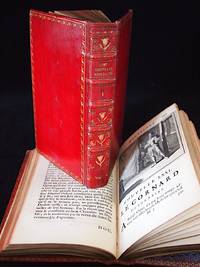
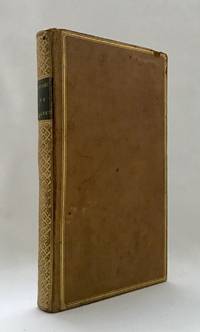
1750E0558axiv368 pages with one folding map and folding plan. Octavo 8" x 5" bound in full leather with five raised spine bands and red label in gilt lettering to spine and gilt decorative cover with gilt spine ends. translated by Joseph Morgan. Querard IV 614 - Playfair n° 220 - Chadenat n° 896 later edition first published in English in 1725.<br /><br />This work is an influential description of Algeria first published in 1725 in French and expanded here with a detailed list of 73 Dutch ships captured by Algerian pirates. Algeria was at this time nominally ruled by the Ottoman Empire but retained a great deal of independence in practice. The work begins with a description of the various inhabitants including separate chapters on the Arabic and Turkish populations followed by chapters on its architecture military navy politics slavery trade etc. It was written by the Jacques Philippe Laugier de Tassy a former diplomat in Algeria and at this date commissioner of the French navy and consul in the Netherlands. It was translated into English as A complete history of the piratical states of Barratry a title that emphasized the notorious Algerian pirates. "Barbary" was not always a unified political entity. From the 16th century on wards it was divided into the political entities of the Regency of Algiers Tunis and Tripolitania Tripoli. Major rulers during the times of the Barbary states' plundering parties included the Pasha or Dey of Algiers the Bey of Tunis and the Bey of Tripoli. Before then the territory was usually divided between Ifriqiya Morocco and a west-central Algerian state centered on Tlemcen or Tiaret. Powerful Berber dynasties such as the Almohads 12th century and briefly thereafter the Hafsids occasionally unified it for short periods. From a European perspective its "capital" or chief city was often considered to be Tripoli in modern-day Libya although Marrakesh in Morocco was the largest and most important Berber city at the time. In addition Algiers in Algeria and Tangiers in Morocco were also sometimes seen as the "capital".<br /><br /><b>Condition:</b><br /><br />folding plate with neat repairs contemporary calf gilt upper joint repaired but splitting again lower joint tender spine a little rubbed with slight loss to extremities else about a very nice copy. Printed for R Griffiths hardcover
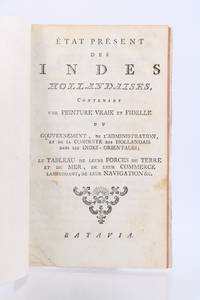
178090166s. n. | Batavia [Jakarta] Amsterdam s. d. [1780] | 12.5 x 18.7 cm | Broché
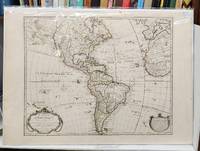
1763159241Paris: Chez l'Auteur Sur le Quay de l'Horloge 1763. Seventh state. Very good. 55 x 78 cm handcoloured map. Centrefold. A few spots. <br/><br/>Originally issued by Guillaume Delisle in 1722 this was one of the most popular maps of the Western Hemisphere in the 18th century and was printed in numerous editions. This is the important seventh state of the map notable because it depicts the mythical "Sea of the West" north of California. An inset in the top left features Buache's elaborate Northwest Passage theories including a conjectural Lac de Valasco. In Labrador is another hypothetical inland sea Mer Nouvellement Decouverte. In South America Brazil is separated from the Pays des Amazones. The map is decorated with a garland-draped title cartouche "Avertissement" cartouche and compass rose. Buache's imprint is in both the title cartouche dated 1722 and at bottom right with the nearly-illegible date of 1745. <br /> <br />Tooley America #7 p. 14. McGuirk #111. Wagner NW #523. Chez l'Auteur Sur le Quay de l'Horloge unknown
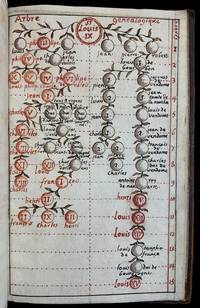
17304557N/A: N/A 1730. A lovely manuscript copy of this selection of Royal ordinances attributed to Andre Barrigue de Montvalon. This work existed only in copied manuscript form from 1724 to 1752 when it was finally published. Our copy is an early manuscript. Attractive manuscript title with a coat of arms beneath. It appears to show the arms of a Marquis. The work contains the Royal Laws along with the commentary of Philippe Bornier. The author is quite critical of Bornier's work and corrects his errors and dating. As stated in the preface content in red ink refers to Bornier's work. Dates of ordinances are indicated in side notes. There are also two tables. One shows them in chronological order. The other in alphabetical. Text is throughout in a neat French secretarial hand. This work is almost identical to a 1728 version found in the Bibliotheque de Droit Schuman in Aix-en-Provence and a slightly earlier 1724 edition currently on sale in the USA. Our copy is slightly enlarged as BOUND IN is a lovely genealogical tree of the French Royal family and 8 pages 4 leaves of a red and black list of the kings and their significant dates. Condition. The full leather period binding is in good strong condition with just a little rubbing and slight loss to the head of the spine. Attractive gilt decoration and titles to spine. Marbled end papers. Internally the pages are in good clean condition with just a touch of movement to the binding. The final gathers with the genealogical details are slightly cracked to the binding and "sit proud" of the rest of the text block. Overall in excellent condition. Collation: 236 7 1 8 1 ff. / 472 ordinances & indexes 14 blank 2 ruled only 16 genealogies 1 1 blank pages. 170 by 110mm 6¾ by 4¼ inches. Conforms to Worldcat OCLC Number: 18455885. Barrigue de Montvalon was a legal advisor to the Parlement of Provence. He was sent to defend the King physically when a disputed broke out between the parlement and the court at Aixes. He was a great supporter of the Jesuits. Barrigue lived to the age of 101. P. Girard noting his devotion said of him that he "knew only the Palace and retirement. A long life is the reward of good morals". Bornier was an Advisor to the King serving as a counselor to the king and lieutenant principal at the présidial court of the city. . Belle copie manuscrite de cette sélection d'ordonnances royales attribuée à André Barrigue de Montvalon. Cet ouvrage n'a existé que sous forme de manuscrit copié de 1724 à 1752 date à laquelle il fut finalement publié. Notre exemplaire est un manuscrit ancien. Titre manuscrit attrayant avec des armoiries en dessous. Il semble qu'il s'agisse des armoiries d'un marquis. L'ouvrage contient les lois royales ainsi que le commentaire de Philippe Bornier. L'auteur est assez critique à l'égard du travail de Bornier dont il corrige les erreurs et les datations. Comme indiqué dans la préface le contenu à l'encre rouge se réfère à l'ouvrage de Bornier. Les dates des ordonnances sont indiquées dans les notes annexes. Il y a également deux tableaux. L'un les présente dans l'ordre chronologique. L'autre par ordre alphabétique. Le texte est rédigé d'une main soignée de secrétaire français. Cet ouvrage est presque identique à une version de 1728 trouvée à la Bibliothèque de Droit Schuman à Aix-en-Provence et à une édition légèrement antérieure 1724 actuellement en vente aux Etats-Unis. Notre exemplaire est légèrement plus grand car il contient un bel arbre généalogique de la famille royale française et 8 pages 4 feuilles d'une liste rouge et noire des rois et de leurs dates significatives. Condition. La reliure d'époque en plein cuir est en bon état solide avec juste un peu de frottement et une légère perte à la tête de la colonne vertébrale. La décoration et les titres dorés au dos sont attrayants. Papiers de fin marbrés. L'intérieur des pages est en bon état propre avec juste un peu de mouvement à la reliure. Les derniers feuillets avec les détails généalogiques sont légèrement fendus à la reliure et se détachent du reste du bloc de texte. Dans l'ensemble l'ouvrage est en excellent état. Collation : 236 7 1 8 1 ff. / 472 ordonnances et index 14 vierges 2 réglées seulement 16 généalogies 1 1 vierge pages. 170 par 110mm 6¾ par 4¼ pouces. Conforme au numéro Worldcat OCLC : 18455885. Barrigue de Montvalon était conseiller juridique au Parlement de Provence. Il fut envoyé pour défendre physiquement le roi lorsqu'un différend éclata entre le parlement et la cour d'Aixes. Il était un grand partisan des Jésuites. Barrigue vécut jusqu'à l'âge de 101 ans. P. Girard notant son dévouement dit de lui qu'il "ne connaissait que le Palais et la retraite. Une longue vie est la récompense des bonnes mœurs". Bornier était conseiller du roi servant comme conseiller du roi et lieutenant principal à la cour présidiale de la ville. N/A hardcover
17304557N/A N/A 1730 Belle copie manuscrite de cette sélection d'ordonnances royales, attribuée à André Barrigue de Montvalon. Cet ouvrage n'a existé que sous forme de manuscrit copié de 1724 à 1752, date à laquelle il fut finalement publié. Notre exemplaire est un manuscrit ancien. Titre manuscrit attrayant avec des armoiries en dessous. (Il semble qu'il s'agisse des armoiries d'un marquis). L'ouvrage contient les lois royales, ainsi que le commentaire de Philippe Bornier. L'auteur est assez critique à l'égard du travail de Bornier, dont il corrige les erreurs et les datations. Comme indiqué dans la préface, le contenu à l'encre rouge se réfère à l'ouvrage de Bornier. Les dates des ordonnances sont indiquées dans les notes annexes. Il y a également deux tableaux. L'un les présente dans l'ordre chronologique. L'autre par ordre alphabétique. Le texte est rédigé d'une main soignée de secrétaire français. Cet ouvrage est presque identique à une version de 1728, trouvée à la Bibliothèque de Droit Schuman à Aix-en-Provence, et à une édition légèrement antérieure (1724) actuellement en vente aux Etats-Unis. Notre exemplaire est légèrement plus grand, car il contient un bel arbre généalogique de la famille royale française et 8 pages (4 feuilles) d'une liste rouge et noire des rois et de leurs dates significatives. Condition. La reliure d'époque en plein cuir est en bon état, solide, avec juste un peu de frottement et une légère perte à la tête de la colonne vertébrale. La décoration et les titres dorés au dos sont attrayants. Papiers de fin marbrés. L'intérieur des pages est en bon état, propre, avec juste un peu de mouvement à la reliure. Les derniers feuillets (avec les détails généalogiques) sont légèrement fendus à la reliure et se détachent du reste du bloc de texte. Dans l'ensemble, l'ouvrage est en excellent état. Collation : 236, 7, 1, 8, 1 ff. / 472 (ordonnances et index), 14 (vierges), 2 (réglées seulement), 16 (généalogies), 1 (1 vierge) pages. 170 par 110mm (6Ÿ par 4Œ pouces). Conforme au numéro Worldcat OCLC : 18455885. Barrigue de Montvalon était conseiller juridique au Parlement de Provence. Il fut envoyé pour défendre physiquement le roi lorsqu'un différend éclata entre le parlement et la cour d'Aixes. Il était un grand partisan des Jésuites. Barrigue vécut jusqu'à l'âge de 101 ans. P. Girard, notant son dévouement, dit de lui qu'il "ne connaissait que le Palais et la retraite. Une longue vie est la récompense des bonnes murs". Bornier était conseiller du roi, servant comme conseiller du roi et lieutenant principal à la cour présidiale de la ville.
178090166Batavia Jakarta Jakarta Amsterdam: s. n. 1780. Fine. s. n. Batavia Jakarta Jakarta Amsterdam s. d. 1780 12.5 x 18.7 cm Broché This critical survey of the Dutch possessions in Indonesia survives in three versions English French and Dutch without it being possible to determine with certainty which constitutes the original edition.Only three copies are recorded in the CCF. Written at the outset of the Fourth Anglo-Dutch War 17801784 triggered by the early recognition of American independence by the United Provinces this pamphlet seeks to highlight the weaknesses of the administration of the Dutch East India Company and the vulnerability of its possessions to a French or British attack.In fact hostilities quickly turned to the disadvantage of the Dutch who in 1784 were compelled to make numerous colonial concessions following the Treaty of Paris. Philippe Fermin or Firmin 17201790 was a colonial physician who spent most of his life in Suriname which he famously described but he also published on various other colonial subjects.A disbound copy presented in a modern temporary marbled paper wrapper; page 13 has been slightly trimmed resulting in the loss of a letter at the end of certain words; a few light spots of foxing. s. n. unknown
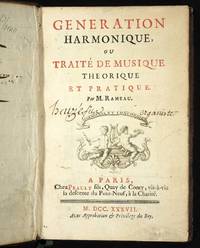
17372674DB1737. Paris Prault 1737. 4°. 16 201 13 S. Mit 12 Kupfertafeln. Grässe VI 20. - MGG dtv X 1904. - Eitner VIII 120. - Fétis VII 175. - Erste Ausgabe. - "Hatte Rameau im Traité Zarlinos 'duale' Theorie mit der nach unten gehenden Reihe zur Erklärung der Mollharmonie scharf zurückgewiesen und dafür den schwachen Versuch unternommen die Lage der Terz zwischen den beiden bestimmenden Eckpfeilern von Grundton und Quinte willkürlich zu vertauschen so greift er in der 'Génération' zum Zwecke einer befriedigenderen Abteilung der Mollharmonie auf die sympathetische Vibration von Saiten und eine sich daraus ergebende arithmetische Proportion zurück was praktisch eine Anerkennung von Zarlinos ursprünglicher Erklärung bedeutet" MGG. - Gioseffo Zarlino 1517-1590 ital. Musiktheoretiker und Komponist. - Papier zu Beginn etwas gebräunt und stockfleckig. Mit alten Besitzereinträgen auf dem Vorsatz. Einband berieben. unknown
17372674DBParis, Prault 1737. 4°. (16), 201, (13) S. Mit 12 Kupfertafeln.
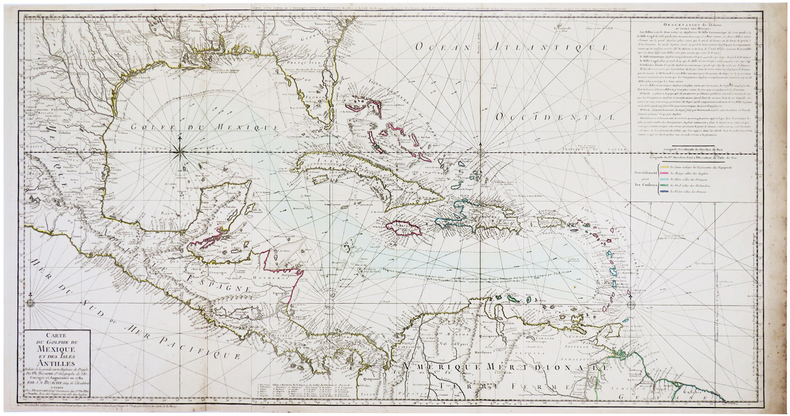
1780LBW-3496Paris, Dezauche, 1780. 494 x 925 mm.
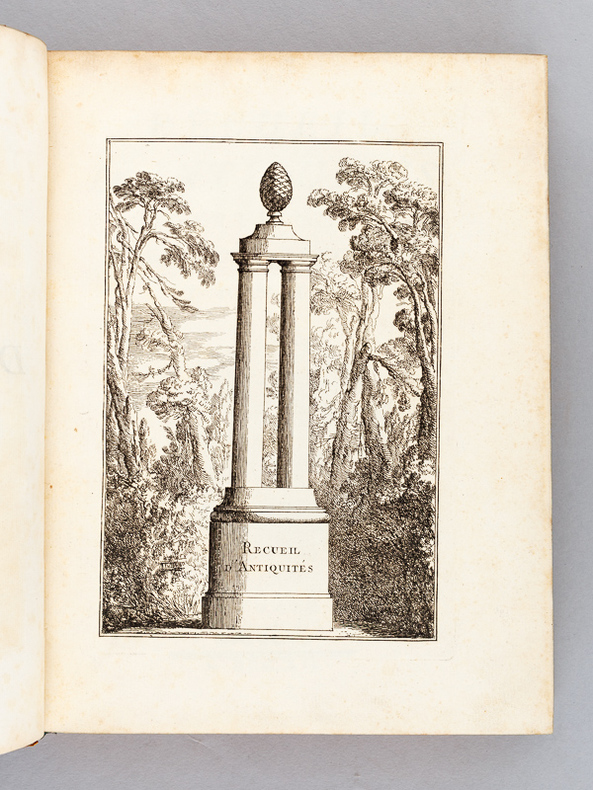
1752571785 vol. in-4 reliure de l'époque plein veau blond, dos à 5 nerfs dorés orné, triple file doré d'encadrement en plats, double filet doré en coupes, chasses ornées, toutes tranches dorées, Chez Desaint & Saillant, [ Chez Duchesne ; Chez N. M. Tilliard ], Paris, 1752-1762, I : Chez Desaint & Saillant, 1752 : 4 ff., XXI-348 pp. et 1 f. n. ch. avec frontispice et 107 planches hors texte ; II : Chez Duchesne, 1756 : 1 f., VIII-429 pp. et 2 ff. n. ch avec frontispice et 128 planches (planches 58 bis et ter) ; III : Chez Desaint & Saillant, 1759 : XXXVI pp. (y compris le frontispice), 448 pp. avec frontispice et 121 planches hors texte ; IV : Chez N. M. Tilliard : 1761 : XX pp. (y compris le frontispice), 418 pp. et 1 f. n. ch. avec frontispice et 125 planches hors texte ; V : Chez N. M. Tilliard, 1762 : XXVI pp. (y compris le frontispice), 1 f. n. ch., 348 pp. avec frontispice et 120 planches hors texte
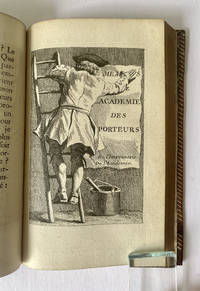
17485611<p><em>Book Pedlars</em></p><p>CAYLUS Anne Claude Philippe comte de. Memoires de l'Academie des Colporteurs. Paris l'Imprimerie ordinaire de l'Academie 1748.£1500</p><p>8vo engraved frontispiece pp. viii 319 with 8 unsigned engraved plates in the text one an engraved title title printed in red and black with attractive title vignette; contemporary full red morocco flat spine ruled lettered and dated directly to spine sides with triple gilt fillet a.e.g. from the collection of Andre Langlois and his red morocco book plate to front pastedown; a fine copy.</p><p>First edition of this unusual and attractively illustrated work on Paris street pedlars hawkers and distributors of pamphlets and books allegedly published under the auspices of the Paris Guild of Booksellers and Printers. Caylus 1692-1765 was an amateur engraver antiquarian and writer from a well-off aristocratic family which allowed him to follow his lifelong interest in the arts and antiquities. He played a prominent role in the Société du Bout du Banc an informal group of writers and aristocrats who met at the home of the actress Quinault. They published a whole series of oeuvres badins licentious and playful stories mostly published under Caylus' name and in fact mostly written by him. This appears to be in the same vein a collection of histories and sketches relating to the exploits and experiences of book pedlars and hawkers. Each anecdote is illustrated with an appealing and competent engraving executed possibly by Caylus himself. The particularly attractive engraved title showing a billposter putting up a poster or placard with the title and partly obscuring it in the process is according to Cohen possibly by Ch. N. Cochin.</p><p>The work is also interesting in that the section beginning on p. 188 Le Malebosse describes and illustrates a scheming poet i.e. Voltaire who is duped by a fake book pedlar. This is in fact one of the first anti-Voltaire caricatures Apgar.</p><p>Cioranescu XVIII 16265; Cohen c 210; see Apgar Trois siècles d'iconographie voltairienne.</p>
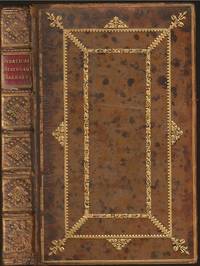
177020119Paris, De l'Imprimerie Royale, 1770-1783. 9 volumes in-4, plein veau moucheté brun, dos à nerfs joliment ornés de filets, fleurons et oiseaux dorés, pièce de titre beige ou rouge, tranches rouges.
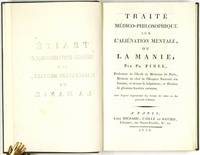
1800315841800. Paris Chez Richard Caile et Ravier Libraires rue Haute-Feuille No. 11 An IX 1800-01 8° I-V VI-LVI 318 pp. 1 Tabelle. 2 Taf. feiner Pappband mit Rvg.; ungewöhnlich breites und frisches Exemplar. First Edition of one of the most important medical classics and one of the most valuable texts in the history of psychiatry written in the opening year of the new century. It is both a postcript to the eighteenth and a preface to the nineteenth century. Pinel wrote this treatise on the basis of his experience in the Bicêtre. His medical theories and classifications are very methodical and clear and they contain some original ideas but their importance pales in comparison with his work of hospital reform and reorganization by which a new tradition was established and a new perspective opened for practical and research psychiatry; it is this achievement which always come to mind when the name of Philippe Pinel is mentioned. On May 24 1798 at the risk of his own life and liberty he struck off the chains of the insane at the Bicêtre placing them in hospitals under lenient physicians and doing away with the abuses of drugging and blood-letting to which they were subjected. Garrison & Morton No. 4922; Heirs of Hippocrates 1070 Grolier/Medicine 54; Lilly Notable Medical Books 155; Norman 1701 unknown
173649994Chez Pierre Gaillard | à Cologne 1736 | 9.50 x 15.50 cm | relié
17786957Paris, Aux dépens de l'Académie & de Lormel, 1778. In-8 carré (174 x 232 mm), 60 pp. Maroquin brun aux armes, encadrement de filets et fleurs de lys, dos à nerfs orné, roulette sur les coupes, doublure et garde de tabis bleu ciel, tranches dorées (reliure de l'époque).
173649994à Cologne: Chez Pierre Gaillard 1736. Fine. Chez Pierre Gaillard à Cologne 1736 9.50 x 15.50 cm relié Reprint by the same publisher of the first edition of 1701 illustrated with a frontispiece and 100 half-page figures by Romain de Hooghe and retouched by Picart le Romain. Rare. Late 18th century binding possibly later in full red Russia leather. Foreign binding perhaps Russian. Spine with raised bands decorated with compartmented tulip tools. Gilt title and volume label. Head and foot rolls. Decorative border on covers. All edges gilt. Headcap of volume 2 partly worn. Corners slightly bumped. A tear to the lower joint of volume 2. Despite minor defects handsome and uncommon binding the set in good condition and well-printed. Les Cent Nouvelles nouvelles is the first collection of French novellas commissioned by the Duke of Burgundy Philip the Good to whom it is dedicated and who received it in 1462. It brings together one hundred very free tales by authors from the Burgundian court satirical and ribald in spirit particularly targeting women and the clergy. Pierre Champion attributes its authorship to Philippe Pot although 36 different storytellers can be identified. Their model of inspiration is clearly Boccaccio's Decameron. Along with La Fontaine's Contes this represents Romain de Hooghe's finest work who captured the spirit of each tale in a lively manner full of fantasy and humor. Chez Pierre Gaillard hardcover
17792092902138100218Not Available 1779. Soft Cover. Fine. Size: 55.5cmx73.5cm Number of books: 1 Not Available paperback
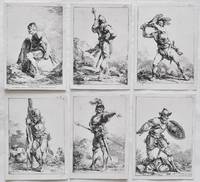
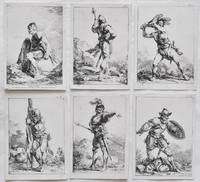
175525093<p>A work from Loutherbourg`s early career when he was in Paris 1755 – 1770. This series is outstandingly rare. Ca. 11.9 x 8.5 cm; plate mark not visible; in fine condition.</p><p>Literature: Le Blanc.</p><p>Loutherbourg an Alsatian painter who studied etching in Johann Georg Wille's academy clearly admired the prints of the seventeenth-century Neapolitan painter Salvator Rosa as did many other French printmakers of the time. In the set entitled "First suite of Soldiers"Loutherbourg took up a format associated with Rosa in order to showcase his own inventiveness and fluency.</p><p><strong>Philip James de Loutherbourg</strong> RA 31 October 1740 – 11 March 1812 whose name is sometimes given in the French form of <strong>Philippe-Jacques</strong> the German form of <strong>Philipp Jakob</strong> or with the English-language epithet of <strong>the Younger</strong> was a French-born British painter who became known for his large naval works his elaborate set designs for London theatres and his invention of a mechanical theatre called the "Eidophusikon". He also had an interest in faith-healing and the occult and was a companion of the confidence-trickster Alessandro Cagliostro</p><p><input type="checkbox"></p></p><p>Loutherbourg was born in Strasbourg in 1740 the son of an expatriate Polish miniature painter.1 Intended for the Lutheran ministry he was educated at the University of Strasbourg.2</p><p>Rejecting a religious calling Loutherbourg decided to become a painter and in 1755 placed himself under >Charles-André van Loo in Paris and later under Francesco Giuseppe Casanova. His talent developed rapidly and he became a figure in the fashionable society of the day. In 1767 he was elected to the French Academy although below the age required by the rules of the institution and painted landscapes sea storms and battles all of which work had a celebrity above those of the specialists then working in Paris. He made his debut with the exhibition of twelve pictures including <em>Storm at Sunset</em> <em>Night</em> and <em>Morning after Rain</em>.2</p><p>Loutherbourg then travelled through Switzerland Germany and Italy distinguishing himself as much by his mechanical inventions as by his painting. One of these showing new effects produced in a model theatre was the wonder of the day with its use of lights behind canvas representing the moon and stars and the illusory appearance of running water produced by clear blue sheets of metal and gauze with loose threads of silver.2</p><p>In 1771 he settled in London where David Garrick paid him £500 a year to design scenery and costumes and oversee the stage machinery at the Drury Lane Theatre.3 His stage effects attracted the admiration not just of the general public but also of artists including Joshua Reynolds. He devised scenic effects in which for instance green trees gradually became russet and the moon rose and lit the edges of passing clouds:2 illusions achieved through the use of coloured lantern-slides and the ingenious lighting of transparencies.4 He continued to work at the theatre until 1785.3</p><p>He achieved an even greater success with an entertainment called the <em>Eidophusikon</em> meaning "image of nature". This was a miniature mechanical theatre measuring six by eight feet and described as displaying "Various Imitations of Natural Phenomena represented by Moving Pictures". It was presented at Loutherbourg's home from March 1781 in an auditorium seating about 130 people. He used Argand lamps to light the stage and stained glass to change colours.</p><p>At Christmas 1781 Loutherbourg mounted a spectacle at a party in the Egyptian Hall at Fonthill for William Beckford promising according to Beckford to "present a mysterious something that the eye has not seen or heart of man conceived".4 Following this he attempted rather more fantastical subjects for the Eidophusikon presenting a scene from <em>Paradise Lost</em> with "Satan arraying his troops on the banks of the Fiery Lake and the rising of the Palace of Pandemonium".4 The Eidophusikon soon closed however as the income did not cover the costs and the audience demanded new productions faster than Loutherbourg could create them. He has been called the inventor of the panorama but although it first appeared about the same time as the Eidophusikon the first panorama was painted and exhibited by the Scottish painter Robert Barker.</p><p>Despite these other projects Loutherbourg still found time for painting. <em>Lord Howe's action or the Glorious First of June</em> exhibited 1795 and other large naval pictures were commissioned to commemorate British naval victories many of them ending up soon afterwards in the Greenwich Hospital Gallery in whose successor the National Maritime Museum they still remain. His finest work was the <em>Destruction of the Armada</em>. He also painted the <em>Great Fire of London</em> and several historical works including the <em>Attack of the Combined Armies on Valenciennes</em> 1793.2 He was interested in the industrial revolution and his 1801 painting <em>Coalbrookdale by Night</em> shows iron foundries at work.</p><p>Seven of his paintings including <em>Lodore Waterfall</em> and <em>Skating in Hyde Park</em> are in the Government Art Collection.5</p><p>He was made a member of the Royal Academy in 1781.</p><p>Two sets of drawings by de Loutherbourg were published reproduced in aquatint under the title <em>Picturesque English Scenery</em> in 1801 and 1805. He also contributed illustrations to a Bible published by Thomas Macklin in 1800.3 After his death Cadell and Davies published a volume of the Apocrypha. All 110 of his drawings for the vignettes but not the Apocrypha are pasted in the Bowyer Bible in Bolton Museum in Greater Manchester.</p><p>Esoteric interests</p><p>In 1789 Loutherbourg temporarily gave up painting in order to pursue an interest in alchemy and the supernatural.3 He met Alessandro di Cagliostro who instructed him in the occult.3 He travelled about with Cagliostro leaving him however before his condemnation to death.2 He and his wife also took up faith-healing. A pamphlet called <em>A List of a Few Cures performed by Mr and Mrs De Loutherbourg of Hammersmith Terrace without Medicine</em> was published in 1789. Written by a follower named Mary Pratt it claimed that the Loutherbourgs had cured two thousand people between Christmas 1788 and the following July "having been made proper recipients to receive divine manuductions".6</p><p>Death</p><p>Loutherbourg died in Chiswick in 1812.</p><p>There are paintings by him in the collections of many British institutions including Tate Britain The Victoria and Albert Museum The National Portrait Gallery The Royal Academy of Art Leicester Farnham and Derby Art Gallery.7</p><p>Loutherbourg was buried in Chiswick Old Cemetery adjoining the graveyard of St Nicholas Church Chiswick. Buried nearby are the artists William Hogarth and James Abbott McNeill Whistler.</p>
176022093<p>A work from Loutherbourg`s early career when he was in Paris 1755 - 1770. This series is outstandingly rare. Ca. 11.9 x 8.5 cm; plate mark not visible; in fine condition.</p><p>Literature: Le Blanc.</p><p>Loutherbourg an Alsatian painter who studied etching in Johann Georg Wille's academy clearly admired the prints of the seventeenth-century Neapolitan painter Salvator Rosa as did many other French printmakers of the time. In the set entitled "First suite of Soldiers"Loutherbourg took up a format associated with Rosa in order to showcase his own inventiveness and fluency.</p>
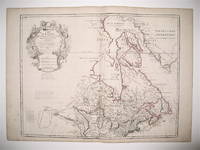
1783242998Dezauche 1783. Map. Engraving with hand coloring. Image measures 19.75 x 25.5". Sheet measures 21.5 x 30".<br/><br/> This map of Canada and the northern United States extends north from around the latitude of Baltimore all the way up to Baffin Bay along the shore of Greenland. Published by Jean-Claude Dezuache in 1783 it is the eighth revision of a map originally published by De L'Isle in 1703. The map is notable as the first to include "Etats-Unis" in the title coming as it did on the heels of the American Revolution. In fact this appearance is one of the earliest appearances of the name United States Etats-Unis on a printed map. The map is compelling in its accuracy particularly with regard to the Great Lakes depicting them as fully enclosed and properly placed in longitude and latitude. There is also excellent detail around the Hudson and Mississippi Rivers. The elaborate cartouche is decorated with a beaver natives one of whom is bearing a scalp and Jesuit explorers. Furthermore the fleurs-de-lis that previously adorned the shield at the top of the cartouche has been erased and the crown converted into a halo suspended above an orb a response to the execution of the king following the French Revolution Below a table of colors delineates the boundaries of the United States and European possessions. Indian nations are also labeled. The map is in excellent condition with wide margins as issued. Guillaume De L'Isle 1675--1726 was a French cartographer known for his popular and accurate maps of Europe and the newly explored Americas and Africa. He is important as the first "scientific" cartographer who incorporated the most current information on exploration and topography into his maps. Philippe Buache 1700--1773 was a student of De L'Isle and became one of the most active proponents of the so-called school of theoretical cartography active in mid-18th century France. This map is fascinating record from a remarkable moment in North American history.<br/><br/> Dezauche unknown books
176910715Paris: P. Vente 1769. Contemporary gilt-ruled polished tan calf rubbed flat spine gilt à la grotesque with a gilt-lettered morocco label red edges blue silk marker. <p>A talented sculptor and frame-maker Cayeux 1688-1769 collected for six decades: “his cabinet was renowned for its examples of ‘our talented modern artists’†like Boucher van Loo and Cochin Bailey. Many lots have eighty or more drawings or prints. One copy in the U.S. In good condition contemporary title inscription On behalf of your most humble servant Cayeux tr. — penned by the deceased collector’s son Louis-Philippe d. 1776.<br /> ¶Bailey Patriotic Taste: Collecting Modern Art in Pre-Revolutionary Paris 21-22; Advielle Notice sur Philippe Cayeux passim; Lugt Répertoire des catalogues des ventes 1793.</p> P. Vente unknown
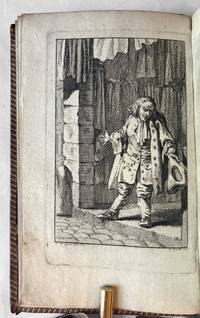
17464391The Hague i.e. Paris: s.n. 1746. 8vo 168 x 101 mm. 2 parts separately titled and paginated: 3-vi-xxiv 182 pages 1 blank leaf; 2 leaves 128 pages. Engraved frontispiece by Fessard after Cochin fils apparently included in the pagination typographic title ornaments head- and tailpieces. An attractive copy stain to fols. A2-3 in second part 2 or 3 minor marginal tears some spotting. Contemporary red morocco triple gilt fillet on sides smooth spine sparingly gold-tooled and lettered board edges gilt gilt edges scuffing to lower board edges and extremities of spine corners a bit bumped. Provenance: early purchase note on lower flyleaf; John Wodehouse 3rd Earl of Kimberley 1883-1941 bookplate; Leonard Forrer 1869-1953 his bookshop ticket of L. S. Forrer Ltd. Numismatic Booksellers London; Charles Van der Elst 1904-1982 bookplate.<br /> <br /> Only Edition of an extended literary joke by the brilliant antiquarian engraver art patron and connoisseur the Comte de Caylus. He exercised his stylistic muscles in this peculiar collection of two dozen literary pieces revolving around the word manteau: in part 1 racy anecdotes short stories fairy tales and a chivalric tale written in pseudo-archaic French; and in part 2 tongue-in-cheek erudite essays in several styles — the religious history the antiquarian disquisition the etymological or bibliographical analysis — all laced with fictional and a few real references including imaginary medieval manuscripts.<br /> <br /> A glance at the entry for manteau in the online Trésor de la Langue Française gives an idea of the semantic opportunities offered by this word whose appearances in many idiomatic expressions are exhaustively exploited by Caylus. In part 1 appear the manteau de fourrure fur coat the manteau de lit a short bed-jacket into which a jealous husband is metamorphosed by his fairy mother-in-law to teach him a lesson the long and short coat the chimney mantel same word in French and a portrait of a remarkable old man presented as the fictional originator of the term “sous le manteau†clandestine or clandestinely.<br /> <br /> In part 2 which its title notes with a wink “one doesn’t need to read†the author delves into the Roman pallium a cloak the coats of saints and clerics those both heraldic and actual of Dukes and Peers and the order of the Blancs-Manteaux. Completing the picture are a florilegium of dictionary extracts and a satirical etymological comparison of the French manteau with other languages containing sentences like: “As for the letter L which is found at the end of words like Mantel and Mantello one can very well understand it to be a diminutive of the Arabic word Allah meaning God†p. 103. <br /> <br /> The self-imposition of arbitrary constraints onto one’s writing while an ancient practice viz. poetic meter have been associated more recently with a French literary movement from the 1960s known as Oulipo short for Ouvroir de littérature potentielle â€workship of potential literature†which included the great French authors Raymond Queneau and Georges Perec whose wry humor and doggedness in pursuing the conceit to the end Caylus foreshadowed. <br /> <br /> Cochin’s frontispiece shows a rather shifty-looking merchant in the doorway of his shop filled with coats. <br /> <br /> OCLC locates 4 copies in North American libraries. Cohen-De Ricci 210; Gay-Lemonnyer 3:23; Barbier III: 34 a 1775 edition not seen elsewhere. s.n. unknown
176347849Lemgo 1763. Aus dem Französischen in das teutsche übersetzt und mit Anmerkungen erläutert und vermehret von D.Christian Philip Berger Geprägter ganzlederner Meisterbuchbinder-Einband goldene Rückenbeschr. Guter Zustand vollständig. Sehr selten Zweite Auflage Kl.-8°. Ldr. Technik unknown
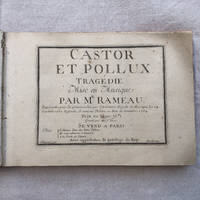
175417<p>Jean-Philippe RAMEAU CASTOR ET POLLUX</p><p>First edition of the definitive version very different from the first attempt of 1737 of the most important and successful opera of Jean-Philippe Rameau. A very good clean copy.</p><p>TrageÌdie mise en Musique par Mr. Rameau repreÌsenteÌe pour la premieÌ€re fois par l'AcadeÌmie Royale de Musique Le 24 Octobre 1737. Refondu Et remis au TheÌaÌ‚tre au Mois de DeÌcembre 1754. GraveÌe par Le Sr. Hue. A Paris Chez l'Auteur Rue des bons Enfans Et aux adresses ordinaires AÌ€ la Porte de l'OpeÌra.</p><p>In-4 aÌ€ l'italienne 1â„2 veÌlin ivoire aÌ€ coins pieÌ€ce de titre papier en forme de cÅ“ur colleÌe au 1er plat tranches rouges Reliure ancienne très légèrement postérieure. 1 f. de titre 163 pages.</p><p>Bel exemplaire de l'édition originale du plus important opéra de J.Ph Rameau et son plus grand succès qui connut plus de 250 représentations à Paris avant la Révolution française. Après une première version créée en 1737 l'opéra fut entièrement refondu pour atteindre à un équilibre exceptionnel dans sa version définitive très différente de la première : le livret est devenu parfaitement limpide et l'ensemble d'une concision et d'une variété admirables. Le coup de génie des fameuses trois notes faisant la transition entre la plainte du chÅ“ur des Spartiates Que tout gémisse et le célébrissime tristes Apprêts apparaît ici pour la première fois. Le déchirant Prélude du cinquième Acte est aussi une nouvelle version caractéristique de la plus grande maîtrise de Rameau au sommet de son art parmi bien d'autres exemples possibles.</p><p>Exemplaire de toute fraicheur imprimé sur vergé fort en excellent état de conservation. Menus défauts à la reliure coiffe inférieure frottements. Tache brune au dernier feuillet. Page de titre un peu salie.</p><p>On trouve relieÌs aÌ€ la suite : <br />Chant de guerre pour l'ArmeÌe du Rhin deÌdieÌe au MareÌchal Lukner. A Paris chez Bignon sans date. 3 pp. <br />Cinq airs d'Estelle et un deÌtacheÌ avec Accompagnement de ForteÌ-Piano. par Daniel Steibelt Paris chez Naderman sans date. 1 f. de titre 15 pp. Signature autographe de J.H. Nadermann 1734-1799 luthier et eÌditeur en marge du f. de titre. Rousseurs sur la pièce de Steibelt.</p><p>Photos supplémentaires sur demande.</p><p>Envoi avec suivi et assurance</p> hardcover
172593531725 A Paris, de limprimerie de Jean-Baptiste-Christophe Ballard, seul imprimeur du Roy pour la musique, & noteur de la Chapelle de Sa Majesté. 1725. Avec privilège du Roy. Un volume grand in-2° (275 x 386 mm) de 4 pages typographiées +204 pages gravées; grande vignette sur bois gravé au titre et six superbes bandeaux sur cuivre dessinés par C. Gillet et gravés par G. Scotin, en tête du prologue et des cinq actes. Reliure de lépoque en plein veau moucheté, dos à nerfs orné, pièce de titre en maroquin rouge, tranches rouges. Coiffes restaurées, déchirure marginale sans manque de texte en page 203/204. En très bon état.