948 résultats
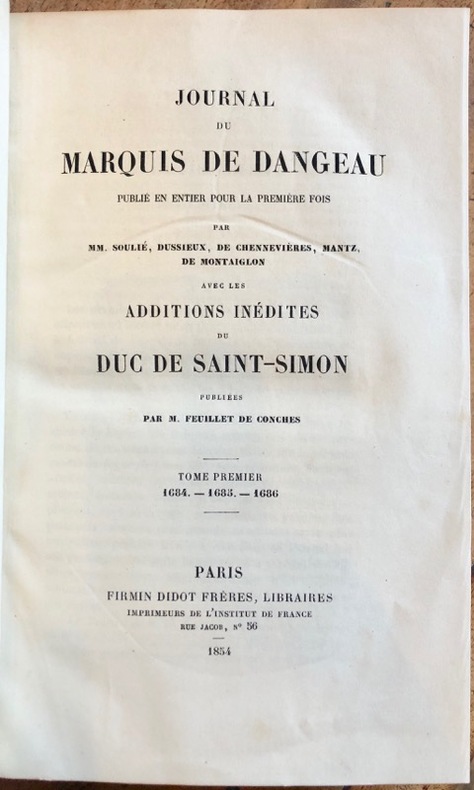
183412367Paris, Paulin, 1834-1838. 40 vol. in-8, cartonnage à la Bradel, dos lisse orné de filets dorés, pièces de titre et de tomaison de maroquin noir (reliure de l'époque).
185413325Paris, Firmin-Didot, 1854-1860. 19 vol. in-8, demi-chagrin rouge, dos orné à nerfs (reliure de l'époque).
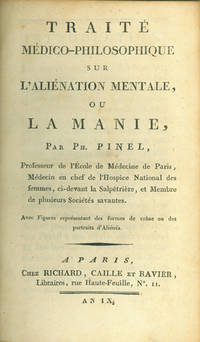
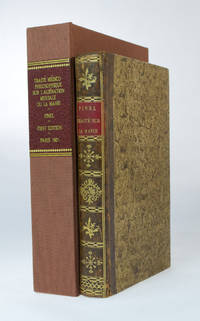
180134528Paris: Richard An IX 1801. <p>Foundation of Modern Psychiatry</p> <p> Pinel Philippe1745-1826. Traite medico-philosophique sur l'alienation mentale ou la manie. 8vo. lvi 318pp. Fold. printed table 2 engraved plates. Paris: Richard Caille & Ravier An IX 1800/1801. 193 x 118 mm. Quarter mottled sheep paste paper boards vellum corners slightly worn at spine. Light browning & foxing but a fine copy.</p> <p> First Edition. Garrison-Morton 4922. Pinel was one of the first to treat the insane humanely striking the chains from the lunatics at the Bicetre Hospital and implementing his "traitement moral" a compassionate form of psychiatric therapy that identified insanity with illness rather than moral perversity or demonic possession. In his Traite Pinel replaced the theorizing and speculation characteristic of earlier works on mental illness with his own practical observations of the Bicetre's mental patients whose behavior could now be observed undistorted by cruel treatment. He retained the old classifications of mental illness but distinguished mania from delirium and recognized the relationships between periodic mania melancholy and hypochondria. He recognized emotional disorders to be the main cause of intellectual dysfunction but also took into account heredity predisposition and hypersensitivity and attempted to find relationships between insanity and cranial deformity. Pinel founded the Salpetriere's famous school of psychiatry and trained a generation of psychiatrists the most important of whom was Esquirol. Norman 1701. Hunter & Macalpine pp. 602-10. Zilboorg pp. 319-41. </p> . Richard (An IX) unknown books
1862CAT0173New York: Elias Dexter 1862. Small folio later black cloth viii 104 pp. Complete with sixty-three plates as well as a photographic title page. One of 100 copies. Very Good. A very scarce and important reference on Saint-Memin also important as one of the earliest books illustrated with unique sets of photographic prints. This copy generally well preserved with some occasional fading to plates. Some dampstaining to text portion at margins. Light marginal creasing to corners of plates not affecting images. The photographic title page appears to be a copy of an earlier edition reading: Partie de la Collection des 818 / Portraits graves / par / Ch. Balt Julien Fevret de Saint Memin ancien Officier / aux Gardes Francaises pendant son emigration aux Etats-Unis. 1793 - 1814 and includes sixteen portraits surrounding the text. This title page detached all other pages soundly attached with a sound 20th-century cloth binding in generally excellent condition with some slight bowing to boards. A nice copy of a very scarce work. Title continues "Photographed by Gurney and Son of New York from proof impressions of the original copper-plates engraved by M. de St.-Memin from drawings taken from life by himself during his exile in the United States from 1793 to 1814. To which are prefixed a memoir of M. de St.-Memin by Ph. Guignard and biographical notices of the persons whose portraits constitute the collection compiled from authentic and original sources by the publisher E. Dexter." Miles Saint-Memin 212; Howes F107 "b"; Sabin 75444 OCLC 4827791. Elias Dexter unknown books
184487756Paris, 1844-1892, in-8, 24 plaquettes, couvertures conservées, Demi-chagrin rouge de l'époque, dos à nerfs et fleuronné, monogramme G.M. en pied du dos [Galien Mingaud], Joli recueil d'opuscules divers publiés par le pharmacien et naturaliste du Gard Philippe Mingaud (1819-1904), réunis et reliés vers 1893-1894, à l'intention de son fils Galien-Philippe Mingaud (1854-1912). L'ouvrage ouvre sur l'ex-dono manuscrit du père, signé à Paris et daté du 20 mai 1893 : "Ce volume est réservé à mon fils Galien. Souvenir affectueux de son père". Plusieurs portraits photographiques de l'auteur en médaillon apparaissent dans le recueil : au début de l'ouvrage, un cliché au format carte de visite [58 x 98 mm] représente Mingaud à l'âge de 75 ans ; sur un autre cliché, plus petit [20 x 30 mm], qui apparait à plusieurs reprises, il a à peu près le même âge ; un troisième cliché [55 x 65 mm] le représente cette fois-ci plus jeune, âgé de 46 ans. Quelques pièces portent le cachet de l'auteur (Mingaud. Conférencier scientifique. Paris) et certaines sont enrichies de notes manuscrites. Philippe Mingaud, pharmacien de première classe de l'École supérieure de Montpellier, fonda en 1844 une pharmacie normale et un cabinet d'histoire naturelle à Saint-Jean-du-Gard, dans les Cévennes. Dans les alentours, il fit la découverte d'importantes mines métallifères de gisements minéraux. Il s'installa à Paris en 1858 et fit don de sa collection au musée de Nîmes. Son fils, Galien-Philippe, s'occupa de minéralogie à ses côtés. Les pièces du présent recueil comprennent les travaux de Mingaud parus entre 1844 et les années 1880, ainsi que des recensions sur ses travaux. Elles ont été reliées dans l'ordre suivant : ? Travaux de Mingaud entre 1844 et 1865 : Grand établissement pour la fabrication des eaux minérales artificielles de Mingaud fils, chimiste à Saint Jean-du-Gard. Alais, Veirun, (s.d.) 8 pp. Synthèses chimiques et pharmaceutiques, présentées et publiquement soutenues devant l'École spéciale de Montpellier le 27 et 28 août 1844. Montpellier, Boehm. 16 pp. Examen d'un minerai qui présente tous les caractères de l'allophane (silicides). Paris, imprimerie de W. Remquet, 1859. 11 pp. Plaquette enrichie du petit portrait photographique de l'auteur [20 x 30 mm] contrecollé sur la couverture et d'un papillon comportant une note manuscrite signée de l'auteur, collé sur la dernière page : "Nota. Je suis très heureux d'avoir pu accomplir le voeu que j'avais exprimé en 1844. Mingaud, âge de 84 ans. Nîmes le 7 juillet 1903". Mémoire sur la fondation d'une pharmacie normale. Paris, Martinet, 1859. 29 pp. Plaquette enrichie du petit portrait photographique. De l'erinus alpinus. Érine pourprée des Alpes de la famille des Personnées de Jussieu. Histoire topographique de son habitat constaté. Paris, Gaittet, 1861. 19 pp. Herbier du bassin de Saint-Jean-du-Gard, précédé de quelques réflexions sur la vie de l'auteur. Paris, Dubuisson, 1863. 22 pp. Plaquette enrichie du petit portrait photographique. Explorations géologiques faites avec Marcel de Serres. Coup d'oeil rapide sur les terrains qui constituent le sol du bassin de Saint-Jean-du-Gard et des principaux gisements métallifères qu'on y rencontre. Paris, Dubuisson, 1863. 36 pp. Plaquette enrichie du petit portrait photographique. De l'erinus alpinus. Érine pourprée des Alpes de la famille des Personnées de J. Histoire topographique de son habitat constaté. Paris, Dubuisson, 1863. 12 pp. Seconde édition. Papillon manuscrit (p. 9). De l'arbousier. De la propagation de sa culture et des produits économiques qui en résultent considérés au point de vue de l'alimentation en général. Paris, Dubuisson, 1863. Front, 24 pp. Plaquette enrichie du petit portrait photographique. De l'arbousier. De la propagation de sa culture et des produits économiques qui en résultent considérés au point de vue de Couverture rigide
1809100473Paris: J. Ant. Brosson 1809. Second edition. 8vo. 2 engraved plates 2 folding tables. 4 xxxii 496 pp. half-title. Near contemporary half calf and marbled boards; rubbed pp. 71-72 torn at bottom with loss of several words Inscribed on the half-title to dermatology pioneer Jean Louis Marc Alibert "de la part de l'Auteur" the inscription is slightly shaved. "In this entirely recast and greatly enlarged second edition Pinel adds much new material and discusses the results of new and more humane methods of treatment for the insane" Heirs of Hippocrates."Pinel founded the French School of Psychiatry. He was among the first to treat the insane humanely; he dispensed with chains and placed his patients under the care of specially selected physicians. Garrison considered the above book one of the foremost medical classics giving as it did a great impetus to humanitarian treatment of the insane. The second French edition Paris Brosson 1809 was very substantially enlarged by Pinel" Garrison-Morton.PROVENANCE: Haskell F. Norman bookplate his sale Christie's NY 1998 lot 722REFERENCE: Garrison-Morton 4922; Heirs of Hippocrates 1071; Norman 1703; Norman/Grolier 100 no. 54 1st ed. J. Ant. Brosson hardcover
1822000458London The Historic Gallery. Pall-Mall: Robert Bowyer 1822. First Edition Later Issue . Hardcover. Very Good. Elephant Folio - over 15" - 23" tall. LOUTHERBOURG PJ de. PICKETT William. CLARK John. 1st ed later issue circa 1822 plates with imprints and signatures removed uncut 36 leaves 2 title pages and 2 leaves of descriptive text for each plate titles and text in both English and French - the French text in double columns 18 hand coloured aquatint plates text watermarked 1822. Contemporary half blue morocco over blue marbled boards corners & edges lightly bumped & worn. Black morocco reback and corners old spine laid down raised bands gilt tooling & titles edges worn. Internally hinges strengthened some spotting to verso of tp. The marbled paper along leading edge of both covers has been replaced with similar in times past. But a very good copy. Folio 330495 cms. First issue copies contain a signature and imprint underneath each plate and watermarks no later than 1805. However copies exist with plates watermarked as late as 1824. The 1824 copies contain a completely reset text in contrast our text matches that of the first edition and an engraved title page supplied by the publisher from left over copies of Loutherbourg's completely separate earlier work Picturesque Scenery of Great Britain London R Bowyer 1801 & reissued 1808. Both the English & French text leaves are watermarked 1822. Abbey 10. Title continues: From drawings made expressly for this undertaking by PJ de Loutherbourg. With Historical and descriptive accounts of the several places of which views are given. Engraved by William Pickett and coloured by John Clark. Loutherbourg landscape painter and scene designer. See ODNB for a full Bio. <br/> <br/> Robert Bowyer hardcover
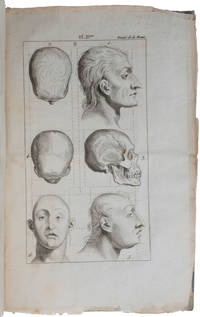
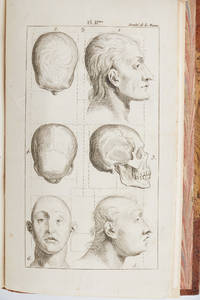
180166795The Textual Foundation of Psychiatry PINEL Philippe. TraitÈ mÈdico-philosophique sur lÃaliÈnation mentale ou la Manie.Avec figures reprÈsentant des formes de cr‚ne ou des portraits d'aliÈnÈs. Paris: Chez Richard Caille et Ravier An IX 1800/1801. First edition. Octavo. lvi 318 pp. Folding letterpress table between pp. 250 and 251 and two engraved plates. Contemporary French quarter mottled sheep over paste paper boards. Smooth spine ruled in gilt with gilt red morocco lettering label. Occasional very light spotting. Housed in a custom brown cloth clamshell. Overall a superb copy. ìPhilippe PinelÃs TraitÈ mÈdico-philosophique sur lÃaliÈnation mentale ou la manie which presented the textual foundation of psychiatry stands as the first great publication of the nineteenth century in clinical medicineî Grolier Medicine. ìIn October 1793 while serving as mÈdecin des infirmeries at BicÃtre Hospital Pinel 1745-1826 had the chains struck off from forty-nine male psychiatric patients in order to substitute for this cruel oppression his ëtraitement moraleà a humane form of psychiatric therapy that identified insanity with illness rather than moral perversity or demonic possession. This dramatic act performed in the liberating spirit of the American and French Revolutions found immediate and enduring favor in the popular imagination as a symbol of a new attitude toward the insane and ignited a general desire for more humane treatment of the mentally ill that culminated in the English non-restraint movement of the mid-nineteenth century. Yet humanitarian treatment of the insane although crucial to PinelÃs psychiatric work was not that workÃs sole focus for Pinel also devoted himself to establishing psychiatry as a scientifically based branch of medicine. His TraitÈ replaced the speculation and theorizing characteristic of earlier discussions of insanity with his own practical observations of the lunatics of the BicÃtre whose illnesses could now be observed undistorted by cruel treatment. He retained the old classifications of mental illness stating that contemporary medicine was as yet too primitive for more precise categories but did introduce some subdivisions isolating mania from delirium and recognizing the relationships between periodic mania melancholy and hypochondria. He recognized emotional disorders to be the main cause of intellectual dysfunction but also took into account heredity predisposition and hypersensitivity and attempted to find relationships between insanity and cranial deformityî Norman Library. Cushing P286. Garrison and Morton 4922. Grolier Medicine 54. Heirs of Hippocrates 668. Hunter & Macalpine pp. 602-610. Norman Library 1701. Waller 7456. Wellcome IV p. 388. HBS 66795. $3250 Chez Richard, Caille et Ravier hardcover books
180166795Paris: Chez Richard Caille et Ravier 1801. The Textual Foundation of Psychiatry<br> <br> PINEL Philippe. Traité médico-philosophique sur l'aliénation mentale ou la Manie.Avec figures représentant des formes de crâne ou des portraits d'aliénés. Paris: Chez Richard Caille et Ravier An IX 1800/1801.<br> <br> First edition. Octavo. lvi 318 pp. Folding letterpress table between pp. 250 and 251 and two engraved plates.<br> <br> Contemporary French quarter mottled sheep over paste paper boards. Smooth spine ruled in gilt with gilt red morocco lettering label. Occasional very light spotting. Housed in a custom brown cloth clamshell. Overall a superb copy.<br> <br> "Philippe Pinel's Traité médico-philosophique sur l'aliénation mentale ou la manie which presented the textual foundation of psychiatry stands as the first great publication of the nineteenth century in clinical medicine" Grolier Medicine.<br> <br> "In October 1793 while serving as médecin des infirmeries at Bicêtre Hospital Pinel 1745-1826 had the chains struck off from forty-nine male psychiatric patients in order to substitute for this cruel oppression his 'traitement morale' a humane form of psychiatric therapy that identified insanity with illness rather than moral perversity or demonic possession. This dramatic act performed in the liberating spirit of the American and French Revolutions found immediate and enduring favor in the popular imagination as a symbol of a new attitude toward the insane and ignited a general desire for more humane treatment of the mentally ill that culminated in the English non-restraint movement of the mid-nineteenth century. Yet humanitarian treatment of the insane although crucial to Pinel's psychiatric work was not that work's sole focus for Pinel also devoted himself to establishing psychiatry as a scientifically based branch of medicine. His Traité replaced the speculation and theorizing characteristic of earlier discussions of insanity with his own practical observations of the lunatics of the Bicêtre whose illnesses could now be observed undistorted by cruel treatment. He retained the old classifications of mental illness stating that contemporary medicine was as yet too primitive for more precise categories but did introduce some subdivisions isolating mania from delirium and recognizing the relationships between periodic mania melancholy and hypochondria. He recognized emotional disorders to be the main cause of intellectual dysfunction but also took into account heredity predisposition and hypersensitivity and attempted to find relationships between insanity and cranial deformity" Norman Library.<br> <br> Cushing P286. Garrison and Morton 4922. Grolier Medicine 54. Heirs of Hippocrates 668. Hunter & Macalpine pp. 602-610. Norman Library 1701. Waller 7456. Wellcome IV p. 388.<br> <br> HBS 66795.<br> <br> $3250. Chez Richard, Caille et Ravier unknown
180119588Paris: Richard Caille & Ravier 1801. FIRST EDITION. With 2 engraved plates and 1 folding table. Contemporary calf-backed marbled boards; spine gilt; a fine copy with an ownership signature on the half-title. First edition of what Garrison considered one of the foremost medical classics. Pinel 1745-1826 a Paris physician and founder of the French School of Psychiatry devoted his life to treatment of the insane. Shocked by inhumane conditions in mental institutions he dispensed with use of chains and placed his patients under the care of specially selected physicians. This classic work "located the origin of mental disease in pathological changes in the brain and gave great impetus to the humanitarian treatment of the insane" Heirs. G&M 4922. Richard, Caille & Ravier unknown
180189800Richard, Caille et Ravier | Paris 1801 (An IX) | 12.5 x 20.8 cm | 2 volumes reliés en 1
18015631Paris: Chez Richard Caille et Ravier 1801. First edition. <p>First edition of a landmark work on the treatment of the insane and mentally ill. "Pinel's psychiatric work effectively transformed the prison for the insane into a hospital. He did not merely initiate better treatment for the mentally ill however but rather concerned himself with establishing psychiatry as a discrete branch of medicine" DSB. "Pinel was among the first to treat the insane humanely; he dispensed with chains and placed his patients under the care of specially selected physicians" Garrison-Morton.</p>. A LANDMARK WORK ON PSYCHIATRY. <p>First edition of a landmark work on the treatment of the insane and mentally ill. It presented the textual foundation of psychiatry stands as the first great publication of the nineteenth century in clinical medicine and at the same time as one of the paradigmatic expressions of the medical and scientific revolution that was taking place in the late eighteenth and early nineteenth centuries. In 1793 Pinel newly appointed physician at the Bicêtre Hospital the Paris asylum for men ordered the chains and shackles removed from 49 patients an event commemorated at the time in paintings and popular prints in order to try his new more humane methods of treatment. He did the same for the female inmates of Salpêtrière when he became the director there in 1794. "Pinel's psychiatric work effectively transformed the prison for the insane into a hospital. He did not merely initiate better treatment for the mentally ill however but rather concerned himself with establishing psychiatry as a discrete branch of medicine . Pinel's classification of mental diseases retained the old divisions of such illnesses as manic melancholic demented and idiotic. He presented these classes with a disclaimer-it was necessary to retain them 'for the time being' since medicine was not advanced enough for subtler distinctions as late as 1812. He nevertheless made finer distinctions isolating mania from delirium and pointing out that in this state the intellectual functions might be intact and in his description of idiocy citing stupor the first stage of some types of mental disease. Pinel recognized the relationship between periodic mania and melancholy and hypochondria and stressed the danger of suicide by the melancholic patient. He also mentioned the possibility of altruistic homicide. In establishing the cause of mental illness Pinel was wary of 'metaphysical discussions or certain ideological ramblings' and he categorically rejected the notion of demonic possession or sorcery. Faithful to the doctrines of Locke and Condillac he considered emotional disorders to be the primary factor in precipitating intellectual dysfunctions; he also took into account heredity morbid predisposition and what he called individual sensitivity. Pinel's psychiatric therapeutics his 'traitement morale' represented the first attempt at individual psychotherapy. His treatment was marked by gentleness understanding and goodwill. He was opposed to violent methods-although he did not hesitate to employ the straitjacket or force-feeding when necessary. He recommended close medical attendance during convalescence and he emphasized the need of hygiene physical exercise and a program of purposeful work for the patient. A number of Pinel's therapeutic procedures including ergotherapy and the placement of the patient in a family group anticipate modern psychiatric care" DSB. "Pinel was among the first to treat the insane humanely; he dispensed with chains and placed his patients under the care of specially selected physicians" Garrison-Morton.</p> <br /> <p>"Pinel was born in the rolling hills of Jonquières France. He was the son and nephew of physicians. After receiving a degree from the faculty of medicine in Toulouse he studied an additional four years at the Faculty of Medicine of Montpellier. He arrived in Paris in 1778. Pinel did much to establish psychiatry formally as a separate branch of medicine. He made notable contributions to the classification of mental disorders and has been described by some as 'the father of modern psychiatry'. Pinel was also one of the first clinician who believed that medical truth was derived from clinical experience. Pinel considered migrating to America. In 1784 he became editor of the not very prestigious medical journal the Gazette de santé a four-page weekly. He was also known among natural scientists as a regular contributor to the Journal de physique. He studied mathematics translated medical works into French and undertook botanical expeditions.</p> <br /> <p>"At about this time he began to develop an intense interest in the study of mental illness. The incentive was a personal one. A friend had developed a 'nervous melancholy' that had 'degenerated into mania' and resulted in suicide. What Pinel regarded as an unnecessary tragedy due to gross mismanagement seems to have haunted him. It led him to seek employment at one of the best-known private sanatoria for the treatment of insanity in Paris. He remained there for five years prior to the Revolution gathering observations on insanity and beginning to formulate<br /> his views on its nature and treatment. Pinel was an Ideologue a disciple of the abbé de Condillac. He was also a clinician who believed that medical truth was derived from clinical experience. Hippocrates was his model. During the 1780s Pinel was invited to join the salon of Madame Helvétius. He was in sympathy with the French Revolution. After the revolution friends he had met at Madame Helvétius' salon came to power. In August 1793 Pinel was appointed 'physician of the infirmaries' at Bicêtre Hospital. At the time it housed about four thousand imprisoned men-criminals petty offenders syphilitics pensioners and about two hundred mental patients. Pinel's patrons hoped that his appointment would lead to therapeutic initiatives. </p> <br /> <p>"Pinel rejected the prevailing popular notion that mental illness was caused by demonic possession. He stated that mental disorders could be caused by a variety of factors including psychological or social stress congenital conditions or physiological injury psychological damage physical conditions and heredity. He observed and documented the subtleties and nuances of human experience and emotion. He identified predisposing psychosocial factors of mental ill such as an unhappy love affair domestic grief devotion to a cause carried to the point of fanaticism religious fears the events of the revolution violent and unhappy passions exalted ambitions of glory financial reverses religious ecstasy and outbursts of patriotic fervor. He noted that a state of love could turn to fury and desperation can cause mania or 'mental alienation'. He also spoke of avarice pride friendship bigotry and vanity.</p> <br /> <p>"Pinel proposed a new nonviolent approach to the care of mental patients came to be called moral treatment in the sense of social and psychological factors. He strongly argued for the humane treatment of mental patients including a friendly interaction between doctor and patient. His treatment was marked by gentleness understanding and goodwill. He was opposed to violent methods - although he did not hesitate to employ the straitjacket or force-feeding when necessary. Pinel expressed warm feelings and respect for his patients: 'I cannot but give enthusiastic witness to their moral qualities. Never except in romances have I seen spouses more worthy to be cherished more tender fathers passionate lovers purer or more magnanimous patriots than I have seen in hospitals for the insane'.</p> <br /> <p>"Pinel visited each patient often several times a day. He engaged them in lengthy conversations and took careful notes. He recommended close medical attendance during convalescence and he emphasized the need of hygiene physical exercise and a program of purposeful productive work for mental patients. He further contributed to the development of psychiatry through his establishment of the practice of maintenance and preservation of detailed case histories for the purpose of treatment and research. Pinel also made the introduction of hospital treatment doctor's rounds medical procedures unchained the insane. Pinel petitioned to the Revolutionary Committee for permission to remove the chains from some of the patients as an experiment and to allow them to exercise in the open air. When these steps proved to be effective he was able to change the conditions at the hospital and discontinue the customary methods of treatment which included bloodletting purging and physical abuse. In 1798 Philippe Pinel cut chains from the limbs of patients called 'madmen' at the Bicêtre Hospital a Parisian insane asylum emphasized the need of hygiene physical exercise and a program of purposeful productive work .</p> <br /> <p>"Soon after his appointment to Hôspital Bicêtre Pinel became interested in the seventh ward where 200 mentally ill men were housed. He asked for a report on these inmates. A few days later he received a table with comments from the 'governor' Jean-Baptiste Pussin 1745-1811. In the 1770s Pussin had been successfully treated for scrofula at Bicêtre; and following a familiar pattern he was eventually recruited along with his wife Marguerite Jubline on to the staff of the hospice. While at Bicêtre Pinel did away with bleeding purging and blistering in favor of a therapy that involved close contact with and careful observation of patients. Pinel visited each patient often several times a day and took careful notes over two years. He engaged them in lengthy conversations. His objective was to assemble a detailed case history and a natural history of the patient's illness.</p> <br /> <p>"In 1795 Pinel became chief physician of the Hospice de la Salpêtrière a post that he retained for the rest of his life. The Salpêtrière was at the time like a large village with seven thousand elderly indigent and ailing women an entrenched bureaucracy a teeming market and huge infirmaries. Pinel missed Pussin and in 1802 secured his transfer to the Salpêtrière. It has also been noted that a Catholic nursing order actually undertook most of the day-to-day care and understanding of the patients at Salpêtrière and there were sometimes power struggles between Pinel and the nurses. Pinel created an inoculation clinic in his service at the Salpêtrière in 1799 and the first vaccination in Paris was given there in April 1800.</p> <br /> <p>"In 1794 Pinel made public his essay 'Memoir on Madness' recently called a fundamental text of modern psychiatry. In 1798 Pinel published an authoritative classification of diseases in his Nosographie philosophique ou méthode de l'analyse appliquée à la médecine. Pinel's classification of mental disorder simplified Cullen's 'neuroses' down to four basic types of mental disorder: melancholia mania insanity dementia and idiotism. Later editions added forms of 'partial insanity' where only that of feelings which seem to be affected rather than reasoning ability. In his book Traité médico-hilosophique sur l'aliénation mentale; ou la manie published in 1801 Pinel discusses his psychologically oriented approach.</p> <br /> <p>"The central and ubiquitous theme of Pinel's approach to etiology causation and treatment was 'moral' meaning the emotional or the psychological not ethical. He observed and documented the subtleties and nuances of human experience and behavior conceiving of people as social animals with imagination. Pinel noted for example that: 'being held in esteem having honor dignity wealth fame which though they may be factitious always distressing and rarely fully satisfied often give way to the overturning of reason'. He spoke of avarice pride friendship bigotry the desire for reputation for conquest and vanity. He noted that a state of love could turn to fury and desperation and that sudden severe reversals in life such as 'from the pleasure of success to an overwhelming idea of failure from a dignified state - or the belief that one occupies one - to a state of disgrace and being forgotten' can cause mania or 'mental alienation'. He identified other predisposing psychosocial factors such as an unhappy love affair domestic grief devotion to a cause carried to the point of fanaticism religious fears the events of the revolution violent and unhappy passions exalted ambitions of glory financial reverses religious ecstasy and outbursts of patriotic fervor" Sushma et al.</p> <br /> <p>En français dans le texte 203; Garrison-Morton 4922; Grolier Medicine 54; Heirs of Hippocrates 1070; Hunter & Macalpine pp. 602-610; Waller 7456; Wellcome IV p. 388; Norman 1701. Sushma Meghamala & Tavaragi 'Moral treatment: Philippe Pinel' International Journal of Indian Psychology 3 2016 pp. 165-170.</p> <br/> <br/> 8vo 213 x 135mm pp. i-v vi-lvi 318 with printed folding table and two engraved plates. Uncut in original blue interim boards. A fine copy. Chez Richard, Caille et Ravier unknown
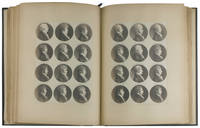
180189800Paris: Richard Caille et Ravier 1801. Fine. Richard Caille et Ravier Paris 1801 An IX 12.5 x 20.8 cm 2 volumes reliés en 1 Rare first edition illustrated with one table and two plates showing cranial shapes and portraits of the insane. See Garrison Morton 4922. En français dans le texte 203. Kelly p. 326. Foucault Histoire de la folie 523. Jan Goldstein Console and classify 65. Bariéty & Coury 882. Half calf binding with corners smooth spine decorated with gilt floral and ornamental motifs marbled paper boards marbled endpapers and pastedowns sprinkled edges; modern pastiche binding. Some foxing mainly affecting the second volume. Bound at the end of the volume is Jean-Etienne Esquirols ""Des Établissemens consacrés aux aliénés en France et des moyens de les améliorer. Mémoire présenté au ministre de l'Intérieur en septembre 1818"" published in Paris undated by Renouard 35 pp. On the verso of the title page: ""Cet opuscule est extrait de l'ouvrage que l'auteur publiera à la fin de janvier 1838 sous le titre: Des maladies considérées sous les rapports médical hygiénique statistique et médico-légal."" A rare offprint of the text that led to the adoption of the law of 30 June 1838 which established the creation of one psychiatric institution per department and made confinement subject to medical advice. ""This Mémoire to the Minister of the Interior on conditions in Hospitals and Prisons is one of the ablest and most influential documents in the history of administrative psychiatry"" Zilboorg & Henry p. 391 cited in Haskell F. Norman Library III 1062. A judicious pairing of two fundamental texts. Philippe Pinel was the great reformer of mental medicine: he was among the first to treat the insane humanely removing their chains and placing them under the care of carefully selected physicians. Garrison considered his book one of the foremost medical classics which gave a major impetus to the humanitarian treatment of the mentally ill. ""Ce traité . procède à la description d'une entité clinique à la codification du traitement moral de la folie à l'amorce de la définition et de la glorification de l'institution asilaire à la consécration de la psychiatrie comme discipline médicale à part entière . Il ouvre la voie à Broussais qui dans De l'irritation et de la folie en 1828 donnera une analyse pénétrante trop injustement décriée du fait mental élémentaire et à Esquirol élève favori de Pinel qui . achèvera la fondation de la psychiatrie moderne"". Cf. Serge Wasersztrum in: En français dans le texte. Michel Foucault also revealed another aspect of the new asylum system: ""L'asile de l'âge positiviste tel qu'on fait gloire à Pinel de l'avoir fondé n'est pas un libre domaine d'observation de diagnostic et de thérapeutique; c'est un espace judiciaire où on est accusé jugé et condamné et dont on ne se libère que par la version de ce procès dans la profondeur psychologique c'est à dire par le repentir. La folie sera punie à l'asile même si elle est innocentée au-dehors. Elle est pour longtemps et jusqu'à nos jours au moins emprisonnée dans un monde moral"". Richard, Caille et Ravier hardcover
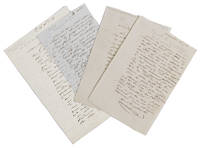
1837ABC_47451France 1837. Folded. 1 17.7 x 12 cm; 2 17.7 x 12 cm; 3 15.6 x 10 cm; 4 20.4 x 13.2 cm. All four letters written in French in an early 19th century cursive in brown ink. With the blind-stamped initials "H.B" in the top right corner of each letter. Including:1 Autograph letter from Hyacinthe de Bougainville to Gaspar baron Gourgaud.France Saturday 26 September 1835.2 Autograph letter from Hyacinthe de Bougainville to Madame Delpeche.France 25 March 1837.3 Autograph letter from Hyacinthe de Bougainville to a "Cher Ami".France 13 April 1838.4 Autograph letter from Hyacinthe de Bougainville to a "Cher Ami" and his best "Comrade".France 16 December 1845. Hyacinthe Bougainville 1781-1846 was a French naval officer son of the famous French Admiral and explorer Louis-Antoine Comte de Bougainville 1729-1811 who had circumnavigated the world in 1766-1779. Hyacinthe sailed around the world from 1824-1826 on board of the Thétis and the Espérance sent by the Minister of the Navy and the Colonies the Duc de Clermont-Tonnerre. It was virtually a diplomatic mission to Réunion Cochin-China Pondicherry in the Indian Ocean Manila and Macao. Hyacinthe returned across the Pacific and after anchoring at Port Jackson for three months he returned to France via Rio de Janeiro. Hyacinthe de Bougainville became Rear-Admiral in 1838.Ad 1: Autograph letter signed by Hyacinthe de Bougainville to Gaspar baron Gourgaud. Hyacinthe complained that he had heard nothing from him since their last "réunion gastronomique" 16 days earlier.Ad 2: Autograph letter signed by Hyacinthe de Bougainville to Madame Delpeche. She was the widow of François Delpeche an engraver who made a portrait of Hyacinthe's father Louis-Antoine de Bougainville in 1837.Ad 3: Autograph letter signed by Hyacinthe de Bougainville to a "Cher ami". He wrote that he had been presented by the Minister with some others that he didn't know to the King as an option for being made a contre admiral = Rear Admiral. "I am at the head of the list and if I stick to my titles I will be without worry ". He invokes his deeds since 1830 and says that he wants to retire "if I am not done justice; the name I bear does not allow me to serve any longer as a stepping stone for others". Three days before he was told that "le travail" was presented to the King and indeed his appointment followed the same year.Ad 4: Autograph letter signed by Hyacinthe de Bougainville to a "Cher ami" and his best "comrade". De Bougainville asks him a favour regarding the son-in-law of his "second" on the Thétis during his voyage around the globe in 1824-1826.All four letters with faint folding lines and pencil annotations; ads 2 and 4 with glue residue on the last leaf ad 2 with the remnants of a seal and a slight defect to the top corner of the last leaf where the letter was sealed and reopened. Overall in very good condition.l Howgego Encyclopaedia of Exploration 1800 to 1850 vol 2 B50. unknown
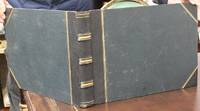
1890B7270No publisher info. circa 1890s to early 1900s. Some spotting mostly to early leaves some prints with imperfections in the plates else crisp and clean most with strong tonal range. . Binding: Half black morocco over navy pebbled boards. Spine with 3 pairs of raised bands. All edges gilt. Notes: Philip Adolphe Klier c.1845 – 1911 also known as Philip Klier was a German photographer who arrived in Burma as a young man around 1865 and spent the rest of his life there. Mainly working as self-trained photographer and businessman Klier took hundreds of photographs at the end of the 19th century during the British colonial period in Burma. His photographs taken both in his studio as well as on location were mainly sold as picture postcards for foreign visitors. They have also been published in several books and collected in public archives. Among a small number of other photographers Klier is considered as one of the earliest professional photographers in the history of today's Myanmar.<br>Jean Philippe Vogel 1871 in The Hague – 1958 popularly known by his initials J. Ph. Vogel was a Dutch Sanskritist and epigraphist who worked with the Archaeological Survey of India from 1901 to 1914 and later as Professor in the University of Leiden where some of his fonds are currently located.<br>George Craddock 1859-1934 was an Anglo-Indian photographer from Punjab. He worked in various cities throughout India eventually settling on his studio in Lahore where he died. <br>G.W. Lawrie was a Scottish photographer active from 1883 to 1921. He had a number of studios in India including in Lucknow. <br>CAPTIONS<br>1.Victoria Terminus G.I.P.R. Bombay<br>2.Public Works Dept. Bombay<br>3.Girgaum Road Bombay<br>4.Jama Musjid Delhi<br>5.Humayon’s Tomb Delhi<br>6.Peacock Throne Delhi<br>7.Dewan-i-Khas Delhi<br>8.Pearl Mosque Delhi<br>9.Justice Palace Delhi<br>10.Kutab Minar Delhi<br>11.Elephant Tower Fattehpore Sikri<br>12.The Great Gate Fattehpore Sikri <br>13.Marble Mausoleum or Sheik Selim Christi Futtehpore Sikri<br>14.General View of Futtehpore Sikri<br>15.Mausoleum of Prince Etmad Dowlat Agra<br>16.Khas Mahal Agra<br>17.Delhi Gate Agra Fort <br>18.Pearl Mosque Agra<br>19.Dewan-i-am Agra Fort<br>20.Taj Mahal<br>21.Tomb Taj Mahal<br>22.Zenana Agra Fort<br>23.Runjiet Singh’s Tomb Lahore<br>24.The Badshak Mosque Lahore<br>25.High Court Lahore<br>26.Museum Lahore<br>27.Shalimar Gardens Lahore <br>28.Public Works Dept. Lahore<br>29.Shadera <br>30.Dhal Canal entrance to Chenar Bagh Srinagar <br>31.Murrec <br>32.On the Canal to Chenar Bagh Srinagar <br>33.Old Mosque Srinagar<br>34.On the Jhelum Srinagar<br>35.Banyian Tree Botanical Gardens Calcutta <br>36.General View of Calcutta Showing Government House and High Court <br>37.Nath Temple at Manicktolla Calcutta <br>38.Mullicks Ghat Hooghly River <br>39.Bhotans <br>40.Darjeeling form Woodlands Hotel <br>41.Himalaya Range<br>42.Loop No. 3 Do. H. Ry. Chumbatti <br>43.Mussoorri<br>44.Naini Tal<br>45.Bhim Tal<br>46.Vishun Pud Benares <br>47.Golden Temple Benares <br>48.Hosainabad and City Lucknow<br>49.General view Hossainabad Lucknow <br>50.Roumi Darwara Lucknow<br>51.Chulunki Kaiserbagh Lucknow<br>52.Mosque of the Great Emambara Lucknow<br>53.The Mosque and Great Emambara Lucknow<br>54.The Residency Lucknow<br>55.The Bailey Guard Gate Lucknow<br>56.Sikandra Bagh Lucknow<br>57.Alum Bagh Lucknow <br>58.La Martiniere College Lucknow<br>59.Memorial Wall Cawnpore <br>60.Meenakshi Amman Temple no. 2216<br>61.Burma <br>62.Dilwana Jain Temple Mt. Nobu <br>63.Scene on the Shwe Dagon Pagoda Rangoon<br>64.Shwe Dagone Pagoda Rangoon<br>65.Scene on the Shwe Dagon Pagoda Rangoon<br>66.Ellora Caves<br>67.Prome Pagoda<br>68.Gaudmas Pagoda Rangoon<br>69.Large Image at Pegu<br>70.Royal Lakes Rangoon<br>71.Shayetmy <br>72.Mandalay the Palace<br>73.Burmese Hpongyees Collecting Alms<br>74.Mandalay Maha Lawka Maya Zain Pagoda <br>75.Jeppalamam Madma Kapaleeshwarar Temple<br>76.Seven Pagodas Madras<br>77.Seven Pagodas<br>78.High Court Madras<br>79.Temple and Tank Little Conjeevaram<br>80.Temple<br>81.Temple Johore<br>82.Temple<br>83.Temple Great Conjeevaram<br><br><br><br> Size: Oblong folio Illustration: Comprising of 83 fine albumen prints silver prints and/or printing-out-paper prints 5 loose mostly of India measuring 185 x 230 – 205 x 285 mm. Most captioned either in manuscript on the sheet mount some captioned on the plate. Some plates have the photographer’s stamp either embossed or printed within the plate. Last 9 sheets trimmed. A few plates mounted upside down. <br>Oblong folio 280 x 380 mm. Category: Book Asia Central India & Ceylon / Sri Lanka; Book Photographic Album; No publisher info. hardcover
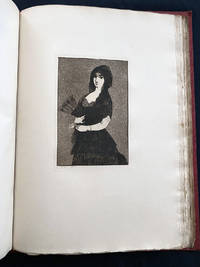
1869B-21-070026<p>Sonnets et Eaux-Fortes. A collection of 42 poems illustrated by 42 etchings published under the direction of Philippe Burty. Edition Alphonse Lemerre Paris 1869. Limited edition of 350 copies after the publication the plates for the etchings have been destroyed. <br />Rare edition with poems by Renaud Claudel Lemoyne Vacquerie and others and etchings by Manet Gustav Dore Corot Braquemond Hugo after and others the book is bounded in ornate red cover with gilded title at the center and spine. Etchings printed by Salmon. Very Good condition. Contact us for complete condition report.</p> Edition Alphonse Lemerre hardcover
1819143871819 Bruxelles, Editions du Nord, (18 novembre 1936), 2 vol. : - in-8° (254 x 187 mm) (texte) et in-folio (383 x 285 mm) (suites) plein maroquin prune, plat supérieur orné de la silhouette d'une femme nue filetée dorée, dos à nerfs, filets dorés sur les coupes et remplis, tête dorée, doublure bordée de maroquin orné dun jeu de 5 filets dorés, gardes et doubles gardes de même papier marbré, couvertures et dos conservés, sous étui bordé, de 191 pp. - (2) ff. (table et achevé dimprimer). - in-folio en œ maroquin prune à coins, dos à nerfs, filet doré bordant les plats, étui. Les deux reliures ont été exécutées par Georges Dubois d'Enghien.Dos insolés, beaux exemplaires par ailleurs
182265421822 Paris, Crapelet, Renouard, Lefèvre, 1822. 6 vol. gr. in-8: 15,5 x 24 cm. I/viii-494-[1] pp. + [7] pl. grav.; II/ [1] f., 554-[1] pp. + [6] pl. grav.; III/ [2] ff., 589-[1] pp., [6] pl. grav.; IV/ [2] ff., 466-[1] pp. [2] pl. grav.; V/ [2] ff., 543-[1] pp. + [4] pl. grav.; VI/ [2] ff., 579-[1] pp. + [2] pl. grav. Edition ornée de 5 portraits de lauteur dont un avant la lettre et de 11 figures dessinées par Laffitte et gravées par Ribault, Langlois, Delvaux, etc... en deux états dont un sur Chine monté, avant la lettre. Edition sur grand papier tirée à 100 exemplaires seulement. Celui-ci lun des 80 sur grand raisin vélin (n° 59). Superbes reliures de lépoque en plein maroquin rouge signées L. Claessens. Dos à 5 nerfs avec titre, tomaison, année et caissons richement décorés dentrelacs en doré. Plats ornés dun triple encadrement fleuronné aux angles. Tranches dorées. Larges roulettes intérieures. Gardes recouvertes de papier marbré. Quelques rousseurs sur les gravures. Mors supérieur du premier volume légèrement fendu et coin supérieur frotté, sinon ensemble en excellent état et de très belle présentation.
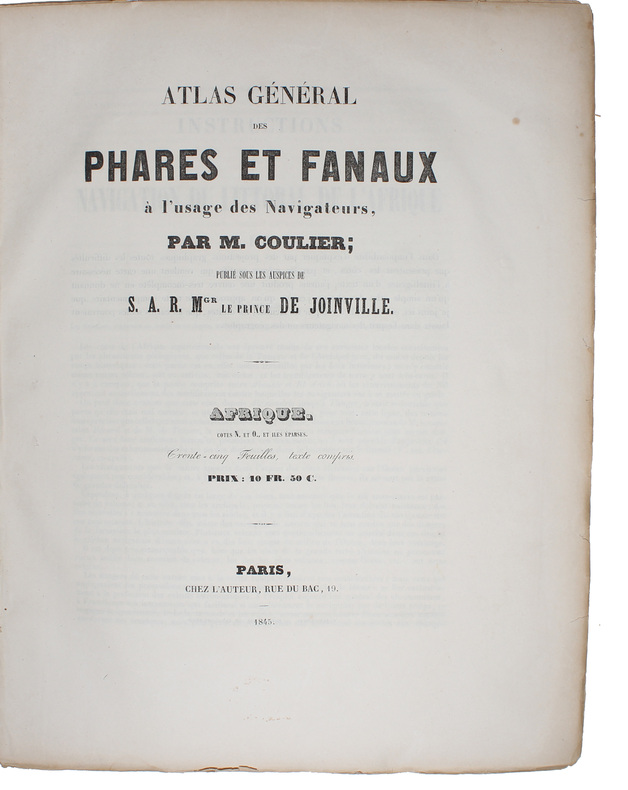
184458482Paris, Chez l'Auteur - Saint-Petersburg, Issakoff, 1844-48. Small folio. (35 x 27 cm.). In a worn contemp. hcalf. Spine cracked and broken. Boards detached. All parts stitched, a few loose. All parts uncut and unopened. All parts clean and fine. Each part separately paginated and with own title-page. Text to each part (from 8-12 pp.). Each part having a large folded engraved general map and from 11 to 27 engraved folio-maps. In all 292 textpages and 441 engraved maps.
184458482Paris Chez l'Auteur - Saint-Petersburg Issakoff 1844-48. Small folio. 35 x 27 cm. In a worn contemp. hcalf. Spine cracked and broken. Boards detached. All parts stitched a few loose. All parts uncut and unopened. All parts clean and fine. Each part separately paginated and with own title-page. Text to each part from 8-12 pp. Each part having a large folded engraved general map and from 11 to 27 engraved folio-maps. In all 292 textpages and 441 engraved maps. <br/><br/><em>The parts volumes comprises: 1. Turquie. 2. Afrique. 3. Grèce et Iles Ioniennes. 4. Portugal. 5. Mer des Indes 1ere Division. 6. Autriche Mer Adriatique. 7. Espagne Cotes N. Mer de Biscaye. 8. Espagne Mer Méditerranée. 9. Sardaigne. 10. Brésil. 11. Amérique Équatoriale Colonies européennes 1re Section. 12. Amérique Équatoriale et Continentale. 13. Prusse. 14. Russie Mer Blanche. 15. Russie Mer Baltique. 16. Russie Mer Noire. 17. Norvège. 18. Suéde. 19. Deux Siciles 1re Section. 20. Deux Siciles 2e Section. 21. Danemarck. 22. Hanovre. 23. Pays-Bas. </em> hardcover
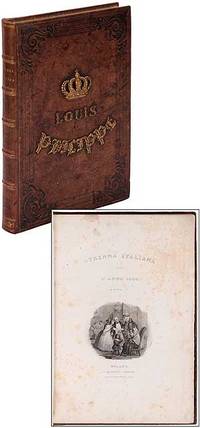
1838339910Milano: P. Ripamonti Carpano 1838. Hardcover. Very Good. First edition. Text in Italian. Quarto. pp. iv 280 4. With 7 engraved plates frontispiece title page and five plates in text. Bound in contemporary mottled calf gilt spine and turn-ins white silk moiré endpapers all edges gilt. An impressive armorial binding of King Louis Philippe I of France with his crown and name in an ornate metal relief design affixed to the front board. Professionally re-jointed with the original binding fully preserved modest chipping to the edges of the front free endpaper and fly leaf scattered foxing very good. The Strenna Italiana was a popular literary gift annual of Italian poetry and prose: this copy was likely given by Louis Philippe as a gift to an important political ally personal friend or dignitary. A scarce unique copy intended to display Louis Philippe's armorial binding conspicuously on a tabletop. P. Ripamonti Carpano hardcover
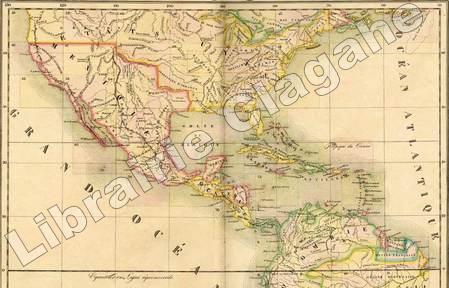
18279452Bruxelles, PMG Vandermaelen éditeur, 1827 ; cinq tomes (Europe, Asie, Afrique, Amérique Septentrionale, Amérique Méridionale), in-folio atlantique (52,5 x 36 cm) ; demi-veau havane à petits coins verts, dos à faux-nerfs dorés, palette décorative dorée en tête et en pied, titre doré, tranches marbrées (reliure uniforme de l'époque) ; 1- Europe : (4), 43 pp., (1) p., tableau comparatif des principales hauteurs du globe (illustré en couleurs), carte d'assemblage de l'Europe et 29 cartes doubles. 2- Asie : (6) pp., carte d'assemblage de l'Asie et 111 cartes doubles. 3- Afrique : (4) pp., tableau d'assemblage de l'Afrique et 60 cartes doubles. 4- Amérique Septentrionale : (4), tableau d'assemblage et tableau provisoire d'assemblage d'une partie de l'Amérique Seple et d'une partie de l'Amérique Méridionale et 77 cartes doubles. 5- Amérique Méridionale : (4), carte d'assemblage d'Amérique Méridionale et 44 cartes doubles. Toutes les cartes sont en couleurs à quelques rares exceptions près et montées sur onglets.
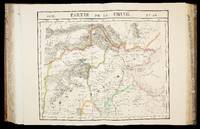
182715962Brussels 1827. 540 by 410mm. 21.25 by 16.25 inches. 6 volumes. Folio 6 letterpress half-titles and title-pages dedication leaf 42 pages of text 'Statistique de l'Europe' 7 lithographed index maps one of comparative heights with contemporary hand-colour in full and 382 numbered double-page maps by Henri Ode with contemporary hand-colour in outline some very occasional spotting; contemporary half tree calf drab paper boards some wear. The maps in the atlas make up the first map of the world on a uniform scale constructed as a modified conical projection and if assembled forming a globe with a diameter of 7.75 metres although only one such was known to have been made by the author himself and requiring a specially designed room. "Philippe Vandermaelen was born in Brussels in 1795 the son of a rich soap manufacturer. After his father's death in 1816 he devoted himself to maps and eleven years later produced this quite remarkable atlas. It was totally at his own expense and like so many innovations in the past it came about through the single-minded efforts of a man who could afford failure. It offered the largest picture of the earth's surface available in the nineteenth century thereby giving the lesser known areas such as Australia South Africa and the West coast of America all developing countries a much greater coverage than before. And perhaps most importantly of all it was the first atlas to be produced by lithography" Wardington Catalogue. cf. Koeman III Vdm 1; NMM 3:179; Philips Atlases 749 hardcover