4 581 résultats
194868854Les actes des apôtres | Paris 1948 | 14.50 x 19.50 cm | broché
193382382Denoël & Steele | Paris 1933 | 12 x 19 cm | relié
196977796Sous étui-chemise signés elbel libro. Non coupé.
196970367Gallimard | Paris 1969 | 14.50 x 20.50 cm | broché
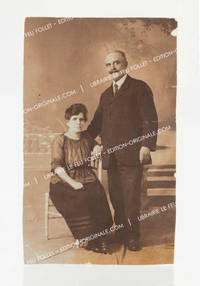
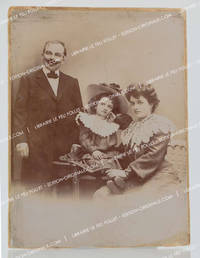
190076037Paris: A. Lauga 1900. Fine. A. Lauga Paris s. d. ca 1900 14.20 x 10.50 cm une photographie Photographic portrait of Charles Destouches uncle of Louis-Ferdinand Céline pictured with his wife and their young daughter Charlotte DestouchesCélines cousin known as Lolotteon albumen paper mounted on a card from the Parisian studio A. Lauga. Small loss to lower right corner. Some glue residue along the edges. Handwritten caption on verso. The bohemian life of Uncle Charles Destouches inspired the character of Uncle Arthur in Death on Credit: Il a vécu en vrai bohème en marge de la société dans une soupente en cheville avec une bonniche. Elle travaillait au restaurant devant l'École Militaire. Grâce à ça il faut en convenir il arrivait à bien bouffer. Arthur c'était un luron avec barbiche velours grimpant tatanes en pointe pipe effilée. Il s'en faisait pas. Il donnait fort dans la 'conquête'. But the tragic true story of the death of his wife Joséphinealso shown in the photographclaimed by cholera despite the care of Dr. Proust Marcels brother reappears in the character of Uncle Rodolphe. By blending the lives of two of his uncles Céline gives Rodolphe the simple-mindedness of René and the grief of Charles Destouches who loses his mind after the death of his tubercular wife: Elle est morte dans sa chambre même au 'Rendez-vous'. Il voulait pas qu'on l'emmène. Il avait bouclé sa lourde. Il revenait chaque soir coucher à côté. C'est à l'infection qu'on s'est aperçu. Il est devenu alors furieux. Il comprenait pas que les choses périssent. C'est de force qu'on l'a enterrée. Il voulait la porter lui-même sur 'un crochet' jusqu'à Pantin. . 'Bonjour ! qu'il me faisait. Bonjour mon petit fi !. Tu la vois hein ma Rosine'.' Il me désignait plus loin que la Seine toute la plaine. un point dans la brume. 'Tu la vois' Je lui disait 'Oui'. Je le contrariais pas. A. Lauga unknown
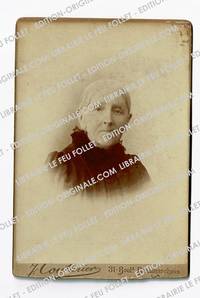
190075325Paris: J. Couturier 1900. Fine. J. Couturier Paris s. d. ca 1900 10.30 x 15.50 cm une photographie au format carte cabinet Photographic portrait of Hermance Delhaye Destouches 1830-1869 paternal grandmother of Louis-Ferdinand Céline in cabinet card format on albumen paper mounted on cardboard from J. Couturier studio. Cardboard slightly trimmed at lower margin. Handwritten caption on verso. A bourgeoise of Flemish origin Céline's grandmother married Auguste Destouches in 1860 and had five children. Upon the premature death of her husband in 1874 at the age of thirty-nine the provincial Hermance tried her luck in Paris with Amélie Céline's aunt where she squandered her fortune and ended up being kept thanks to her daughter's demi-mondaine lifestyle. In Mort à crédit Céline borrows her second name Caroline for the character of the grandmother who runs the antique shop on rue Montorgueil. This aspect of the character however relates to the shopkeeper life of his maternal grandmother Céline Guillou whose first name served as the writer's pen name. J. Couturier unknown
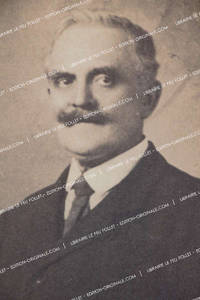
1920760201920. Fine. circa 1930 12.50 x 17.80 cm Rare photographic portrait of René Destouches uncle of Louis-Ferdinand Céline. Photographic enlargement in a probably later printing. Inscription ""René Destouches"" on the back. René Destouches remained employed all his life in various menial jobs following a serious fall from the top of the cliff at Sainte-Adresse. Céline devoted passages to him in Mort à crédit under the features of uncle Rodolphe: ""Mais le plus cloche de la famille c'était sûrement l'oncle Rodolphe il était tout à fait sonné. Il se marrait doucement quand on lui parlait. Il se répondait à lui-même. Ça durait des heures. Il voulait vivre seulement qu'à l'air. Il a jamais voulu tâter d'un seul magasin ni des bureaux même comme gardien et même de nuit. Pour croûter il préférait rester dehors sur un banc. Il se méfiait des intérieurs. Quand vraiment il avait trop faim alors il venait à la maison. Il passait le soir. C'est qu'il avait eu trop d'échecs. La ""bagotte"" son casuel des gares c'était un métier d'entraînement. Il l'a fait pendant plus de vingt ans. Il tenait la ficelle des ""Urbaines"" il a couru comme un lapin après les fiacres et les bagages aussi longtemps qu'il a pu."" ""But the most cracked in the family was surely uncle Rodolphe he was completely punch-drunk. He would laugh quietly when you spoke to him. He would answer himself. It would go on for hours. He only wanted to live in the open air. He never wanted to try a single shop or offices even as a watchman and even at night. To get by he preferred to stay outside on a bench. He was wary of interiors. When he was really too hungry then he would come to the house. He would come by in the evening. It's because he had had too many failures. The 'bagotte' his casual work at the stations it was a training job. He did it for more than twenty years. He held the string of the 'Urbaines' he ran like a rabbit after the cabs and the luggage as long as he could."" unknown
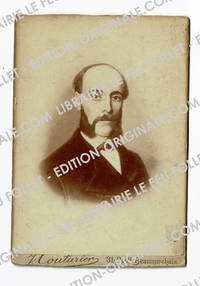
190075327Paris: J. Couturier 1900. Fine. J. Couturier Paris s. d. ca 1900 10.30 x 15.50 cm une photographie au format carte cabinet Photographic portrait of Auguste Destouches paternal grandfather of Louis-Ferdinand Céline after a painting of the period in cabinet card format on albumen paper mounted on cardboard from J. Couturier studio. Cardboard slightly trimmed at lower margin. Handwritten caption on verso. The literature professor from Le Havre is among the recurring characters in Céline's works; this model whose career as an agrégé long resonated with the aspiring writer is powerfully evoked in the preface to Guignol's band 1944: « Faut que je vous avoue mon grand-père Auguste Destouches par son nom qu'en faisait lui de la rhétorique qu'était même professeur pour ça au lycée du Havre et brillant vers 1855. C'est dire que je me méfie atroce ! Si j'ai l'inclination innée ! Je possède tous ses écrits de grand-père ses liasses ses brouillons des pleins tiroirs ! Ah ! redoutables ! Il faisait les discours du Préfet je vous assure dans un sacré style ! Si il l'avait l'adjectif sûr ! s'il la piquait bien la fleurette ! Jamais un faux pas ! Mousse et pampre ! Fils des Gracques ! la Sentence et tout ! En vers comme en prose ! Il remportait toutes les médailles de l'Académie Française. Je les conserve avec émotion. C'est mon ancêtre ! Si je la connais un peu la langue et pas d'hier comme tant et tant ! Je le dis tout de suite ! dans les finesses ! J'ai débourré tous mes ""effets"" mes ""litotes"" et mes ""pertinences"" dedans mes couches. Ah ! j'en veux plus ! je m'en ferais crever ! Mon grand-père Auguste est d'avis. Il me le dit de là-haut il me l'insuffle du ciel au fond. ""Enfant pas de phrases !."" » ""I must confess to you about my grandfather Auguste Destouches by name who practiced rhetoric who was even a professor for that at the Le Havre lycée and brilliant around 1855. That's to say I'm terribly wary! If I have the innate inclination! I possess all my grandfather's writings his bundles his drafts whole drawers full! Ah! formidable! He wrote the Prefect's speeches I assure you in a hell of a style! How sure he was with his adjectives! how well he turned a phrase! Never a false step! Moss and vine! Sons of the Gracchi! the Sentence and all! In verse as in prose! He won all the medals of the French Academy. I keep them with emotion. He's my ancestor! If I know the language a bit and not since yesterday like so many others! I say so right away! in the subtleties! I've purged all my 'effects' my 'litotes' and my 'pertinences' in my diapers. Ah! I want no more of it! It would kill me! My grandfather Auguste agrees. He tells me so from above he breathes it into me from heaven deep down. 'Child no phrases!.'"" Guignol's band Denoël 1944 J. Couturier unknown
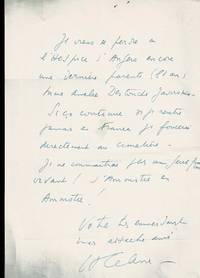
195076172s. l. Klarskovgaard 1950. Fine. s. l. Klarskovgaard 8 décembre 1950 21 x 34 cm 2 pages sur un feuillet Autograph letter signed partly unpublished by Louis-Ferdinand Céline addressed to his lawyer Maître Thorvald Mikkelsen. Two pages written in blue ink on a large sheet of white paper; numbered 575 in Célines hand in red pencil at the top left corner. Fold marks from mailing. This letter was only partially transcribed in Année Céline 2005 p. 64. A moving and bitter letter by Céline who had just lost his aunt Amélie the Aunt Hélène of Death on Credit and witnesses the slow disappearance of the world he once knew. The writer finds solace in the memoirs of Élisabeth de Gramont another witness to a bygone era. From his Danish exile Céline learns with sorrow of the death of his Aunt Amélie the last surviving member of the Destouches family: Je viens de perdre à l'hospice d'Angers encore une dernière parente. Although he had not spared his alter ego in Death on Creditthe scandalous Aunt Hélène meets a shameful end trailed by suitors lovers or clientshe recalls: À Saint-Pétersbourg elle est devenue grue. . Elle est venue nous voir au Passage deux fois de suite frusquée superbe comme une princesse et heureuse et tout. Elle a terminé très tragiquement sous les balles dun officier. The real Aunt Amélie had settled in Romania married to a diplomat Zenon Zawirski. Unfortunately reality caught up with fiction: she returned to Paris in utter destitution at the age of 80. Céline arranged for her transfer from the hospice of the Little Sisters of the Poor in Breteuil to the hospital in Angers where she died in December 1950 Que la pauvre femme meure gentiment. Assez de fins tragiques dans la famille ! he had written to Dr. Camus on 11 July 1949. His secretary Marie Canavaggia met her before her arrival in Angers: elle avait par moments des gestes et des expressions qui en éclairs me rappelaient son neveu 13 July 1949. With the last of his family gone Céline reflects on his own end: si ça continue si je rentre jamais en France je foncerai directement au cimetière. Devouring the books his lawyer sent to ease the burden of exile Céline describes his current readings: Le Temps des équipages by Élisabeth de Gramont est un des livres fameux parus vers 1920 ! Lun des « Guides des Snobs » les mieux réussis de lÉpoque. It is striking to imagine Céline delighting in this aristocrats social chronicle so alien to his world: Javais un ami Carré de Rennes étudiant en droit qui lavait appris par cur ! . il sen est établi marchand de tableaux. As a young medical student Céline had indeed crossed paths with Louis Carré later a successful Parisian art dealer who exhibited Paul Klee Juan Gris Le Corbusier and Picasso: il y a fait 10 fois fortune ! Preuve que tous les livres ne sont pas déprimants ! In 1947 pursued by French justice for his collaborationist stance Céline took refuge in Denmark. In May 1948 accompanied by Lucette and Bébert he arrived at the home of his lawyer Maître Thorvald Mikkelsen in Klarskovgaard. Mikkelsen owned a large estate on the Baltic Sea and welcomed the exiled writer to stay. On 21 February 1950 as part of the post-war purge Céline was definitively sentenced in absentia by the Civic Chamber of the Paris Court of Justice to one year in prison for collaboration a sentence already served in Denmark. Raoul Nordling the Swedish consul general in Paris intervened on his behalf with Gustav Rasmussen the Danish Foreign Minister successfully delaying his extradition. On 20 April 1951 Jean-Louis Tixier-Vignancour his lawyer since 1948 obtained Célines amnesty as a severely disabled veteran of the Great War submitting the case under the name Louis-Ferdinand Destouches without the magistrates making the connection. Céline left Denmark that summer after three years spent in his lawyers home. unknown
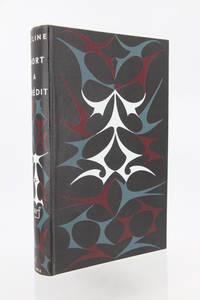
195287808Paris: Gallimard 1952. Fine. Gallimard Paris 1952 14.50 x 22 cm reliure de l'éditeur ENGLISH DESCRIPTION ON DEMAND Première édition Gallimard un des 750 exemplaires numérotés sur vélin labeur seul tirage en grand papier. Cartonnage d'après la maquette originale de Paul Bonet. Dos légèrement pincé en tête et en queue. Bel exemplaire du plus rare des titres de Louis-Ferdinand Céline en cartonnage Bonet. Gallimard unknown
14265Paris, Gallimard, 1960. In-8, 461 pp., broché, sous couverture imprimée. Couverture un peu cornée, pliure sur le deuxième plat, décharges de scotch sur les pages de garde, rousseurs sur les tranches, rares sur les pages.
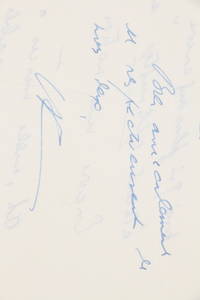
1952bf5510Gallimard Coups de coeur de Bernard Broché 1952 BEL ENVOI PLEINE-PAGE AUTOGRAPHE DE CELINE. PAS DE GRAND PAPIER MAIS NOTRE EXEMPLAIRE EST UN SERVICE DE PRESSE. In-12 (12 x 19 cm), broché, 132 pages, réédition de Gallimard en 1952 (l'originale date de 1937), ce texte est en fait la thèse de Céline qu'il a soutenue à Rennes en 1924 ; l'exemplaire est un service de presse sans grand papier ; l'envoi autographe pleine-page de l'auteur fait référence à un confrère: « A notre cher confrere Athimon qui [xxx?] tous les secours de sa science et toute son amitié Bien affectueusement Celine» envoi signé et intéressant, on comprend que le destinataire aurait alors aidé Céline lors de la rédaction de sa thèse; dos et bord du 2eme plat insolés, intérieur frais, très bon état par ailleurs. Notre ouvrage est protégé par une pochette velours. Livraison a domicile (La Poste) ou en Mondial Relay sur simple demande.
195445175Gallimard | Paris 1954 | 14.50 x 20.50 cm | broché
202281478Gallimard | Paris 2022 | 14.50 x 21.50 cm | broché
199832624Gallimard | Paris 1998 | 17.50 x 22.50 cm | broché
199864950Gallimard | Paris 1998 | 17.50 x 22.50 cm | broché
199184276Gallimard | Paris 1991 | 17.50 x 23 cm | broché
199887810Gallimard | Paris 1998 | 17.50 x 22.50 cm | broché
196978263Gallimard | Paris 1969 | 14.50 x 20.50 cm | broché
193687524Nrf | Paris 1936 | 12 x 19 cm | broché
195291740Gallimard | Paris 1952 | 13.6 x 22 cm | Reliure de l'éditeur
1920760211920. Fine. circa 1930 8.40 x 13.30 cm Rare photographic portrait of René Destouches uncle of Louis-Ferdinand Céline accompanied by his wife Pauline Dauteville. Vintage gelatin silver print. Inscription ""M. et Mme Destouches"" ""Mr. and Mrs. Destouches"" on verso. One small corner loss and minimal creasing. René Destouches brother of Fernand Destouches married Pauline Dauteville with whom he had two children. Céline borrowed his moonstruck character inherited from a fall from the cliffs of Sainte-Adresse ""il était tout à fait sonné. Il se marrait doucement quand on lui parlait. Il se répondait à lui-même"" ""he was completely dazed. He would laugh softly when spoken to. He would answer himself"" and the hard labor he endured throughout his life for the character of Uncle Rodolphe in Death on the Installment Plan. To darken the picture even further Céline probably lent Uncle Rodolphe elements from the life of another of his uncles Charles Destouches whose wife had disappeared tragically at the age of twenty-eight: ""Une pauvre malheureuse elle crachait déjà ses poumons. Ça a pas duré trois mois"" ""A poor unfortunate woman she was already coughing up her lungs. It didn't last three months"" Death on the Installment Plan Denoël & Steele 1936. unknown
195080910s. l. Klarskovgaard 1950. Fine. s. l. Klarskovgaard 17 novembre 1950 21 x 34 cm 2 pages sur un feuillet Autograph letter signed with the initials of Louis-Ferdinand Céline addressed to his lawyer Master Thorvald Mikkelsen. Two pages written in blue ink on a large sheet of white paper; number ""568"" in Céline's hand in red pencil at the top left. Transversal folds inherent to mailing. This letter was very partially transcribed in Année Céline 2005. Early November 1950 Gaby Paul had come to visit Céline and Lucette at Klarskovgaard: ""Oh mille mercis à Mme Christensen pour son aimable repas qui réchauffé fit nos délices ! Et puis aussi gratitudes pour tout le soin qu'elle a pris de Mme Gen Paul !. Laquelle ne donne aucune nouvelle. Quelle vacherie encore . Comme c'est amusant ! Je crois qu'elle avait des projets ""journalistiques"" mais que mon attitude l'a désenchantée. """"Oh a thousand thanks to Madame Christensen for her kind meal which reheated was our delight! And also gratitude for all the care she took of Mme Gen Paul!. Who gives no news. What nastiness again. How amusing! I believe she had 'journalistic' projects but my attitude disenchanted her."" Céline also mentions the Swedish writer Ernst Bendz one of the few to defend Céline alongside Paraz: ""Une lettre amusante de Bendz ! Bendz appartient vraiment à l'aristocratie des esprits ! La preuve ! La façon qu'il ""m'estime""!!!""""An amusing letter from Bendz! Bendz truly belongs to the aristocracy of minds! The proof! The way he 'esteems me'!!!"" In 1947 Céline pursued by French justice for his collaborationist involvement was confined in Denmark. It was in May 1948 accompanied by Lucette and Bébert that he arrived at his lawyer Master Thorvald Mikkelsen's home at Klarskovgaard. The latter owned a large property by the Baltic Sea and invited the exile to stay there. On February 21 1950 as part of the épuration the writer was definitively sentenced in absentia by the civic chamber of the Paris Court of Justice for collaboration to one year of imprisonment which he had already served in Denmark. The Swedish Consul General in Paris Raoul Nordling intervened on his behalf with Gustav Rasmussen Danish Foreign Minister and managed to delay his extradition. On April 20 1951 Jean-Louis Tixier-Vignancour his lawyer since 1948 obtained Céline's amnesty under the title of ""severely disabled veteran of the Great War"" by presenting his file under the name Louis-Ferdinand Destouches without any magistrate making the connection. Céline would leave Denmark the following summer after three years spent at his lawyer's home. unknown
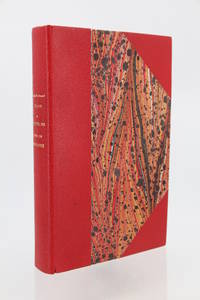
193787022Paris: Denoël 1937. Fine. Denoël Paris 1937 14.50 x 22.50 cm relié First edition one of 440 numbered copies on alfa paper. Half-shagreen binding with morocco corners in red smooth spine marbled paper boards combed paper endpapers and pastedowns covers and spine preserved top edge gilt binding signed by Montécot. Some foxing mainly at the beginning of the volume. A handsomely bound copy. Denoël hardcover
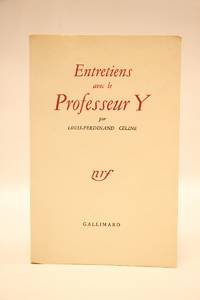
195574210Paris: Gallimard 1955. Fine. Gallimard Paris 1955 12 x 19 cm broché First edition one of 85 numbered copies on pur fil deluxe copies after 36 on Holland paper. Handsome copy. The first part of Féerie pour une autre fois having failed to achieve the expected success Céline wished to surround the release of the second part - Normance - with maximum publicity and restore his reputation after his years of exile in Germany and Denmark. Wishing to distance himself from the solemn form of the publisher's slip he proposed to Gaston Gallimard this eulogy written in the manner of an imaginary interview between himself and Professor Y alias Colonel Réséda a prostatic old man. The text of this zany « interviouwe » would be published in several parts in the Nouvelle Revue française in 1954 before appearing in volume form in 1955. The writer speaks with fervor about his style his conception of literature and vehemently criticizes the literary world and public taste. Gallimard unknown