Thomas CarlyleBiblio.com
4 251 résultats
A9781498096096Paperback / softback. New. paperback
ria9781017825435_inpHardcover. New. New Book; Fast Shipping from UK; Not signed; Not First Edition; N/A hardcover
ria9783368305819_inpHardcover. New. New Book; Fast Shipping from UK; Not signed; Not First Edition; Reproduction of the original. hardcover
ria9783375153366_inpPaperback. New. New Book; Fast Shipping from UK; Not signed; Not First Edition; Reprint of the original first published in 1858. paperback
ria9783375153373_inpHardcover. New. New Book; Fast Shipping from UK; Not signed; Not First Edition; Reprint of the original first published in 1858. hardcover
19009155J28-2: George Bell and Sons. Very Good in Good dust jacket. 1900. Limited Edition. Hardcover. Limited edition one of 500 copies . George Bell and Sons hardcover
0877543526New. New. Satisfaction Guaranteed or your money back. unknown
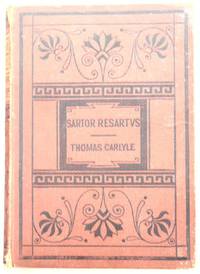
1892GB001TOABGOI5N01Thomas Y Crowell 1892. Hardcover. Acceptable. Missing dust jacket; Readable copy. Pages may have considerable notes/highlighting. ~ ThriftBooks: Read More Spend Less.Dust jacket quality is not guaranteed. Thomas Y Crowell hardcover
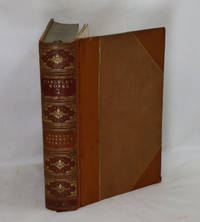
1858FB9041 /6A<p>Tan calf spine with brown title plate raised banding gilt decoration and title. Tan cloth boards. Part of the Standard edition. <strong>Bound by Bickers & Son</strong>. Leicester.</p><p>A great book both in content and presentation. For conditions please view our photographs. Sartor Resartus 1833–34 and On Heroes Hero-Worship and the Heroic in History 1841 are major 19th-century works by Thomas Carlyle exploring philosophy social critique and historical leadership . Sartor Resartus uses a satirical "Philosophy of Clothes" to discuss existence while On Heroes presents a six-lecture series championing the "Great Man" theory. Together they represent a move away from 18th-century rationalism toward a Romantic transcendentalist and ultimately a "reactionary" worldview that emphasized spiritual organic and authoritarian leadership over mechanical democratic or utilitarian progress. On Heroes Hero Worship and the Heroic in History is a timeless masterpiece by Thomas Carlyle a renowned Scottish historian philosopher and writer. The book which is a series of six lectures by Thomas Carlyle was published in 1841 and to date it remains a classic exploration of the concept of heroism and its place in human history. Carlyle's work is a captivating analysis through a series of six essays on how heroes have influenced history. He argues heroic figures have played a critical role in shaping human events. Through his insightful analysis Carlyle provides readers with a unique perspective on the power of heroism and its ability to inspire and transform societies. In this thought-provoking book Carlyle explores the lives of several historical figures. They include Odin Luther Cromwell and Napoleon. He shows how their heroic actions and ideals have had a lasting impact on society. Carlyle's vivid descriptions and passionate prose make this a fascinating read for anyone interested in history philosophy or human nature. He also delves into the psychological and spiritual aspects of hero worship and its role in shaping human identity and culture. Thomas Carlyle 4 December 1795 – 5 February 1881 was a Scottish essayist historian and philosopher. Known as the "sage of Chelsea" his writings strongly influenced the intellectual and artistic culture of the Victorian era. Carlyle was born in Ecclefechan a village in Dumfriesshire Scotland. He attended the University of Edinburgh where he excelled in mathematics and invented the Carlyle circle. After finishing the arts course he prepared to become a minister in the Burgher Church while working as a schoolmaster. He quit these and several other endeavours before settling on literature writing for the Edinburgh Encyclopædia and working as a translator. He initially gained prominence in English-language literary circles for his extensive writing on German Romantic literature and philosophy. These themes were explored in his first major work a semi-autobiographical philosophical novel entitled Sartor Resartus 1833–34. Carlyle eventually relocated to London where he published The French Revolution: A History 1837. Its popular success made him a celebrity prompting the collection and reissue of his earlier essays under the title of Miscellanies . His subsequent works were highly regarded throughout Europe and North America including On Heroes 1841 Past and Present 1843 Cromwell's Letters 1845 Latter-Day Pamphlets 1850 and Frederick the Great 1858–65. He founded the London Library helped to establish the National Portrait Galleries in London and in Edinburgh became Lord Rector of the University of Edinburgh in 1865 and received the Pour le Mérite in 1874 amongst other honours. Carlyle occupied a central position in Victorian culture being considered the "undoubted head of English letters" and a "secular prophet". Posthumously a series of publications by his friend James Anthony Froude damaged Carlyle's reputation provoking controversy about his personal life and his marriage to Jane Welsh Carlyle in particular. His reputation further declined in the aftermaths of the First World War and the Second World War when his philosophy was seen as a precursor of both Prussianism and fascism. Growing scholarship in the field of Carlyle studies since the 1950s has improved his standing and although little-read today he is yet recognised as "one of the enduring monuments of English literature".</p> Chapman & Hall. hardcover
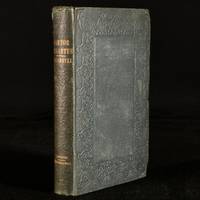
1871FB9448 /11<p>Brown cloth binding with gilt and black title on the spine and front board. We provide an in-depth photographic presentation of this item to stimulate your feeling and touch. More traditional book descriptions are immediately available </p><p>The Life and Opinions of Herr Teufelsdrockh in Three Books. This is a rare fair to good copy providing Carlyle's quality revisions to his original draft. All in all a very worthwhile edition though a difficult to read for those with a little understanding of Hegel. In the publisher's original brick red cloth covered boards blocked and lettered. The work is in part a parody of Hegel and of German Idealism more generally Carlyle had difficulty finding a publisher for the novel and began composing it as an article in October 1831 in Fraser's serialised Magazine in 1833-1834. The text would first appear in book form in Boston in 1836 its publication arranged by Ralph Waldo Emerson who much admired the book and also Carlyle. Emerson's savvy dealing with the overseas publishers would ensure Carlyle received high compensation which the novel did not attain in Britain which was first published in London in 1838. Reviews: Written by Carlyle in the 1830's this is a slightly odd novel that sort of straddles several genres. The central metaphor is clothes: the old ones tattered and needing to be torn off and replaced with new ones a startlingly radical thing to say at a time of national disturbance and civil strife and the need for people to trust tailors learn to distinguish what clothes are important and what not metaphors for civil society reorganizing itself at a time of strife and behind it all the children's story of the emperor's new clothes - which only the outsiderthe child naif could bring himself to identify properly - worthless - while custom and fear kept others in thrall.It also anticipates many ideas about language and structure and narrative that were to come in the 20th century with the likes of Joyce and Woolfe. It gets five stars for being an important book exceedingly clever and many many years ahead of its time. I stumbled on this outstanding work and have devoured it in one long long read. It could have been written only yesterday in its commentary on the human condition. Carlyle skewers and roasts the establishment the church in its guises and fashion. Yet he displays a great empathy for the have-nots and withering contempt for the wealthy particularly inherited wealth. Here is an author sure footed at the top of his game. He now joins my relatively short list of authors such as JP Donleavy RabelaisPynchon Spike Milligan et al. I RECOMMEND that it be read whilst dressed in your red leather one piece and ocelot dressing gown.</p><p><strong>Thomas Carlyle</strong> 4 December 1795 – 5 February 1881 was a Scottish essayist historian and philosopher. Known as the "sage of Chelsea" his writings strongly influenced the intellectual and artistic culture of the Victorian era.mCarlyle was born in Ecclefechan a village in Dumfriesshire Scotland. He attended the University of Edinburgh where he excelled in mathematics and invented the Carlyle circle. After finishing the arts course he prepared to become a minister in the Burgher Church while working as a schoolmaster. He quit these and several other endeavours before settling on literature writing for the Edinburgh Encyclopædia and working as a translator. He initially gained prominence in English-language literary circles for his extensive writing on German Romantic literature and philosophy. These themes were explored in his first major work a semi-autobiographical philosophical novel entitled Sartor Resartus 1833–34.mCarlyle eventually relocated to London where he published The French Revolution: A History 1837. Its popular success made him a celebrity prompting the collection and reissue of his earlier essays under the title of Critical and Miscellaneous Essays 1838-39. His subsequent works were highly regarded throughout Europe and North America including On Heroes 1841 Past and Present 1843 Cromwell's Letters 1845 Latter-Day Pamphlets 1850 and Frederick the Great 1858–65. He founded the London Library helped to establish the National Portrait Galleries in London and in Edinburgh became Lord Rector of the University of Edinburgh in 1865 and received the Pour le Mérite in 1874 amongst other honours. Carlyle occupied a central position in Victorian culture being considered the "undoubted head of English letters" and a "secular prophet". Posthumously a series of publications by his friend James Anthony Froude damaged Carlyle's reputation provoking controversy about his personal life and his marriage to Jane Welsh Carlyle in particular. His reputation further declined in the aftermaths of the First World War and the Second World War when his philosophy was seen as a precursor of both Prussianism and fascism. Growing scholarship in the field of Carlyle studies since the 1950s has improved his standing and although little-read today he is yet recognised as "one of the enduring monuments of English literature". </p> Chapman & Hall. hardcover
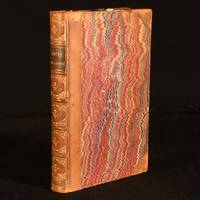
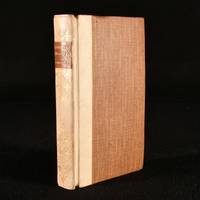
18381008F1London: Saunders and Otley 1838 . First edition. Leather. Very Good. 8" by 5". None. A handsome example of the sought after first UK trade edition of philosopher Thomas Carlyle's comic novel 'Sartor Resartus'. The first UK trade edition of this work which was initially published in Fraser's Magazine from November 1833 to August 1834. It is believed that only 500 copies of this edition were produced.In a half calf binding with gilt detailing.Scottish essayist historian and philosopher Thomas Carlyle's satirical work offers a commentary on the writings of fictional German thinker Diogenes Teufelsdröckh.The significance of this work lies in its innovative form and influence on Victorian thought combining German philosophical ideas with English prose.Carlyle anticipates later developments in existential and symbolic writing. In a half calf binding with marbled paper covered boards. Gilt detailing to back strip. Light rubbing to back strip head and head of front board otherwise externally excellent. Front hinge strained but firmly held. Internally firmly bound. Spotting to first and last few leaves with pages otherwise clean and bright. Very Good Saunders and Otley hardcover
445330Chapman And Hall Piccadilly London. Hardcover. Good. THERE ARE NO TARIFFS OR CUSTOMS DUTIES ON BOOKS. Thomas Carlyle 1795 – 1881 was a Scottish born essayist historian activist and philosopher. Relocated to London he was known as the "sage of Chelsea" his writings strongly influenced the intellectual and artistic culture of the Victorian era. 'Sartor Resartus' is a novel first published as a serial in Fraser's Magazine in November 1833 – August 1834. The novel purports to be a commentary on the thought and early life of a German philosopher called Diogenes Teufelsdröckh translates as 'Zeus-born Devil's-dung' author of a tome entitled Clothes: Their Origin & Influence. Teufelsdröckh's Transcendentalist musings are mulled over by Chapman And Hall, Piccadilly, London hardcover
3717518046.Ghardcover. Good. Access codes and supplements are not guaranteed with used items. May be an ex-library book. hardcover
B9781498096096Paperback / softback. New. paperback
1849816F22London: Chapman and Hall 1849 . Cloth. Very Good. 8.5" by 5.5". None. The very scarce third edition Thomas Carlyle's satirical philosophical novel 'Sartor Resartus'. The very scarce third edition of this novel from historian essayist and philosopher Thomas Carlyle a satirical commentary on a the fictional German philosopher Diogenes Teufelsdrockh purporting to be a commentary on the thoughts and early life of the man.Originally serialized in 'Fraser's Magazine' from November 1833 to August 1834 this novel is in part a parody of Hegel and of German Idealism.With the inscription of Andrew Leighton to the front pastedown. In the publisher's original cloth binding. Bumping to back strip head and tail with small splits to cloth at head of joints. Hinges starting with boards holding firm. Inscription to front pastedown. Internally firmly bound. Pages a touch age toned with the odd pencil notation to margins. Very Good Chapman and Hall hardcover
1903814J71London: Henry Frowde 1903. Vellum. Very Good. 6.5" by 4". Not Stated. A nicely bound edition of Thomas Carlyle's satirical German novel 'Sartor Resartus'. 'Sartor Resartus' is a satirical commentary on a German philosopher Diogenes Teufelsdrockh.In part this novel is a parody of Hegel and of general German Idealism.Originally serialized in 'Fraser's Magazine' from November 1833 to August 1834.By Thomas Carlyle a cultural critic known for his enormous influence on the intellects of the Victorian era.In quarter vellum binding with charming floral motifs to the spine. Containing the bookplate and ink signature of nineteenth and twentieth century British explorer and sportsman Sir Philip Brocklehurst to the front pastedown and front free-endpaper. In quarter vellum binding with cloth covered boards. Externally smart with some light shelf wear and light bumping to the extremities as well as some darkening to the spine as is common with vellum. Previous owner's bookplate and ink signature to the front pastedown and front free-endpaper. Internally firmly bound. A few spots to the fore-edge otherwise pages are bright and clean. Very Good Henry Frowde hardcover
026094906X.Ghardcover. Good. Access codes and supplements are not guaranteed with used items. May be an ex-library book. hardcover
B9781017825435Hardback. New. hardcover
152767116X.Gpaperback. Good. Access codes and supplements are not guaranteed with used items. May be an ex-library book. paperback
B9783368305819Hardback. New. hardcover
0282509216.Gpaperback. Good. Access codes and supplements are not guaranteed with used items. May be an ex-library book. paperback
188089644Boston: Houghton Mifflin Company 1880. First Edition. Hardcover. Very Good in boards. Some wear to edges and spine. Part of the Modern Classics series.; 8vo 8" - 9" tall. Houghton Mifflin Company hardcover
0265517788.Ghardcover. Good. Access codes and supplements are not guaranteed with used items. May be an ex-library book. hardcover
0332691950.Ghardcover. Good. Access codes and supplements are not guaranteed with used items. May be an ex-library book. hardcover
ria9781107661660_inpPaperback. New. New Book; Fast Shipping from UK; Not signed; Not First Edition; Originally published in 1929 this book presents a selection of Thomas Carlyle's writings aiming 'to collect and arrange the passages most representative of Carlyle's contribution to culture and to thought particularly in the spheres paperback