BUTTS, Mary; COCTEAU, Jean (illus).Biblio.com
829 résultats
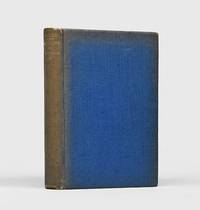
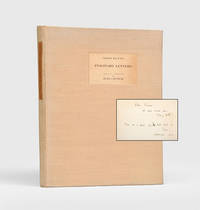
1928166236Paris: Edward W. Titus 1928. A rare inscribed copy First edition limited issue number 55 of 250 numbered copies on large paper; this a presentation copy and is inscribed by the author on the front free endpaper "Peter Teigen all good wishes from Mary Butts. part of a part of my best part of Paris. September 1928". Butts met the recipient through one of her closest friends Harcourt Wesson Bull who recalled their escapades in Paris in 1928 "at a time when sheer pleasure-seeking was neither shaming nor dull". Butts took a liking to his friend Teigen whom she nicknamed "Mr. Peter Tiger". Imaginary Letters is a fictional tale of gay heartbreak in 1920s Paris comprised of eight letters written to the mother of a young Russian by one of his exasperated and possibly infatuated friends. It was the first book that Cocteau illustrated aside from his own publications. Square octavo. Copper-engraved frontispiece and 3 plates all after original drawings Jean Cocteau. Original tan cloth paper labels printed in dark red on spine and front board edges uncut. Housed in a custom paper jacket and linen-reinforced card slipcase author and title written in manuscript on rear. Spine ends gently bumped covers and labels toned a few marks to covers text block a little foxed gutter just cracked at pp. 24-5; slipcase toned: a very good copy. Harcourt Wesson Bull "Truth is the Heart's Desire" in Chrisopher Wagstaff ed. A Sacred Quest: The Life and Writings of Mary Butts 1995. hardcover
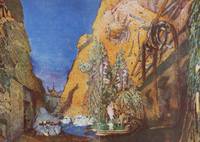
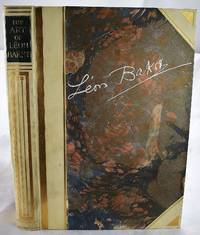
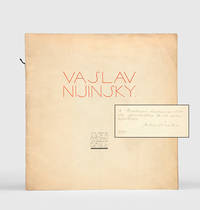
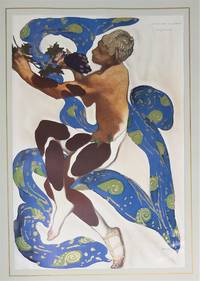
191355306London: The Fine Art Society 1913. First English edition. Hardcover. Good to fine condition. Folio. 8 51pp. text 77 1 leaves plates. Uncut. Original gilt-stamped three-quarter vellum over decorative paper-covered boards with Bakst signature stamped to cover gilt lettering on green leather label and gilt ruling on spine. Top edge gilt. Mounted photogravure frontispiece portrait of Leon Bakst with his facsimile signature below gravure. Title page printed in red and black. Historiated head- and tailpieces after Bakst. Chapter titles and initials printed in red.<br /> <br /> Lev Samoylovich Rosenberg Bakst painter and stage designer realized his greatest artistic success in the Alesandrinksy and Maryinsky theaters and later from 1901 to 1921 with Diaghilev at the Ballet Russe where he designed more productions than any other artist. Theater and costume designs for more than ten ballet works appear in this splendid edition containing 77 tipped-in plates all but one after Bakst 4 of them folding and 50 in full color with pochoir highlights. <br /> <br /> The striking plates of Leon Bakst's stage sets and costumes for the Ballet Russe are accompanied by synopses of the plays by Jean Cocteau for whom they were designed. Bakst’s brilliant control of color line and decoration give his stage pictures a visual rhythm. Color and chromatic combinations were used emotionally and sensuously. The splendid costumes are richly decorated with a myriad of motifs and decorative shapes. Captions for each plate on facing plates. <br /> Covers with minor smudging interior in near fine to fine condition.<br /> <br /> Binding with some rubbing on front over and spine. Title page with small inked initials HTK. Interior and plates in fine condition. The Fine Art Society hardcover
28534and inscribed "Jean Cocteau Salue à l'Université de Washington" with a five pointed star 11" x 8" in mount 14½" x 10½" no place no date circa A splendid image of one of the 20th century's most versatile artist writer poet ballet creator and film maker. Henri Manuel 1874-1947 was a Portrait Photographer working in Paris with his brothers Gaston and Lucien under the imprint Manuel Frères. unknown
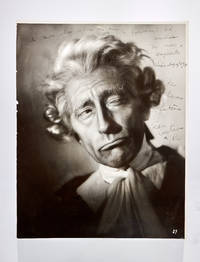
194375328S. n. 1943. Fine. S. n. 1943 29 x 22.80 cm une photographie Large photographic portrait of Jean Cocteau inscribed by Cocteau to Willy Michel 1943 29 x 22.8 cm one photograph Extremely rare photographic portrait of Jean Cocteau in contemporary silver print produced during the shooting of Serge de Pologny's film Le Baron fantôme for which he wrote the dialogues. Beautiful signed autograph inscription in the upper margin of the photo to which Cocteau has added his famous little star: à mon cher willy Michel. Souvenir très amical de nos complicités cinématographiques. Le Baron fantôme Jean Cocteau. 1943 To my dear Willy Michel. Very fond memory of our film-making complicity. Le Baron fantôme Jean Cocteau. 1943 Some tiny lacks in the left margin of the photograph. Magnificent large photographic portrait offered to the photographer Willy Michel who installed the first photo booth in France in his studio and became famous for his selfies with all the artists actors and writers of his time. With this superb highly expressive photograph in costume Cocteau offers this bibliophile patron of artists and accustomed to cinema sets an item of choice for his famous collection of portraits and artists' signatures. A wonderful highly expressive portrait of which we have not found any other copy in international public collections. S. n. unknown
1930D17620Paris: Librairie Stock 1930. First Edition. Hardcover. Very Good. This is number XI one of 10 copies hors commerce on velin pur fil du marais. Inscribed by Cocteau to John Kobler on the half-title with a fine original drawing dated 1960. 43 illustrations by the author. 8vo Dark blue morocco by Andréas Relìeur top edges gilt spine and board edges unevenly discolored joints rubbed; original wrappers bound in. John Kobler bookplate tipped to front pastedown. <br/><br/> Librairie Stock hardcover
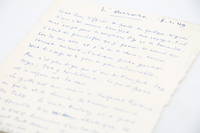
1949866621949. Fine. Cocteau fascinated by New York the ""city that sleeps standing"" 17 janvier 1949 14.90 x 19.50 cm un feuillet Initialed autograph manuscript by Jean Cocteau entitled ""L'Aurore"" dated by the author 17 January 1919. One page on one leaf written in blue pen. Published in L'Aurore 19 January 1949 no. 1353. Jean Cocteau wrote this dazzling portrait of the city that never sleeps for the newspaper L'Aurore after a twenty-day stay in New York. The writer would later extend this account with his 'Lettre aux Américains' Grasset 1949 taking up some of the words and expressions written on the spot in this charming manuscript. According to legend Cocteau began writing his 'Lettre aux Américains' on the flight home. One can imagine the writer eyes still shining with the lights of the city jotting down his first impressions on this page: ""It's very difficult to speak in a few lines about a city like New York. Did my trip last twenty days or twenty years I wonder . Nothing is lighter than the air of New York. Too light. Everything swirls. What rests and settles is very rare. The skyscrapers themselves sway slightly at the top and the light shines through them like tulle. At night Broadway is plagued by frightful electrical tics. And luminous Christmas trees six stories high adorn Park Avenue."" Cocteau had flown to New York in the last days of December 1948 for the premiere of The Eagle with Two Heads starring Edwige Feuillère as the Queen and his great love Jean Marais as the young anarchist poet. He hoped to convince the great actress Greta Garbo to play a role in one of his next films: ""It was the first time I'd spent New Year's Eve away from my city and I'm lucky when the clock struck midnight to be kissing Greta Garbo whose face is more and more admirable."" The writer ends the manuscript with a masterful ode to the New York way of life: ""There are sitting cities. There are cities that lie down. New York likes neither to sit nor to lie down. It's a city that sleeps standing."" In New York Cocteau found the perfect match for his own creative energy. During this short stay he posed for Philippe Halsman who had been commissioned by LIFE magazine to ""capture on camera what goes on inside a poet's mind"". Halsman's emblematic portraits - a janiform double profile or as a monster-magician with three pairs of hands smoking drawing and reading - caught the likeness of the surprisingly varied artist with incomparable accuracy. Precious impressions of a dandy and protean Cocteau irresistibly drawn to New York's bustling energy. unknown
19131911080058London : Fine Art Society 1913. First Edition. Hardcover. Very Good. First English Edition of the Earliest Major Work on Baskt Limited edition of only 425 copies. Folio; 41 cm. Bound in publisher's 3/4 vellum over marbled boards. Gilt stamped spine. Top edge gilt. Green calf spine label. 51 pages; portrait frontispiece and 77 mounted plates including 50 in color. Art decoratif de Leon Bakst; translated from the French by Harry Melvill. "With the greatest economy of means he Bakst obtains the greatest sum of effect and thus he realises an "orchestration" of colour in unison with the true colour of music." Preface. The colour plates depict Bakst's iconic costume designs several made for Nijinsky and several stage sets. Cocteau provided the notes on the ballets the designs were created for. Ballets Russes Diaghilev <br> This is an oversized or heavy book which requires additional postage for international delivery outside the US. London : Fine Art Society hardcover
195224329Paris 1952. Original wraps. Fine/Fine. Jean Cocteau and Georges Hugnet. #78 of 80 copies within the larger limitation of 100 copies printed "sur velinde Rives" and SIGNED AT THE LIMITATION BY BOTH ILLUSTRATORS JEAN COCTEAU AND GEORGES HUGNET. A lovely copy to boot of the 1952 original edition in French. Immaculate in its glassine dustjacket housed in an all-but-pristine dark-red chemise and matching dark-red slipcase. 64 surrealist poems written by both Jean Cocteau 1889-1963 and Georges Hugnet 1906-1974 and 16 original color lithographs executed by both of them. unknown
1928161170London: Wishart & Company 1928. Eliot and I are working on a parallel First edition first impression one of 100 deluxe copies printed on handmade paper and specially bound including illustrations by Jean Cocteau not supplied with the trade edition this copy unnumbered. Armed with Madness was Butts's second novel "a modernist treatment of the grail myth" ODNB. The first trade edition is seldom encountered and this handsome limited edition is inevitably rare. This Butts's first novel to be published in the UK combines Modernist concerns about the spiritual wilderness of the period with the powerful symbol of redemption and healing found in the Holy Grail. "In toying with the Grail myth Armed with Madness casts modernism's relentlessly fragmented disenchanting and morally ambiguous narratives as a quest without end" Emre. The use of Arthurian grail-quest mythology to comment on the conditions of the time had been explored by other modernist authors most notably perhaps in T. S. Eliot's The Waste Land 1922 the fact of which Butts was well aware. In a journal entry from 1927 Butts half-jokingly complains that Armed with Madness "might well have been called The Wasteland sic. Eliot always anticipates my titles. Eliot and I are working on a parallel but what is interesting is that he is working on the Sanc Grail on its negative" Kroll p. 159. Butts uses this novel to suggest "readily available cures for the condition of barrenness and sterility illustrated in Eliot's poem" ibid. Butts's own interest in the Grail myth was grounded in the rich folkloric landscape where she lived - the countryside around Salterns South Dorset. This "together with the classical stories and myths her beloved father recounted and acted out with her haunted her imagination and informed her writing" ODNB. Her interest in the mystical led Butts to spend three months at Aleister Crowley's Abbey of Thelema where she contributed to Book 4 of his Magick in Theory and Practice. Butts was disappointed with Crowley's form of mysticism however which she later referred to as "a desolate path" Blondel p. 102. Despite this her "brief friendship with Crowley had a lasting effect on her fiction leading to the development of her ethics of modernist occultism" Clukey p. 79. Butts met Jean Cocteau in Paris in 1926 and immediately felt that they shared a "magical affinity" Radford p. 219. The pair quickly established a friendship based on their shared loves of literature and opium. Cocteau also illustrated her Imaginary Letters published in the same year as the present work. Butts's writing remained somewhat overlooked until the 1980s when several of her novels were republished and her work has continued to receive growing scholarly interest. She is "now recognized as one of the most important and original modernist authors of the inter-war years" Blondel p. 1. Octavo. Frontispiece and 2 plates after drawings by Jean Cocteau. Original blue buckram spine lettered in gilt top edge gilt others untrimmed blue silk bookmarker. Pencilled ownership inscription dated January 1936 of one Lady Margaret Joanne Bowyer-Smyth 1900-1976 on front free endpaper. Spine and board edges faded extremities rubbed touch of wear to foot of spine contents clean and bright; a very good copy indeed. Nicholas Blondel The Journals of Mary Butts 2002; Amy Clukey "Enchanting Modernism: Mary Butts Decadence and the Ethics of Occultism" in Modern Fictions Studies 2014; Merve Emre "Modernism's Forgotten Mystic" in The New Yorker December 2021; Jennifer Kroll "Mary Butts's 'Unrest Cure' for The Waste Land" in Twentieth Century Literature 1999. hardcover
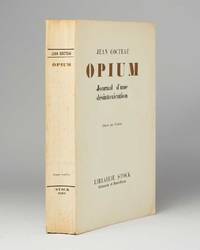
193021228021930. Paris: Librairie Stock Delamain et Boutelleau. 1930. 8vo. Original cream printed wrappers spine and upper cover lettered in black and gold partially uncut; pp. 264 2 with 40 plates after line drawings by Cocteau included in pagination and a further 3 plates after collages by Cocteau; very slight lean creasing and spotting to spine spine ends a little worn very light toning and dust-soiling to covers; internally clean; overall a very good copy.First edition number 14 of 28 copies printed on Japon Imperial of Cocteau's extraordinary account of the physical and mental anguish of his withdrawal from opium addiction extensively illustrated by the author.Cocteau had largely been introduced to opium by the French musicologist and sinologist Louis Laloy 1874-1944 in 1924 during a period of profound depression following the unexpected death of the writer Raymond Radiguet. 'Cocteau shut himself away with the amateur Sinologist and the musicians in a room in their hotel . A hundred times he tried to absorb opium more bitter than bromide; a hundred times he complained about not feeling any benefit from it. Finally after three months the anguish fell away' Arnaud pp. 351-2. Cocteau wrote and illustrated Opium between 16 December 1928 and April 1929 while undergoing treatment at a clinic in Saint-Cloud and it was during this time that he wrote Les Enfants terribles 1929 - arguably his most famous work - over the course of three weeks his illustration to p. 241 bearing the same title.His haunting illustrations from the early stages of his recovery - featuring a screaming figure with his eyes scratched out a limbless man a nude figure holding his four-faced head in his hands and a weeping sun inter alia - give way to eerie figures composed of tubular structures and finally to images of freedom and hope. The third collage Je quitte Saint-Cloud I Am Leaving Saint-Cloud shows a classical statue fleeing on horseback through a star-studded sky and the final illustration La Destinee de l'oiseleur The Fate of the Bird-Catcher shows an outstretched hand allowing Cocteau himself the self-portrait on p. 27 titled Oiseau to fly away at last. 'The drawings done under the influence of opium are a marvel. They allow us a glimpse into the life of a tortured soul who cries out in lines that excite the senses and cause us to wonder about the daily nightmare of addiction' Emboden p. 36.Addressed to 'opium smokers the sick and those unknown friends found through books who are the only excuse for writing' trans. Opium was perhaps unsurprisingly taken up by the American Beat poets. The book featured on the shelves of William S. Burroughs's library which so impressed Allen Ginsberg and Jack Kerouac in the mid-1940s. Although Burroughs does not name Cocteau's Opium in his preface to Junkie 1953 he would later explicitly acknowledge its importance: 'I always had a romantic literary relationship to drugs like you find in De Quincey or in Cocteau's Opium' Lane p. 106.Crosland p. 229; not in Carteret cf. vol III p. 107. See Arnaud Jean Cocteau: a Life 2016; Emboden The Visual Art of Jean Cocteau 1989; Lane The French Genealogy of the Beat Generation 2017. unknown
1910136928Paris: Société générale d'impression 1910. A veritable love letter to Nijinsky First edition one of 934 standard copies from an edition of 1000 on japon inscribed by the illustrator on the recto of the limitation leaf "A Madame Suzanne Süe son admirateur et son ami respectueux Paul Iribe août 1910". "Nijinsky fascinated Cocteau most on account of his potent mixture of animality and fragility at once desirable and androgynous half-angel and half-leopard. He presented for Cocteau a unique hybrid spectacle of desire pain and sacrifice. In this little-known volume. Cocteau signed a veritable love letter to Nijinsky" Williams p. 46. The book arranges Cocteau's pair of Nijinsky-inspired poetic triplets into single lines to form captions for Iribe's Beardsley-esque illustrations. Paul Iribe 1883-1935 worked in Hollywood during the 1920s and was Coco Chanel's lover from 1931 to his death. He came to prominence when couturier Paul Poiret used his fluid decorative line to create a modern style of fashion plate subsequently collected in the volume Les Robes de Paul Poiret racontée par Paul Iribe. These images of uncorseted young women enjoying the luxurious pastimes of the affluent were contentious. Cocteau said in Portraits-Souvenirs that "Iribe's album disgusts mothers". The recipient was the wife of Louis Süe the painter architect and interior designer. Süe visited Vienna with Poiret in 1910 and was inspired by the Wiener Werkstätte to create a similar design collective being a co-founder of L'Atelier Français in 1912 later establishing the Compagnie des Arts Français with André Mare. Quarto 300 x 310 mm. Six plates from line drawings by Iribe. Publisher's silk-tied light card wrappers printed in red and black. Some wear and soiling to the wrappers with scratches to the back wrapper and a light corner crease not affecting the illustrations. unknown
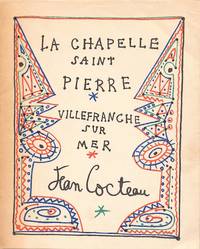
5113La Chapelle Saint Pierre Villefranche sur Mer Editions du Rocher Monaco 1957. 775 copies printed. On the title page Cocteau drew two sketches with inscription and date. To the right of his last name near the right margin Cocteau has sketched half of Orpheus's face. Below the full title Cocteau inscribed signed with date and drew a second smaller sketch which included a second signature. "With fond memories to Luis Calvo and to A.B.C Jean Cocteau 1960." A second signature and small vertical sketch appear to the right. Nineteen separate pages printed drawings and photographs throughout in gray tones. <br /> Condition: Paper cover shows age especially at the spine light soiling along right edge decorative cover shows small break at spine.<br /> <br /> The soft cover book tells the story of Cocteau restoring the Chapel of Saint Peter including many reproductions of the artwork as well as Cocteau engaged in the refurbishing effort. The ancient Romanesque chapel dedicated to Saint Peter patron saint of fishermen was restored and decorated by Cocteau. . unknown
913<br /><br /><p><b>BEAUTIFUL EXAMPLE OF THIS MAJOR LUXURY WORK ON BAKST'S ART THE FIRST ONE OF ITS KIND AND THE MOST IMPRESSIVE</b> especially attractive thanks to its art-déco publisher's binding here in great condition. It focuses on Bakst's costumes for Diaghilev's Ballets Russes together with a few set designs gathering most of his most famous creations. Interestingly it occasionally mentions the owner of the costume itself usually British or French.</p><p>Alexandre contributed a critical essay while the 24-year old Cocteau authored notes on the various ballets.</p><p>"Born in Russia in 1866 Léon Bakst belonged to that young generation of European artists who rebelled against 19th century stage realism which had become pedantic and literal without imagination or theatricality. There were no specialist trained theatre designers so painters like Léon Bakst turned their painting skills to theatre design. Bakst's fame lay in the ballets he designed for the Diaghilev Ballets Russes and huge pageant spectaculars for dancer and patron Ida Rubinstein. He died in 1924 but after nearly 100 years his magic is as potent as ever rediscovered by every generation. His influence was such that people who have never heard his name now see the world in a different way" V&A.</p><p><br /></p><p><i><u>Description</u></i><i><br />Folio 41.3 x 28.5 cm. Photographic portrait frontispiece title 4 ll. 50 pp. and 12 ll. 1 l. 77 tipped-in plates including 50 in colour some double-page entirely printed or mounted on grey papier d'Auvergne. <br />Original publisher's half vellum over marbled boards Bakst signature printed in white to upper board; very lightly soiled here and there small bumps at extremities small split to lower hinge.</i></p> De la More Press, Londres, for Maurice de Brunoff, Paris, 1913.
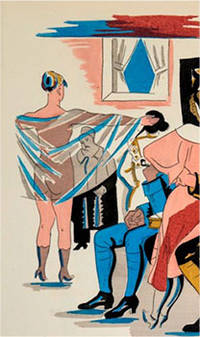
16-3508Paris: La Sirène 1920. Quarto 35pp. 31.5 x 25.5 cm. Original wrappers. In custom red roan leather slipcase with raised design from one of the images by the Russian American binder Sasha Mosalov.André Lhote has handcolored 11 designs for this unique copy in addition to the color pochoirs. This copy contains as an added frontispiece the original ink drawing of one of the illustrations showing a stern Madame and one of her triste filles.First edition of these audacious Escales to the glory of the French brothels. Limited to 440 copies this one on Lafuma is unnumbered because it is a unique presentation copy. There are 32 compositions of the Cubist painter André Lhote of 13 including the cover and the title page have been enhanced with colors in stencil pochoirs or silkscreens by the Marty workshops. There is an autograph dedication signed by André Lhote to «doctor of Cardenal expert in many things.» . It is noted that the said doctor was detached by the administration with the ladies of the brothels. Repaired tear to the cover not affecting any image.LHOTE - Jean COCTEAUEscales. Paris La Sirène 1920.In-4 35 feuillets broché.Édition originale de ces escales audacieuses à la gloire des maisons closes. Tirage limité à 440 exemplaires celui-ci sur vélin pur fil Lafuma non justifié.L’illustration réunit 32 compositions du peintre cubiste André Lhote dont 13 y compris la couverture et la vignette de titre ont été mises en couleurs au pochoir par les ateliers Marty.Envoie autographe signé d’André Lhote au « docteur de Cardenal connaisseur en bien des choses… ». Il y lieu de souligner que ledit médecin était détaché par l’administration auprès des dames des maisons closes.Luc Monod: Manuel de L'Amateur Livres Illustrés Modernes 1875-1975 1875-1975 no. 2906. Paris: La Sirène, 1920. hardcover
16-5018Paris: Michèle Trinckvel 1965. The complete portfolio of thirty-two lithographs sixteen in colors hors-texte title page text in French and justification. This is the deluxe edition of 48 copies with a an extra suite of the lithographs on Rives.Sheets loose as issued with original brown paper wrapper with original lithographic cover and yellow cloth-covered portfolio stamped with artist's name in red. Front cover slightly time stained.15.5 x 11.5 inches sheet size; 395 x 290mm.The last artist book by Cocteau finished a few hours before he died. Luc Monod: Manuel De L'Amateur Livres Illustres Modernes 1875-1975 no. 7626.32 lithographies en couleurs par Jean COCTEAU dont un frontispice et un titre-frontispice.Tiré à 200 et quelques exemplaires celui-ci n° 48 un des 48 sur vélin de Rives comprenant une suite supplémentaire des lithographies en couleurs. Paris: Michèle Trinckvel, 1965 hardcover
19522091202133206188Fequet et Baudier 1952. Soft Cover. Fine. Volume: 1 Fequet et Baudier paperback
1924412274Paris: Stock 1924. Hardcover. Near Fine. First edition. Quarto. Quarter cloth and decorated papercovered boards with printed paper title label on front board. Modernist bookplate of Alex de Hass on rear pastedown moderate edgewear on the boards near fine. A collection of Cocteau's pen and ink drawings mostly portraits which was dedicated to Picasso.<br /> <br /> In October of 1946 Cocteau visited Amsterdam to attend the Dutch premiere of his famous film La Belle et la Bête. During this visit he was hosted by the Dutch songwriter and performer Alex de Haas. This volume has two large original drawings by Cocteau one on the front fly the other on the half-title each dedicated by Cocteau to de Haas.<br /> <br /> Additionally affixed to the front pastedown is an original gelatin silver photograph 9.25" x 6.5" of Cocteau speaking at a press conference in Amsterdam as well as a later color portrait of Cocteau from a magazine affixed on the copyright page. Additionally on the recto of the rear fly-leaf is an original drawing by the well-known Dutch caricaturist Eppo Doeve depicting de Haas paying homage to Cocteau on the stage of Tuschinski Theatre 28 October 1946. This copy is referenced in the Dutch literary journal De Parelduiker May 2007 pp.36-44. Stock hardcover
1962D17822Monaco: Éditions du Rocher 1962. First Edition. Paperback. Near Fine. Inscribed and signed by Cocteau for editor Jean Denoël with a drawing at the front and signed by Picasso and Cocteau on the colophon. Among a number of copies on Rives reserved for collaborators from a total edition of 255. 24 original lithographs 11 of them hors-texte including the front wrapper and 2 double-page by Picasso printed in black by Mourlot. Folio contents loose as issued in original wrappers with cut-out design revealing title on front cover; 1/4 calf gilt-backed chemise and board slipcase split. Contents are fine. Prospectus laid in. "On the occasion of Picasso's 80th birthday Pierre Bertrand who was Cocteau's publisher assembled eleven of the poet's texts which reflected his friendship with Picasso. The latter illustrated these texts with 24 lithographs some of which are drawn in Cocteau-esque style "---Cramer 117; Monod 292; Bloch 1037-1060. <br/><br/> Éditions du Rocher paperback
19374425n.p. n.d. 1937 1937. A collection of typescripts of thirteen short stories by Lise Deharme with five signed drawings by Jean Cocteau. Some of the stories are drafts with manuscript or typed amendments and some in fair copy. Each story with its illustration is loosely inserted into a card folder. Also present is the original pink file which contained the stories and drawings. On the cover of this is inscribed in De harme's hand: "Lise Deharme 146 rue de Grenelle Paris VII. Quleque dessins de Cocteau". All housed in a custom made box with paper label to spine. Given their brevity and simplicity their subject matter and the nature of the drawings these stories were clearly intended for young children - she had two of her own Tristan and Hyacinthe. We have found no evidence of these stories and drawings being published. None of them is dated but we would tentatively suggest a date in the late 1930s or early 1940s. Deharme and Cocteau were corresponding regularly at this time and Deharme was working on a book of children's poems with photographs by Claude Cahun - published in 1937 as Le Coeur de Pic. Clearly Deharme was planning another book for children this time of stories and with drawings by another leading figure of the surrealist movement Jean Cocteau. � Lise Deharme 1898-1980 has tended to be written about as little more than a muse to the great surrealists Breton Cocteau Dali and Ernst. It is true that a chance meeting with André Breton in 1924 first drew her into the circle of the surrealists but by 1933 she was running the magazine Phare de Neuilly which brought together surrealist poems and short stories and political commentary. As well as editing the work of others Deharme wrote widely herself and collaborated extensively with other surrealists. Mention is made in the literature of her work with the artists Cahun and Leonor Fini but we have found no reference to a collaboration with Cocteau. Which makes this collection of unknown and unpublished illustrated stories especially important and exciting. 1. Muscade. La Petite Fille aux dix doigts. Single leaf with title in manuscript three typed leaves recto only and then a further two leaves with the story retyped leaves 270x210mm. Two drawings by Cocteau one in pencil on tracing paper signed "Jean" and the other in purple crayon on heavier drawing paper 420x280mm folded. On the verso of the larger drawing is written "Pour Lise Jean". 2. La véritable histoire du Petit Chaperon Rouge. Single leaf with title in manuscript. Two leaves with the story typed and the title in manuscript and one amendment in blue biro. Two further copies of the story typed. Drawing by Cocteau signed "Jean". Fraying to left edge of the drawing. 3. Le Nouveau Narcisse. Single leaf with title in manuscript. Two leaves with the story in typescript and two amendments in pencil. Drawing by Cocteau signed "Jean". 4. Le Vent. Single leaf with title in manuscript. Two leaves with the story in typescript and two amendments. Fair copy of the typescript on a single leaf. Drawing by Cocteau signed "Jean". 5. Couleur de rose. Single leaf with title in manuscript. Four leaves with the story in typescript and two amendments in blue ink. Fair copy of the typescript on four leaves. 6. La Chemise. Two leaves with the story in typescript. 7. La Belle Vie. Seven leaves with the story in typescript and numerous amendments in pencil. 8. Il etait une fois. Two leaves with the story in typescript and three amendments in pencil. Fair copy of the typescript on a single leaf. 9. Le Prince Feroce. Two leaves with the story in typescript. 10. Chansons du Soir. Two leaves with the story in typescript. 11. Histoire de Jules. Two leaves with the story in typescript and numerous amendments in blue ink. 12. La Porte Ouverte. Two leaves with the story in typescript. 13. Histoire de la petite Laurence. Two leaves with the story in typescript and five amendments in ink and type. n.p. n.d. [1937] unknown
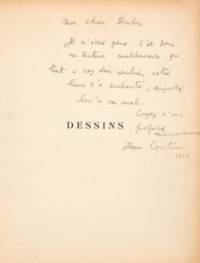
19242785Paris: Librairie Stock 1924. First edition. In very good conditon. First edition. 272 p. Inscribed to André Breton. <p><br /> Mon cher Breton // Je n'écris plus. C'est donc // un lecteur malheureux qui // tient à vous dire combien votre // livre l'a enchanté emporté // loin de son mal.<br /> // Croyez à ma // profonde // reconnaissance // Jean Cocteau // 1924.<p><br /> From the collection of Pierre Berge. Librairie Stock unknown
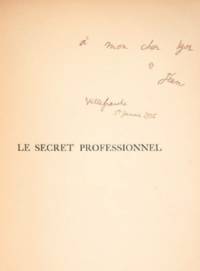
19252775Paris: Stock 1925. First edition. In original paper. Very good condition small restoration on the back. Illustrated with twelve color drawings by the author reproduced in facsimile. Very good condition small restoration on the back. Illustrated with twelve color drawings by the author reproduced in facsimile. Very good condition small restoration on the back. First edition. In original paper. 4 ff. 105 pp 3 ff. the last 2 blank 11 plates. <p><br /> Inscribed to to Igor Stravinsky: à mon cher Igor // Jean // Villefranche // 1er janvier 1926.<br /> <p><p><br /> The year 1926 corresponds to the period when the relationship between the musician and the writer was the most intense. At the end of the summer of 1925 Stravinsky had asked Jean Cocteau to compose a libretto for an opera-oratorio on the myth of Oedipus with the directive that the text be in Latin. The text was translated by the future cardinal Jean Daniélou. OEdipus Rex is one of the masterpieces of 20th century lyrical music.<br /> <p>. Stock unknown
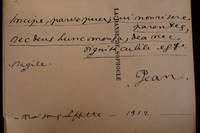
191245274Paris: Mercure de France 1912. Fine. Mercure de France Paris 1912 15 x 19 cm relié First edition one of 7 numbered copies on Hollande paper the only large paper copies this one no. 1 specially printed for Jean Cocteau's mother. Contemporary vellum Bradel binding by Dupré gilt date to foot of spine brown shagreen title label marbled endpapers and pastedowns covers and spine preserved. Light worming principally affecting the margins of some leaves. A moving and exceptional autograph inscription signed and dated by Jean Cocteau to his mother in Latin quoting a verse of Virgils Bucolics: Incipe parve puer : cui non risere parentes nec deus hunc mensa dea nec dignita cubili est. / Virgile. / Jean which in English is: Realise this child: the boy at whom his parents never smiled is fit neither to approach the table of the Gods nor the couch of a Goddess. A unique copy. With the publication of this third collection of poetry Cocteau a young prodigy then aged 23 was feted by artistic and literary circles. An intimate of Proust's a friend of Jacques-Emile Blanche a follower of Nijinski and Diaghilev and a disciple of Anna de Noailles his ambition was to unite in his own person all the talents that surrounded him. The Danse de Sophocle Dance of Sophocles a reference to the nude dance that the young and divine Sophocles did in Athens after the naval victory at Salamis reflects the ambition and the exaltation of the young Cocteau: novelist painter dancer poet he felt truly fit to approach the table of the Gods. As with all the best artists he was a link between God and Earth. In his biography Claude Arnaud dedicates a chapter The Living God to the psychology of the poet in this period: He was a piece torn from God one of the terrestrial organs through which this Being constantly evolving thought about and finally acted to improve his creation. Thus Cocteau broke free of his illustrious models and assumed his full artistic divinity which unfolded in this ecstatic collection witnessed by the eponymous poem: Thanks to you dear pride I wore the halo Given by the charming god of words Thanks to you I knew the frenetic struggles in which pen and paper the dreary pot of ink Are the ties of verses you want to shout You want to scream sing sigh laugh And which we must since they are in us and we feel them Let flow like beautiful blood. The inscription to his mother on the first of seven rare large paper copies is a witness to Cocteau's only real great influence: Eugénie Cocteau. A mother idolized by her son she was a profound influence on both the poet's life and his work marked by the omnipresence of the Oedipal figure. Claude Arnaud describes at length this filial outpouring coupled with an almost amorous attention.: only my love for you is rooted in something real the rest seems to be a bad dream'. One can hardly miss in this quotation from Virgil the incestuous ambiguity that bound Cocteau to his mother. One of the most desirable provenances for this extremely rare copy. Mercure de France hardcover
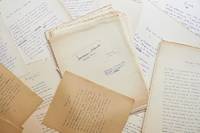
195283726Saint-Jean-Cap-Ferrat 1952. Fine. Saint-Jean-Cap-Ferrat août 1952 20.80 x 34 cm 52 pages Autograph manuscript by Jean Cocteau early version of the poetry collection Appogiatures - published in 1953 by Éditions du Rocher in Monaco - comprising 47 leaves of thick paper taken from a large drawing pad and 5 smaller leaves of thin paper written in blue ink and blue ballpoint pen. Numerous deletions and corrections. The leaves are numbered up to 25 including one number 8 bis and most bear a small cross or the mythical Cocteau star. The last leaf containing the poem titled ""Lettre"" is dated in the poet's hand August 15 1952. Also in Cocteau's hand the first leaf bears the final title above which is crossed out the initially envisaged title - Soucoupes volantes - the date 1952 and the place - St Jean Cap Ferrat; it also features a crossed-out dedication: ""À la mémoire de Baudelaire et de Max Jacob qui nous apprirent ces exercices de style."" While the collection clearly shows the influence of Baudelaire's Petits Poèmes en prose and Max Jacob's Le Cornet à dés this tribute was not retained in the published version and was replaced by a dedication to the publisher Henri Parisot. An exceptional ensemble containing 33 of the 51 published poems 11 texts rejected on the advice of publisher Henri Parisot and published in ""En marge d'Appogiatures"" uvres poétiques complètes de la Pléiade pp. 818-831 and 6 unpublished texts. David Gullentops in the edition of Jean Cocteau's uvres poétiques complètes in the Pléiade notes the existence of a second set of manuscripts and typescripts preserved at the Bibliothèque Historique de la Ville de Paris BHVP. He further indicates that he had access to no manuscript of the poem ""Lanterne sourde."" Yet this poem is indeed part of our ensemble which would thus be the first version of the collection envisioned by Cocteau. Jean Cocteau began writing this collection of poems in verse and prose commissioned by his friend the publisher Henri Parisot at the end of July 1952 while staying at Saint-Jean-Cap-Ferrat in Francine Weisweiller's Villa Santo-Sospir. The first version of the collection was completed in mid-August as attested by the two dates on our manuscript ""août 1952"" and ""15 août 1952"" and this entry in Cocteau's diary: ""J'ai terminé la mise au point des courts poèmes en prose pour Parisot. Il y en aura vingt-six à moins que le mécanisme continue ce que je ne souhaite pas car à la longue ces exercices d'écriture illustrés par Baudelaire et Max Jacob fatiguent."" Le Passé défini Tome 1 1951-1952 August 14 1952. Our ensemble would thus be a mixture of the first poems sent to Henri Parisot written with a pen and several added texts written with a ballpoint pen. This hypothesis is supported by the writing of the final title Appogiatures on the title page of our manuscript; Cocteau relates this change again in his diary dated August 29 1952: ""Ai . classé les poèmes pour Parisot sous le titre : Appogiatures."" Our early manuscript version contains significant variants concerning the titles of the poems; thus the poem ""Livre de bord"" was initially titled ""Le Spectacle"" likewise for ""Au poil"" for which Cocteau had previously chosen ""La langue française"" or ""Le tableau noir"" originally titled ""Le lièvre et la tortue."" The order of the poems was also considerably modified for printing: our ensemble shows that Cocteau wished to begin the collection with ""Le voyageur"" which would finally be replaced by ""Seul"" and moved to second position. Also noteworthy in our dossier is the presence of eight poems entirely in verse: these would be removed Appogiatures becoming a collection exclusively in prose. The ensemble heavily deleted and corrected also presents long passages suppressed in the published version for example this very beautiful extract from the poem ""Scène de ménage"" evoking the ""countess"" Francine Weisweiller: ""Et les larmes de la comtesse se disaient : nous sommes la mer. Et la mer se unknown
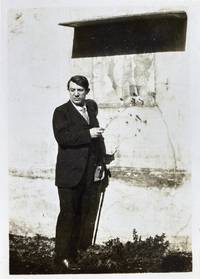
191778126Paris 1917. Fine. Paris 1917 6.30 x 8.60 cm une photographie Original photograph likely unique and unpublished of Pablo Picasso at the Casa di Marco Lucrezio Pompeii spring 1917 Paris 1917 63 x 86 cm one photograph Original photograph depicting Pablo Picasso in the spring of 1917 at the Casa di Marco Lucrezio in Pompeii holding a twig in front of a wall on which there is a Pompeian fresco. Contemporary silver print perhaps unique from Jean Cocteau's personal archives then the Maurice Sachs collection. Exceptional almost undiscovered and probably unpublished photograph taken by Jean Cocteau during the stay. On 16 April 1917 Picasso visits Pompeii accompanied by Jean Cocteau and Léonide Massine to prepare the ballet Parade the first work described as surrealist by Guillaume Apollinaire for the new season of Serge de Diaghilev's Ballets Russes. On his return this initiatory journey inspired his monumental painting: the Parade stage curtain a real visual signature of the ballet marking the beginnings of Picasso's neo-classical period and today preserved at the Musée national d'Art Moderne Georges Pompidou. Pierre Daix in his bibliography dedicated to the painter recounts the aesthetic shock caused by the discovery of the Pompeian frescoes: Giovanni Carandente to whom we owe the best studies on this trip highlights that Picasso was strongly struck by the animation and the sensuality that the cataclysm of the year 79 AD had brutally destroyed. If it is true as he wrote to Gertrude Stein that he immediately drew many Pompeian fantasies which are a little daring attracted as he was by the erotic elation that emerges from these licentious paintings . these memories settled in him to emerge with force thereafter. . Everything that had made up the Pompeian universe was preserved on the site as well as in the National Archaeological Museum of Naples . In its singularity this universe contributed to enriching Picasso's cultural heritage with something more alive more trembling than he had gained from his museum visits until then. He particularly loved the conciseness of the paintings: two or three years later the impressions felt in Pompeii were to translate into a real creative explosion a series of paintings which all bore traces of these never buried memories. This source was to remain alive until La Danse of 1925. Pierre Daix Picasso. Unique and early original photograph of Picasso taken and printed by his friend Jean Cocteau in a mythical place that will influence his aesthetic for the long-term. Provenance: Jean Cocteau's personal archives then the Maurice Sachs collection and Max-Philippe Delatte. unknown
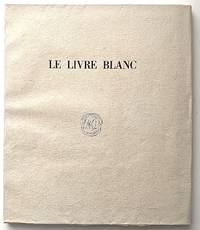
19282423Paris: Maurice Sachs and Jacques Bonjean 1928. First edition. 6 7-80 6 pp. Quarto. Folded wrappers title and monogram printed on front cover. Printed on Montval laid paper handmade by Gaspard Maillol by Ducros et Colas printers Paris. Slightest occasional spotting to leaves still a fine copy housed in a chemise and slipcase. <br /> <br /> One of 31 numbered copies printed of which ten were reserved for the author. The true and extremely rare first edition of one of Cocteau's most extraordinary and emblematic works. Published anonymously it is the first time Cocteau directly wrote on the subject of homosexuality- as Claude Arnaud notes in his definitive biography "this indirect praising of homosexual love experienced as 'one of the most mysterious workings of the divine masterpiece' was the kind of work that might once have helped the adolescent Cocteau to rise above opprobrium and secure his self-esteem." Cocteau never allowed his name to be directly attributed to the text of this book although later editions bore his preface and sometimes illustrations. As Frédéric Canovas writes "From the first edition to the last one published while he was still alive Jean Cocteau systematically refused to print his name on the cover of Le Livre Blanc: the text was to remain anonymous although Cocteau himself had not hesitated to demonstrate his intimate relationship to the book by illustrating it on several occasions and by adding a short manuscript note to the second French edition and a longer foreword to the English one. Indeed of all Cocteau's books Le Livre Blanc is probably one of his most confusing because of both its subject and its form or forms. Even today it remains difficult to consider this book. The critic finds himself lost among the multiple editions the various versions of the text and the many illustrations as well as the prefaces manuscript notes and frontispieces. Despite its nature as a confidential text. Le Livre Blanc has appeared in no less than 13 different editions from 1928 to the present. the first edition is anonymous bears no mention of the publisher's name and contains no illustrations. The printing was limited to 21 copies including 10 author's copies and is needless to say almost impossible to find today."<br /> <br /> Pia Les Livres de l'Enfer 812-813. Canovas "Jean Cocteau's Le Livre Blanc: Sex Text and Images" Word & Image 231:1-15 January 2007. Georgel Jean Cocteau et Son Temps 402. Young The Male Homosexual in Literature 709 for the English edition. [Maurice Sachs and Jacques Bonjean] unknown