829 résultats
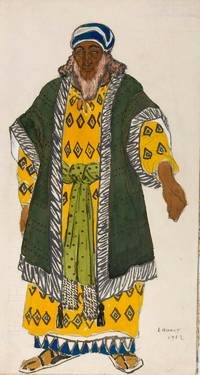
191355315Paris: Maurice de Brunoff 1913. Limited edition. Hardcover. Very good to fine condition. 1/80. Small Elephant Folio. 6 49pp. text 77 leaves plates 8pp. Uncut at fore- and bottom edges. Original gilt-stamped full vellum with gilt vignette on cover gilt lettering and ruling on spine. Top edge gilt. Laid in an original pochoir-highlighted watercolor signed and dated in pencil by the artist in lower right margin protected by modern mylar. Mounted photogravure frontispiece portrait of Leon Bakst with his facsimile signature below gravure. Title page printed in red and black. Limitation page with publisher's signature. Additional publisher's signature on verso of first front free endpaper. Historiated head- and tailpieces after Bakst. Chapter titles and initials printed in red.<br /> <br /> Lev Samoylovich Rosenberg Bakst painter and stage designer realized his greatest artistic success in the Alesandrinksy and Maryinsky theaters and later from 1901 to 1921 with Diaghilev at the Ballet Russe where he designed more productions than any other artist. Theater and costume designs for more than ten ballet works appear in this splendid deluxe edition containing 77 tipped-in plates all but one after Bakst 4 of them folding and 50 in full color with pochoir highlights. <br /> <br /> The striking plates of Leon Bakst's stage sets and costumes for the Ballet Russe are accompanied by synopses of the plays by Jean Cocteau for whom they were designed. Bakst’s brilliant control of color line and decoration give his stage pictures a visual rhythm. Color and chromatic combinations were used emotionally and sensuously. The splendid costumes are richly decorated with a myriad of motifs and decorative shapes. Captions for each plate on facing plates. <br /> Text in French. Covers with minor smudging interior in near fine to fine condition. Maurice de Brunoff hardcover
192845975Paris.: Editions des Quatre Chemins. 1928. Original publisher's cream printed wrappers with red printed title and black printed text to upper cover and spine cloth-backed board chemise and matching box. Small 4to. 246 x 194 mm. Half-title printed title with copyright verso and Cocteau's text dated 'Décembre 1927' illustrated with 5 monochrome illustrations by de Chirico each recto only leaf with justification recto and 'Paru dans la même collection' verso and final leaf with achevé d'imprimer. A very fine example of the édition de tête with de Chirico's original etchings and corrected proofs by Jean Cocteau.From the edition limited to 3330 copies with this one of 10 from the édition de tête on Japon Impérial with de Chirico's etchings inserted loose each signed and numbered from the edition of 100 in pencil;; the book is also signed by Cocteau on the half-title and includes two leaves of printed text with manuscript corrections in ink by Cocteau.The two leaves with manuscript corrections feature text printed on pages 30 31 32 and 33. Cocteau has made manuscript excisions ellisions and additions which amount to substantial changes. In several instances the corrections differ even from the final published text which was completed in December 1927; the achevé d'imprimer gives a publication date of 'le Trente Mai Mil Neuf Cent Vingt-Huit'.Ciranna 3 / 4. Editions des Quatre Chemins. hardcover
19442091202133212862Editions Rombaldi 1944. Soft Cover. Fine. Volume: 1 Editions Rombaldi paperback
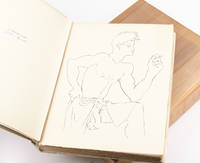
194791769n. l.: Paul Morihiens. n. 1947. Fine. One of a 9-copy issue of this celebrated clandestine novel with an original drawing by Cocteau Paul Morihien s. n. n. l. s. d. 1947 ; lettre : fin mars 1944 25 x 32.5 cm En feuilles sous chemise et étui First edition. One of 10 copies on vélin de Lana lettered G around which Genet has signed in blue ink signed by Genet at the limitation page most limited deluxe issue except for a unique copy. Complete with the loose leaf beginning with Une brusque lassitude.. With an autograph letter signed by Jean Genet on one page with customary fold marks from mailing published in Edmund White Jean Genet pp. 260-261. Illustrated with 29 erotic lithographs by Jean Cocteau and an original pencil drawing by Cocteau as well as a suite of the illustrations presenting some foxing on certain plates. Loose leaves in the publishers wrappers and laced slipcase with the upper board detached wood slipcase square spine with slide mechanism on the spine bearing the title and author engraved in red. An exceptional copy with a suite of the illustrations on Chine paper and an original drawing by Cocteau also featured in the book on p. 177. Also with an important autograph letter signed dating from late March 1944 written by Jean Genet to Maurice Toesca thanks to whom he avoided being sent to a concentration camp. Maurice Toesca a senior official at the Prefecture of Police as well as a prolific novelist biographer and literary critic had met Genet in 1944 on the request of Cocteau to secure his release: Sir Even had Monsieur Jean Cocteau not told me I would have understood the part you played in my release for you are poetrys representative at the Prefecture and my simple thanks would seem poor recompense for the marvellous gift you have given me. I am deeply sorry not to be able to offer you of all people a poem; but at least my heart is full of warm feeling toward you. Do not laugh Monsieur Toesca if you hear me speak of friendship it is still the finest thing I have to give. Please accept mine. Need I tell you again how desperate I was sunk in a darkness from which I no longer hoped to emerge and truly darkness it was for I had contemplated staking everything on an escape attempt whose most likely outcome was death the guards were terribly well armed! I tell you this nonetheless so that you may know my joy when the inspector came to announce my release. Monsieur Dubois was splendid; I should be glad if he could learn from you that I hold him in the deepest gratitude. My happiness is such that I could embrace everyone who helped bring this about. Monsieur Toesca it is a very thankful old thug who dares to shake your hand. translation our own Querelle de Brest was published clandestinely by Paul Morihien Jean Cocteaus secretary. Cocteau is responsible for the masterly and sensuous and unsigned illustrations. A portion of the five hundred and twenty-four copies printed were seized by the police the following year during a raid on the bookshop run by Morihien just steps from Cocteaus apartment at the Palais-Royal. After Genets wartime tribulations Cocteau came once more to his aid this time to spare him a life sentence: convicted for a third time and facing transportation to a penal colony Genet obtained a Presidential pardon through the intervention of Cocteau and Sartre. Querelle de Brest was adapted for the screen in 1982 by Rainer W. Fassbinder. A superb copy of this masterpiece a true cornerstone of homosexual and queer literary culture where the criminal underworld mingles with almost metaphysical ecstasy. [Paul Morihien]s. n. unknown