3 895 résultats
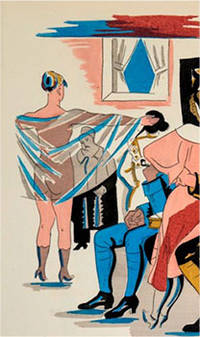
16-3508Paris: La Sirène 1920. Quarto 35pp. 31.5 x 25.5 cm. Original wrappers. In custom red roan leather slipcase with raised design from one of the images by the Russian American binder Sasha Mosalov.André Lhote has handcolored 11 designs for this unique copy in addition to the color pochoirs. This copy contains as an added frontispiece the original ink drawing of one of the illustrations showing a stern Madame and one of her triste filles.First edition of these audacious Escales to the glory of the French brothels. Limited to 440 copies this one on Lafuma is unnumbered because it is a unique presentation copy. There are 32 compositions of the Cubist painter André Lhote of 13 including the cover and the title page have been enhanced with colors in stencil pochoirs or silkscreens by the Marty workshops. There is an autograph dedication signed by André Lhote to «doctor of Cardenal expert in many things.» . It is noted that the said doctor was detached by the administration with the ladies of the brothels. Repaired tear to the cover not affecting any image.LHOTE - Jean COCTEAUEscales. Paris La Sirène 1920.In-4 35 feuillets broché.Édition originale de ces escales audacieuses à la gloire des maisons closes. Tirage limité à 440 exemplaires celui-ci sur vélin pur fil Lafuma non justifié.L’illustration réunit 32 compositions du peintre cubiste André Lhote dont 13 y compris la couverture et la vignette de titre ont été mises en couleurs au pochoir par les ateliers Marty.Envoie autographe signé d’André Lhote au « docteur de Cardenal connaisseur en bien des choses… ». Il y lieu de souligner que ledit médecin était détaché par l’administration auprès des dames des maisons closes.Luc Monod: Manuel de L'Amateur Livres Illustrés Modernes 1875-1975 1875-1975 no. 2906. Paris: La Sirène, 1920. hardcover
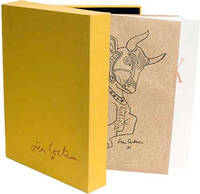
16-5018Paris: Michèle Trinckvel 1965. The complete portfolio of thirty-two lithographs sixteen in colors hors-texte title page text in French and justification. This is the deluxe edition of 48 copies with a an extra suite of the lithographs on Rives.Sheets loose as issued with original brown paper wrapper with original lithographic cover and yellow cloth-covered portfolio stamped with artist's name in red. Front cover slightly time stained.15.5 x 11.5 inches sheet size; 395 x 290mm.The last artist book by Cocteau finished a few hours before he died. Luc Monod: Manuel De L'Amateur Livres Illustres Modernes 1875-1975 no. 7626.32 lithographies en couleurs par Jean COCTEAU dont un frontispice et un titre-frontispice.Tiré à 200 et quelques exemplaires celui-ci n° 48 un des 48 sur vélin de Rives comprenant une suite supplémentaire des lithographies en couleurs. Paris: Michèle Trinckvel, 1965 hardcover
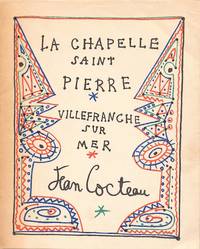
5113La Chapelle Saint Pierre Villefranche sur Mer Editions du Rocher Monaco 1957. 775 copies printed. On the title page Cocteau drew two sketches with inscription and date. To the right of his last name near the right margin Cocteau has sketched half of Orpheus's face. Below the full title Cocteau inscribed signed with date and drew a second smaller sketch which included a second signature. "With fond memories to Luis Calvo and to A.B.C Jean Cocteau 1960." A second signature and small vertical sketch appear to the right. Nineteen separate pages printed drawings and photographs throughout in gray tones. <br /> Condition: Paper cover shows age especially at the spine light soiling along right edge decorative cover shows small break at spine.<br /> <br /> The soft cover book tells the story of Cocteau restoring the Chapel of Saint Peter including many reproductions of the artwork as well as Cocteau engaged in the refurbishing effort. The ancient Romanesque chapel dedicated to Saint Peter patron saint of fishermen was restored and decorated by Cocteau. . unknown
192977746Sous étui bordé, chemise de rhodoïd. Reliure maroquin rouge à large encadrement et sertis d'un listel de box noir. Le premier plat est décoré de roussette noire polie et de papier Japon gris-noir laissant apparai?tre un cercle de papier Japon blanc évoquant « la boule de neige » ; le second plat également orné de roussette noire polie divisée dans toute la hauteur d'un papier Japon blanc auquel est accolée partiellement une languette de roussette rouge bordeaux. Tranches colorées noires. Couverture et dos conservés. Reliure signée G. CLAES.
1928161170London: Wishart & Company 1928. Eliot and I are working on a parallel First edition first impression one of 100 deluxe copies printed on handmade paper and specially bound including illustrations by Jean Cocteau not supplied with the trade edition this copy unnumbered. Armed with Madness was Butts's second novel "a modernist treatment of the grail myth" ODNB. The first trade edition is seldom encountered and this handsome limited edition is inevitably rare. This Butts's first novel to be published in the UK combines Modernist concerns about the spiritual wilderness of the period with the powerful symbol of redemption and healing found in the Holy Grail. "In toying with the Grail myth Armed with Madness casts modernism's relentlessly fragmented disenchanting and morally ambiguous narratives as a quest without end" Emre. The use of Arthurian grail-quest mythology to comment on the conditions of the time had been explored by other modernist authors most notably perhaps in T. S. Eliot's The Waste Land 1922 the fact of which Butts was well aware. In a journal entry from 1927 Butts half-jokingly complains that Armed with Madness "might well have been called The Wasteland sic. Eliot always anticipates my titles. Eliot and I are working on a parallel but what is interesting is that he is working on the Sanc Grail on its negative" Kroll p. 159. Butts uses this novel to suggest "readily available cures for the condition of barrenness and sterility illustrated in Eliot's poem" ibid. Butts's own interest in the Grail myth was grounded in the rich folkloric landscape where she lived - the countryside around Salterns South Dorset. This "together with the classical stories and myths her beloved father recounted and acted out with her haunted her imagination and informed her writing" ODNB. Her interest in the mystical led Butts to spend three months at Aleister Crowley's Abbey of Thelema where she contributed to Book 4 of his Magick in Theory and Practice. Butts was disappointed with Crowley's form of mysticism however which she later referred to as "a desolate path" Blondel p. 102. Despite this her "brief friendship with Crowley had a lasting effect on her fiction leading to the development of her ethics of modernist occultism" Clukey p. 79. Butts met Jean Cocteau in Paris in 1926 and immediately felt that they shared a "magical affinity" Radford p. 219. The pair quickly established a friendship based on their shared loves of literature and opium. Cocteau also illustrated her Imaginary Letters published in the same year as the present work. Butts's writing remained somewhat overlooked until the 1980s when several of her novels were republished and her work has continued to receive growing scholarly interest. She is "now recognized as one of the most important and original modernist authors of the inter-war years" Blondel p. 1. Octavo. Frontispiece and 2 plates after drawings by Jean Cocteau. Original blue buckram spine lettered in gilt top edge gilt others untrimmed blue silk bookmarker. Pencilled ownership inscription dated January 1936 of one Lady Margaret Joanne Bowyer-Smyth 1900-1976 on front free endpaper. Spine and board edges faded extremities rubbed touch of wear to foot of spine contents clean and bright; a very good copy indeed. Nicholas Blondel The Journals of Mary Butts 2002; Amy Clukey "Enchanting Modernism: Mary Butts Decadence and the Ethics of Occultism" in Modern Fictions Studies 2014; Merve Emre "Modernism's Forgotten Mystic" in The New Yorker December 2021; Jennifer Kroll "Mary Butts's 'Unrest Cure' for The Waste Land" in Twentieth Century Literature 1999. hardcover
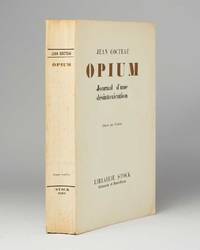
193021228021930. Paris: Librairie Stock Delamain et Boutelleau. 1930. 8vo. Original cream printed wrappers spine and upper cover lettered in black and gold partially uncut; pp. 264 2 with 40 plates after line drawings by Cocteau included in pagination and a further 3 plates after collages by Cocteau; very slight lean creasing and spotting to spine spine ends a little worn very light toning and dust-soiling to covers; internally clean; overall a very good copy.First edition number 14 of 28 copies printed on Japon Imperial of Cocteau's extraordinary account of the physical and mental anguish of his withdrawal from opium addiction extensively illustrated by the author.Cocteau had largely been introduced to opium by the French musicologist and sinologist Louis Laloy 1874-1944 in 1924 during a period of profound depression following the unexpected death of the writer Raymond Radiguet. 'Cocteau shut himself away with the amateur Sinologist and the musicians in a room in their hotel . A hundred times he tried to absorb opium more bitter than bromide; a hundred times he complained about not feeling any benefit from it. Finally after three months the anguish fell away' Arnaud pp. 351-2. Cocteau wrote and illustrated Opium between 16 December 1928 and April 1929 while undergoing treatment at a clinic in Saint-Cloud and it was during this time that he wrote Les Enfants terribles 1929 - arguably his most famous work - over the course of three weeks his illustration to p. 241 bearing the same title.His haunting illustrations from the early stages of his recovery - featuring a screaming figure with his eyes scratched out a limbless man a nude figure holding his four-faced head in his hands and a weeping sun inter alia - give way to eerie figures composed of tubular structures and finally to images of freedom and hope. The third collage Je quitte Saint-Cloud I Am Leaving Saint-Cloud shows a classical statue fleeing on horseback through a star-studded sky and the final illustration La Destinee de l'oiseleur The Fate of the Bird-Catcher shows an outstretched hand allowing Cocteau himself the self-portrait on p. 27 titled Oiseau to fly away at last. 'The drawings done under the influence of opium are a marvel. They allow us a glimpse into the life of a tortured soul who cries out in lines that excite the senses and cause us to wonder about the daily nightmare of addiction' Emboden p. 36.Addressed to 'opium smokers the sick and those unknown friends found through books who are the only excuse for writing' trans. Opium was perhaps unsurprisingly taken up by the American Beat poets. The book featured on the shelves of William S. Burroughs's library which so impressed Allen Ginsberg and Jack Kerouac in the mid-1940s. Although Burroughs does not name Cocteau's Opium in his preface to Junkie 1953 he would later explicitly acknowledge its importance: 'I always had a romantic literary relationship to drugs like you find in De Quincey or in Cocteau's Opium' Lane p. 106.Crosland p. 229; not in Carteret cf. vol III p. 107. See Arnaud Jean Cocteau: a Life 2016; Emboden The Visual Art of Jean Cocteau 1989; Lane The French Genealogy of the Beat Generation 2017. unknown
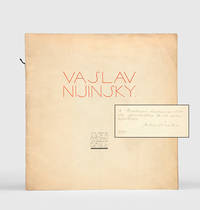
1910136928Paris: Société générale d'impression 1910. A veritable love letter to Nijinsky First edition one of 934 standard copies from an edition of 1000 on japon inscribed by the illustrator on the recto of the limitation leaf "A Madame Suzanne Süe son admirateur et son ami respectueux Paul Iribe août 1910". "Nijinsky fascinated Cocteau most on account of his potent mixture of animality and fragility at once desirable and androgynous half-angel and half-leopard. He presented for Cocteau a unique hybrid spectacle of desire pain and sacrifice. In this little-known volume. Cocteau signed a veritable love letter to Nijinsky" Williams p. 46. The book arranges Cocteau's pair of Nijinsky-inspired poetic triplets into single lines to form captions for Iribe's Beardsley-esque illustrations. Paul Iribe 1883-1935 worked in Hollywood during the 1920s and was Coco Chanel's lover from 1931 to his death. He came to prominence when couturier Paul Poiret used his fluid decorative line to create a modern style of fashion plate subsequently collected in the volume Les Robes de Paul Poiret racontée par Paul Iribe. These images of uncorseted young women enjoying the luxurious pastimes of the affluent were contentious. Cocteau said in Portraits-Souvenirs that "Iribe's album disgusts mothers". The recipient was the wife of Louis Süe the painter architect and interior designer. Süe visited Vienna with Poiret in 1910 and was inspired by the Wiener Werkstätte to create a similar design collective being a co-founder of L'Atelier Français in 1912 later establishing the Compagnie des Arts Français with André Mare. Quarto 300 x 310 mm. Six plates from line drawings by Iribe. Publisher's silk-tied light card wrappers printed in red and black. Some wear and soiling to the wrappers with scratches to the back wrapper and a light corner crease not affecting the illustrations. unknown
AMA-367Paris, À la Belle Édition, 1909-1911. 6 numéros en un volume in 8° carré, cartonnage beige à dos toilé, premier plat de couverture illustré par Paul Iribe contrecollé, couvertures conservées, 6 signets de soie noire, non rogné, rousseurs sur la couverture.
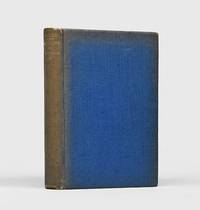
1930D17620Paris: Librairie Stock 1930. First Edition. Hardcover. Very Good. This is number XI one of 10 copies hors commerce on velin pur fil du marais. Inscribed by Cocteau to John Kobler on the half-title with a fine original drawing dated 1960. 43 illustrations by the author. 8vo Dark blue morocco by Andréas Relìeur top edges gilt spine and board edges unevenly discolored joints rubbed; original wrappers bound in. John Kobler bookplate tipped to front pastedown. <br/><br/> Librairie Stock hardcover books
195224329Paris 1952. Original wraps. Fine/Fine. Jean Cocteau and Georges Hugnet. #78 of 80 copies within the larger limitation of 100 copies printed "sur velinde Rives" and SIGNED AT THE LIMITATION BY BOTH ILLUSTRATORS JEAN COCTEAU AND GEORGES HUGNET. A lovely copy to boot of the 1952 original edition in French. Immaculate in its glassine dustjacket housed in an all-but-pristine dark-red chemise and matching dark-red slipcase. 64 surrealist poems written by both Jean Cocteau 1889-1963 and Georges Hugnet 1906-1974 and 16 original color lithographs executed by both of them. unknown
192377745Sous étui bordé, chemise de rhodoïd. Reliure maroquin bleu à encadrement. Plats ornés de papier aérographé de formes géométriques de couleur gris-vert, bleu, jaune et gris qui rehaussent quelques petites pièces rouge vif. Gardes de papier assorti. Tranches dorées sur témoins. Couverture et dos conservés. Reliure signée P. AMELINE.
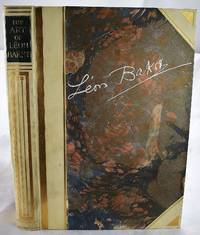
19131911080058London : Fine Art Society 1913. First Edition. Hardcover. Very Good. First English Edition of the Earliest Major Work on Baskt Limited edition of only 425 copies. Folio; 41 cm. Bound in publisher's 3/4 vellum over marbled boards. Gilt stamped spine. Top edge gilt. Green calf spine label. 51 pages; portrait frontispiece and 77 mounted plates including 50 in color. Art decoratif de Leon Bakst; translated from the French by Harry Melvill. "With the greatest economy of means he Bakst obtains the greatest sum of effect and thus he realises an "orchestration" of colour in unison with the true colour of music." Preface. The colour plates depict Bakst's iconic costume designs several made for Nijinsky and several stage sets. Cocteau provided the notes on the ballets the designs were created for. Ballets Russes Diaghilev <br> This is an oversized or heavy book which requires additional postage for international delivery outside the US. London : Fine Art Society hardcover
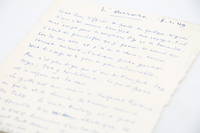
1949866621949. Fine. Cocteau fascinated by New York the ""city that sleeps standing"" 17 janvier 1949 14.90 x 19.50 cm un feuillet Initialed autograph manuscript by Jean Cocteau entitled ""L'Aurore"" dated by the author 17 January 1919. One page on one leaf written in blue pen. Published in L'Aurore 19 January 1949 no. 1353. Jean Cocteau wrote this dazzling portrait of the city that never sleeps for the newspaper L'Aurore after a twenty-day stay in New York. The writer would later extend this account with his 'Lettre aux Américains' Grasset 1949 taking up some of the words and expressions written on the spot in this charming manuscript. According to legend Cocteau began writing his 'Lettre aux Américains' on the flight home. One can imagine the writer eyes still shining with the lights of the city jotting down his first impressions on this page: ""It's very difficult to speak in a few lines about a city like New York. Did my trip last twenty days or twenty years I wonder . Nothing is lighter than the air of New York. Too light. Everything swirls. What rests and settles is very rare. The skyscrapers themselves sway slightly at the top and the light shines through them like tulle. At night Broadway is plagued by frightful electrical tics. And luminous Christmas trees six stories high adorn Park Avenue."" Cocteau had flown to New York in the last days of December 1948 for the premiere of The Eagle with Two Heads starring Edwige Feuillère as the Queen and his great love Jean Marais as the young anarchist poet. He hoped to convince the great actress Greta Garbo to play a role in one of his next films: ""It was the first time I'd spent New Year's Eve away from my city and I'm lucky when the clock struck midnight to be kissing Greta Garbo whose face is more and more admirable."" The writer ends the manuscript with a masterful ode to the New York way of life: ""There are sitting cities. There are cities that lie down. New York likes neither to sit nor to lie down. It's a city that sleeps standing."" In New York Cocteau found the perfect match for his own creative energy. During this short stay he posed for Philippe Halsman who had been commissioned by LIFE magazine to ""capture on camera what goes on inside a poet's mind"". Halsman's emblematic portraits - a janiform double profile or as a monster-magician with three pairs of hands smoking drawing and reading - caught the likeness of the surprisingly varied artist with incomparable accuracy. Precious impressions of a dandy and protean Cocteau irresistibly drawn to New York's bustling energy. unknown
192033262Paris Editions de la Sirn 1920 In-12, broch, couverture imprime.Edition originale de ce recueil de 20 articles parus dans Paris-Midi du 31 mars au 11 aot 1919 dans lesquels il y prcise son esthtique. Tirage sur grand papier limit 55 exemplaires numrots. Un des 5 premiers exemplaires sur vieux japon. Couverture dcolore.Carte blanche constitue la premire collaboration suivie de Cocteau avec la presse grand public. Sous ce titre, lit-on dans larticle inaugural, Cocteau se propose dinitier le public lesprit nouveau qui agite toutes les branches de lart : son jazz-bandisme, la diffrence entre cubisme et futurisme, que le public et ses guides confondent ; le public de thtre ; le cinma, genre nouveau (lloge de Charlie Chaplin et de Mistinguett); des expositions de Derain, qui ne divise plus personne (Les artistes de toutes les coles jeunes, de toutes les coteries se rapprochent pour admirer Andr Derain), ou de Matisse ; le got des faits divers ( propos de Landru) ; le bal musette, qui est Paris.Est joint le manuscrit autographe d'un des article, intitul Raspoutine Vernouillet, 3 feuillets in-4 crits au recto la plume, monts sur onglets et relis en une plaquette in-4, bradel demi-maroquin noir bandes, plats de papier gris; doublures et gardes de papier gris.Trs beau texte sur l'apptit du public pour les faits divers: L'autre jour le peintre Vlaminck djeunait au petit "Restaurant de Rome", rue Houdon, lorsque la porte s'ouvrit et laissa entrer un vieillard pauvre. Il vendait des journaux. Vlaminck observa qu'il en vendait quatre pour un sou et que tout le monde achetait. Vlaminck suivit l'exemple et vit que ses journaux taient de vieux journaux de 1915. Comme il en faisait la remarque, "oui" murmura le vieillard en clignant de l'oeil et en lui poussant le coude, "mais dans ces journaux, IL Y A ENCORE LA GUERRE". Cette histoire fait rflchir. La masse aime le fait divers. La guerre tait la reine des faits divers. Le fait divers monstre. Le fait divers type. La guerre finie, la masse rclame "cancans et faits divers". Or Landru inaugure le retour du fait divers civil. Avec lui le chien cras retrouve son droit... Le texte de ce manuscrit autographe trs corrig, prsente de nombreuses et importantes variantes par rapport celui qui a t publi dans l'dition originale de Carte blanche (Paris, Editions de la Sirne, 1920, pages 56 59).
192554636Paris Librairie Stock 1925 Grand in-4, en feuilles, couverture imprime.Edition originale de ce pome crit en 1923 par Cocteau la suite du dcs de Raymond Radiguet, qui voque le jeune romancier dont la photographie rayogramme de Man Ray (reproduite en hliogravure et place en frontispice) serait le portrait. Cette photographie est un des premiers rayogrammes dont Man Ray venait de mettre au point le procd. Tirage limit 355 exemplaires numrots. Un des 250 exemplaires sur vlin d'Arches.
1930D17620Paris: Librairie Stock 1930. First Edition. Hardcover. Very Good. This is number XI one of 10 copies hors commerce on velin pur fil du marais. Inscribed by Cocteau to John Kobler on the half-title with a fine original drawing dated 1960. 43 illustrations by the author. 8vo Dark blue morocco by Andréas Relìeur top edges gilt spine and board edges unevenly discolored joints rubbed; original wrappers bound in. John Kobler bookplate tipped to front pastedown. <br/><br/> Librairie Stock hardcover
1935CLL-293Paris, Grasset, 1935 Grand in-4 de (134) pp., broché, couverture rempliée.
19498666217 janvier 1949 | 14.90 x 19.50 cm | un feuillet
193080661Reliure postérieure bradel plein papier imprimé. Couverture et dos conservés. Non rogné. Reliure signée P. Goy et C. Vilaine.
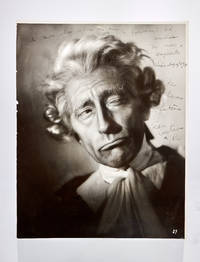
194375328S. n. 1943. Fine. S. n. 1943 29 x 22.80 cm une photographie Large photographic portrait of Jean Cocteau inscribed by Cocteau to Willy Michel 1943 29 x 22.8 cm one photograph Extremely rare photographic portrait of Jean Cocteau in contemporary silver print produced during the shooting of Serge de Pologny's film Le Baron fantôme for which he wrote the dialogues. Beautiful signed autograph inscription in the upper margin of the photo to which Cocteau has added his famous little star: à mon cher willy Michel. Souvenir très amical de nos complicités cinématographiques. Le Baron fantôme Jean Cocteau. 1943 To my dear Willy Michel. Very fond memory of our film-making complicity. Le Baron fantôme Jean Cocteau. 1943 Some tiny lacks in the left margin of the photograph. Magnificent large photographic portrait offered to the photographer Willy Michel who installed the first photo booth in France in his studio and became famous for his selfies with all the artists actors and writers of his time. With this superb highly expressive photograph in costume Cocteau offers this bibliophile patron of artists and accustomed to cinema sets an item of choice for his famous collection of portraits and artists' signatures. A wonderful highly expressive portrait of which we have not found any other copy in international public collections. S. n. unknown
28534and inscribed "Jean Cocteau Salue à l'Université de Washington" with a five pointed star 11" x 8" in mount 14½" x 10½" no place no date circa A splendid image of one of the 20th century's most versatile artist writer poet ballet creator and film maker. Henri Manuel 1874-1947 was a Portrait Photographer working in Paris with his brothers Gaston and Lucien under the imprint Manuel Frères. unknown
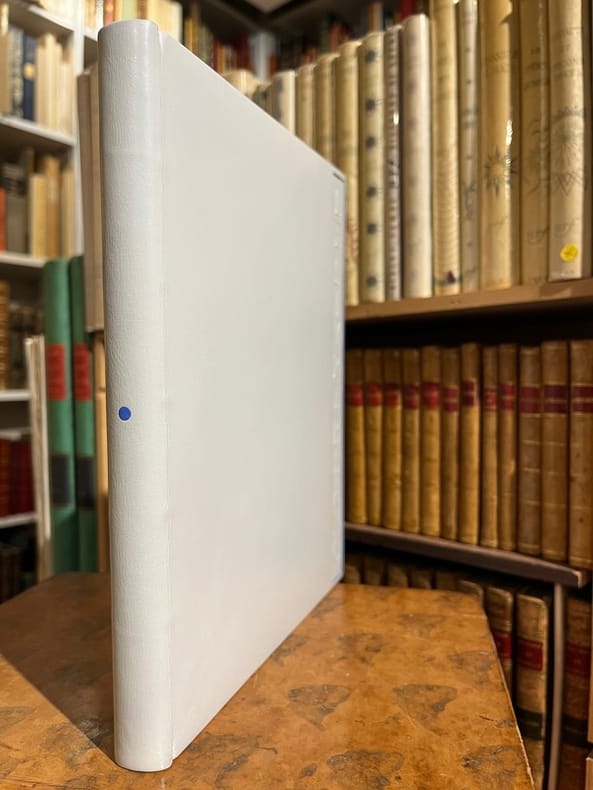
194920139Paris, Paul Morihien, [1949]. Petit in-4 en plein box gris brume (ou blanc ombragé) orné au premier plat du titre mosaïqué en lettre de box blanc, dos lisse orné d'un point bleu, gardes de papier couché bleu, couvertures et dos conservés, tranches dorées. Chemise à rabat de box et papier identiques. Reliure signée P. L. Martin.
701143Galerie Jean Giraudoux Paris 1964 Grand in-4 carré ( 315 X 245 mm ) de 123 pp.-( 4 ) ff. toile blanche, illustrée du titre en rouge dessiné par COCTEAU sous coffret de toile tango de léditeur. Edition originale, et premier tirage des 30 compositions de Jean COCTEAU, imprimées en rouge. Tirage sur papier de toile enduit, comme les nappes de restaurant, pliées en double à la chinoise, à 915 exemplaires, et quelques hors-commerce, celui-ci un des 30 exemplaires de tête ( N°17 ), avec un beau DESSIN ORIGINAL signé de Jean COCTEAU une RECETTE AUTOGRAPHE signée avec PETIT DESSIN de Raymond OLIVER et une suite en noir des illustrations. Dos de l'étui légèrement passé, livre en parfaite condition. De la bibliothèque Jacques et Hélène BON ( 2022, N°521 ) ( Ex-libris ).
5491Au commencement de la Grande guerre, Cocteau est assign au service des ambulanciers auprs dune unit de fusiliers marins sur le front de Nieuport en Belgique. Il passe tout lhiver 1915 et le dbut de lanne 1916 dans la rgion de lYser o il vivra une exprience traumatisante qui conditionnera sa vie future. CE PRCIEUX MANUSCRIT DE POMES CHARG DMOTION CONSTITUE LA RELATION DE CETTE TERRIFIANTE EXPRIENCE....Ma mre ctait bien elle assez bien elle / avec un tablier gorge de pigeon borde (sic) de velours noir / et un petit lzard de diamant son corsage / Elle me dit : je viens par le tunnel du rve / Jai voulu couter le canon avec toi / Car cette nuit il y aura une attaque / et moi je disais mais non, mais non / alors elle sassit prs de moi / elle posa ses mains sur moi / et elle tait dune tristesse immense / Elle me dit : Tu sais ton frre a son brevet de pilote / aussitt / Et javais douze ans la campagne / le soir, dehors, aprs dner / mon camarade Charles dit : "il parat / que les frres Whrit volent" / Maman sourit en cousant / Mon frre Paul toujours incrdule / Et Charles dit : Je serai mort / il y aura une grande guerre / et Paul qui fume la sous ce chne / Volera et jettera / des bombes la nuit sur des villes& [alors jtais avec mon frre en aroplane / nous volions dans un appareil Nieuport sans moteur / Nous volions a une grande hauteur / au dessus dun port ou entraient et sortaient les navires...]...[Juste au dessous de nous / il y a maman / elle nous cherche / elle nous cherche sur toute la terre probablement / alors je le suppliai de descendre / mais il disait : nous ne pouvons plus redescendre]Je me rveille mon bras / tu semplit deau de Seltz et le songe / Quelle heure est il a-t-on dn / Le lieutenant me jette un coussin la tte / mais couche toi donc tu dors debout / Je ne dors pas / Une lame de fond me roule / dans ce faux sommeil / Et je maccroche / la barque jentends des rires / mais une lame de fond / memporte / profondment / dans les mers mortes / Alors jtais avec mon frre en aroplane (& ) Nous volions a une grande, grande hauteur / au dessus dun port ou entraient et sortaient les navires / Il me dit / Tu vois sur ce bateau / Juste au dessous de nous / il y a maman elle nous cherche / Elle nous cherchera probablement sur toute la terre / Et je le suppliais de descendre / mais il disait : non nous ne pouvons plus redescendre& ...Ils dorment tous (& ) / Ils se sont tous remplis comme un bateau fait eau / et soudain flotte la drive / Cette pave de couvertures / de genoux de coudes / (& ) / les obus tombent / sur lhtel de ville quil fait bon / sous leur bocage / nuit dtoiles / La fusillade tape / de coups de trique secs sur / des planches tout lhorizon / scroule......Cette nuit dans les mines / Une nuit Nieuport Jai surpris entendu / le travail du rossignol au clair de lune / Qui donc brait / tousse glousse grogne et coasse / dans larbre endormi debout au cloroforme / (& ) Cest le rossignol il prpare / son chant damour la rose / a la rose en avril / et je sens ici l non l / cette odeur / mais cest elle ! Cest la rose ! / Voil deux ans que je nai pas senti de rose / Le rosier viril en boutons / et bientot fminin / concentre / un explosif dodeur / qui tue les papillons crdules / Prpuces friss de la rose / indcente / de la chaleur jadis ici / je vois une rose rouge& ...Entre les deux poussent / La brousaille de fil de fer o se cabrent (& ) / les chevaux de frise. L / l cest le boulevard o on meurt / Le sol qui tue / Si on y marche / Comme sur le rail rouge du mtropolitain (& ) / La bande mixte / plus vide que sil y a la peste / La nuit on y fait des patrouilles / mais pas / La bande mixte / La zone qui foudroie / car en haut de petits trous / du priscope / loeil surveille et se perche (& ) seul sur les sacs& ...Mais ici la vie est interrompue / Car cette ville calme, cet got / toil sont moins srs / que Vra Cruz pendant la peste / Mme / il arrive mme quun promeneur / nentende pas gmir loiseau / des balles mortes / Et sans rien comprendre il sent sa figure vaporise avec du chlorure de mthyle / [Et de nouveau la mer / Se posait de tous les cts / comme une partie dchecs / autour de notre marche des mille murs du labyrinthe] (& ) / [Et de nouveau la nuit / Dplaait le bruit de la mer / comme un jeu dchecs / De tous cts autour de nous / autour des mille / a droite gauche de mille murs du labyrinthe]......Capitaine ! - Mon Capitaine ! / Nous allons arriver. Quelle route ! / les Ces trous dobus ! Le brancard / le brancard dfonce la paroi en mesure, impossible / impossible de lattacher. Mon Capitaine ! / Mon Capitaine ! / Jai sa main qui sue, ses poils, son bracelet montre / Piti ! Achevez moi ! Prenez mon rvolver ! / Soyez charitable ! On arrive / On arrive / Mon Capitaine, on approche / on ne voit rien dehors. Sa balle Sa balle est dans le ventre. ma femme / ma femme& , il faut / Taisez vous, ne me parlez pas / vous parlerez lambulance / Sortons dabord de ce chemin / ou les marmites& / Pouf ! Quatre Sa pleur / claire, on voit ses mains sa moustache qui tremble / Calmez vous mon Capitaine / on approche / o sommes nous ? / Gronendick. Encore ! / Je ne pourrai jamais / il vaut mieux machever / Calmez vous mon Capitaine / a boire ! Il ne faut pas / il ne faut pas boire. Il saute ! Ha je me couche...Le Discours du grand sommeil avait t ddi au jeune pote Jean Le Roy, mort au combat. Lpigraphe indique que ce long pome est "traduit (& ) de cette langue morte, de ce pays mort o mes amis sont morts". Ds lors, la posie devient une confrontation avec la mort, les pirouettes verbales si singulires de lcriture de Cocteau napparaissent que comme des exercices de funambulisme pour masquer le danger permanent de la mort. Le Discours ne parut pas en volume ; il fut recueilli dans Posie : 1916-1923 (Gallimard, 1925).
192640920Couverture rempliée illustrée. Intérieur très frais.