1 336 résultats
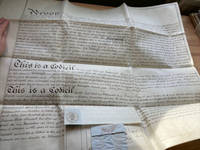
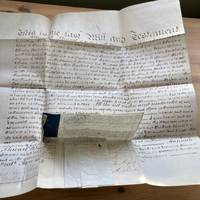
49887Long Melford Sudbury Suffolk: Hannah Stewart 26th February 1839 . Large vellum document. Two vertical folds and three horizontal folds. 18" x 18". Plus probate certificate and paper/wax seal. VG. Long Melford, Sudbury, Suffolk: Hannah Stewart, 26th February 1839 . hardcover
49886Great Waldingfield Sudbury Suffolk: Reverend Francis Cresswell 22nd December 1841 Probate. 22" x 27". 2 vellum sheets written on one side. Two vertical folds and three horizontal folds. Plus the probate certificate is attached including the paper/wax seal. Family history records show Francis Cresswell was born in 1762. He married Jane Okes on October 12 1807 in Cambridge Cambridgeshire England. He died on November 17 1841 in Suffolk England having lived a long life of 79 years and was buried in Great Waldingfield Suffolk. "1807 - Francis Cresswell S.T.B. Clare College Cambridge; B.A. 1785; M.A. 1788; B.D. 1796; Fellow and Tutor; was instituted March 24 1807 enjoying the benefice thirty-five years.He died Nov. 17. and was burried here November 24 1841 aged 78 years. There is a tablet in the church. In the churchyard West of the church is a stone with the initials: "F.C." 1841 J.C. 1870. The Parish register gives Francis Cresswell buried 24 Nov. 1841 aged 78. Jane Cresswell of Melford late of Great Waldingfield buried Feb 5 1870 aged 91." - See Rectors of Great Waldingfield By Rev. Francis Haslewood . Great Waldingfield, Sudbury, Suffolk: Reverend Francis Cresswell 22nd December 1841 (Probate) hardcover
1931007351Fécamp La Feuille en 4 1931 plaquette in-8 Broché Edition originale
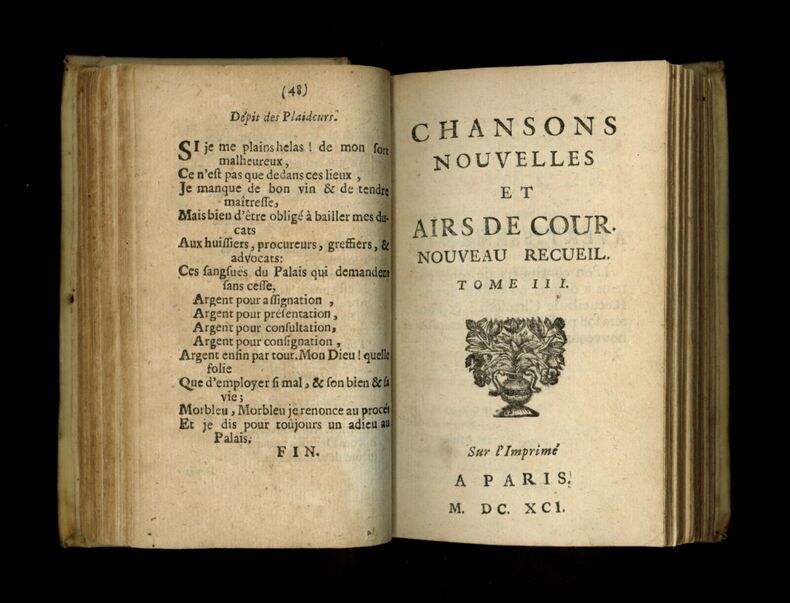
1690AMO-4534Reliure plein vélin ivoire de l'époque à coutures apparentes (vélin hollandais). Reste de titre à l'encre au dos (presque effacé). Légers frottements. Exemplaire frais, non restauré. Papier de qualité plus ou moins médiocre selon les tomes, parfois uniformément teinté. Collationné complet. Ce recueil est extrêment rare selon les différentes sources consultées. Sa mise en oeuvre semble hératique (nom d'éditeurn, dates et mention d'édition assez fantaisistes). Il semble pourtant que ce soit tout ce qui a paru de cet ensemble composé de chansons bacchiques, lestes et gaillardes. On lit dans le catalogue de livres provenant de la bibliotheque de monsieur Leroux de Lincy, n°225 (vélin, même collation) : "Recueil extrêmement rare, dans lequel on trouve un certain nombre de chansons relatives au règne de Louis XIV (vendu 58 francs à la vente Silvestre en 1845, ex. relié vélin comme le nôtre). "Il s'y trouve un grand nombre de couplets hostiles à Louis XIV". On trouve un autre recueil quasi identique à la date de 1688, est-le même ? Et un autre en 12 parties datées de 1696, qui ne semble pas être le même que notre exemplaire. On lit par ailleurs dans le catalogue de la bibliothèque de monsieur Cigongne à propros d'un exemplaire identique au nôtre : "Tome I. 3è édition (6 parties intitulées t. I à VI, et 1ère partie d'un 2ème volume, datée de 1690). Sur l'imprimé à Paris (Hollande), 1691. Petit in-12. maroquin olive par Trautz-Bauzonnet (n°1228 du catalogue Cigongne), avec ce commentaire : "On croit que c'est tout ce qui a paru de ce recueil.".
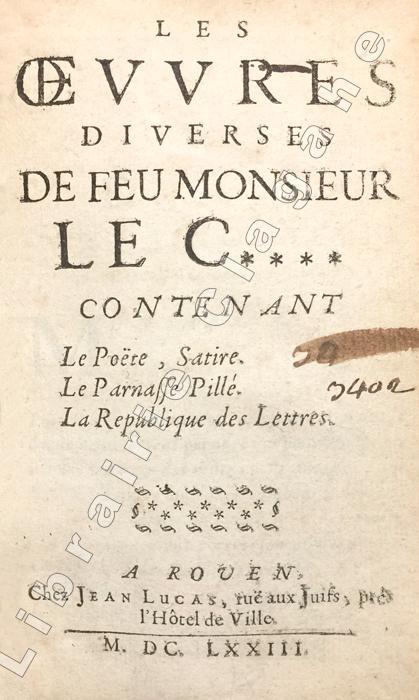
16734331Rouen, Jean Lucas, 1673 ; in-12 ; plein vélin ivoire (reliure de l'époque) ; 53 pp.
1994LFA-126746915N° 307 (Décembre 1994) : revue de 78 pages, format 215 x 285 mm, illustrée, brochée couverture couleurs, bon état
189212349Lyon, Librairie Artistique et Littéraire, Dizain et Richard, 1892 ; in-4, plein chagrin rouge cerise, dos à nerfs soulignés de filets à froid et dorés, fers dorés aux lions au dos, titre et tête dorés, non rogné, couverture t dos conservés (reliure de l’époque) ; IV, (1), 358, (2) pp., très nombreuses illustrations (32 hors-texte, 1 eau-forte).
1934013804Paris [Georges Hugnet] 1934 In-12 Broché
1928120551928. Original illuminated large manuscript page on vellum comprising a central panel of calligraphic text in red and black ink with a miniature of a young herald surrounded by a decorative border of larger armorial shields set within a stylised foliate background in blue red green and gilt with a fine miniature of a knight’s tournament at the foot. 41 x 25.5cm. Mounted on card with ink title to the head: “Illuminated page on vellum. / Testimony of study for Board of Education Exam in industrial design 1928.†In very good condition.WITH: Two further pencil drawings by the same artist the first of an elderly gentleman the second of a classical sculpture measuring 57.5 x 38cm and 56 x 39cm respectively each signed “Bate†and dated 1927. The pencil drawings have a few short tears to the edges otherwise they are in very good condition. A fine example of 1920s illumination hardcover
1942012873Saint-Maurice d'Etelan Pierre Bettencourt 1942 In-8 broché, couverture illutrée
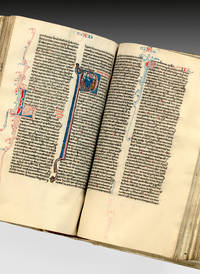
ABAA25-1<p>Northern France probably Paris 1230-1250.</p><p>12mo 140 x 93 mm of 1 658 ll.: 1-1524 1620 17-2224 2310 24-2524 2617 without the bl. l. xviii 2726 2828 295 without the bl. l. vi. <strong>Thus complete</strong>.</p><p>Double column of 47 lines written in brown ink in a very fine Gothic writing.</p><p>Justification: 92 x 60 mm.</p><p><strong>78 historiated initials</strong>. Quires numbered in Roman numerals at the foot of the back of the last ll. and signatures at the bottom corner of the text on each recto of the first half of a quire headings in red initials in red letters of running titles and chapters numbers alternately in red or blue initials of chapters on 2 lines alternately in red or blue with a decor of the opposite color initials of 5 to 7 lines at the beginning of the prologues of the same type but with decoration in two colors opening the prologues 78 historiated initials most decorated with foliage and dragons the extension of 29 of them forming borders decorating the margin painted in blue pink orange-red and yellow a few wormholes in the first l. a few running titles cropped last l. restored in the outer margin.</p><p>Stiff vellum gilt Greek roll-stamp around the covers flat spine decorated green morocco lettering piece gilt edges from the 19th century.</p><p>Superb Capetian manuscript from the School of Paris complete and of perfect freshness handwritten on vellum skin and illuminated with exquisite finesse between 1230 and 1250.</p><p><u>Text</u>: List of Books of the Bible: recto and verso of the first endpaper; the Vulgate with the preamble: ll. 1-599v; Interpretation of the Hebrew names: ll. 600-658.</p><p>Superb example of the small vulgate bibles produced in Paris in the 13th century.</p><p>It was in the 13th century in Paris that the masters of theology of the University established what was to become the standard form of the Latin Bible: the selection of the books their order and their division into chapters established by Stéphane Laugton still universally employed the insertion of the forewords of St Jerome and the interpretation of the Hebrew names.</p><p>All these characteristics are present in this very elegant Bible on very thin vellum skin.</p><p><u>Illuminations</u>: A masterpiece from Pierre de Bar's workshop active in Paris between 1230 and 1250 distinguishes itself by the particularly colored and bright shades of its illuminations; the usual whites pinks and blues are enriched with red orange and even more surprisingly by large areas of yellow.</p><p>This Bible contains 78 illuminations of great beauty and of amazing freshness.</p><p>The repertoire of decorative details is peculiar compared to other French illuminations of the time and the foliage contains small clover leaves.</p><p>Branner attributed the illustration of the manuscript to the Parisian workshop that illustrated the most outstanding illuminated manuscripts of the first half of the 13th century Bar's workshop with reference to Cardinal Pierre de Bar 1252 who gave to the Abbey of Clairvaux a Bible in four volumes issued from this workshop and preserved today under the reference Troyes Bibliothèque municipale ms. 106 108 110 and 111.</p><p>This manuscript can be dated from 1230-1250. Remarkable for its large and well-formed heads; the bodies are robust and covered with clothes with deep and dark folds R. Branner <em>Manuscript Painting in Paris during the Reign of Saint Louis</em> 1977 pp. 70-71. He dates the activity of Pierre de Bar's workshop between 1230-1250 and explains its specificities by suggesting the development of its style outside Paris.</p><p>The decoration of the manuscript consists of 78 historiated illuminated initials and a great number of capital letters rubricated in red or blue.</p><p>This very attractive bible seems to have been made in Paris; it represents an interesting addition to the production of a workshop producing according to Branner some of the most beautiful and refined Parisian illuminations of the first half of the 13th century.</p><p>We witness from the years 1220-1230 under the reign of Queen Blanche of Castile a concentration of illuminators in Paris at the expense of abbeys and provincial capitular schools. We can indeed attribute several manuscripts to Blanche of Castile who inaugurated the tradition of female patronage in the royal family. But the peak of these famous small Capetian bibles happened during the reign of Saint Louis.</p><p>The subjects of the historiated initials are the following:</p><p>l. l St Jerome Prologue; l. 4 The 7 days of Creation Genesis; l. 27 Moses leading his people across the Red Sea Exodus; l. 43 the Jews offering a sacrifice; l. 54 Moses preaching; l. 72 Moses receiving the Tablets of Stone; l. 89 God talking to Joshua; l. 99 Gideon holding his sword; l. 110 Elimelech and Naomi migrating to Moab Ruth; l. 112v Beheading of Eli; l. 128 Beheading of Amalekite before David; l. 141 David's servant bringing Abishag to him; l. 155v Ahaziah falling from a tower; l. 170v the Patriarchs; l. 185 Solomon enthroned; l. 202 The Construction of the Temple; l. 207 Nehemiah presenting the golden cup to Artaxerxes; l. 213v Spraying of the Temple; l. 220v Tobias; l. 225v Judith beheading Holofernes; l. 232 Ahasuerus being merciful to Esther; l. 238v Job on the manure heap; l. 251 David playing the harp; l. 256 anointing of David by Samuel; l. 258v David showing his mouth; l. 261 madman holding the stick and the bread Psalm 52; l. 264 God above David below in the water Psalm 68; l. 268 David ringing the bells Psalm 80; l. 271v Two Singers Psalm 97; l. 275 The Trinity Psalm 109; l. 283v Solomon whipping a young man; l. 294v Solomon teaching to a young man; l. 298 Madonna and Child Enthroned; l. 299v Solomon and a young man carrying a sword; l. 307v Ecclesia; l. 328 Isaiah being sawn in half; l. 353 Stoning; l. 381 Baruch writing; l. 384v Ezekiel in bed with the Tetramorph; l. 412 Daniel in the lions' den; l. 423v Hosea and Gomer; l. 427v Joel preaching to a group of Jews; l. 429v Amos offering the sheep; l. 432v God appearing to Obadiah; l. 433v Jonah in the mouth of the whale; l. 434v the teaching Prophet; l. 437 Nahum lamenting about the fall of Nineveh; l. 438v Habakkuk and the stones; l. 440 the Prophet with his scroll; l. 441v Two Prophets; l. 442v Prophet; l. 447 Two men talking; l. 449 Beheading of the idolatrous Jew; l. 466 the Messenger delivering the letter; l. 478v the Tree of Jesse; l. 494v Saint Mark with the lion; l. 505 Saint Luke with the angel; l. 521v Saint John; l. 535 Saint Paul carrying the cross; l. 541 Saint Paul carrying a sword; l. 546v Saint Paul carrying a sword and a scroll; l. 551 Saint Paul carrying a sword and a book; l. 555 Saint Paul carrying a sword; l. 556v Saint Paul carrying a sword and a book; l. 558 Saint Paul carrying a sword; l. 559 Saint Paul carrying a sword; l. 560 Saint Paul carrying a sword; l. 561v Saint Paul carrying a sword; l. 562v Saint Paul carrying a sword; l. 561v Saint Paul carrying a sword; l. 562v Saint Paul carrying a sword; l. 563v Saint Paul carrying a sword; l. 564 Two men talking; l. 568v. Ascension; l. 585 Jacob holding a book; l. 586v Saint Peter seated holding a book; l. 588 Saint Peter holding a key; l. 589 Saint John writing; l. 590v Saint John; l. 591 Saint John; f. 591 Saint Jude; l. 592 Saint John writing.</p><p>This complete bible dated from 1230-1250 is a masterpiece of Capetian illumination produced under the reign of Saint Louis.</p><p>Provenance:</p><p>- <em>Jean Tornone</em>: doctor from Burgundy: inscription on the verso of the endpaper mentioning his gifting of the book to <em>Stroyff</em>.</p><p>- <em>Assuerus Stroyff</em>: inscription mentioning his reception of the book by Tornone then his gift to <em>Johan Baron de Bronckhorst.</em></p><ul><li><em>Johan Baron de Bronckhorst</em> and <em>Batenburg de Guelders</em>: inscription dated from 1574 mentioning his receipt of the book.</li></ul><p><strong>FR</strong></p><p>Nord de la France probablement Paris 1230-1250.</p><p>In-12 de 1 658 ff. : 1-1524 1620 17-2224 2310 24-2524 2617 sans le f. blanc xviii 2726 2828 295 sans le f. blanc vi. <strong>Ainsi complet</strong>.</p><p>Double colonne de 47 lignes écrites à l'encre brune dans une très fine écriture gothique.</p><p>Justification : 92 x 60 mm.</p><p><strong>78 initiales historiées</strong>. Cahiers numérotés en chiffres romains au pied des versos des derniers ff. et signatures au pied du coin inférieur du texte sur chaque recto de la première moitié d'un cahier rubriques en rouge initiales en rouge lettres des titres courants et numéros des chapitres alternativement en rouge ou bleu initiales des chapitres sur 2 lignes alternativement en rouge ou bleu avec un décor de la couleur opposée initiales de 5 à 7 lignes au début des prologues du même type mais avec des décors des deux couleurs ouvrant les prologues 78 initiales historiées la plupart ornées de feuillage et de dragons le prolongement de 29 d'entre elles formant des bordures décorant la marge peintes en bleu rose orange-rouge et jaune qq. trous de vers ds. le premier f. atteinte à qq. titres courants dernier f. restauré ds. la marge extérieure.</p><p>Vélin rigide du XIXe siècle encadrement d'une roulette grecque dorée autour des plats dos lisse orné pièce de titre de maroquin vert tranches dorées.</p><p>140 x 93 mm.</p><p><strong>Superbe manuscrit capétien de l'école de Paris complet et de parfaite fraicheur calligraphié sur peau de vélin et enluminé avec une exquise finesse entre 1230 et 1250.</strong></p><p><u>Texte</u> : Liste des Livres de la Bible : recto et verso de la première garde ; la Vulgate avec le préambule : ff. 1-599v ; Interprétation des noms hébreux : ff. 600-658.</p><p><strong>Superbe exemple des petites bibles vulgates produites à Paris au XIIIe siècle.</strong></p><p>C'est au XIIIe siècle à Paris que les maîtres de théologie de l'Université établirent ce qui devait devenir la forme standard de la Bible latine : la sélection des livres et de l'ordre de ceux-ci et leur division en chapitres établies par Stéphane Laugton et encore universellement employée l'insertion des prologues de St Jérôme et l'interprétation des noms hébreux.</p><p>Toutes ces caractéristiques sont bien présentes dans cette très élégante Bible sur peau de vélin très fine.</p><p><u>Enluminures</u> : Chef-d'œuvre de l'atelier de Pierre de Bar actif à Paris entre 1230 et 1250 il se distingue par les teintes de ses enluminures particulièrement colorées et vives ; les habituels blancs roses et bleus sont enrichis de rouge orange et de manière plus surprenante encore par de larges zones de jaune.</p><p><strong>Cette Bible possède 78 enluminures d'une grande beauté et d'une étonnante fraicheur.</strong></p><p>Le répertoire de détails décoratifs est particulier en comparaison des autres enluminures françaises de cette époque et le feuillage comporte des petites feuilles de trèfle.</p><p><strong>Branner a attribué l'illustration du manuscrit à l'atelier parisien qui a illustré les plus remarquables manuscrits enluminés de la première moitié du XIIIe siècle l'atelier de Bar</strong> par référence au cardinal Pierre de Bar 1252 qui donna à l'abbaye de Clairvaux une Bible en quatre volumes provenant de cet atelier et conservés aujourd'hui sous les cotes Troyes Bibliothèque municipale ms. 106 108 110 et 111.</p><p>On peut dater le présent manuscrit de 1230-1250. Remarquable par ses têtes larges et bien formées ; les corps sont robustes et recouverts de draperies aux plis profonds et sombres. R. Branner <em>Manuscript Painting in Paris during the Reign of Saint Louis</em> 1977 pp. 70-71. Il date l'activité de l'atelier de Pierre de Bar entre 1230-1250 et explique ses spécificités en suggérant la formation se son style en dehors de Paris.</p><p><strong>La décoration du manuscrit comprend 78 initiales historiées enluminées et d'innombrables capitales rubriquées en rouge ou bleu.</strong></p><p>Cette bible très séduisante semble avoir été réalisée à Paris ; elle représente un ajout intéressant à la production d'un atelier considéré par Branner comme produisant certaines des enluminures parisiennes les plus belles et les plus raffinées de la première moitié du XIIIe siècle.</p><p>On assiste à partir des années 1220-1230 sous le règne de la reine Blanche de Castille à une concentration des artistes enlumineurs à Paris au détriment des abbayes et des écoles capitulaires de province. On peut en effet imputer plusieurs manuscrits à Blanche de Castille qui inaugura la tradition du mécénat féminin dans la famille royale. Mais l'apogée de ces célèbres petites bibles capétiennes se situe sous le règne de Saint Louis.</p><p>Les sujets des initiales historiées sont les suivants :</p><p>f. l St Jerome Prologue ; f. 4 Les 7 jours de la Création Genèse ; f. 27 Moïse conduit son peuple à travers la Mer Rouge Exode ; f. 43 les Juifs offrent un sacrifice ; f. 54 Moïse preche ; f. 72 Moise reçoit les tables de la Loi ; f. 89 Dieu s'adresse à Joshua ; f. 99 Gédéon tient son épée ; f. 110 Elimelech et Naomi migrent à Moab Ruth ; f. 112v Décapitation d'Eli ; f. 128 Décapitation d'Amalekite devant David ; f. 141 le serviteur de David lui amène Abishag ; f. 155v Ahaziah tombe d'une tour ; f. 170v Les trois juifs patriarches ; f. 185 Salomon intronisé ; f. 202 La Construction du Temple ; f. 207 Néhémie présentant la coupe d'or à Artaxerxès ; f. 213v Aspersion du Temple ; f. 220v Tobias ; f. 225v Judith décapitant Holopherne ; f. 232 Assuérus se montre clément envers Esther ; f. 238v Job sur le tas de fumier ; f. f. 251 David joue de la harpe ; f. 256 onction de David par Samuel ; f. 258v David montre sa bouche ; f. f. 261 fou tenant le bâton et le pain psaume 52 ; f. 264 Dieu au-dessus David dans l'eau dessous Psaume 68 ; f. 268 David sonnant les cloches Psaume 80 ; f. 271v Deux chanteurs Psaume 97 ; f. 275 La Trinité Psaume 109 ; f. 283v Salomon fouette un jeune ; f. 294v Salomon enseigne à un jeune ; f. 298 La Vierge et l'Enfant intronisé ; f. 299v Salomon et un jeune portant une épée ; f. 307v Ecclésia ; f. 328 Isaïe est scié en deux ; f. 353 Lapidation ; f. 381 Baruch écrivant ; f. 384v Ezéchiel au lit avec le Tétramorphe ; f. 412 Daniel dans la fosse aux lions ; f. 423v Osée et Gomer ; f. 427v Joel prechant à un groupe de juifs ; f. 429v Amos offre le mouton ; f. 432v Dieu apparait à Obadiah ; f. 433v Jonas dans la bouche de la baleine ; f. 434v le Prophète enseignant ; f. 437 Nahum se lamente sur la chute de Nineveh ; f. 438v Habakuk et les pierres ; f. 440 le Prophète avec son rouleau ; f. 441v Deux Prophètes ; f. 442v Prophète ; f. 447 Deux hommes en discussion ; f. 449 Décapitation du juif idolâtre ; f. 466 le Messager livre la lettre ; f. 478v l'Arbre de Jessé ; f. 494v Saint Marc avec le lion ; f. 505 Saint Luc avec l'ange ; f. 521v Saint Jean ; f. 535 Saint Paul portant la croix ; f. 541 Saint Paul portant une épée ; f. 546v Saint Paul portant une épée et un rouleau ; f. 551 Saint Paul portant une épée et un livre ; f. 555 Saint Paul portant une épée ; f. 556v Saint Paul portant une épée et un livre ; f. 555 Saint Paul portant une épée ; f. 556v Saint Paul portant une apée et un livre ; f. 558 Saint Paul portant une épée ; f. 559 Saint Paul portant une épée ; f. 560 Saint Paul portant une épée ; f. 561v Saint Paul portant une épée ; f. f. 562v Saint Paul portant une épée ; f. 561v Saint Paul portant une épée ; f. 562v Saint Paul portant une épée ; f. 563v Saint Paul portant une épée ; f. 564 Deux hommes en discussion ; f. 568v. Ascension ; f. 585 Jacob tenant un livre ; f. 586v Saint Pierre assis tenant un livre ; f. 588 Saint Pierre tenant une clef ; f. 589 Saint Jean écrivant ; f. 590v Saint Jean ; f. 591 Saint Jean ; f. 591 Saint Jude ; f. 592 Saint Jean écrivant.</p><p><strong>Cette bible complète datée de 1230-1250 est un chef-d'œuvre de l'enluminure capétienne réalisée sous le règne de Saint Louis.</strong></p><p>Provenance :</p><p>- <em>Jean Tornone</em> : docteur bouguignon : inscription au verso de la garde mentionnant son présent du livre à Stroyff.</p><p>- <em>Assuerus Stroyff</em> : inscription mentionnant sa réception du livre par Tornone puis son présent à Johan Baron de Bronckhorst.</p><p>- <em>Johan Baron de Bronckhorst</em> et <em>Batenburg de Guelders</em> : inscription datée de 1574 mentionnant sa réception du livre.</p> hardcover
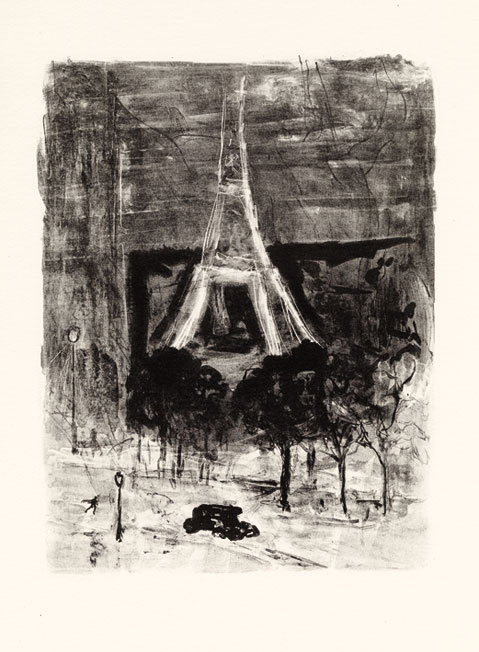
193114589Paris, Les Amis de l'Amour de l'Art, Librairie de France, 1931 ; in-folio, broché ; (48) ff. non chiffrés, le premier et le dernier blancs, et 16 lithographies dont 15 hors-texte et une vignette de titre.
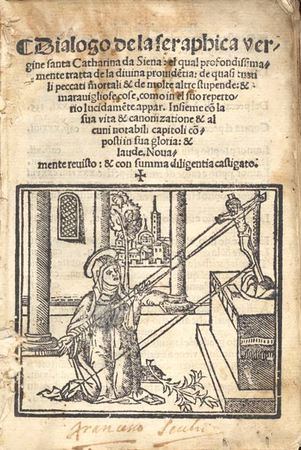
15406505Venetia (Venezia), Marchia Sessa, 1540 ; in-8 ; plein vélin vieil ivoire (reliure de l'époque) ; (32) ff., 224 ff., le dernier verso blanc ; grand bois gravé (88 x 78 mm) en page de titre représentant Sainte Catherine recevant les stigmates et marque d'imprimeur à la suite du collophon, achevé d'imprimer du 29 avril 1540, date anniversaire de la mort de la Sainte (29 avril 1380).
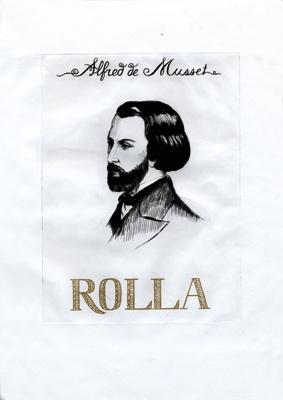
19501179Sans lieu (Paris), sans nom (l’Artiste), sans date (1950), grand in-4, broché en feuillets sous couverture rempliée ; chemise étui crème, pièce de titre bordeaux ; (38) feuillets, 14 eaux-fortes dont sept hors-texte, toutes les pages ont des décors gravés dorés, nombreuses lettrines et majuscules rehaussées de gouache pourpre, portrait de Musset gravé à l’eau-forte sur la couverture.Tiré à 350 exemplaires (dont 20 sur Japon) ; celui-ci sur vélin d’Angoumois pur fil, demi à la main du moulin du Verger du Puy Moyen, signé par l’artiste.
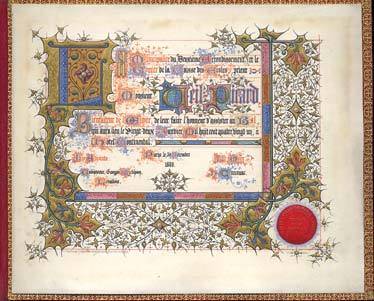
18811235Un feuillet de vélin richement enluminé, cachet de cire rouge " Mairie de la Bourse " sous chemise en plein chagrin bordeaux, " A Monsieur Veil Picard " à froid, roulette dorée d’encadrement sur les plats intérieurs.
19482078Paris, Robert Laffont, 1948 ; in-folio, en feuillets sous chemise-étui jaune (bordé de rouge pour l'étui), pièce de titre rouge, couverture beige imprimée noir et rouge à rabats, 24 lithographies en couleurs dont 22 in-texte et 2 hors-texte ; 130 pages, (3) feuillets (blanc, notes, achevé d'imprimer).
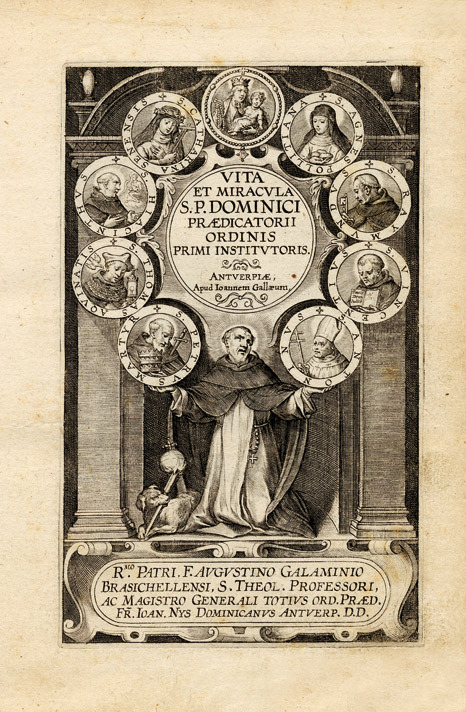
163011321Antverpiae, Joan Galle, (circa 1630) ; F. Ioannes Nys invenit, Peter de Jode figuravit, Theodor Galle sculpsit et excudit ; titre gravé, portrait et 32 planches légendées. SUIVI de 4 planches gravées par JOAN GALLE : I- Prudentia, II- Justitia, III- Fortitudo, IV- Temperantia (les 4 vertus cardinales). SUIVI de 14 planches de sujets religieux, gravées par CORNELIUS GALLE le Vieux : Silva sacra, Fugit familia sacra, S. Barbara, S. Ianvarius Neapolis patronis, S. Lucia, S. Leontius martyr miraculis gloriossus in Muris Helvetiorum, S. Iacobus Maior, Benedicite omnes bestiae et pecora domino, S. Hieromymus, Vierge à l'Enfant, etc. Soit en tout 52 planches, reliées en 1 volume petit in-4 ; plein vélin ivoire, titre au dos, tranches rouges (reliure du XIXe).
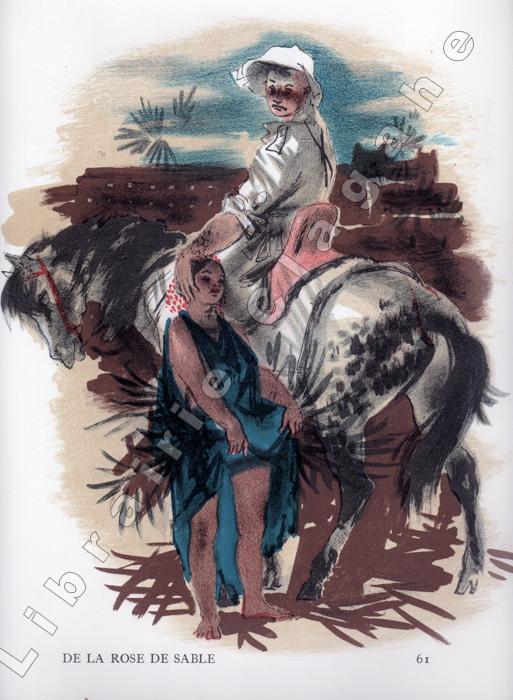
195615543- VILLON (François) : LES REPEUES FRANCHES, SUIVIES DU MONOLOGUE. 1956 ; 152, [153], (3) pp., (1) f. blanc, couverture crème granitée rempliée, 12 miniatures hors-texte (prises dans la pagination) coloriées au pochoir.- RABELAIS (François) : PANTAGRUELINE PROGNOSTICATION, SUIVIE DE LA SCIOMACHIE. 1957 ; 149, [150], (8) pp., couverture crème granitée rempliée, 12 miniatures hors-texte coloriées à la main au pochoir.
173698283[Leipzig], Joh. Friedr. Gleditschens sel. Sohn [Gleditsch], 1736. Titel in Rot-/Schwarzdruck. [7] Bl., 2336 Spalten. Mit 1 Kupferstich als Frontispiz. 22 cm. Ganzpergament d. Zt.
148552035France c.1485-1515. Small8vo. 80 x 12 mm. 1 leaf in vellum single column with text to both verso and recte. Fine flower ornamentation in red blue and gold to outer margin both verso and recte. Horisontal catchword. Small worm-hole to upper right corner far from affecting text. hardcover
52102Presumably late 15th century. 4to 195 x 142. 1 leaf of vellum 21 lines of text recte and 18 lines verso. hardcover
52102Presumably late 15th century. 4to (195 x 142). 1 leaf of vellum, 21 lines of text (recte) and 18 lines (verso).
19132396Paris, Maurice Glomeau, 1913 ; petit in-8, demie-basane aubergine, dos lisse, titre doré, dos décoré de deux importants fleurons dorés, filet doré sur les plats et les coins, couverture conservée (reliure de l'époque signée Flammarion Vaillant) ; VIII pp. (faux-titre, titre, note), 51 pp. (1) f. (imprimeur) ; 1 illustration en couleurs en frontispice.
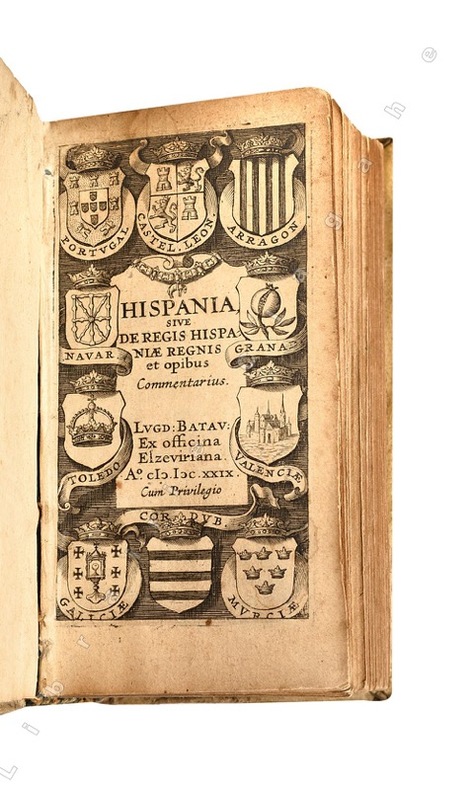
162921438Lugd. Batav. (Leyde), ex officina Elzeviriana, 1629 ; in-24 (108 mm), vélin rigide de l’époque, titre manuscrit au dos ; [16], 498 pp., [1] f. de Privilège, titre gravé illustré de blasons.
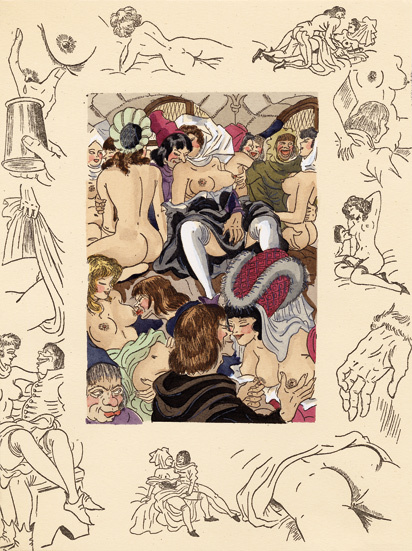
19302370Paris, Librairie des Amateurs, 1930 ; in-4, broché ; (3) ff. (bl., faux-titre, titre), 129 pp., (3) ff. (justification, achevé d'imprimer, bl.) ; 8 illustrations hors-texte dont une en frontispice, chacune en deux états, quelques illustrations en couleurs in-texte ; couverture blanche à rabats illustrée en couleurs.