[Auguste Bleton] Monsieur Josse :Livre Rare Book

1 336 résultats
189212349Lyon, Librairie Artistique et Littéraire, Dizain et Richard, 1892 ; in-4, plein chagrin rouge cerise, dos à nerfs soulignés de filets à froid et dorés, fers dorés aux lions au dos, titre et tête dorés, non rogné, couverture t dos conservés (reliure de l’époque) ; IV, (1), 358, (2) pp., très nombreuses illustrations (32 hors-texte, 1 eau-forte).
1943014226Bruxelles Editions de la nouvelle revue Belgique. Collection "L'amour des livres". 1943 in-8° Broché, couverture rempliée.
1932012909Paris Editions des Cahiers Libres 1932 In-12 Broché, couverture rempliée Edition originale
1952015185Paris Gallimard NRF 1952 In-12 Cartonnage éditeur
1955014478Alès Pab 1955 In-16 Broché, couverture à rabats
1992014125Paris L'Echoppe 1992 In-12 Broché, couverture à rabats
2591Paris, Editions littéraires de France, s. d. ; in-4, demie-basane rouge-sang à coins, dos à cinq nerfs décorés de double filets dorés, titre doré, tête dorée, couverture conservée (reliure de l'époque) ; (1) f. (bl.), 174 pp., (2) ff. (justification, bl.) ; 11 illustrations en couleurs hors-texte dont une en frontispice, plusieurs illustrations en couleurs in-texte.
19255205Paris, Cité des Livres (Abbeville, F. Paillart), 1925, collection balzacienne N°1 ; in-12, broché ; (2) ff. blancs, 22, (2) pp., (2) ff. blancs, couverture rempliée lie-de-vin.
3734759889.Gpaperback. Good. Access codes and supplements are not guaranteed with used items. May be an ex-library book. paperback
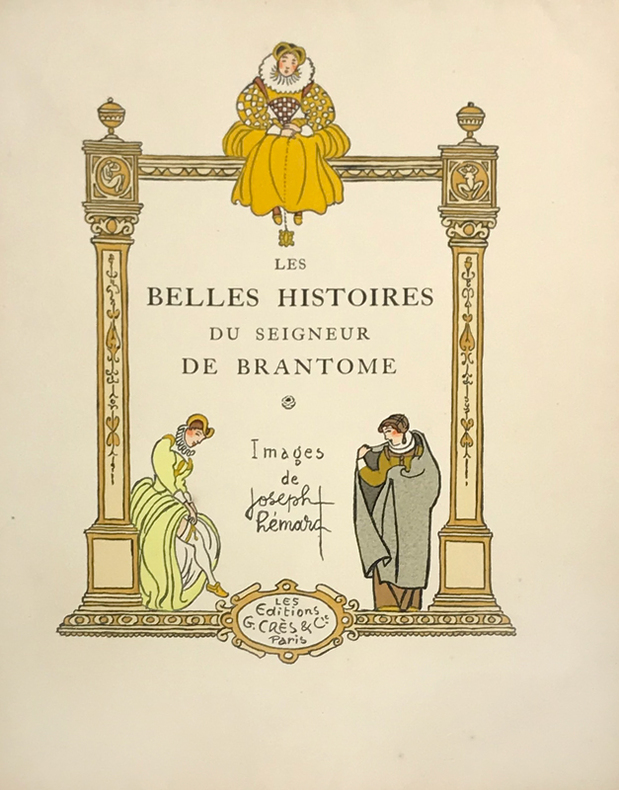
192415125Paris, Crès, 1924 ; in-4, broché ; (4), 86, (2) pp., couverture crème rempliée illustrée d'une grande composition en couleurs ; frontispice et vignette de titre coloriés au pochoir et 40 dessins humoristiques de Joseph Hémard en noir et blanc.
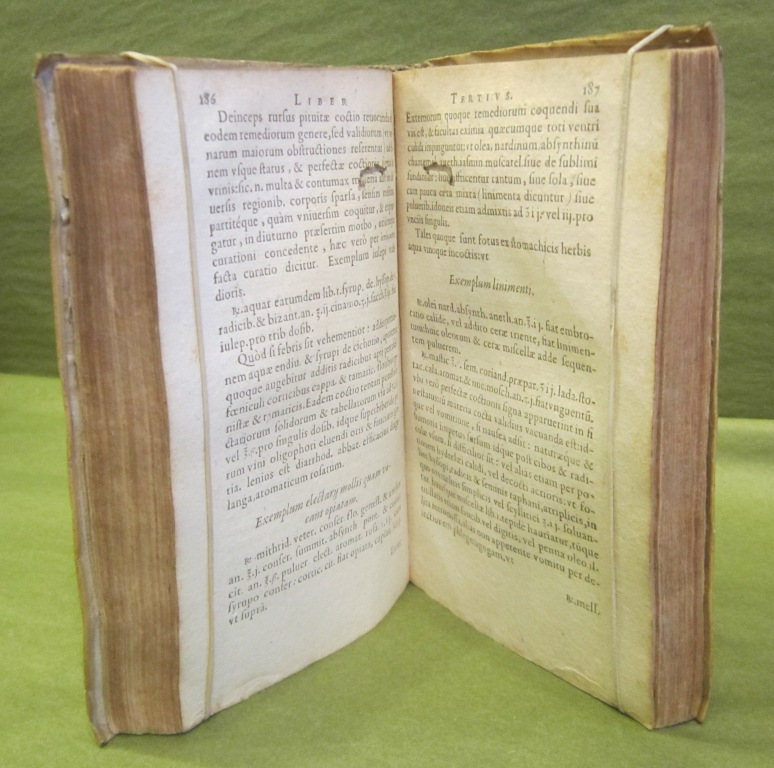
1601001274Lugduni Antonium de Harsy 1601
19302573S. l., s. n., s. d. (circa 1930) ; in-8, broché ; 66 pp., (1) f. (épilogue) ; 6 illustrations en sanguine hors-texte ; couverture beige à rabats imprimée en rouge.
234Paris, Galllimard, 1928 19 x 26, 185 pp., broché, couverture rempliée, très bon état.
2326Paris, Grasset, 1926 14 x 20, 223pp., broché, très bon état
9473Paris, Grasset, 1928 15 x 20, 223 pp., reliure dos/coins cuir, tête dorée, couverture conservée, très bon état
1924010196Paris Librairie des Amateurs A. Ferroud.-F. Ferroud, Successeur 1924 In-8 Broché, couverture illustrée rempliée
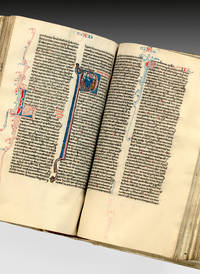
ABAA25-1<p>Northern France probably Paris 1230-1250.</p><p>12mo 140 x 93 mm of 1 658 ll.: 1-1524 1620 17-2224 2310 24-2524 2617 without the bl. l. xviii 2726 2828 295 without the bl. l. vi. <strong>Thus complete</strong>.</p><p>Double column of 47 lines written in brown ink in a very fine Gothic writing.</p><p>Justification: 92 x 60 mm.</p><p><strong>78 historiated initials</strong>. Quires numbered in Roman numerals at the foot of the back of the last ll. and signatures at the bottom corner of the text on each recto of the first half of a quire headings in red initials in red letters of running titles and chapters numbers alternately in red or blue initials of chapters on 2 lines alternately in red or blue with a decor of the opposite color initials of 5 to 7 lines at the beginning of the prologues of the same type but with decoration in two colors opening the prologues 78 historiated initials most decorated with foliage and dragons the extension of 29 of them forming borders decorating the margin painted in blue pink orange-red and yellow a few wormholes in the first l. a few running titles cropped last l. restored in the outer margin.</p><p>Stiff vellum gilt Greek roll-stamp around the covers flat spine decorated green morocco lettering piece gilt edges from the 19th century.</p><p>Superb Capetian manuscript from the School of Paris complete and of perfect freshness handwritten on vellum skin and illuminated with exquisite finesse between 1230 and 1250.</p><p><u>Text</u>: List of Books of the Bible: recto and verso of the first endpaper; the Vulgate with the preamble: ll. 1-599v; Interpretation of the Hebrew names: ll. 600-658.</p><p>Superb example of the small vulgate bibles produced in Paris in the 13th century.</p><p>It was in the 13th century in Paris that the masters of theology of the University established what was to become the standard form of the Latin Bible: the selection of the books their order and their division into chapters established by Stéphane Laugton still universally employed the insertion of the forewords of St Jerome and the interpretation of the Hebrew names.</p><p>All these characteristics are present in this very elegant Bible on very thin vellum skin.</p><p><u>Illuminations</u>: A masterpiece from Pierre de Bar's workshop active in Paris between 1230 and 1250 distinguishes itself by the particularly colored and bright shades of its illuminations; the usual whites pinks and blues are enriched with red orange and even more surprisingly by large areas of yellow.</p><p>This Bible contains 78 illuminations of great beauty and of amazing freshness.</p><p>The repertoire of decorative details is peculiar compared to other French illuminations of the time and the foliage contains small clover leaves.</p><p>Branner attributed the illustration of the manuscript to the Parisian workshop that illustrated the most outstanding illuminated manuscripts of the first half of the 13th century Bar's workshop with reference to Cardinal Pierre de Bar 1252 who gave to the Abbey of Clairvaux a Bible in four volumes issued from this workshop and preserved today under the reference Troyes Bibliothèque municipale ms. 106 108 110 and 111.</p><p>This manuscript can be dated from 1230-1250. Remarkable for its large and well-formed heads; the bodies are robust and covered with clothes with deep and dark folds R. Branner <em>Manuscript Painting in Paris during the Reign of Saint Louis</em> 1977 pp. 70-71. He dates the activity of Pierre de Bar's workshop between 1230-1250 and explains its specificities by suggesting the development of its style outside Paris.</p><p>The decoration of the manuscript consists of 78 historiated illuminated initials and a great number of capital letters rubricated in red or blue.</p><p>This very attractive bible seems to have been made in Paris; it represents an interesting addition to the production of a workshop producing according to Branner some of the most beautiful and refined Parisian illuminations of the first half of the 13th century.</p><p>We witness from the years 1220-1230 under the reign of Queen Blanche of Castile a concentration of illuminators in Paris at the expense of abbeys and provincial capitular schools. We can indeed attribute several manuscripts to Blanche of Castile who inaugurated the tradition of female patronage in the royal family. But the peak of these famous small Capetian bibles happened during the reign of Saint Louis.</p><p>The subjects of the historiated initials are the following:</p><p>l. l St Jerome Prologue; l. 4 The 7 days of Creation Genesis; l. 27 Moses leading his people across the Red Sea Exodus; l. 43 the Jews offering a sacrifice; l. 54 Moses preaching; l. 72 Moses receiving the Tablets of Stone; l. 89 God talking to Joshua; l. 99 Gideon holding his sword; l. 110 Elimelech and Naomi migrating to Moab Ruth; l. 112v Beheading of Eli; l. 128 Beheading of Amalekite before David; l. 141 David's servant bringing Abishag to him; l. 155v Ahaziah falling from a tower; l. 170v the Patriarchs; l. 185 Solomon enthroned; l. 202 The Construction of the Temple; l. 207 Nehemiah presenting the golden cup to Artaxerxes; l. 213v Spraying of the Temple; l. 220v Tobias; l. 225v Judith beheading Holofernes; l. 232 Ahasuerus being merciful to Esther; l. 238v Job on the manure heap; l. 251 David playing the harp; l. 256 anointing of David by Samuel; l. 258v David showing his mouth; l. 261 madman holding the stick and the bread Psalm 52; l. 264 God above David below in the water Psalm 68; l. 268 David ringing the bells Psalm 80; l. 271v Two Singers Psalm 97; l. 275 The Trinity Psalm 109; l. 283v Solomon whipping a young man; l. 294v Solomon teaching to a young man; l. 298 Madonna and Child Enthroned; l. 299v Solomon and a young man carrying a sword; l. 307v Ecclesia; l. 328 Isaiah being sawn in half; l. 353 Stoning; l. 381 Baruch writing; l. 384v Ezekiel in bed with the Tetramorph; l. 412 Daniel in the lions' den; l. 423v Hosea and Gomer; l. 427v Joel preaching to a group of Jews; l. 429v Amos offering the sheep; l. 432v God appearing to Obadiah; l. 433v Jonah in the mouth of the whale; l. 434v the teaching Prophet; l. 437 Nahum lamenting about the fall of Nineveh; l. 438v Habakkuk and the stones; l. 440 the Prophet with his scroll; l. 441v Two Prophets; l. 442v Prophet; l. 447 Two men talking; l. 449 Beheading of the idolatrous Jew; l. 466 the Messenger delivering the letter; l. 478v the Tree of Jesse; l. 494v Saint Mark with the lion; l. 505 Saint Luke with the angel; l. 521v Saint John; l. 535 Saint Paul carrying the cross; l. 541 Saint Paul carrying a sword; l. 546v Saint Paul carrying a sword and a scroll; l. 551 Saint Paul carrying a sword and a book; l. 555 Saint Paul carrying a sword; l. 556v Saint Paul carrying a sword and a book; l. 558 Saint Paul carrying a sword; l. 559 Saint Paul carrying a sword; l. 560 Saint Paul carrying a sword; l. 561v Saint Paul carrying a sword; l. 562v Saint Paul carrying a sword; l. 561v Saint Paul carrying a sword; l. 562v Saint Paul carrying a sword; l. 563v Saint Paul carrying a sword; l. 564 Two men talking; l. 568v. Ascension; l. 585 Jacob holding a book; l. 586v Saint Peter seated holding a book; l. 588 Saint Peter holding a key; l. 589 Saint John writing; l. 590v Saint John; l. 591 Saint John; f. 591 Saint Jude; l. 592 Saint John writing.</p><p>This complete bible dated from 1230-1250 is a masterpiece of Capetian illumination produced under the reign of Saint Louis.</p><p>Provenance:</p><p>- <em>Jean Tornone</em>: doctor from Burgundy: inscription on the verso of the endpaper mentioning his gifting of the book to <em>Stroyff</em>.</p><p>- <em>Assuerus Stroyff</em>: inscription mentioning his reception of the book by Tornone then his gift to <em>Johan Baron de Bronckhorst.</em></p><ul><li><em>Johan Baron de Bronckhorst</em> and <em>Batenburg de Guelders</em>: inscription dated from 1574 mentioning his receipt of the book.</li></ul><p><strong>FR</strong></p><p>Nord de la France probablement Paris 1230-1250.</p><p>In-12 de 1 658 ff. : 1-1524 1620 17-2224 2310 24-2524 2617 sans le f. blanc xviii 2726 2828 295 sans le f. blanc vi. <strong>Ainsi complet</strong>.</p><p>Double colonne de 47 lignes écrites à l'encre brune dans une très fine écriture gothique.</p><p>Justification : 92 x 60 mm.</p><p><strong>78 initiales historiées</strong>. Cahiers numérotés en chiffres romains au pied des versos des derniers ff. et signatures au pied du coin inférieur du texte sur chaque recto de la première moitié d'un cahier rubriques en rouge initiales en rouge lettres des titres courants et numéros des chapitres alternativement en rouge ou bleu initiales des chapitres sur 2 lignes alternativement en rouge ou bleu avec un décor de la couleur opposée initiales de 5 à 7 lignes au début des prologues du même type mais avec des décors des deux couleurs ouvrant les prologues 78 initiales historiées la plupart ornées de feuillage et de dragons le prolongement de 29 d'entre elles formant des bordures décorant la marge peintes en bleu rose orange-rouge et jaune qq. trous de vers ds. le premier f. atteinte à qq. titres courants dernier f. restauré ds. la marge extérieure.</p><p>Vélin rigide du XIXe siècle encadrement d'une roulette grecque dorée autour des plats dos lisse orné pièce de titre de maroquin vert tranches dorées.</p><p>140 x 93 mm.</p><p><strong>Superbe manuscrit capétien de l'école de Paris complet et de parfaite fraicheur calligraphié sur peau de vélin et enluminé avec une exquise finesse entre 1230 et 1250.</strong></p><p><u>Texte</u> : Liste des Livres de la Bible : recto et verso de la première garde ; la Vulgate avec le préambule : ff. 1-599v ; Interprétation des noms hébreux : ff. 600-658.</p><p><strong>Superbe exemple des petites bibles vulgates produites à Paris au XIIIe siècle.</strong></p><p>C'est au XIIIe siècle à Paris que les maîtres de théologie de l'Université établirent ce qui devait devenir la forme standard de la Bible latine : la sélection des livres et de l'ordre de ceux-ci et leur division en chapitres établies par Stéphane Laugton et encore universellement employée l'insertion des prologues de St Jérôme et l'interprétation des noms hébreux.</p><p>Toutes ces caractéristiques sont bien présentes dans cette très élégante Bible sur peau de vélin très fine.</p><p><u>Enluminures</u> : Chef-d'œuvre de l'atelier de Pierre de Bar actif à Paris entre 1230 et 1250 il se distingue par les teintes de ses enluminures particulièrement colorées et vives ; les habituels blancs roses et bleus sont enrichis de rouge orange et de manière plus surprenante encore par de larges zones de jaune.</p><p><strong>Cette Bible possède 78 enluminures d'une grande beauté et d'une étonnante fraicheur.</strong></p><p>Le répertoire de détails décoratifs est particulier en comparaison des autres enluminures françaises de cette époque et le feuillage comporte des petites feuilles de trèfle.</p><p><strong>Branner a attribué l'illustration du manuscrit à l'atelier parisien qui a illustré les plus remarquables manuscrits enluminés de la première moitié du XIIIe siècle l'atelier de Bar</strong> par référence au cardinal Pierre de Bar 1252 qui donna à l'abbaye de Clairvaux une Bible en quatre volumes provenant de cet atelier et conservés aujourd'hui sous les cotes Troyes Bibliothèque municipale ms. 106 108 110 et 111.</p><p>On peut dater le présent manuscrit de 1230-1250. Remarquable par ses têtes larges et bien formées ; les corps sont robustes et recouverts de draperies aux plis profonds et sombres. R. Branner <em>Manuscript Painting in Paris during the Reign of Saint Louis</em> 1977 pp. 70-71. Il date l'activité de l'atelier de Pierre de Bar entre 1230-1250 et explique ses spécificités en suggérant la formation se son style en dehors de Paris.</p><p><strong>La décoration du manuscrit comprend 78 initiales historiées enluminées et d'innombrables capitales rubriquées en rouge ou bleu.</strong></p><p>Cette bible très séduisante semble avoir été réalisée à Paris ; elle représente un ajout intéressant à la production d'un atelier considéré par Branner comme produisant certaines des enluminures parisiennes les plus belles et les plus raffinées de la première moitié du XIIIe siècle.</p><p>On assiste à partir des années 1220-1230 sous le règne de la reine Blanche de Castille à une concentration des artistes enlumineurs à Paris au détriment des abbayes et des écoles capitulaires de province. On peut en effet imputer plusieurs manuscrits à Blanche de Castille qui inaugura la tradition du mécénat féminin dans la famille royale. Mais l'apogée de ces célèbres petites bibles capétiennes se situe sous le règne de Saint Louis.</p><p>Les sujets des initiales historiées sont les suivants :</p><p>f. l St Jerome Prologue ; f. 4 Les 7 jours de la Création Genèse ; f. 27 Moïse conduit son peuple à travers la Mer Rouge Exode ; f. 43 les Juifs offrent un sacrifice ; f. 54 Moïse preche ; f. 72 Moise reçoit les tables de la Loi ; f. 89 Dieu s'adresse à Joshua ; f. 99 Gédéon tient son épée ; f. 110 Elimelech et Naomi migrent à Moab Ruth ; f. 112v Décapitation d'Eli ; f. 128 Décapitation d'Amalekite devant David ; f. 141 le serviteur de David lui amène Abishag ; f. 155v Ahaziah tombe d'une tour ; f. 170v Les trois juifs patriarches ; f. 185 Salomon intronisé ; f. 202 La Construction du Temple ; f. 207 Néhémie présentant la coupe d'or à Artaxerxès ; f. 213v Aspersion du Temple ; f. 220v Tobias ; f. 225v Judith décapitant Holopherne ; f. 232 Assuérus se montre clément envers Esther ; f. 238v Job sur le tas de fumier ; f. f. 251 David joue de la harpe ; f. 256 onction de David par Samuel ; f. 258v David montre sa bouche ; f. f. 261 fou tenant le bâton et le pain psaume 52 ; f. 264 Dieu au-dessus David dans l'eau dessous Psaume 68 ; f. 268 David sonnant les cloches Psaume 80 ; f. 271v Deux chanteurs Psaume 97 ; f. 275 La Trinité Psaume 109 ; f. 283v Salomon fouette un jeune ; f. 294v Salomon enseigne à un jeune ; f. 298 La Vierge et l'Enfant intronisé ; f. 299v Salomon et un jeune portant une épée ; f. 307v Ecclésia ; f. 328 Isaïe est scié en deux ; f. 353 Lapidation ; f. 381 Baruch écrivant ; f. 384v Ezéchiel au lit avec le Tétramorphe ; f. 412 Daniel dans la fosse aux lions ; f. 423v Osée et Gomer ; f. 427v Joel prechant à un groupe de juifs ; f. 429v Amos offre le mouton ; f. 432v Dieu apparait à Obadiah ; f. 433v Jonas dans la bouche de la baleine ; f. 434v le Prophète enseignant ; f. 437 Nahum se lamente sur la chute de Nineveh ; f. 438v Habakuk et les pierres ; f. 440 le Prophète avec son rouleau ; f. 441v Deux Prophètes ; f. 442v Prophète ; f. 447 Deux hommes en discussion ; f. 449 Décapitation du juif idolâtre ; f. 466 le Messager livre la lettre ; f. 478v l'Arbre de Jessé ; f. 494v Saint Marc avec le lion ; f. 505 Saint Luc avec l'ange ; f. 521v Saint Jean ; f. 535 Saint Paul portant la croix ; f. 541 Saint Paul portant une épée ; f. 546v Saint Paul portant une épée et un rouleau ; f. 551 Saint Paul portant une épée et un livre ; f. 555 Saint Paul portant une épée ; f. 556v Saint Paul portant une épée et un livre ; f. 555 Saint Paul portant une épée ; f. 556v Saint Paul portant une apée et un livre ; f. 558 Saint Paul portant une épée ; f. 559 Saint Paul portant une épée ; f. 560 Saint Paul portant une épée ; f. 561v Saint Paul portant une épée ; f. f. 562v Saint Paul portant une épée ; f. 561v Saint Paul portant une épée ; f. 562v Saint Paul portant une épée ; f. 563v Saint Paul portant une épée ; f. 564 Deux hommes en discussion ; f. 568v. Ascension ; f. 585 Jacob tenant un livre ; f. 586v Saint Pierre assis tenant un livre ; f. 588 Saint Pierre tenant une clef ; f. 589 Saint Jean écrivant ; f. 590v Saint Jean ; f. 591 Saint Jean ; f. 591 Saint Jude ; f. 592 Saint Jean écrivant.</p><p><strong>Cette bible complète datée de 1230-1250 est un chef-d'œuvre de l'enluminure capétienne réalisée sous le règne de Saint Louis.</strong></p><p>Provenance :</p><p>- <em>Jean Tornone</em> : docteur bouguignon : inscription au verso de la garde mentionnant son présent du livre à Stroyff.</p><p>- <em>Assuerus Stroyff</em> : inscription mentionnant sa réception du livre par Tornone puis son présent à Johan Baron de Bronckhorst.</p><p>- <em>Johan Baron de Bronckhorst</em> et <em>Batenburg de Guelders</em> : inscription datée de 1574 mentionnant sa réception du livre.</p> hardcover
193466660Weimar, Gesellschaft der Bibliophilen, 1934. 6 Bll., 190 S., 3 Bll. Mit roten Initialen. (= Jahresgabe für die Mitglieder der Gesellschaft der Bibliophilen, 1933). (Ca. 24 x 16,5 cm). OHPgt. mit RSch.
192688747Berlin, Wegweiser-Verlag, [© 1926). 156 S. Text in Schwarz- und Rotdruck. Mit zahlr. farb. Illustr. (= Meisterdruck d. Volksverbandes d. Bücherfreunde). 4to. 28 cm. OHPgt. m. vergoldt. RTitel.
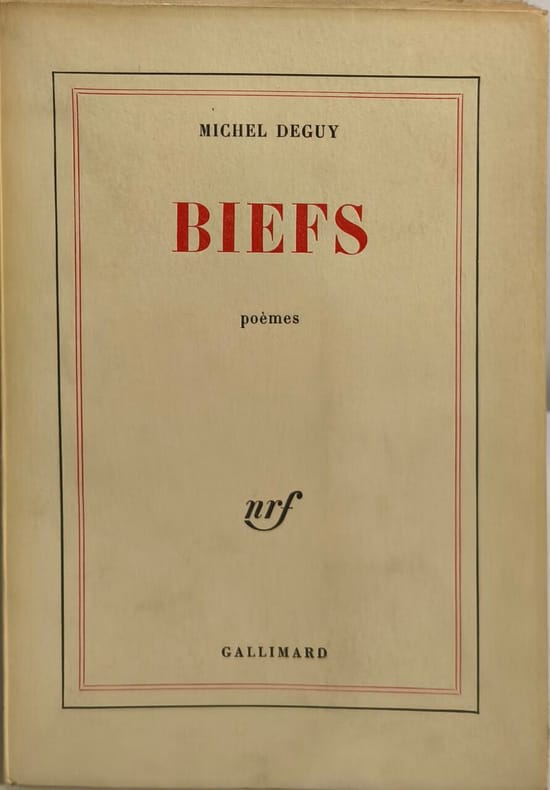
19646166Gallimard 1964 164 pages in8. 1964. Broché couverture rempliée. 164 pages. Recueil de poèmes publié en 1964 explorant les thèmes du couple du mensonge de la liberté et de la mémoire (anamnèse) à travers une écriture qui mêle rationalité et élans poétiques
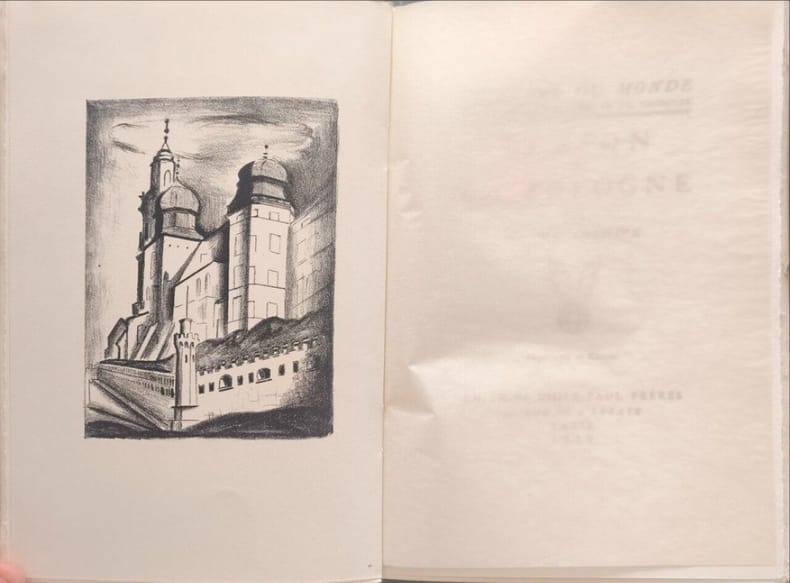
192913105Émile-Paul Frères 1929 93 pages in8. 1929. Broché couverture rempliée. 93 pages. Blason de la Pologne est un ouvrage d'André Thérive publié en 1929 par Émile-Paul Frères dans la collection Ceinture du Monde. Le livre illustré par Kisling traite de la Pologne
1947010030Paris Editions de la Nouvele Revue Critique N.R.C "Document pour l'histoire de la litterature francaise" 1947 In-12 Broché
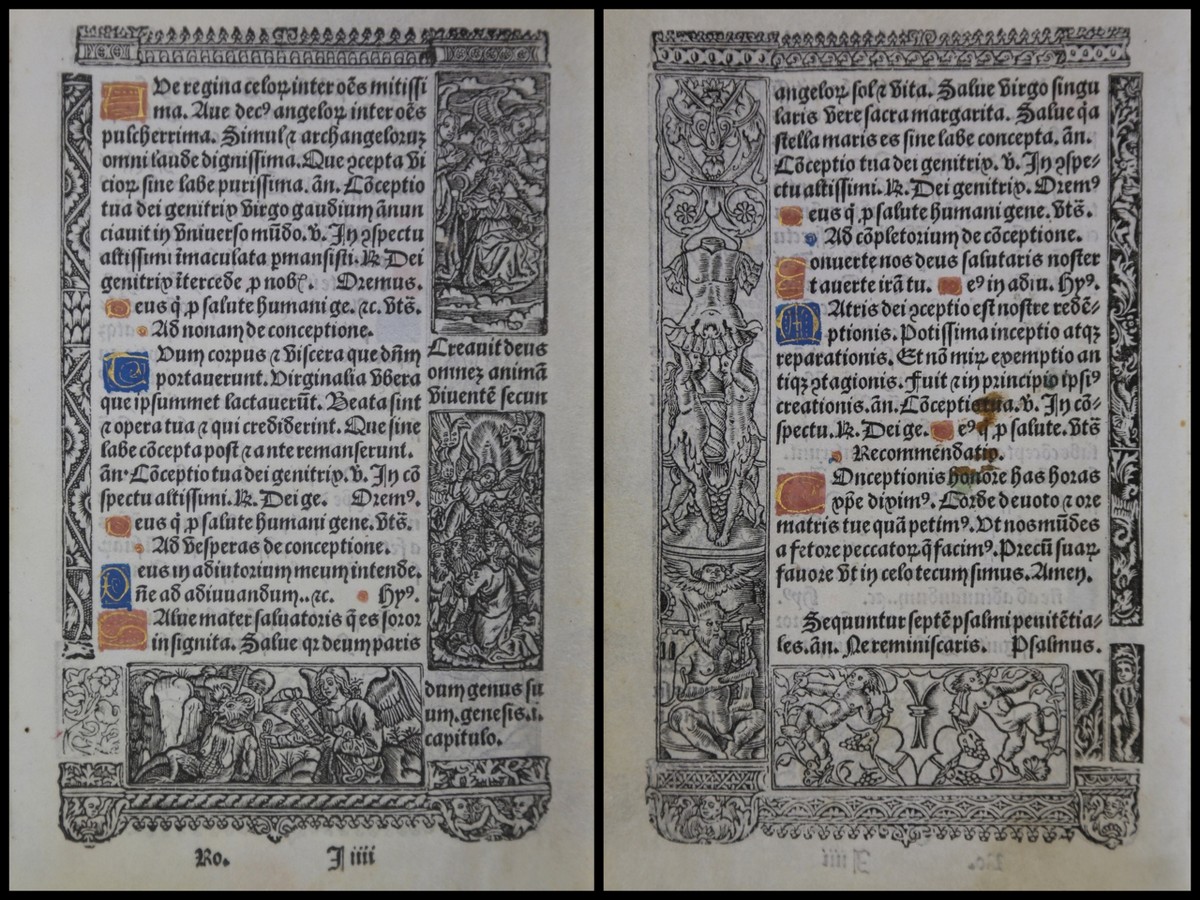
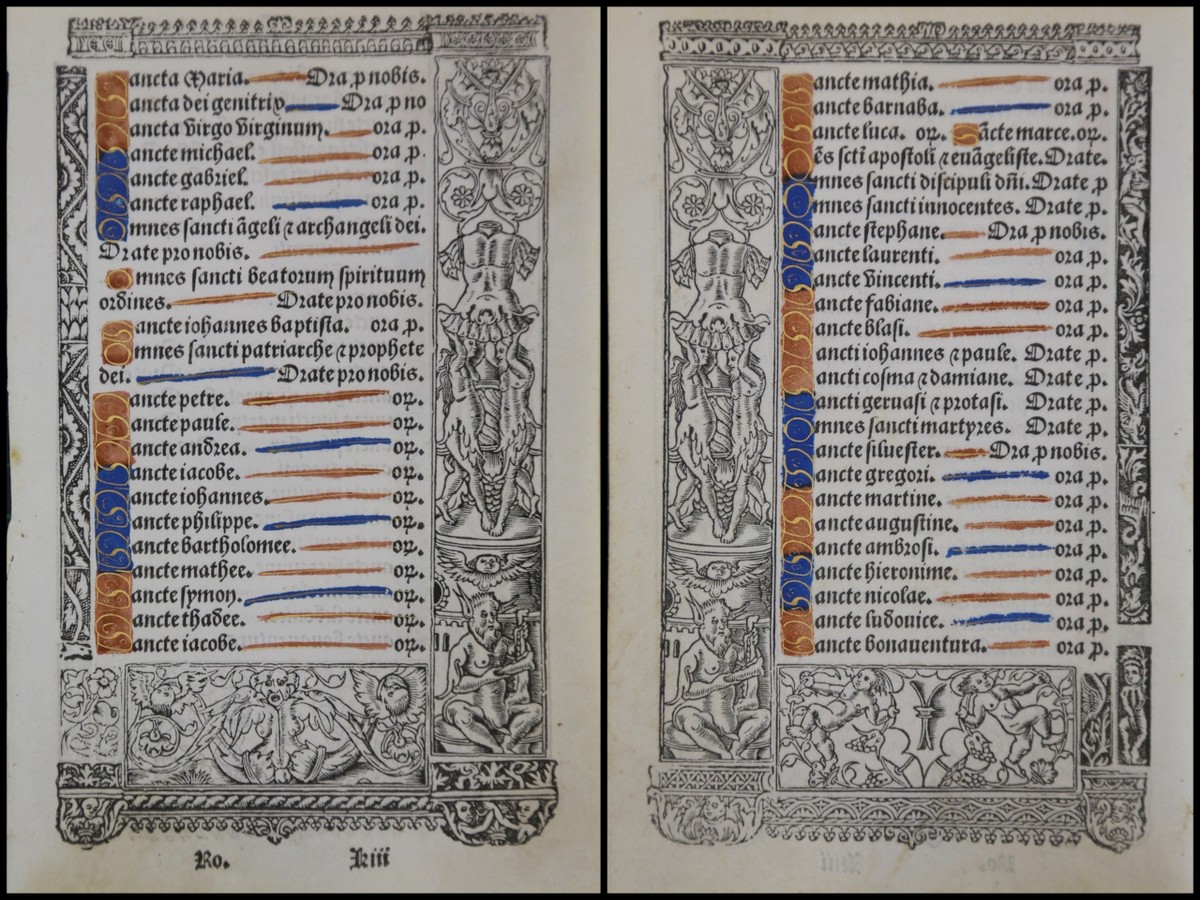
1510151128(Paris, um 1510). Blattgröße: 17,5 x 11,5 cm. Schriftspiegel: 16 x 9,5 cm.
1510151127(Paris, um 1510). Blattgröße: 17,5 x 11,5 cm. Schriftspiegel: 16 x 9,5 cm.
1986000094Paris Opéra-Grafica 1986 In-4 En feuilles, couv. illustrée Ed. originale