105 174 résultats
Engberg, JensIn Pristine Condition. unknown
87892JAPANESE THEATRE. ODA OTOYA: A COLLECTION OF STAGE DESIGNS. Oda Otoya 1920-2006 began his career in the arts as an illustrator of fiction moving to stage design in the post-war period. He created designs for many plays at the National Theatre in Tokyo as well as the famous Little Theatre there. He published an important book on his own work in 1977: BUTAI BIJUTSU WO KANGEARU THOUGHTS ON STAGE DESIGN. Receiving a special Kikuta Kazuo Theatre Prize in 1977 and then the coveted Shijushô Purple Ribbon Decoration in 1983 for his advancement of the Japanese theatre arts he was regarded as one of the grand old men of the Japanese theatre. Besides his extensive work in Kabuki he also designed the sets of many modern theatre productions including plays by Mishima Tanizaki etc. This collection consists of literally thousands of his original designs and design ideas for the stage.<br /> <br /> There are:<br /> <br /> 2311 oblong sheets most are around 7 x 21 inches showing proscenium views stage backgrounds pieces of scenery scrims etc. Some are preliminary sketches with touches of color but the majority. over 2000 are highly finished watercolor designs that show either an entire scenic design on one sheet or component pieces of a single scenic design on two or more sheets that form the whole or even a large prop such as a boat. A handful of designs have small photos attached to them that either indicate the inspiration for the design suggest a view to be seen outside a stage window and in one instance show the set as realized with actors.<br /> <br /> 46 smaller various sizes preliminary and final sketches either colored or with touches of color that show scenic designs details of specific elements of designs props decorative motifs etc.<br /> <br /> 456 drawings some sketches while others are quite detailed and include measurements along with photocopies of drawings and painted designs many of which are marked with notations or with areas of color.<br /> <br /> 363 stage plans various sizes that show the placement of the component elements of the rendered designs.<br /> <br /> 29 watercolors of kimono designs 15 x 10 inches and 3 sheets of costume designs.<br /> <br /> An important archive documenting Japanese theatre design in creative context. unknown
CARUSO ENRICO (NAPOLI 1873-IVI 1921), CELEBRE TENORE LIRICO ITALIANO, CONSIDERATO IL PIU' GRANDE DELLA SUA EPOCA, NOTO COLLEZIONISTA D'ARTE, MONETE, FRANCOBOLLI E CARTOLINE. <BR>IMPORTANTE COLLEZIONE DI 51 CARTOLINE POSTALI ILLUSTRATE, QUASI TUTTE VIAGGIATE PER POSTA: (1 RITRATTO; 4 FOTOGRAFICHE DALLA VILLA BELLOSGUARDO DI LASTRA A SIGNA (FI); 3 SUE AUTOGRAFE; 17 SUE OLOGRAFE; 22, A LUI INVIATE, AUTOGRAFE DI ARTISTI E PERSONAGGI SUOI CONTEMPORANEI; 2 INDIRIZZATE ALLA PRIMA MOGLIE ADA GIACCHETTI; 2 AUTOGRAFE DEL CANTANTE LUCIO DALLA CON STROFE DI SUO PUGNO DALLA CANZONE "CARUSO"), MONTATA SU 40 FOGLI DA ESPOSIZIONE, CORREDATI DAI RELATIVI TESTI ESPLICATIVI.
Tre parti in un volume, in 4 oblungo (mm 240x305), completo delle 300 tavole oltre al titolo figurato della parte I. Legatura coeva in percallina marrone con titolo in oro al centro del piatto superiore, entrambi i piatti incorniciati da ricca bordura dorata, fregi e titolo al dorso; la terza parte precede la seconda. Le tavole, numerate in alto a destra, hanno l'indicazione che la centesima è l'ultima di ogni parte. Essendo raccolte in un unico grosso tomo, i frontespizi della seconda e della terza parte non sono stati inseriti. D'altronde, Open Library censisce una decina di esemplari, "All title-pages numbered Parte I." e l'unico digitalizzato, quello del Getty Museum (non colorato) ha tutte le tre parti con il titolo Parte I ripetuto. Le sei copie censite in Italia citano 100 tavole per ognuno. Pochi tra questa ventina di esemplari sono completi o a colori. Raccolta di sontuose scenografie teatrali, la maggior parte relative al Teatro alla Scala di Milano, eseguite dai più celebri pittori scenici nei primi decenni del sec. XIX a Milano. Tra le opere le cui scenografie sono raffigurate: Gli Arabi nelle Gallie di G. Pacini, Giulietta e Romeo di Gounod, La gazza ladra, Tancredi, Semiramide di Rossini Don Giovanni, La clemenza di Tito di Mozart, Rossini , Chiara e Serafina di Donizetti e altre note pièces di teatro lirico eseguite nel teatro milanese in quegli anni didi Meyerbeer, Mayr, Mercadante, Pacini. Raccolta di grande interesse per la storia della scenografia, preziosa documentazione iconografica e di costume sull'attività operistica milanese intorno al 1820. Come testimonia un ritaglio della copertina azzurra di uno dei fascicoli (applicato in fine) l'opera uscì a dispense con prezzi assai superiori per quelle con tavole a colori ("La presente Raccolta si pubblica a fascicoli di 5 stampe per caduno; 20 fascicoli formeranno un volume"). Quindi, anche in bianco e nero la serie completa è di difficile reperibilità. I rialzi à la gomme e all'albume esaltano la coloritura coeva di questo esemplare, rendendo le scenografie assai vivide e decorative. Le tavole sono titolate nel margine inferiore del rame, con l'indicazione dell'opera o ballo da cui sono tratte. Sono firmate da vari artisti: Stucchi, Pistrucci, Biasioli, Angeli, Rados, Campi, Fumagalli, Raineri, Landini, Carolina Lose, Perego, Zucchi, Arrigoni, Gandaglia, Canna e Bussi. Si trova anche qualche veduta reale come quelle de La Scala o "capricci' ispirati a luoghi milanesi (infatti sono citate da Arrigoni, vol I, n. 800, 809 e altri); varie scenografie soggetti vennero ripresi dal Sanquirico nella "Raccolta di varie decorazioni sceniche inventate ed eseguite per il R. Teatro alla Scala", pubblicata da Ricordi, 1830-35 circa. Raro, eccezionale esemplare completo delle 300 tavole superbamente colorato all'epoca. La copia consultata alla GAM di Torino è in realtà una miscellanea di 100 tavole in bianco e nero ed a colori tratte dalla seconda e dalla terza parte, benché numerate in sequenza 1-100. Il frontespizio ha l'indicazione "III Parte ed ultima", con la medesima vignetta. oblong album (mm 240x305), complete with three parts of 100 numbered plates, which were published in issues of 5 sheets with a higher price for the ones in colours. They shows set designs by Sanquirico and others: Biasioli, Stucchi, Angeli, Rados, Campi, Fumagalli, Landini, Carolina Lose, , Zucchi, Arrigoni, Bussi for operas and ballets at La Scala in Milan, including some by Mozart (Don Giovanni, La clemenza di Tito), Rossini (La gazza ladra, Tancredi, Semiramide), Donizetti (Chiara e Serafina), Meyerbeer, Mayr, Mercadante, Pacini and others one showing the view of the façade of the famous theater and another one the audience on their feet during a ballet at La Scala. Engraved title with device, fine aquatints neatly coloured à la gomme, in a nineteenth-century green blind-stamped cloth, gilt title to spine, light foxing, a few staining, These are finely produced aquatints, illustrating some of the same La Scala productions as the larger coloured lithographs of Sanquirico, whose designs they mostly reproduce, and that they were engraved in a larger format for his "Raccolta di varie decorazioni sceniche inventate ed eseguite per il R. Teatro alla Scala", published by Ricordi, 1830-35 circa. There does not seem to be a fixed plate order or number for Stucchi's collections. The OPAC Catalogo SBN asks for 100 plates only, but copies have appeared at auction containing anywhere between 50 and 300 aquatints like this one, which is very rare, especially in colours. Only some 20 copies are censed and is impossible to know if they include the three parts, if complete and if in colours. Therefore, it is much rare in these conditions, with very large margins.. Enciclopedia dello Spettacolo VIII, pp.1483-1486. GIRANI, Decora- zioni sceniche alla Scala. BERLIN Katalog, 4169 (descrive esempl. incompleto, non dipinto). Thieme-Becker XXXII, 231. PREDARI, Bibliogr. Milanese, p.448 (semplice citazione senza dati). .
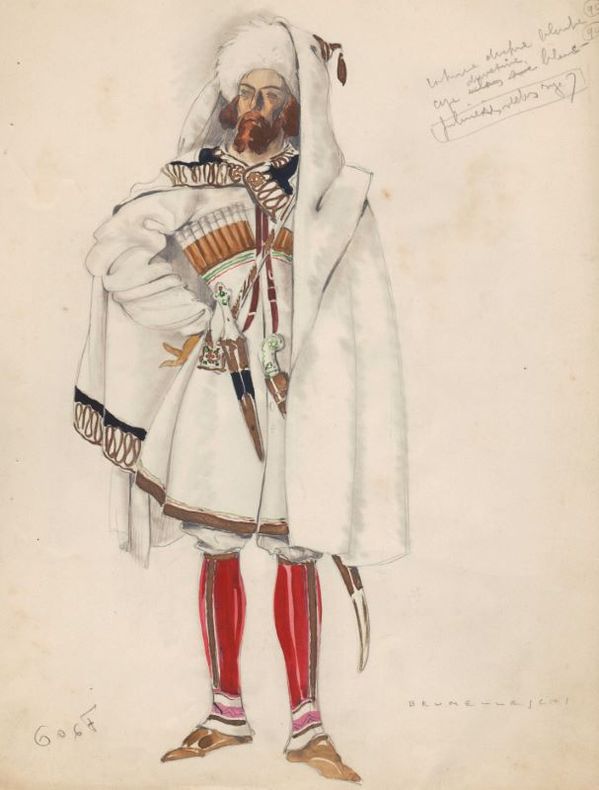
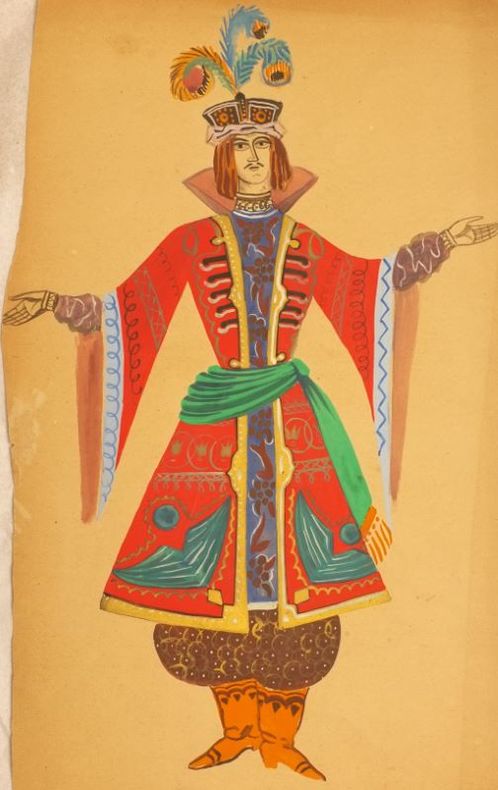
1938193831938 22 aquarelles pour le spectacle-opérette de Mogador, sur papier cartonné beige, 21 signées en bas à droite, 4 datées (1938), rehauts d'or et de blanc, mine de plomb, feuilles de 32 x 25 environ, dessins de 30 x 15 cm. environ.
1921160171Los Angeles: California Theatre 1921. Archive of 41 vintage photographs of the elaborate stage sets and live performers which supported silent film screenings at the California Theatre in Los Angeles taken during the theatre's first three years in operation 1919-1921. 20 photographs with blindstamps crediting photographer Dick Stagg and 14 with blindstamps crediting photographer J.C. Milligan.<br /> <br /> Photographs housed in an album with typed labels on the versos of the adjacent pages identifying the film screening dates performers and musical numbers. <br /> <br /> The first two photographs in the archive feature a day shot and a striking night shot of the theatre's beautifully elaborate facade followed by a photograph of the "original installation" of the stage and grand staircase. The balance of the photographs however show theatre sets usually with performers present occasionally with the orchestra present and always without the audience present likely taken during rehearsals or after the completion of the set designs. <br /> <br /> The earliest dated photographs in the archive only two and a half weeks after the theatre's opening on December 24 1918 show two different sets for the screening of the 1918 film "Eye for an Eye." The last and latest photograph in the archive shows a parlor set with five costumed actors for the 1921 screening of the 1920 film "Billions." All in all 29 films are represented in the archive.<br /> <br /> Interestingly many of the screening dates of the films represented in the archive coincide with-or date earlier than-the currently believed premiere dates of the films some of which may have had their premiere at the California Theatre. <br /> <br /> Fred Miller opened the California Theatre at 810 S. Main Street in downtown Los Angeles on December 24 1918. The majestic Beaux-Arts cinema housed a capacity of 2000 and was designed by architect Alex B. Rosenthal who also designed the Granada Theatre in Santa Barbara. In 1919 the theatre was bought by Goldwyn Pictures and in 1935 operated as Teatro California often showing Spanish language films until 1983 after which it operated as a grindhouse and pornographic theater. The theater closed in 1987 and was demolished in 1990.<br /> <br /> Photographs: 8 x 10 inches. Very Good plus to Near Fine overall with some faint toning with one photograph with two vertical creases.<br /> <br /> Album: 13.75 x 10.25 inches. Very Good plus. California Theatre unknown
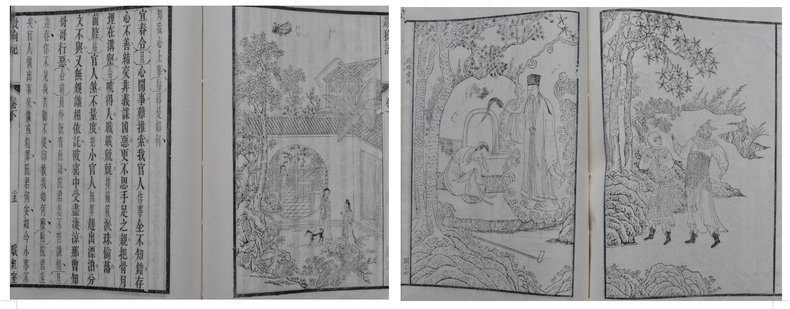
192646405094Shanghai, (vers 1923-26) ; 30 pièces de théâtre et suppléments en 44 volumes grand in-8 (30 x 17 cm.), brochés, couvertures muettes, emboîtages toile modernes. Nombreuses illustrations en noir, gravées sur bois à double ou pleine page. Rarissime collection complète de cette considérable œuvre éditoriale de Liu Shiheng. Ces pièces avaient originellement été publiées sous la dynastie Ming dans la célèbre édition Nuanhongshi. Au début du XXe siècle seules 15 de ces 30 pièces étaient encore connues. Le savant bibliophile Liu Shiheng (1874-1926), par ailleurs Conseiller de Droite du budget au Ministère des Finances, entreprit de donner cette nouvelle édition, fidèle reproduction de l'originale, en rassemblant les fragments parvenus jusqu'à son époque et conservés dans différentes bibliothèques. Cette édition tirée à petit nombre, est remarquable à plusieurs titres. Célèbre pour avoir tiré de l'oubli des pièces classiques, c'est avant tout une performance éditoriale, l'ouvrage étant entièrement regravé d'après les planches originales. Cette collection est un trésor littéraire national chinois. Les 30 premiers volumes se trouvent très rarement. Nous en avons identifié quelques exemplaires dans les bibliothèques institutionnelles, tous semblent incomplets des 14 volumes de supplément. La Chambre de l'Ouest suivie d'annexes et de commentaires par plusieurs auteurs occupe les 12 premiers tomes, t. 16-17 Pipa ji ou Histoire du luth de Gao Ming (1307-1370) suivi de commentaires - t. 21 Hongfu ji de Zhang Fengyi – les volumes 22-25 donnent l'œuvre de Tang Xianzu, Le retour de l'âme dans le pavillon Yuming, le Pavillon aux Pivoines avec des commentaires. - etc. Un des rares exemplaires complet des suppléments. Petit travail d'insecte en marge d'un volume, sinon bel exemplaire très frais.
"Opera divisa in quattro volumi, rarissima a trovarsi completa: Libro primo, detto la Qualità delle comedie. Per dichiarare, quale sia la lecita a' buoni christiani, e quale la illecita; e per distinguere la modesta dalla oscena, secondo la dottrina di s. Tomaso, e d'altri theologi per sicurezza della coscienza. In-4°, XV, (6cc), 172pp (i.e. 272), legatura in pelle coeva, nervature e titolo al dorso in oro, Firenze, Bonardi 1655; Libro secondo, detto La solutione de' nodi. Per isciogliere molte difficoltà, e per risoluere molti casi di coscienza intorno alle comedie poco modeste; e per mostrare, che non è mai lecita la loro permissione ... Opera di un theologo religioso, stampata ad instanza del sig. Odomenigico Lelonotti da Fanano. Si aggiunge al fine vna Censura d'autori antichi, e moderni intorno a' compositori, compositioni, lettione, e recitamento di poca honestà. Et di più il Giuditio, che si può fare di quelle comedie, che si rappresentano tal'hora con titolo di honesta ricreatione da persone ascritte in vna osseruante congregatione. In-4°, (20cc), 158pp (i.e.258); 135pp+1, legatura in pelle coeva, nervature e titolo in oro al dorso, Firenze, Bonardi, 1649; Libro terzo, detto L’instanza, per supplicare a' signori superiori, che si moderi christianamente il theatro dall'oscenità, e da ogni altro eccesso nel recitare, secondo la dottrina di S. Tomaso, e d'altri theologi antichi e moderni. Opera d'vn religioso theologo, stampata per soddisfattione del sig. Odomenigico Lelonotti da Fanano. ... Vi sono due indici, vno de' capi, e punti, l'altro delle materie. In-4°, (16cc), 377pp, (16cc), legatura in pelle coeva, nervature e titolo in oro al dorso, Firenze Bonardi, 1652; Libro detto L'ammonitioni a' recitanti, per auuisare ogni christiano à moderarsi da gli eccessi nel recitare. Sono diuise in tre breui trattati, cioè il primo intorno à recitanti. Il secondo intorno al comico Beltrame, & al suo libro. Il terzo intorno à ciarlatani. Opera d'vn theologo religioso da Fanano, stampata ad istanza del sig. Odomenigico Lelonotti. Con aggiunta all'vltimo d'vn'Hipomnistico, ouero Discorso ammonitorio, diretto in forma di preghiera a' musici comedianti mercenarij, & ad ogn'altro musico aiutante al theatrale, e poco modesto recitamento. Con due indici, vno dell'ammonitioni, e l'altro delle cose notabili. In-4°, (16cc), 566pp, (2cc), legatura in pergamena con titolo manoscritto al dorso, Firenze, Bonardi 1652. Il gesuita Ottonelli (Odomenigico Lelonotti da Fanano) fu, insieme a Giovanni Paolo Oliva e Paolo Segneri, uno dei critici del teatro più celebri nelle fila della Compagnia di Gesù e in particolare la sua critica è importante per tracciare l’evoluzione del rapporto fra teatro professionale e religione (Zampelli, 2006). Sicuramente sono i libri di teatro, soprattutto Della Christiana moderatione del theatro, a raccontarci molto di Ottonelli. Dagli aneddoti autobiografici sepolti in queste pagine dense possiamo ricostruire l'attività di Ottonelli per i cinque anni cruciali che precedettero il suo arrivo a Firenze nel 1640. Dipingono un quadro sorprendente. Ottonelli si presenta non come un teologo o uno scrittore, ma come un uomo d'azione, un guerrigliero impegnato nella lotta contro il teatro e soprattutto contro il ruolo delle donne in esso. Ottonelli sapeva che in Inghilterra le attrici erano proibite (anche se occasionalmente sul palco apparivano donne di compagnie continentali e la regina e le sue dame si esibivano in maschere di corte). Ottonelli conosceva la pratica inglese e la raccomandava per l'Italia, anche se sapeva che gli attori italiani erano assolutamente contrari. Le donne erano essenziali per l'economia del teatro popolare, e Ottonelli spiega perché. Vendevano i biglietti e permettevano di dare un'occhiata al viso o al petto per qualche soldo. Durante le rappresentazioni vendevano merce: ""mercantie, profumeria, saponetti, moschardini, o simili coserelle"". Cantavano, eseguivano acrobazie e si scambiavano mance, una pratica redditizia. Le brave attrici portavano clienti sia alle commedie che ai giochi d'azzardo. I regali poi venivano inviati dietro le quinte. E’ l’opera di Ottonelli la più attenta cronaca della nascita del teatro italiano, una miniera di notizie e fatti che, anche se narrati con vis polemica, sono l’unico documento di prima mano del periodo d’oro delle compagnie teatrali italiane; addirittura egli si sofferma sulle figure minori dell’intrattenimento, come ciarlatani, musici ambulanti, venditori e imbonitori, vagabondi scaltri e giocolieri. A work which extremely rare to find complete. Jesuit Ottonelli (Odomenigico Lelonotti da Fanano) was, together with Giovanni Paolo Oliva and Paolo Segneri, one of the most famous theater critics in the ranks of the Society of Jesus and in particular his criticism is important for tracing the evolution of the relationship between theater professional and religion (Zampelli, 2006). In fact it is the books on theater, especially Della Christiana moderatione del theatro, that tell us much about Ottonelli. From the autobiographical anecdotes buried in these dense pages we can reconstruct Ottonelli’s activities for the five crucial years preceding his arrival in Florence in 1640. They paint a surprising picture. Ottonelli comes across not as a theologian or writer, but as a man of action, a guerrilla engaged in combat against the theater and especially against the role of women in it. Ottonelli knew that in England actresses were prohibited (though women from continental troupes occasionally appeared on stage and the Queen and her ladies performed in court masques). Ottonelli knew of the English practice and recommended it for Italy, though he knew that Italian actors were dead set against it. Women were essential to the economics of the popular theater, and Ottonelli explains why. They sold the tickets and threw in a glimpse of face or bosom for good measure. They peddled merchandise during performances: “mercantie, profumeria, saponetti, moschardini, o simili coserelle.” They sang, performed acrobatics, and passed a cup for tips, a lucrative practice. Good actresses brought in clients both to the plays and to games of chance. Gifts were sent backstage. Ottonelli's work is the most careful chronicle of the birth of the Italian theater, a mine of news and facts which, even if narrated with a polemic face, are the only first-hand document of the golden period of the Italian theater companies; he even dwells on the minor figures of entertainment, such as charlatans, traveling musicians, vendors and barkers, crafty vagrants and jugglers."
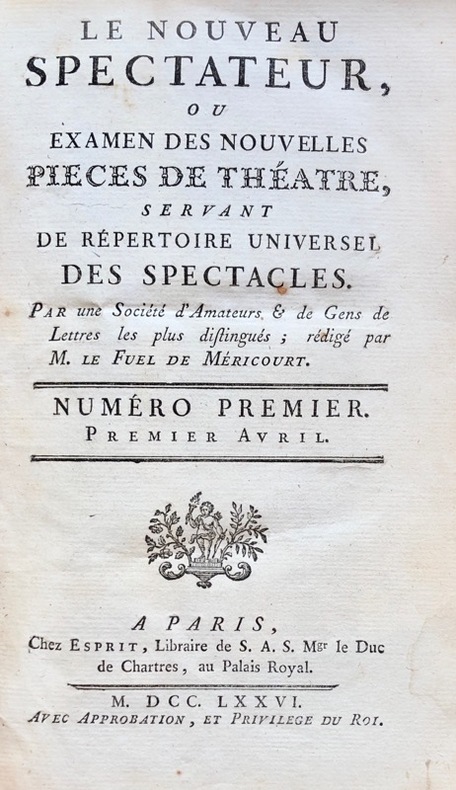
177612458Paris, , 1776-1798. 1. Le Nouveau Spectateur, 1 vol. in-8 de (4)-532-388-(2) pp. (1) f., veau fauve marbré, dos lisse orné, pièce de titre en maroquin rouge, tranches rouges (reliure de l'époque). 2. Journal des Théâtres, 4 vol. in-8 de (2)-7-(1)-384-(2) pp. ; (2)-402 pp. ; (2)-407-(3) pp. ; (2)-304 pp., demi-basane blonde, pièces de titre et de tomaison en maroquin blond, dos lisse orné (relié vers 1810).3. Le Censeur dramatique, 4 vol. in-8, de 8-584 pp. ; 576 pp. ; 576 pp. ; 256 pp., cachets anciens, basane havane, dos à nerfs orné de fers à l'oiseau, pièces de titre en maroquin havane et de tomaison en maroquin vert, tranches rouges (reliure de l'époque).
157342628A Paris, Par Federic Morel Imprimeur du Roy, 1573. In-8 de 173 ff. chiffr. et 3 ff. non chiffrés.Saul le furieux, Tragedie prise de la Bible, Faicte selon l'art & à la mode des vieux Autheurs Tragiques. Plus, Une Remonstrãce faicte pour le Roy Charles IX, à tous ses subiects, à fin de les encliner à la paix. Avec Hymnes, Cartels, Epitaphes, Anagrammatismes, & autres Oeuvres d'un mesme autheur. A Paris, Par Federic Morel Imprimeur du Roy, 1572. In-8 de 80 ff. chiffrés.Alexandre, Tragedie de Jacques de la Taille, du pays de Beauce. A Paris, De l'Imprimerie de Federic Morel Imprimeur du Roy, 1573. In-8 de 31 ff. chiffrés.Daire, Tragedie de feu Jacques de la Taille, du Pays de Beauce. A Paris, Par Federic Morel Imprimeur du Roy, 1573. In-8 de 35 ff. chiffrés, et 1 f. blanc.La Manière de faire des vers en Francois, comme en Grec & en Latin. Par Feu Jaques de la Taille, du pays de Beauce. A Paris, De l'Imprimerie de Federic Morel Imprimeur du Roy, 1573. In-8 de 22 ff. chiffrés et 1 f. non chiffré.Ensemble 5 parties en 1 vol. in-8, vélin souple, tranches jaspées (reliure à l'imitation).
1738002897Paris, Prault père, Jacques Clousier, 1738
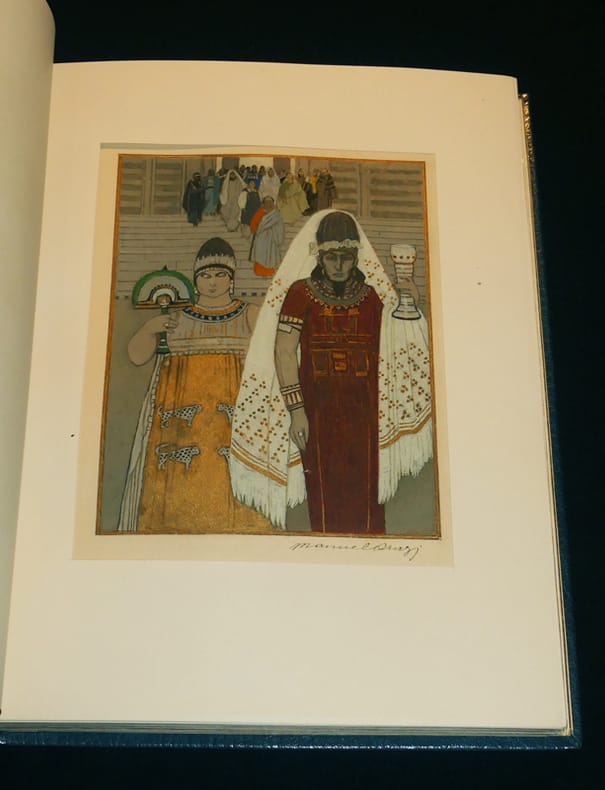
1930ru1157Société des amis du livre moderne Relié sous emboîtage 1930 TIRAGE LIMITE -- EXEMPLAIRE ENRICHI D'AQUARELLES ORIGINALES. In-4 (22 x 29 cm), belle reliure signée Max Fonsèque, plein maroquin bleu-gris, dos lisse orné du titre doré, motifs géométriques dorés aux plats, maroquin turquoise et gris-bleu encadrés de filets dorés aux contreplats, gardes de soir brochée dorée, tranches dorées, couverture et dos conservés. L'ouvrage est protégé par un emboîtage composé d'un étui carton dont les angles et l'ouverture sont bordés du même maroquin gris-bleu, et d'une chemise à rabats demi-maroquin à bandes avec le titre et l'auteur dorés au dos. Beau livre illustré de 26 gravures en couleurs dont un cul-de-lampe d'après les compositions de Manuel Orazi (1860-1934, peintre et affichiste italien, mais également créateur de bijoux), gravées sur bois par Pierre Bouchet. TIRAGE LIMITE A 149 EEMPLAIRES (ici le n°88, réservé à Albert Natural). Exemplaire enrichi de 3 AQUARELLES ORIGINALES rehaussée de gouache signées Manuel Orazi, d'une SUITE EN NOIR DES ILLUSTRATIONS SUR JAPON, et du menu du dîner du 25 mars 1931 de la Société des amis du livre moderne, illustré d'une gravure originale en couleurs d'Orazi ; très bel exemplaire. Livraison a domicile (La Poste) ou en Mondial Relay sur simple demande.
1691101581691 1 Le relieur Léon Fixon, ancien ouvrier de Thouvenin, dut s'établir à la mort de ce dernier (en 1834) et exerça jusqu'en 1850 environ. Ex-libris imprimé Paul Helbronner (et dessiné par lui), alpiniste, géodésien, aquarelliste et bibliophile. P., Denis Thierry, 1691, in-4° de 7 ff.n.ch. y compris le frontispice (Titre, 4 de Préf., Extt du Priv.) - 87 pp. ; relié plein maroquin rouge XIXe, titre et date or sur dos 5 nerfs élégamment orné, triple filet d'encadrement sur les plats, tranches dorées, roulette intérieure, gardes marbrées ; infime manque angulaire au frontispice, très soigneuses restaurations à quelques feuillets : Titre, dernier de la Préface, A, A2, E2, E3 et E4 ; le feuillet B est très légèrement effrangé en gouttière. (Reliure de Fixon).
19334585Paris, Editions de la Montagne, 1933. Un volume in-folio (405 x 335), en feuilles sous emboîtage (fatigué).
in-4, pp. (22), 64, leg. del tempo m. pelle con tit. e fregi oro al dorso, tagli marmorizz. Il testo è preceduto da una ''Notizia storica'' in italiano e francese. Dedicato ''alle Sacre Reali Maestà Cristianissime del Re, e Regina di Francia dal Cardinale Otthoboni, protettore degl'affari della Corona''. Antiporta raffig. il proscenio del teatro, Armi di Francia inc. sul tit. e 13 magnifiche tavole f.t. illustranti le diverse scene della festa, disegnate da Nicolò Michetti, impresario del Card. Ottoboni, e finem. inc. in rame da Filippo Vasconi, Carlo Grandi, Paolo Pilaja e G. Massi. Di particolare importanza è l'antiporta, che costituisce una delle prime raffigurazioni di un'orchestra barocca, formata da 11 elementi e diretta dal Costanzi. Prima edizione (una tiratura in-folio di 100 esempl., nella quale le tavole sono comprese entro bordure barocche, venne destinata alla corte di Francia) di questo libretto d'opera in tre atti in versi, scritto dal Cardinale Pietro Ottoboni, nipote di Papa Alessandro VIII, per celebrare la nascita del Delfino di Francia, Luigi (1729-65), unico figlio di Luigi XV e di Maria Leckzinska e futuro padre di Luigi XVI; la musica venne composta da Giovanni Costanzi (noto come Giovannino del Violoncello, Roma 1704-1778, grande compositore ed innovatore nella tecnica del violoncello), allora al servizio dell'Ottoboni e Maestro di Cappella in S. Luigi dei Francesi. Animarono la festa, che ebbe luogo in Piazza Navona, sontuosi fuochi d'artificio, ideati da Pierleone Ghezzi su incarico del Cardinale Melchior de Polignac, ambasciatore di Francia a Roma, il quale donò al Ghezzi un diamante del valore di oltre 200 doppie. Bell'esemplare, puro e marginoso, di questo libro di feste raro e di notevole pregio, con antica nota di possesso ms. nel margine infer. del frontesp. (piccole macchie d'inchiostro nell'angolo alto delle pp. 33-34.. "Le illustrazioni costituiscono un documento prezioso per la storia del teatro... l'antiporta rappresenta l'unica raffigurazione conosciuta, all'infuori dei disegni di Juvarra, del teatro della Cancelleria" (Olivier MICHEL). Esposito, Annnali di A. de Rossi, 449-50. Sonneck, Cat. of Opera Librettos I, 259. Allacci 166. Sartori 5108. Notizie su Costanzi in Diz. Biogr. It., vol. 30, pp. 380-3..
1829385231829 In-8 (207 x 127 mm). plein veau glacé vert sapin orné dun riche décor romantique, dos à 4 faux-nerfs garnis de triples filets dorés, fer spécial doré répété entre-nerfs, filets et palettes à froid et dorés, grand décor à la plaque estampé à froid sur les plats dégageant un médaillon central encadré dun jeu de filets dencadrement dorés, roulette sur les coupes, dentelles sur les chasses, gardes de papier marbré, tranches dorées (reliure de l'époque signée Thouvenin), x, (-11), 171 p. Paris, Vezard & Cie, 1829.
In Roma, 1729. Per Antonio de’ Rossi nella Strada del Seminario Romano. PRIMA EDIZIONE. In folio piccolo (cm. 25,6), cartoncino rosso ed oro coevo con fascetta di rinforzo al dorso, antiporta raffigurante il proscenio del teatro incisa + 22 pp. nn., 64 + 13 splendide tavole fuori testo che illustrano le scene della festa, disegnate da Nicolò Michetti ed incise in rame da Filippo Vasconi, Carlo Grandi, G. Massi e Paolo Pilaja. Importante il disegno dell’antiporta che raffigura per la prima volta un’orchesta formata da 11 elementi. Axs
151859259(Colophon:) Hagenau, Thomas Anshelm, 1518. Small folio. Bound in a recent full vellum binding with gilt lines and gilt lettering to spine. Title-page re-hinged, affecting neither printing nor woodcut. First leaves with light dampstaining to lower blank margin, far from affecting text. Last portion of leaves with small single worm-holes, mostly marginal, but touching the woodcut at the end. Neat marginal annotations. All in all a very nice copy. Magnificently printed, with three pages with the terms of the Hebrew cantillation printed in red and black, nine pages of musical scores (printed from right to left), extensive use of distinctive Hebrew type, large title-woodcut, and Anshelm's magnificent, large woodcut Printer's device at the colophon (presumably by Anshelm himself, after Dürer). 83, (5) ff.
(Colophon:) Hagenau, Thomas Anshelm, 1518. Small folio. Bound in a recent full vellum binding with gilt lines and gilt lettering to spine. Title-page re-hinged, affecting neither printing nor woodcut. First leaves with light dampstaining to lower blank margin, far from affecting text. Last portion of leaves with small single worm-holes, mostly marginal, but touching the woodcut at the end. Neat marginal annotations. All in all a very nice copy. Magnificently printed, with three pages with the terms of the Hebrew cantillation printed in red and black, nine pages of musical scores (printed from right to left), extensive use of distinctive Hebrew type, large title-woodcut, and Anshelm's magnificent, large woodcut Printer's device at the colophon (presumably by Anshelm himself, after Dürer). 83, (5) ff.
163191764Robert ALLOT John BEALE | Londres 1631 | 20 x 32 cm | Relié
1923192281923 11 gouaches, sur papier cartonné (feuilles 49 x 30 cm, dessins 45 x 27 environ), deux dessins datés et signés, en bas à gauche, 1923, encadré.
in-8, (140x97 mm), ff. (124, segn. *2, A-O8, P10), magnifica legatura milanese coeva in pieno marocchino tabacco, filetti a secco e in oro ai piatti con scritta in capitali in oro "Tempio de amore", al piatto anteriore, e "Giovan Battista Pechio", al piatto posteriore (piccole mancanze al dorso nella parte di testa e piede, lievi graffi al piatto posteriore). La famiglia Pecchio Ghiringhelli Rota vanta antiche origini milanesi e il Giovan Battista possessore del presente esemplare può essere identificato con il cavaliere dell'Ordine di S. Stefano di Toscana vissuto nella prima metà del XVI secolo (SPRETI, Enciclopedia Nobiliare Italiana, V, pp. 220-221). Seconda edizione (la prima era apparsa l'anno precedente) di questo componimento teatrale realizzato verso il 1504 e dedicato a Guglielmo, marchese di Monferrato, presso la cui corte, l'A. si rifugiò dopo che il suo castello di Finale fu raso al suolo dai Genovesi. E' un "dramma allegorico" in versi, senza la divisione in atti, che tratta un argomento profano nella forma della sacra rappre sentazione, ed che include "altri componimenti come la versione in terza rima della "Tavola di Cebete" e il riassunto delle "Metamorfosi" di Apuleio" (D.B.IT). Il piemontese Galeotto Del Carretto (nato nel contado di Acqui poco prima del 1455 e morto nel 1530) è personalità di spicco nell'aristocrazia, nella vita politica e culturale italiana a cavallo dei secoli XV-XVI; fu poeta, scrittore di teatro e storiografo (la sua "Cronica di Monferrato" in ottava rima, rimasta inedita per secoli benché fosse conosciuta e citata, ha visto la luce soltanto nel 1898, per cura di Giorcelli, nella "Rivista di storia della prov. di Alessandria", VII, pp. 8-107). Di lui il Vallauri, nella sua "Storia della poesia in Piemonte", parla a lungo e molto bene, dichiarando che "un nostro paesano fu quegli che scrisse nel 1502 la prima tragedia italiana, la Sofonisba" (op. cit. I, p. 71). Bell'esemplare assai puro (lievi tracce d'umido sugli ultimi ff.), a grandi margini, con antica nota di dedica al titolo, probabilmente di mano dell'autore stesso, "Al mol. Magnifico signor mio oss. mo". Importante edizione in legatura milanese del tempo, assai rara a reperirsi (per confronti per lo stile della legatura cfr. De Marinis, III, n. 2635).. BOLOGNA n. 119. CLUBB 350 (solo ediz. 1524). ALLACCI 756. SANESI I, 171. SOLEINNE, SUPPL. 362 (ed. 1524). BMC 151. DBIT XXXVI, 415-419. OLSCHKI, 4591, ed. 1524..
3 vol. in-8 (203x132mm), pp.XXVIII, 239; 248, (2); 209, (2); stupenda legatura del tempo in pieno marocchino verde scuro finemente decorata ai piccoli ferri in oro: bordura sui piatti formata da doppio filetto che racchiude una striscia di fregi a foglie e fiori, dorsi lisci con filetti e titoli, tagli dor. Al centro dei piatti anteriori dei tomi I e II è impresso il grande monogramma CF coronato di Carlo Felice Re di Sardegna (dal 1821 al 1831); al centro del tomo III è impresso il monogramma coronato di Maria Cristina di Borbone sua sposa, al centro del secondo piatto dei tre vol. figura il grande stemma araldico di Casa Savoia. Fr. Righetti (1770-1828) fu valente letterato e attore, con esperienze in varie compagnie e poi ''caratterista'' e promiscuo nella Compagnia Reale Sarda, ivi soprannominato Righettone, sino alla sua morte. Lasciò la presente stimata opera in tre vol., nel primo dei quali è tradotta e adattata la ''Storia del Teatro'' di Luigi Riccoboni, nel secondo vi è il saggio ''Stato attuale del Teatrio Italiano'', il terzo contiene uno ''Studio sull'arte della declamazione teatrale''. Opera impressa con gran cura su carta forte. Esemplare di eccezionale bellezza in artistica legatura coeva, di assoluta freschezza.. Rasi, Comici, II, 358. Rasi, Racc. Teatrale, p.495. Encicl. Spettacolo, VIII, 986. Treccani vol.XXIX..
182634976Paris chez Mme Dabo-Butsch 1826 45 volumes in-16, demi-veau havane, plats de papier marbr, dos sans nerfs orns de filets et fleurons pousss or et froid; doublures et gardes de papier marbr, tranches marbres (reliures de l'poque).Collection complte de cette Fin du rpertoire du Thtre franais. Trs bel exemplaire reli l'poque.
34972Paris chez Mme Veuve Dabo 1822-1825 81 volumes in-16, demi-veau rouge, plats de papier marbr, dos sans nerfs orns de filets et fleurons pousss or et froid; doublures et gardes de papier marbr, tranches marbres (reliures de l'poque).Collection complte de cette Suite du rpertoire du Thtre franais. Trs bel exemplaire reli l'poque.