ARTAUD (Antonin) - [LAM (Wifredo)].Livre Rare Book

105 183 résultats
12278P., Aubry-Rueff, 1966 ; in-8, broché. 39 pp. - 5 eaux-fortes originales en couleurs hors-texte. Très bon état.
in-4 picc., pp. (8, compr. frontesp. inc.; il f. 4 per errore è stato anteposto), 138 (con numeraz. delle pp. 55-56 ripetuta e salto da 118 a 121), leg. coeva p. perg. (parzialm. restaurata). Adorno di frontespizio e 5 tavole ripieg. f.t., il tutto magistralmente inciso da Jacopo Callot (il frontespizio in quarto stato, con le armi dei Medici sostituite da quelle di Alessandro Tasca, cui l'edizione è dedicata da parte del Manolessi; le tavole in unico stato). Terza edizione illustrata di questa celebre tragedia in cinque atti, in versi (dopo la prima di Firenze del 1620 e la seconda di Roma del 1632; altre edizioni del solo testo erano apparse nel frattempo a Venezia nel 1621 e 1636). Bell'esempl. marginoso, con le incisioni assai fresche e nitide (antica firma di possesso nel margine infer. bianco del frontesp.).. Manca a molti repertori consultati. Cat. Rasi, p. 300: «Raro». Lieure n. 363-368..
Raccolta di drammi teatrali in francese, con molte prime edizioni. Quattro volumi in -4°, piena pelle con nervi e tasselli al dorso. VOL. I - DUBUISSON, Pierre Ulric, Nadir ou Thomas-Kouli-Kan, tragédie, Jombert, 1780. (48) - PALISSOT, Charles, Le satirique. Moutard, 1782 - LE BLANC, Antoine, Manco-Capac, premier Ynca du Pérou. Belin, 1782 (35) - [LANTIER, Etienne François], L'impatient. Dessain junior, 1779 (25) - PATRAT (Joseph), L'Anglais ou le fou raisonnable. Toulouse, chez Broulhiet, 1782. (35) - Jeannot et Colin. Ruault, 1782 - Théatre de M. Cailhava, tome III; Les journalistes anglois. Paris, 1782 - MERCIER, Jenneval. Paris, Le Jay, 1769 (60) - MERCIER, Le deserteur. Paris, Le Jay, 1770 (200) Vol. II - LA NOUE, Mahomet second. Paris, Prault, 1789 - Didon. Chaubert, 1784 - Les graces. Prault, 1745 - CHAUSSE, Nivelle de La, L’école des mères. Prault, 1745 (44) - BOISSY, Le françois a Londres. Prault, 1735 - PIRON, Alexis, La Métromanie ou le poete. Le breton, 1738 (150) Vol. III - Sedaine, Le philosophe sans le savoir. Herissant, 1766 (20) - CHAMFORT (Sébastien-Roch-Nicolas), La jeune indienne. Cailleau, 1764. (100) - COLLE, La partie de chasse de Henri IV. Veuve Duchesne, 1766 (66) - COINSINET, Le cercle ou la soirée à la mode. Duchesne, 1764 (45) - MERCIER, Le bienfait rendu ou le négociant. Prault, 1763 - Les tuteurs. Duchesne, 1757 VOL. IV - BEAUMARCHAIS, Eugenie. Merlin, 1767 (ed. originale) (150) - CHAMFORT, Le marchand de Smyrne. Delalain, 1770 (ed. originale) (240) - BEAUMARCHAIS, Les deux amis. Veuve Duchesne, 1770 (ed. originale, completa delle pagine di spartiti alla fine) (373) - BARTHE (Nicolas-Thomas), Les fausses infidélités, comédie en un acte et en vers. Prault, 1768. (ed. originale) (20) - SEDAINE Michel-Jean, La gageure imprévue. Herissant, 1768 (ed. originale) (60) - Laurès, Thomire. Robustel, 1769 A wide collection of french theatre dramas and comedies; many first editions.
"In-4°, (6cc), 466pp, (16cc), legatura in mezza pergamena, tassello e titolo in oro al dorso, dorso con fori di tarlo, altrimenti buona copia. Pag 267 con pianta di teatro, pagg 282-283 con schemi di disposizione del Coro. Gesuita, fu legato da amicizia e stima intellettuale al suo maestro Bernardino Stefonio, divenuto famoso per la creazione della ""tragedia cristiana"" e considerato il più importante drammaturgo della storia teatrale della Compagnia di Gesù. Dopo la messa in scena delle due tragedie latine dello Stefonio, il Crispo e la Flavia, fu il Galluzzi che si occupò di trarre le conclusioni teoriche del successo ottenuto; nel 1621, pubblicò il trattato Virgilianae vindicationes et Commentarii tres de tragoedia, de comoedia et elegia che, basandosi sui lavori dello Stefonio (nei quali si fondevano i valori estetici di origine umanistica con quelli della sensibilità cristiana), diventò una vera e propria poetica ufficiale dell'Ordine. (DBI, 1998) In-4° (6cc), 466pp, (16cc), half vellum binding, label and gilt title at the back, spine with bookworms, otherwise good copy. Pag 267 plan of a theatre, pagg. 282-283 schemes of disposition of the Chorus. Jesuit, he was linked by friendship and intellectual esteem to his teacher Bernardino Stefonio, who became famous for the creation of the ""Christian tragedy"" and considered the most important playwriter in the theatrical history of the Society of Jesus. After the staging of the two Latin tragedies by Stefonio, Crispo and Flavia, it was Galluzzi who took care of drawing the theoretical conclusions of the success achieved; in 1621, he published the treatise Virgilianae vindicationes et Commentarii tres de tragoedia, de comoedia et elegia which, based on the works of Stefonio (in which aesthetic values of humanistic origin were merged with those of Christian sensitivity), became a real official poetics of the Order. (DBI, 1998)"
in-8 (mm 157x100), ff.. 92., leg. posteriore in pergamena. Silografia al frontespizio raffigur. la Giustizia. Seconda edizione, rara. L'invenzione comica del Giancarli «Rhodigino» fu subito celebre – come attesta l'elogio di Andrea Calmo – per la sua straordinaria coloritura lessicale. Da annoverare tra i capolavori della commedia plurilinguistica di area veneta , la Cingana è infatti composta nella cosiddetta parlata zingaresca, mescidanza dei dialetti veneziano, bergamasco, pavano e ‘greghesco'. In cinque atti in prosa. «Prima di essere un punto di arrivo, Venezia era stata un punto di partenza. Città multietnica, incrocio di ricchi mercanti di varia provenienza, sia italiana che straniera, da tempo aveva fatto del suo porto l'approdo di diversi linguaggi, il luogo della commistione delle razze e delle culture. L'espressione letteraria e teatrale di ciò erano state le commedie plurilinguistiche del pieno Cinquecento, prime fra tutte quelle di Ruzante, del Calmo e del Giancarli... espressione diretta dell'immigrazione di nuove classi sociali e nuove etnie: prevaleva dunque il genere del "contrasto" tra i buffoni locali della tradizione municipale di origine medievale e quattrocentesca e gli attori provenienti dall'esterno» . Buon esemplare (ex-libris Sordelli).. B.M.STC IT, 300. Allacci 858. Salvioli 760..
194992070Gallimard | Paris 1949 | 14 x 21 cm | Relié
1899bf4779Mercure de France Relié avec emboîtage 1899 EXEMPLAIRE UNIQUE. 15 AQUARELLES ORIGINALES LIBRES. In-12 (12,5 x 19,5 cm.), relié plein maroquin rouge sous emboîtage, cinq nerfs au dos, titre, auteur, date et lieu dorés au dos, filets dorés aux contre-plats doublés de soie imprimée, gardes couleurs, reliure estampillée René Kieffer, dos et couverture conservés, tranches dorées, un des 10 exemplaires tirés sur papier Japon impérial (n°7), fleurons et roulettes en haut de page, culs-de-lampes, 15 aquarelles, soit une en début de chaque chapitre, ces aquaralles originales sont propres à cet exemplaire n°7, très libres et non signées, elles évoquent Calbet, petite coupure de presse collée au contreplat postérieur ; très légers frottements et traces d'usage, très bon état général. Livraison a domicile (La Poste) ou en Mondial Relay sur simple demande.
In-8°; cc. (40) grande ritratto dell’autore inciso su legno al frontespizio. Legatura in cartonato moderno. Agnelli 2, pp. 119-120
In-8°; cc. (32), grande ritratto dell’autore inciso su legno al frontespizio. Legatura in cartonato moderno. Edizione originale. Agnelli 2, pp. 109-110.
in-4 (mm.294x220), ff.6 nn: (compreso antiporta), pp.130, bellissima legatura del tempo in piena pelle marmorizzata, triplice filettatura in oro sui piatti, dorso liscio con fregi oro, titolo su tassello. Antiporta fig. con scena teatrale,dis. da Mazzoneschi e inc.da Barbazza; medaglione con due maschere inc. al front. Precede la dedica alla principessa Costanza Braschi Onesti Falconieri, nipote di Pio VI. Edizione originale del primo lavoro teatrale del Monti (1754-1828), magistralmente impresso da Bodoni, il quale si adoperò anche a far rappresentare la tragedia al cospetto del Duca Ferdinando, che premiò l'autore con una medaglia d'oro. La narrazione, che prende spunto da Pausania, risente notevolmente anche degli influssi shakesperiani. Il Goethe, presente alla prima recita privata dell'opera nel 1786, giudicò molto favorevolmente il lavoro. Ottimo esempl., probabilmente uno dei 12 in carta d'Annonay.. Gamba, 2617 ''Splendida edizione''. De Lama, II, 40. Brooks, 312. Parenti, 353. Bustico, 86. Cat. Mostra 1990. n.53..
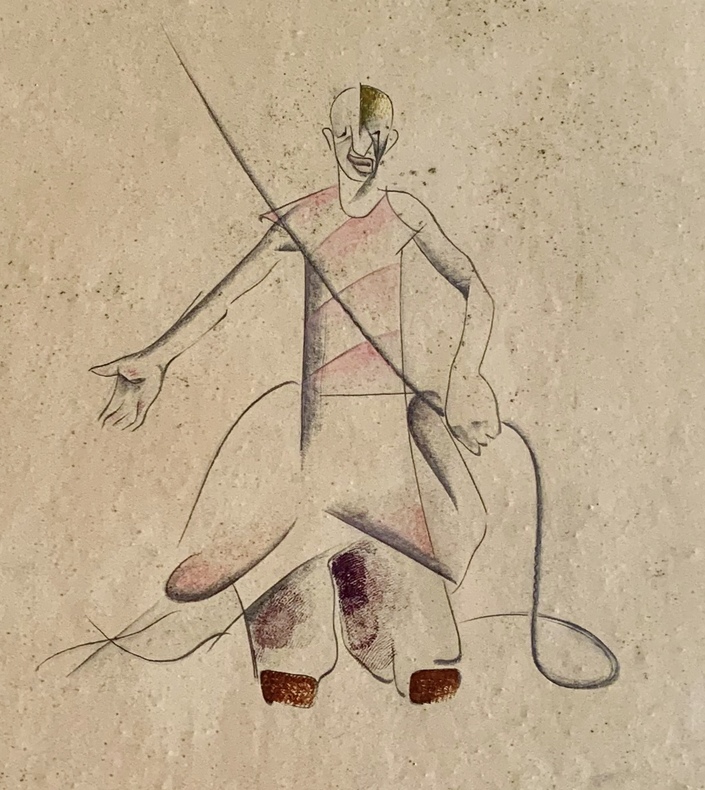
awd-836Aquarelle et crayon sur papier, avec une inscription russe en bas, vers 1920 (17/22,5 cm). Bon état.
In-8, nove volumi su dodici .In Lucca, per Gio. Della Valle, 1762-1764 Rara raccolta settecentesca di opere teatrali a cura di Ottaviano Diodati, tra cui quelle di Goldoni, Mestasio, Salvi, Nivelle de La Chaussé e Diodati stesso, noto esponente dell'illuminismo italiano. In apertura del volume I e prima di ogni opera teatrale, antiporte calcografiche disegnate da Domenico Paladini, incise da Ferdinando Fambrini e Giovanni Canocchi. Ai frontespizi emblema calcografico (3 amorini con libri) disegnato e inciso da Canocchi. Legature coeve in piena pelle, al dorso titolo e numero del volume in oro su tasselli rossi e verdi, nervi disegnati in oro. I volumi sono impreziositi dagli ex libris di una famiglia principesca italiana. Imbrunimento della carta, mancanza di quattro cm al dorso del tomo 3, angoli arrotondati, foxy, percorso di tarlo al tomo 9, qualche segno da sfregamento. In-8, nine volumes of twelve. In Lucca, for Gio. Della Valle, 1762-1764 Rare eighteenth-century collection of theatrical works by Ottaviano Diodati, a well-known exponent of the Italian Enlightenment. At the opening of volume I and before each theatrical work, chalcographic anti-doors designed by Domenico Paladini, engraved by Ferdinando Fambrini and Giovanni Canocchi. On the title pages, a chalcographic emblem (3 cupids with books) designed and engraved by Canocchi. Contemporary full leather binding, title and volume number on the spine in gold on red and green labels, bands designed in gold. The volumes are embellished with the bookplates of an Italian princely family. Browning of the paper, lack of 4 cm in the spine of tome 3, rounded corners, foxy, path of woodworm in tome 9, some rubbing marks.
Dodici volumi in 8o, ognuno di circa 400 pagine, su carta forte vagamente azzurra (papier de Hollande bleueté). Ritratto inciso di Metastasio, 37 belle incisioni nei diverso volumi, opera di Cochin, Moreau, Duclos, ecc. Cohen: "Edition de luxe avec des illustrations d'une grande beauté". Margini non tagliati. Legatura d'attesa in cartone rigido rosa, con tassello di titolo al dorso (qualche usura ai margini, un dorso un po' più chiaro). Esemplare freschissimo e senza difetti di uno dei capolavori dell'arte tipografica del 700. ----- (Nota Bene: le dimensioni dell'opera comportano un supplemento di costo della spedizione).
2 vol. in-8, pp. XVI, 319; XLVIII, 320, assai bella leg. coeva m. pelle e angoli, carta marmorizz. sui piatti, tassello granata e ricchi fregi oro ai dorsi. Titolo figurato inc. al primo volume, il titolo a stampa nel secondo tomo, come è di regola per tutti gli esempl. noti, 17 incisioni f.t. al volume II raffig. i personaggi della commedia all'italiana, una tavola ripieg. f.t. Le prime 4 pagine sono di dedica in italiano a Carolina Regina di Gran Bretagna. Seconda edizione, assai rara (la prima in un vol. era apparsa nel 1728) di opera antologica di grande importanza, che offre la traccia di centinaia di tragedie e commedie recitate in un secolo dagli attori italiani a Parigi. In molte collezioni è presente il solo tomo I dell'opera. Bell'esemplare.. Rasi p.491. De Courville n.74. Encicl. d. Spettacolo, VIII, 942..
4 vol. in-12, pp. XXXVI, 352, 4; (30), 328, 60; (30), 408, 88; (34), 312, 92, belle leg. coeve in p. pelle moucheté, fregi e tit. oro al dorso a nervi, tagli rossi. Ogni vol. è preceduto da antiporta disegnate e incise in rame da Mathey et Scotin, testate, finalini e capilettera silogr. Seconda edizione (prima 1731) aumentata e corretta di questa opera importante e fondamentale per lo studio del teatro settecentesco e in particolare della Commedia dell'Arte, pubblicata per volontà di Riccoboni. In testa al primo vol. indice alfabetico generale di tutte le Parodie riportate; in fine ad ogni vol. parti musicali inc. in rame. Ottimo esempl.. Courville, Bibliogr. di Riccoboni, n. 65 e 67. Soleine 3362. Cohen 784..
Edizione originale. Ottimo esemplare (contenute normali lacerazioni a testa e piede del sottile dorso). Raro reperto del compositore italo-egiziano, le cui marce furono usate per musicare i balli plastici di Depero.Numero editoriale 1391. L’edizione raccoglie la «Marcia funebre per un uccellino», la «Marcia nuziale per un coccodrillo» e la «Marcia militare per le formiche». Lo spartito è datato in fine «dicembre 1920». -- «La compagnia di Van Doesburg, molto interessata alla musica d’avanguardia italiana, restò poi in contatto con Rieti e accolse con entusiasmo la partitura delle ‘Tre marcie’ che il compositore le inviò da Roma. Il 23 settembre 1922, nel corso di una serata dada organizzata da Tzara all’Hotel Furstenhof di Wiemar, in occasione del congresso d’artisti d’avanguardi, Nelly eseguì così al piano le ‘Tre marcie’ di Rieti davanti a un gruppo di dadaisti e costruttivisti, di cui faceva parte anche il futurista Vasari, riportando un grande successo» (Lista). Cammarota, Futurismo, 399.1; Lista, Dada in italia, p. 125
#[16841]Covens et Mortier 1747 25x11cm engraved titlepage 25 detailed engraved fold out maps 25×33 cm first of which is the general map and 24 detailmaps of the low countries wormholes through the whole book in the margins of the maps and through the titlepage as well contemporary tooled leather binding in very good state gilt ornaments and title on spine marbled endpapers attractive book intended for officers to plan marches through the low countries size of the book adapted to the pockets of the uniforms of the 18th century. Campaign atlas. l Gebonden in geheel leer formaat 25x11 cm gegraveerd titelblad en 25 gevouwen kaarten ieder ca. 22x30 cm. Mooi exemplaar met goudstempeling op rug en platten. Enkele wormgaatjes in de marge van de kaartjes. Koeman Atlantes Neerlandici C&M 19. Anonieme atlas ondanks de vermelding van de naam Covens en Mortier in de titel. Op de titelpagina worden 11 boekverkopers genoemd alle in de zuidelijke Nederlanden Duitsland en Frankrijk maar niet Covens en Mortier. Deze atlas was bedoeld voor legerofficieren om de marsen in dit deel van de lage landen te kunnen uitzetten. Het bestreken terrein - op een overzichtskaart en 24 detailkaarten - betreft het deel van Holland Gelderland Limburg en Brabant. Linksboven begrensd door Leiden rechtsboven door Zutphen linksonder door Brussel en rechtsonder door Aken. De schaal van de detailkaarten is 1:150.000 hardcover
First and only edition of the best monograph on Soler i Rovirosa (1836-1900), the great Catalan set designer of the late 19th century. Profusely illustrated throughout. 43 beautifully produced full-page plates of set designs, several printed in color. FROM A TOTAL EDITION OF ONLY 310 COPIES, this is ONE OF ONLY THREE (3) ON JAPAN PAPER WITH AN ORIGINAL SIGNED WATERCOLOR BY SOLER I ROVIROSA. The highly-finished watercolor measures 12 x 23 cm and depicts a set design (perhaps for "Miss Robinson"). It is signed by Soler i Rovirosa with his monogram, and is annotated Barna (i.e., Barcelona), 17 Junio 1894. It is on fine wove paper, mounted on a blank sheet of Japan paper. There are additional sketches and annotations on the back. Original watercolors by Soler i Rovirosa are very rare, especially signed. Folio, loose as issued in original wraps. Fine and bright, with no defects. An outstanding item.
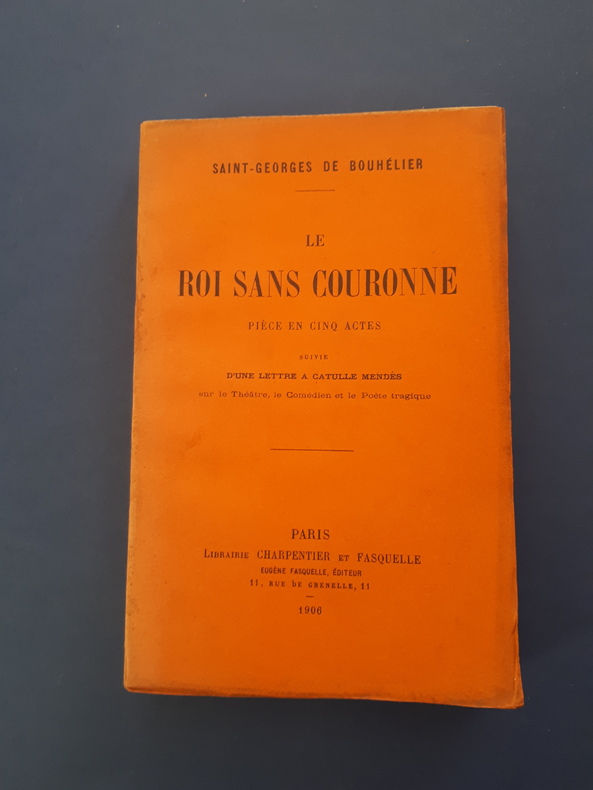
1906AA349Charpentier, Paris 1906 In-12° de 308 pp.,
193062548Hollywood CA & New York NY; Oshkosh WI & Parkersburg WV: The Strand Theatre Smoot Theatre Lincoln Theatre & Warner Bros. 1930-1934. Oblong folio. 14.5 x 11.5 in. 100 pp unpaginated. two different papers many preserved in archival mylar sleeves. With 90 original silver gelatin photographs either mounted or loose and inserted into sleeves sized from 2 x 2 in. up to 8 x 10 in. most sized approx. 5 x 7 in. many w/ photographer’s imprints 71 pieces of mounted ephemera including promotional cards souvenir promotional items such as napkins studio advertising mimeograph typescript marketing scripts lobby cards newspaper clippings and more. All leaves bound w/ brass screw posts at gutter margin many preserved in archival mylar sleeves some leaves w/ chipping & tears at fore=-edges offset tears and or reside on versos of a few photos some scuffing old glue markings cropping to some leaves still a VG artifact preserved as album. This exceptional original Warner Bros. Studio marketing photo album/scrapbook chronicles the movie industry’s system of engaging the movie-going public during the Great Depression in a form of interactive promotional live theatre to immerse them in the cinematic experience. Featuring physical props displays special lighting costumed extras studio scripts featuring a myriad of promotions the Warner Bros. Studios theatre group was able to enhance and pull in far more movie-goers and set the foundation for their marketing system in the coming decades. By using their opulent and fabulous 1920’s era created movie palaces these images capture the pre-Code sexualized Mae West in slinky costumes emblazoned on radio station cars physical stand-up showroom displays restaurant menus post-Prohibition tavern beer coasters and even pulled in local officials such as Mayor George Oaks of Oshkosh WI. Also featured here are photos and flyers for the giveaway cars tie-ins with the Oshkosh State Teachers College football team and nearby department store window displays which significantly expanded the visual and immersive experience.Of particular interest is the included and very detailed 117 step campaign script for Mae West’s iconic “I’m No Angel†featuring the titillating star as Tira the circus beauty who manages to always be mistress of the situation whether in the cage with wild beasts her boudoir filled with admirers to be bedded or even charming and seducing the judge at the end of the film with only a wiggle. The pre-Code campaign encourages the Warner Bros. Studio theatre’s to include a “Try your figure†display panel where young women would measure themselves against the busty silhouette and those that matched closest to the scantily gowned West would receive free tickets. Another stunt was setting up a “Mae West Voice Test†using a dictaphone in the lobby with a “pretty girl attendant†set up in charge to ask potential women movie-goer attendees to utter “Come up and see me sometime†and free tickets were awarded for the best Mae West imitations. Other movies featured at the Strand in Oshkosh or the Smoot & Lincoln Theatre’s in Parkersburg WV depicted here with promotions souvenirs and photographs include: “The Sea Wolf†based on Jack London’s book and which starred Milton Sills Jane Keithley and Raymond Hacket released just 1 week after Sills’ death and features stunts with potential young movie-goers to bring their Rin Tin Tin like dogs as well as airplane stunts and lobby card; or elaborate window displays and automobile floats mocked up as dirigibles and costumed extras for Frank Capra’s “Dirigible†released in 1931 and starred Fay Wray Jack Holt Ralph Graves and Hobart Bosworth set against the drama of a competition by fixed-wing aircraft and dirigible airships to reach the South Pole. Other movies briefly archived in the group here feature “When Ladies Meet†released in 1933 starring Ann Harding Myrna Loy and Robert Montgomery or a couple mentions of the 1931 Bela Lugosi Dracula. The 1933 Gold Diggers is featured in several photos which starred Joan Blondell Aline MacMahaon Monica Bannister Joan Barclay and Connie Blackwood as out-of-work Broadway chorus girls. Also appearing here in approximately one fourth of the photo album/scrapbook is a similar campaign as that for Mae West for the 1932 “Fireman Save my Child!†with the wildly popular comedian Joe E. Brown starring as Joe Grant inventor fireman and baseball player offered to play in the big leagues in the film but earning more money from his inventions Again the script advises engaging the local fire department to put on stunts include the supplied advertising on their fire engines and even encourages the use of a large animatronic mechanical head of Brown in a fireman’s hat in the lobby. The movie was actually a natural fit for Joe Brown who had launched his physical comedy during the 1893 Depression by making faces at the firemen on passing coal-burning trains so they would throw coal at him to collect and sell and later worked as circus acrobat and newsboy and was a lifelong baseball fan. From 1930-July 1934 the Hollywood studios were largely self-regulating their content with continued threats by outside groups to “clean†up their movies and somehow balance the puritanical group sensibilities against the ever growing demands by audiences for movies that were daring edgy naughty and even sexualized often depicting spousal abuse sexual bondage marital infidelity free love with stars such as Mae West Norma Shearer Kay Francis Dorothy Mackaill Nancy Carroll and Constance Bennett typically depicted half-clad or in bed. At the time the movie studios and theatre’s were attempting to recoup the massive investments in transitioning to sound films and market the new technology by cultivating a sophisticated campaign system often hiring Broadway writers directors and actors to travel around and oversee their promotions productions. See: John Farr How Movies Got Us Through the Great Depression Best Movies 2024; David P. Hayes Production Code of the Motion Picture Industry 2009; Mae West Reveals Herself as a Circus Queen in “I’m No Angel†at the Paramount New York Times Oct. 14 1933. The Strand Theatre, Smoot Theatre, Lincoln Theatre, & Warner Bros., unknown
IN FOLIO, pp. 8 CON LA SPEGAZIONE DELLE DUE SEZIONI DELLE TAVOLE INCISE ALL'ACQUAFORTE. SEZIONE PRIMA, TAVOLE XXVII.DETTAGLIO GENERALE DELLE MACCHINE DA TEATRO DELL'OPERA DI PARIGI ( LE TAVV. DALLA A ALLA S + v.r - T, V, Y, Z, AA ,BB, pg. SINGOLE, CC + v.r, DD SINGOLA ). SEZIONE SECONDA, CONTIENE TAVOLE XXII DOPPIE EQUIVALENTI A 44 TAVOLE SEMPLICI. COPERTINA MUTA MARMORIZZATA ANTICA CON ETICHETTA RIPORTANTE MANOSCRITTO IL CONTENUTO DEL FASCICOLO DI EPOCA POSTERIORE . OTTIMA CONSERVAZIONE CON LE TAVOLE FRESCHE E A PIENI MARGINI<BR>PRIMA EDIZIONE PARIGINA, TESTO IN FRANCESE. ID,6664
in-8, ff. 48 n.n. (l'ultimo bianco), leg. moderna in p. perg. Grande impresa tipogr. al titolo e in fine, due grandi iniziali istoriate. Prima edizione di rarissima commedia, ritrovata manoscritta anonima, secondo la lettera di Benedetto Busini a Filippo Giunti, che precede il testo. è ritenuta opera dello stesso Busini, o, più propriamente attribuita al Gelli. Ambientata a Firenze, consta di un prologo e di cinque atti. Ricalca lo schema della schermaglia amorosa, con implicazioni assai licenziose; curioso il fatto che la bellissima Polifila, figlia di uno dei protagonisti, cui è intitolata la commedia, non figuri tra i suoi personaggi. Bell'esempl. (qualche piccola macchia, angolo inf. dell'ultimo f. bianco restaurato).. Melzi, Diz. opere anonime II, p.356. Soleinne IV, 4238: ''Elle est rare. On y trouve toute la licence de l'Arétin et de Machiavel''. Clubb 18Allacci 636. Non in Rasi. Camerini 162 (erra la paginazione). Gay, Bibl. de l'Amour III, 807-8: ''Pièce très licensieuse''..
in-8, pp. 110, (2), leg. in cartoncino rustico. Marca tipogr. sul front. e sul verso dell'ultimo f., iniziali silogr. istoriate. Prima edizione completa degli Intermezzi. La commedia era stata pubblicata nel 1551, quando gli ''Intermedii'' non erano ancora ultimati, malgrado fossero stati recitati durante la prima rappresentazione che ebbe luogo a Palazzo Minerbetti nel Febbraio 1550, a spese di 20 giovani nobili fiorentini. Il Grazzini (Firenze 1503-1584), detto il Lasca, appartenne all'Accademia degli Umidi della sua città e successivamente fu tra i fondatori dell'Accademia della Crusca; il suo teatro in prosa ebbe grande successo nella seconda metà del XVI secolo, ed influenzò svariati drammi shakespeariani. Ottimo esempl.. Sanesi p.304-305. Allacci 389. Clubb 486..
Vicenza per Tolomeo Ianiculo nel 1529 di Maggio. In 4to (cm. 19,8); legatura del Cinquecento in pergamena molle con il titolo manoscritto al piatto anteriore. Tolomeo Ianiculo (ma Zanetti, Bartolomeo) Camaldoli 1520; Firenze 1514-1524; Roma; Venezia 1535-1548; Tipografo di Casterzago (Castrezzato) presso Brescia, attivo a Firenze, Camaldoli e Venezia, verso il 1487, iniziò l’attività lavorando a Firenze per i Giunta, poi si mise in proprio. Nel 1520 stampò a Camaldoli per conto del Monastero. Trasferitosi a Venezia, vi restò fino al 1541, quando tornò a Firenze, dove collaborò con Anton Francesco Doni. Rientrato a Venezia, vi lavorò sia come tipografo che come copista di testi greci; fu attivo anche a Vicenza, dove stampò soprattutto opere di Gian Giorgio Trissino sotto lo pseudonimo, scelto dallo stesso Trissino, di Tolomeo Ianiculo. Axs
95 albums 33 tours des années 1955 à 1980s, répartis en 9 boîtiers à disques de 34x34x5,5 cm chacun. Liste des albums de disques contenus dans cet ensemble, généralement édités par E.S. l'Encyclopédie Sonore Hachette, sauf mention : William Shakespeare - drames et tragédies romaines ; comédies ; tragédies ; la tragédie du roi Richard II , par le T.N.P. ; 400e anniversaires de la naissance de William Shakespeare ( l'avant-scène théâtre ) ; Daniel Sorano : Shylock ou le marchand de Venise (disques Adès) ; compte des mille et une nuits ; le roman de renart, par Bourvil (Emidisc) ; la chanson de Roland ; le roman de renard (par D. Sorano, Georges Wilson, etc.) ; Chartres (Decca) ; François Villon par Serge Reggiani et Pierre de Ronsard par André Reybaz (disques Adès) ; François Villon, poèmes dits par Alain Cuny (disque Festival) ; Rabelais, extraits de Gargantua et Pantagruel , Montaigne, Les Essais (extraits) ; Poètes du XVIe siècle (anthologie sonore de la Pléiade) ; Rabelais, les mirifiques aventures de Grangousier, Gargantua et Pantagruel, par Jacques Fabbri, Michel Galabru et Claude Pieplu (éditions Lucien Adès) ; Cervantès, les aventures de Don Quichotte de la Manche, par Gérard Philipe et Jacques Fabbri (Petit Ménestrel) ; Blaise Pascal, pensées dites par Pierre Fresnay (Festival) ; Visages de Pascal ; Madame de Sévigné, ses plus belles lettres (Véga) ; le monde musical de Racine (O.R.T.F.) ; Corneille, Cinna (disques Pléiade ) ; Rodogune ( SSB sélections sonores Bordas) ; Nicomède ( SSB ) ; Racine, Les Plaideurs ; La Fontaine, Fables Choisies mises en vers, premier fablier + deuxième fablier + troisième fablier ; Visages de La Fontaine, par les comédiens du théâtre national populaire ; Racine, Les Plaideurs ; Racine, Esther ; Molière, Le médecin malgré lui, par Fernandel (Decca) ; Dom Juan, par la Comédie-Française , Georges Descrières et Jacques Charon (EMI) ; Georges Dandin (Adès) ; l'étourdi ou les contre-temps (Lumen) ; le médecin malgré lui, par la Comédie-Française (la voix de son maître) ; aimer Molière, par la Comédie-Française (EMI) ; Molière en 1930, par la Comédie-Française (EMI) ; le malade imaginaire, par la Comédie-Française (EMI) ; les précieuses ridicules ; le médecin malgré lui ( SSB ) ; les précieuses ridicules ( SSB ) ; Rousseau, Les Confessions, par Pierre Fresnay ; Goethe, Werther ; Voltaire, Extraits ; Marivaux, les fausses confidences (pat Madeleine Renaud et J._L. Barrault) ; Diderot, le neveu de Rameau, par Pierre Fresnay (l'Avant-Scène) ; Lesage, scènes de la vie de Gil Blas ; Musset, les caprices de Marianne ( SSB ) ; théâtre romantique ; Lamartine, textes réunis ; Musset, Pages choisies (Poésies + comédies et proverbes + confession d'un enfant du siècle) ; Gérard Philipe joue Musset (extraits - disques Adès ) ; Émile Zola, pages choisies ; Alfred de Vigny, pages choisies ; Victor Hugo, pages choisies ; Hernani (SSB) ; Ecce Homo ; Les pauvres gens (disques Pléiade) ; Hugo, Pauca Meae ; Les Misérables (Petit Ménestrel) ; Chateaubriand témoin de l'histoire, textes réunis ; Flaubert, Madame Bovary (Pléiade) ; Rimbaud ; Baudelaire ; Verlaine Rimbaud ( Adès ) ; Mérimée, Colomba ; Hector Malot, Sans famille (Philips) ; Théophile Gautier, le capitaine Fracasse ; Scènes de la vie de Pasteur ; George Sand, La mare au diable ; Maupassant, Le parapluie ; Flaubert, un coeur simple ; Anatole France, Pages choisies ; Mussy, vigny , par Michel Vitold et Francis Huster (Adès) ; Charles Baudelaire, Gérard de Nerval, dits par Jean Desailly et jean Vilar (Adès) ; Paul Valéry, Stéphane Mallarmé, dits par Jean Vilar et Pierre Bertin (Adès) ; Hugo dit par Georges Wilson et Lamartine dit par Jean Topart (Adès) ; Les cinq sous de Lavarède (Musidisc) ; Walter Scott, Ivanhoé ; Visages de Mérimée ; Proust, pages choisies ; Saint-Exupéry, pages choisies ; Le Petit Prince (avec J.-L. Trintignant, Grand prix Charles Cros 1971 - Philips) ; Charles Péguy, textes choisis (Adès) ; Romain Rolland, Pages choisies ; Paul Claudel, pages choisies ; Roger Martin du Gard, Pages choisies ; Paul Valéry, Pages choisies ; Charles Péguy, Pages choisies ; J.-H. Rosny, La Guerre du Feu ; Le Petit Prince (par Gérard Philippe, Disques Festival) ; Saint-Exupéry (Disques Festival, Grand prix du disque Charles Cros 1955) ; Charles Péguy, cinq prières dans la cathédrale de Chartres ( Grand Prix charles Cros 1962) ; Proust, Une soirée dans le monde (Decca) Etat très satisfaisant (des mentions d'ex libris ms. sur certains albums, bon état par ailleurs). Prix pour l'ensemble. Un ensemble peu courant, avec des interprétations notamment par la Comédie Française ou le Théâtre National Populaire (T.N.P.). Au total, 18 albums relatifs au moyen-âge et au XVIe, 25 relatifs au XVIIe, 6 au XVIIIe, 32 au XIXe et 14 au XXe. Poids total de 33 Kg Français