388 résultats
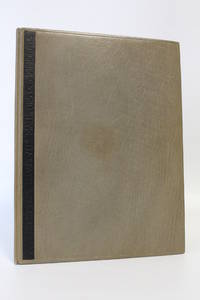
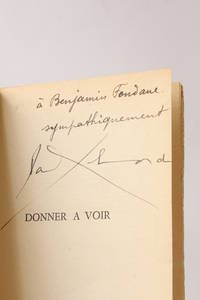
193959300Paris: Gallimard 1939. Fine. From poet to poet from comrade-in-arms to kindred spirit. ""Rien que le temps de n'être plus / Et rien que le temps d'être tout"" Gallimard Paris 1939 12 x 19 cm broché First edition one of the press service copies. Precious signed autograph inscription from Paul Éluard to Benjamin Fondane. Spine with three small expertly repaired tears of no consequence. A moving dedication from poet to poet written on the eve of the war during which the two friends would contribute together to poetic resistance journals such as l'Honneur des poètes. The deportation and death of Fondane in 1944 along with many other artist and poet friends would profoundly affect Éluard who composed in their memory a magnificent poetic tribute ""Eternité de ceux que je n'ai pas revus"" listing the names of each of the departed: ""Visages clairs souvenirs sombres Puis comme un grand coup sur les yeux Visages de papier brûlé Dans la mémoire rien que cendres La rose froide de l'oubli Pourtant Desnos pourtant Péri Crémieux Fondane Pierre Unik Sylvain Itkine Jean Jausion Grou-Radenez Lucien Legros Le temps le temps insupportable Politzer Decour Robert Blache Serge Meyer Mathias Lübeck Maurice Bourdet et Jean Frayse Dominique Corticchiato Et Max Jacob et Saint-Pol Roux Rien que le temps de n'être plus Et rien que le temps d'être tout"" Gallimard unknown
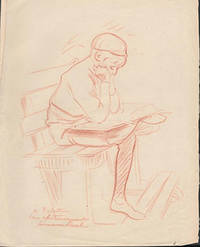
51-6725Paris: circa 1930s. Crayon or chalk drawing in sanguine. 32 x 25cm. Annotated: "à Valentine bien affecteusement Paul.".Valentine Gross met her future husband Jean Hugo grandson of the influential French author Victor Hugo in 1917 at the home of Mimi and Cypa Godebski. In 1919 they were married with Cocteau and Satie as their only witnesses. Neither of Jean's parents consented to the marriage perhaps contributing to its eventual demise.In March of 1926 Valentine attended one of the first Surrealist expositions where she met Paul Éluard. Their meeting sparked a friendship that would continue until his death in 1952. In 1927 after working as costume designer on the set of La Passion de Jeanne d'Arc Valentine returned to Paris a full-fledged Surrealist; Jean Hugo however never embraced the Surrealist movement. In the years following their hurried nuptials their tastes diverged leading to separation in 1929 and finally divorce in 1932. Despite the end of their marital relations Valentine and Jean remained friends until her death in 1968.Provenance: Pierre Spivakoff 1933-2012…Après des études au Cours Simon Pierre Spivakoff crée à Paris le tout premier café-théâtre « Le Royal » situé boulevard Raspail où il met en scène des pièces de Fey¬deau Ionesco Dumas Rachilde Molière et Corneille. En 1973 il met en scène «Délirante Sarah» une pièce autour de Sarah Bernhardt où il interprète le rôle prin¬cipal. Le spectacle représentera la France dans de nom¬breux Festivals européens Rome Belgrade Berlin… et se prolongera à la comédie des Champs-Elysées durant toute l’année 1974. Habité par la divine Sarah Il est l’auteur du livre « Sarah Bernhardt vue par les Nadar » éditions Herscher 1997. Par ailleurs il monte « L’Homme aux camélias » au Théâtre La Bruyère ou « Monsieur Vénus » au Théâtre des Mathurins. Également metteur en scène et professeur d’art dramatique il dirigera de très nombreux acteurs avant d’ouvrir une classe de théâtre à l’American Center aventure qui durera plus de 10 ans. Enfin son cours de coaching d’avocats et de personnalités politiques a durablement marqué l’éloquence à la française chez les ténors ténors du barreau . Paris: circa 1930s. unknown
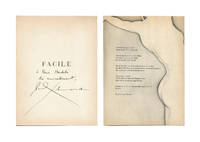
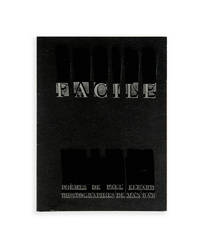
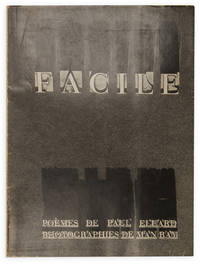
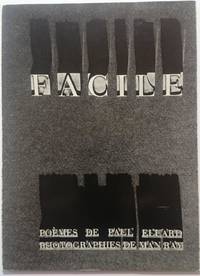
1935Eluard9<p><strong>ÉLUARD Paul 1895-1952</strong></p><p><em>Facile. Poèmes de Paul Éluard. </em><em>Photographies de Man Ray<strong><br /></strong></em>Paris G.L.M. Guy Lévis-Mano 1935<br />First edition one of 200 "hors commerce" copies<br />Print: One of the 200 "hors commerce" copies from the 1200 copies printed on Rives wove paper.<br />This copy is numbered 'CLXXV'<br />Small restored scuff in the upper margin of page 4.<br />Illustration: 13 photographs of Nusch by Man Ray printed in heliogravure including one on the cover</p><p><strong>One of the most desirable illustrated books of the 20th century</strong></p><p><strong><em>'Facile where Nusch's naked body photographed by Man Ray encircles the poems with a clear tenderness and ideal lines…'</em></strong><br /><strong>Album Éluard p. 173</strong></p><p><u>With a signed autograph inscription by Paul Éluard to René Bertelé in black ink:</u></p><p><em>" À René Bertelé<br />Très amicalement </em><br /><em>Paul Éluard "</em></p><p>René Bertelé was one of the foremost publishers of poets in the 20th century. In the aftermath of the war he founded and directed Éditions du Point du Jour—named after a work by André Breton. A close associate of Jacques Prévert he published <em>Paroles</em> in 1946 the collection that brought the poet to widespread public attention. His publishing house also featured works by Michaux Breton Ernst Soupault and Queneau.</p><p>Born from an artistic collaboration between Man Ray Paul Éluard and his wife Nusch the book exalts her body through the poet's words and the photographer's light. Following his collection <em>Au défaut du silence</em> where Gala was ever-present Éluard composed these four poems evoking Nusch which are echoed by a subtle interplay of layout and twelve photographs by Man Ray depicting Nusch entirely nude. Her body never appears in full a technique characteristic of the "Man of Light." The work contributed significantly to the revival of eroticism in 1930s art.</p><p>The elegance and originality of <em>Facile</em>'s layout combined with the aesthetic quality of Man Ray's photographs—characterized by raking light shadow play and superimpositions—contribute to the perfection of this legendary work:<br /><em>"Identical to herself in her inexhaustible creation of self woman is also like the sign—or better yet: the condition—of the identity of all things. One would almost have to quote entire poems from Facile to convey the true sense of the 'harmony' established between feminine eroticism and the fertile energies of the earth—between the gestures of woman and the movements of human destiny…"</em><br />Pierre Emmanuel <em>Le Je universel chez Paul Éluard</em></p><p><u>Bibliography:<br /></u><em>Œuvres complètes</em> t. I éd. Marcelle Dumas et Lucien Scheler Pléiade pp. 457-466</p> GLM
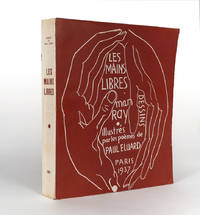
193721205811937. Paris: Jeanne Bucher 1937 4to. Original pictorial red and white wrappers lettered in red to spine; pp. 176 30 with pictorial title and 66 full-page illustrations by Man Ray; pages partially uncut; very minor creasing to lower corners and spine a little frayed otherwise near fine copy; author's presentation inscription to half-title 'a Georges Mouton tres amicalement Paul Eluard' see below.First edition number 319 of 650 copies printed on Chester verge of a total edition of 675 copies presented by Eluard to the Surrealist writer Georges Mouton. Les mains libres is the second collaborative work between Man Ray a pioneer of the Surrealist movement and Paul Eluard poet and one of the movement's founders. During the 1930s Man Ray made numerous drawings in Paris and the South of France. He shared them with Eluard who requested to keep them temporarily. Adhering to the Surrealist tradition the poet 'illustrates' the images not the opposite: upon Man Ray's return Eluard had paired each drawing with a poem. This collaboration resulted in the publication of Les mains libres featuring fifty-four illustrations by Man Ray facing as many poems by Eluard and three appendices 'Sade' 'Portraits' and 'Details' which include Man Ray's portraits of Pablo Picasso Andre Breton and Eluard. Provenance: This copy was presented by Eluard to the writer Goerge Mouton. Connected to Surrealist circles in the 1930s Mouton was a member of the Contre-Attaque group led by Georges Bataille and Andre Breton during 1935-1936. unknown
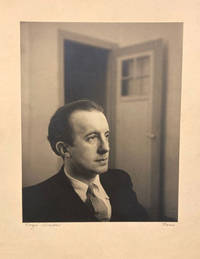
294271934 pour la prise de vue 1944 pour la signature voire le tirage. 1 tirage argentique 233 x 293 mm et 330 x 420 mm avec marges noir et blanc. Encadré. . Rare portrait méconnu dont il existe peu d'épreuves. La photographie est signée à l’angle inférieur droit « Rogi-André 1944 » et dans la marge blanche « Rogi-André. Paris ». : il s'agit de la photographe hongroise Rosa Klein et le portrait fut réalisé en 1934 dans l'appartement de Paul Éluard. . Rosa Klein fut un temps l'épouse d'André Kertesz qui l'initia à la photographie dans les années 1920. Au milieu du bouillonnement intellectuel parisien elle se lie avec les artistes d'avant-garde notamment les surréalistes dont elle réalise de nombreux portraits en suivant le conseil de Kertesz : « Ne jamais photographier quelque chose pour lequel tu éprouves peu d'enthousiasme mais seulement ce qui t'intéresse passionnément. » Elle privilégie - et c'est une nouveauté - de faire poser les modèles dans leur environnement certains critiques relevant dans ses portraits une influence du cubisme par exemple lorsqu'elle réalise une composition géométrique grâce au jeu des ombres et des lumières - comme ici avec ce portrait utilisant les éléments de la pièce où se tient Éluard. En 1941 pendant la Seconde Guerre mondiale Rogi André a été contrainte de fuir en zone libre et de se réfugier en Touraine en raison de ses origines juives avant de regagner Paris et de s'y cacher grâce à l'aide de la galeriste Jeanne Bucher. Elle décède le 11 avril 1970 à Paris dans la pauvreté et tous ses modestes biens sont mis en vente à l'Hôtel Drouot. Une partie de ses archives et notamment ses tirages sont cependant sauvés du désastre grâce aux efforts de Jean-Claude Lemagny conservateur responsable de la photographie contemporaine au département des Estampes et de la Photographie de la Bibliothèque nationale de France qui en fait l'acquisition pour la collection de la BnF qui possède une épreuve de ce tirage cote 40299995 non signée ; un tirage tardif de 1982 est détenu par le Centre Pompidou AM1983-429. On connaît par ailleurs une autre épreuve de ce tirage non signée par la photographe mais offerte par Paul Éluard à Max-Pol Fouchet dédicacée. Ce sont les trois seules épreuves connues. Notre épreuve tirée par l'artiste en 1944 est la seule qui soit signée ici par deux fois : sur la photo et sur le montage. [1934], pour la prise de vue, [1944], pour la signature voire le tirage. 1 tirage argentique (233 x 293 mm) et (330 x 420 mm ave unknown
29716Paris 1934. 1 tirage argentique 233 x 293 mm et 330 x 420 mm avec marges noir et blanc. Encadré. . Seule épreuve connue de cet portait d'Éluard par Rogi André. . Elle est l'oeuvre de la photographe hongroise Rosa Klein dit Rogi André et fut réalisée en 1934 dans l'appartement de Paul Éluard. Rosa Klein fut un temps l'épouse d'André Kertesz qui l'initia à la photographie dans les années 1920. Au milieu du bouillonnement intellectuel parisien elle se lie avec les artistes d'avant-garde notamment les surréalistes dont elle réalise de nombreux portraits en suivant le conseil de Kertesz : « Ne jamais photographier quelque chose pour lequel tu éprouves peu d'enthousiasme mais seulement ce qui t'intéresse passionnément. » Elle privilégie - et c'est une nouveauté - de faire poser les modèles dans leur environnement certains critiques relevant dans ses portraits une influence du cubisme par exemple lorsqu'elle réalise une composition géométrique grâce au jeu des ombres et des lumières - comme ici avec ce portrait utilisant les éléments de la pièce où se tient Éluard. En 1941 pendant la Seconde Guerre mondiale Rogi André a été contrainte de fuir en zone libre et de se réfugier en Touraine en raison de ses origines juives avant de regagner Paris et de s'y cacher grâce à l'aide de la galeriste Jeanne Bucher. Elle décède le 11 avril 1970 à Paris dans la pauvreté et tous ses modestes biens sont mis en vente à l'Hôtel Drouot. Une partie de ses archives et notamment ses tirages sont cependant sauvés du désastre grâce aux efforts de Jean-Claude Lemagny conservateur responsable de la photographie contemporaine au département des Estampes et de la Photographie de la Bibliothèque nationale de France qui en fait l'acquisition pour la collection de la BnF. Cette épreuve manque au fonds ; on connaît en revanche quatre épreuves d'un portrait plus rapproché d'Eluard qui date de la même séance où Eluard est assis dos à la porte : une à la BnF un tirage tardif de 1982 au Centre Pompidou AM1983-429 une épreuve dédicacée par Paul Éluard à Max-Pol Fouchet et une épreuve de 1944 signée par Rogi. De cette variante où le poète se tient debout on ne connaît que ce seul tirage - par ailleurs inédit. [Paris, 1934]. 1 tirage argentique (233 x 293 mm) et (330 x 420 mm avec marges) noir et blanc. Encadré. unknown
32420Paris Éditions Surréalistes 20 avril 1930. 1 vol. 205 x 290 mm non paginé. Broché sous doubles couvertures. . Edition originale. Un des 20 exemplaires sur papier de couleurs - celui-ci jonquille n° 290 - tirage de tête après les 8 exemplaires sur Japon ancien. D'Avignon en avril 1930 Paul Eluard écrit à Gala : « Nous avons fait Breton Char et moi un assez long livre de trente très beaux poèmes que l'imprimeur de Char nous fait pour rien à 200 exemplaires ». Les poèmes furent conçus durant une période difficile pour André Breton et Paul Éluard autant sur le plan intellectuel qu'affectif au moment où les deux poètes retrouvent René Char nouvellement rallié au surréalisme dans le Vaucluse à la toute fin de l'hiver 1930. Ensemble ils composent ce mythique recueil à trois mains : « Ce furent des semaines de ferveur poétique. À la fin de ces vacances provençales l'amitié était scellée et Char se joignit à Breton et Eluard qui rejoignaient Paris le manuscrit de » Ralentir Travaux » dans leurs bagages » afin de les confier à l'imprimeur de Char qui n'est autre que José Corti. Une recontre détaillée dans Provisoirement Définitif où l'éditeur décrit ce moment et ce recueil comme « l'une des illustrations les plus lumineuses de la volonté de mise en commun de la pensée un des axes majeurs du projet surréaliste . où la partie de chacun . est mêlée comme le sable à la chaux ». Le livre sera finalement tiré à 300 exemplaires : 8 exemplaires sur Japon ancien et non les 8 Chine annoncés 20 exemplaires sur papier de couleurs 22 sur Hollande et 250 sur Lafuma-Navarre. Rare tirage en bonne condition une décoloration en marge supérieure de première couverture. Paris, Éditions Surréalistes, (20 avril) 1930. 1 vol. (205 x 290 mm) non paginé. Broché, sous doubles couvertures. unknown
25130Paris Editions Surréalistes 20 avril 1930. 1 vol. 284 x 202 mm de 56 p. Broché. . Édition originale. Un des 20 exemplaires sur papier de couleurs n° 300 - celui-ci vert d'eau. . D'Avignon en avril 1930 Paul Éluard écrit à Gala : « Nous avons fait Breton Char et moi un assez long livre de trente très beaux poèmes que l'imprimeur de Char nous fait pour rien à 200 exemplaires ». Le livre sera finalement tiré à 300 exemplaires. Dans son ouvrage Provisoirement Définitif José Corti relate l'époque de la création de Ralentir Travaux : « Ce furent des semaines de ferveur poétique. À la fin de ces vacances provençales l'amitié était scellée et Char se joignit à Breton et Éluard qui rejoignaient Paris le manuscrit de Ralentir Travaux dans leurs bagages ». Ce recueil à trois mains est l'une des illustrations les plus lumineuses de la volonté de « mise en commun » de la pensée un des axes majeurs du projet surréaliste. Corti parlera de « mosaïque plutôt que d'amalgame » pour ce collectif où « la partie de chacun . est mêlée comme le sable à la chaux ». Très rare tirage sur papier de couleurs en parfaite condition. De la bibliothèque Paul Destribats Christies 2019 I - n° 294. Paris, Editions Surréalistes, (20 avril) 1930. 1 vol. (284 x 202 mm) de 56 p. Broché. unknown
19351730881935. MAN RAY. Facile. With poetry by Paul Eluard. Illustrated with photographs by Man Ray. 8vo. original printed wrappers in a new cloth folding box Paris: Edition G.L.M. 1935. One of Man Ray and Eluard most successful collaborations. Facile is illustrated with Man Ray's splendid photographs of nudes which have been sensuously interwoven into the text. This is arguably one of the loveliest photographically illustrated livres de peintres and despite the large edition 1225 copies is now quite scarce. A Century of Artists Books 183. hardcover
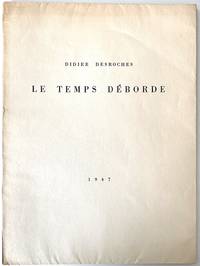
19472402Paris: Éditions Cahiers d’Art 1947. First edition. 48 pp. Plain wrappers with attached dust jacket. Some toning to cover extremities minor handling wear near fine.<br /> <br /> One of 500 numbered copies although Eluard noted that only 258 copies were printed due to a lack of paper. Eluard’s poignant tribute to his wife Nusch published a few months after her sudden and unexpected death. Illustrated with eleven exquisite photographs of Nusch by Man Ray and Dora Maar. Nusch had also been the subject of Man Ray’s camera in the similarly superlative Facile published ten years earlier. In 1965 Louis Aragon during a tribute to his friend mentioned his first encounter with the book: “He signed it with an invented name Didier Desroches because he had killed Paul Eluard… What he had shown me of Didier was of a confounding beauty. This little book which was to appear as the work of an unknown it is an understatement to say that in my eyes it surpasses all that Eluard signed with his name. I thought it then and I think it today.†A rare and beautiful book. Éditions Cahiers d’Art unknown
121611Paris Editions G. L. M. 1935. . First edition number 69 of 1000 copies on vélin there were also 200 hors-commerce copies and 25 on Japon; folded sheets 242 x 179 mm 9½ x 7 in; black & white photographs printed in gravure by Breger pages lightly toned as usual erased inscription on half-title; photo-illustrated card covers minor wear to extremities an exceptionally fresh copy in the original glassine; 28pp.<br /> Facile is a beautiful synthesis of image and text combining Paul Éluard's love poems written for his wife Nusch born Maria Benz with Man Ray's nude photographs of her. The book shows the range of techniques Man Ray experimented with including solarisation double exposures and superimposed and negative photographs.<br /><br />'Although Man Ray participated in and produced hundreds of fruitful collaborative works in his life Facile must be ranked among the most successful. It is a fluent but not at allfacile collaboration between the poet the photographer the model and muse and the publisher Guy Levis Manos' David Levi Strauss in The Book of 101 Books: Seminal Photographic Books of the Twentieth Century.<br /> The Book of 101 Books Seminal Photographic Books of the Twentieth Century pp86-7; The Photobook A History I pp104-5; The Open Book pp118-9; 802 photo books from the Auer collection p217; Paris Les livres de photographies 1920-1950 pp152-3. Paris, Editions G. L. M., 1935. unknown
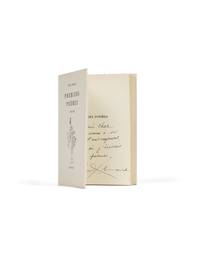
32051Lausanne Mermod mai 1948. 1 vol. 120 x 170 mm de 176 p. et 2 f. Broché. . Première édition collective dont il n'a pas été tirés de grands papiers. Un des exemplaires imprimés du service de presse. Envoi signé : « à René Char que j'ai connu à ses vingt ans majeurs à l'âge où j'écrivais ces poèmes Paul Éluard ». . L'exemplaire rappelle utilement qu'il ne faut pas confondre ce volume Mermod avec le tout premier livre du poète publié sous son nom civil de Paul-Eugène Grindel Premiers Poèmes Paris Eymard & Cie 1913 tiré à compte d'auteur et dont Éluard reniera ensuite l'essentiel. Cet ouvrage publié en 1948 constitue la première véritable anthologie d'Éluard où le poète rassemble lui-même ses textes de jeunesse écrits entre 1913 et 1921 sévèrement triés et « rejugés » par l'exigence rétrospective. De cette période il ne garde que six poèmes parus individuellement en revue entre 1913 et 1918 puis y ajoute ensuite un choix de poèmes extraits du Devoir et l'inquiétude Les Poèmes pour la paix Les Animaux et leurs Hommes Pour Vivre ici et Les Nécessité de la vie. Paul Éluard a alors entre 17 et 26 ans ; il ne rencontrera René Char que près de dix ans plus tard en 1930 alors que dernier n'a que 23 ans « vingt ans majeurs » mais encore pour les deux hommes l'âge d'une jeunesse littéraire et poétique qui sera prolifique pour l'un et l'autre et les deux ensemble puisque les deux poètes signeront dès 1930 un livre en commun Ralentir travaux avec André Breton avant d'en produire un second en 1937 Neuve et Paliers qui ne sera publié qu'en 1960 sous les titres Deux poèmes. Lausanne, Mermod, (mai) 1948. 1 vol. (120 x 170 mm) de 176 p. et [2] f. Broché. unknown
115177Paris Editions G. L. M. 1935. . First edition inscribed by Man Ray in blue ink on title-page number 510 of 1000 copies on vélin there were also 200 hors-commerce copies and 25 on Japon; folded sheets 242 x 179 mm 9½ x 7 in; black & white photographs printed in gravure by Breger pages toned as usual; photo-illustrated card covers light wear to extremities sides rubbed short tear to foot of spine conserved publisher's press-numbered ticket laid in a very good copy; 28pp.<br /> A presentation copy of one of the key French surrealist books of the 1930s inscribed: 'For Louis & Peggy Kannenstine / Cordially / Man Ray'.<br /><br />Facile is a beautiful synthesis of image and text combining Paul Éluard's love poems written for his wife Nusch born Maria Benz with Man Ray's nude photographs of her. The book shows the range of techniques Man Ray experimented with including solarisation double exposures and superimposed and negative photographs.<br /><br />'Although Man Ray participated in and produced hundreds of fruitful collaborative works in his life Facile must be ranked among the most successful. It is a fluent but not at allfacile collaboration between the poet the photographer the model and muse and the publisher Guy Levis Manos' David Levi Strauss in The Book of 101 Books: Seminal Photographic Books of the Twentieth Century.<br /><br />Louis Kannenstine was an American writer and scholar who wrote extensively about Djuna Barnes. His book 'The Art of Djuna Barnes Duality and Damnation' 1977 was long considered the standard work for insight into her writing. He met his wife artist Margaret 'Peggy' Lampe at Washington University Saint Louis where they both studied in the late 1950s.<br /> The Book of 101 Books Seminal Photographic Books of the Twentieth Century pp86-7; The Photobook A History I pp104-5; The Open Book pp118-9; 802 photo books from the Auer collection p217; Paris Les livres de photographies 1920-1950 pp152-3. Paris, Editions G. L. M., 1935. unknown
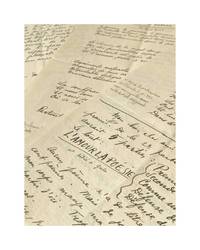
1928Elu1<p><strong>ÉLUARD Paul 1895-1952</strong></p><p>Autograph letter signed " Votre Eluard " to Joë Bousquet<br />Arosa 4 Nov. 1928 4 p. in-4°<br />Stamped and postmarked autographed envelope<br />Some tiny spots one word crossed off in Bousquet's hand<br />Pencil annotations by Lucien Scheler</p><p><strong>Magnificent letter by Éluard enriched with three autograph poems featured in his collection <em>L'Amour la Poésie</em></strong></p><p><strong><u>One of the poet's major works dedicated to his wife Gala who was then on the verge of leaving him for Salvador Dalí</u></strong></p><p><strong><em>"Such strikingly new concordances that I'm startled with a kind of dread by their appearance of eternity"</em></strong><br /><strong>— Jacques Rèce <em>Variété</em> on <em>L'Amour la Poésie</em></strong></p><p><em>" Mon bien cher ami voici les poèmes promis. De la 2e partie la manière noire<br /><strong>Ce livre aurait 5 parties :</strong></em><br /><strong><em>Premièrement</em></strong><br /><strong><em>Seconde Nature</em></strong><br /><strong><em>Comme une image</em></strong><br /><strong><em>Défense de savoir 1</em></strong><br /><strong><em>Défense de savoir 2</em></strong></p><p><strong><em>Le tout : L'AMOUR LA POÉSIE</em></strong><br /><strong><em>Et dédié à Gala</em></strong></p><p><strong><em>Aucun poème n'a de titre. Environ 100 poèmes. Mais de jour en jour mon corps mange ma tête. J'ai hâte de partir d'ici. Trop de nerfs trop de cauchemars.</em></strong><br /><em>Peut-être puisque vous ne m'avez pas dit si vous avez un gramophone détestez-vous la musique. Mais soyez certain que ce que je vous aurai conseillé n'a avec celle-ci que de mauvais rapports.</em><br /><em>Ce que vous me dites sur la lâcheté de Paulhan</em> le nom a été caviardé au stylo rouge peut-être de la main de Bousquet lui-même pour ne pas de compromettre <em>ne m'étonne pas.</em><br /><em>Nous voudrions déjà être à Carcassonne. Je vous fais adresser le Tanguy de Nelli.</em><br /><em>Je voudrais écrire des chansons et c'est drôle je n'ai jamais eu si peu envie de chanter. Avez-vous fini par obtenir l'Histoire de l'Œil Si oui vous dites publiquement ce que vous en pensez. </em><em>Et vous êtes le seul.</em><br /><em>Votre Eluard "</em></p><p>The letter is enriched with three autograph poems by Éluard annotated XXIX XXXV and XXXVII</p><p><em>" XXXV Seconde nature "</em> on top of first page</p><p><em>" Ils n'animent plus la lumière</em><br /><em>Ils ne jouent plus avec le feu</em><br /><em>Pendus au mépris des victoires</em><br /><em>Et limitant tous leurs semblables</em><br /><em>Criant l'orage à bras ouverts</em><br /><em>Aveugles d'avoir sur la face</em><br /><em>Tous les yeux comme des baisers</em><br /><em>La face battue par les larmes</em><br /><em>Ils ont capturé la peur et l'ennui</em><br /><em>Les solitaires pour tous</em><br /><em>Ont séduit le silence</em><br /><em>Et lui font faire des grimaces</em><br /><em>Dans le désert de leur présence. "</em></p><p><em>" XXIX Seconde nature "</em> on se separate sheet</p><p><em>" Toutes les larmes sans raison</em><br /><em>Toute la nuit dans ton miroir </em><br /><em>La vie du plancher au plafond</em><br /><em>Tu doutes de la terre et de ta tête </em><br /><em>Dehors tout est mortel </em><br /><em>Pourtant tout est dehors </em><br /><em>Tu vivras de la vie d'ici</em><br /><em>Et de l'espace misérable </em><br /><em>Qui répond à tes gestes</em><br /><em>Qui placarde tes mots </em><br /><em>Sur un mur incompréhensible </em></p><p><em>Et qui donc pense à ton visage "</em></p><p><em>" XXXVII Seconde nature "</em> on another separate sheet</p><p><em>" A genoux la jeunesse à genoux la colère </em><br /><em>L'insulte saigne menaces ruines</em><br /><em>Les caprices n'ont plus leur couronne les fous </em><br /><em>Vivent patiemment dans le pays de tous. </em></p><p><em>Le Chemin de la mort dangereuse est barré</em><br /><em>Par des funérailles superbes</em><br /><em>L'épouvante est polie la misère a des charmes</em><br /><em>Et l'amour prête à rire aux innocents obèses.</em></p><p><em>Agréments naturels éléments en musique </em><br /><em>Virginités de boue artifices de singe </em><br /><em>Respectable fatigue honorable laideur </em><br /><em>Travaux délicieux où l'oubli se repaît. </em></p><p><em>La souffrance est là par hasard </em><br /><em>Et nous sommes le sol sur quoi tout est bâti</em><br /><em>Et nous sommes partout </em><br /><em>Où se lèvent le ciel des autres</em></p><p><em>Partout où le refus de vivre est inutile "</em></p><p>L'Amour la Poésie anticipates the end of the poet's relationship with Gala. He dedicates it to her with these words: "To Gala / This endless book."<br />At the time the poet's wife and muse — then openly the mistress of Max Ernst — meets Salvador Dalí. She leaves Éluard for the Surrealist painter at the very beginning of 1929.<br />Paul Éluard as Gala prepared to leave him said to her:<br />"Your hair slips into the abyss that justifies our separation."</p><p><u>The collection ultimately comprises only three parts:</u><br />– <em>First of All</em> <em>Premièrement</em><br />– <em>Second Nature</em> <em>Seconde Nature</em><br />– <em>Like an Image</em> <em>Comme une image</em><br />The three poems presented here by Éluard to Bousquet are taken from the second part of the collection <em>Second Nature</em>. A complete manuscript of this section is preserved in the copy of <em>L'Amour la Poésie</em> held at the Saint-Denis Museum no. 26 in the catalogue of the exhibition <em>Paul Éluard</em> Saint-Denis 1963.<br />The last two parts — <em>Défense de savoir 1 & 2</em> mentioned by Éluard — were eventually compiled into a separate volume under that very title.<br />Speaking of the collection Éluard once said:<br />"The title was given to me by my daughter in 1928 she was 10 years old. I had asked her after modestly reading her a few of the poems."</p><p>1 – A short novel by Georges Bataille. Published clandestinely in 1928 under the pseudonym Lord Auch it recounts the sexual experiences of two adolescents and their growing perversity.</p><p><u>Bibliography:</u><em><br />Œuvres complètes</em> I ed. Marcelle Dumas and Lucien Scheler Pléiade edition in the section <em>Seconde Nature</em>:<br />– Poem XXXVII I p. 243 also reproduced in <em>Poésie</em> 1929 vol. VII p. 139<br />– Poem XXIX II pp. 243–244<br />– Poem XXXV XX p. 253</p>
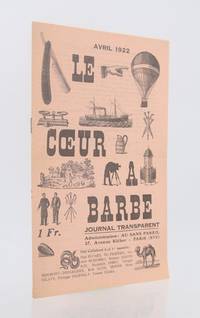
192288277Paris: Au sans pareil 1922. Fine. Au sans pareil Paris avril 1922 14 x 22.50 cm agrafé First edition of this pamphlet with contributions by Éluard Tzara Marcel Duchamp under his pseudonym Rrose Sélavy Benjamin Péret Erik Satie Philippe Soupault Georges Ribemont-Dessaignes Vincente Huidboro Walter Serner Matthew Josephson Théodore Fraenkel. Three copies found in institutions BnF Thomas J. Watson Library Princeton University Library Ryerson & Burnham Libraries - Art Institute of Chicago. Cover designed by Ilia Zdanevich Iliazd on a motif created out of 19th-century woodcuts: The cover of Le Coeur à barbe is an emblematic image of the Dada aesthetic where old engravings are combined with words to create visual puns and unpredictable associations. Princeton University Museum. Extremely rare copy in excellent condition of the only published issue of this famous Dada journal - Tristan Tzara's counterattack to André Breton's criticism in the March 2 1922 issue of Comdia. Coeur à barbe : journal transparent is an eight-page pamphlet on pink paper decorated with ready-made vignettes produced by Tzara and his group. Dada was in the process of splitting acrimoniously a process accelerated by a planned Paris Congress against which the invectives published in Le Coeur à barbe are directed. While Breton was impatient to break away from Dadaism Tzara was determined to carry on. The Congress was to bring together the main avant-garde groups including the cubists and purists Ozenfant and Le Corbusier and had been dubbed by Breton Congrès pour déterminer les directives et la défense de l'Esprit moderne. For a brief period Tzara found himself pitted against Breton and Picabia who had rallied and published another short-lived journal La Pomme des pins in March 1922. Ribemont-Dessaignes Eluard Soupault Satie and Rrose Sélavy among others joined Tzara. Most of the brochure deals with the immediate incidents surrounding plans for the Congress which never took place. Tzara had originally planned to call his little magazine L'Oeil à poils. A ""barbe"" can mean 'uncut' like the pages of luxury poetry books Ades Dawn The Dada reader: a critical anthology 2006 p. 316. Au sans pareil unknown
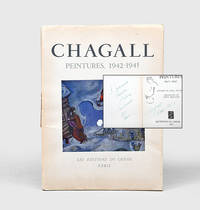
1943164927Paris: Les Éditions du Chéne 1943. With original self portrait drawn by Chagall First edition first printing inscribed by the artist in French with an original self portrait drawing "A mademoiselle Paulette Carlier Souvenir de Marc Chagall Vence 1951". Quarto. 16 tipped in colour plates after paintings by Chagall. Original illustrated wrappers lettering to front cover in black and grey. Housed in a red cloth flat-back box with black leather label. Spine split otherwise a bright copy. hardcover
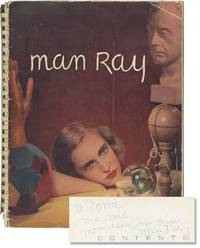
1934166323New York and Hartford CT: Random House / James Thrall Soby 1934. Softcover. Second Edition. INSCRIBED by Man Ray just above the table of contents: "À Noma / ma mie / mon amie bien aimée / Man Ray" "To Noma / my girlfriend / my darling friend / Man Ray". Text in French and English.<br /> <br /> "Noma" is likely Noma Copley born Norma Rathner a jewelry designer and person of note in French surrealist circles. Copley married her husband William to whom she was introduced by Ray in 1953 and their estate in Longpont-sur-Orge was a gathering space for avant-garde artists and writers in the interwar period. Noma served as a muse and close friend to Ray for many years. <br /> <br /> A groundbreaking photography album considered one of the definitive works on May Ray featuring over 100 pages of the artist's photographs and "rayographs" alongside essays by his contemporaries. <br /> <br /> Very Good plus in wrappers with a white comb binding. Moderate discoloration along the binding with light creasing and rubbing on the wrappers. Housed in a custom quarter-leather pictorial clamshell box. Random House / James Thrall Soby unknown
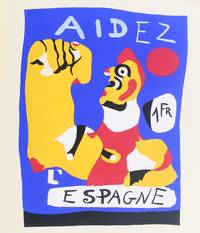
193788877Paris: Cahiers d'art 1937. Fine. Complete issue featuring Joan Miró's striking original stencil Cahiers d'art Paris 1937 25 x 32 cm broché First edition featuring the celebrated original color stencil ""Aidez l'Espagne!"" printed on Arches paper by Joan Miró. With literary contributions by Christian Zervos on Pablo Picasso's ""Guernica"" as well as texts by Jean Cassou Georges Duthuit Pierre Mabille Michel Leiris Paul Éluard René Char. Illustrated with numerous reproductions of works by Pablo Picasso and Joan Mirós ""Le faucheur"". Some rubbing and small tears to the spine as often a vertical crease to the rear wrapper otherwise a fresh and well-preserved copy. Cahiers d'art unknown
30428S.l.n.d. circa 1951. 9 pages 1/2 en 10 f. 210 x 270 mm à l'encre et au stylo bille sur papier « Montévrain - extra strong ». Manuscrit autographe. . L'amitié entre Paul Éluard et Pablo Picasso fut immense. Si il se connaissaient depuis 1916 c'est en 1935 que leur amitié - au moment où s'étiole celle liant le peintre à André Breton - se renforce pour n'être plus jamais démentie sans ombre ni faille. Quinze ans plus tard le 18 octobre 1951 Paul Éluard donne à Londres une conférence en l'honneur de son grand ami lequel va fêter une semaine plus tard le 25 octobre ses soixante-dix ans : « J'imagine facilement que l'on vient de publier le cent soixante et onze millième articles et le mille deux centième livres sur Picasso que l'on en est à sa millionième photographie et que son nom est devenu un mot commun . On n'a jamais parlé d'un peintre vivant comme on parle de Picasso. Et pourtant cet homme de 70 ans peut être considéré comme le plus jeune artiste de son temps. Commencée il y a plus d'un demi-siècle son oeuvre continue à se montrer la plus vivace du monde elle continue à surprendre à indigner et heureusement aussi à susciter l'admiration et l'enthousiasme. . La vérité sur laquelle Picasso s'appuie c'est sa propre jeunesse. . Et aujourd'hui nous ne commémorons pas Picasso nous l'inaugurons. Sa force sera grande son génie va s'épanouir. Demain ne réalisera pas la promesse d'hier mais la promesse du lendemain suivant. Ce perpétuel enfant ce nouveau Faust et ce nouveau Don Juan se promet de séduire de méduser . Que fait Picasso aujourd'hui Une chèvre. Pour ses côtes il a pris des branches pour ses mamelles deux marmites pour ses cornes un guidon de bicyclette. Et la chèvre commence à vivre. Et Picasso est né ». La complicité fraternelle entre le peintre et le poète qu'Éluard qualifie de « sublime » dans une dédicace à Picasso ne prend fin qu'au décès du poète le 18 novembre 1952 : un an et un mois jour pour jour après cette conférence. Le manuscrit à l'encre bleu nuit ou au stylo bleu présente de nombreuses et importantes ratures et corrections. Un fragment en a été publié sous le titre « Le plus jeune artiste du monde » à la une du numéro des Lettres françaises du 25 octobre 1951 lui aussi consacré au peintre catalan avec une photographie par Man Ray surplombée en lettres capitales d'un large « PICASSO A 70 ANS ». Une double page est consacrée au peintre. Le texte de la conférence dans son intégralité est inédit. Ce sera le dernier texte d'Éluard consacré à son ami : les deux hommes venaient d'achever l'édition du Visage de la paix un recueil de 29 poèmes illustré d'une lithographie de Picasso. Éluard lui avait consacré dès 1944 un premier hommage aux Éditions des trois collines à Genève : À Pablo Picasso pour la collection « Les Grands peintres et leurs amis ». Le poète avait alors réuni tous les textes écrits sur son ami depuis la conférence « Je parle de ce qui est bien » : « En janvier 1936 à Barcelone lors de l'exposition organisée par ADLAN Amics de l'Art Nou en hommage à Picasso qui n'avait jamais été exposé en Espagne depuis 1900 Éluard joue le rôle d'ambassadeur itinérant du peintre ; il donne une conférence dans cette ville qui est radiodiffusée avant d'aller porter la bonne parole à Madrid. » Emmanuel Guigon directeur du musée Picasso de Barcelone dans la préface au catalogue Picasso - Éluard 2020. L'artiste traversait alors une grave crise : séparé d'Olga il s'est arrêté de peindre et s'est mis à écrire des poèmes. Entre les deux hommes tout converge alors : un même goût pour la poésie et une même vision de la création artistique. Leur amitié seize années durant jusqu'à la mort du poète va engendrer des oeuvres communes : la première sera Les Yeux fertiles parue en 1936 où les dessins de l'un répondent aux poèmes de l'autre. Un remarquable hommage du poète à son ami peintre. Ancienne collection Jacques Millot Paris Bibliothèque du Professeur Millot Ader 15 juin 1991 n° 66. S.l.n.d. [circa 1951]. 9 pages 1/2 en 10 f. (210 x 270 mm) à l'encre et au stylo bille sur papier « Montévrain - extra stron unknown
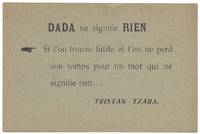
19191334Paris: S.n. 1919. First edition. Printed on one side. Two on gray-green and one on light green paper. Each in excellent condition. First edition. Printed on one side. Two on gray-green and one on light green paper. ca. 105 × 70 mm. <p><br /> Three leaflets of the series of the “Papillons Dadaâ€.<br /> <p><br /> <p><br /> Texts are attributed to Tristan Tzara and Paul Eluard and they were issued by the Paris Dada group in December 1919 in only 1000 copies. The “Papillons Dada†was an ephemeral series of four broadsides intended for use as small posters and as leaflets for general distribution the first such use of leaflets as a form of advertisement in the artistic field and one that would be significant for the Dada movement and later the Surrealists.<br /> <p>. [S.n.] unknown
19354171Paris: GLM 1935 Quarto 24.5x18 cm. wrappers 201pp. loose as issued. No. 791 of 1000 copies on velin of 1220 overall. A very successful collaboration of poet and photographer with extraordinary sensuous photos of Eluards wife Nusch coupled with page design incorporating the poetry cycle therein. It is rightly acclaimed as one of the greatest surrealist publications. This is a fine crisp copy in custom clambshell box bearing hand-tooled leather spine. Paris: GLM paperback
19371704521937. MAN RAY. Les Mains Libres. By Paul Eluard. 208 pp. with 66 reproductions of drawings by Man Ray. 4to 280 x 225 mm. bound in the original illustrated wrappers in a new slipcase with morocco backed chemise. Paris: Editions Jeanne Bucher 1937. A pristine copy of this celebrated collaboration between Man Ray and Paul Eluard inscribed by Man Ray to Souzouki. Man Ray had moved to Paris in 1921 and in the 1930s was one of André Breton's surrealist circles. Unlike most illustrated books where the pictures illustrate the text this book uses the poems to illustrate the drawings which are important documents of Man Ray's non-photographic output. One of 650 printed on Chester Vergé of a total edition of 675 copies. From Manet to Hockney 104. unknown
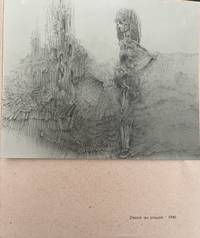
19443018Toulouse: Librairie Silvio Trentin 1944. First edition. In origianl paper. In fine condition. With an original photo mounted inside. With an original photo mounted inside. First edition. In origianl paper. 4 p. <p><br /> First exhibition catalogue of Bellmer illustrated with and original photo with Paul Eluard’s text.<br /> <p><p><br /> Extremely scarce.<br /> <p>. Librairie Silvio Trentin unknown
192261537Paris: Librairie Six 1922. Fine. Librairie Six Paris 1922 19 x 25.50 cm relié The first edition on simili-Japon paper. Bradel grey cloth binding navy blue cloth band with authors and title blindstamped to edge of upper board upper cover preserved at end. With 21 collages by Max Ernst. A very good and rare copy. Librairie Six hardcover
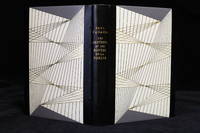
195252661Paris: Armand Henneuse 1952. Fine. Armand Henneuse Paris 1952 14 x 19.50 cm relié sous chemise et étui First edition one of 15 numbered copies on chiffon Auvergne paper tirage de tête. Spectacularly bound in black calf by Pierre-Lucien Martin the covers inlaid with white and grey calf with a geometric decoration of gilt fillets making perspective shapes endpapers and pastedowns of Auvergne paper the delicate Auvergne paper covers and back preserved top edge gilt. Slipcase with black paper flaps lined with grey felt and with a spine of rhodoid plastic small crack to head trimmed with black calf and with a brown paper interior. This copy is enriched with a manuscript sheet bearing six fragments of poems chosen and copied out by Paul Eluard which had appeared in Poésie et vérité Poetry and Truth ten years before. A magnificent copy remarkably bound in decorated black calf by Pierre-Lucien Martin. Armand Henneuse unknown