658 résultats
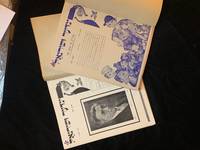
1st edition. Original paper wrappers with modernist 1930s typeface design. 8vo. 28 pages, 20 cm. In Yiddish. Title translates to Nucleus. A lesser known Yiddish monthly featuring some popular Yiddish writers of the period like Jacob Stodolsky and Jacob Glatstein. First published in June of 1930. It appears to have run only 3 issues: June, July (this issue), and November 1930. SUBJECTS: Yiddish literature - Periodicals. OCLC 35215860. OCLC lists 5 holdings worldwide for any issues (NYPL, YIVO, Brandeis, Harvard, NLI), though those holdings may be incomplete. Very Good Condition, a beautiful copy. Scarce. (YID-33-49-elx) xx
1st edition. Original paper wrappers with modernist 1930s typeface design. 8vo. 29 pages, 20 cm. In Yiddish. Title translates to Nucleus. A lesser known Yiddish monthly. Features poetry and prose by Casia Koperman, Michael Licht, and more, It appears to have run only 3 issues: June, July, and November 1930 (this issue) SUBJECTS: Yiddish literature - Periodicals. Very good condition. OCLC 35215860. OCLC lists 5 holdings worldwide for any issues (NYPL, YIVO, Brandeis, Harvard, NLI), though those holdings may be incomplete. Very Good Condition, a beautiful copy. Scarce. (YID-33-49-'elx)
Biblioteca Adelphi 676 1 22x14 cm., in brossura, in copertina opera di F?lix Vallotton "Giovane donna seduta di profilo" pp. 280 (6), in antiporta "Prima pagina del manoscritto" del libro, prima edizione italiana, buone condizioni "Capitava di rado che una femmina gi? passata per tre bordelli si sposasse...A Keyla la Rossa nessuno resiste...Yarme dopo aver trascorso con lei un giorno e una notte, l'aveva portata da un rabbino e l'aveva sposata...
1st edition. Original red boards with gitl lettering and design, 8vo, 96, 96 pages, illustrated, in Yiddish. Contents: 1. Mayzele ganev un andere 2. Yankele shneyele un andere. Both volumes are overflowing with gorgeous Yiddish modernist woodcut illustrations by Aharon Gudlman (1890-1978), with 15 full- or partial-page illustrations and 20 fanciful initial Yiddish letters in Volume I; and 12 full or partial page illustrations and 15 initial letters in Volume II. Detailed red bordering on each page add to the deluxe illustrated feel of the work as well. "Goodelman grew up in Russia and studied at an art school in Odessa. After graduating, he moved to New York and attended the Cooper Union, the National Academy of Design, and the Beaux-Arts Institute of Design, working during the day to support himself. He traveled to Paris for a brief time, but was forced to return to America at the outbreak of World War I. He was a member of the Yiddish branch of the Communist Party, and art editor for YKUF, a Jewish cultural magazine. He...was a founding member of the Society of American Sculptors. Goodelman created sculptures in wood, metal, and stone, and illustrated many childrens books in English and Yiddish" (National Museum of American Art, 1996). "Chaver Paver" was the pen name of Gershon Einbinder. Einbinder was born on February 8, 1901 in Bershad (today in the Ukraine) . At the age of 19, he moved to Romania and eventually settled in the United States in 1924. He lived in New York and Los Angeles, where he died in 1964. Chaver Paver made his debut in Yiddish literature in the 1920s as a childrens writer. He wrote five volumes of childrens stories and several plays. However, the majority of his literary works were stories and novels for adults. SUBJECT(S): Children's stories, Yiddish. Children's literature. OCLC: 15009977 Lacks backstrips (spine coverings) as usually found, internally very nice and clean on beatuful strong white paper. Good Condition thus. (YIDCHI-5-10E-L-'excc)
1st edition. Vol 1 in period red boards; Vol 2 in original red boards with gilt lettering and design, 8vo, 96, 96 pages, illustrated, in Yiddish. Contents: 1. Mayzele ganev un andere 2. Yankele shneyele un andere. Both volumes are overflowing with gorgeous Yiddish modernist woodcut illustrations by Aharon Gudlman (1890-1978), with 15 full- or partial-page illustrations and 20 fanciful initial Yiddish letters in Volume I; and 12 full or partial page illustrations and 15 initial letters in Volume II. Detailed red bordering on each page add to the deluxe illustrated feel of the work as well. "Goodelman grew up in Russia and studied at an art school in Odessa. After graduating, he moved to New York and attended the Cooper Union, the National Academy of Design, and the Beaux-Arts Institute of Design, working during the day to support himself. He traveled to Paris for a brief time, but was forced to return to America at the outbreak of World War I. He was a member of the Yiddish branch of the Communist Party, and art editor for YKUF, a Jewish cultural magazine. He...was a founding member of the Society of American Sculptors. Goodelman created sculptures in wood, metal, and stone, and illustrated many childrens books in English and Yiddish" (National Museum of American Art, 1996). "Chaver Paver" was the pen name of Gershon Einbinder. Einbinder was born on February 8, 1901 in Bershad (today in the Ukraine) . At the age of 19, he moved to Romania and eventually settled in the United States in 1924. He lived in New York and Los Angeles, where he died in 1964. Chaver Paver made his debut in Yiddish literature in the 1920s as a childrens writer. He wrote five volumes of childrens stories and several plays. However, the majority of his literary works were stories and novels for adults. SUBJECT(S): Children's stories, Yiddish. Children's literature. OCLC: 15009977 Vol 2 Lacks backstrip (spine coverings) as usually found, internally very nice and clean on beatuful strong white paper. Good Condition thus. (YIDCHI-5-10F-L-'excc)
1st edition. Cloth, 8vo, 1116 pages, 24 cm. In Yiddish. A selection of testimonies, chronicles, letters, wills, inscriptions, poems, music, legends, stories and essays pertaining to Jewish martyrdom today and in bygone days. SUBJECT (S) : Jews -- Persecutions. Added Title: Kiddush Hashem. Samuel Niger was the pseudonym of Samuel Charney (1883-1955) . A Zionist influenced by Adah Ha-Am and a Russian socialist revolutionary, he joined the Zionist-Socialist Workers Party, and was repeatedly arrested and tortured by Russian authorities. Though his first literary efforts were in Russian and Hebrew, his mature work was written mostly in Yiddish. In 1908, he, with A. Veiter and S. Gorelik, founded Literarishe Monatshriften, which became very popular and influential after the Czernowitz Yiddish Conference. In 1912, after three years in Europe, he began editing DiYidishe Velt. After being imprisoned by Polish legionaires in 1919, Niger left for the United States. In New York, he worked for Der Tog, a Yiddish daily; beginning in 1920, he worked for the paper for 35 years, becoming the most revered and feared Yiddish critic of his generation. Outside of strictly literary work, Niger worked with the YIVO Institute for Jewish Research from its inception, a and helped found the Congress for Jewish Culture. (Liptzin, EJ) Light wear, Good Condition. (yiz-20-13/ny-1-1)
Original Wraps for each issue, bound by publisher into illustrated boards. 4to. [approx. 18 pages per issue]. 29 cm. Begins with the special "Yubelai Numer," April/May 1922, and running a full calendar year, though Volume/Issue numbering follows a different system! Run of Kinder Zhurnal, Wrappers in various colors, almost always with beautiful period front cover illustrations and, internally, period modernist yiddish illustrations by artists including Aaron Goodelman. "Kinder zhurnal and Farlag Matones were both founded by the Sholem Aleichem Folk Institute, an organization established in New York in 1918 to coordinate a secular Yiddish school system. Kinder zhurnal, a children's magazine, was in existence from 1920 to 1981. Its first editor, Shmuel Niger, served from 1922 to 1948. The magazine published works by writers such as Mani Leib, Aleph Katz, Jacob Glatstein, Kadia Molodowsky. " - Guide to the Yivo Archives. For more, see Naomi Tozman's 1993 masters thesis, :Kinder zhurnal: a microcosm of the Yiddishist philosophy and secular education movement in America," which can be downloaded at https://escholarship.mcgill.ca/downloads/1c18dg573?locale=en. Subjects: Children's literature, Yiddish - Periodicals. Kinder Zhurnal Kinder Journal Kinder Zshurnal Sholem Aleichem Folks Shuln. Sholem Aleichem Folk Institute (New York, N. Y. ) . Yiddish periodicals - New York (State) - New York. Jews - Education - New York (State). OCLC: 179197128. Most libraries which have any issues at all appear to have limited runs, oftentimes only a year or two.Bit of discoloration to illustration boards, otherwise an excellent copy with no damage, Very good condition (YID-22-51D-L-'e)
Original Wraps for each issue, bound by publisher into illustrated boards. 4to. [approx. 18 pages per issue]. 29 cm. Begins with the special "Yubelai Numer," April/May 1922, and running a full calendar year, though Volume/Issue numbering follows a different system! Run of Kinder Zhurnal, Wrappers in various colors, almost always with beautiful period front cover illustrations and, internally, period modernist yiddish illustrations by artists including Aaron Goodelman. "Kinder zhurnal and Farlag Matones were both founded by the Sholem Aleichem Folk Institute, an organization established in New York in 1918 to coordinate a secular Yiddish school system. Kinder zhurnal, a children's magazine, was in existence from 1920 to 1981. Its first editor, Shmuel Niger, served from 1922 to 1948. The magazine published works by writers such as Mani Leib, Aleph Katz, Jacob Glatstein, Kadia Molodowsky. " - Guide to the Yivo Archives. For more, see Naomi Tozman's 1993 masters thesis, :Kinder zhurnal: a microcosm of the Yiddishist philosophy and secular education movement in America," which can be downloaded at https://escholarship.mcgill.ca/downloads/1c18dg573?locale=en. Subjects: Children's literature, Yiddish - Periodicals. Kinder Zhurnal Kinder Journal Kinder Zshurnal Sholem Aleichem Folks Shuln. Sholem Aleichem Folk Institute (New York, N. Y. ) . Yiddish periodicals - New York (State) - New York. Jews - Education - New York (State). OCLC: 179197128. Most libraries which have any issues at all appear to have limited runs, oftentimes only a year or two. Some paper covers, with browning paper, have come loose (all are present) with a tough of edgewear, some wear to cloth, Good condition overall (YID-22-51D-E-'e)
Original Wraps for each issue, all bound together at spine but lacking boards. 4to. [approx. 18 pages per issue]. 29 cm. The publisher generally bound Vol II, Nr. 11/12 (Jan/Feb 1923) with Vol III as a 1923 volume, so is not present here. Run of Kinder Zhurnal, Wrappers in various colors, almost always with beautiful period front cover illustrations and, internally, period modernist yiddish illustrations by artists including Aaron Goodelman. "Kinder zhurnal and Farlag Matones were both founded by the Sholem Aleichem Folk Institute, an organization established in New York in 1918 to coordinate a secular Yiddish school system. Kinder zhurnal, a children's magazine, was in existence from 1920 to 1981. Its first editor, Shmuel Niger, served from 1922 to 1948. The magazine published works by writers such as Mani Leib, Aleph Katz, Jacob Glatstein, Kadia Molodowsky. " - Guide to the Yivo Archives. For more, see Naomi Tozman's 1993 masters thesis, :Kinder zhurnal: a microcosm of the Yiddishist philosophy and secular education movement in America," which can be downloaded at https://escholarship.mcgill.ca/downloads/1c18dg573?locale=en. Subjects: Children's literature, Yiddish - Periodicals. Kinder Zhurnal Kinder Journal Kinder Zshurnal Sholem Aleichem Folks Shuln. Sholem Aleichem Folk Institute (New York, N. Y. ) . Yiddish periodicals - New York (State) - New York. Jews - Education - New York (State). OCLC: 179197128. Most libraries which have any issues at all appear to have limited runs, oftentimes only a year or two.Light wear to outer wrappers at first and final issue, touch of worming to two issues, Overall Good+ condition. (YID-22-51B-L-'e)
Original Wraps for each issue, all bound into publisher's distinctive illustrated boards. 4to. [approx. 18 pages per issue]. 29 cm. Run of Kinder Zhurnal, Wrappers in various colors, almost always with beautiful period front cover illustrations and, internally, period modernist yiddish illustrations by artists including Aaron Goodelman. "Kinder zhurnal and Farlag Matones were both founded by the Sholem Aleichem Folk Institute, an organization established in New York in 1918 to coordinate a secular Yiddish school system. Kinder zhurnal, a children's magazine, was in existence from 1920 to 1981. Its first editor, Shmuel Niger, served from 1922 to 1948. The magazine published works by writers such as Mani Leib, Aleph Katz, Jacob Glatstein, Kadia Molodowsky. " - Guide to the Yivo Archives. For more, see Naomi Tozman's 1993 masters thesis, :Kinder zhurnal: a microcosm of the Yiddishist philosophy and secular education movement in America," which can be downloaded at https://escholarship.mcgill.ca/downloads/1c18dg573?locale=en. Subjects: Children's literature, Yiddish - Periodicals. Kinder Zhurnal Kinder Journal Kinder Zshurnal Sholem Aleichem Folks Shuln. Sholem Aleichem Folk Institute (New York, N. Y. ) . Yiddish periodicals - New York (State) - New York. Jews - Education - New York (State). OCLC: 179197128. Most libraries which have any issues at all appear to have limited runs, oftentimes only a year or two. Overall very clean and fresh, not aged, and well kept. Some wear to cloth on spine, internally very clean and nice, overall about Very good- condition. (YID-22-51-L-'e)
Original Wraps for each issue, all bound into publisher's distinctive illustrated boards. 4to. [approx. 18 pages per issue]. 29 cm. Run of Kinder Zhurnal, Wrappers in various colors, almost always with beautiful period front cover illustrations and, internally, period modernist yiddish illustrations by artists including Aaron Goodelman. "Kinder zhurnal and Farlag Matones were both founded by the Sholem Aleichem Folk Institute, an organization established in New York in 1918 to coordinate a secular Yiddish school system. Kinder zhurnal, a children's magazine, was in existence from 1920 to 1981. Its first editor, Shmuel Niger, served from 1922 to 1948. The magazine published works by writers such as Mani Leib, Aleph Katz, Jacob Glatstein, Kadia Molodowsky. " - Guide to the Yivo Archives. For more, see Naomi Tozman's 1993 masters thesis, :Kinder zhurnal: a microcosm of the Yiddishist philosophy and secular education movement in America," which can be downloaded at https://escholarship.mcgill.ca/downloads/1c18dg573?locale=en. Subjects: Children's literature, Yiddish - Periodicals. Kinder Zhurnal Kinder Journal Kinder Zshurnal Sholem Aleichem Folks Shuln. Sholem Aleichem Folk Institute (New York, N. Y. ) . Yiddish periodicals - New York (State) - New York. Jews - Education - New York (State). OCLC: 179197128. Most libraries which have any issues at all appear to have limited runs, oftentimes only a year or two. Gorgeous flawless copy, a stunning copy, Very good+ condition. (YID-22-51-L-'e)
Original Wraps for each issue, all bound into publisher's distinctive illustrated boards. 4to. [approx. 18 pages per issue]. 29 cm. Run of Kinder Zhurnal, Wrappers in various colors, almost always with beautiful period front cover illustrations and, internally, period modernist yiddish illustrations by artists including Aaron Goodelman. "Kinder zhurnal and Farlag Matones were both founded by the Sholem Aleichem Folk Institute, an organization established in New York in 1918 to coordinate a secular Yiddish school system. Kinder zhurnal, a children's magazine, was in existence from 1920 to 1981. Its first editor, Shmuel Niger, served from 1922 to 1948. The magazine published works by writers such as Mani Leib, Aleph Katz, Jacob Glatstein, Kadia Molodowsky. " - Guide to the Yivo Archives. For more, see Naomi Tozman's 1993 masters thesis, :Kinder zhurnal: a microcosm of the Yiddishist philosophy and secular education movement in America," which can be downloaded at https://escholarship.mcgill.ca/downloads/1c18dg573?locale=en. Subjects: Children's literature, Yiddish - Periodicals. Kinder Zhurnal Kinder Journal Kinder Zshurnal Sholem Aleichem Folks Shuln. Sholem Aleichem Folk Institute (New York, N. Y. ) . Yiddish periodicals - New York (State) - New York. Jews - Education - New York (State). OCLC: 179197128. Most libraries which have any issues at all appear to have limited runs, oftentimes only a year or two. Two issues show some toning, three cover pages have come loose but are present. Some wear to spine. Overall Good condition. (YID-22-51A-L-'e)
195743419New York: Shalom-Alekhem folks shuln 1957. ; First edition. Original illustrated paper wrappers bound by year into later paper outer wrappers for each yearly volume 4to each issue contains 18 pages includes illustrations. 26 cm. In Yiddish. Title translates as "Children's Journal."<br> All published copies of the famous Yiddish children's magazine Kinder Zhurnal from 1956 and 1957 during the Cold War. Six issues per year. <br> "Kinder zhurnal a children's magazine was in existence from 1920 to 1981. Its first editor Shmuel Niger served from 1922 to 1948. The magazine published works by writers such as Mani Leib Aleph Katz Jacob Glatstein Kadia Molodowsky. Farlag Matones was established in 1925 as a publisher of children's books but became a leading publisher of Yiddish literature and of well-known authors such as Menahem Boraisha Jacob Glatstein Chaim Grade Moses Moyshe Leib Halpern Leibush Lehrer Isaac Bashevis Singer Hillel Zeitlin Aaron Zeitlin. Lippa Lehrer was the manager and leading figure of both organizations and was editor of Kinder zhurnal for a number of years." YIVO<br> SUBJECTS: Children's literature Yiddish -- Periodicals. Children's literature Yiddish. OCLC: 10158059<br> Outer blank paper wrappers faded with light rusting to staples but issues themselves remain in Very Good Condition. YID-48-104-GGLEX-'cc. New York: Shalom-Alekhem folks shuln unknown
1st editions. Original publisher's boards. 8vo. Each issue is 31 pages. 26 cm. Features years 1921-1923 and 1929-1930 in 3 volumes. Periodical ran from 1920-1951. Features Yiddish literature (generally short stories) , along with illustrations and songs. Edited by Beyle Schaechter-Gottesman (1920-2013) , the well-known American Yiddish poet and songwriter. Schaechter-Gottesman won the 2005 National Heritage Fellowship awarded by the National Endowment of the Arts (the highest honor in the folk and traditional arts) . She was the first Yiddish poet to receive this honor (Wikipedia, 2019) . SUBJECTS: Children's literature, Yiddish -- Periodicals. OCLC lists 29 copies worldwide (OCLC: 10158059) . Boards are lightly worn. 1921-1922 volume is slightly more edge worn with repaired spine. Otherwise very good. Gorgeous rare set of 3 complete volumes. Price per volume. (YID-33-80-L)
1st edition. Original boards. 8vo. 12 issues per year, each issue is 31 pages. 26 cm. April 1922-April 1923. Periodical ran from 1920-1951. Features Yiddish literature (generally short stories) , along with illustrations and songs. Edited by Beyle Schaechter-Gottesman (1920-2013) , the well-known American Yiddish poet and songwriter. Schaechter-Gottesman won the 2005 National Heritage Fellowship awarded by the National Endowment of the Arts (the highest honor in the folk and traditional arts) . She was the first Yiddish poet to receive this honor (Wikipedia, 2019) . SUBJECTS: Children's literature, Yiddish -- Periodicals. Boards lightly faded. Issues are coming loose from boards. Pages browning but good. (YID-33-81)
1st edition. Original modernist illustrated cloth cover, 8vo, 159, [1] pages ; 22 cm. In Yiddish. Title translates as, "Lamentations of our Time." Holocaust-era Poetry. Inscribed by the author on front end paper. Features construtivist cover by Aron Gudelman, who is featured in Hillel Kozovskys CEtait lEpoque ou lOn a Commence a Illustrer les Livres Juifs, [appearing in French Translation in Futur antérieur: l'Avant-garde et le livre yiddish (1914-1939) , p. 47]. Aron Gudelman (Ataki, Bessarabia, 1890 - New York, 1978) was a sculptor, illustrator, etcher, lecturer, and teacher. Born in Russia, he immigrated to New York in 1905 at the time of pogroms in Russia. After attending the Cooper Union and the National Academy of Design, in 1914 he studied with Jean-Antoine Injalbert at the Ecole des Beaux-Arts in Paris. Supporting himself as a machinist in the 1920s, Goodelman became a communist. His concerns about social and economic conditions were expressed in his art. He participated in exhibitions at the John Reed Club in the early 1930s. After World War II, Goodelman created artworks related to the Holocaust. He taught at City College of New York in the 1960s (National Museum of American Art, 1996). Malka Lee (1904- 1976) "was an American poet and author. She is the author of Durkh Kindershe Oygn (Through the Eyes of Childhood), published in 1955 and dedicated to her family, who were killed by the Nazis in the shtetl of Monastrishtsh (now Monastyryska, Ukraine) in 1941, as well as six volumes of poetry in Yiddish, her mother tongue, much of it about her experience of observing the Holocaust from the safety of the United States" (Wikipedia). OCLC 11430181. Touch of wear, Very Good Condition, a beautiful inscribed copy (Yid-26-8C-AELX-'+) xx
1st edition. Original modernist illustrated cloth cover, 8vo, 159, [1] pages ; 22 cm. In Yiddish. Title translates as, "Lamentations of our Time." Holocaust-era Poetry. Inscribed by the author on front end paper. Features construtivist cover by Aron Gudelman, who is featured in Hillel Kozovskys CEtait lEpoque ou lOn a Commence a Illustrer les Livres Juifs, [appearing in French Translation in Futur antérieur: l'Avant-garde et le livre yiddish (1914-1939) , p. 47]. Aron Gudelman (Ataki, Bessarabia, 1890 - New York, 1978) was a sculptor, illustrator, etcher, lecturer, and teacher. Born in Russia, he immigrated to New York in 1905 at the time of pogroms in Russia. After attending the Cooper Union and the National Academy of Design, in 1914 he studied with Jean-Antoine Injalbert at the Ecole des Beaux-Arts in Paris. Supporting himself as a machinist in the 1920s, Goodelman became a communist. His concerns about social and economic conditions were expressed in his art. He participated in exhibitions at the John Reed Club in the early 1930s. After World War II, Goodelman created artworks related to the Holocaust. He taught at City College of New York in the 1960s (National Museum of American Art, 1996). Malka Lee (1904- 1976) "was an American poet and author. She is the author of Durkh Kindershe Oygn (Through the Eyes of Childhood), published in 1955 and dedicated to her family, who were killed by the Nazis in the shtetl of Monastrishtsh (now Monastyryska, Ukraine) in 1941, as well as six volumes of poetry in Yiddish, her mother tongue, much of it about her experience of observing the Holocaust from the safety of the United States" (Wikipedia). OCLC 11430181. Wear to edges of cover, about Very Good- Condition, a beautiful inscribed copy (Yid-26-8D-AELX-'+) xx
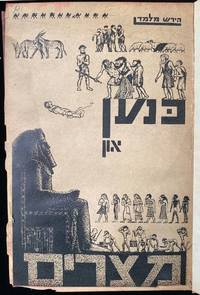
193042782Rige Riga: Yungbukh 1930. 1st edition. Period boards with original covers bound in. 8vo. 157 pages 21 cm. In Yiddish with Latvian "front" cover and title page at rear. Title translates as "Canaan and Egypt: A Novel." <br> Wonderfully illustrated cover bound in featuring cartoonish drawings of Canaanites and Egyptians. Two volumes in one: 1. Yoysef in Mitsroyim and 2. Yosef der reter fun Mitsroyim. <br> <br> SUBJECTS: Yiddish fiction. OCLC: 503648109. OCLC lists 8 copies worldwide including copies of an undated edition which we assume to be a later reprint. <br> <br> Ex-library with usual marks. Paper brown and somewhat fragile old dampstain to lower edge of boards extending into margins of first and last leaves. Original bound-in covers have come loose. Good condition thus. B YID-33-27-L-'ccex. Rige [Riga]: Yungbukh unknown
1st edition. Original boards with gilt lettering. 8vo. 96 pages, 25 cm. In Yiddish. Title translates to Candlewicks. Asselin (1889-1974) was a prominent Russian-American poet. He published hundreds of poems in Yiddish and his work was featured in the biggest Yiddish newspapers of his day. The Judaica Section of Harvard currently features the Alter Esselin Archive. (Wikipedia, 2018) . SUBJECTS: Yiddish poetry. Light edge wear to boards. Very Good Condition overall. (YID-40-69-CFLX)
1st edition. Stiff Wrappers, 4to, 8-36 pages each issue. In Yiddish. Daily writeups from the Workmens Circle Annual convention, here bound together with the annual joke issue, "Der Bezem, " a kind of April Fools Day-like response to the convention. This is not a kind of post-convention wrap-up, but rather daily news for the delegates as it unfolds. Most issues include numerous cartoons, photos, etc. Important Depression-era volume. "Aroysgegebn fun der konvenshon arandzshments komite; redagirt fun F. Gelibter un L. Ratman." Presume given only to delegates and not published and distributed further afield. We were unable to locate a single holding of this volumes anywhere, and only 3 holdings of any other volumes of it (Harvard, Brandeis, Illinois). SUBJECT(S) Jews -- United States - Congresses. Workmen's Circle (U. S. ) -- Congresses. Very Good Condition. Rare. (Y-4)
IN HEBREW, YIDDISH AND ENGLISH. 25x18cm. LXI+357 pages. Gilt hardcover. Spine slightly faded. Else in good condition.
1st edition. Original black cloth with modernist gold lettering, initialed B.B. in the plate. 8vo, 96 pages. 21 cm. In Yiddish. Title page in classic interwar modernist typefacePoems by the great Yiddish poet, Yaakov Glatshteyn (1896-1971). Born in Poland, Glatshteyn became a modernist Yiddish poet who immigrated to the United States. in 1919, together with Aaron Glanz,and N.B. Minkoff, he founded the In-Zikh ("Introspectivist") movement of Yiddish poetry and the literary organ In Zikh for the propagation of the Inzikhist credo. SUBJECT(S): Yiddish poetry. Poe´sie. OCLC: 19309093. Bits of paper from original dust jacket stuck to bottom edge of of cloth, with some related staining, otherwise Very Good Condition. (YID-42-37-++)
New York, Workmen's Circle, 1978. Paper Wrappers, 4to, 32 pages. In Yiddish. Bimontly (i. E. 6 times per year) . On the activies of the Workmans Circle/Arbayter Ring. OCLC lists 9 holdings worldwide. Very Good Condition. (Y-1-17) Price is per issue
1st edition. Original cloth in dust jacket. 8vo. 231 pages. Illustrated. In Yiddish. SUBJECT (S) : Jews Lithuania history; Haskalah Lithuania history. SERIES: Dos Poylishe Yidntum ; ; bd. 70; Variation: Poylishe Yidntum ; ; bd. 70. Born in Warsaw, Shatzky [1893-1956] received his doctorate in 1922 for a dissertation on 19th-century Polish-Jewish history. During World War I he served as an officer in the Polish Legion. From 1913 on he wrote Polish articles and reviews on Jewish literary and historical subjects. He came to write mainly in Yiddish after 1922, the year he settled in the U. S. Where he was one of the founders of the U. S. Section of YIVO. From 1929 until his death he was librarian of the New York State Psychiatric Institute. Shatzky's range was extraordinarily wide: Spinoza, psychiatry, theater, music, folklore, literature, language, and other areas. His principal field, however, was Eastern European Jewish history, and his major work was his history of Warsaw Jewry. He was an indefatigable and often querulous reviewer of scholarly works; the quality and accuracy of his own historical scholarship has often been questioned. (Prager, EJ) Has tanned dust jacket and sewn in ribbon bookmark. Very good condition in good jacket. (YIZ-8-5)
1st edition. Original cloth in dust jacket. 8vo. 231 pages. Illustrated. In Yiddish. SUBJECT (S) : Jews Lithuania history; Haskalah Lithuania history. SERIES: Dos Poylishe Yidntum ; ; bd. 70; Variation: Poylishe Yidntum ; ; bd. 70. Born in Warsaw, Shatzky [1893-1956] received his doctorate in 1922 for a dissertation on 19th-century Polish-Jewish history. During World War I he served as an officer in the Polish Legion. From 1913 on he wrote Polish articles and reviews on Jewish literary and historical subjects. He came to write mainly in Yiddish after 1922, the year he settled in the U. S. Where he was one of the founders of the U. S. Section of YIVO. From 1929 until his death he was librarian of the New York State Psychiatric Institute. Shatzky's range was extraordinarily wide: Spinoza, psychiatry, theater, music, folklore, literature, language, and other areas. His principal field, however, was Eastern European Jewish history, and his major work was his history of Warsaw Jewry. He was an indefatigable and often querulous reviewer of scholarly works; the quality and accuracy of his own historical scholarship has often been questioned. (Prager, EJ) Has tanned dust jacket and sewn in ribbon bookmark. Very good condition in very good jacket. A gorgeous copy (YIZ-8-5) x