658 résultats
8vo; 361 pages; Includes 25-page bibliography & 14-page index. Very light wear, Very Good Condition (Comhist 3-3)
Original Wraps. 8vo. 67 pages. 21 cm. First edition. In German. 'The Natural Sciences and Beliefs; Opening speech to mark the 25th anniversary of the Verein für Natur- und Heimatkunde in Koln and the Rhein. ' Inscribed to Rabbi Jakobovitz by the author. Bruno Zecharias Kisch (1890-1966) was a medical doctor, biochemist, and Jewish scholar. He was one of the founders of the Juedisches Lehrhaus in Cologne and taught experimental medicine, physiology, and biochemistry at the University of Cologne until 1936, when he was forced to leave Nazi Germany. He taught at Yale and Yeshiva Universities in the United States subsequent to his emigration. He was a founder and president of the American College of Cardiology and made many medical contributions. - Guide to the Bruno Kisch Papers, Yeshiva Univ. Subjects: Science - Philosophy. Materialism. OCLC lists 22 copies. Light soiling to wraps, light chipping to backstrip; edges bumped. Fresh and clean. Good condition. (GER-43-59)
1934STLE0064a?ernovits : Seminar far Jid. Literatur- un ?prachkenteni?, 1934. kl.-8°. 96 S., OKart. mit mont. Deckel- u. Rückenschildchen. Errata-Zettel beiliegend. In romanisiertem Jiddisch. Das Romanisierungsystem ist im Anhang erläutert.
New New English Original bdg. Dust wrapper. Roy. 8vo. (24 x 17 cm). In English. B/w and color ills. 375 p. Memoirs of the President of the Turkish-Jewish Community 1989-2004. My life as a Turkish Jew. Memoirs of the President of the Turkish-Jewish Community 1989-2004. Compiled by Tülay Gürler. JUDAICA Jewish culture Memoirs Turkish Jews.
Publishers Cloth. 4to. 209 pages. 26 cm. First edition. In Yiddish. Inscribed in Yiddish by author on front end paper. Written by Israel Rabinovitch (1894-1964) , an accomplished musician and writer, was chief editor of the Montreal Yiddish daily newspaper, the Keneder Adler, from 1924 to 1964. Following in the tradition of fellow musicologist Professor Abraham Tzvi Idelsohn, whom he greatly admired, Rabinovitch used the Keneder Adler as a platform to share his love for Jewish music, writing widely about it and contributing to the status and knowledge of hazzanut (cantorial arts) in Canada. In 1940, Rabinovitch published the book Muzik bai Yidn (Music by Jews) , which was translated from Yiddish into English by A. M. Klein in 1952 under the title Jewish Music: Ancient and Modern. Rabinovitch was one of the founders of the Jewish Public Library, a leader in the Labour Zionist group Poale Zion, and also the first president of the Jewish Music Council of Montreal. He passed away in Montreal in 1964. As Cantor Nathan Mendelson of the Shaar Hashomayim wrote in his obituary of Rabinovitch, his song, the song of our people remains eternal. (Le musée interactif du Montréal juif; Israel Rabinovitch) Subjects: Jews - Music - History and criticism. Hingest starting, but solid. Good+ condition. (YID-18-11)
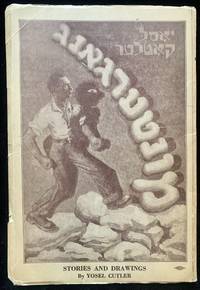
193443320Nyu York New York: Farlag Signal 1934. Original illustrated paper wrappers 8vo 190 pages including illustrations. 20 cm In Yiddish. The title translates as “Underground†or “Success.â€<br> Nazi-era Poetry and fiction by Yosl Cutler with illustrations by the author. <br> “A mish-mosh of wildly creative stories and illustrations by Yosl Cutler one of the most original and unique characters in Yiddish cultural life. Includes one of the first Yiddish science fiction stories ‘Afn shtern mars’ On the Planet Mars as well as a great deal of left wing political work in prose poem and cartoon.†Yiddish Book Center. <br> “Cutler was born in Troyanets Volhynia. He studied in religious elementary school. He was orphaned in his youth and at age eleven he became a server in a tavern. He mastered sign painting and in 1911 departed for the United States. He pursued his study of painting and in 1925 he created with the artists Zuni Maud and Jack Tworkov a Yiddish marionette theater called “Modicut†which proved successful in the United States and Europe but didn’t last long because of the great expenses involved. Under the influence of Moyshe Nadir in 1922 he began writing poetry humorous sketches stories and short plays… Of his short plays that were published in journals: Di sokhrim fun fefer Merchants of pepper; Der kindermark The children’s market; and Mayn filozofisher vesher My philosophical laundry; among others. In book form: Muntergang Success New York 1934 190 pp. ‘Yosl Kotler worked in three realms’ wrote M. Olgin ‘which merged into one: writer of humor cartoonist and marionette operator.’ He died in Memphis.†Leksikon Fun Der Nayer Yidisher Literatur<br> SUBJECTS: Yiddish wit and humor. Jewish wit and humor. Short stories Yiddish. Yiddish drama. OCLC: 23578196<br> Clean copy with some worn edges. Good Condition YID-48-75-MLX-’ggecc. Nyu York [New York]: Farlag Signal unknown
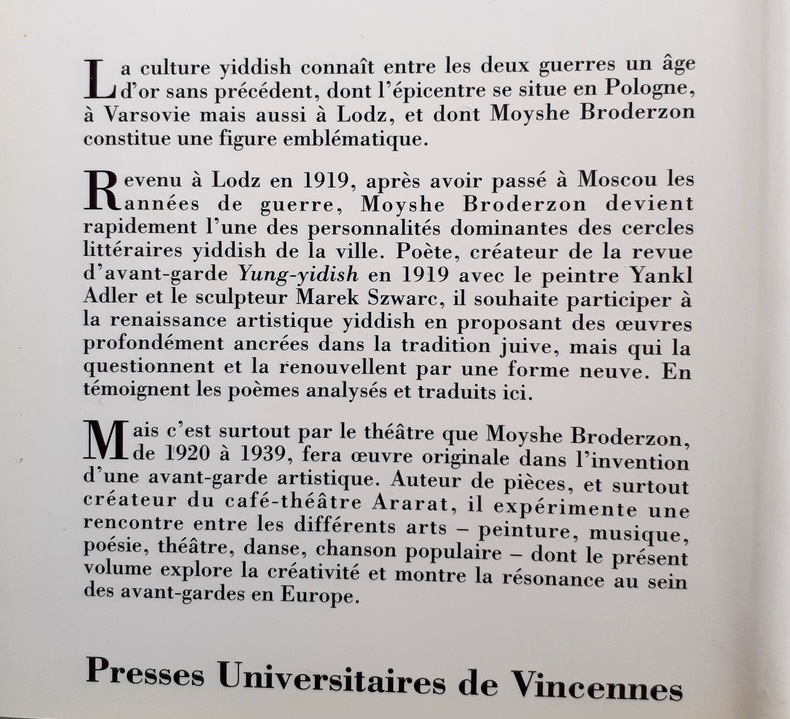
46134Saint-Denis : Presses Universitaires de Vincennes, 1999. Un volume broché (13,5x22 cm), 280 pages. Avec une bibliographie et un index des personnes, périodiques et institutions cités. Bon état.
IN YIDDISH. 150x225 mm. 491 pages. Hardcover. Rear cover loose. Cover corners bumped and worn. Spine wrinkled. Spine edges worn. Pages yellowing. Else in good condition.
Milano, A. Mondadori, 1958, in-8 piccolo, br. edit. ill. a colori, pp. 398, [2]. "I Libri del Pavone".
Publishers cloth. 8vo. 200, XIII pages. 25 cm. First edition. In Hebrew with English summary. Added title page: The Crown Rabbinate in Russia; A Chapter in the Cultural Struggle Between Orthodox Jews and Maskilim. The Crown Rabbis of late imperial Russia held the government-mandated designation of rabbi, but their functions as record keepers, Russian administrative representatives, and sometimes Jewish communal (but secular) leaders belied the religious title. the opening of government-sponsored rabbinical training seminaries in Vilna and Zhitomir in 1847 these schools reflected the practical ideals of the maskilim, who emphasized the need for religious leaders to have a strong secular education. the crown rabbinate outlasted the crown rabbinical schools. On the one hand, the increasingly influential maskilim and other progressive Jews promoted the notion that a rabbi should embody worldly ideas and guide his community in the social, economic, and intellectual components of the Haskalah. Orthodox Jews, on the other hand, wanted only a traditional spiritual rabbinate. By the turn of the twentieth century, the question of who should be empowered with the religious representation of, and authority over, the Jewish communities in Russia had turned into a heated debate that played itself out in the Russian Jewish press and at various meetings of rabbis and the intelligentsia. The Russian Jewish journals Ha-Melits and Voskhod served as forums for this debate, which continued until World War I and aimed, ultimately, at solving the problem of the dual rabbinate. All the while, crown rabbis continued to function in their official capacities, even participating in various Russian rabbinic commissions as well as the Rabbinic Congress of 1910. (YIVO Encyclopedia) In the series: Mehkarim be-toldot `am-Yisrael ve-Erets-Yisrael : Sidrah monografit; kerekh 1 (Studies in the history of the Jewish people and the land of Israel; 1) Subjects: Crown Rabbinate. Haskalah - Russia. Jews - Europe, Eastern - Politics and government. Jews - Legal status, laws, etc. - Russia - History. Jews - Russia - Emancipation. Jews - Russia - Politics and government. Judaism - Russia. OCLC lists 15 copies. Light wear to cloth, otherwise fresh and clean. Very good + condition. (EE-5-39)
30.5x22.5cm. 296 pages. Gilt hardcover. Spine edges slightly bumped. Else in good condition. PLEASE NOTE: This item is overweight. We may ask for extra shipping costs.
1st edition. Original paper wrappers. 8vo. 20 pages, 24 cm. In Yiddish. Title translates to Montreal: Monthly Literature Journal. Montreal was Canada's Yiddish publishing capital in the interwar period. The journal forged a bond between the Yiddish culture of Europe and helped spread the work Canadian Yiddish writers. The Montreal journal was one of the more popular journals of the Depression era and focused on proletarian themes. (Margolis, 2009) SUBJECTS: Jews -- Canada -- Periodicals. OCLC lists 4 copies worldwide (YIVO, HUC, NLI, Brandeis) (OCLC: 959582783) . Very light soiling. Very Good Condition. Sarce. (YID-40-79)
IN HEBREW AND YIDDISH. RARE memorial book dedicated to the Jewish community of Molchad, a village located on the Molchad River in the Baranovichy District of the Brest Region, Belarus. 3600 Jews from Molchad and the surrounding area were massacred by the native Polish population with the support of German troops, with many Jews buried alive. Contains a list of pictures, an introduction by editor and two prefaces in English. 240x170mm.460+12 pages. Black leather embossed Hardcover with gilt front cover and spine. Cover slightly curved. Several small paint stains on rear cover and spine. Single small stain on front cover. Cover edges slightly bumped. Cover corners and spine edges bumped. Inner cover age-stained near binding and slightly wrinkled. Pages slightly yellowing. [SUMMARY]: This extremely rare Yizkor Book is in good condition. PLEASE NOTE: This item is overweight. We may ask for extra shipping costs.
IN YIDDISH AND ENGLISH. 22.5X15 cm. 16+789+XLIII pages. Softcover. Cover slightly chafed. Else in good condition.
23x15 cm. XLIII+790+XVI pages. Softcover. In good condition. PLEASE NOTE: This item is overweight. We may ask for extra shipping costs.
Publishers cloth. 8vo. 599 pages. 23 cm. First edition. In Yiddish. Title page verso: Looking back, East European Jewry, Existence and Struggle; Ayin la-avar. A series of essays on Jewish life in Eastern Europe before the holocaust, by Heshl Klepfisz (1910-2004) , orthodox Yiddish journalist; he contributed to the Agudas Yisroel press in Poland, served as Rabbi in Costa Rica and Panama, and was a regular essayist to the Forverts. Includes index of names and table of contents of author's previous works. Subjects: Jews - Europe, Eastern - History. Jews - Europe, Eastern - Social life and customs. Yiddish literature - History and criticism. Ashkenazim. OCLC lists 29 copies. Light bumped corners of cloth, otherwise fresh and clean. Very good + condition. (EE-5-26)
First edition. Original wrappers. 4to. 48 + [4] pages. 32cm. In Yiddish. Milgroym was published bi-monthly in separate Hebrew and Yiddish editions (The Hebrew editions were titled Rimon) from 1922-1924 for a total of 6 issues and "embraced the study, both retrospective and contemporary, of art in all its manifestations painting, sculpture, music, theatre. " In Geveb called Milgroym "arguably the most visually stunning of the interwar Yiddish journals." Each issue contains illustrations and literary works from a wide array of Jewish artists. Milgroym also published works by the likes of Chaim Nachman Bialik, Jacob Klatzkin, Marc Chagall, El Lissitzky, and A. Z. Idelson. The present issue features an essay on the Synaoguge of Mohilev, with illustrations, by El Lissitzky; and essay on Jewish Artists in Russia by Henryk Berlewi, an essay on the Magen David by Moses Gaster; an essay on the Posthumous Work of Israel Wachser by Chaim Bialik, as well as other articles and illustrations, many in color. For a detailed analysis of the importance and cultural context of Milgroym, see Naomi Brenner's excellent essay, "Milgroyms Cultural Context (https://ingeveb.org/blog/milgroym-s-cultural-context), part of In Geveb's series on Milgroym and other interwar Yiddish journals. For more on Milgroym, see the In Geveb special issue dedicated to this wonderful periodical (https://ingeveb.org/issues/the-milgroym-project). SUBJECT(S):Jews -- Periodicals. Yiddish literature Jewish arts -- Periodicals. Art, Modern -- 20th century -- Periodicals -- Yiddish. Germany. Jüdische Kunst. OCLC: 1200783324. Wrappers are very lightly soiled and browning. Spine is worn. Internally Very Good. (ART-27-6A)
First edition. Original wrappers. 4to. 48 + [4] pages. 32cm. In Yiddish. Final issue. Milgroym was published bi-monthly in separate Hebrew and Yiddish editions (The Hebrew editions were titled Rimon) from 1922-1924 for a total of 6 issues and "embraced the study, both retrospective and contemporary, of art in all its manifestations painting, sculpture, music, theatre. " In Geveb called Milgroym "arguably the most visually stunning of the interwar Yiddish journals." Each issue contains illustrations and literary works from a wide array of Jewish artists. Milgroym also published works by the likes of Chaim Nachman Bialik, Jacob Klatzkin, Marc Chagall, El Lissitzky, and A. Z. Idelson. For a detailed analysis of the importance and cultural context of Milgroym, see Naomi Brenner's excellent essay, "Milgroyms Cultural Context (https://ingeveb.org/blog/milgroym-s-cultural-context), part of In Geveb's series on Milgroym and other interwar Yiddish journals. She discusses this issue in particular in her essay, "Milgroym and Rimon, Fraternal Twins" (https://ingeveb.org/blog/milgroym-and-rimon-fraternal-twins). For more on Milgroym, see the In Geveb special issue dedicated to this wonderful periodical (https://ingeveb.org/issues/the-milgroym-project). SUBJECT(S):Jews -- Periodicals. Yiddish literature Jewish arts -- Periodicals. Art, Modern -- 20th century -- Periodicals -- Yiddish. Germany. Jüdische Kunst. OCLC: 1200783324. Wrappers are very lightly soiled and browning.Wear to spine. Internally Very Good. (ART-27-6C)
1922N442Berlin: Rimon Publ. House 1922. First Edition . Hardcover. Near Fine. Folio. 1922-1924. Issues 1 - 6 all published. Some 250pp. for the 6 parts bound together in the ORIGINAL PUBLISHER'S HALF CLOTH. Each issue HAS A FINE DECORATIVE COVER PRESERVED HERE. PROFUSELY ILLUSTRATED. MANY IN COLOR. Contributors included Bialik Lissitzky Chagall Tchernichovsky Nathan Altman and others many of the Jewish-Russian Avantgarde. This YIDDISH language journal published in BERLIN between 1922-1924 was dedicated to Jewish arts and literature and unique in its paper and printing quality. It served as a parallel publication to the Hebrew edition "Rimon" but varied in the literary content which was edited by the famous Yiddish writers Dovid Bergelson and Der Nister. The initiators of this exquisite production were Dr. Mark Wischnitzer and his wife famous art historian RACHEL BERNSTEIN-WISCHNITZER who had joined a group of Russian-Jewish intellectuals immigrants in Berlin with multi-lingual literary needs. Text in yiddish except for the additional content page in each issue which is in German for the first issue and in English for all the others issues. Condition of binding: Head and tail of spine with small expert repair hard to notice Cover with a few minimal markings. A VERY GOOD CLEAN AND FRESH COPY .RARE in this complete and fine state! ---ERSTE ORIGINAL -AUSGABE 1- 6 alles erschienen. Ca. 250 S. für die 6 Teile zusammengebunden in dem Original-Halbleinen des Herausgebers. Jede einzelne der 6 Ausgaben hat ein eindrucksvolles dekoratives Umschlagsblatt alle sind erhalten. Reich illustriert teils farbig. Mit Beiträgen von Ch.N. Bialik Marc Chagall Eli Lissitzky Nathan Altman u.a. viele Vertreter der JÜDISCH- RUSSISCHEN AVANTGARDE. Dieses jiddische Journal wurde in Berlin zwischen 1922 -und 1924 veröffentlicht und war der jüdischen Kunst und Literatur gewidmet. Es erschien parallel zu der hebräischen Edition genannt "Rimon" hatte aber einen anderen literarischen Inhalt. Text in jiddisch mit Ausnahme der zusätzlichen Inhaltsgabe der jeweiligen der 6 Ausgaben beim ersten Heft in deutsch bei Heft 2- 6 in englisch.Die Initiatoren dieser herausragenden Produktion in herausragender Druckqualität waren Dr. Mark Wischnitzer und seine Frau die berühmte Kunsthistorikerin Rachel Bernstein-Wischitzer.Beide hatten sich einer Gruppe von russisch-jüdischen Intellektuellen in Berlin angeschlossen.: Einband am Kopf des Rückens und unten mit einer kleinen kaum sichtbaren professionellen Restauration. Einband mit einigen wenigen minimalen Gebrauchsspuren. Ein sehr sauberes und frisches Exemplar. SELTEN! <br/> <br/> Rimon Publ. House hardcover
IN HEBREW AND YIDDISH. 24x18cm. 314 pages. Hardcover. Cover edges and corners slightly bumped. Spine edges slightly bumped. Pages slightly yellowing. Else in good condition. PLEASE NOTE: This item is overweight. We may ask for extra shipping costs.
1st Edition. Original Illustrated Paper Wrappers. 8vo. 319 pages ; 18 cm. In Spanish. Title Translates into English as, My Uncle Sholem Aleichem and Other Relatives. One of the last published works of César Tiempo. César Tiempo , born Israel Zeitlin (1906 - 1980) was a writer , journalist , editor , playwright and screenwriter in Argentina. (Wikpedia, 2016) He was part of the Grupo de Boedo. Note the translation of his last name from Yiddish into Spanish. Contains an introduction from Eduardo Stilman. SUBJECT(S) : Biography. Spine is taped. Some wear to wrappers. Paper browning. In good condition. (Latam-4-2)
1st separate edition. Original illustrated modernist paper wrappers. 8vo. 64 pages, 23 cm. In Yiddish. Title translates to "Metatron: An Apocalyptic Poem. " First appeared in Di Yidishe Velt periodical in 1914. Aaron Zeitlin (1898-1973) was a Yiddish writer and the son of famous Jewish writer Hillel Zeitlin. He was close with Isaac Bashevis Singer and briefly taught Hebrew literature at JTS (Wikipedia, 2019) . SUBJECTS: Yiddish poetry. OCLC lists 19 copies worldwide (OCLC: 19304954) . Spine is chipped and worn. Wrappers are edgeworn. Pages browning. Overall good condition. (YID-33-87-ELBBKK'o)
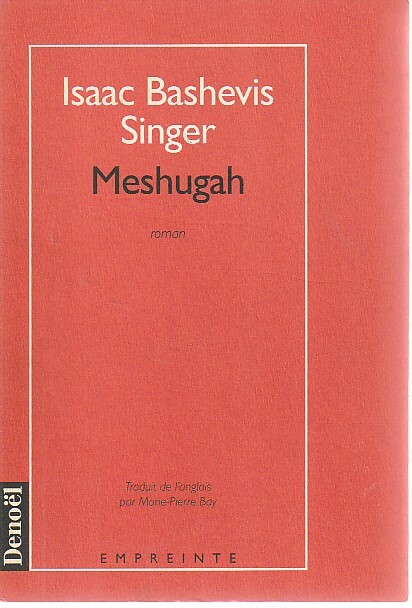
16949Denoël, Empreinte,1995, 297 pp., broché, rousseurs sur les tranches et la couverture, état correct.
Denoël, Empreinte,1995, 297 pp., broché, rousseurs sur les tranches et la couverture, état correct.
Title translates as Mendele Anthology: Published for the 100th Birthday of MMS. A nazi-era Yiddish language study book on Mendele Mokher Sefarim, produced by the children's publishers Grinke Beymelekh ("Green Saplings"). Mendele Mokher Seforim (1835-1917) is revered as the grandfather of Yiddish literature for his innovations in laying a new literary framework for Yiddish. His work realistically portrayed Jewish life with honesty and without judgment and depicted the world of the shtetl [village] with all its poverty and decay; all its joy and poetry. Mendele was born in Belorussia (Belarus) and came from a comfortable family of Lithuanian rabbis. He initially wrote in Hebrew and was a proponent of the Haskalah, but started writing writing in Yiddish in the 1860s (Stevens, 2019). SUBJECTS: Yiddish-language study. OCLC Number:234575366. OCLC lists 5 copies worldwide (NLI, YIVO, Harvard, NYBC, HUC). Spine rebacked with tape, paper toning, a bit fragile at the edges with some light damp stains. Pages and wrappers are edge worn with no loss to contents. About Good- Condition. Scarce. (YID-33-63-'elx)