3 889 résultats
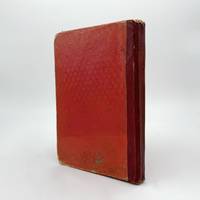
Very Good Arabic Original brown half leather bindings in Egyptian style, raised six bands to spine, title gilt on the second, volume nos on fourth, and alphabetical with the historical content of the volumes on sixth compartments and "Mahmoud Al-Tawawî" name. Minor foxing on some pages. Overall a very good set. Roy. 8vo. (24 x 17 cm). In Arabic. 14 books are complete set in 7 volumes. Extremely rare first printed edition of the most comprehensive and complete corpus on Baghdad city, which includes Al-Baghdadi's first-hand account of the collection of hadiths, biographies, and his travels in the 11th century Baghdad in traditional "al-râwî" style. Al-Baghdadi is known as a Muslim traveler in the pursuit of knowledge who compiled hadiths and traveled to many Islamic cities. He was born on the 24th ?jumada II, 392 (1002) at Darzidjan, a large village on the west bank of the Tigris below Baghdad. The son of a khatib [i.e. preacher], he began his studies very early and spent his youth traveling in search of ?adith. In this way, he visited Basra, Nishapur, I?fahân, Hamadân, and Damascus. Finally settling in Baghdâd, he held the office of a kha?îb and this was the origin of the name al-Khatîb al-Bag_dadi. After completing his education, he spent more than twenty years of his time writing "Tarikh Baghdad". He finished his corpus in 444 AH [1052-53]. He was a fellow student of Rîsürrüesâ Ibn al-Muslima who was the vizier of the Abbasid caliph Kâim-Biemrillâh. The vizier took Khatib, whom he appreciated in the science of hadith, under his patronage. The Abbasid caliph, therefore, ordered Khatib to be given permission to take hadith lessons from him. Khatib started to narrate hadiths from "Tarikh Baghdad" to his students here in his house near the Nizâmiya Madrasa, on the other hand, he started to read the books for which he had permission to narrate from many teachers, also write the books he planned. Several years after, the Turkish commander Besasiri (?-1060), who was a supporter of the Fatimid Caliph Mustansir-Billâh, entered Baghdad with the encouragement of the Fatimid caliph, deposed the caliph, and killed Ibn al-Muslima. Some members of the Hanbali sect, who had a grudge against Khatib because of what they wrote against some Hanbalis in Tarikh Baghdad, started to disturb him by taking the opportunity to kill the vizier. Therefore, he had to flee to Damascus. In his masterpiece, Khatibi, in addition to his account and descriptions of the city during his time in Baghdad, 7831 figures of people in total who lived or came in Baghdad before 450 (1058), statesmen such as caliphs, viziers, commanders, poets, judges, and other professions. This is an alphabetical work giving information about biographies of these figures, but it starts with the name "Muhammad" referring to the Muslim prophet. The first volume is about the establishment of Baghdad in the pre-Islamic period, its conquest by the Muslims, and its history. This masterpiece of him, published in fourteen volumes, is the most comprehensive corpus written on Baghdad in the Islamic world including the city's topography, history, et alli. Brockelmann, GAL, I, 401; Suppl., I, 563.; H. Gibb, "Islamic Biographical Literature".; F. Rosenthal, A History of Muslim Historiography, Leiden 1968, p. 14, 43. Only one set in OCLC in BnF (Bibliothèque nationale de France): 1198963531.
- Imprimerie Mourès & Cie, Alexandrie , in-4, relié. - Edition originale. Reliure moderne en demi-basane bleu foncé, dos lisse orné de filets dorés, plats de la couverture conservés, couverture renforcée, traces de lavage. Ce projet de réforme du Code Civil égyptien fut élaboré pendant le règne d'Ismaïl-Pacha. Il parut peu après l'inauguration du Canal de Suez. Le vice-roi puis khédive d'Égypte, qui avait été formé en France, notamment à l'École d'État-major, manifestait un désir sincère d'ouvrir l'Égypte au progrès. Nombreuses annotations manuscrites au crayon en début de volume. [ENGLISH DESCRIPTION ON DEMAND]
2 Vols., small folio (305 x 190 mm), xxxiii, [3], 49-458; [4], 582, [2]pp., text in English and Persian, occasional marginal pencil notes, title page and terminal leaf to both volumes browned, staining to inner upper corner of leaves to start and end of volume two, later vellum-backed marbled boards, title in manuscript to spines. One of the most extensive Persian grammars written in English. "Matthew Lumsden (1777?1835), orientalist, was fifth son of John Lumsden of Cushnie, Aberdeenshire, and a cousin of Sir Harry Burnett Lumsden (1821?1896), army general. After education at King's College, Aberdeen, he went to India as assistant professor of Persian and Arabic in the College of Fort William, and in 1808 succeeded to the professorship. In 1812 he was appointed secretary to the Calcutta Madrasa, and superintended various translations of English works into Persian then in progress. From 1814 until 1817 he had charge of the East India Company's press at Calcutta, and in 1818 he became secretary to the stationery committee."?(Oxford DNB). Provenance: John L. Platts? signature in pencil to title page.
Folio, cc. (8), 258; cc. (6), 277, 1 c.b., (12). Frontespizio stampato in nero e rosso, con marca tipografica incisa su legno. Il Supplementum ha un proprio frontespizio. All'ultima carta Registro e marca tipografica. Numerosi legni nel testo raffigurano le piante. Il testo è su due colonne con capilettera figurati incisi su legno. Legatura in mezza pergamena. enciclopedica opera di medicina, che è anche una farmacopea, di ibn Masawaih, originario di Damasco (777-875 ca) divenne direttore di un ospedale a Bagdad; fu scrittore assai prolifico, trattò di oftalmologia, fisica, dietologia, depressione ecc. botanica medicina medicine botany piante farmacologia segreti ricette recipe givanni costeo
- Paul Dupont, Paris 1852, 35,5x26,5cm, reliure de l'éditeur. - First edition, one of 185 copies numbered and justified by Paul Fort on vergé d'Arches paper and reserved for his friends. Publisher's binding. Retaining its 51 lithographs. Scattered foxing and light dampstain on some leaves. Very rare. [FRENCH VERSION FOLLOWS] Edition originale, un des 185 exemplaires numérotés et justifiés par Paul Fort sur vergé d'Arches et réservés à ses amis. Reliure de l'éditeur, plats de cartonnage sable comportant des auréoles claires et des rousseurs, dos de toile verte. Ouvrage bien complet de ses 51 planches lithographiées. Rousseurs éparses et mouillures claires sur certains feuillets. Très rare.
187176693Imprimerie Mourès & Cie | Alexandrie 1871 | in-4 | relié
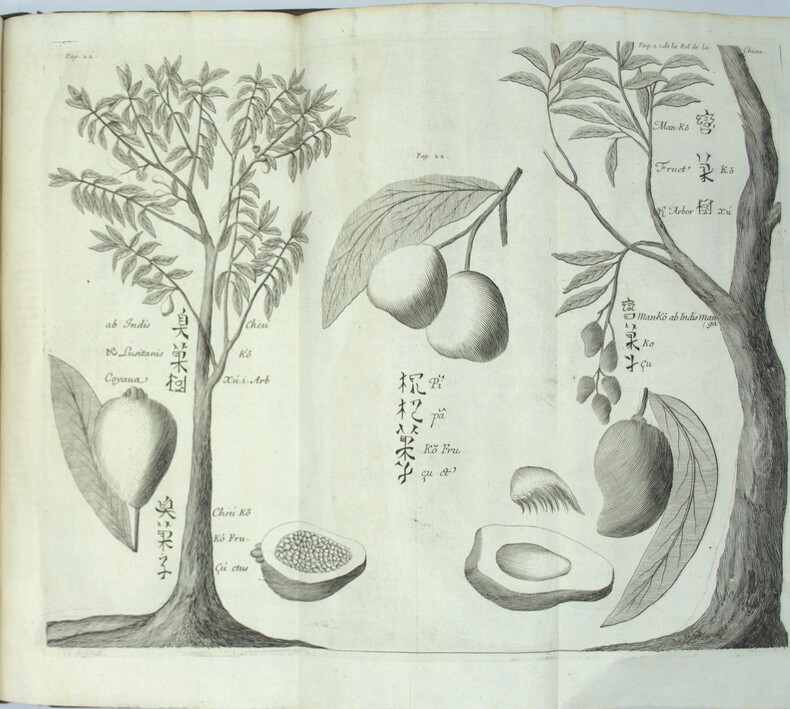
1663PHO-2278A Paris, chez Jacques Langlois, 1663-1666 3 parties en 1 volumes in-folio (38x25cm). Veau tacheté époque, dos à nerfs ornés avec pièce de titre en maroquin et tomaison, tranches jaspées rouges. Réparations au dos et coins, mouillure, quelques rousseurs, réparation au titre, renforcement à la carte. Complet de ses relations de voyage selon Brunet & Camus
- Hoddesdon Herts 28 février 1871, 13,5x21cm, 4 pages sur un double feuillet et un simple. - Lettre autographe inédite signée de William Ellis, quatre pages rédigées à l'encre noire sur un double feuillet et un feuillet simple. Intéressante lettre du révérend William Ellis, missionnaire de la London Missionary Society à Madagascar et auteur des plus anciennes photographies de l'île. Beau témoignage de l'approche ethnographique d'Ellis qui se détache de la « théorie du sauvage » portée par le regard européen. Il donne à son interlocuteur de précieuses informations sur les Vazimba, encore non identifiés au XIXe siècle et décrits par les premiers explorateurs de l'île comme des pygmées belliqueux vivant dans les montagnes malgaches. Ellis se montre très critique envers les descriptions fantasmées de ces prédécesseurs et privilégie les témoignages directs des habitants gardant le souvenir de ce peuple disparu. Auteur de plusieurs ouvrages d'histoire malgache, Ellis décrit en détails les légendes sur l'ethnie Vazimba qui faisaient encore de cet habitant premier, caractérisé par sa petite taille et sa peau cuivrée, l'occupant des hauts plateaux de l'île. Ellis doute fort des descriptions issues des expéditions de Flacourt (1648) et de l'abbé Rochon (1768) qui désignent ce peuple sous le nom de "Kimos" ou "Quimos" et les décrivent comme une "race naine" ("dwarf race"). Il se fie davantage aux témoignages des habitants de l'île qu'il recueille pendant ses séjours chez les Hovas et les Betsiles, rapportant la crainte et le respect qu'inspirait encore les esprits et les sépultures des Vazimba. La lettre rassemble et critique les connaissances de l'époque et mentionne l'expérience de son successeur, le révérend Charles Jukes de la London Missionary Society, dont il célébra la messe de départ en mission le 8 juillet 1866. Il évoque dans cette lettre une hypothèse qui sera confirmée par les recherches scientifiques modernes : les Vazimba seraient une des communautés fondatrices de l'île, à l'origine de la langue et de la culture malgache. "[...] By the Hova's & others who spoke of them, they were called Vazimba. They were said to be smaller in stature and lighter in colour than the Hovas, & to be regarded with superstitious feelings by the other inhabitants, who hold their tombs in extreme veneration & frequently offer at their tombs sacrifices or gifts to the spirits of the Vazimba. During my own intercourse with people on the coast & in the interior I made repeated enquiries, but never met with a native who had seen a Vazimba. Their graves I saw frequently in my journeys among the people in the interior. I saw also many of their tombs at which offerings had been recently presented and found that many of the people regarded them with superstitious fear and seemed exceedingly afraid of doing any thing likely offend them. The Hovas didn't appear to know anything of the name of Kimos all elapses of whom I enquired call the diminutive race Vazimba & spoke of them as the ancient or earliest inhabitants of the country. [...] My friend informed me that the Betsiles do not speak of the Vazimba as remarkable on account of their small size or light colour, many of the Hovas are of quite a light colour. [...] My own opinion is that the Vazimba are the dwarf of which early writers speak & that they are not as diminutive as they have been represented to be. As our missionaries now occupy the Betsiles country, I have no doubt we shall soon have reliable accounts of the Vazimba relating of their present condition as well as their traditions of the past. If the foregoing statements should prove in any way revocable it will be gratifying so." Passionnante étude fouillée et documentée sur les moeurs et les origines des habitants de Madagascar qui révèle, dans l'intimité de cette correspondance privée, l'évolution du regard ethnologique et les questionnements d'un des principaux historiens de l'île au XIXe siècle. [ENGLISH DESCRIPTION ON DEMAND]
185262826Paul Dupont | Paris 1852 | 35.50 x 26.50 cm | reliure de l'éditeur
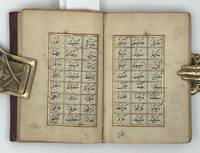
1730369933Ottoman Empire 1730. Polychrome double page ornamental opening text in black ink in a rounded naskh hand 8 lines per page fully vocalized with gold dot aya markers all within gilt rule borders. Attributes within gilt frames 30 per page. Occasional annotations in red. 117 ff. Dated at end A.H. 1143. 1 vols. 12mo. Late nineteenth century Islamic binding of red leather plaque stamped in silver with fore edge guard. Some minor smudging of passages a few paper flaws. Twentieth-century ownership inscriptions on first blank. Very good plus overall. Polychrome double page ornamental opening text in black ink in a rounded naskh hand 8 lines per page fully vocalized with gold dot aya markers all within gilt rule borders. Attributes within gilt frames 30 per page. Occasional annotations in red. 117 ff. Dated at end A.H. 1143. 1 vols. 12mo. Attractive pocket devotional with short surahs tables of the Attributes of Allah and other prayers. unknown
182523Sidney Ohio: Chaplin Editorial Services; R. Howard Courtney Peoria Illinois 1972-82. The birth of Arab philately First editions a complete run. Chaplin was the first to devote a journal to the stamps of the entire Arab world stretching from Libya to the peninsula and as far north as Syria. We have traced one set of Chaplin's journals at the National Postal Museum and none of Courtney's. Mervin Chaplin's Journal of Arabian Philately was published at a time when Arabian stamps were unpopular amongst Western collectors a viewpoint that Chaplin aimed to counteract. His journal covered topics such as mosques featured on stamps and those issued in the Hejaz and Nejd. It also included a list of new issues in the first half of 1972. The journal only lasted for two volumes both released in 1972. Six years later stamp collector Robert Courtney decided to continue Chaplin's work with the Arab World Philatelist. He copied the design and layout of the Journal of Arabian Philately and produced six volumes. Courtney also included a list of recent auction results in every volume. 8 vols octavo. Many half-tone photographic illustrations and maps; advertisements throughout. Original mixed wrappers lettered and decorated in black to recto and verso stapled as issued. Housed in a grey archival box. Some ink tick marks to the Journal of Arabian Philately. Wrappers a touch toned at extremities as expected occasional foxing and offsetting internally: a very good collection. Robert Courtney "The Arab World Philatelist 1978-1982". unknown
1843000384Paris: Oriental Translation Fund of Great Britain and Ireland 1843. Hardcover. Fair/not applicable. Four volumes published in 1843 1843 1868 and 1871 respectively. - Quarto 28.5x23 cm. - 4 XL 688; XVI 697; 4 689; XVIV 616 pages. - In uniform 3/4 morocco spines with 5 bands and title in gilt. - Volumes I and IV: corners and edges quite worn else very good to fine; Volume III: covers and spine detached else fine; Volume IV; covers detached about 2/3 of detached spine present. - Interiors of Volumes I and IV are good.; Volume II: water spots on last 100-or-so pages; Volume III: lower left corner 9.5x9.5 cm of front free end-paper is gone last leaf with some folds and tears bit no loss of text. - With colorful bookplate of the now defunct"Samuel Ives Curtiss Library - Old Testament Theology" followedby that of the Chicago Theological Seminary with release stamp. - This monumental bibliography of IBN KHALLIKAN 1211-1282 was called by the British scholar Reynold A. Nicholson "the best general biography ever written" - It was translated by the Irish orientalist William McGuckin who later became a French national and was named Baron de Slane. - Very rare: WorldCat gives only 4 locations all of them in the Netherlands: den Haag Leiden Amsterdam Utrecht. <br/> <br/> Oriental Translation Fund of Great Britain and Ireland hardcover
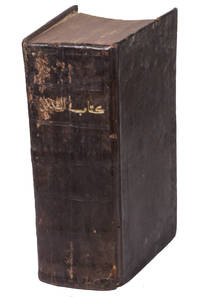
1855ABC_47909London: William Watts 1855. Original elaborately embossed brown calf with the title lettered in gold on the spine red edges. 8vo 22 x 14 cm. Rare edition of one of the best Arabic translations of the Bible. This work is based on the 1671 version from Rome which was the first printed edition of the complete Bible in Arabic. However the version from 1671 was not vocalised written with vowel points but the present edition from London is.The Arabic translation of the Bible from 1671 was done under the direction of Sergius Risi d. 1638 the archbischop of Damascus. It had been requested by the Archbischop of Aleppo and other important figures from the Eastern Church as manuscript copies had become rare and were often found to be incorrect. Risi and his team compared the Arabic manuscripts of the Bible they had access to with Hebrew and Latin versions and then composed their own translation. They first completed the Arabic Pentateuch. The Old and New Testament followed in 1647 and 1650 respectively after Risi's passing. These translations were revised and then finally published in 1671. It was the only Arabic translation of the complete Bible until 1811. Numerous new translations were made in 19th century. The present Catholic edition of the Arabic Bible translation existed alongside the 1860 Protestant translation by Cornelius van Alen van Dyck.According to the title-page this edition of the Old Testament was printed in 1855. However none of the relevant reference works mention an 1855 edition. Since the title-page of the New Testament bears the year 1857 it is possible that the Old Testament was also printed in that year and the date on the title-page is a printing mistake. The 1857 edition is also fairly rare on the market as we have only been able to find it in 1 sales record of the past 100 years.With the label of Watkins' bookbinding factory mounted on the front pastedown and a purple Spanish stamp from the library of someone with a law degree on the final leaf. The edges and corners of the boards are somewhat scuffed the binding is rubbed with some loss of material on the spine. The leaves are somewhat browned mild foxing throughout the back pastedown has a tear in the gutter. Otherwise in good condition.l BM General catalogue vol 2 p. 1276-198/199 other eds.; Darlow & Moule 1684; WorldCat 1402269394 1 copy 1857 ed.; cf. Green Journeymen middlemen: travel transculture and technology in the origins of Muslim printing. In: International journal of Middle East studies vol. 41 2 2009 pp. 203-224. William Watts, unknown
- A. Lévy, Paris 1882, 28x37cm, reliure de l'éditeur. - First edition in French, printed on vergé paper. Publisher's Arabesque yellow paper binding by A. Lenègre, spine with gilt, black, and turquoise Arabic decorative motifs (head- and tail-pieces slightly rubbed), upper cover richly ornamented with Arabic decorative motifs in gilt, black and turquoise with a frame of gilt and black fillets, turquoise paper pastedowns and endpapers (corners slightly bumped), all edges gilt, a few small insignificant spots to lower cover. Text by Alfred Edmund Brehm & Johannes Dumichen. The work is illustrated with 24 watercolors after nature by Charles Werner. A few small spots, mostly affecting endpapers. Rare.% [FRENCH VERSION FOLLOWS] Edition originale de la traduction française imprimée sur vergé. Reliure de l'éditeur en plein cartonnage sable, dos lisse passé agrémenté de motifs décoratifs arabisants dorés, noirs et turquoises, coiffes légèrement frottées, premier plat richement orné de motifs décoratifs arabisants dorés, noirs et turquoise, le tout encadré d'un jeu de filets dorés et noirs, gardes et contreplats de papier turquoise, coins légèrement émoussés, toutes tranches dorées, quelques petites taches sans gravité sur le deuxième plat, reliure arabisante de l'époque signée de A. Lenègre. Texte de Alfred Edmund Brehm & Johannes Dumichen. Ouvrage illustré de 24 aquarelles d'après nature de Charles Werner. Quelques petites rousseurs affectant essentiellement les gardes. Rare exemplaire.
365678Ottoman lands undated early 18th c. C.E. Ink on on aharli paper. Text in black and red ink 23 lines per page. 158 ff. 1 vols. 6 x 8 inches. Later red leather spine cloth boards. Old paper repairs throughout pencil page numbers in a European hand. Two ownership inscriptions dated A.H. 1128-1152 1716-1739 C.E. Very good. Ink on on aharli paper. Text in black and red ink 23 lines per page. 158 ff. 1 vols. 6 x 8 inches. An important compendium of Islamic jurisprudence in the Hanafi school by Ê»Abd AllÄh ibn Aḥmad NasafÄ« d. A.H. 710 / 1310 C.E. <br /> It systematically presents authoritative Hanafi rulings without extended argumentation. The introduction highlights its purpose as a concise yet comprehensive reference. A foundational Hanafi legal text Kanz al-Daqâ'iq is an abridgment of the author's al-Wâfî widely studied in Ottoman madrasas. unknown
Very Good Turkish, Ottoman (1500-1928) Original Ottoman cloth bdg. Cr. 8vo. (20 x 14 cm). In Ottoman script (Old Turkish with Arabic letters). 293 p., 17 b/w plates and 1 folding map, and 1 folding linguistic table (including alphabets used in India such as Sanskrit, Brahmi, Devanagari and their pronunciations in Latin and Arabic alphabets). Slightly loosed spine, skillfully repaired a part of the spine, fading and chipped on the board's extremities, slight stains on the plates. Overall a good copy. Extremely rare (with a map and the plate at the end of the book) first edition of this eye-witness travel account of the Indo-Islamic culture during the British Raj in the late 19th century, by the Hamidian period Turkish ambassador and scholar Sirvanî (1831-1890), who had written and translated three geographical books as well. Sirvânî completed his travel memoirs on his return from India to Constantinople, where he was sent as an ambassador by Sultan Abdulhamid II between 1877-1879. The narrative of his journey begins with the landing in India from Constantinople by ferry. He describes the splendid and fascinating British Indian cities, regions, and buildings such as Bombay, Poona, Dakkan, Udaipur, Baroda, Ajmer, Jaipur, Amber Fortress, Allahabad, Benares, Calcutta, Jaipur, Lucknow, Agra, Alexandre, Delhi, Nepal, Racputana, Indor, Sind, Bundelkhand, Datia, Chatarpur, Bina, Mihr, Bihar, Bengal, Ceylon, Aligarh, Sirhind, Lahore, Kashmir, Dekkan, Orissa, Avrang, Bijapur, Malia, Khandesh, Gujarat, Hugli, Madras, Maisur, Jehlam, Sialkot, Rawalpindi, Nevshar, Mardan, Swat (now in Pakistan), Beloojistan, Peshawar, Afghanistan, Kabul, Ghazna, Kandahar, Herat, Badakhshan, etc. This first-hand travel account offers an invaluable insight into the customs of Indian peoples living in the region as well as the onomastics and ethnography of India and Afghanistan. He met Sayyid Ahmed Khan, who was the founder of the Aligarh University which was famous as the Aligarh School (founded in 1877) among the Indian people. The Aligarh Movement was the push to establish a modern system of education for the Muslim population of British India, during the later decades of the 19th century. The work includes a large chapter of Mecca, where Sirvânî stayed for a long time. He gives detailed information on the Islamic pilgrimage (Haj) and the Arabian Peninsula in this chapter. OCLC 19769728, 1030091889 (Six copies worldwide).; Ihsanoglu, pp. 269-270.; Özege 7654.; Karatay I, 268.; TBTK 1438.
188244882A. Lévy | Paris 1882 | 28 x 37 cm | reliure de l'éditeur
18814680Madrid: Imprenta de La Iberia á cargo de J. Blasco 1881. Facsimile 1st Thus. Good. An 1881 facsimile of a 13th century medieval manuscript. Translated from the Arabic to early Spanish at the commission of King Alfonso X of Castile and by a Jewish scholar Yehuda ben Moshe. This represents one of the earliest examples of Spanish being used in the writing of manuscripts rather than Latin or Arabic. Regarding many topics including the magical properties of stones and talismans astronomy and philosophy. Complete with prologue facsimile letters dated to 1883 complete Lapidario in 236 actual sized color prints on strong paper a second manuscript in 28 actual sized color prints on strong paper and 76 pages of contemporary to the facsimile writings. The dates of the letters leads me to believe that this book was compiled after the initial run of the facsimile with the additional letters and manuscript added - I am unable to locate another copy stating that these pieces are present. Bound in brown buckram with a brown cloth spine. Paper label containing the title on spine along with a cataloguing number on bottom likely ex-library. Pasted description on front pastedown reads: "The Translation of the Celebrated Arabic Book was made in MS. by order of King Alfonso X in the year 1276 an exact facsimile of this splendid specimen of 13th century art reproduced in color with 353 beautiful initial letters 18 other full-page and smaller illuminations and 340 head-and-tail pieces with Introductory History and Transcript of the Text." All pages present some weakness at spine to some pages but all remain bound. Some scuffing to covers and rounding of corners. An exceptional and complete facsimile of one of the most important early commissions in Spanish and of medieval art. <br /> <br /> Pages: 20 12 236 28 76 Dimensions: 12⅜ x 9⅛ x 1½. Imprenta de La Iberia, á cargo de J. Blasco unknown
- Madame Huzard, Paris 1835, 31x43cm, relié. - First edition and the first printing of the plates. Plate volume only. Bradel binding of marbled paper boards by T. Boichot, preserved covers repaired and laid down. This copy retains its 18 plates mounted on guards, but lacks the title page, showing details of the work undertaken to remove the western obelisk at Luxor, as well as various sites and costumes in Egypt linked to the places visited by the expedition. Tiny wormtracks occasionally affecting some engravings, dampstain to upper margin, traces of sewing to inner margin. Very rare. [FRENCH VERSION FOLLOWS] Edition originale et premier tirage des planches. Volume de planches seul. Reliure à la bradel en plein cartonnage recouvert de papier marbré, couverture restaurée et doublée conservée, reliure signée de T. Boichot. Exemplaire bien complet de ses 18 planches montées sur onglets, mais sans la page de titre, reproduisant les détails des travaux exécutés pour l'enlèvement de l'obélisque occidental de Luxor, et divers sites et costumes d'Egypte se rattachant aux lieux habités par l'expédition. Minuscules galeries de vers affectant parfois certaines gravures, une mouillure en marge supérieure, traces de couture en marge intérieure. Très rare.
71236c.1880. . Albumen print. Four-part panorama very good tonal range and in good condition.<br /> <br /> [c.1880]. unknown
2014111335Snoeck Publishers. New. 2014. Paperback. 9461611765 . FREE UPGRADE to Courier/Priority Shipping Upon Request - IN STOCK AND IMMEDIATELY AVAILABLE FOR SHIPMENT - Flawless copy brand new pristine never opened - Text in French. -- with a bonus offer-- . Snoeck Publishers paperback
70897Dover Publications. As New. N.D. Paperback. 0486203514 . FREE UPGRADE to Courier/Priority Shipping Upon Request - IN STOCK AND IMMEDIATELY AVAILABLE FOR SHIPMENT - AS NEW THE TEXT BLOCK IS PRISTINE CLEAN UNMARKED AND IN EXCELLENT CONDITION - - ND Circa 1990 Appears unread. -- with a bonus offer--; 1 x 8.4 x 5.3 Inches . Dover Publications paperback
37846New York: A. L. Burtt Company. As New. Hardcover. FREE UPGRADE to Courier/Priority Shipping Upon Request IN STOCK AND IMMEDIATELY AVAILABLE FOR SHIPMENT - Text clean unmarked. -- with a bonus offer-- . A. L. Burtt Company hardcover
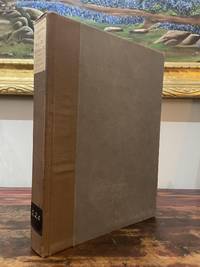
Very Good English Original leather bdg. Folio. First 3 volumes of 5: ([xL], 688 p.; [xvi], 695 p.; 384 p.). Ibn Khallikan's biographical dictionary. [= Translated from the Arabic by Bn. (Baron) William Mac Guckin de Slane, (1801-1878). First 3 volumes of 5 volumes set. Muslim judge and author of a classic Arabic biographical dictionary. Ibn Khallikân studied in Irbîl, Aleppo, and Damascus. Ibn Khallikan was an assistant to the chief judge of Egypt until 1261, when he became qâ?î al-qu?ât (chief judge) of Damascus. He adhered to the Shâfi'î branch of Muslim law, and for the first years had deputy judges of the other three main branches. In 1271 he was dismissed. He taught in Cairo until he regained his judgeship and returned to Damascus in 1278. Ibn Khallikân's fame rests on his biographical dictionary Wafayât al-a'yân wa-anbâ' abnâ' az-zamaân ('Deaths of Eminent Men and History of the Sons of the Epoch'; trans. by Baron de Slane, Ibn Khallikan's Biographical Dictionary, 1842-74). He began arranging material for it in 1256 and worked on it until 1274, continuing to improve it with marginal notes. He excluded the Prophet Mu?ammad, the caliphs, and other subjects about whom adequate information already existed. Ibn Khallikân selected factual material for his biographies with intelligence and scholarship and rounded them out with poetry and anecdotes. His book is a valuable source for his contemporaries and contains excerpts from earlier biographies no longer extant. (Source: Encyclopediæ Britrannica).
In-4°, (24cc), 344pp, 32pp, buone condizioni, legatura in pergamena, prima edizione. Esempi di idiomi grammaticali arabi, presi da varie fonti, libro pubblicato per la prima volta a Padova nel 1687. Agapito dalla Val di Fiemme era un francescano ed un professore di arabo al seminario di Padova. In-4°, (24cc), 344pp, 32pp, good condition, vellum binding, first edition. Examples of Arabic grammatical idioms collected from various sources, first published at Padua in 1687. Agapitus a Valle Flemmarum was a Franciscan and professor of Arabic at the seminary in Padua.