880 résultats
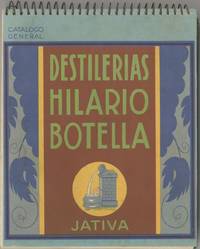
19206853Barcelona: Encuardernaciones Patentadas Spirax Sol; Papeles de Estano-Barna 1920. Booklet spiral-bound along top edge 17 x 13 cm. 58 leaves printed rectos only. Illustrated throughout in chromolithography. Title from cover. FIRST & ONLY EDITION. A trade catalog for the distinctive and elaborate bottles for wine and spirits from the firm of Destilerias Hilario Botella from Jativa in Spanish Valencia. The first offerings are the highly decorated bottles in styles such as Anfora Valenciana Nagasaki del Japon Carmen Sevilla Piramidal Conica and most exciting the Botella Pinguino Patentada– a 1000 gram bottle in the shape of a penguin. Bottles for dozens of types of spirits are included as well as a lemonade dispensing device and two pages of fine leather goods. Some offsetting throughout; rear wrapper panel soiled but mostly clean and bright. Some early ink scribbles to front wrapper verso otherwise generally very good or better. Scarce. OCLC locates no copies. Encuardernaciones Patentadas Spirax Sol; Papeles de Estano-Barna hardcover
171521225London 1715. A petition to Parliament by the officers of Lieutenant General George Hamilton's Regiment of Foot seeking pay due for services abroad in the War of the Spanish Succession. Lord George Douglas-Hamilton 1666-1737 was a Scottish Williamite officer during the Glorious Revolution who later married William III's mistress Elizabeth Villiers became a confidant of William was created Earl of Orkney in 1696 was appointed Governor of Virginia in 1714 and in 1736 was the first British general promoted to the rank of Field Marshal. In 1701 at the beginning of the War of the Spanish Succession Hamilton led the First Regiment of Foot the Royal Scots to the Netherlands where the regiment fought for the remainder of the war. Despite their long service and the high position of Hamilton the officers suggest in the present petition that having been so long overseas they had been forgotten by the British government and charge that they had not received their pay even after frequent petitions. The document is an early example of lobbying literature which first began proliferating in the lobby of the House of Commons at the time of the accession of King George I and the British general election of 1715. ESTC records four copies two at the British Library one at Oxford and one at the National Library of Scotland. unknown
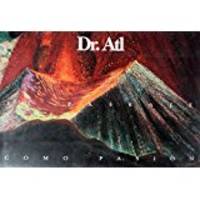
19948471-38U.S.A.: Fondo Editorial de la Plastica Mexicana 1994. First Edition. . Hardcover. Good/Very Good. Spanish text. In good clean unmarked condition with minor shelfwear and a lightly cracked front hinge between two front end pages. Text block still tightly fastened. 126 pages fully illustrated. <br/> <br/> Fondo Editorial de la Plastica Mexicana hardcover
1970L242Taiwan: Pirated copy 1970. Hardcover. Pirated Edition Stated First Edition. 8vo. 422pp. Cloth boards. Soon after its original publication pirated editions of the lauded novel were proliferated throughout Taiwan and China due both to censor and lack of legal authorization. After being told of the widespread piracy of his works during a visit to China in 1990 Marquez is purported to have angrily stated 'not even one hundred and fifty years after my death will my books be authorized in China.' Even still the first legal and authorized Chinese edition was published in 2011 after much publisher bidding several years before his death in 2014. This particular copy is completely in English inferring an early issue and the text itself printed from the First U.S. Edition of Harper & Row. The half-title and title pages are identical save for the removal of all publisher mention and curiously the acute accents over the words Garcia and Marquez. The copyright page also with all publisher mention removed bears the First Edition statement in identical typeface and orientation but now off-middle set on the page and above a printing statement in Taiwanese. Of the pertinent information noted in Taiwanese: sold by the Royal Family Book Co. printed by the Guangda Printing Co. and an additional statement of First Edition. The dust jacket crudely reprinted retains the original price of $7.95 but lacks the exclamation mark after the first paragraph inferring use of the second issue. VERY GOOD in Very Good dust jacket protected in a removable mylar cover. The book itself with just a hint of shelf rubbing along the edges the pages up to the first chapter are slightly waved due to the quality of paper stock a small book exchange label on the back endpaper otherwise the binding is strong and tight the text is clean and unmarked and the boards remain bright and distinct. The dust jacket shows slight shelf rubbing along the edges with several very small chips a very short closed tear at the back panel otherwise remains colorful and distinct. As pictured. Pirated copy hardcover
1836231491836. Diario Constitucional de Santiago de Cuba No. 57 November 1836 just months after the restoration of Spain's liberal Constitution of 1812. This newspaper records the transmission of Spanish constitutional government into eastern Cuba in late 1836 through decrees ministerial correspondence and public political dispute printed for circulation in Santiago de Cuba. Issued weeks after the political upheavals that restored constitutional rule in Spain this number shows how the language of the regency government the suppression and reorganization of state bodies and local declarations of loyalty to Isabel II reached colonial readers through the newspaper press. In a Cuban setting where metropolitan policy was filtered through governors ministries and municipal elites an issue such as this preserves the working connection between imperial administration and provincial print.<br /> <br /> Diario Constitucional de Santiago de Cuba. No. 57. Santiago de Cuba 27 November 1836. 4 pages. Folio newspaper issue. The masthead reads "DIARIO CONSTITUCIONAL / DE SANTIAGO DE CUBA" with the date line "DOMINGO 27 DE NOVIEMBRE DE 1836." Page 1 opens with "MINISTERIO DE LA GOBERNACION DEL REINO" followed by a circular and a substantial "EXPOSICION A LA REINA GOBERNADORA" leading into a "REAL DECRETO" concerning the suppression of the Consejo Real de España e Indias. Interior pages continue the decree and carry translatedly legible sections including "MISCELANEA" notices on "Las islas turcas libres" and "Noticias sobre Tejas" and a long exchange under "REMITIDOS" dated "Cuba 25 de Noviembre de 1836" addressing militia service volunteers of Isabel II and the political insult attributed to an earlier subscriber. The issue survives as a complete four page folio with dense double column text throughout and no wrappers as issued.<br /> <br /> Printed in Santiago the issue shows constitutional and monarchist language being adapted for a colonial audience that was expected to follow ministry decrees military loyalty and debates over public honor in the same sheet. Folded as issued with minor edge chipping small losses at corners and margins some toning and closed tears and pinholes; complete and legible. Overall good condition. The juxtaposition of metropolitan government text Caribbean and Atlantic news and the local controversy printed in "Remitidos" gives the number a documentary range broader than a routine official gazette placing state policy beside the contested language of provincial political life. unknown
141328 Leigh St Burton Crescent London1 Dec. no year. Two pages 12mo bifolium tipped on to larger piece of paper substantial good condition. "My dear Sir.- I have alled on you twice . Mr Roscoe tells me that it is decided by you Mr Campbell & Mr Colburn that Mr Galiano see Note 2 below should write an Article for the New Monthly - on the subject of Spanish romance - taking as a text my romances - Of course this is highly desirable & I have no doubt Mr Galiano would do justice to the subject which I think will be interesting - But as I have already spoken to Mr Galiano about the other article - I think the communication would come with a better grace from you & Mr Roscoe - as I was unsuccessful in the first negotiation & besides as my 'Castilian' a work of his is to be noticed in the same article that the propposal should come from a third person. Will you write me a word or appoint a meeting - Is the article to be for this or for the next month - because if it is the first case there's no time to be lost."WITH: two copies of the cartoon of Trueba y Cosio that appeared in Maclise's "Gallery of Literary Characters" in "Fraser's Magazine" as "The Author of 'The Exquisites' a farce published in 1832 by Bentley with a copy of the accompanying letterpress in which it is claimed he is English not Spanish and his work e.g. "The Exquisites or a new portraiture of exclusive society" slated.Notes:1. He contributed to the autobiographical collection "Our Exile in England: autobiographical sketches of Spanish Refugees" in the "New Monthly Magazine" vol.44.44-49 May 1835 and "The Spanish Novelists" in the "Foreign Quarterly Review" vol.2:486-511 June 1828; 2. Antonio Galiano "Born June 22 1789 in Cadiz; died Apr. 11 1865 in Madrid. Spanish political figure; participant in the military uprising of R. Riego y Núñez which led to the reestablishment of the constitutional structure in Spain 1820. During the revolution of 1820–23 Alcalá Galiano was one of the prominent leaders of the Exaltados. Between 1822 and 1823 he served as deputy in the Cortes. He opposed the Comuneros—the leftmost wing in the Spanish revolution. After the defeat of the revolution Alcalá Galiano emigrated to England returning after the amnesty of 1834. He joined the moderate party the Moderados. In 1834 he served as minister of the navy and in 1865 as minister of the economy." In fact in collaboration with Sir John Bowring he wrote an article on "Spanish Novels" published in the "Westminster Review" vol. 6.278-303 October 1826 - does this suggest an approximate date for this letter. 8 Leigh St, Burton Crescent, [London]1 Dec. (no year) unknown
171521226London 1715. Broadsheet. 1p. plus printed docket title on verso. Ornamental initial. Disbound. Small folio. Early folds and early stab holes in left margin. Some foxing. A rare political leaflet petitioning Parliament for relief of warrant officers who had fought in the recent War of the Spanish Succession. In March 1715 the House of Commons ordered that a list of all the regimental and warrant officers be drawn up but by the time of this document's printing numerous warrant officers had not been entered into the list and rumors had begun to circulate that they would therefore not be receiving expected compensation for their service. "Besides the Nature of several of the Warrant Officers Posts was such as they could not be put on a Regimental List viz. Directors of Hospitals Commissaries Officers who have lost their Limbs and many other Officers whose particular Hardships Pretensions and Disappointments are more at large set forth and specify'd in their several Warrants. So that their Condition is very deplorable." This is among the earliest examples of lobbying literature which first began proliferating in the lobby of the House of Commons at the time of the accession of King George I and the British general election of 1715. ESTC lists only two copies at Oxford and the University of Missouri.<br/> <br/> Hanson 2212. unknown
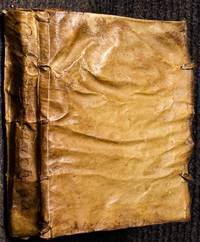
159540142En Granada Por Sebastian De Mena A Costa De Ioan Diaz . Good with no dust jacket. 1595. First Edition. Velllum. 10 267 blank leaves pages; Compendio de Doctrina Christiana with: Siguense Treze Sermones de las Principales.Together 2 parts in 1 volume. Small 4to limp vellum; covers creased and worn 8 tightly written pages of contemporary manuscript notes on endpapers generally sound although bulked internally. Louis of Granada was a Dominican friar who was noted as theologian writer and preacher. The cause for his canonization has been long accepted by the Holy See with his current status being Venerable. Apparently the first edition. Elaborated initials. Ties worn to nubs. Wrinkling thoughout. Only a single copy located in Biblikoteca Nacional de Espana in Madriod Spain. . En Granada Por Sebastian De Mena A Costa De Ioan Diaz ... unknown
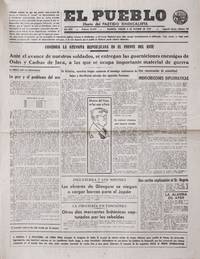
193730146Valencia: S.i. 1937. Six tabloid issues 58cm; newsprint wrappers; 4pp per issue; occasional illus; text entirely in Spanish. Publication sequence as follows: Año XLIV Nos.15.394 15.409 15.411 15.413 15.424 15.435 October 8272931; November 1326 1937. All six issues horizontally folded at center occasional creasing to extremities with a few scattered passages underlined in red and blue colored pencil; one with mild toning along folds else paper is still supple and quite fresh; Very Good overall. Nicely-preserved selection of issues of this Republican daily newspaper the official organ of the Partido Sindicalista one of the smaller Spanish left-wing workers' parties that would eventually become affiliated with the United Front. The paper was founded in 1896 by the popular Spanish novelist and journalist Vicente Blasco Ibañez. During the Second Republic under the management of Ibañez's nephew Sigfrido the paper became more politically aligned eventually becoming the organ of the Syndicalists in 1932; it ceased publication with the end of the Republic in 1939. Rare; OCLC finds 2 locations holding any issues Biblioteca Universitat de Barcelona Universidad de Valencia none in the U.S. S.i. unknown
76-0141Paris: Gazette des Beaux-Arts 1867. Etching aquatint and drypoint on laid watermark paper. 21 x 29 cm sheet. Printed by Delatre Paris. From the first edition with lettering. Very Good light staining in margins.Ref.: Harris 25; Delteil 24. Paris: Gazette des Beaux-Arts, 1867. unknown
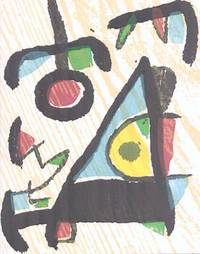
76-0877Barcelona: Joan Barbara 1990. Color wood engraving. 32 x 25 cm sheet. Not signed. Printed by Joan Barbara Barcelona. From an edition of 5500. Very Good.Literature: Dupin 1291. [Barcelona: Joan Barbara, 1990]. unknown
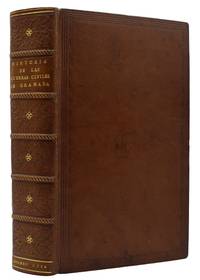
1714AQ23536En Amberes i.e. Antwerp: Por Henrico y Cornelio Verdussen 1714. 8 336 331-680pp 2. Text complete despite erratic pagination. Handsomely bound in nineteenth century russia tooled in gilt and blind A.E.G. A trifle rubbed and marked. Armorial bookplate in sanguine superimposed on an earlier bookplate of Thomas Merthyr Guest to FEP An early eighteenth century revised edition of the first part of Gines Perez de Hita's 1544-1619 Historia de los vandos de los Zegries y Abencerrages 1595-1619 widely considered the first Spanish historical novel. The book's portrait of the chivalrous Moorish family of the Abencerrages did much to establish the stereotype of the romantic Moor in European literature. Thomas Merthyr Guest 1838-1904 Welsh industrialist and landowner husband to author and benefactor Lady Theodora Guest née Grosvenor 1840-1924. . 8vo. Por Henrico y Cornelio Verdussen unknown
1937SPANISHC016421Madrid. 1937-1938. Thirty-six issues - most comprising two folded sheets one inserted within the other. A daily tabloid size newspaper. This batch consists of fifteen issues from November 1937 twenty issues from December 1937 including those for 25th and 31st December and one issue from January 1938. Numerous photographs. Several issues contain as a supplement a full-page photograph or portrait issued in a series entitled ''Figuras de la Democracia Mundial'' - the ''figuras'' include Gandhi and Paderewski.Together with: ABC - Diario Illustrado. 1937. Seville. Eight issues from November and December. Falangist daily tabloid size newspaper though each issue is much more substantial than those of the Madrid ABC each consisting of twenty to thirty pages. Several black and white photographs including one of members of the Hitler Youth visiting the ruins of Toledo.This daily founded in 1903 remains one of the three newspapers of record in Spain. In July 1936 the Madrid version was seized by the Republican government with a consequent change in its political outlook while that of Seville supported the Nationalists. In 1939 the government of Franco returned the Madrid ABC to its original owners.Generally very good. Madrid. unknown
25603‘Brunswick Hotel Jermyn Street London / May 26. 1838.’. Signed ‘Geo. Ticknor’. The male recipient is not named but the item is from the papers of the author Lady Theresa Lewis 1803-1865 successively wife of the novelist Thomas Henry Lister 1800-1842 and the Liberal politician Sir George Cornewall Lewis 1806-1863 all of whom have entries in the Oxford DNB. 2pp 12mo. On first leaf of a bifolium with a trace of glue from mount to the second leaf. In good condition lightly aged and folded for postage. He is ‘much interested that the Life of Ferdinand & Isabella written by a friend in America should be known in England where it has already obtained some reputation & is well liked by Hallam Allen & Southey.’ He asks him to ‘do me the favour to accept a copy of it from me. If it serves for nothing else it may serve to remind you of the kindness you and your friends have shown Mrs. Ticknor and myself ever since we have been in Europe.’ From the papers of Lady Theresa Lewis which also contain two letters to her from Prescott. ‘Brunswick Hotel [Jermyn Street, London] / May 26. 1838.’ unknown
16989Printed heading Ministerio de la Guerra etc. Madrid 7 March 1860. In Spanish. Two pages used of four cr. 8vo bifolium writing seeped through but text still legible. Ulloa's secretary has written on the right half of the two pages Serrano a note of 13ll on the left on p.1. Apparently Ulloa is suggesting that freed Slaves "emancipados" should be used to populate colonise Spanish Colonies in the Gulf of Guinea. Note: Recipient and note-maker Don Francisco Serrano Domínguez Cuenca y Pérez de Vargas 1st Duke of la Torre Grandee of Spain Count of San Antonio es: Francisco Serrano y Domínguez primer duque de la Torre conde de San Antonio; 17 December 1810 – 25 November 1885 was a Spanish marshal and statesman. He was Prime Minister of Spain and regent in 1868-1869. Image available on request. [Printed heading] Ministerio de la Guerra etc., Madrid, 7 March 1860. unknown
1906218101906. Manuscript medical remedy book from Devonport England compiled between 1903 and 1915 and preserving a striking record of everyday therapeutic practice in the years immediately preceding the global influenza pandemic that would soon devastate Europe. Written in ink in a clear and highly legible hand across 36 pages of a ruled notebook measuring 7.75" x 6.5" the volume gathers dozens of medicinal formulas for ailments ranging from bronchitis neuralgia rheumatism and digestive complaints to deep ulcers eye conditions sore throats winter coughs and childhood illnesses. Particularly notable are repeated entries for "influenza" appearing years before the outbreak retrospectively termed the Spanish Flu revealing how influenza already existed as a familiar and recurring medical threat within Edwardian Britain long before the catastrophic pandemic wave of 1918-1920 transformed it into one of the deadliest public health disasters of the modern era.<br /> <br /> The notebook therefore captures an important transitional moment in the history of epidemic disease: a period when influenza was treated as a common but serious seasonal illness through localized mixtures tonics expectorants and domestic pharmaceutical preparations rather than through coordinated state medicine or modern antiviral therapies. These entries provide unusually direct evidence of how ordinary practitioners dispensers or caretakers approached influenza treatment in the years immediately before the Spanish Flu pandemic altered both public consciousness and medical infrastructure surrounding contagious respiratory disease. The remedies themselves demonstrate the hybrid world of early twentieth-century medicine where domestic caregiving folk therapeutics and increasingly professionalized pharmacy overlapped. Familiar household substances such as witch hazel and paregoric appear beside pharmaceutical compounds later restricted or abandoned by mid-century medicine. Several preparations include age-specific dosages for children while others focus on strengthening mixtures cough remedies liniments lotions and wound treatments. A handful of entries are dated including one reading "June 29 1903" and another attributed to an individual identified as "A. Wilson."<br /> <br /> Accompanied by three inserted paper ephemera pieces including an index of herbs and chemicals and two additional recipe slips one bearing a postage stamp from the "Plymouth . Society Dispensing Dept. Fore St. Devonport." The overall character strongly suggests compilation by someone with regular access to a dispensary or chemist environment though not necessarily a formally licensed pharmacist operating instead within the fluid boundary between domestic medical care and industrialized pharmaceutical practice in prewar England. Well rubbed with losses to spine and extremities; interior remains clear and legible with minor foxing. Good overall condition. unknown
2002SONG9707180021Example Product Brand 2002-12-26. hardcover. Used: Good. 9.00x1.00x9.50. Buy with confidence. Excellent Customer Service & Return policy. Example Product Brand hardcover
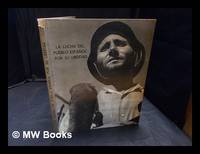
1937369023London : Press Department of the Spanish Embassy 1937. First Edition. Softcover. Good copy in original stiff card wrappers with some wear and tear as with age. Remains well-preserved overall; bright and clean. Physical description; 15 pages 128 pages plates ; 31 cm. Notes; Preface and captions in Spanish English and French. In Spanish English and French. Subjects; Spain History Civil War 1936-1939 ; Pictorial works. Spain Pictorial works History Civil War 1936-1939. Genres; History. Illustrated. Pictorial works. London : Press Department of the Spanish Embassy paperback
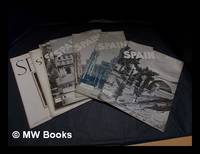
1939369001Madrid: Spanish Press Services Ltd 1939. First Edition. Softcover. Good set in the original stiff-card wrappers; edges slightly nicked and dust-dulled as with age. Physical description; 9 issues. Contents; No. 88: 8th June 1939 ; No. 89: 15th June 1939 ; No. 107: 7th March 1940 ; No. 108: 4th April 1940 ; 109: 2nd May 1940 ; No. 11: 4th July 1940 ; No. 112: 1st August 1940 ; No. 113: 5th September 1940 ; No. 115: 7th November 1940. Subjects; Spain. Spanish Culture. Spanish History. Madrid: Spanish Press Services Ltd paperback
1927055900Ankara: Adliye Vekâleti Istatistik ve Nesriyât Müdüriyeti Türk Ocaklari Matbaasi 1927. 1st Edition . Soft cover. Very Good. 4to - over 9¾ - 12" tall. Original trichrome wrappers. 4to. 27 x 20 cm. In Ottoman script Old Turkish in Arabic letters. 4 56 72 92 32 92 41 31 8 25 p. two full paged b/w plates. First and only edition of detailed account of the Lotus case an international legal case involving France and Turkey in front of the Permanent Court of International Justice compiled by Spanish judge Altavira y Crevea and translated by Turkish Distinguished Professor of International Law Menemenlizâde Edhem 1878-1965. The case is known for establishing the so-called "Lotus principle" in international law says that sovereign states may act in any way they wish so long as they do not contravene an explicit prohibition. The Bozkurt-Lotus case decided by the Permanent Court of International Justice PCIJ in 1927 became a landmark in international law especially regarding issues of jurisdiction and the extent of a state's rights to assert criminal jurisdiction over foreign nationals. The case arose from the collision between the S.S. Lotus a French vessel and the S.S. Bozkurt a Turkish ship near the Greek island of Mytilene on 2 August 1926. After the collision eight Turkish nationals aboard the Bozkurt drowned. In response Turkey arrested and charged the captain of the Lotus Captain Demons for causing the deaths and damages to the Turkish vessel. The Turkish courts condemned him asserting their right to try him for the incident even though the collision occurred in international waters and involved a French ship. France contested the jurisdiction of Turkish courts over the captain arguing that Turkey could not claim the right to prosecute a foreign national for actions committed on a foreign vessel in international waters. France brought the case before the PCIJ to challenge Turkey's legal authority. The court ruled in favour of Turkey emphasizing that under international law there was no general prohibition against a state asserting jurisdiction over crimes involving foreign nationals even when the incident occurred outside its territorial waters. The PCIJ's decision established the principle that absent an explicit prohibition in international law states are free to exercise jurisdiction in cases where they have a legitimate interest even if the matter involves foreign nationals and occurred in international waters. This judgment reinforced the notion of state sovereignty in determining jurisdiction and highlighted the extent to which international law permits states to assert legal authority over incidents involving foreign nationals under certain conditions. However it also raised important questions about extraterritorial jurisdiction and the balance between state sovereignty and international cooperation in legal matters. "The Lotus principle or Lotus approach usually considered a foundation of international law says that sovereign states may act in any way they wish so long as they do not contravene an explicit prohibition. The application of this principle - an outgrowth of the Lotus case - to future incidents raising the issue of jurisdiction over people on the high seas was changed by article 11 of the Convention on the High Seas. The convention held in Geneva in 1958 laid emphasis on the fact that only the flag state or the state of which the alleged offender was a national had jurisdiction over sailors regarding incidents occurring on the high seas." Wikipedia. It is the first legal Turkish success achieved in the international arena after the proclamation of the Republic. Karakus. In court the Turkish side was represented by Mahmut Esat Bozkurt who was the Minister of Justice at the time. When Turkey adopted the formal surname system in 1934 Mahmut Esat chose the surname "Bozkurt" as a reminder of the landmark case. Sources: Karakus H.Burak. 2013. Atatürk Özel Sayisi: "Genç Türkiye'nin Ilk Hukuk Zaferi: Bozkurt-Lotus Davasi". Ankara: Hukuk Gündemi Dergisi. Wikipedia. Bulut Hüseyin. 2018. Atatürk <br/> <br/> Adliye Vekâleti Istatistik ve Nesriyât Müdüriyeti, Türk Ocaklari Matbaasi paperback
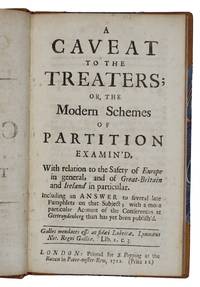
1711AQ26623London: Printed for S. Popping 1711. 8 88pp. Modern half-calf marbled paper boards contrasting red morocco lettering-piece. Minor shelf-wear. Half-title browned. The sole edition of a pamphlet variously attributed to Bishop of Chichester Francis Hare 1671-1740 and physician and satirist William Wagstaff 1683/4-1725 demonstrating 'the Danger of leaving the House of Bourbon in possession of the whole Spanish Monarchy or of any considerable part of it' occasioned by the peace negotiations March-July 1710 held at Geertruidenberg in the United Provinces between representatives of Louis XIV and the Dutch in an attempt to conclude the War of the Spanish Succession and written partly in response to three contemporary pamphlets; The ballance of Europe: or an enquiry into the respective dangers of giving the Spanish monarchy to the Emperour as well as to King Philip; Reasons why this nation ought to put a speedy end to this expensive war; and An essay at a plain exposition of that difficult phrase a good peace - all commonly ascribed to Daniel Defoe 1660-1731. ESTC T56742. First edition. 8vo. Printed for S. Popping hardcover
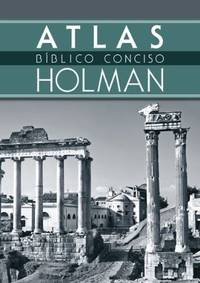
0805495916-8-1B&H Español. Concise Reprint. Very Good. It's a well-cared-for item that has seen limited use. The item may show minor signs of wear. All the text is legible with all pages included. It may have slight markings and/or highlighting. B&H Español unknown
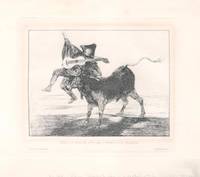
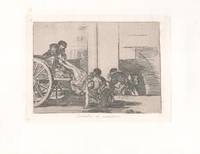
76-0143Madrid: Real Academia 1903. Etching aquatint and drypoint on wove paper. 23.5 x 33 cm sheet. Limited edition to 100. Very Good light specks of foxing in the margins.Ref.: Harris 184; Delteil 183. Madrid: Real Academia, 1903. unknown
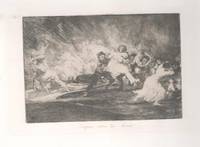
76-0144Madrid: Real Academia 1903. Etching aquatint and drypoint on wove paper. 24 x 33 cm sheet. Limited edition to 100. Very Good light specks of foxing in the margins.Ref.: Harris 161; Delteil 160. Madrid: Real Academia, 1903. unknown
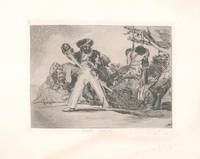
76-0145Madrid: Real Academia circa 1906. Etching aquatint and drypoint on laid paper. 23.5 x 32 cm sheet. Very Good light toning in the margins.Ref.: Harris 151; Delteil 160. Madrid: Real Academia, [circa 1906]. unknown