(Bible in Latin)Biblio.com
26 128 résultats
1593371924London: Excudebant G. Bishop R. Newbery & R. Barker 1593. Six parts in one. Text printed in verse form double column references and notes in margins. 81771 blankpp; 31041 blank leaves; 3 75 i.e. 73 leaves; 6 numbered 1-12pp 13-129 leaves 1 blank; 3 4-74 leaves; 3 198 leaves. With additional blanks bound in at the front and rear. 1 vols. Folio. Eighteenth century reverse calf covers blocked in blind red morocco lettering piece repairs to joints minor loss at head of spine. Repairs at hinges scattered minor paper repairs. Provenance: Peckham Williams armorial bookplate; General Theological Seminary bookplate. Six parts in one. Text printed in verse form double column references and notes in margins. 81771 blankpp; 31041 blank leaves; 3 75 i.e. 73 leaves; 6 numbered 1-12pp 13-129 leaves 1 blank; 3 4-74 leaves; 3 198 leaves. With additional blanks bound in at the front and rear. 1 vols. Folio. The third edition of the Latin Bible printed in England in this case printing Tremellius and Junius's version of the Old Testament with Beza's translation of the New Testament accompanied by Tremellius's version based on the edition printed in Geneva in 1590 see D&M 6182. Texts printed in double columns. The complete text was printed in six parts each with a divisional title and independent pagination or foliation. The fifth part Junius's translation of The Apocrypha was never bound into this copy. A variant of this edition with the imprint for "Guliel. N." i.e. William Norton appeared the same year. ESTC S106974; STC 2061.5; Darlow & Moule 6185; BM 1. b. 12; Copinger 534 Excudebant G. B[ishop] R. N[ewbery] & R. B[arker] unknown
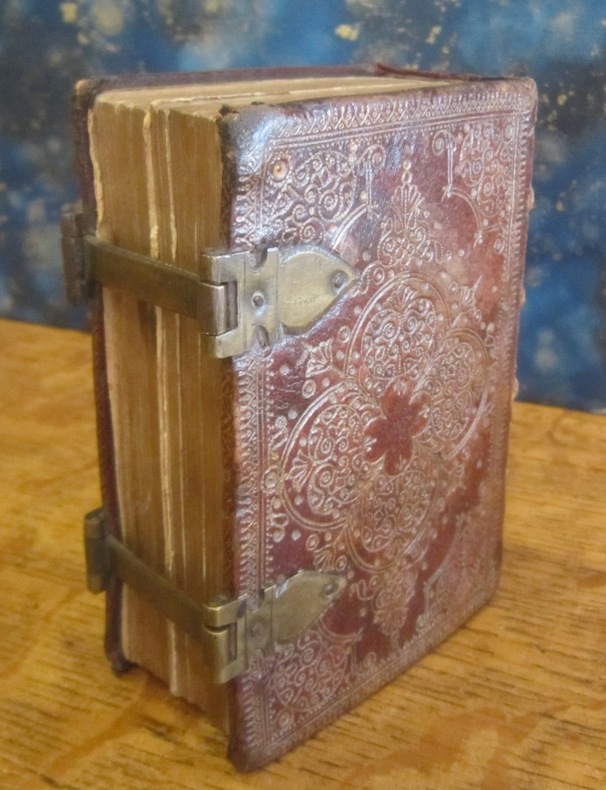
1564S1550Antwerp 1564. 16mo 11.2 x 7.2 cm. Christophe Plantin Contemporary blind- and gold-tooled calf each board with a doubler frame of blind double fillets with a small gold fleuron in the centre and a gold curl at each corner of the inner frame gilt and elaborately gauffered edges including floral decorations and six-pointed stars. With Plantins woodcut compasses device on both title pages "Labore et constantia" with woodcut decorated initials throughout the first work and 1 in the second. Hebrew and Greek types in 2nd work. 2 works in 1 volume the 1st in 2 parts. 316 68; 111 1 blank ll. Two complementary works printed by Plantin: a Latin New Testament and an alphabetical list of Hebrew Greek and Latin names of biblical people and places appearing together in a lovely binding with beautifully decorated edges. The New Testament opens with Saint Jerome's preface and his short introductions also accompany the different books. The order of the ecclesiastical year with the different readings is included at the end. The present New Testament appeared in a series of parts of the Bible Voet 682 I-VI & VI bis all in a 16mo format. The second work "must be considered to be the last volume of this edition" Voet I p. 352.Rebacked with the remnants of the original spine laid down slightly damaged with faint water stain on front board not affecting the book block. Minor corrosion spots only on the inside of the front board and in the margins of the first few leaves not affecting the text some very slight very light foxing throughout. A good copy of Plantins 16mo New Testament in a contemporary binding with extensively and beautifully decorated edges.l Ad 1: Belg. Typ. 443; Voet 682 VI and VI bis 8 copies. Ad 2: Belg. Typ. 443 and 1390; Voet 1750 2 copies. ABE CAT Bibles Sermons & Psalmbooks unknown
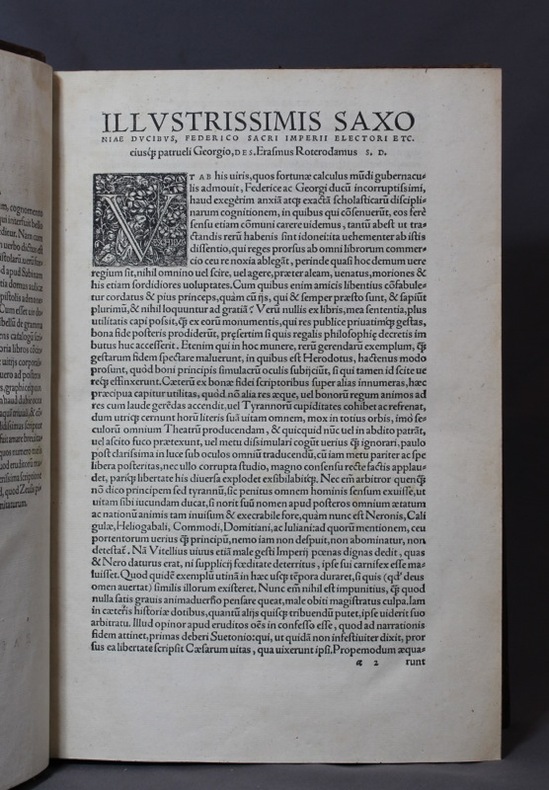
15466366Basilea, Froben [au colophon: Basileae per Hieronymvm Frobenivm et Nic. Episcopvm mense Septembri, M.D.XLVI.], 1546. Petit in-folio de [20]-810-[2]bl. -[68]p., plein veau raciné brun, dos lisse orné de filets et lyres dorés, filets et roulettes dorés encadrant les plats (reliure première moitié dix-neuvième). Quelques rares annotations anciennes.
1775c2412110474xbvkLouvain / Leuven, Belgium; 1775. Titlesheet (former blank front flyleaf), (9) pages 'Proemium Rhetorica / ...' and 'Deperiodo.', 5 blank sheets, pages 17-257 (of?), 1 blank sheet, blank rear flyleaf. - Vellum binding of the period over 5 raised bands with colour-marble-paper covered panel with vellum corners and red edges; small 4to.(ca. 19 x 16 x 2 cm).
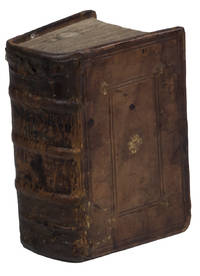
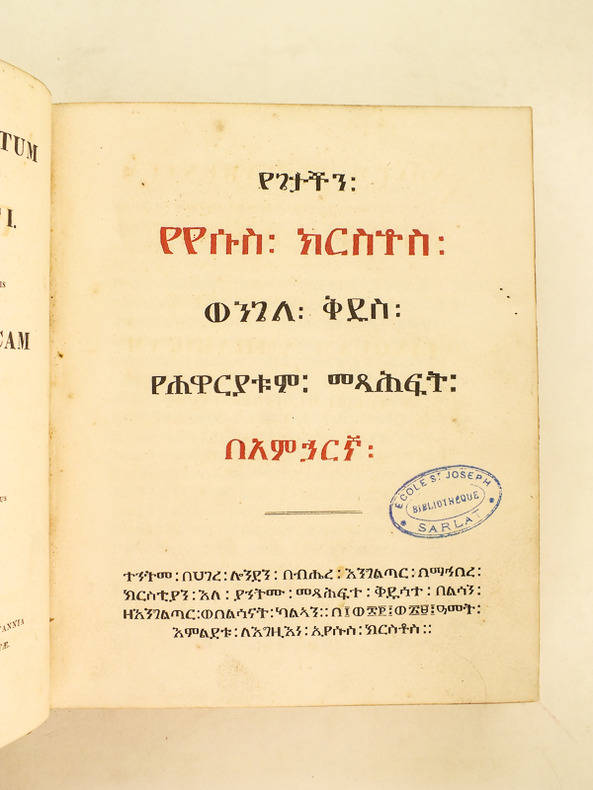
Edidit Thomas Pell Platt A.M., 1 vol. petit in-4 reliure de l'époque pleine basane marron estampée à froid, impression en deux couleurs, Impensis Societatis Ad Biblia sacra in Britannia et apud exteras gentes evulganda Institutae, Impressit Ricardus Watts [Richard Watts ], Londini [ Londres, London ], 1829, [-]2, B-Z4 2A-2Q4, 2R2, B*-Z*4, AA*-ZZ*4, AAA*-DDD*4, DDD**4. Très rare exemplaire de la première traduction du Nouveau Testament en Amharique. Le consul français au Caire, Jean Louis Asselin de Cherville, avait élaboré durant 10 années cette traduction avec le secours d'Abu Rumi (l'ancien traducteur de l'explorateur James Bruce). Il n'existait auparavant que des traductions partielles en amharique, et la bible éthiopienne existait seulement en langue Ge'ez. Le manuscrit en fut acquis par William Jowett au bénéfice de la British and Foreign Bible Society. Le présent exemplaire est parfaitement conforme à la collation indiquée par Fumagalli dans sa Bibliografia Etiopica, 1384 : "Questo Nuovo Testamento si compono dei Vangeli del 1824 e degli altri liberi stampati nel 1829. Il volume ha il seguente registro : da B a 2R (fine dei Vangeli), da B* a DDD*, piu la segn. DDD*** e i due frontesp. latino ed amarico. Il quad. 2R non ha che due carte". La reliure d'origine est conservée, mais a été renforcée à l'adhésif. Hormis un très petit travail de vers marginal en début d'ouvrage, le texte est d'une fraîcheur remarquable. The first complete New Testament published in Amharic. The translator, Abu Rumi, was an Abyssinian monk. He was helped by M. Asselin de Cherville, French consul in Cairo. The editor was P. T. Platt, (1798-1852), librarian of the British and Foreign Bible Society, assisted by Samuel Lee, professor of Arabic at Cambridge. They bought the manuscript of the Bible for 1250.00 £. Darlow-Moule 1558. Latin
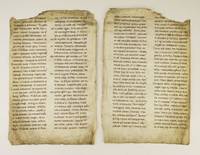
ST15769aPerhaps France mid-12th century. Each leaf measures approximately 370 x 240 mm. 14 1/2 x 9 1/2". Double column 32 lines in a fine proto-gothic hand. <br/> See: Thompson "An Introduction to Greek and Latin Paleography" p. 436. ◆Recovered from a binding and thus with one side of each leaf somewhat browned soiled and with a few creases one leaf with several small blotches of red paint in the text not affecting overall legibility one corner of each leaf torn away affecting running title and one to two lines of text other trivial defects but still very nice specimens with clear and legible script and one side of each leaf quite clean and well preserved.<br/> <br/> Once part of a large and elegant Romanesque Bible these leaves are excellent examples of a high quality proto-gothic book hand. Sometimes referred to as "praegothica" or "late Caroline" the proto-gothic script is characterized by letterforms that are more or less unchanged from Caroline minuscule but with a number of traits starting to show elements of gothic script--most notably the addition of feet appearing here as an upward flick of the pen on the bottom of minims but also including the use of more abbreviations the fusion of certain letter combinations a more elongated "o" and a straight-backed "a." Whatever the level of its evolution the script here has very pleasing rounded letterforms that are highly legible and generously spaced. Though the vellum is not unmarred by its former life as binding material the script here has not lost any of its beauty revealing a hand that is practiced regular and distinctly pleasing to the eye. As Thompson notes "In the twelfth century the scribes seem to have vied with each other in producing the best types of book-writing of which they were capable with the result that remarkable precision in the formation of the letter was attained and that the century may be named as excelling all others for the beauty of its MSS." Our leaves come from Deuteronomy the Old Testament book consisting primarily of three sermons made by Moses just before entering the Promised Land. One leaf contains brief summaries of chapters 2-18 with some chapters numbered in the margins while the other leaf contains part of the first of Moses' speeches in which he recalls the Israelites' 40-year journey through the wilderness. unknown
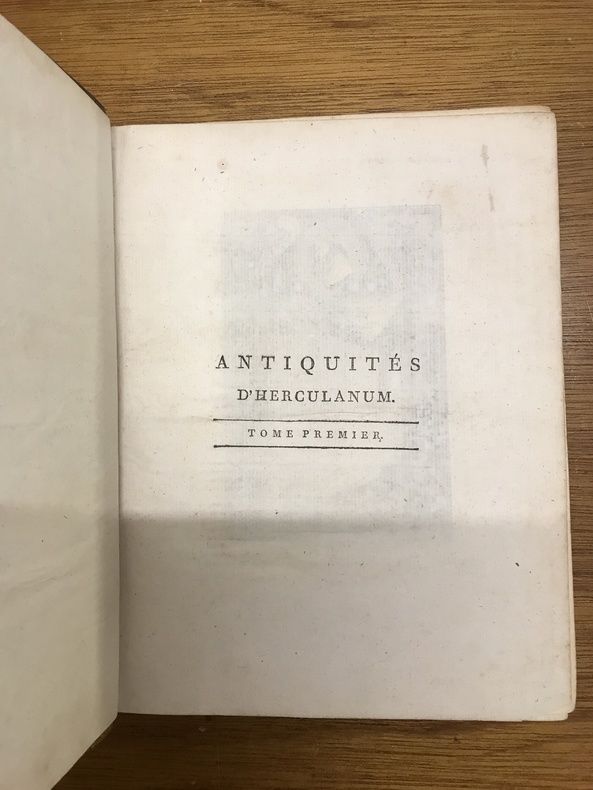
His3966MChez l'auteur, F.A. David, À Paris, 1780. Édition originale de ce superbe travail de compilation des gravures de F.A. David représentant la somme des découvertes du site d'Herculanum, alors fraîchement excavé. 9 volumes petit in-4, reliure veau brun, pièce de titre maroquin grenat, pièce de tomaison maroquin vert anglais, dos lisse, titrage et fleurons ornés, plats encadrés de filet dorés.reliures très clairement usées, mais état intérieur superbe. Tome I : 168 pages - 134 figures. Tome II : 215 pages - 141 figures. Tome III : 204 pages - 130 figures. Tome IV : 119 pages - 130 illustrations. Tome V : 100 pages - 181 figures. Tome VI : 96 pages - 144 figures. Tome VII : 104 pages - 163 figures. Tome VIII :50 pages - 70 figures. Tome IX : 108 pages - 129 figures. Reliures encore solides malgré une esthétique usée. Dos et plats frottés et accrochés par endroits. À rafraîchir. Intérieur des 9 volumes d'une fraîcheur irréprochable. COMPLETS. Tranches très bonnes. Chez l'auteur, F.A. David, À Paris, 1780. Original publication of this wonderful compilation of plates by F.A. David representing every aspect of what archeologists found and excavated on the freshly discovered, at this date, site of Herculanum. 9 volumes in small in-4, original binding in full, blond calf, red title piece, green volume piece. Vol I : 168 pages - 134 plates. Vol II : 215 pages - 141 plates. Vol III : 204 pages - 130 plates. Vol IV : 119 pages - 130 plates. Vol V : 100 pages - 181 plates. Vol VI : 96 pages - 144 plates. Vol VII : 104 pages - 163 plates. Vol VIII : 50 pages - 70 plates. Vol IX : 108 pages - 129 plates. Binding showing signs of wear but text and plates perfect condition. Binding could be restored.
1567127481567 un volume, reliure, reliure plein maroquin noir (19ème) petit in-octavo (full morocco in-octavo), dos long (spine without raised band), décoré or (gilt decoration) - titre frappé or (gilt title) - , plats décorés d'un encadrement à double filets à froid (cover with double line blind-stamping), tête lisse (top edge smooth), toutes tranches lisses (all smooth edges) noires (all edges black), orné de 53 bois de Hans HOLBEIN gravés sur bois en noir (woodcuts) par Antoine Silvius, 1567 Cologne héritiers de Arnold Birckmann Editeurs (Coloniae : Apud haeredes Arnoldi Birckmanni, 1567),
1709CA1100viii24412 pages with engraved map folding plan and four engraved illustrations in text and index. Quarto 9 ¾" x 7½" bound in period calf with modern rebacking original gilt spine leather laid down and ruled gilt edges to cover. Translated by Joh Stevens. First English Edition.<br /><br />This is a highly regarded chronicle of the conquest and colonization of Peru by Spaniards in the latter part of the 16th century and is lauded for its at the time objectivity. Cieza de Leon's Chronica was to appear in 4 sections this translation being the first part only all that was available of the history until the latter part of the 19th century.<br /><br />Pedro Cieza de León was a Spanish conquistador and chronicler of Peru. He is known primarily for his history and description of Peru Crónicas del Perú. He wrote this book in four parts but only the first was published during his lifetime; the remaining sections were not published until the 19th and 20th centuries. Cieza de León was born to a family of Jewish conversos1 around 1520 in Llerena a town in southeastern Extremadura less than 60 mi from Portugal. Although recently converted from Judaism to Catholicism the family enjoyed good social standing in the region because of their networks and business dealings. His father Lope de León was a shopkeeper in the town and his mother Leonor de Cazalla was a native of Llerena. There is scant documentary evidence of the young Cieza de León’s childhood and little is known of his early life before his voyage to the Americas. Given the fact that he left home at 13 it is unlikely that Cieza de León received more than a rudimentary education. In 1536 in Córdoba at 16 Cieza de León was greatly surprised to learn of the discovery of the land of the Incas and so decided to go to Seville to embark on his journey to South America to see for himself the artifacts of precious metals which had been brought to Spain from Cajamarca. In light of the prohibition of entry into the Spanish colonies for Jews and Jewish converts to Catholicism Alonso López and Luis de Torres attested for Cieza de León that he was not prohibited. Jewish converso Pedro López de Cazalla secretary of Spanish conquistador Francisco Pizarro conqueror of the Incan Empire was also his first cousin. He returned to Seville Spain in 1551 and married a woman named Isabel López de Abreu. Here he published in 1553 the first part of the chronicles of Peru Primera Parte. He died the following year leaving the rest of his work unpublished. His Second Part of Chronicles of Peru describing the Incas was translated by Clements Markham and published in 1871 for the Hakluyt Society. In 1909 the fourth part of his chronicle focusing on the civil wars among the Spanish conquerors was published under the title Third Book of the Peruvian Civil Wars. The third part of Cieza de León's Crónicas del Perú which examined the discovery and conquest of Peru by the Spaniards was considered by historians to be lost. The document eventually turned up in a Vatican library and historian Francesca Cantù published a Spanish version of the text in 1979. Though his works are historical and narrate the events of the Spanish conquest of Peru and the civil wars among the Spaniards much of their importance lies in his detailed descriptions of geography ethnography flora and fauna. He was the first European to describe some native Peruvian animal species and vegetables.<br /><br />Condition:<br /><br />Expertly rebacked some light rubbing to extremities foxing old book plate on front pastedown else very good. unknown hardcover books
ST12668bHNortheastern France probably Arras late 15th century. 146 x 95 mm. 5 3/4 x 3 3/4". Single column 15 lines in a pleasing bâtarde hand. <br/> Rubrics in red one- and two-line initials in brushed gold on a red or blue ground EACH SIDE OF LEAF WITH A BRUSHED GOLD PANEL BORDER WITH VERY PRETTY ILLUSIONISTIC FLOWERS AND FRUITS and intricate strapwork design in colors; WITH TWO SMALL MINIATURES measuring approximately 40 x 25 mm. depicting John the Baptist and John the Evangelist shown with their attributes. Headlines written in French in a later 18th century calligraphic hand. ◆Light soiling a touch of paint loss to frames and background not very noticeable and not affecting the figures otherwise an excellent specimen generally clean and smooth with ample margins winning decoration and shining gold.<br/> <br/> From a charmingly decorated 15th century prayer book this leaf offers the opportunity to acquire two particularly nice miniatures each depicting an important saint. The recto shows St. John the Baptist with a lamb at his side and a book balanced on his knee; and the verso depicts St. John the Evangelist as a young man holding a chalice with what ought to be snakes emerging from it in reference to the poisoned cup he was invited to drink as a test of faith but which instead look more like tendrils of smoke. For other leaves from this same manuscript please check our website. unknown
1512372103Paris: Philippe Pigouchet for Simon Vostre 1512. Title page printed in red and black with woodcut device of Simon Vostre; full page woodcuts of St. Jerome crucifixion old coloring. Text in gothic type in two columns ornamental initials some colored text ruled in red throughout. 15 340 28 leaves. Terminal black dd6 present. 1 vols. Folio. Modern linen conservation binding. First leaf toned ownership marks struck out early bibliopole's description in ink at bottom of title. Some minor worming at end. Very good. Title page printed in red and black with woodcut device of Simon Vostre; full page woodcuts of St. Jerome crucifixion old coloring. Text in gothic type in two columns ornamental initials some colored text ruled in red throughout. 15 340 28 leaves. Terminal black dd6 present. 1 vols. Folio. Large folio Bible printed for Simon Vostre by Philippe Pigouchet the famous printer of some of the most beautiful Books of Hours. Uncommon in institutions and in the trade. Renouard ICP II 248; Delaveau & Hillard 778 Philippe Pigouchet for Simon Vostre unknown
1611WRCAM40080Spain 1611. 12pp. leaves numbered 1-6. In Spanish. Folio. Dbd. Early folds mild foxing. Very good. An early and evidently unrecorded 17th- century Spanish petition to the King on behalf of mendicant and monastic communities in the Spanish Americas. The authors argue that the churches attempting to tax their incomes and force them to pay tithes are hurting religious efforts in the Americas and infringing upon the historical independence of the religious orders from the churches. The document is signed in print by eleven monks each representing a different order: the Benedictines Hieronymites Franciscans Cistercians Mercedarians Dominicans Augustinians Trinitarians Jesuits Premonstratensians and Carmelites. The Jesuit signer is Pedro de Caruajal presumably Pedro de Carbajal former magistrate and judge of the Vilcas Huamán province of Peru and author of DESCRIPCION FECHA DE LA PROVINCIA DE VILCAS GUAMAN.EN EL AÑO 1586. unknown books
1515659741 vol. in-4 (20,45 x 14,3 cm en marges) reliure XVIIIe restaurée en plat postérieurement, dos lisse muet, Impressit Simon Luerensis [ Simone da Lovere ], Venetiis [ Venezia ; Venise ], 1515, 57 ff.
188484Cologne, Johann Birckmann, 1560 in-folio, [6] [sur 20] ff. n. ch. (titre avec vignette de libraire, dédicace, table des chapitres), 240 ff., texte sur deux colonnes, signatures **, puis A-Z, puis Aa-Rr, avec un tableau dépliant (f. 113, arbre de consanguinité), il manque le Prologue dans les pièces liminaires, demi-veau prune, dos lisse orné de filets et guirlandes dorés, ainsi que de larges fleurons à froid, pièce de titre noire, tranches marbrées (rel. du XIXe siècle). Dos passé, un mors supérieur fendillé.
173120905Douay J.-F. Willerval 1731 -in-4 plein-veau 3 parties en 1 volume, reliure plein veau brun raciné in-quarto (binding full calfskin in-4) (26 x 19 cm), RELIURE D'EPOQUE, dos à 5 nerfs (spine with raised bands) décoré "or" et à froid (gilt and blind stamping decoration), titre frappé "or", pièce de titre sur fond bordeaux foncé avec filet "or" et filet perlé "or" en encadrement, roulette "or" (avec manques de dorure) en place des nerfs avec un filet à froid de part et d'autre des nerfs, filet or en tête et en pied, entre-nerfs au double C couronné "or" dans un encadrement à filet et filet perlé "or" avec rinceaux "or" aux angles, Coiffes absentes, mors supérieur et inférieur du 1er plat fendus sur 3 cm, mors supérieur du 4ème plat fendu sur 6 cm, coins écornés, toutes tranches lisses jaspées rouges, PLATS ARMORIES, plats avec les Armoiries "or" (au centre) de : (Armoiries de Cardinal avec chapeau de prêtre à bords larges, muni de cordelettes à trente glands, L'écu représentant les armoiries de la famille d'Orléans surmonté d'une couronne de comte) LOUIS-ETIENNE DE SAINT-PHAR, légitimé, comte de Saint-Phar, abbé de Livry, prieur à Saint-Martin-des-Champs FILS NATUREL DU ROI PHILIPPE D'ORLEANS (LOUIS XVIII) et de Madame Etiennette Le Marquis, texte en vieux françois, l'APPENDIX est en latin, sans illustrations (no illustration) excepté une vignette "marque de l'Editeur" en bas du titre gravée sur bois en noir + Bandeaux, lettrines et culs de lampes Historiés gravés sur bois en noir, quelques mouillures périphériques claires, plus importante sur les 20 dernière pages, mais ne génant à aucun moment la lecture du texte, (8 p. de préface + 2 p. privilège + 450 + 76 + (2) + 82 + 8 p. de tables) pages, 1731 Douay : J.-F. Willerval Editeur,
[6]-134 p. Bibliography. Index. "The history of the Jews of Mexico 1521-1821 is recorded in the documents of the Inquisition. The Mexican Archivo General de la Nacion are 1,553 volumes of Mexican Inquisition documents. The index to these volumes is the Incice del Ramo de la Inquisicion, itself fifteen large volumes in length. However, it is not arranged in any fashion accepted by archivists. This book presents in tabular form all matters of Jewish interest as they appear in the Indece. The name of each Jew who appeared before the Holy Office of the Incqusition, as well as of those disinterred from the grave, are furnished with dates, charges, places of birth, and other pertinent data. An Alphabetical list of names appended to it makes it possible to locate the various parts of the proceso of any individual. Appendices to this work list names and give much information from sources other than the documents in the Archives." - dust jacket. Book clean and unmarked with light wear to publisher's blue cloth. Binding tight. Moderate wear to dust jacket now preserved in archival-grade Brodart. A quality example of this important reference. Book
182937035Edidit Thomas Pell Platt A.M., 1 vol. petit in-4 reliure de l'époque pleine basane marron estampée à froid, impression en deux couleurs, Impensis Societatis Ad Biblia sacra in Britannia et apud exteras gentes evulganda Institutae, Impressit Ricardus Watts [Richard Watts ], Londini [ Londres, London ], 1829, [-]2, B-Z4 2A-2Q4, 2R2, B*-Z*4, AA*-ZZ*4, AAA*-DDD*4, DDD**4.
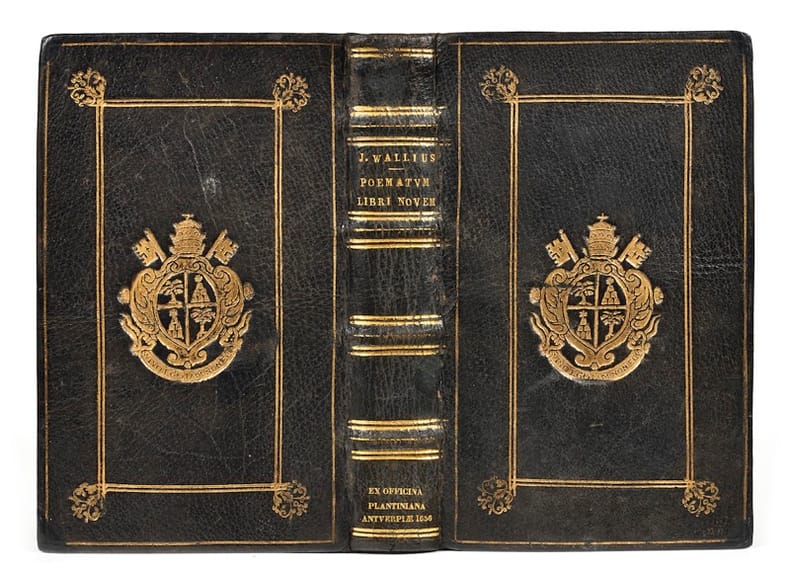
165610722Anvers, Balthasar Moretus, 1656. In-12 (170 x 107 mm), 16 ff. n. ch., 422 pp. 1 f. n. ch. Maroquin noir, double encadrement de filets dorés sur les plats, fleuron doré en écoinçon, armes au centre, dos à nerfs avec double filet doré séparant les caissons, auteur, titre, éditeur, lieu et date dorés, tranches dorées, étui cartonné du XIXe siècle, tache d’encre au feuillet **4 et p. 262, trace d’encre sans atteinte au texte page 154 et 155, petits traits d'encre pour pointer ou souligner des vers pp. 261 à 267, coins habilement restaurés, gardes renouvelées (reliure de l’époque).
pp. x, 227. Footnotes. Index. List of Works Cited. Personalia. Black and white reproductions of historic documents. Frontispiece illustration of Isaac Aboab Da Fonseca (1605-93), the first rabbi in the New World. "Historiography has quite neglected the romantic and fascinating history of the underground and free-professing Jews in colonial Brazil, who formed the earliest Jewish community in America and became the "Jewish Pilgrim Fathers" of New York, as well as of Jamaica, Barbados, and other Jewish communities in the Caribbean area. The present work is an effort to fill this gap." - Preface. Wiznitzer was president of the Brazilian Jewish Institute of Historical Research and a frequent contributor to learned journals. Moderate wear to publisher's navy blue cloth brightly lettered in gilt upon backstrip. Binding intact. Prior owner's bookplate and small bookseller tag inside front board. Prior owner appears to have clipped author's photo/bio from dust jacket (not included) and mounted it upon recto of front free endpaper. Prior owner's blind stamp, name and date upon title page. Pencil underlining and marginal lines erased from about 45 pages. Foxing in vicinity of endpapers and, lightly, to edges. A sound copy of this important work. Book
ST12083eItaly ca. 1150. 406 x 273 mm. 16 x 10 3/4". Double column 42 lines in a fine rounded early proto-gothic hand. <br/> Recto with a pleasing three-line red initial. ◆Formerly used in a binding and consequently a bit soiled and trimmed at the head with loss of the first line perhaps 100 or so small wormholes in the margin only a few causing trivial harm to the text a faint grayish stain affecting a couple of words in the top 20 lines of one column on each side but the entirety of the text completely clear and the stately leaf quite fresh and unusually well-preserved in general for a recovered specimen.<br/> <br/> This leaf comes from a very large copy of one of the major texts by one of the great popes of the early Middle Ages. Dealing in part with the central occurrence in the salvation of humanity the text here treats of John 20:19-31 which tells of the risen Christ's appearance to the Apostles. Doubting Thomas insists on touching the Lord's wounds before he will be convinced of the Resurrection. Gregory tells his audience that Thomas was healed of unbelief and so must they be although they cannot see Jesus in the flesh as did Thomas. Written ca. 593 Pope Gregory's 40 homilies on the Gospels enjoyed enduring popularity throughout Medieval times as they offered ordinary Christians practical guidance on applying the lessons of the Gospels to their own lives. Elected pope in 590 Gregory ca. 540-604 was one of the most influential pontiffs in the history of the Church. In addition to revising liturgical worship he wrote extensively on theology offering homespun wisdom rather than esoteric debates. He was declared a saint immediately upon his death. The script here is regular rounded and very pleasing--almost soothing--to the eye. Moreover the letters are so large and there is so little significant damage to the leaf that the text can be easily read from a considerable distance. unknown
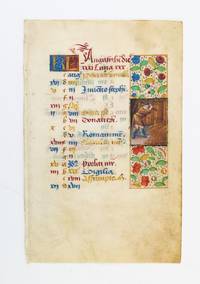
1470ST17245-09Northern France probably Rouen ca. 1470. 180 x 117 mm. 7 x 4 5/8". Single column 18 lines text in a bâtarde hand. <br/> Text in red blue and gold two-line "KL" in shell gold on blue and red ground both sides with panel border composed of flowers and ink dots WITH TWO SMALL MINIATURES each centered in the middle of the panel borders featuring the labor of the month Threshing and the zodiac sign a young woman for Virgo. Vellum a bit soiled and slight wrinkling in margins small area of rubbing at bottom of the Virgo miniature but in excellent condition overall the fine details in the miniatures well preserved.<br/> <br/> Situated among the flowers of the panel borders here are two small but charming miniatures depicting the labor of the month "Threshing" and the zodiac sign for August. According to Roger Wieck far fewer than half the Books of Hours of the period contain illustrated calendars "even in manuscripts with otherwise lavish cycles of miniatures"; when they do appear they are invariably charming as is the case here. In the threshing scene a young layman brings down his grain flail two hinged pieces of wood the longer one called a helve and the other a beater joined by a thong in an effort to separate the grain while neatly gathered bushels of straw appear just behind him. On the verso we see a representation of Virgo as a young woman holding appropriately two long stalks of grain in her hands. The rich palette used in these miniatures allows the delicate gold highlighting on the harvested crop and garments to shine through adding a fine sense of detail to each image. unknown
ST12668bJNortheastern France probably Arras late 15th century. 146 x 95 mm. 5 3/4 x 3 3/4". Single column 15 lines in a pleasing bâtarde hand. <br/> Rubrics in red one- and two-line initials in brushed gold on a red or blue ground EACH SIDE OF EACH LEAF WITH A BRUSHED GOLD PANEL BORDER WITH VERY PRETTY ILLUSIONISTIC FLOWERS; EACH LEAF WITH TWO SMALL MINIATURES measuring approximately 40 x 25 mm. depicting saints shown with their attributes. Headlines written in French in a later 18th century calligraphic hand. ◆Light soiling rubrics faded otherwise excellent specimens generally clean and smooth with ample margins attractive decoration and shining gold.<br/> <br/> From a charmingly decorated 15th century prayer book these lovely leaves offer the opportunity to acquire a miniature and considerable gold ornamentation at an attainable price. One leaf depicts St. Andrew holding an "X" shaped cross and St. Etienne i.e. St. Stephen here shown with three stones on his body and the other shows St. Remigius the so-called "Apostle of the Franks" and St. Quentin--a saint that was particularly venerated in France especially in the north whence we be believe these leaves originated. For other leaves from this same manuscript please check our website. unknown
167630226ABJena, Samuel Krebs für Johannes Bielkius 1676. 1676. Kl.4°. Frontispiz, 7 (unnum.) Bll. (einschl. zweifarbiger Titel), 370 S., 11 (unnum.) Bll. Pgmt der Zt. Einband leicht altersfleckig. Pgmt an der Vorderkante des Vorderdeckel teils von diesem gelöst.
14617Eleutheropoli [Leyde]; [et] Gorinchemi, Extra plateam obscuram, sine privilegio auctoris, absque ubi & quando [et] ex officinâ Cornelii Lever, 1678 [et] 1680. In-12 de [10]-146-[4] et [4]-56-[4]-13-[3] pages, plein maroquin noir du temps, dos à nerfs orné de filets et fleurons dorés, triple filet doré encadrant les plats, tranches dorées.
1646000266Paris 1646