ROSINUS, Johann [ ROSZFLED, Johann ] ; WALDKIRCH, Conradum ; RHENANUS, Beatus ; GELENIUS, Sigismundus ; ALCIAT, AndréLivre Rare Book
26 128 résultats
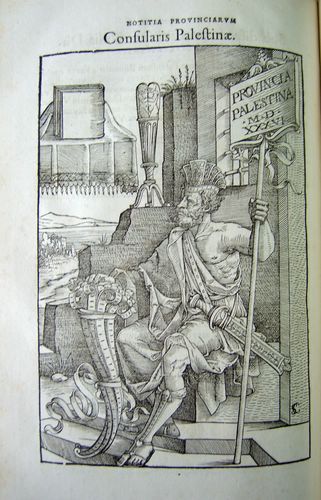
155226569Romanarum Antiquitatum Libri Decem Exvariis Scriptoribus Summa fide singularique diligentia collecti, a Ioanne Rosino Bartholomaei F., cum indicibus locupletissimis, [suivi de : ] Notitia Utraque cum Orientis tum Orientis ultra arcadii honoriique Caesarum tempora, illustre vetustatis monumentum, ensemble en 1 vol. in-folio reliure de l'époque anciennement restaurée demi-basane marron, dos à 6 nerfs, Ex Officina Haeredum Petri Pernae, Basileae, 1583 , 12 ff. n. ch., 491 pp. et 32 ff. n. ch. (tables), collation : ()6, ()()6, a8, b-z6, A-O6, P4, Q-Y6, Z8 et Apud Hieronymum Frobenium et Nicolaum Episcopium, Basileae, 1552, 108 ff. n. ch. collation : *8, a-o6, p4, q-r6 avec plus de 100 bois gravés
1609301886Venezia: Antonio Pinelli 1609. Engraved title pages in red and black; text in four columns 24-1102 2 ; 8-674-2 p. ; 8-326-34 p. 2 vols. Folio. Contemporary pigskin with ms. lettering on spine. Covers a bit soiled but binding is solid and text near immaculate. Handsome copy ex-library deaccessioned in 1873 from a library in Bologna with occasional stamps. Engraved title pages in red and black; text in four columns 24-1102 2 ; 8-674-2 p. ; 8-326-34 p. 2 vols. Folio. A gathering of Latin translations: The Vulgate printed after an edition printed in Antwerp in 1605; the translation from the Hebrew by St. Pagnini after the Lyon edition of 1528; and the Septuagint after the edition of Rome 1508.<br/><br/>Scarce in institutions: OCLC locates 3 copies in Italy 2 in France 1 in Switzerland and none in Great Britain or the United States. Not in Darlow and Moule; OCLC 800915086 Antonio Pinelli unknown books
9 vol. in-folio reliure de l'époque pleine basane marron, dos à 6 nerfs ornés (fleurons), Sumptib. Phil. Borde, Laur. Arnaud & Claud. Rigaud, Lugduni [ Lyon ], 1661-70, Tome I : 10 ff. (dont faux-titre avec frontispice au verso, gravé par Auroux), 577 pp. et 1 f. blanc ; Tome II : 8 ff., 614 pp. ; Tome III : 6 ff., 578 pp. ; Tome 4 : 6 ff., 530 pp. ; Tome 5 : 7 ff., 650 pp. ; Tome 6 : 7 ff., 574 pp. ; Tome 7 : 6 ff., 602 pp. ;Tome 8 : 6 ff., 434 pp. et 1 f. blanc ; Tome 9 : 6 ff. (dont faux-titre avec frontispice au verso, gravé par Auroux), 759 pp. - Titre complet : Eminentissimi Dominici Tuschi, Regiensis episcop. Tiburtini, Presbiteri Cardinalis, Practicarum conclusionum Iuris, in omni foro frequentiorum (9 Tomes - Complet) In quibus Praeter Spirituales, Ecclesiasticas, Legales, Iudiciarias caeterásque materias Canonicas, Prophanas, Civiles, Criminales & mixtas in vtroque foro magis frequentes, miro ordine digestas receptásque opiniones vbique Asterisco * notatis aliqua multarum insignium Ecclesiarum, Ordinum Regularium, Militiarum, Regnorum, Provinciarum, Civitatum & aliorum locorum statua mores consuetudines, indulta & privilegia ut obiter a Doctoribus citatis sunt relata ordine alphabetico contineuntur ac declarantur. Rare exemplaire parfaitement complet des 9 Tomes. Le tome 9, publié par Carlo Toschi, et ici présent pour la première fois, bénéficie d'une page de titre propre. Etat satisfaisant (rel. frottées avec qq. accrocs et mq. en coiffes, des mouillures, fortes dans le tome 3, qq. travaux de vers affectant rarement le texte sur plus de qq. lettres) pour cet exemplaire de l'édition la plus complète. Latin
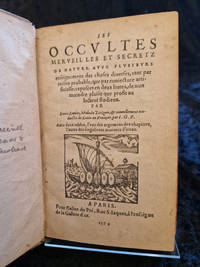
1574001927<p>Paris: pour Galliot du Pre 1574. 3rd Edition . Hardcover. Very Good. French translation from the 1st edition in Latin Occulta Naturae Miracula published 1559. 12mo collated as Title page with woodcut of viking ship pp2 pp213 plus 30 pages of alphabetical index to rear. Hardcover issued without dust jacket. Slightly later rebind of full leather with 5 raised bands and leather title label to spine and half of the "Gen de Paris" stamp to front cover. Binding in good condition with some rubbing to all edges and boards and a little chipping to top of back board. Inside except for the very odd mark all pages with all edges dyed red in excellent clean and bright condition with no foxing waterstains fingermarks etc. . For added interest the bookplate of Baron Hyacinthi Theodori dean of the Faculté de médecine de Paris circa 1720s is pasted to front pastedown. Levinus Lemnius was a celebrated Dutch physician whose medical writings were much translated. He studied under the famous Swiss botanist and bibliographer Konrad Gesner at the University of Louvain and under the famous Flemish anatomist Andreas Vesalius at the University of Padua. This Renaissance treatise on natural philosophy and medicine draws on classical sources particularly Aristotle with Lemnius being influenced by the "airs waters places" doctrine from the Hippocratic Corpus. This important work includes explanations of demonology somnambulism and the physical causes of mental illness the properties and healing virtues of herbs and gemstones alongside oddities like hermaphrodites. An superb copy of a very scarce early work with an interesting provenance. <br /><br /></p> pour Galliot du Pre hardcover
174820909Paris GABRIEL MARTIN, J. B. COIGNARD & ANT. BOUDET, PIERRE-JEAN MARIETTE, HIPPOLYTE-LOUIS GUERIN 1748-1750 -in-4 plein-veau 14 volumes, reliure plein veau havane marbré in-quarto (binding full calfskin in-4) (26 x 20,3 cm), RELIURE D'EPOQUE, dos à nerfs (spine with raised bands) décoré "or" et à froid (gilt and blind stamping decoration), titre et tomaisons frappés "or", pièce de Titre et de Tomaison sur fond bordeaux foncé avec filet "or" et filet perlé "or" en encadrement, (avec en plus pour la tomaison une roulette "fleur de lys" "or" de part et d'autre de la tomaison), roulette "or" en place des nerfs avec un filet à froid de part et d'autre, entre-nerfs à fleuron central "or"au fer évidé (between the raised bands floweret with hollowed out blocking stamp) dans un encadrement d'un filet "or" et un filet perlé "or" avec rinceaux "or" aux angles, roulette "fleur de lys" "or" avec filet "or" et filet perlé "or" en tête et en pied, plats ornés d'un double filet à froid en encadrement, double filets "or" aux coupes avec manque de dorure (blurred gilding), toutes tranches lisses rouges, ETAT DE LIVRES : TOME I : coiffes de tête et de pied manquantes, mors haut et bas de la 1ère et 4ème de couverture fendus sur 2 cm, TOME II : mors haut et bas du 1er plar fendus sur 4 cm, TOME III : léger manque de cuir à la coiffe inférieure (angle) et tache brune légère au 1er plat, TOME IV : légère tache brune au 4ème plat (1 cm2), léger manque de cuir en tête (moins de 1/5 cm 2), petit accident à la coiffe de tête à l'angle, TOME V : légers accidents à la coiffe de tête et de pied, TOME VI : léger accident à la coiffe de tête, TOME VII : petite tache brune en haut du 1er plat (2cm2), TOME VIII : mors haut du 1er plat fendu sur 1,5 cm, pièce de tomaison manquante (à restaurer), TOME IX : léger accident à la coiffe de tête, mors haut du 1er et 4ème plats fendus sur 2,5 cm, TOME X : coiffe de tête manquante, angle gauche bas de la pièce de titre et de la pièce de tomaisons épidermés, TOME XI : coiffes de tête et de pied manquantes, petit manque de cuir en têt et en pied (moins de 1/2 cm2), tache brune en haut du 1er plat (2 cm2), TOME XII : la coiffe de tête manque, épidermures à la pièce de titre, de tomaison et en pied, TOME XIII : coiffe de pied accidentée, épidermure à la pièce de titre et à la pièce de tomaison, mors haut et bas fendus du 1er plat sur 4 cm, mors haut du 4ème plat fendu sur 4 cm, TOME XIV : coiffes de tête et de pied accidentées, 2 épidermures à la pièce de tomaison, mors tachés (tache brune sur toute la longueur), Titre orné d'une vignette gravée sur bois en noir "branches de gui de part et d'autre avec fleur de lys au centre" en bas de la page de titre, orné de 46 planches dépliantes hors-texte gravées sur bois en noir (gravures, cartes, tableaux et plans) , TOME I : (X + 957) + TOME II ((2) + II + 781) + TOME III ((4) + 184 + 592) + TOME IV ((4) + 789) + TOME V((2) +V + 753) + TOME VI((4) + 680) + TOME VII((4) + 924) + TOME VIII((2) + II + 841) + TOME IX (VI + 929) + TOME X ((6) + 110 + 653) + TOME XI(192 + 614) + TOME XII (IV + 248 + 448) + TOME XIII(VIII + 927) + TOME XIV (232 + 187) Pages, 1748-1750 à Paris CHEZ GABRIEL MARTIN, J. B. COIGNARD & ANT. BOUDET, PIERRE-JEAN MARIETTE, HIPPOLYTE-LOUIS GUERIN Editeurs,
1882R96478Ad Claras Aquas (Quaracchi), Ex typographia Collegii S. Bonaventura 1882-1902 Complete series of 11 volumes (Volumes 1 to 10, and 1 volume of indices), title in black and red, 35cm., text in Latin, uniform hardcover bindings (spines in vellum, marbled boards, label at lower end of spines, some traces of use), library stamp on first endpaper and on (verso of) title page, text clean and bright, good condition, [CONTENTS: Volume 1: Commentaria in quatuor libros sententiarum magistri Petri Lombardi: in primum librum sententiarum, 1882, lxxxvii + 871pp. // Volume 2: Commentaria in quatuor libros sententiarum magistri Petri Lombardi: in secundum librum sententiarum, 1885, 1026pp. // Volume 3: Commentaria in quatuor libros sententiarum magistri Petri Lombardi: in tertium librum sententiarum, 1887, 905pp. // Volume 4: Commentaria in quatuor libros sententiarum magistri Petri Lombardi: in quartum librum sententiarum, 1889, 1067pp. // Volume 5: Opuscula varia theologica, 1891, 606pp. // Volume 6: Commentarii in Sacram scripturam, 1893, 640pp. // Volume 7: Commentarius in evangelium S. Lucae, 1895, xviii, 857pp.with ill. // Volume 8: Opuscula varia ad theologiam mysticam et res ordinis fratrum minorum spectantia, 1898, cxxiv + 757pp. // Volume 9: Introductio cum Opusculo de arte praedicandi, Sermones de Tempore, de Sanctis, de B. Virgine Maria et de diversis, 1901, 752pp. // Volume 10: Operum omnium complementum, 1902, 277pp. // Indices in tomos I-IV operum omnium S. Bonaventurae, 1901, 502pp.], Total weight of this series is ca. 40kg. (extra shipping charges will apply), [edita, studio et cura PP. Collegii a S. Bonaventura], R96478
Complete series of 11 volumes (Volumes 1 to 10, and 1 volume of indices), title in black and red, 35cm., text in Latin, uniform hardcover bindings (spines in vellum, marbled boards, label at lower end of spines, some traces of use), library stamp on first endpaper and on (verso of) title page, text clean and bright, good condition, [CONTENTS: Volume 1: Commentaria in quatuor libros sententiarum magistri Petri Lombardi: in primum librum sententiarum, 1882, lxxxvii + 871pp. // Volume 2: Commentaria in quatuor libros sententiarum magistri Petri Lombardi: in secundum librum sententiarum, 1885, 1026pp. // Volume 3: Commentaria in quatuor libros sententiarum magistri Petri Lombardi: in tertium librum sententiarum, 1887, 905pp. // Volume 4: Commentaria in quatuor libros sententiarum magistri Petri Lombardi: in quartum librum sententiarum, 1889, 1067pp. // Volume 5: Opuscula varia theologica, 1891, 606pp. // Volume 6: Commentarii in Sacram scripturam, 1893, 640pp. // Volume 7: Commentarius in evangelium S. Lucae, 1895, xviii, 857pp.with ill. // Volume 8: Opuscula varia ad theologiam mysticam et res ordinis fratrum minorum spectantia, 1898, cxxiv + 757pp. // Volume 9: Introductio cum Opusculo de arte praedicandi, Sermones de Tempore, de Sanctis, de B. Virgine Maria et de diversis, 1901, 752pp. // Volume 10: Operum omnium complementum, 1902, 277pp. // Indices in tomos I-IV operum omnium S. Bonaventurae, 1901, 502pp.], Total weight of this series is ca. 40kg. (extra shipping charges will apply), [edita, studio et cura PP. Collegii a S. Bonaventura], R96478
17628Basileae : apud Hieronimum Frobenium et Nicolaum Episcopium, 1549.Basel, Hieronymus Froben & Nikolaus Episcopius (1.), 1549,Fort INFOLIO pleine basane epoque,plats decoré d’un medaillon titre PETRUS,sur les 2 plats,manques important au dos,a restaurer fol.index non pagine titre+406p,non pagine +5] h., 1316 col.soit 674 pages sur 3 colonnes, [1] h. : il. ;37,5 cm.
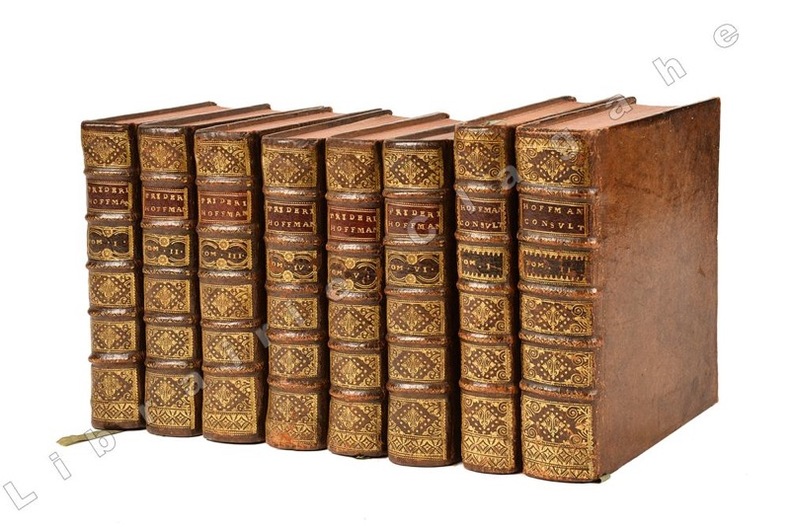
173021397Venetiis apud Ballionem, 1730-1735 ; 4 tomes reliés en 6 volumes in-4° ; portrait gravé de Hoffman par J. Rupert aux tome I, IV (1) et tome I de “Consultationum” ; le tome 4 comprend trois parties soit les tomes IV, V et VI . [Suivi de] - Consultationum et responsorum medicinalium centuria prima complectens Morbos capitis et pectoris. 1 vol., 472 pp. - Consultatiomum et responsorum medicinalium centuria secunda et tertia complectens Morbos addominis et arturum externorum. 1 vol., 864, [54] pp. Francofurti ad Moenum, Franciscum Varremtrapp, 1734-1735; soit en tout 8 volumes in-4°, veau brun marbré, dos à nerfs très décorés et dorés, pièce de titre grenat, roulette dorée sur les coupes, tranches rouges ; les 2 derniers volumes sont légèrement plus grand et le décor du dos très légèrement différent.
155724175Bâle, Apud Episcopium Juniorem, 1557 Petit in-8 maroquin rouge, plats ornés de filets et de pointillé or formant des losanges de fleurs et de fleurs de lys , armes au centre des plats dans une couronne de feuillages, dos à nerfs orné de fleurs de lys. 860-(42) pp. (Reliure postérieure).
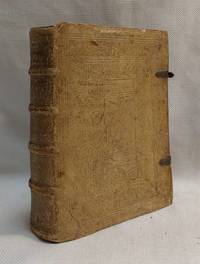
1544321627Wittenberg Germany: Veit Kreutzer 1544. Hardcover. Very Good. Wittenberg: Veit Kreutzer 1544 German edition of Melanchthon's Loci Communes first published in Latin in 1521 as "Loci communes or Loci communes rerum theologicarum seu hypotyposes theologicae" Latin for Common Places in Theology or Fundamental Doctrinal Themes. Very good. Pages of the text are numbered entirely in roman numerals to page CCCLIII. With an unnumbered register index of 23 pages. Beautiful contemporary stamped ivory vellum veneer boards with a set of elegant silver clips. No front endpaper. The copy bears an early bookplate "Ex bibliotheca Gust. Ad. Hauseri theol et philos. stud. Cl nr" inside the front board. Light pencil signatures from the 19th century trace the stewardship of Ole Lokensgaard 1854-1931 Granite Falls Minnesota who came to the US in 1857. The family was associated through his son Gerhard W. Lokensgard with St. Olaf College in Northfield. It has been held by the family through 3 generations. The Loci Communes evolved with the reform movement. This 1544 edition is translated by Justus Jonas into German based on Melanchthon's 1542 revision. Title in English: "The Heubtartike Christian Literature/ drawn together/ By Philippum Melanthon/ called in Latin/ Loci Communes Theologici. Germanized by Justum Jonam/Doctor/ and in the 1542nd year/ By Philip. Melanth. checked again and improved." The Loci Communes evolved with the movement. Philipp Melanchthon 1497 – 1560 was a German reformer a collaborator with Martin Luther and part of the Wittenberg team that established the foundation of the Protestant Reformation. Melanchthon was its first systematic theologian and an intellectual leader of the Lutheran Reformation who with Luther was a primary founder of Lutheranism. Loci Communes was Melanchthon's Magnum Opus. "Melanchthon points out that he wrote the Loci Communes to encourage people to bypass extra-biblical sources and go straight to scripture. He does not believe it makes sense to try to integrate philosophy with the interpretation of the Holy Scriptures. Melanchthon berates the scholastic methodology of dialectic. He discusses the skewing of scripture that those who employ such methodology foisted upon the interpretation of scripture". The colleagues that Luther assembled in Wittenberg’s theological faculty formed the nucleus of his team. This included Justus Jonas 1493 –1555 who served in addition to roles as advisor and legal expert as translator of the works of Luther and Melanchthon from Latin into German or German into Latin. In the 16th century intellectuals across Europe spoke Latin. To spread the Wittenberg message this process of translation and revision was essential to the maturing of the movement. The later editions were published from 1543-1559 with the final edition being published just one year before Melanchthon’s death in 1560. The 1560 edition is four times the size of the original 1521 edition. "The German text of the third generation remains close to the second generation of the Latin Loci; the text is a revision by Melanchthon of the translation of Jonas.He once confessed that he found the final revision of this German translation better than the Latin Loci CR 22 31/32." We believe that this 1544 Jonas translation may be the one to which Melanchthon refers. But that is a matter for further scholarly investigation. The simple beauty of the copy with its silver clasps is exceptional. Veit Kreutzer hardcover
160714063Antverpiae, ex Officina Plantiniana, 1607. Petit in-8 de [16]-213-[3] pages, plein veau glacé châtaigne, dos à 5 nerfs orné de fleurons et titre dorés, filet doré sur les coupes, roulette intérieure, tranches dorées. De la bibliothèque Maurice Meaudre de Lapouyade, avocat à la cour d'appel de Bordeaux, avec son ex-libris portant la devise Sig. Maurit. de Meldris. Reliure signée Trautz-Bauzonnet.
1924R118512Ad Claras Aquas (Quaracchi), Ex typographia collegii S. Bonaventurae 1924-1948 Complete work [tomus I-IV, bound in 5 physical volumes]: xlv,769 + lxiv,801 + lviii,858 + ccclxx + ix,1170pp., title in red and black, 33cm., text printed in 2 columns, small stamp on title page, nice solid modern and uniform bindings, spines in brown cloth with gilt lettering, text in Latin, interior is clean and bright, [full title of the work: Doctoris irrefragabilis Alexandri de Hales ordinis minorum Summa Theologica seu sic ab origine dicta "Summa fratris Alexandri", Tomus I: liber primus. Tomus II: prima pars secundi libri. Tomus III: secunda pars secundi libri. Tomus IV: liber tertius (prolegomena). Tomus IV: liber tertius (textus)], weight: 15kg., R118512
158311101Lyon, s.n. (François Conrard), 1583 ; in-8 ; demi-vélin à petits coins, étiquette orange titre manuscrit (reliure probablement de la mi-XIXe) ; (32), 362, (10) pp., *-2*-8 A-Z8 [croix]2 ; marque 2 au titre.
175811269Augbourg Johann Georg Hertel 1758 -in-4- PLEIN VEAU un volume (album), reliure d'époque plein veau havane raciné (binding full calfskin) in-quarto, dos à nerfs (spine with raised bands), frotté (rubbed), décoré or (gilt decoration) filets or (gilt line) et filets à froid (blind-stamping line decoration) - entre-nerfs - compartiments à fleuron au fer plein (floweret with full blocking stamp) - titre frappé or (gilt title)- pièce de titre sur fond bordeaux + pièce de titre sur fond noir (label of title) avec filet or (label of title with gilt line), coiffe supérieure manquante (head of the spine lightly faded),manque de cuir sur 1/2 centimètre carré en haut du dos + légers manques de cuir aux mors, plats décorés or (gilt decoration), d'un double encadrement au motifs Rococos (coquille saint Jacques + fleurons + glands aux angles avec les lettres P L V P au centre de l'encadrement central), charnière fendue (cracked joints), coins écornés (corners dog-eared) - toutes tranches dorées (all edges gilt) - , marque-page en tissu (bookmark in tissue), orné de 96 gravures sur 100 illustrations (manquent les N° 20-62-63-92) d'Emblèmes baroques et roccocos (Baroque and Rococo Imagery) par EICHLER Gottfried , légère rousseur sur la gravure N° 100, divisé en 5 parties sans pagination, sans date (1758) Augbourg Johann Georg Hertel Editeur,
1703106501703 3 volumes, reliure plein veau havane (binding full calfskin) in-quarto, dos à nerfs (spine with raised bands) décoré or (gilt decoration), entre-nerfs - compartiments or à fleuron fleurette (floweret) - fers spéciaux (specials blocking stamps) - titre frappé or (gilt title) - tomaison (volume numbering) - pièce de titre à filets sur fond bordeaux foncé (label of title with gilt line), léger manque aux coiffes supérieures du tome 1 et 3, ainsi qu'à la coiffe inférieure du tome 1 (head and tail of the spine lightly faded), mors fendus sur le 1er volume, plats et couverture frottés (covers rubbed) reteintés grossièrement en plus foncé (teinte grossière XVIIIème) sur le 1er volume, charnière fendue (cracked joints) et coins écornés (corners dog-eared) pour le 1er volume, gouttière rognée (fore-edge smooth), tranches lisses (edges smoothes) - tranches jaspées (marbled edges) rouges (reds edges), illustrations : le tome 1 est orné (illuminated of) d'une gravure sur Bois (engraving-wood) en bas de la page de titre (engraved title page)+ 1 front-de-chapitre bandeaux (headpiece) et 1 lettrine (dropped initial) gravés en taille-douce (line-engraving) sur bois (wood-cut engraving), les tomes 2 et 3 sont constitués uniquement de 476 feuillets de planches (full page engraving) + 1 frontispice (frontispiece) gravé sur Bois (engraving-wood) sur la page de titre (engraved title page), légères mouillures (lights waterstains) anciennes sur tout le bas des pages du 1er volume (volume de texte), les volumes de planches sont eux en parfait état, pages : tome 1 - (18) + 697 (+ 54 pages + index du volume "Tabulae generum recens..." relié avec en fin de volume) - tome 2 : 250 feuillets de planches tout en illustrations - tome 3 : planches de 251 à 476 tout en illustration, avec Approbation & Privilège du Roi Roy, 1700 Parisiis Typographia Regia (Paris Imprimerie Royale) Joanne Anisson Editeur + 1703 Parisiis Typographia Regia (Paris Imprimerie Royale) Joanne Anisson Editeur ( pour "Tabulae generum recens..." relié avec en fin de volume 1),
Complete series in 28 volumes, text printed in 2 columns, together ca. 20.000 pages, most texts in Latin and few in French, 28cm., uniform 19th century hardcover bindings in good condition (marbled boards, leather spines with gilt lettering), marbled endpapers, text clean and bright with only some occasional foxing, libr. stamp on recto and verso of title page, rare complete set in good condition, weight: over 40kg., [Content: VOLUME 1: Introductionis pars prima, 2: Introductionis pars secunda et partis tertiae initium, 3: De divinitatis et canonicitate SS. Bibliorum, Scripturae historia naturalis seu Bibliae Zoologiae, Botanicae, Geologiaeque, Expositio descriptiva, Dictionnaire archéologique et philologique de la Bible, Dictionnaire géographique de la Bible, etc., 4: Introductionis pars quarta, de auctoritate librorum veteris et novi testamenti, resolutio difficultatum, quibus impugnantur libri sacri, 5: In Pentateuchum introductio, in Genesim et in Exodum commentaria, variae dissertationes, 6: In Exodum, in Leviticum et in Numeros commentaria, variae dissertationes, 7: In Numeros, in Deuteronomium, in Josuam, 8: De Josua, de judicibus, de Ruth, variae dissertationes, 9: In primum et secundum Samuelis, sive regum, libros commentarium, variae annotationes, 10: In secundum et tertium Regum libros commentarium, plurimae annotationes, 11: In quartum regum et in duos paralipomenon libros commentarium, plurimae annotationes et dissertationes, 12: De Esdra et Nehemia, de Tobia, de Judith, Variae dissertationes et annotationes, 13: In Esther, in Job, plurimae annotationes, 14: In Job et in Psalmos commentaria, variae annotationes et dissertationes, 15: In Psalmos commentarium, 16: In Psdamos et in Proverbia commentarium, variae annotationes, 17: in Ecclesiasten, in Canticum canticorum, in Sapientiam et in Ecclesiasticum commentarium, Concorde des Livres sapientiaux, Variae dissertationes et annotationes, 18: Dissertations sur les prophéties, L’incrédulité convaincue par les Prophéties, De l’usage et des fins de la prophétie, in Isaiam commentarium, 19: in Jeremiam, in Baruch et in Ezechielem commentaria, 20: In Danielem, duodecim minores prophetas, et duos Machabaeorum libros commentaria, 21: Historia et concordia evangelica, Verba a Christo prolata, Praefationes in quatuor evangelia, in S. Matthaeum commentaria, 22: In S. Marcum et in S. Lucam commentaria, 23: in S. Joanneml commentaria, In historiam et concordiam evangelicam dilucidatae quaestiones, Dissertatio de miraculis, In actus apostolorum commentaria, Quaestiones dilucidatae in actus apostolorum, 24: In epistolas D. Pauli ad Romanos, I et II ad Corinthos, ad Galatas, ad Ehpesios, ad Philippenses, ad Colossenses, I et II ad Thessalonicenses, Commentaria, 25: In epistolas D. Pauli I et II ad Timotheum, ad Titum, etc., in Apocalypsim Commentaria, 26: Delucidationes in libros Genesis, Exodi, Levitici, Numerorum, Deuteronomii, Josue, Judicum, Ruth, Regum, Paralipomenon, Esdrae, Judith, Esther et Machabaeorum, 27: Règles pour l’intélligence des Saintes Ecritures, Scriptura sacra in formam meditationum redacta, Poésie et musique des Hébreux, Titre primitifs de la révélation, Histoire évangélique confirmée par la Judaique et la Romaine, Nomenclature des ouvrages édités dans le cours d’écriture-sainte, liste alphabétique des auteurs et titres des ouvrages contenues dans le même cours, table statistique concernant les 238 auteurs dont les écrits composent les deux cours d’Ecriture sainte et de théologie, etc.], R98156
165919365Amstelodami Janssonius 1659 -in-4 plein-veau 2 titres reliés en un volume, reliure de l'époque plein veau brun raciné (binding full calfskin) in-quarto, dos à nerfs (spine with raised bands) décoré or (gilt decoration) filets or (gilt line) et filets à froid (blind-stamping line decoration), titre frappé or (gilt title), pièce de titre sur fond bordeaux avec roulette "dentelles" or, coiffes manquantes, important manque de cuir en pied (4 cm2 à restaurer), manque de dorure au dos (blurred gilding), mors supérieur fendu, plats ornés d'un filet or en encadrement avec manques de dorure (blurred gilding), toutes tranches jaspées (all marbled edges) rouges (red edges), texte en latin, orné d'un titre frontispice (frontispiece portrait) gravé sur Bois (engraving-wood) en noir + Vol. 1 : orné d'un avant-Titre frontispice gravé sur bois (engraving-wood) en noir et 24 planches hors-texte gavées sur bois (engraving-wood) en noir incluses dans la pagination ; Vol. 2 : orné de 4 planches hors-texte avec légendes en regard, Vol. 1: [24], 274, [12] pages; Vol. 2: 228, [19, 1 bl.] pages, Vol. 1: 1663 + Vol. 2: 1659 Amstelodami apud Joannem Jansonnium Editeur,
154049324Paris: F. Gryphius 1540. Two parts in one volume 16mo in 8s. 199 1 blank; 136 16 indexff. "Novvm testamentum" in cartouche vignette at title-page along with Gryphius' griffin device Renouard 413; 90 three-quarter page including repeats and 15 smaller woodcut illustrations including repeats; 21 historiated initials and woodcut lettrines; cartouche vignettes with book titles; printed marginalia; half-title for the second part Epistles and the Book of Revelation. Text not divided into verses; occasional quotations in Greek. Later vellum over boards; manuscript title at the spine faded; speckled paper endleaves; edges stained red. Light dampstain at bottom margins extending up into text and gutter at the later leaves; small puncture at leaf 140 resulting in slight loss of text. A good complete copy of a very scarce illustrated New Testament with clean woodcut illustrations throughout.<br /> <br /> Collation: a-z8 &8 Aa8 A-T7 blank leaf 200; lacks final blank T8.<br /> <br /> Third Gryphius New Testament in 16mo format. Arranged in two parts with the Epistles and the Book of Revelation presented separately it reproduces the Vulgate text edited by Robert I Estienne for his Latin Bible edition of 1532. While some of the woodcuts appear in Gryphius' complete octavo Bible of 1541 this separate Testament is even more lavishly illustrated. Based upon Mortimer's description of the 1541 Bible we can ascertain that at least some of the Apocalypse woodcuts in the present volume are based on Holbein while most of the other illustrations whose blocks had been completed by 1539 "are relatively independent of earlier sets" Mortimer.<br /> <br /> An important shift in Bible illustration occured in the Netherlands in the late 1520s as printers began to focus on copiously illustrated small format editions of the New Testament to better explain the text and assist private devotion. The subtitle in our volume "cum ad ueritatem historiae tum ad uenustatem singulari artificio expressis" with the truth of history as well as beauty expressed by a singular artifice is clearly suggestive of this shift. Adopting this new format François Gryphius became the "first Paris printer to illustrate a Bible in the Renaissance style" Johnson quoted in Mortimer. These illustrations first appeared in the Acts of the Apostles and the Book of Revelation in Gryphius' pocket New Testament edition of 1537 Novum Testamentum additis picturis in Acta Apost. et Apocalipsin quibus miracula et visiones exprimuntur The New Testament with added illustrations in the Acts of the Apostles and the Book of Revelation depicting miracles and visions. Subsequent editions would include an expanding suite of woodcuts and were published at Paris by Gryphius under the present title in 1539 1540 1541 and 1542; Antwerp editions appeared in 1542 and 1545. The suite of illustrations in the present work is identical in placement and inventory with the data cited by Mortimer for the 1541 edition 90 cuts by repetition of 58 blocks from the larger set and 15 cuts by repetition of 6 small blocks and confirmed by inspection of the digitized version of the 1541 edition at the Bibliothèque de la Ville de Lyon. The only notable differences in graphic materials between the two editions appears occasionally in the selection of woodcut initials; the later edition also has several more unset initials indicated by guide letters than appear in our 1540 edition. <br /> <br /> All editions are quite scarce with only a handful of copies of each surviving.<br /> <br /> Provenance and annotations: Old entries at paste-down and front endleaf of George Woodhouse with his note about prior provenance dated May 1875; E. Holwell noting "This curious edition published in A.D. 1540" References: Cf. Deleveau & Hillard Bibles imprimées Paris 1539 and 1542; Antwerp 1542; Le Long/Masch 2.3 1783 p.279 Paris ed. 1542; R. Mortimer French 16th Century Books no.70 ed. 1541 illustrating woodcuts on a3 recto and P3 recto as per our copy and no. 69 8vo Bible 1541. For a discussion of the development of the woodcut series in these Gryphius pocket bibles see: A.F. Johnson "Some French Bible illustrations" Gutenberg Jahrbuch 1935 p.190.<br /> <br /> Full title and imprint: Novvm testamentum illvstratum insignium simulacris cum ad ueritatem historiae tum ad uenustatem singulari artificio expressis. Excudebat Fran. Gryphius An. M.D.XL. Cum priuelegio Regio.<br /> <br /> Typeface: Gryphius's own Brevier Roman or Petite-Text with scattered Greek. U. Aberdeen note via OCLC. F. Gryphius unknown
1922List2026N.P. 1922. Oblong 8vo wraps 9 x 6 inches. Rear wrap detached tears and chips to front wrap fine contents very good overall. Very Good. An uncommon first edition copy of Manuel Gomez Miralles’ photographic survey of Costa Rica. Miralles was one of Costa Rica’s most prolific photographers operating for many decades and this book is an early collection of his work. Miralles work is compositionally advanced and his large format images are reproduced effectively in the volume. This book was the only survey of Miralles’ work to appear in his lifetime and after his death his negatives were sold to a foreign photographer. We find no records of this book in the trade or auction records at the time of this listing. unknown
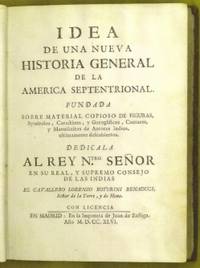
1746A0068xxxvi167viii96 pages. Octavo 8 1/4" x 6 1/4" bound in full leather with decorative gilt and lettering to spine. From the library of George M Foster. First edition.<br /><br />Lorenzo Boturini Benaducci born in Italy of noble parentage studied in Milan and lived in Trieste and Vienna. He was a knight of the Holy Roman Empire. Forced to flee Austria because of the war with Spain Boturini arrived in Spain via England and Portugal. In Madrid he met the Condesa de Santibáñez oldest daughter of the Condesa de Moctezuma. The mother authorized him to collect a pension due her as a descendant of the Aztec Emperor Moctezuma II from the royal treasury in New Spain. Boturini went to New Spain in 1736 where he remained eight years. During those years he assembled a vast collection of paintings maps manuscripts and native codices. He copied more than 500 pre-Columbian inscriptions and made his own drawings of monuments and sculptures and he investigated the history of the apparition of the Virgin of Guadalupe on the hill of Tepeyac. He traveled widely and on his travels brought together the largest collection of Mexican antiquities assembled to that time by a European. Not only did he intend to write the history of the Virgin of Guadalupe but he also had plans to crown her image with a gold crown. For that purpose he sought donations from the bishops and from the public. This brought him to the attention of the colonial government which was suspicious of the motives of a foreigner making this proposal. On June 2 1743 after an investigation the recently arrived viceroy Pedro Cebrián y Agustín had him imprisoned and impounded his collection. He was accused of entering New Spain without license from the Council of the Indies and of introducing papal documents without a royal permit. After eight months in prison Boturini was sent to Spain. He fell into the hands of pirates who eventually released him at Gibraltar. From there he traveled to Madrid in miserable conditions. In Madrid he met Mariano Fernández de Echeverría y Veytia another passionate collector of Indian antiquities. Fernández de Echeverría y Veytia offered Boturini a place to live and financial support and got the Council of the Indies to reconsider his case. Boturini was absolved. The king named him royal chronicler of the Indies ordered that his collection be returned to him and extended an invitation for him to return to New Spain. Boturini however declined to return to New Spain and his collection was never restored. It appears that he was granted recompense and a stipend to work on his projected history of the colony. In Madrid he wrote a history of ancient Mexico unpublished at the time of his death in 1753. The library at the Basílica de Nuestra Señora de Guadalupe is named for him. The Boturini Collection was formed between 1735 and 1743 to serve as the basis of a projected Historia de América Septentrional. It consisted of many valuable documents the majority of them of Indian provenance. Among these were hieroglyphic paintings that had belonged to Juan de Alva Ixtlilxochitl a descendant of the rulers of Texcoco. Ixtlilxotchitl bequeathed these documents to Carlos de Sigüenza y Góngora. The collection was confiscated by Viceroy Pedro Cebrián y Agustín at the time of Boturini's arrest in 1743. It was deposited in the office of the secretary of the viceroyalty. The documents were neglected there for years and suffered considerable pilferage. The subsequent viceroy Juan Francisco de Güemes 1st Count of Revillagigedo granted the historian and antiquary Fernández de Echeverría y Veytia Boturini's friend from Madrid the paintings and documents he solicited for his own studies. On Fernández de Echeverría y Veytia's death they passed to Antonio de León y Gama. He died in 1802 and the collection passed to his heirs. Shortly thereafter 16 paintings were obtained by Alexander von Humboldt during his visit to Mexico in 1802-03. He published them in Vues des cordillères et monuments des peuples indigènes d'Amérique. The originals of these are now in the Berlin State Library. Part of the remainder of the collection may have passed to Father José Pichardo an amateur antiquarian. Joseph Alexis Aubin beginning in 1827 or shortly thereafter obtained important parts of the collection from a variety of sources. He sold his collection to Eugène Goupil who was of French and Mexican descent. This part of the collection passed by donation or purchase to the National Library in Paris where it remains under the name Aubin-Goupil Collection.<br /><br />George McClelland Foster Jr born in Sioux Falls South Dakota on October 9 1913 died on May 18 2006 at his home in the hills above the campus of the University of California Berkeley where he served as a professor from 1953 to his retirement in 1979 when he became professor emeritus. His contributions to anthropological theory and practice still challenge us; in more than 300 publications his writings encompass a wide diversity of topics including acculturation long-term fieldwork peasant economies pottery making public health social structure symbolic systems technological change theories of illness and wellness humoral medicine in Latin America and worldview. The quantity quality and long-term value of his scholarly work led to his election to the National Academy of Sciences in 1976. Virtually all of his major publications have been reprinted and/or translated. Provenance from the executor of Foster's library laid in.<br /><br />Condition:<br /><br />Lacks frontispiece portrait. Lacks Foster's stamp or date of purchase. some damp stains to end papers neat old marginalia in Spanish to back end paper worm hole ant head and heal of spine going through spine extremities bumped and rubbed old owner's label to front paste down 1" chip at back head hinge and name to front end paper scuffed else a good copy of a rare item. En la Imprenta de Juan de Zuniga hardcover
1746A0068xxxvi167viii96 pages. Octavo 8 1/4" x 6 1/4" bound in full leather with decorative gilt and lettering to spine. From the library of George M Foster. First edition.<br /><br />Lorenzo Boturini Benaducci born in Italy of noble parentage studied in Milan and lived in Trieste and Vienna. He was a knight of the Holy Roman Empire. Forced to flee Austria because of the war with Spain Boturini arrived in Spain via England and Portugal. In Madrid he met the Condesa de Santibáñez oldest daughter of the Condesa de Moctezuma. The mother authorized him to collect a pension due her as a descendant of the Aztec Emperor Moctezuma II from the royal treasury in New Spain. Boturini went to New Spain in 1736 where he remained eight years. During those years he assembled a vast collection of paintings maps manuscripts and native codices. He copied more than 500 pre-Columbian inscriptions and made his own drawings of monuments and sculptures and he investigated the history of the apparition of the Virgin of Guadalupe on the hill of Tepeyac. He traveled widely and on his travels brought together the largest collection of Mexican antiquities assembled to that time by a European. Not only did he intend to write the history of the Virgin of Guadalupe but he also had plans to crown her image with a gold crown. For that purpose he sought donations from the bishops and from the public. This brought him to the attention of the colonial government which was suspicious of the motives of a foreigner making this proposal. On June 2 1743 after an investigation the recently arrived viceroy Pedro Cebrián y AgustÃn had him imprisoned and impounded his collection. He was accused of entering New Spain without license from the Council of the Indies and of introducing papal documents without a royal permit. After eight months in prison Boturini was sent to Spain. He fell into the hands of pirates who eventually released him at Gibraltar. From there he traveled to Madrid in miserable conditions. In Madrid he met Mariano Fernández de EcheverrÃa y Veytia another passionate collector of Indian antiquities. Fernández de EcheverrÃa y Veytia offered Boturini a place to live and financial support and got the Council of the Indies to reconsider his case. Boturini was absolved. The king named him royal chronicler of the Indies ordered that his collection be returned to him and extended an invitation for him to return to New Spain. Boturini however declined to return to New Spain and his collection was never restored. It appears that he was granted recompense and a stipend to work on his projected history of the colony. In Madrid he wrote a history of ancient Mexico unpublished at the time of his death in 1753. The library at the BasÃlica de Nuestra Señora de Guadalupe is named for him. The Boturini Collection was formed between 1735 and 1743 to serve as the basis of a projected Historia de América Septentrional. It consisted of many valuable documents the majority of them of Indian provenance. Among these were hieroglyphic paintings that had belonged to Juan de Alva Ixtlilxochitl a descendant of the rulers of Texcoco. Ixtlilxotchitl bequeathed these documents to Carlos de Sigüenza y Góngora. The collection was confiscated by Viceroy Pedro Cebrián y AgustÃn at the time of Boturini's arrest in 1743. It was deposited in the office of the secretary of the viceroyalty. The documents were neglected there for years and suffered considerable pilferage. The subsequent viceroy Juan Francisco de Güemes 1st Count of Revillagigedo granted the historian and antiquary Fernández de EcheverrÃa y Veytia Boturini's friend from Madrid the paintings and documents he solicited for his own studies. On Fernández de EcheverrÃa y Veytia's death they passed to Antonio de León y Gama. He died in 1802 and the collection passed to his heirs. Shortly thereafter 16 paintings were obtained by Alexander von Humboldt during his visit to Mexico in 1802-03. He published them in Vues des cordillères et monuments des peuples indigènes d'Amérique. The originals of these are now in the Berlin State Library. Part of the remainder of the collection may have passed to Father José Pichardo an amateur antiquarian. Joseph Alexis Aubin beginning in 1827 or shortly thereafter obtained important parts of the collection from a variety of sources. He sold his collection to Eugène Goupil who was of French and Mexican descent. This part of the collection passed by donation or purchase to the National Library in Paris where it remains under the name Aubin-Goupil Collection.<br /><br />George McClelland Foster Jr born in Sioux Falls South Dakota on October 9 1913 died on May 18 2006 at his home in the hills above the campus of the University of California Berkeley where he served as a professor from 1953 to his retirement in 1979 when he became professor emeritus. His contributions to anthropological theory and practice still challenge us; in more than 300 publications his writings encompass a wide diversity of topics including acculturation long-term fieldwork peasant economies pottery making public health social structure symbolic systems technological change theories of illness and wellness humoral medicine in Latin America and worldview. The quantity quality and long-term value of his scholarly work led to his election to the National Academy of Sciences in 1976. Virtually all of his major publications have been reprinted and/or translated. Provenance from the executor of Foster's library laid in.<br /><br />Condition:<br /><br />Lacks frontispiece portrait. Lacks Foster's stamp or date of purchase. some damp stains to end papers neat old marginalia in Spanish to back end paper worm hole ant head and heal of spine going through spine extremities bumped and rubbed old owner's label to front paste down 1" chip at back head hinge and name to front end paper scuffed else a good copy of a rare item. En la Imprenta de Juan de Zuniga hardcover books
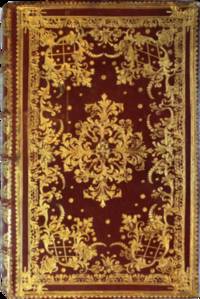
17564062Rome: Gioacchino & Giovanni Giuseppe Salvioni Stampatori Pontificii Vaticani 1756. 8vo 210 x 135 mm. 24 407 1 pp. 2 parts the Office of the Dead separately titled. Printed in red and black. Engraved frontispiece and 12 full-page engravings by Arnold Van Weserhout and Jacob Frey after Joseph Passarus Giuseppe Passaro two engraved title vignettes and 12 tailpiece vignettes a few unsigned others by Frey after Passaro or by M. Schedi engraver 3 engraved initials numerous red-printed woodcut initials. Occasional light browning. 18th-century Roman gold-tooled red goatskin covers with densely tooled dentelle border built up from leafy plant tools sprigs floral and arabesque tools each cornerpiece enclosing a grid with gold dots blossom tools and dots in central field ornamental centerpiece of large foliate arabesque and dandelion tools spine in six uniformly gold-tooled compartments block-printed pastedown endpapers with flower and fruit design stencil-colored in red green and yellow gilt edges with gauffred border design; upper cover a bit faded and bowed corner bumped a couple of scrapes to lower cover. Provenance: Horace de Landau 1824-1904 bookplate shelfmark no 47854; Vicomte de Cossette armorial bookplate. A rococo binding on a luxuriously printed and illustrated Office of the Virgin from the Salvioni press official printers to the Vatican. The Salvioni press used several workshops sometimes collectively mislabeled as the "Vatican" or "Salvioni" bindery. Those bound for the papal library were finely executed and different binderies can be identified by their tools color of leather and stylistic details. The present pretty but crowded binding decor with its in places overlapping tooling does not seem to belong to the corpus of binderies represented in for example the Vatican Library's 1977 exhibit catalogue of papal bindings. Stylistically it uses types of tools and decoration - the wide "Louis XV" style border and the basketweave cornerpieces - in vogue during the reigns of Clement XIV 1769-1774 and Pius VI 1775-1799. Its decoration is similar for example to binding no. 262 in Legature papali but it is of inferior workmanship and does not use the same tools. It was probably produced in a Roman shop executing many commissions and forced to work quickly although it could even be a provincial binding. Cf. Biblioteca Apostolica Vaticana Legature papali da Eugenio IV a Paolo VI no. 262 plate CXCI. Gioacchino & Giovanni Giuseppe Salvioni, Stampatori Pontificii Vaticani hardcover
17564062Rome: Gioacchino & Giovanni Giuseppe Salvioni Stampatori Pontificii Vaticani 1756. 8vo 210 x 135 mm. 24 407 1 pp. 2 parts the Office of the Dead separately titled. Printed in red and black. Engraved frontispiece and 12 full-page engravings by Arnold Van Weserhout and Jacob Frey after Joseph Passarus Giuseppe Passaro two engraved title vignettes and 12 tailpiece vignettes a few unsigned others by Frey after Passaro or by M. Schedi engraver 3 engraved initials numerous red-printed woodcut initials. Occasional light browning. 18th-century Roman gold-tooled red goatskin covers with densely tooled dentelle border built up from leafy plant tools sprigs floral and arabesque tools each cornerpiece enclosing a grid with gold dots blossom tools and dots in central field ornamental centerpiece of large foliate arabesque and dandelion tools spine in six uniformly gold-tooled compartments block-printed pastedown endpapers with flower and fruit design stencil-colored in red green and yellow gilt edges with gauffred border design; upper cover a bit faded and bowed corner bumped a couple of scrapes to lower cover. Provenance: Horace de Landau 1824-1904 bookplate shelfmark no 47854; Vicomte de Cossette armorial bookplate. A rococo binding on a luxuriously printed and illustrated Office of the Virgin from the Salvioni press official printers to the Vatican. The Salvioni press used several workshops sometimes collectively mislabeled as the "Vatican" or "Salvioni" bindery. Those bound for the papal library were finely executed and different binderies can be identified by their tools color of leather and stylistic details. The present pretty but crowded binding decor with its in places overlapping tooling does not seem to belong to the corpus of binderies represented in for example the Vatican Library's 1977 exhibit catalogue of papal bindings. Stylistically it uses types of tools and decoration - the wide "Louis XV" style border and the basketweave cornerpieces - in vogue during the reigns of Clement XIV 1769-1774 and Pius VI 1775-1799. Its decoration is similar for example to binding no. 262 in Legature papali but it is of inferior workmanship and does not use the same tools. It was probably produced in a Roman shop executing many commissions and forced to work quickly although it could even be a provincial binding. Cf. Biblioteca Apostolica Vaticana Legature papali da Eugenio IV a Paolo VI no. 262 plate CXCI. Gioacchino & Giovanni Giuseppe Salvioni, Stampatori Pontificii Vaticani hardcover books
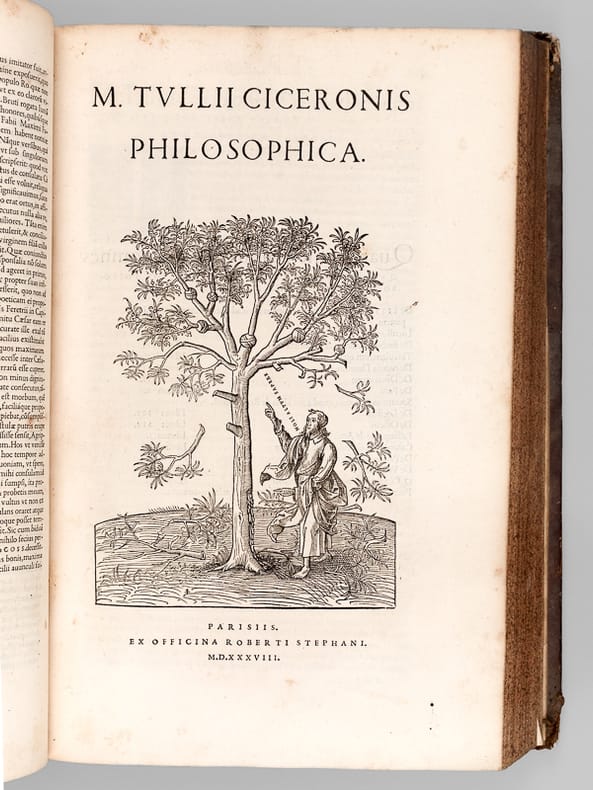
1538645612 vol. in-folio reliure de l'époque plein veau brun, dos à 5 nerfs orné, Ex Officina Roberti Stephani [ Robert Estienne ], Paris, 1538 - 1539, 8 ff., 288-640 pp. et 3 ff.n. ch. ; 416-450 pp., 1 f., 158 pp., 50 ff. n. ch. Rappel du titre complet : M.T. Ciceronis Opera. Ex Petri Victorii codicibus maxima ex parte descripta, viri docti et in recensendis authoris huius scriptis cauti & perdiligentis : quem nos industria, quanta potuimus, consequenti, quasdam orationes redintegratas, tres libros De legibus multo quàm antea meliores, & reliquias de commentariis qui De Republica inscripti erant, magno labore collectas vndique, descriptásque libris, vobis exhibemus. Eiusdem Victorii explicationes suarum in Ciceronem castigationum. Index rerum et verborum.