(Binding, Italian)Biblio.com
1 592 résultats
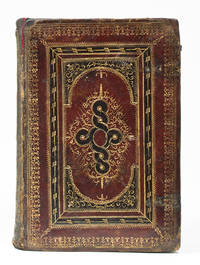
1618254275Venetiis Venice: Juntas 1618. Title with engraved border 11 full-page engravings black chant notation on red four-line staves lxiii i 557 3; 24; 14 pp. text in double columns printed in red and black. 8vo. Bound in contemporary maroon morocco richly gilt black morocco inlaid panel border surrounding central inlaid entrelac design rebacked preserving original spine lacking clasps and catches a.e.g. joints rubbed front joint starting some light foxing throughout contemporary and early ownership notes to endpapers. Title with engraved border 11 full-page engravings black chant notation on red four-line staves lxiii i 557 3; 24; 14 pp. text in double columns printed in red and black. 8vo. Juntas unknown
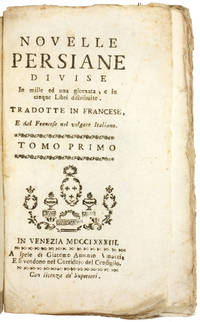
1783ABC_49354Venice = Naples: Giacomo Antonio Vinaccia 1783. Contemporary grey paper wrappers with manuscript volume numbers on the spines. Stored in a brown decorated paper slipcase. 12mo. With vignettes built up from typographical ornaments on each title page and some ornamental headpieces. 5 volumes. Very rare highly remarklable pirated edition in five volumes of the Heyaryek-Rouz or Thousand and One Days so called to give the work an air of originality Chauvin IV 124. A Persian manuscript of this work was given to Francois Petit de la Croix in Isfahan in 1675 but enjoyed far fewer editions and translations than the Alf layla wa-layla. As Chauvin notes it cannot be determined whether the Thousand and One Days or the Thousand and One Nights was composed first nevertheless to this day the Heyarek-Rouz is much less well-known to the Western world IV 123f. Chauvin quotes one commentator who declares the Heyarek-Rouz much more ingenious and more realistic as it sometimes includes marvels following the taste of the Oriental.The place of printing given on the title page of the present edition is Venice but the costs were borne by the well-known Neapolitan publisher Giacomo Antonio Vinaccia and the books were also sold in Naples in the Corridoio del Consiglio. It is known that Vinaccia drew on the great publishing pool of Venice for many of his publications creating actual counterfeits and it is thought that even Venetian publishers themselves relied on his presses to encourage the distribution of their works in the south as well without having to pay duties or apply for printing licences cf. A. Scannapieco. In 1784 the following year an identical edition appeared giving Naples as the place of printing.The wrappers are worn mainly around the spines the edges of the leaves are somewhat frayed. Otherwise in good condition.l OPAC SBN ITICCUNAPE028513 4 copies incl. 3 incomplete; WorldCat 955557595 1 copy also in OPAC SBN; cf. A. Scannapieco Un editore goldoniano nella Napoli del secondo Settecento in Problemi di critica goldoniana IV 1997 pp. 7-152; This edition not in Chauvin. Giacomo Antonio Vinaccia, unknown
1774ST12037<p>Vicenza: per Gio. Battista Vendramini Mosca 1774. FIRST EDITION. 305 x 216 mm. 12 x 8 1/2". lxxvi pp.</p><p>Original paste paper boards covered in red and green block-printed patterned paper. In a modern red cloth folding box. Frontispiece engraving of the arms of bride and groom engraved allegorical vignettes on title page and at end woodcut head- and tailpieces and foliated initials all done with considerable charm. Spine and head edge just slightly faded a couple of very small snags in backstrip one page with mild thumbing but A SUPERB COPY EXCEPTIONALLY CLEAN FRESH AND BRIGHT both the text and original printed paper wrappers in an almost unbelievable state of preservation.<br /><br />This is a remarkably well-preserved Italian "wedding book" a souvenir produced for friends and guests of a noble bride and groom. It contains a collection of romantic poems by 28 different authors along with engravings of the newlyweds' arms. This kind of book was popular in Italy particularly in the north during the second half of the 18th and early part of the 19th centuries. Such occasional works were produced by printers in the major cities like Venice Vicenza Padua Trento and Milan for assorted noble patrons. Copies of these fête books are to be found today in Italian and Swiss libraries but only two copies of any such volumes are held in North America one by the New York Public Library and one by the Getty. KVK locates four copies of our work one of them damaged in three Italian libraries. The groom here Count Lodovico Tiene or Thiene was a scion of one of Vicenza's most important families. His ancestor also named Lodovico built the Palazzo Thiene that was memorably remodelled by Vicenza's most famous son Andrea Palladio. Our volume was obviously a treasured keepsake that was carefully stored away from light and dust and it looks amazingly like it must have on the day of the happy nuptials.</p> per Gio. Battista Vendramini Mosca
1688254004Napoli Naples: Carlo Porpora 1688. Second edition. Engraved title. xx 229 3 pp. 4to. Mid-eighteenth century Italian polychrome enameled binding of full brown calf covers with two gilt-rolled panells central strap and scroll device built up from gouges surrounded by pointellé flowers with remnants of blue and red enamel edges gilt guaffered and painted with floral and hare design front free endpaper removed bookplate. Second edition. Engraved title. xx 229 3 pp. 4to. A history of ancient sport and games in Italy first printed in 1641. This copy in an elaborate eighteenth-century Neopolitan enameled binding with all edges gilt gauffered and painted. Graesse IV p. 113 Carlo Porpora unknown
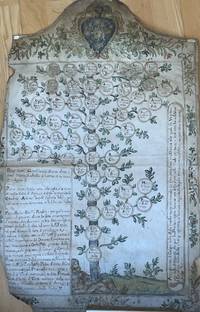
17002280Written and illuminated in Italy 1700. . On large vellum upper edge arched. Written in brown and illuminated in green blue and red ink. The family tree emerges from the lap of a forefather figure ruled with floral frames on each side and crowed with a coat of arms in floral decoration notes in two text boxes. Traces of old restoration. The left edge and lower corner are partly missing and burnt. Traces of old folding. With a few wormholes. Overall in good condition. A large and decorative Italian genealogical tree of the Stella Della-Scorzosi family.<br /> An early 18th-century Italian genealogical tree of the Stella Della-Scorzosi family the descendants of the Sienese Pietro Scotti who became privileged and donated with Monticchiello Monte Suchiello in 1397. Other sources describe that Monticchiello during a conflict with Florence and Montepulciano was sold to Florence for 2000 florin and remained under their control until 1401 when due to a peace treaty it returned into the possession of Siena Repetti 1839. Members of the family originated from or spread to Murello Florence and Arezzo.<br /> Literature: Repetti E.: Dizionario geografico fisico storico della Toscana. 3 M-O. Firenze: Presso l'autore e editorei 1839. p. 564. unknown
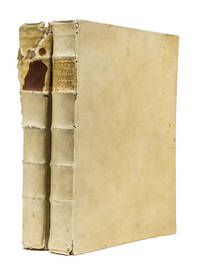
1753214550Venezia: Giambatista Pasquali 1753. Title page of volume I printed in red and black woodcut title vignettes initials tailpieces. 2 vols. 4to. Contemporary vellum morocco spine labels worn. Apart from repair to head of spine of vol. II a lovely set from the library of the Borghese-Fantuzzi family armorial bookplate. Title page of volume I printed in red and black woodcut title vignettes initials tailpieces. 2 vols. 4to. The definitive edition of this celebrated catalogue of works written in Italian -- a virtual PMM of Italian printing. It first appeared in 1706 as a bibliopraphical appendix to the Fontanini's work Della eloquenza italiana with 1500 entries. Subsequent editions appeared in 1727 1736 and 1737 before this last and most important edition -- which is entirely the bibliographical part of the work -- containing 5000 entries of Italian works in poetry prose arts sciences etc. with the invaluable commentary by Zeno and an index. Besterman 3213; Graesse II 612 Giambatista Pasquali unknown
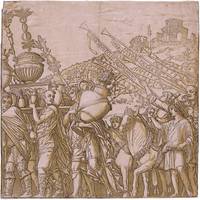
15997751599. Chiaroscuro woodcut in colors printed from four blocks on laid paper in dark brown grey and three shades of ochre 14 1/2 x 14 1/2 inches 370 x 370 mm the full sheet. A very good impression with gaufrage clearly visible on the verso trimmed to the platemark. A central vertical fold is mainly visible on the verso an additional diagonal fold is also visible on the verso. There are several scattered expert repairs to areas of skinning in the lower right quadrant of the sheet on the verso as well as one pea-sized area of expert repair in the center-left sheet on the verso. Repairs are not visible on the recto unless the sheet is viewed through raking light. Laid down to an archival paper matrix.<br /> <br /> Bartsch XII.101.11. Andreani published this suite of prints to reproduce the nine canvases of the Triumphs of Caesar by Andrea Mantegna made for the Gonzaga ducal palace in Mantua between 1484 and 1492 now residing in Hampton Court. The set his last large-scale publication took four years to complete and was the first to depict a painted cycle in its entirety. According to the dedication page Andreani worked after drawings prepared by the Mantuan painter Bernardo Malpizzi. Each of the nine scenes were printed with four blocks; the key block for outlines and separately carved blocks to apply the different shades of color. <br /> - The Chiaroscuro Woodcut in Renaissance Italy edited by Naoko Takahatake p108. unknown
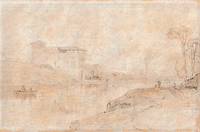
514Pen and sepia ink wash on cream laid paper 4 1/8 x 6 3/16 inches 103 x 152 mm. In good condition with scattered areas of light brown discoloration and uniform age tone. Condition consistent with age. unknown
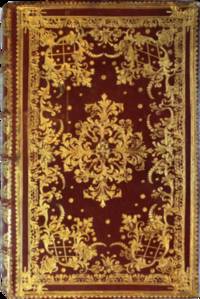
17564062Rome: Gioacchino & Giovanni Giuseppe Salvioni Stampatori Pontificii Vaticani 1756. 8vo 210 x 135 mm. 24 407 1 pp. 2 parts the Office of the Dead separately titled. Printed in red and black. Engraved frontispiece and 12 full-page engravings by Arnold Van Weserhout and Jacob Frey after Joseph Passarus Giuseppe Passaro two engraved title vignettes and 12 tailpiece vignettes a few unsigned others by Frey after Passaro or by M. Schedi engraver 3 engraved initials numerous red-printed woodcut initials. Occasional light browning. 18th-century Roman gold-tooled red goatskin covers with densely tooled dentelle border built up from leafy plant tools sprigs floral and arabesque tools each cornerpiece enclosing a grid with gold dots blossom tools and dots in central field ornamental centerpiece of large foliate arabesque and dandelion tools spine in six uniformly gold-tooled compartments block-printed pastedown endpapers with flower and fruit design stencil-colored in red green and yellow gilt edges with gauffred border design; upper cover a bit faded and bowed corner bumped a couple of scrapes to lower cover. Provenance: Horace de Landau 1824-1904 bookplate shelfmark no 47854; Vicomte de Cossette armorial bookplate. A rococo binding on a luxuriously printed and illustrated Office of the Virgin from the Salvioni press official printers to the Vatican. The Salvioni press used several workshops sometimes collectively mislabeled as the "Vatican" or "Salvioni" bindery. Those bound for the papal library were finely executed and different binderies can be identified by their tools color of leather and stylistic details. The present pretty but crowded binding decor with its in places overlapping tooling does not seem to belong to the corpus of binderies represented in for example the Vatican Library's 1977 exhibit catalogue of papal bindings. Stylistically it uses types of tools and decoration - the wide "Louis XV" style border and the basketweave cornerpieces - in vogue during the reigns of Clement XIV 1769-1774 and Pius VI 1775-1799. Its decoration is similar for example to binding no. 262 in Legature papali but it is of inferior workmanship and does not use the same tools. It was probably produced in a Roman shop executing many commissions and forced to work quickly although it could even be a provincial binding. Cf. Biblioteca Apostolica Vaticana Legature papali da Eugenio IV a Paolo VI no. 262 plate CXCI. Gioacchino & Giovanni Giuseppe Salvioni, Stampatori Pontificii Vaticani hardcover
195352369New York: Noonday Press. As New. 1953. Hardcover. FREE UPGRADE to Courier/Priority Shipping Upon Request IN STOCK AND IMMEDIATELY AVAILABLE FOR SHIPMENT - Text pristine clean & unmarked tight to the spine - 503 pages. -- with a bonus offer-- . Noonday Press hardcover
2010123498Electa. New. 2010. Paperback. 8837070217 . FREE UPGRADE to Courier/Priority Shipping Upon Request - IN STOCK AND IMMEDIATELY AVAILABLE FOR SHIPMENT - TWO VOLUME SET ONE1 I 2 II. Flawless copy brand new pristine never opened. Text in Italian with a bonus offer-- . Electa paperback
200533806Academia Verlag. New. 2005. Hardcover. 389665330X . FREE UPGRADE to Courier/Priority Shipping Upon Request - IN STOCK AND IMMEDIATELY AVAILABLE FOR SHIPMENT - FULL TEXT IN ITALIAN ONLY -- 308 pages size 155 x 23 cm -- FLAWLESS COPY -- AVAILABLE IMMEDIATELY -- Choose us for the information you need -- DESCRIPTION: La dottrina delle idee ha rappresentato un oggetto privilegiato di analisi per numerose generazioni di autorevoli interpreti da un punto di vista storico filologico filosofico e scientifico. Tuttavia una pur rapida consultazione della vastissima bibliografia platonica dell'ultimo cinquantennio mostra sufficientemente come l'interesse critico ed esegetico intorno a questo nucleo teorico della riflessione di Platone si sia rivolto per lo più all'indagine di problemi specifici o di singoli aspetti dell'opera del filosofo ateniese perdendo talvolta di vista l'orizzonte concettuale e lo sfondo filosofico entro il quale bisogna collocare il suo pensiero. Ora questo volume intende invece concentrare l'attenzione sulla nozione e sul concetto di eidos nella filosofia di Platone e nel dibattito che le dottrine platoniche hanno suscitato nella tradizione posteriore a partire dalla prima Accademia e da Aristotele fino a giungere a tracciare un quadro schematico e sintetico delle principali correnti "platonizzanti" del pensiero antico. Attraverso un confronto a più voci che si è andato via via costruendo nel corso di successivi seminari e incontri di studio si è pensato di fornire così una raccolta miscellanea capace di "fare il punto" intorno al dibattito critico e agli studi più recenti su questo tema cruciale. -- TABLE OF CONTENTS CONTRIBUTORS: Introduzione W. L. & F. F. ; La teoria platonica delle idee; M. Baltes-M. L. Lakmann Idea dottrina delle idee; L. Brisson Come rendere conto della partecipazione del sensibile all'intellegibile in Platone ; W. Leszl Ragioni per postulare le idee; J. -F. Pradeau Le forme e le realtà intellegibili: l'uso platonico del termine eidos; G. Sillitti L'idea del bene tra geometria e dialettica nei libri VI e VII della Repubblica platonica; B. Centrone L'eidos come holon in Platone e i suoi riflessi in Aristotele; D. O'Brien La forma del non essere nel Sofista di Platone ; Il dibattito sulle idee fra l'Accademia antica e Aristotele; M. Isnardi-Parente Il dibattito sugli eide nell'Accademia antica; F. Fronterotta Natura e statuto dell'eidos: Platone Aristotele e la tradizione platonica; M. Mariani Aristotele e il "terzo uomo"; C. Cerami La sostanza sensibile e la nozione di TODE TOIONDE in Metafisica VII 8; Il dibattito sulle idee nella tradizione platonica; F. Ferrari Idea ed eidos nel medioplatonismo; A. Linguiti Dottrina delle idee nel neoplatonismo; Bibliografia -- with a bonus offer-- . Academia Verlag hardcover
199550678Kingston New York: Michael Shamansky Bookseller. New. 1995. Paperback. FREE UPGRADE to Courier/Priority Shipping Upon Request IN STOCK AND IMMEDIATELY AVAILABLE FOR SHIPMENT - Pages clean and unmarked tight to spine - 11 pages of text; 265 titles listed and described not illustrated. -- with a bonus offer-- . Michael Shamansky, Bookseller paperback
199550677Kingston New York: Michael Shamansky Bookseller. As New. 1995. Paperback. FREE UPGRADE to Courier/Priority Shipping Upon Request IN STOCK AND IMMEDIATELY AVAILABLE FOR SHIPMENT - Pages clean and unmarked tight to spine - 12 pages; 318 titles listed and described not illustrated. -- with a bonus offer-- . Michael Shamansky, Bookseller paperback
199550676Kingston New York: Michael Shamansky Bookseller. As New. 1995. Paperback. FREE UPGRADE to Courier/Priority Shipping Upon Request IN STOCK AND IMMEDIATELY AVAILABLE FOR SHIPMENT - Pages clean and unmarked tight to spine - 18 pages; 523 titles listed and described not illustrated. -- with a bonus offer-- . Michael Shamansky, Bookseller paperback
1956130122"Silvana" Editoriale D'Arte - Milano. As New. 1956. Paperback. - In stock and immediately available for shipment - AS NEW THE TEXT BLOCK IS PRISTINE CLEAN UNMARKED AND IN EXCELLENT CONDITION - - with a bonus offer -- . "Silvana" Editoriale D'Arte - Milano paperback
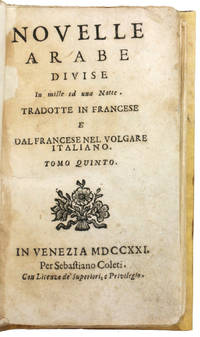
1721ABC_49346Venice: Sebastiano Coleti 1721. Near-contemporary vellum. 12mo. With a small woodcut vignette on the title page and a woodcut ornamental tailpiece. 2 volumes bound as 1. Two volumes from the very rare first Italian edition of the Arabian Nights based on Gallands liberal but highly influential French translation. Adapted to Parisian tastes it had been first published in 12 volumes between 1704 and 1717. The present translation was the main vehicle for the circulation of the Nights in Italian culture through the 18th- and 19th centuries and via Venice also influenced Modern Greek literature which had access to the work only in the Italian translation. The history of the Italian reception of the Arabian Nights is characterised by the hegemony of Gallands work in Italian translation which circulated first via Coletis edition and its various new editions and later in the translation by Armando Dominicis in 1893 Christian-Muslim relations p. 859.Volumes V and VI contain respectively Nights CLXVI-CCIII and CCV-CCCXXXIV. The work is of great rarity: only two complete sets of the present work are traceable in libraries worldwide Arezzo City Library and National Central Library Florence and only two other libraries have an incomplete set volumes 11 and 12; Biblioteca Saveriana Conforti Parma and Biblioteca comunale Alessandro Cialdi Civitavecchia. Thus only two other copies of the present fifth and sixth volumes are known!The binding is slightly soiled internally slightly soiled with small repairs to the title page. Otherwise in good condition.l Burton VIII 104; Chauvin IV p. 46 no. 104A; OPAC SBN ITICCURMSE061932 4 copies incl. 2 incomplete; cf. Christian-Muslim relations A bibliographical history 37; this ed. not in WorldCat. Sebastiano Coleti, hardcover
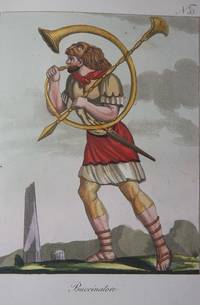
1825006547Bergamo: Mazzoleni 1825. Half Morocco. Marbled boards. Custom slipcase. Very Good. Folio 31 by 23 cm. 328 pp. Aquatint portrait 62 hand-colored plates. Lipperheide Be 29. This book is in a larger format than the French original of 1796. This is tantamount to a large paper edition of the original. Custom slipcase with morocco trim patterned paper pastedown. Modern half red morocco binding. Condition: slip case with some separation of a few edges. Repair to joints. Some foxing on paper but overall remarkably clean given the paper stock used at the time in Italy. One long closed tear repaired and a few shorter tear repairs. Mazzoleni unknown
25091The first three-quarters from Paris 18 June to 16 November 1859. The last quarter from Dresden and Copenhagen 1860 to 1863. The papers of Sir Charles Stewart Scott an Ulsterman: see his entry in the Ulster Dictionary of Biography are held by the British Library. The present journal described by its writer as ‘Private & most Confidential’ covers the very start of his career from Paris in 1859 to Copenhagen in 1863. The basic details of his career to this point together with information regarding his colleagues are to be found in the Foreign Office List for January 1865: Scott was nominated attaché in 1858 and transferred to Paris on 31 March 1859 and to Dresden on 5 October of the same year to Copenhagen three years later and was promoted to position of a third secretary in April of 1863. This journal is 186pp 8vo; all edges gilt in embossed brown cloth binding with the label of Paris stationers Delarue & Hivert. The paper is lightly aged with a little discoloration and a few loosening leaves and the binding is worn but the general overall condition is good. On reverse of front free endpaper: ‘33 Rue de la Madelaine / Charles: S: Scott. / Attached to H.B.M Embassy Paris’. The diary is as Scott admits kept in a ‘negligent way’. The first page is headed ‘Private / Paris’ and the first three-quarters of the journal consist of 140pp covering the period between 18 June to 16 November 1859 followed by three and a half pages headed ‘Nearly A year afterwards in Octr 1860’ but with only one entry: 4 October 1860. After a blank page the final quarter of the journal consists of 45pp carrying desultory entries between March 1861 and January 1863 as follows: 4pp Dresden 26 March 1861; 6pp ‘January 1862’; 7pp 6 to 14 January 1862’; 16pp 16 October to 12 November 1862; 2pp Copenhagen 21 December 1862; 2pp ‘January 1863’; 3pp ‘Princess Alexandra’. The diary contains a good mixture of the personal and professional. Of particular interest is Scott’s description of Embassy news and gossip: reports and telegrams received communications composed the views of superiors articles in the newspapers. The pre-eminent topic is the Parisian response to the conclusion of the 1859 Franco-Austrian War Second Italian War of Independence including a description of Napoleon III’s victory parade and a couple of references to Garibaldi. Other topics include the American Civil War and the marriage of Princess Alexandra of Denmark to the future King Edward VII. There is also a description of initial reports of the Second Battle of the Taku Forts June 1859 in the Second Opium War. On the personal side there what Scott himself sees as his ‘illspent youth’ with frequent references to money worries 4 August: ‘we all dined at Voisin’s capital dinner but enormously dear 18 frs a head. Afterwards we played Loo and I lost £16 - my state of mind is something awful. I could scarcely sleep a wink all night & vowed I never should play a gambling game again’. The following day he ‘must borrow £25 from somebody’. He searches for new lodgings in Paris describes his dinner engagements and socializing ‘I saw some very pretty faces in the Champs Elysees’ his private reading ‘I finished Tennyson’s New poem. I like it as a whole very much Enid is very pretty & so is the last Guinevre sic I think my favorite is Alaine evidently the Lad of Shalott’ the weather and much Embassy news and gossip. With reference to the Franco-Austrian War Second Italian War of Independence on 25 June Scott describes an early report of the victory of Napoleon III and the Sardinians at the Battle of Solferino: ‘On my way down to the Chancery at 12.30 I saw an “Affiche†giving the news of a great battle dated Caravina June 24 9.15 in the morning to the effect that the Allies had engaged the whole Austrian. Army in a line of 15 miles taken all the positions & captured several guns flags & prisoners. The details have not yet been given. It appears to have been a very bloody affair & I should not wonder at hearing a very different version soon.’ The following day is the Fête de Dieu: ‘The Chancery was very intolerable & as there was no news of any importance we had not much to do. Laurence & I spent the afternoon on chairs in the Champs: Elysee. The rest of the Chancery seem to have done ditto - We then drove to the Tavern & dined. We found Atlee there too. A very fine woman was dining near me I liked her face very much. Atlee seemed to know her. After dinner we did the coffee & liqueur dodge at the Cardinal & while we were there the newest telegram was posted up stating that the Austrians had lost 1500 prisoners in the hands of the French 30 guns & 3 flags. On one side of us as the news arrived were some Italians on the other Germans. The effect on the respective parties was worth seeing.’ The long entry for 12 July is headed ‘Conclusion of Peace of Villafranca’ discusses aspects of the conclusion of the war. The entry for 21 July begins: ‘I was in the Embassy at 11.30 Cowley sent down an angry minute with a request that some of us shd. be in the Chancery every day from 11. till 7. & that we shd be on duty by turns. He & Norton went in full tog to St Cloud where the Emperor received the Corps Deputations. made a short speech expressing the pleasure of the Corps at his safe return & the speedy reestablishment of peace. The Emperor replied with some little asperity in his tone that Europe had been unjust to him at the commencement of the war that he was glad now to have an opportunity of proving that once the honor & interests of France satisfied he did not desire to provoke further confusion of a more general war. A very important Tel: from Rome passed thro’ Paris this morning a measure of reforms has been recd by the French Ambassador at Rome to be submitted to HH. The Pope is in secret negotiation with Spanish. Minister. to reconquer Legations. In case of distress he will probably retire to Spain.’ Scott speculates regarding ‘what sort of a Foreign. Minister. Ld John will make’ Lord John Russell had been appointed to the post in the new Liberal government. On 4 July he reports: ‘There was rather an important Desp: from Ld. John relative to the Perugia atrocities he desires C. to read the Desp: to Wal: & in it he expresses his conviction that the Papal Govt is a crying evil in Italy & that at any future negotiations it would be desirable to take steps to deprive H.M. of all temporal powers - C. wrote an important Conf: Desp home upon the rumoured agreement between France & Sardinia. respecting cession to former of Savoy he expressed a wish that the gentlemen of the Chancery shd not speak about it to anyone. It appears that steps have been already taken towards negotiation by Prussia she has made proposals at London & St. Petersburg to England & France to join her in settling Bases Austria wished Prussia to act alone Prussia will not assent to do so. Claremont writes from Valeggio the Sardinian Army are besieging Peschiera the Emperor seems to have turned his attention to Venice.’ The entry for 22 July contains a long account of a despatch from Cowley: ‘a 5 sheeter an important one which he has taken two days to concoct. it is in answer to the question “should England take part or not in a Congress on Italyâ€â€™ ‘C. answers emphatically no’. He describes the French victory parade on 14 August: ‘Up at 7. dressed in white tie & tails & down & sic the Chancery at 9. there I found Lord C. and Atlee in morning coats so went back to the Rue de la Madelaine changed & got to the Place Vendome at 9.30. The Place had a most gorgeous appearance one enormous amphitheatre packed tight with well dressed ladies & gay uniforms among them an Irish milita uniform. Proh sic Patria! above us in front of the Ministere de la Justice & facing the column the Imperial balcony. Covered with crimson flock & shaded by a crimson velvet awning & this was crowded with the members of the court among them the Prince Jerome Princesse Mathilde Walewski Hamelin Gould & c. After a short time the Empress’s carriage drove into the Place amid the most enthusiastic cheering. She made her appearance some minutes afterwards in the balcon with the Prince Imperial. The latter in the uniform of the chasseurs de la garde. He is a pleasing looking little child yellow like most French babies with pudding cheeks. His mother looked very nice it was the first time I had any chance of seeing her to advantage she has such a charming expression. & was looking her very best. After this there came a long pause which I employed in looking round at my neighbours I was in the diplomatic gallery. Ld Cowley & Kisseleff Nikolai Kiselyov the Russian ambassador below me the Swedish Minr. behind some Persian attaches beside me in full uniform & the American mission a little in front. On the neat tribune the Duchess of Montrose & Lady H Graham & lots of charming English faces everybody nicely dressed & as happy as possible under the hotters sun I have felt for some time. - Soon a rustling of dresses & a number of impatient & excited explosions of “les voila†made us all strain our eyes towards the entnree by the Re de la Paix & in a few seconds the Emperor at the head of the Cent Gardes & surrounded by his staff cantered into the Place on a beautiful charger. I shall never forget the magnificence of this sight.’ The following two pages contain a description of the review of the troops ‘the Cent Gardes with the captured Austrian colours & the assorted colors of some of the regts.’. news articles in French papers ‘The Patrie has this evening rather a bitter article against the English dread of invasion - alluding to article in Moniteur.’. English fears of invasion are apparently genuine. On 28 July he writes: ‘There was an article in the Moniteur to-day giving notice of the Emperor’s intention to place the army & navy on a peace footing if this be really carried out it will be a stopper on the fears of invasion on the other side of the Channel. This Announcement is said to be the result of a Privy Council meeting who upon the suggestion of to do something to appease the fears in England met yesterday to consider what course they should take.’ News from Italy on 1 August: ‘I decyphered a long Tel. from Elliot this morning to the effect that the Neapolitan. Govt had been informed that Garibaldi with 12000 men meditated a descent on some part of the Neapoln. States & had engaged steamers at Genoa & Cagliari for that purpose. the Govt of H.S.N. wished to know whether Her .Majesty’s. Government. would protest agst Sardinia permitting this expedition & if H.Ms. fleet wd allow it to be carried out.’ Cowley asked Wal: whether he had received any intimation to the same effect he said he had been applied to by the Neapn. Govt & had accordingly written to Sardinian Govt but he did not believe there was any foundation for these apprehensions.’ On 7 September 1859 he is ‘again reduced to the same miserable pauper state’ and ‘thinking of changing to Lisbon. I have been spending too much money here - and as Sir A. Magennis is appted: Minister at that place & Grey his greatest friend has offered to recommend me strongly to him. I have thought to accept Grey’s offer & have written to Papa about it’. The same entry contains a discussion of ‘political news’ including ‘the great question’: ‘What is to become of the Duchies’ A week later 15 September he is ‘of course getting poorer & poorer. to-day Friday I had to borrow 60 frs. from Adams 20 of which went to little A - who is also hard up.’ In the same entry he gives an account of the Second Battle of the Taku Forts June 1859: ‘Matters are coming to an interesting crisis and a new European mess is brewing & this time on a very respectable scale. 1st. in China. The Frh: & English Minrs: proceeding up the Reiko in order to ratify Treaty were fired upon on the 20th of June & 3 guns boat were lost 460 men killed & wounded & the Minrs. forced to retire to Shangai. This was the first telegram which came to our hands. & a startler it certainly was. The details soon followed telegraphed by Rumboldt sic who was on his way home with Desps:’. Further details are given including ‘the P.P. ordered Adml. Hope to force the passage which he succeeded in doing when all of a sudden the batteries on either bank were unmasked & a slashing fire poured upon them. The batteries were manned by Mongols an enemy which we met for the first time in the field. An attempt to land some of our marines in gun-boats was signally unsuccessful the banks being formed of a soft mud in which our men sank up to their middle exposed all the time to a desperate fire. Adml. Hope is wounded & the affair is altogether a most signal disaster’. He continues to discuss this and ‘The 2nd mess’ - ‘a more serious one . the result of the Death of the Emperor of Morocco’. ‘Papa & the girls’ pay a visit in mid-September and he reports ‘My people are gone’ at the beginning of the following month. On 16 September 1859 he writes from ‘Dresden’ stating that he came to the place ten days before and that his ‘first fealing on hearing of my appointment was sheer disgust’ but that he is ‘beginning to know the place’ and ‘far happier than at Paris. Strange enough Dresden is to me twice as gay as Paris.’ In the pages that follow he describes the opera at Dresden and a visit to ‘Saxon Switzerland’ before giving a review headed ‘January 1862’ of his ‘illspent youth that has planted its vices in my blood and weighs me down into the mire’ and his desire to ‘emerge mothlike from the chrysalis of the past & with blood keeping an even tenour follow the “Beautiful†that now only comes to visit me in visions. - How hard now to acquire the strenghth of will that has failed me hitherto! and yet I feel that unless the change be effected now my future happiness will be ruined.’ Regarding the brewing American Civil War he writes: ‘Each day may bring us important answers from America: I fervently hope such an unnatural war may be averted.’ On 5 January 1862 he writes that ‘The news from America continues to be pacific’ but on the following day: ‘A Telegraph has come in to the effect that the Privateer Sumpter has made some prizes has sunk them & run into Cadiz. - pretty warfare this for the 19th: Century’. On 16 October: ‘Little prospect of a peaceable settlement of affairs on the other side of the Atlantic. Lincoln’s proclamation emancipating the slaves not only an uncivilized but a useless & an impolitic move. / Prussian affairs looking bad. The lower House has unanimously refused to vote the military Budget “in toto†without details. The Herrenhaus sides with the Govt: & the Chambers closed. - I do not see how the question can be settled. - We have also had a meeting of Deputies at Weimar & the National Verein at Coburg. both seem bent upon restoring the Reich Verfassung of 49. - the 1st: in favor of exclusion of Austria.’ 24 October: ‘2 new battles in America account as yet confused. - Confederates. said to have retreated. - Garibaldi a little better.’ He gives a full-page description of a ‘Jewish wedding’ on 25 October: ‘The Congregation a most curious assemblage of Jewish faces in wh: the hooked nose was the most characteristic feature.’ On 30 October he responds to a speech by Cobden proposing ‘to exempt private property from capture at sea’ and the blockade of continental ports: ‘the raw material of our food & industry come fm. America the only three powers w. whh. we cd. go to naval war are France Russia U. States. F. cd. always make use of Haburgh & the free ports & from Russia & the U:S: we draw our principal imports. In the Crimean War we purposely abstained from enforcing a blockade until we had imported sufficient grain fm. the Rn: ports. - Disputation in N of England showed what a state we shd. be reduced to if we strictly enforced the blockade of the Baltic Ports.’ On 12 November 1862 he comments sarcastically on the ‘pleasant announcement’ that he has received his orders to proceed to Copenhagen. On 21 December he records his arrival there ‘This place is certainly no pleasant residence in winter.’. January 1863 sees ‘the Federals in a worse state than ever the accounts of the late battle at Fredericksburg are terrible & the loss almost unparalleled’. Another question he discusses at this time is the ‘Affairs of Greece’. On 12 January 1863 he describes his socializing: ‘I dined twice with the Chief and went to the Lutzerodes where I met everybody & did my duty to all acquaintances. I was presented to Countess: Hohenan Prince: Albert of Prussia’s wife. She seems agreeable. - A party at the Sawyers where I was introduced to Mme: de Benst Freyburg & her daughter who has the reputation of being a beauty. I was disappointed.’ He is presented to ‘Princess. Alexandra our future Pss: of Wales she is lovely & graceful natural & charming in her manners & will certainly have great success in England.’ Over a page he describes the ‘“tableau†at the Landgraf’s’ at which he first saw Alexandra. ‘It was the Landgts. birthday & the Pce: & Psses: had arranged a series of tableaux vivants each subject to begin with one of the Initial Letters of H. Hs. name.’ The last three pages give an ecstatic account headed ‘Princess Alexandra’: ‘without being a great beauty has one of the loveliest faces & expressions I have ever seen . She leaves Denmark in tears & will find England awaiting her with smiles & English welcomes!’ In conclusion we give in its entirety the very first entry in the journal 17 June 1859. It is lengthy and gives a good indication of the general tone and level of detail and the good mix of personal and professional: ‘I found some difficulty in opening my eyes at 10 A.M. & when I succeeded in doing so found them fixed on Darand’s garçon arranging my breakfast. My conscience painfully reminding me that I owed him 60 francs for breakfast & that each day I had promised to pay his little “note†“demainâ€. Future entrie contain complaints against his debtor ‘Conyngham the wretch’ and a row with ‘Duraud’s garçon’ takes place ‘consisting of mild expostulation on his part confusion and indignation on mine’. I closed them again & answered his ‘Monsieur est serve†said in a hesitating tone only by a low grunt & he departed. After taking my usual time for consideration before committing the rash act of getting up and after taking my bath I found my breakfast as cold as my breakfasts generally are when I take half an hour to consider about getting up. / I did not go to fence but booted slowly down to the Embassy we only moved to our new pig stye of a Chancery yesterday. I found Laurence in the Chancery he had deserted Ruas too. There was no work a Tel: had been sent off about Despatches. to be forwarded to Turin. Bayly soon made his appearance I answered a Mons d’Hartville about some book which he had sent Cowley a copy of. Little news in any of the Papers. Later in the day there came in news of a conspiracy in Athens to dethrone King Otto & the intelligence was sent in cypher to the F.O. details to be sent by messenger. It appears that the Conspirators have called themselves the Italian French Society & tried to implicate the French. Minister. / Very important news arrived of the state of the Prussian policy drawn from a Convention. of French. Ministers. with Schlemetz. General. opinion in Chancery that Germany wd. join Austria before the end of the month. / I wrote to Conyngham about the £4. 10 travelling expenses asking him to send it to me. I am in a fearful state in the way of finances and I am afraid to tell the Govenor but what am I to do this is the 17th. Quarter does not commence before 23rd day of July & I have only the £4. 10 with lots of debts. - I read a book called Lama the style & character ridiculously extravagant & unnatural. Something in it excites me so I could not put it down I think it must be the present unhealthy state of my mind. / We dined at the Tavern why I say we I mean Atlee Sandford Laurence & myself. My dinner cheapest 3.75 with waiter. Then to the Cardinal coffee & petits verres. Atlee & Sandford went to their - & Laurence & I to the Embassy & his diggings where we played double dummy & talked on various subjects. I borrowed Shelley from him - walked home by the Avenue Gabriel beautiful moonlight tho’ nothing to what I saw on Wednesday night in the Place de la Concord - / Letters - from Tom. is going to be priested - Parish matters. good advice &c / Lizzie - State of religious excitement in North - to my weak mind this looks like a damned humbug. & that it is the effect of living in the same uncivilized spot without new ideas that has made everybody so superstitious. However Liz: seems rather to believe in it. / I feel rather maudlin & sentimental in fact in low-spirits tonight - the state of my funds. Darand’s bill & other details weigh upon me like a nightmare or an over feed - I have been a great fool I am doing nothing to get myself on in my profession & instead of improving my mind I think I am stupifying myself more & more every day. I wonder if the Diary will do me any good. It will never do to go on at this rate writing 5 pages a day so good-night I am off to Shelley & Bed. -’ The first three-quarters from Paris, 18 June to 16 November 1859. The last quarter from Dresden and Copenhagen, 1860 to 1863. hardcover
1767223077Milan: Federico Agnelli 1767. First edition. Engraved portrait frontispiece to volume I. xv 1 343; 2 352; 2 423; 2 374 4; pp. 375-805 Additioni. 4to 25.5 x 20 cm.; 10 x 8 inches. Contemporary half vellum over patterned paper boards brown morocco lettering-piece to spine extremities slightly bumped or rubbed. BEAUTIFUL COPY uncut. First edition. Engraved portrait frontispiece to volume I. xv 1 343; 2 352; 2 423; 2 374 4; pp. 375-805 Additioni. 4to 25.5 x 20 cm.; 10 x 8 inches. Fine set of this massive and important bibliography by the Bolognese Argelati 1685-1755 posthumously published with additions and corrections by Angelo Teodoro Villa 1723-1794. Federico Agnelli unknown
183426035Italy 1834. Pen-and-ink watercolour and gouache painted black border titled and dated in white gouache in the lower margin within the border. Lovely 19th-century watercolour of Palermo.<br/> <br/> Catering to the foreigners flocking to the region on the Grand Tour this lovely watercolour shows the town of Palermo with its beautiful hills and mountains in the background with a large fort in the harbour with a British and French ship beside it. The sky is awash in pinks and blues displaying the incredible light of the region. unknown
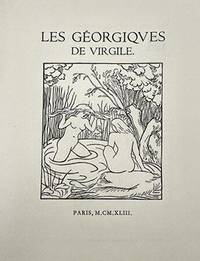
16-5726Paris: Philippe Gonin 1937- 1943 finished in 1950. Large 4to. 24.5 x 32.5cm. 2 vols. 174 154pp. Sheets loose as issued in original chemise boards and slipcase. One of 750 numbered copies.Text in Latin and French 122 woodcuts by by Maillol 61 in each volume. Publisher's pictorial chemises and slipcases printed with woodcuts. Rubbed and slightly soiled to slipcases and chemises some light foxing.Maillol began work on this large project with Count Kessler of the Cranach Press in 1908 but failed to complete the woodcuts until just before he died in 1944. It was published posthumously by Gonin who frequently collaborated with Maillol.References: Luc Monod no. 11339; The Artist and the Book no. 175;OCLC Number / Unique Identifier: 16395270. Paris: Philippe Gonin, [1937- 1943] finished in 1950 hardcover
1650130R86Rome . 1650 248 leaves. Manuscript in Italian on the History of Germany and virtually all of Europe in the momentous era of the 1620's prepared for Pope Urban VIII Maffeo Barberini by the Papal Nuncio to the Holy Roman Emperor. Written in a graceful Italian hand. Folio. 340 mm. Text generally clean but with scattered mold stains. Remains of old vellum binding. Interesting colorful paste paper end sheets. With the bookplate of Elkin Mathews = Charles Elkin Mathews 1851-1921 London publisher bookseller and collector who played an important role in the literary life the English speaking world in the late 19th and early 20th centuries. Also with a circular Sneyd family book plate probably Ralph Sneyd 1793-1870 but perhaps earlier. This work is often attributed to Carlo Carafa an incompetent and criminal administrator who was executed for treason at Castel San Angelo on Mar 4 1561 by Pius IV. but it is certainly by a later Carlo Carafa born in Naples in 1611 who was bishop of Aversa and Papal Nuncio to Switzerland the Republic of Venice and to the Holy Roman Emperor. The Holy Roman Emperor at this time was Ferdinand II 1578-1637 a member of the House of Habsburg. He was also King of Bohemia and King of Hungary. His rule coincided with the Thirty Years' War. Ferdinand's aim as a zealous Catholic was to restore Catholicism as the only religion in the Empire and suppress Protestantism. The Neapolitan Carafa family produced a large number of bishops cardinals and some saints. Cardinals in the Carafa family include with dates of their elevation to Cardinal: Filippo Carafa 1378; Oliviero Carafa 1467; Gianvincenzo Carafa 1527; Carlo Carafa 1555; Diomede Carafa 1555; Alfonso Carafa 1557; Antonio Carafa 1568; Decio Carafa 1611; Pier Luigi Carafa seniore 1645; Carlo Carafa della Spina 1664; Fortunato Ilario Carafa della Spina 1686; Carafa di Belvedere 1764-1830; Francesco Carafa della Spina 1773; and Domenico Carafa della Spina 1844. Biographical and bibliographic confusion among them is rampant. UNIQUE. A wonderful item for further scholarly study. Chest 2/4. (Rome? ?). hardcover
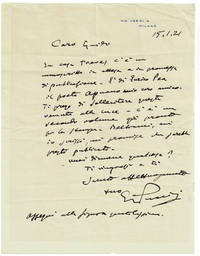
1921100261<p>Milano January 15 1921. 1921. Very good. - Over 60 words penned in Italian on 10-1/2 inch high by 8-1/4 inch wide cream "Via Verdi 4 Milano" stationery. Puccini writes to the publishers Fratelli Treves on behalf of his friend the writer Enrico Pea. He addresses Guido Treves the nephew of the firm's founder Emilio Treves who took over the company upon Emilio's death in 1916. Guido Treves ran the company with his wife Antonietta. Puccini writes that there is a manuscript awaiting publication at Treves' house. It is from his dear friend the Apuan region poet Enrico Pea. He asks that publication be expedited as there is a second volume ready for print. Puccini states that he wrote to Beltrami Giovanni Beltrami the managing director at Fratelli Treves who promised that it would be published soon. Signed "tuo yours G. Puccini" followed by his regards to Guido's wife. Folded horizontally and vertically for mailing the letter is slightly creased at the corners with a couple of minuscule chips to the edges. Once mounted there are remnants of archival tape along the top edge of the verso.</p><p>Giacomo Puccini often enjoyed a table at the Antico Caffe di Simo in Lucca with his friend Enrico Pea.</p><p>The book being discussed by Puccini is without doubt the first volume in Pea's "Trilogia del Moscardino" simply titled "Moscardino" published by Fratelli Treves in 1922. The book was translated into English by Ezra Pound. It was reviewed in the January 1 2005 edition of the New York Review of Books: "A small masterpiece Pea's lyrical autobiographical novel paints a fiery and intimate portrait of an old man through the brushstrokes of his grandson. The passions and tensions between the old eccentric and his brothers play themselves out in mythical sketches before a vivid backdrop of the hills of Lunigiana. Moscardino the first novella of his tetralogy Il romanzo di Moscardino is anarchic and haunting. Pound conducts Pea's vernacular song allowing images to flow from the land the flesh and beyond."</p><p>Little needs to be said about the life of the great Italian opera composer Giacomo Puccini 1858-1924 who composed several of the best known Italian operas. His works include "Manon Lescaut" "La Boheme" "Madama Butterfly" and "Turandot" among many other works.</p><p>The Italian poet novelist playwright and theatre impressario Enrico Pea 1881-1958 produced literary works that are said to be divided into two periods. The first being that of "Moscardino" and the second beginning with "Il Figlioccia" which takes on a softer delicate modulated style.</p> Milano, January 15, 1921.
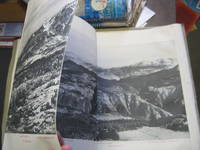
1917287142Bestetti E Tumminelli 1917 Green/Gilt Card Covers.3 Large Foldout Extensions of Photographs Of Mountains With Numbers To Identify extending to seven feet in length. A Topographic map. History in Italian. Altipiani Di Lavarone E Luserna Da Cima Campomolon. Very Rare Worldcat Finds 1 Copy At University Di Padova. Excellent Photography Of Italian Alps. Double Elephant - over 25 - 50" tall. 1st Edition. Soft cover. Very Good. Bestetti E Tumminelli paperback