54 336 résultats
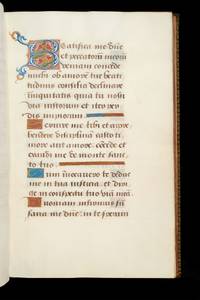
TM 796<p>MEDIEVAL ILLUMINATED MANUSCRIPT IN ITALIAN ON PAPER Northeastern Italy Veneto Venice c. 1474. Dimensions 328-332 x 230 mm. 188 folios missing at least three leaves written in brown ink in an Italian cursiva libraria script EIGHT ILLUMINATED INITIALS of seven lines one-line paraphs in red or blue<i> </i>simple two- to four-line in red or blue initials. BINDING: re-cased using original binding materials of brown half leather over bevelled wooden boards with three double bands remains of four straps present. TEXT: Italian translation of Gregory the Great's <i>Moralia in Job</i> one of the most important and widely copied texts of the Middle Ages. Though forty copies of this translation survive this volume is unusual in its incorporation of Venetian dialectal forms. All other copies are in European institutions and have not been on the market for the last century. PROVENANCE: scribal colophon on f. 190v provides a date for this manuscript's completion and helps localize its production within Italy: "Scripto per mi zuane de zane zoielier condam per simon et chi li lezeranno priegi dio per lo scriptore. MCCCCLXXIIII" Written by me Zuane de Zane jeweler once for Simon and may whoever will read it pray to God for the writer. 1474. There is no Zuane de Zane on record elsewhere as a scribe; the name itself is Venetian and evidence of the manuscript's watermark and decoration also suggest an origin in the region of Veneto and possibly Venice specifically. The manuscript was later acquired by a private European collection. CONDITION: slight tears in the lower margin of f. 25 and upper margin of ff. 37 and 160 from f. 161 to the end there is a slight loss to the upper outer corner<i> </i>slight water staining visible parchment reinforcement present prickings visible. Full description and images available. TM 796</p> Northeastern Italy, Veneto (Venice?), dated 1474
150012054Tours 1500. 19th-century blind-ruled crushed green morocco Niédrée; hinges slightly cracked at top and bottom gilt-lettered spine title all edges gilt green silk marker. <p> THIS ELEGANT TRILINGUAL PRIVATE DEVOTIONAL WAS PREPARED FOR A HIGH-RANKING FRENCH MILITARY OFFICIAL likely a participant in the Italian Wars of 1494-1512. An identical suite of prayers appears in a manuscript Morgan M.292 made for maréchal de France Pierre de Rohan-Gié 1450-1513 who campaigned in Italy with Charles VIII and Louis XII.<br /> Our anthology is centered on the faithful's plea for military success and protection against the dangers of war. The opening prayers in French are rich in chivalric imagery. Next is an uncommon extended version of the Latin Abbreviated Psalter a series of extracts from the Psalms compiled for soldiers and others unable to recite the full daily Office. The texts that follow include a Latin prayer for victory in battle the placeholder n stands in for the name of the supplicant and unusually the long pseudo-Augustinian Prayer for the Troubled in its Italian version.<br /> This last concludes the work of the first scribe who in line with the contemporary trends of luxury manuscript production at Tours adopted a peculiar rounded bâtarde. His hand's nod to the shapes of humanistic Antiqua doesn't mitigate the striking mismatch of language and script in the italian prayer.<br /> In Latin the Gospel readings on the Passion occupy the second half of the manuscript executed in a more traditional hand by a second scribe. attractive uniform decoration unifies our intriguing manuscript. In very good condition.<br /> ¶Salmon "Psautiers abrégés du moyen âge" in Analecta liturgica 1974 80; Cottier "Psautiers abrégés et prières privées durant le haut Moyen Âge" in Recherches Augustiniennes 33 2003 215-30; Avril & Reynaud Les Manuscrits à peintures en France 165 173 & 177.<br /> <br /> </p> <br /> <p>Prayer Book in French Latin and Italian. <br /> TEXTS & ILLUSTRATIONS </p> <br /> <p>I. French prayers to the Virgin: pp. 1-8<br /> p. 1 Inc. O glorieuse pure vierge pucelle Sinclair 6243; four-line illuminated initial in blue and white on red and gold ground infilled with flowers.<br /> p. 6 Inc. Je te salve tres chaste espouse Sonet 897; two-line boxed initial in gold ink on blue ground.<br /> p. 8 blank.</p> <br /> <p>II. Confession formula and Psalterium Abbreviatum: pp. 9-58<br /> p. 9 Inc. Confitebor tibi domine deus omnipotens; four-line illuminated initial in grey and and white on gold ground infilled with flowers.<br /> p. 14 blank.<br /> p. 15 Inc. Beatifica me domine et peccatorum meorum; three-line illuminated initial in blue and white on red and gold ground infilled with flowers.<br /> p. 25 Inc. Miserere mei deus secundum magnam misericordiam; two-line boxed initial in gold ink on red ground.<br /> pp. 35-36 blank.<br /> p. 37 Inc. Domine exhaudi orationem meam; two-line boxed initial in gold ink on red ground.<br /> p. 48 blank.<br /> p. 49 Inc. Domine quid multiplicati sunt; two-line boxed initial in gold ink on red ground.<br /> p. 58 blank.</p> <br /> <p>III. Latin Prayers to Jesus and the Trinity: pp. 59-70<br /> p. 59 Inc. Deus omnipotens pater filius et spiritus sanctus; two-line boxed initial in gold ink on red ground.<br /> p. 62 Inc. Iesu Nazarene respice ad meas miserias; two-line boxed initial in gold ink on red ground.<br /> p. 64 blank<br /> p. 65 Inc. Domine iesu christe qui septem verba; four-line illuminated initial in grey and white on gold ground infilled with flowers.<br /> p. 70 blank.</p> <br /> <p>IV. Pseudo-Augustine's Orazione per i Tribolati in Italian: pp. 71-84<br /> p. 71 Inc. O dulcissime signore iesu cristo vero dio; four-line illuminated initial in blue and white on red and gold ground infilled with flowers. </p> <br /> <p>V. Psalm 117: pp. 85-90<br /> p. 85 Confitemini domine quoniam bonus; three-line illuminated initial in blue and white on red and gold ground infilled with flowers and strawberries.<br /> p. 90 blank.</p> <br /> <p>VI. Gospel readings on the Passion: pp. 91-172<br /> p. 91 rubric: Dominica in ramis palmarum. Text of Matthew 26-27 begins; four-line initial in blue and white on red and gold ground infilled with flowers.<br /> p. 116 rubric: Feria tercia post ramos palmarum. Text of Mark 14-15 begins; two-line boxed initial in gold ink on red ground.<br /> p. 136 rubric: Feria quarta post ramos palmarum. Text of Luke 22-23 begins; two-line boxed initial in gold ink on red ground.<br /> p. 156 rubric: Die veneris sancta. Text of John 18-19 begins; three-line illuminated initial in blue and white on red and gold ground infilled with flowers.<br /> p. 172 blank.</p> unknown
41129Contains manuscripts of works by Anfossi Aprile Asioli Belli Beauharnais Cantone Carafa Carlini Caruso Clari Clementi Czerny Dalvimare Eichner Fioravanti Giordani Hasse Haydn Herz Isola Jommelli Kreutzer Labriola Lanza Leo Macagnani Mancinelli Mercadante Meyerbeer Morandi Pacini Paisiello Pergolesi Perugini Pratelli Raimondi Roggero Romani Ricci Rossini Sampieri Sarti Scandellari Scarlatti Schuster Tartini Traetta Tunca Tritto Verdi and Zingarelli.<br /> <br /> Provenance<br /> Predominantly from the collections of Luigi Ricci 1893-1981 Italian musician assistant conductor vocal coach and friend of Mascagni and Puccini and long-time London music antiquarian William Reeves. Of considerable research value.<br /> <br /> A detailed inventory is available upon request. unknown
180312541Florenz, Tofani, 1801 - 1803. 3 Bde. VIII, 168; IV, 140; V, 140 S. 204 (4 doppelblattgr.) Aquatinta-Tafeln und 5 doppelblattgr. Kupferstichkarten. Gr.-Fol. Pp. der Zeit (beschabt und bestoßen) mit eingebundenem vorderen OU.
167021449ABParis, N. Langlois, [um1670-1700]. 30 x 39,5 cm. Sammelband mit 289 (inkl. 7 Titel) Kupfern auf 250 (3 gefalt.) Tafeln. Geflammtes Leder (Hardcover) der Zeit mit einer geschwärzten Bordüre, Fadenheftung auf 5 echten Bünden, Rotschnitt. Ggpr. RS, Rücken mit reichen Fileten. Gutes, breitrandiges Exemplar. Tafeln teils (feuchtigkeits)fleckig. Gelenke teils aufgeplatzt. Einband bestoßen und beschabt, mit kleinen Fehlteilen. Mit einigen alten Ausbesserungen. Auf dem fliegenden Vorblatt Widmung von 1924.
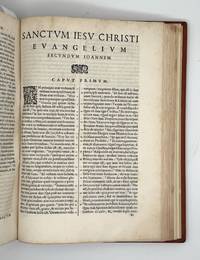
1592371810Rome: Ex Typographia Apostolica Vaticana 1592. First edition of the Clementine Bible. Edition of 500 copies. Engraved title page reading: Biblia sacra vulgatae editionis. Sixti Quinti Pont. Max. iussu recognita atque edita. Letterpress title page printed in red and black. Text in double columns. 12 1131 1 blank 23 1 blank pp. 1 vols. Folio 349 x 250 mm. Full reddish-orange levant morocco spine titled in gilt raised bands highlighted in black boards with single rule in black dated 1957 on turn-in. Fine. Leather-tipped slipcase. First edition of the Clementine Bible. Edition of 500 copies. Engraved title page reading: Biblia sacra vulgatae editionis. Sixti Quinti Pont. Max. iussu recognita atque edita. Letterpress title page printed in red and black. Text in double columns. 12 1131 1 blank 23 1 blank pp. 1 vols. Folio 349 x 250 mm. First edition of the official text of the Catholic Bible issued under sanction of Clement VIII and therefore known as the "Clementine Bible" and superseding the controversial and suppressed edition of Sixtus V of 1590. The text is preceded by Cardinal Bellarmino's preface the Decree of the Council of Trent on the canonical Scriptures and a brief by Clement VIII.<br /> <br /> "It is generally admitted that on the whole the Clementine text . is critically an improvement upon the Sixtine. . The Clementine Bible of 1592 remains to the present day the standard edition of the Roman Church" Darlow & Moule. <br /> <br /> Nice wide-margined copy of this notable edition. Brunet I 878; Darlow and Moule 6184; Adams B1101; P.M. Baumgarten Neue Kunde von alten Bibeln pp. 316-322. Provenance: W. A. Copinger bookplate; General Theological Seminary gift of Cornelius Vanderbilt and Dean Augustus Hoffman bookplates Ex Typographia Apostolica Vaticana unknown
1741KART0239Den Haag, Pieter de Hondt 1741. 2°. Titelbl., 1 nn. Bl., 44 S., 53 Tafeln (davon 52 doppelseitig), großteils mit reichen figuralen Kartuschen, Titelblatt in Rot- und Schwarzdruck, mit Titelblattvignette, Initialen u. Schlussvignette. Neuer Halbpergamentband, Deckel mit grünem Kleisterpapierbezug u. Pergamentecken, Schuber. Titelbl. u. Vorsätze gebräunt, flieg. Vorsatzbl. fleckig u. mit 2 kl. Wurmspuren. Textteil stellenweise etwas stockfleckig. Tafeln an den Rändern mit leichten Feuchtigkeitsspuren, vereinzelt verso leicht fingerfleckig, die letzten 10 Taf. am unteren Rand stärker gebräunt u. im rechten Rand mit schwarzem Tintenfleck. Vorletzte Tafel oben mit Eckabriss im weißen Rand. Insgesamt in gutem Erhaltungszustand, breitrandig und unbeschnitten. Koeman I,1:631; Goffart, Historical Atlases 544; Acta Cartographica 27,201; BM Catalogue of Maps 9; ADB 13,137f. ? Der Historiker Georg Horn (1620-1670) war 1653-70 Professor für Geschichte an der Universität Leiden, er verfasste neben anderem Lehrbücher für Universalgeschichte, die in ihrer Gesamtheit ein umfassendes Nachschlagewerk für Geographie und Geschichte bildeten und viele Jahre bei den Studierenden Hollands und Deutschlands sehr geschätzt waren. Vorl. eine Ausgabe - mit dem erklärenden Text in französischer Sprache - seiner 1667 erstmals erschienenen ?Accuratissima orbis delineatio?, mit allen im Verzeichnis genannten Karten. Das Werk beinhaltet gestochene Landkarten der bedeutendsten Kartographen dieser Zeit, die meisten stammen von oder sind gearbeitet nach Johannes Janssonius (1588-1664), weitere auch von Abraham Ortelius (1527-1598), Nicolas Blankaart (1624-1703), Johann Lauremberg (1590-1658) und enthält u. a. Karten zur biblischen Geschichte (11), Karten von Ägypten (2), Zypern, Griechenland (4), Spanien, Italien (5), Großbritannien (3) Frankreich zur Zeit Julius Caesars, des Heiligen Römischen Reiches, sowie eine Karte zur Illias, eine zur Expeditionsroute Alexander des Großen, eine des Fränkischen Reiches unter Karl dem Großen und auch eine Wiedergabe der Tabula Peutingeriana auf 4 Tafeln mit je 2 Abschnitten. Beeindruckender kompletter Atlas mit gut erhaltenen Kupfern.
147-Io.J. Feder in Braun, braun laviert, über Stift, auf Velin, innerhalb der Darstellung auf der Brunnenmauer unten Mitte bezeichnet, datiert und signiert ?a Torre francolise 1792 Filippo Hackert. F.?. 68,2:47,5 cm.- Mit sorgfältigen Restaurierungen entlang der Ränder. [2 Warenabbildungen]
1840030-I1840. Aquarell über Bleistift, auf cremefarbenem Aquarellkatron, links signiert, datiert und bezeichnet ?C. Werner f. 1840. Rom.? 24,3:33,1 cm. Provenienz: Galerie Arnoldi Livie, München. Wunderbar farbfrisches, charakteristisches Aquarell von herausragender künstlerischer Qualität! Vergleichsliteratur: Galerie Joseph Fach, Frankfurt am Main, Kat. 75 mit Farbabb. S. 71; Ausst. Katalog: Venedig Bilder in der deutschen Kunst des 19. Jahrhunderts. Karlsruhe/Paderborn, 2011, Seite 208, Farbtaf. 72.
64883Venedig, Franz Renner von Heilbronn u. Nikolaus von Frankfurt, 1473. Fol. 404 nn. Bll. (Got. Type, 2 Kol., 52 Zeilen), durchg. rubriziert u. mit zahlr. eingemalten Initialen in Rot u. Blau. HSchweinsldr.-Bd. d. 18. Jhds. a. 3 Bünden m. goldgepr. Rückenschild.
27-EFo.J. Bleistift, mit Bleistiftlinie umrandet, auf grau-rosa Bütten mit Wasserzeichen: Initialen PM, rechts oben undeutlich bezeichnet. 31,5:45,2 cm. - Verso: Skizze einer Berglandschaft. Bleistift. - Ränder mit Knickspuren.
148-Io.J. Aquarell, über Bleistiftskizze, auf festem chamoisfarbenem Zeichenkarton, rechts unten signiert ?F. Horner?. 51,4:71,3 cm. - Papier im Bereich des Himmels leicht gebräunt und mit Lichtrand an beiden Seitenrändern. Die Augustusbrücke, die über den Fluß Nera führte, war Teil der Via Flaminia. Literatur: Wird in das in Vorbereitung befindliche Werkverzeichnis von Johannes Fichter, Weisslingen/Schweiz aufgenommen.
26-EFo.J. Bleistift, mit nur teilweise sichtbarer Umfassungslinie, auf gelblichem Transparentpapier. 23,5/23,2:43,8 cm. - Rechte obere Ecke ergänzt, mit mehreren winzigen Löchlein.
24-Go.J. Öl, auf Karton, um 1830, verso mit schwarzer Feder beschriftet ?Venus Tempel zu Rom? sowie darunter mit Kreide von fremder Hand fälschlich bezeichnet ?Franz Ludwig Catel?. 24,1:19,2 cm. Die Authentizität des Gemäldes wurde von Gerd Bartoschek, Potsdam bestätigt (siehe: Villa Grisebach, Berlin, Auktion 27.11.2013, Kat.-Nr. 124). Es handelt sich um eine Variante des ehemals in Schloß Charlottenburg in Berlin befindlichen Gemäldes ?Ruinen des Tempels der Venus und Roma in Rom? (Öl auf Leinwand, 35:29 cm). Vergleichsliteratur: Zerstört, entführt, verschollen. Die Verluste der preußischen Schlösser im Zweiten Weltkrieg. Gemälde I. Bearbeitet von G. Bartoschek u. Chr. M. Vogtherr. Potsdam, Stiftung Preußischer Schlösser und Gärten Berlin-Brandenburg, 2004, S. 101.
749-Eo.J. Graphitstift, mit Sepia laviert, auf bräunlichem Bütten mit Wasserzeichen: Wappenschild mit den Buchstaben D & C B (ähnlich Heawood 3267 und 3268; Paris um 1797). 63,7:49,1 cm. - Papier leicht vergilbt. Vergleichsliteratur: S. Francksen-Liesenfeld, Der Landschaftsmaler Ludwig Philipp Strack 1761-1836, Biographie und Werkverzeichnis, Veröffentlichungen der Oldenburgischen Landschaft, Bd. 14, 2008, G 42 und G 58. Gutachten: Dr. Silke Francksen-Mansfeld, Hamburg, vom 10.12.2017. - In ihrem ausführlichen Gutachten schreibt Dr. Silke Francksen-Liesenfeld u.a.: ?Die Zeichnung stellt einen nicht genau bestimmbaren Landschaftsausschnitt dar, den Strack 1806 und 1818/19 in zwei Wandgemäldezyklen malerisch umgesetzt hat. Die erste Fassung in Öl, die zu einem ursprünglich vermutlich neunteiligen, nicht vollständig erhaltenen Zyklus mit Ansichten aus Italien gehört, hatte Strack 1806 für das Stadtpalais des Kaufmanns und Konferenzrates Georg Friedrich Baur an der Pallmaille in Altona geschaffen und befindet sich heute im Besitz des Altonaer Museums in Hamburg. Der Bildtitel ?Felsental bei La Cava? ist in einer zeitgenössischen Quelle zu der leicht variierten Fassung überliefert, die zu dem 1818/19 entstandenen Wandgemäldezyklus im sogenannten ?Strack-Saal? des Oldenburger Schlosses ? heute Landesmuseum für Kunst und Kulturgeschichte ? gehört. Die sechsteilige Ansichtenfolge mit Veduten aus Italien ist als Bestandteil einer Innenraumgestaltung für den ehemaligen herzoglichen Speisesaal in situ erhalten und wurde zwischen März 1818 und Februar 1819 von Strack im Auftrag Herzog Peter Friedrich Ludwigs ausgeführt. Protagonist in beiden Panneaus ist die mächtige Pinie, deren Ast- und Kronenbildungen sich mit der Darstellung in der Zeichnung bis in kleine Details decken. Aber auch einzelne, in der Zeichnung dargestellten Bäume lassen sich in den Gemälden als Baumindividuen wiederfinden, ebenso die in den Dunst der Ferne getauchte Krone einer zweiten kleineren Pinie im Hintergrund. Auch den bereits in der Zeichnung berücksichtigten Lichteinfall von rechts hat Strack in beide Wandbilder übernommen. In beiden malerischen Versionen wird dem Betrachter die harmonische Verbindung von Vegetation und Architektur in Form einer gemauerten Brücke mit Torbogen vor Augen geführt, die einen plätschernden Fluss überspannt und aufgrund nachweislich im Hinterland Salernos ehemals befindlicher ähnlicher Brückenkonstruktionen, vermutlich ebenfalls auf ein topographisches Motiv zurückgehen. Strack hatte im Jahr 1790 zusammen mit dem Landschaftszeichner Christoph Heinrich Kniep (1755-1825) in dem kleinen, nördlich von Salerno gelegenen Städtchen La Cava di Tirreni Quartier genommen, um von dort aus, die wegen ihres malerischen Charakters bei Künstlern und Italienreisenden gleichsam beliebte Gegend mit dem Zeichenstift zu durchwandern. Die nicht datierte und signierte Zeichnung dürfte demnach auf Naturstudien beruhen, die Strack damals während seiner Suche nach lohnenden Motiven in der zerklüfteten und von zahlreichen Wasserläufen durchzogenen Umgebung La Cavas aufgenommen hat. Die Zeichnung dürfte als Vorbereitung auf eine malerische Umsetzung um 1805/06 entstanden sein.
38-EFo.J. Bleistift, auf chamoisfarbenem Velin mit Wasserzeichen: De Canson Frères. 23,7:44,7 cm. - Mit leichter Knickspur am linken oberen Rand.
27-Go.J. Öl, auf Papier, auf Hartfaserplatte aufgezogen, verso mit Zuschreibung an August Lucas sowie älterer Besitzvermerk. 22:18 cm. Diese vor der Natur gemalte Ölstudie dürfte im September/Oktober 1832 während der Reise in den Süden entstanden sein. Bäume, immer wieder Bäume nehmen im malerischen und zeichnerischen Werk von August Lucas einen wichtigen Platz ein. ?Seit 1822 zeichnete und skizzierte er Bäume, besonders Eichen und Buchen. Er beobachtete ihren hohen Wuchs mit Borke, Wurzeln und Knorpeln im Detail.? (Zit. aus: Barbara Bott, Gemälde hessischer Maler des 19. Jahrhunderts. Darmstadt, Hess. Landesmuseum, 2003, S. 194).
002-Io.J. Bleistift, auf Bütten mit Wasserzeichen: Vogel auf Dreiberg im Kreis, links unten bezeichnet und datiert ?Olevano den 11ten Sept. 24.?. 26,7:38,3 cm. Verso: Vier Studien einer stehenden jungen Frau. Bleistift. Die Studien auf der Rückseite der Zeichnung scheinen nach vorne durch. Horizontale Mittelfalte, vereinzelte kleine Stockflecken. In der bisher einzigen umfassenden Ausstellung der italienischen Landschaften von Heinrich Reinhold, waren 5 Zeichnungen vom Sommer 1824 zu sehen, die alle Landschaften bei Olevano darstellen (vgl. Ausst. Katalog: Heinrich Reinhold (1788-1825). Italienische Landschaften. Gera 1988, Nrn. 159-163, Abb. Ss. 243-247). Einen vergleichbaren Landschaftsausschnitt in der Serpentara mit dem kleinen Wäldchen, den wir hier vorstellen, hat Reinhold bereits 1821, von nahezu demselben Standort aus, gezeichnet (vgl. op. cit. Nr. 75, Abb. S. 161).
- RARISSIMO PRIMO STATO DI SEI, dalla PRIMA EDIZIONE delle CARCERI - Acquaforte, bulino, tinta allo zolfo e bruniture, firmata in lastra in basso a destra. Tavola della PRIMA edizione delle 'Carceri'. Esemplare nel primo stato di sei secondo Robison. Magnifica prova, impressa su carta vergata coeva con filigrana "cerchio e giglio, margini di circa 8 mm, in ottimo stato di conservazione.Le 'Carceriì in prima edizione sono di eccezionale rarità. Secondo un censimento fatta da Andrew Robison, solo 16 esemplari completi dell'opera in prima tiratura sono noti nelle raccolte pubbliche di tutto il mondo.Senza dubbio la serie più nota e celebrata fra le opere del Piranesi. La serie è databile intorno al 1745, e comprendeva quattordici tavole, includendo il frontespizio che portava il titolo di Invenzioni Capric di Carceri all’acquaforte datte in luce da Giovanni Buzard in Roma, mercante al Corso. Una seconda stesura delle stesse, subito successiva, recava il titolo con il nome dell’editore giustamente corretto in Bouchard. E’ fuori di dubbio che l’idea, assolutamente innovativa, per la realizzazione di questa opera nasce da un collegamento molto stretto con la serie denominata Prima Parte di Architetture non solo per la vicinanza di tempo che intercorre tra i due lavori, ma proprio per il preciso intendimento ideologico che l’artista aveva in quel periodo in fatto di architettura. La serie venne ripubblicata dopo ben quindici anni, nel 1761, ampiamente riveduta e corretta. Il Piranesi non era nuovo a ripensamenti e variazioni sulle proprie opere, ma molto interessante è analizzare il motivo che lo indusse a riproporre, cambiandolo nella forma, questo importante lavoro. Le esperienze archeologiche condotte nello studio che porterà alle Antichità Romane (1756), le polemiche con architetti e le loro teorie del periodo, la consapevolezza di aver affinato ancora la propria tecnica stilistica, e il variato concetto architettonico lo indussero a mettere mano alle Carceri. E’ con questa nuova ed arricchita sapienza incisoria che l’artista va a ripescare le vecchie lastre, e dopo la rielaborazione, le ripresenta nel pieno della figura polemica e della lotta ideologica in fatto di architettura che in quegli anni conduceva. La riproposizione della serie rappresenta per il Piranesi un aspetto ben preciso, ovvero ripresentare, rinforzandolo, il messaggio polemico e di polemica architettonica già affrontato quindi anni prima. Lo scardinamento degli spazi e della prospettiva, della logica e di tutti i principi comuni affermati nei trattati, rottura totale con le leggi tradizionali e gli insegnamenti accademici dell’architettura. Due sono le tavole aggiunte nella seconda edizione, che quindi comprende il frontespizio e quindici lastre. Notevoli le differenze stilistiche tra il corpus dell’opera e le due nuove lastre, dove notevoli sono la complessità di struttura e di composizione architettonica, che dimostrano il cambiamento avvenuto in seguito allo studio archeologico dei grandi monumenti romani.Di diverso aspetto l’effetto emotivo che suscita la visione delle singole opere che compongono la serie, che con il loro aspetto malinconico costituiscono un elemento di perenne richiamo, di inesausta vitalità, e di estrema modernità. I ponti sospesi, le reti, i ballatoi, le scale e quanto altro presente nelle Carceri sono stati esame di numerosi studi, che una copiosa letteratura ha colto sin dal romanticismo, dando loro una grande popolarità, esaltandone le molteplici reazioni emozionali che le stesse conferivano. - THE VERY RARE FIRST STATE, from the FIRST EDITION of CARCERI -Etching, engraving, sulphur tint and burnishing, 1750, signed at lower right. From the Carceri set, from the first edition, first issue. Example in the first state of six described by Robison, from the contemporary roman edition.A magnific impression, printed with black ink on contemporary laid paper with "encircled fleur de lys" watermark, with small margins (about 8 mm), very good condition.The first edition of 'Carceri' is absolutely rare. According with Andrew Robison, there are only 16th complete set of the first edition and first issue preserverd in the libraries.Undoubtedly these is the best known and most celebrated series among the works by Piranesi. The series, datable around 1745, consisted of fourteen plates, with the title page bearing the title Invenzioni Capric di Carceri all’acquaforte datte in luce da Giovanni Buzard in Roma, mercante al Corso. In the second issue, immediately subsequent, the title presents the publisher’s name rightly corrected in Bouchard. There is no doubt that the innovative idea of this work comes from a very close connection with the series titled Prima Parte di Architetture not only for the proximity of the dates, but also because both the series reflect the Piranesi’s precise ideology on architecture.The series was re-published fifteen years later , in 1761. Robison 38 I/VI, Hind 12, Focillon 35.
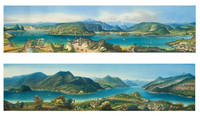
185020181Italy 1850. Pair of views gouache over faint etched line black gouache border. Period gilt and faux bois frames. Two splendid panoramic views of Lake Como and Lake Maggiore.<br/> <br/>Catering to the foreigners flocking to the region on The Grand Tour this pair of hand-painted prints beautifully depict the famed picturesque lakes with rich bands of blue highlighting the water and sky with the surrounding hills and mountains dotted with luxurious villas. In the view of Lake Maggiore we see from a very high vantage point the Borromean Islands: Isola Bella Isola Madre and Isola dei Pescatoriwith their extraordinary gardens. The view of Lake Como looks north up the lake towards Switzerland from above Bellagio which occupies the point at which the lake divides in two. The paintings are clearly intended as a pair the images being almost identical in size with matching black painted margins. The prints are as issued with black labels covering the original printed titles. unknown books
173718598Turin, Mairese, 1737. Text- und Tafel-Bd. 4 Bll., 307 S. 1 Kupferporträt und 79 Kupfertafeln. Fol. Mod. HLdr. unter Verwendung der alten Buchdeckeln (bestoßen und beschabt). [5 Warenabbildungen]
183010997(Wien, H. Engel, um 1830). 1 Titel, 1 Widmungsblatt und 2 Tafeln mit jeweils einem Plan und 14 bzw. 16 Ansichten als Umrahmung (alles in Lithographie). Gr.-Fol. Lose in OKart. (hinterlegte Randein- und -ausrisse, leicht fleckig, Rücken und hinterer Deckel erneuert). [5 Warenabbildungen]
016-Io.J. Aquarell, auf cremefarbenem Velin, rechts unten signiert und datiert ?J.J. Frey Rom 1838.?, auf beigefügtem altem Untersatz vermutl. vom Künstler selbst numeriert und bezeichnet ?N 1 Castel Gandolfo bei Albano, See... Albano in der Ferne das Meer gegen Ardea zu.? . 31:45 cm.
24-EFo.J. Bleistift, Feder in Braun, mit Deckweiß gehöht, auf chamoisfarbenem Velin. 28,2:43,3 cm. - In den Rändern Papier etwas wellig, Knickfalte links unten, Druckstelle rechts unten.
10856Hardcover. A unique look at human sexuality and literary Romantic love in the early part of the twentieth century during the colonial and modernist eras. As noted by the famous French philosopher Michel Foucault in his "repressive hypothesis" the age of Victorian repression clearly produced non-traditional expressions of lust. The epistolary consists of an original diary and correspondence between two lovers from 1912 to approximately 1916. It is written primarily in English with some excerpts in Italian. The primary diarist is presumed to be an Italian officer during the colonial era of the early 20th century involving Italy Britain and the "Mad Mullah" in the Benadir region of East Africa. The other correspondent is probably a British lady living in Tuscany at the time. The epistolary includes more than one hundred original drawings of various sexual acts most of which are in color and include detailed descriptions of the scenes depicted. Some images are watercolors some pastels and others are simple pencil sketc. <br/><br/> hardcover books