Brown, Dan; Poe, Richard [Reader]Biblio.com

5 568 résultats
2004Q-0743539478Simon & Schuster Audio 2004-06-01. Audio CD. New. New. In shrink wrap. Looks like an interesting title! Simon & Schuster Audio unknown
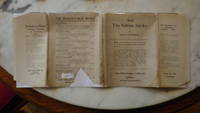
1953013285New York: Ziff - Davis Publishing Company 1953. Near Fine condition. Bright clean tight square and unmarked. Flat spine. One small crease to a corner of the rear cover. Not price clipped 35 cents. No store stamp owner's name or bookplate. Softcover. 5.5" wide by 7.5" tall. Includes Poe's: The Lighthouse "for the first time in the pages of any magazine the story on which Edgar Allan Poe was at work when he died." The story is here completed by Robert Bloch. Fantastic is NOT the same as Fantastic Story Magazine. The two are sometimes confused since they were published at the same time i.e. both had January 1953 issues. . First Edition. Softcover. Near Fine condition. Illus. by Frankenberg Robert cover art; interior art by Heinrich Kley Virgil Finay Tom Beecham Emsh etc. 162pp. Ziff - Davis Publishing Company Paperback
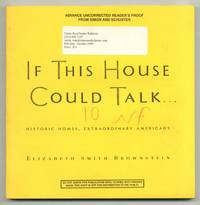
1999569844New York: Simon & Schuster 1999. Softcover. Near Fine. Uncorrected proof. Quarto. Illustrated. Printed yellow wrappers. Faint smudge on front wrap very near fine. Very scarce in this format. Simon & Schuster unknown
1973284707Stgt: Metzler 1973. 372 S. Br. *Gilzstiftmarkierung im Fußstegt, sonst sehr gutes Expl.*.
1927055330Boston MA: Bibliophile Society 1927. Limited . Hardcover. Very Good/Slipcase Very Good -. 4to - over 9¾" - 12" tall. 2vol.set: 26&38pp.; HBs indigo w/gilt; rubbed w/wear on edges&corners; much gilt rubbed off; some lt.tanbut cleantight pgs.; tops uncut on purpose. Slipcase; Indigo. rubbed w/sun & stain; edges worn w/chips; top edges broken w/chips&tears. The Raven w/two illus. "This Edition is Limited to 450 Copies. Printed for Members Only. <br/> <br/> Bibliophile Society hardcover
905Baltimore (U.S.A.). The Johns Hopkins Press. 1949. In-8°, reliure d'éditeur sous jaquette illustrée. 289 pages. E.O.
Twayne's United States Authors Series #4. Clean tight copy, only minor signs of library ownership 166p. bibliography index Ex-Library
19085202CBLeipzig, Otto Wigand, 1908. Gr.-8°. VII, 303 S. Mit 30 Tafeln und 71 Textillustr. Orig.-Leinenband.
1839006294Philadelphia: William E. Burton 1839. Very Good Plus and handsomely bound in later red cloth with gilt titles and rules top edge gilt marbled end pages 332 pp.with six tissue-guarded plates. gilt initials P.L. front board. complete with all illustrations lacking only the tissue guard for the month of September. Bound without the original wrappers. Cloth rubbed at corners and spine ends. Contains the First Printing of Poe's classic story "The Fall of the House of Usher" basis for several movies and TV shows including the 1960 classic "House of Usher" starring Vincent Price and with the screenplay by Richard Matheson. Also includes several other Poe stories and poems including "To Ianthe in Heaven" "The Man that was Used Up: A Tale of the Late Bugaboo and Kickapoo Campaign" "William Wilson: A tale" basis for several TV episodes "Morella: A tale" also filmed 1999 and "The Conversation of Eiros and Charmion". . First Edition. Cloth. Very Good Plus/No Jacket As Issued. 8vo - over 7¾" - 9¾" tall. William E. Burton, Hardcover books
183937562Philadelphia: William E. Burton 1839. 8vo pp. iv 334; 6 steel engraveds plates and illustrations in text; full calf gilt-stamped spine shelf wear; ex-Hill Library with usual markings; foxing and discoloration. This volume includes numerous stories and poems by Poe including "To Ianthe in Heaven" "The Man that was Used Up: A tale of the late Bugaboo and Kickapoo Campaign" "The Fall of the House of Usher" "William Wilson: A tale" "Morella: A tale" and "The Conversation of Eiros and Charmion". Also includes extensive pieces on archery gymnastics and cricket. <br/><br/> William E. Burton unknown books
1839BBS-2021172William E. Burton 1839. Paperback. Acceptable. The December 1839 issue of Burton's; appears to have been excerpted from a contemporary omnibus as it is preceded by the title page and contents list from a Volume V compilation of July-December. No covers. Contains the first-ever appearance of Edgar Allan Poe's 'The Conversation of Eiros and Charmion.' Stained and edgeworn. Threadbound; threads intact. The fore-half of pages 327-328 is torn out as is the bottom fore-edge corner of pages 331-332 with loss to text. The final leaf with pages 333-334 is missing. Poe's contribution is in pages 321-323 and is complete. William E. Burton paperback
19683228Paris. Nrf, Gallimard, 1968. "Les Essais" CXXXIII. 1 volume in-12 (185 X 120 mm) broché, 216 pp. + ffnch. + catalogue, sous couverture gris-bleu rempliée imprimée en noir et rouge. ÉDITION ORIGINALE. Exemplaire de première émission (15/02/1968) enrichi d'un feuillet monté et plié agrémenté d'une page contre-collé en plein milieu par lui, arrachée d'une édition de poche des Essais de Montaigne. L'auteur à recouvert l'ensemble d'annotations et d'UN ENVOI AUTOGRAPHE AU FEUTRE VIOLET SIGNÉ À BERNARD GHEERBRANT. Exemplaire offert à une importante personnalité du monde intellectuel et artistique parisien de l'époque, libraire et galeriste de légende. L'ouvrage est en parfait état. Très belle provenance.
2082702114909996Kenkyusha N.A. Soft Cover. Fine. Number of pages: xviii 320 p. port. Size: 18 cm Kenkyusha paperback
196630183<p>HBDJ 1966 1st Edition THUS EARLY ISSUE REPRINT LARGER FORMAT VG/NFINE- BLUEGREEN ILLUSTRATED DJ .Small GREEN cloth boards GOLD GILT ON SPINE CVR LITE WEAR. Extremities tiny chipswear to DJ BACK DJ MENTIONS OVER 500 VOLS. END WITH ZOLA HAS LITE SCUFFING 527 PGS NO ADS LITE Mild tanning to pages throughout . Boards have mild shelf wear with light rubbing and corner bumping. . Unclipped jacket has light edge wear . Mild rubbing and tanning to spine DJ Gold Bug is 1st example Crytogram Story . & 1ST EXAMPLES OF MODERN DETECTIVE STORY WITH Purloined Letter Mystery Marie Roget & MURDERS IN RUE MORGUE</p> EVERYMAN’S LIBRARY J. M. DENT LONDON hardcover
194129169<p>HBDJ 1941 1st Edition THUS EARLY ISSUE REPRINT VG/VG RED & BLACK ILLUSTRATED DJ 410 pages. red SALMON EMBOSSED cloth boards GOLD GILT ON SPINE CVR LITE WEAR. Extremities tiny chipswear to DJ BACK DJ MENTIONS OVER 970 VOLS. END WITH ZOLA 527 PGS ADS Spine dJ small stain & wear Mild tanning to pages throughout with occasional thumb marking present. Light marking to text block edges. Boards have mild shelf wear with light rubbing and corner bumping. Some light marking to surfaces and crushing at spine ends. Unclipped jacket has light edge wear with minor tears and chipping. Mild rubbing and tanning to spine with small area of loss at top.</p> EVERYMAN’S LIBRARY J. M. DENT LONDON hardcover
192129454HBDJ 1921 1ST EDIITON 1st Printing DJ CHIPS EDGE STAINS & WEAR RUB VG/GOOD- SMALL TRIANGULAR CHIP BACK DJ BTM EDGE takes out part of print BLUE Pictorial BOARDS Illustration of SPHINX ON FRONT WITH CLOTH SPINE HAS CORNER STAIN ON BACK. Book in Near Fine- condition slightest of wear to the covers. Dust jacket in Good- condition. 8vo pictorial light blue boards with SPHINX ON FRONT dark blue cloth spine with paper label. Dust Jacket in Good- condition some chips and tears mild soiling. 99 pgs Stories & Prose Poems ARE AMONG THE UNIQUE THINGS IN AMERICAN LITERATURE Includes Chinese Doll Evil's Good WORMS & BUTTERFLIES I Am t<br /><br /> STRATFORD CO. PUBLISHERS BOSTON MASS hardcover
1981762619PN. New. 1981. Soft Cover. Date is original print. This is a reprint edition. . PN paperback
1984773081PN. New. 1984. Soft Cover. Date is original print. This is a reprint edition. . PN paperback
Trad. di Giulia Veronesi.<BR>(Enc. popolare). 16°, pp.191 (1), ill.n.t. Mz. perg. recente, tass. con tit. oro al dor.
In 8°, pp. 191 con molte ill. anche a piena pag. n.t. Bross. edit. ill.
In-16°, leg. in bross. edit., pp. 138. Piccole abrasioni al dorso.
br. La chiave per decifrare il mistero Edgar Allan Poe è introvabile. La teneva in tasca lui stesso quando fu trovato riverso su un marciapiede di Baltimora: fu malmenato, derubato o assassinato? Sarebbe morto comunque perché malato? Alcolismo, depressione, perversione, mania di persecuzione: che nome dare alla sua malattia? Di sicuro ne aveva una: la Letteratura, alla quale sacrificò denaro, amore, prestigio. Il termometro della febbre si chiamava Poesia e lo scopo della guarigione Bellezza, intesa come verità, aspirazione eterna, fine ultimo dell'uomo, da ricercarsi ovunque, persino nella deformità, nel grottesco, nell'intelligenza analitica e negli abissi del cuore umano. Edgar Allan Poe fu soprattutto un veggente: anticipò la critica moderna e generi letterari come la detective story e il gotico moderno, in una società - quella americana degli inizi dell'Ottocento - priva di una cultura nazionale, che sarebbe sprofondata, da lì a poco, nella tragedia della Guerra Civile. Come autore fu disprezzato dai più; costretto ai margini come giornalista, non pubblicò mai per intero una raccolta né di racconti, né di poesie. Solo nel suo ultimo anno di vita conobbe una certa fama grazie alla poesia Il Corvo, composta come estremo "graffio" al mondo che lo ignorava. Abbandonato a più riprese dagli affetti più cari, assaporò l'amore solo per essere costretto a separarsene. In vita sua guadagnò poco più di 300 dollari e scrisse i suoi migliori racconti sotto l'urgenza della fame e del freddo: tanto gli costò il suo posto nella letteratura mondiale.
2010Q-0521614058Cambridge University Press 2010-12-06. Paperback. New. In shrink wrap. Looks like an interesting title! Cambridge University Press paperback
2002Q-157028220XMcGraw-Hill Education 2002-08-26. Paperback. New. In shrink wrap. Looks like an interesting title! McGraw-Hill Education paperback
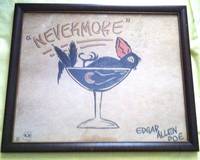
177New Jersey or New York: Al Capp 1930. UNIQUE. Framed. Very Good. Al Capp. Oil painting framed 15 1/2" H by 18 5/8" W; image: 13 7/16" x 16 7/16" signed by Al Capp with facial caricature of a man with bulbous eyes & two teeth plus initials; with the Edgar Allen Poe-based caption "Nevermore" in gold with black highlighting and double underlining above a cartoon of a drunken black raven with orange beak passed out upside down in a martini glass while still holding an olive with pimento. On the tattered brown paper backing there is the ink inscription: "PRESENT from MR. ACE" / The One and Only 1981" and an old browned newspaper cut-out of an Edgar Allen Poe caricature see below. Panel beneath the brown paper reads: Visit our Grecian Art Pavilion Ltd. Home of the "Hellenic Art Festival" Exquisite Oil Paintings Watercolors and select Handicrafts by Greek Artists 95-42 Queens Blvd. Rego Park N.Y. 11374 212 275-1745 Opposite Alexanders with auction tag Stamp faded on brown paper reads: Hellenic Art Center Ltd. 2804 Stenway Street Astoria N.Y. 1805 210-545-5093 Original Oil Paintings Framing & Frames in Stock. "Nevermore" is Al Capp's amusing painted parody of Edgar Allen Poe's famous croaking Raven adapted to point the negative moral of drunkenness for alcoholics. This remarkable and unique framed oil is in a somewhat worn wooden frame; executed on board ; and signed with Capp's unusual early caricature face & initials. Al Capp 1909-79 has been called--correctly I believe--the "Mark Twain of cartoonists." Other comparisons have likenened his work to that of Charles Dickens who also used social satire lampoons reformist topicality and memorable names for his unforgettable characters. Thus Capp observed that Dickens might have written comics if he had been alive today. As Capp also liked to emphasize: "No artist who can write should avoid words; no author who can draw should avoid drawing." From his boyhood on Al Capp was an enthusiastic reader of "literary classics" to name a few: adventure novels Dickens Thackeray Conrad Trollope G.B. Shaw and Edgar Allen Poe. During the late '40's and '50's when public fears mounted about violence and horror in comics having negative effects on children Capp used the example of Poe to illustrate that great authors and their works were not deemed to have such negatives. In this remarkable use of a major Poe image--that of the Raven who croaked "Nevermore"--Al only slightly twists it humorously to point a moral against alcoholism. Of course Poe himself suffered from alcoholism . . . and more while Capp was always a teetotaller though he too suffered in later life from a "cocktail" of drugs he took to cope with manic-depressive tendencies and chronic pain caused by the early amputation of most of his right leg. No doubt in part because of the mysterious alchemy created by the interaction of his comedic genius with his physical and emotional problems Capp's comic-based social satire was brilliant inventive frequently controversial enormously influential and topical--having persisted for 40 or more years through the middle of the 20th century with numerous repercussions to this day. Capp's characters and related creations have become part of American folklore; among them Dogpatch and its folksy denizens: Mammy and Pappy Yokum; Li'l Abner and a bevy of busty-and-leggy femmes fatals: Daisy Mae Stupifying Jones Wolf Gal Lena the Hyena and Available Jones. For many the depressed region of "Slobbovia" still resonates. Capp's inventive genius led to other memorable creations such as "Sadie Hawkins' Day" from 1937 and the mass merchandising of "Shmoos" 1948ff. "Kigme's" and "Kickapoo Joy Juice." Several of Capp's memorable phrases have also entered everyday use such as "amoozin and confoozin" or during the Cold War the name "Nogoodnik." Likewise musicals and movies have been made of "Li'l Abner" while an Arkansas' theme park named "Dogpatch" opened in 1968. A high school dropout Al Caplin took a succession of art courses from several distinguished art schools before he invariably dropped out. Accordingly his brilliant gifts as a cartoonist were honed on the job after constant practice. Highly relevant to the dating of our oil "Nevermore" during Al Capp's school-and-early apprentice years he sometimes worked in oils. Because this rare--but undated--cartoon has been executed in oils we can delimit its creation to Capp's early creative years. For a brief time Capp was active as a boardwalk caricaturist around Asbery Park New Jersey. At that time--about 1931-32--he hung out with an alcoholic portrait sketcher named Anderson. That Capp strongly rejected having a similarly depressed tawdry and boozy life as a starving artist suggests the milieu in which this memorable piece may have been created. Instead as a lifelong teetotaller Al soon took his portfolio of drawings to New York City where he began his strenuous climb toward recognition and prominence. Also about this time though he was still signing his work as "A. G. Caplin" in the early 1930s he formally changed his name to "Al Capp" after he turned 22 in early 1931. We can thus place the creation of this piece to around this period. Comparison of Al Capp's signatures over his career--especially this caricature & initial--indicates that this example is from earlier in his career. Most famous for "Li'l Abner" he began his famous strip on August 8 1934 while his first full color Sunday strip came out on February 24 1934. The beloved strip achieved an enormous circulation of 25-million by 1946. And between 1937 and 1947 it is estimated that each day about 70 million people read his "Li'l Abner" comic strip. Artist-writer Capp often remarked: "I think of myself as a novelist and of 'Abner' as a novel a page of which is pulled every day. At the end of the year I've written 365 pages fully illustrated." The remarkable period of the Thirties also saw the birth of Chester Gould's "Dick Tracy" 1931 and "Terry and the Pirates" 1934; while "Superman" Action Comics came into being in 1938. Capp created the comic strip of "Abbie an' Slats" in 1937. During World War II because he had lost most of his right leg in a trolley-car accident Capp was 4-F. He actively participated in creating promotions for war bonds and regularly visited wounded vets for whom he regularly drew pictures. The tone of our piece doesn't seem appropriate though for a possible hospital visit. During the war and through most of the later 1940's however Capp also created devastating pre-Mad magazine parodies. Among them he lampooned Milt Caniff's "Steve Canyon" with his own "Milton Goniff's 'Steve Cantor'"; John Steinbeck's Grapes of Wrath the Ford film of 1940; and his friend Chett Gould's "Dick Tracy" in contrast to Capp's ridiculous detective "Fearless Fosdick" 1942ff. Al overstepped contemporary legal boundaries with a strip parody of "Gone wif the Wind" starring "Wreck Butler" and "Scallop O'Hara" in late 1942. As a result Margaret Mitchell threatened to sue his publisher for $76-million thereby causing Capp to drop the spoof and formally apologize in another cartoon. Stylistically our "Nevermore" is a take-off or parody of Poe's very well-known ominous raven. During the early 1940s several cartoonists created similar crows and ravens. Capp's raven resembles Chuck Jones' "Mynah bird" that he created for Warner Brothers from 1939-41. Likewise Cliff Edwards' "Jim Crow" appeared in Disney's "Dumbo" in 1941. One also notes nose art that WWII pilots used to decorate their warbirds "Old Crow Express" being one such; as well as Paul Terry's very popular "Heckle & Jeckle"--actually two Magpies not ravens--that he created in 1946 for Terrytoons. Because of this ravenesque flocking I would put a terminus a quem date on Capp's fine piece of the mid-1940s. The above date spread circa 1929-1946 is reinforced by a survey of Al Capp's other bird sketches--not just ravens or crows. This too suggests that the simplicity and humor of his raven in "Nevermore" dates from an earlier phase of his long career. Examination of other birds--particularly parrots--indicates that his "bird-style" became more elaborate and decorative over time e.g. "The Parrots of Wimpole Street" Oct. 1959 drawn by Capp &/or Frazee lot 582 in Nate D. Sanders' 2013 catalog; a flamboyant and wildly colored parrot drawn by Capp in 1974 lot 710 in Sanders. We thus provisionally date our Edgar Allen Poe parody to between the late 1920's through the mid-1940's; and cartoon styles he used--in keeping with other cartoonists--during the 1940's as reflected by the cartoon of Capp's raven. Accordingly "Nevermore" fits within the period late 1920's through the immediate post-WWII period say 1946. The possible reverberation of Capp's antagonism to alcoholism pronounced in 1931-32; his use of paint as medium as during his student and impoverished apprentice days; coupled with the slight wear to the finish of the paint however suggest a date closer to the 1930's than the 1940's. We conjecture that this piece was possibly executed in New Jersey and taken with the cartoonist to New York as part of his portfolio in the early 1930's. One notes that Al Capp once again used oils near the end of his life when he had an exhibition of large paintings of notable "Li'l Abner" characters at the New York Cultural Center April 15-May 11 1975. At this time neither the finish subject backing nor size of our parody fit his late spurt of productivity in oils. The matter of dating is somewhat complicated by the brown paper backing writing stamp and framer's ad beneath it. The brown paper backing of the painting has become tattered but one can still read "For MR. ACE / "The One and Only" as well as next to it the clear date "1981." Given the early suggested dates for the creation of Capp's artwork we assume that this painting was given after Capp's death in 1979 to "Mr. ACE / The One and Only" whomever that was in "1981." Also on the paper backing there was previously a taped & now removed for safe-keeping small ~ 3" newspaper clippling depicting a caricature of Edgar Allen Poe with his famous raven not by Capp with a date of "1967" appearing on its verso. We cannot be certain who cut out this clipping but the "1967" date provides a terminus after which the clipping was cut. One can also identify the Greek framer see above. Given the convergence of likely dates around the late 1920's/early 1930s-early 1940s however these later indications of framing suggest that the painting was gifted--perhaps more than once--sometime between 1967 and 1981. For additional references see especially a recent catalog of Al Capp cartoons issued by Nate D. Silver Inc. in September 2013; as well as Michael Schumacher & Denis Kitchen Al Capp: A Life to the Contrary Bloomsbury 2013--especially pages 20 on Al's early reading; 34 on the alcoholic caricaturist Anderson; 81 112-13 136 on Poe; 162 on Stenbeck's plaudits; & pages 251-52: where Capp observed that when he took up oils in the 1970's he hadn't used that medium since art school. Al Capp unknown books