1 706 résultats
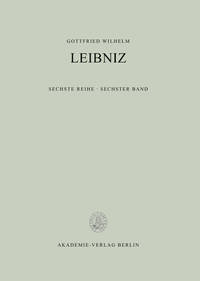
1992639097Akademie Verlag 1992. Hardcover. Very Good/No Jacket. 8vo. - Text in German - Corners a little bumped - Some minor dust marks to edge of text block and very minor shelfwear otherwise Clean bright tight book - Single volume - 822 pages No Jacket Akademie Verlag hardcover
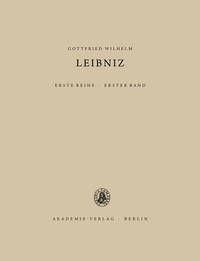
1986BN150879Akademie - Verlag Berlin 1986. 1986. Allgemeiner politischer und historischer Briefwechsel / hrsg. von der Akademie der Wissenschaften der DDR Bd. 1.1668 - 1676 / Bearb.: Paul Ritter . aus: Sämtliche Schriften und Briefe. 1. Reihe <br/><br/>Allgemeiner politischer und historischer Briefwechsel / hrsg. von der Akademie der Wissenschaften der DDR Bd. 1.1668 - 1676 / Bearb.: Paul Ritter . aus: Sämtliche Schriften und Briefe. 1. Reihe Leibniz Gottfried Wilhelm / Briefe - Leibniz Gottfried Wilhelm und Paul Ritter Akademie - Verlag Berlin unknown
1957230864BBBln., Akademie-Verl., 1957. Bd. 6: 1690-1691. 4°. 42, 706 S. OLwd. m. OU. - Mehrsprachig. - Sämtliche Schriften u. Briefe, Reihe 1, Bd. 6. - Rckn. unbedeutend verblasst, sonst gutes Ex.
19864839Akademie - Verlag Berlin 1986. XLVII, 545 S. ohne Schutzumschlag Gewebe, gebundene Ausgabe, leichte Gebrauchsspuren am Einband, sonst gut
19702123029Berlin: Akademie-Verlag 1970. XLIX, (1), 794 Seiten. Teilweise Frakturdruck. 4° (25,5 x 20 cm). Schwarzer Orig.-Leinenband mit goldgeprägtem Titel auf Deckel und Rücken und Orig.-Schutzumschlag. [Hardcover / fest gebunden].
15933Paris, Librairie Philosophique J. Vrin, 1965. Coll. "Bibliothèque des Textes Philosophiques". In-8 broché, 155 p. Traduit du latin par Paul Schrecker. Bon état.
2494509017.Gpaperback. Good. Access codes and supplements are not guaranteed with used items. May be an ex-library book. paperback
Mm 170x240 Brossura editoriale con bandelle, pagine VII-200. Opera in perfette condizioni. SPEDIZIONE IN 24 ORE DALLA CONFERMA DELL'ORDINE. WORLDWIDE DELIVERY
Collana “Testi e Saggi”, 28. Un volume di VII-200 pagine, brossura editoriale illustrata. Dimensioni: 17,5x24,5 cm. Minime tracce d'uso alla brossura, per il resto ottime condizioni. Presentazione di Giovanni Papuli
1986100126996Librarie Philosophique J. Vrin 1986 454 pages 15x2 8x23 2cm. 1986. Broché. 454 pages.
195319422Académie Internationale d'Histoire des Sciences - Hermann , Archives Internationales d'Histoire des Sciences Malicorne sur Sarthe, 72, Pays de la Loire, France 1953 Book condition, Etat : Bon broché In-8 1 vol. - 190 pages
br. Questo lavoro, che si colloca al confine tra la storia della filosofia e la storia della scienza, analizza il costante interesse dimostrato da Gottfried W. Leibniz (1646-1716) per la nascente microscopia, che spalancò alla scienza moderna campi di indagine interamente nuovi. La più piccola goccia d'acqua rivela un pullulare di creature invisibili a occhio nudo, che estendevano la scala naturale ben oltre i limiti allora conosciuti. Leibniz, che fu sempre particolarmente sensibile, in ogni campo della sua attività, teorica e pratica, a ciò che è infinitamente piccolo, non esitò a utilizzare prontamente l'osservazione del microcosmo come supporto empirico del "nuovo sistema della natura" che andava elaborando: una sorta di atomismo vitalistico, noto anche come "monadologia". In esso trovava una formulazione rigorosa la tesi che il mondo attuale realizza la massima varietà ordinata possibile, idea che Leibniz cercò di corroborare attraverso le nuove scoperte osservative, in un dialogo costante tra "scienza colta" e "saperi tecnici", speculazione metafisica e risultati sperimentali. Prefazione di Massimo Mugnai.
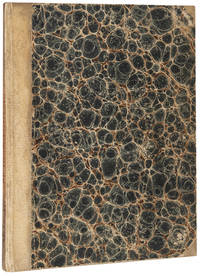
114780Frankfurt Christopher Cröker 1690. . Second edition; 4to 18.5 x 14.5 cm; engraved frontispiece tables in the text decorative initials typographic headpiece contents faintly toned but overall clean; early 19th century half vellum with marbled boards manuscript title to spine small bookplate of the same period in the upper left corner of the front pastedown the name scratched out and the number '192' in manuscript calf a little toned boards rubbed with wear at the edges very good unsophisticated condition; 78pp.<br /> Second edition of Leibniz's groundbreaking early work on combinatorics a highly original proposal in logic and mathematical philosophy expanded from his thesis Disputatio arithmetica de complexionibus and first published with the title Dissertatio de arte combinatoria in 1666. Both editions of the text are rare in commerce with only one copy of each noted in auction records over the last two decades.<br /><br />Leibniz's Arte Combinatoria is concerned with two issues the development of a system of symbols denoting human concepts so that they could be symbolically manipulated 'to discover new truths and find proofs for the old ones' and a 'meta-science' for 'investigating the various methods and procedures deductive and inductive empirical and logical internal to each scientific field' Mugnai Leibniz: Dissertation on Combinatorial Art Oxford University Press 2020. These would remain major pre-occupations for Leibniz throughout his life.<br /><br />Though the book made Leibniz famous among European intellectuals it was written before he had thoroughly studied mathematics. He responded to this unauthorised edition with a note in the scientific journal Acta Erudatorium writing that though the text was 'not sufficiently polished' it contained '"many new meditations" he did not regret concerning "the art of discovery" and the "excellent" idea of an alphabet of human thoughts' Mugnai.<br /> Frankfurt, Christopher Cröker, 1690. hardcover
9788574316376-11-72951Unisinos. New. Unisinos unknown
196631700AHildesheim und New York, Georg Olms Verlag, 1966. Ca. 19,5 x 13 cm. 8 Seiten, 521 Seiten, 19 Seiten Register; 10 Blätter, 429 Seiten, 39 nn. Seiten Register. Mit Abbildungen. Weinrote Original-Leinenbände mit goldgeprägten Front- und Rückentiteln sowie Kopffarbschnitt. 2 Bände.
2008112149München : Diana-Verlag, 2008. Taschenbucherstausgabe; 271, [16] S. ; 19 cm; OKart. (Taschenbuch);
200874096München: Diana, 2008. 271, [16] S.; 19 cm; OKart. (Taschenbuch);
1702168455Hanover: 25 April 1702. A meeting of minds in the Age of Enlightenment The opening letter of Leibniz's correspondence with William Wotton marking the beginning of the long-standing relationship between the two great polymaths. The letter draws attention towards a relatively understudied side of Leibniz his engagement with historiography and presents his reflections on the role of history as a "mirror for princes". Wotton 1666-1727 was an English theologian who wrote chiefly on history and theology. Among his major works are Reflections upon Ancient and Modern Learning 1694 and The History of Rome from the Death of Antoninus Pius to the Death of Severus Alexander 1701 - the latter later used by Gibbon. These caught Leibniz's attention prompting him to open correspondence. Leibniz thanks Wotton for gifting him a copy of his Roman history praising the work as "accurately elaborate" and presented in "an elegant book". He then compliments the breadth of Wotton's knowledge admitting that: "I almost couldn't believe that the author of the History was the same as he who produced that famous work comparing the learning of the ancients and moderns Reflections. For such different forms of erudition are unlikely to coexist in the same person. I can't thank you without also expressing my admiration". Leibniz had read the Reflections a contribution to the ongoing controversy concerning the merits of ancient and modern learning and sided with the moderns as did Wotton. Leibniz first heard of Wotton's works a few years before from his friend Thomas Burnett who acted as a source of English intellectual news for him and had previously introduced him to Locke. In the first part of the letter Leibniz also mentions Wotton's "extraordinary envoy" who delivered the book; this was James Cresset English ambassador for several north-German states and a friend of Leibniz. Leibniz reveals that soon after receiving the book he immediately brought it to court and showed it to Georg Ludwig Elector of Hanover and the future King George I of England. The prince who Leibniz notes was "fond of English literature" was already reading a copy with pleasure; Leibniz regrets that the recently deceased William III could not do the same. This occasion prompts the philosopher to reflect on the educational role of history as a mirror for princes: "It is an old saying that History is the school of princes but hardly another history could be a better teacher than yours in which the Caesars. are depicted almost as if to be admired on a canvas". The letter also exemplifies Leibniz's fluid and creative Latin style: "with this taste you have wonderfully stimulated my appetite which you can satisfy if anyone can". Wotton replied in July and their correspondence continued until Leibniz's death the two typically exchanging cultural news. Leibniz's fascination with history began very early and was concentrated on Germany. Work on the critical edition of his historical contributions started in 2019 and is ongoing. Around the time of this letter he was publishing collections of Medieval documents: Mantissa Codicis Juris Gentium Diplomatici 1700 and Accessiones historicae 1700. These were part of a wider project to collect materials for the publication of a history of Germany which was never realized. The letter is a witness to Leibniz's curiosity towards the works of English historians at a time when he was actively reflecting on these topics; it also testifies to the popularity of Wotton whose achievements are often overlooked by modern scholarship. A transcription of the letter is published in Gottfried Wilhelm Leibniz Sämtliche Schrifte und BriefenReihe I Band 21 2012 no. 137. Single sheet of laid paper 199 x 158 mm legibly written on both sides in brown ink attached to a later blank of wove paper. Lightly toned and foxed creased from folding Leibniz's hand clear and the ink unfaded. Overall in very good condition. unknown
19466925BWeimar, Hermann Böhlaus Nachf., 1946. 8° (20 x 13,8 cm), 15 Seiten Hellgrauer OKt. (lichtrandig) mit Blaudruck Titel gestempelt
197226110München, Produktion Tonbild München, 1972. Mit einem Reprint von Adolf Hölzels "Abstraktion". Mit einem Schutzeinband.
1990__3050010355De Gruyter 1990. Hardcover. New. 626 pages. German language. 9.84x7.64x1.34 inches. De Gruyter hardcover
196516412Köbenhavn Munksgaards Forlag, 1965. 745 S. 4° Quart Brosch. 2 Bände
194715031ABReutlingen, Gryphius-Verlag, 1947. 214 S. OKart. (= Monographien zur philosophischen Forschung, Band 1).
19471736Reutlingen, Gryphius-Verlag, 1947. 8°, 240 Seiten. Orig.Karton.
19474158Reutlingen, Gryphius-Verlag, (1947). 8°, 240 Seiten. OKart.