4 530 résultats
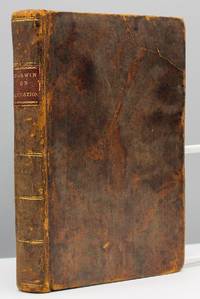
1803290244Boston: Thames and Andrews 1803. Second. hardcover. good. PARTS 1 & 3 ONLY bound together. xxix 3 466 96 pages. Includes an index to these volumes one page partially torn. 8vo old tan cloth very worn but sound with inner hinges re-enforced. Text is unmarked but heavily browned and with occasional staining. Boston: Thomas and Andrews 1803. Second American from the third London edition. Scarce. A good copy but lacking the 2nd part.<br/><br/> Austin 617 and 618. GM 105 Osler 2413 both cite original London edition 1794-1796. Orr 148 2nd and 3rd American editions. Reynolds 1187 3rd American edition. Cole 2087. Wood p. 311. This work is "the celebrated forerunner of Darwinism" and the one which alone has made the author's name memorable apart from his familial connection with Charles Darwin. The work sustains a peculiar but original thesis in which the author attempts to formulate the laws that govern the origin and progress of animal life. There is much in it that seems to foreshadow Darwinism.<br/><br/> Thames and Andrews unknown books
1797310467Philadelphia: Printed by T. Dobson at The Stone House 1797. First American Edition. A New Edition. xxiv 486; 8 539pp. 2 vols. 8vo 8-1/4 x 5-3/4 inches. Original quarter sheep and red leather title labels on spine marbled boards uncut. First American Edition. A New Edition. xxiv 486; 8 539pp. 2 vols. 8vo 8-1/4 x 5-3/4 inches. UNCUT IN ORIGINAL BINDING. "As a physician Erasmus Darwin was widely recognized as England's finest medical doctor. He was asked several times to be personal physician to King George although his lack of respect for the monarchy in general and George in particular made this an easy offer to refuse. Much of the philosophy central to Erasmus Darwin's medical beliefs is laid out in his treatise on animal life Zoonomia. Although his views were loaded down with incorrect 18th-century ideas and assumptions. he was generally able to improve the lives of many of his patients using common-sense ideas such as a balanced diet the practice of basic hygiene and the cleaning and dressing of wounds. He was considered progressive in that he believed in a connection between his patient's state of mind and their general health and was one of the first physicians to espouse sympathetic treatment of mental patients who at the time were kept in deplorable conditions. Most of Zoonomia is made up of a Linneaus-inspired classification of all diseases and treatments known at that time. Erasmus tries to arrange them into distinct species genera families and ultimately into four broad classes: diseases of irritation from external sources sensation such as excess pain or pleasure volition caused by desire or aversion and association where diseases of one organ or system can cause other associated problems" Robert Day. This exercise led Darwin to advance the "first consistent all-embracing hypothesis of evolution" Garrison & Morton: "When we observe the essential unity of plan in all warmblooded animals we are led to conclude that they have been alike produced from a single living filament.". Evans 32017 Printed by T. Dobson, at The Stone House unknown books
1963PW1193London:: Macmillan 1963. 1963. 8vo. vii 1 183 pp. Frontis. map index. Cloth dust-jacket; jacket rubbed. Very good copy. Macmillan, 1963. hardcover books
1963PW1194New York:: Charles Scribner's Sons 1963. 1963. 8vo. vii 1 183 pp. Frontis. map index; small stain p.viii. Green cloth dust-jacket; jacket lightly worn. Very good. Charles Scribner's Sons, 1963. hardcover books
1806PW1192Lisbon:: Joao Rodrigues Neves 1806. 1806. 8vo. 4 vii 1 408 2 pp. 1 engraved plate facing p. 220; lacks front free endleaf. Original speckled calf; scuffed. Very good. First Portuguese edition translated by Henrique Xavier Baeta. This is a translation of Darwin's Zoonomia and part of his Materia medica. Baeta took his bachelor's degree in the Faculty of Philosophy at the University of Coimbra then his PhD in Medicine from the University of Edinburgh. In 1800 he came to Lisbon because in Coimbra he was being persecuted and began to begin the exercise of his profession. In 1831 he was searched arrested and placed in jail where he was until July 24 1833. web source. Joao Rodrigues Neves, 1806. unknown books
18077174New York: Printed and sold by T. & J. Swords 1807. Second American edition. Full Calf. Very Good. 2 parts in 1 each part with a separate title page. xviii278;144pp. Index of pant names. Illustrated with a copper engraved frontispiece 16 copper engraved plates 6 by William Blake including 4 of the Portland Vase and a copper engraved folding geologic stratigraphic column. Cont. tree calf brown calf spine label hinges & spine a bit rubbed but sound. General title page a bit browned and with an old paper repair to a blank portion no text loss. Some offset browning to pages facing the plates. AMERICAN BIBLIOGRAPHY 1807 #12395. Printed and sold by T. & J. Swords unknown books
1902PW1202Wien Vienna & Leipzig:: Wilhelm Braumuller 1902. 1902. Series: Wiener Beitrage zur Englischen Philologie XVI Band. 8vo. xii 203 1 pp. Later blue buckram gilt stamped spine title. Columbia University Library embossed stamp on title. Very good. Scarce. Wilhelm Braumuller, 1902. hardcover books
1973PW1195New York:: Twayne 1973. 1973. Series: Twayne's English Authors Series. Small 8vo. 143 1 pp. Index. Cloth dust-jacket; endleaves scarred paper removed d. j. essentially stuck to boards library pocket at rear with spine label numerous rubber-stamps including title. As is but scarce in jacket. Twayne, 1973. hardcover books
1943PW1197New York:: Penguin Books 1943. 1943. Small 8vo. 143 1 pp. Figs. Blue & black printed wrappers; extremities rubbed spine end worn. Bookplate of DG Denis Gibbs Oxford. Good. Penguin Books, 1943. unknown books
1930PW1198London:: J. M. Dent & Sons 1930. 1930. First edition. 8vo. xi 1 242 2 pp. 12 plates index; some foxing. Pale green cloth black-printed green dust-jacket; jacket rear torn. Ownership inscription of J. Edmonds Oxford. Scarce in jacket. Very good. "The first American publication of a thirty-odd year old portrait of Erasmus Darwin grandfather of the famous Charles and great three times grandfather of author Pearson the last probably accounting not only for the intimacies involved but also the reverence indulged in. Darwin was 18th century England's physician par excellence George III wanted him but didn't get him; Darwin was too democratic; he was also a philosopher a poet and head mandarin of the Lunar Society whose celebrated enclave held Watt of the steam engine Wedgwood of pots and Priestley of oxygen. Darwin was a stutterer who looked twice his age; nevertheless his sallies never missed nor was his sexual appetite ever starved. Twice married and many more times a father his home was a happy one; a failing though- grumpy disapproval of all things spiritual- cost him a son a wistful lad who ended it all at the bottom of the River Derwent. Pearson's style here- it has changed since then- is pretty much drawing-room English comfortably ensconced with wit and stage-bearded with wisdom. The hyperbole of course gets heavy-handed: was Darwin really the progenitor of eugenics aeroplanes submarines psychoanalysis That he was the "parent of Creative Evolution" one can doubt a doctrine made unfashionable ironically enough by his grandson. Put it all down as a bunched-together biography- incidents anecdotes character studies-which in its fustily fastidious way is fascinating. And if Darwin as a personality doesn't emerge as engaging as he was intellectually extraordinary well one can't have everything especially all in one family." Kirkus Reviews. J. M. Dent & Sons, 1930. hardcover books
1973BL3264London:: The Scolar Press Limited 1973. 1973. Facsimile reprint of the 1803 edition. 29 cm. xiv 174 2 124 pp. Illus. Gilt-stamped tan cloth dust-jacket; jacket edges frayed. Very good. ISBN: 0859670686 / 0-85967-068-6 The Scolar Press Limited, 1973). hardcover books
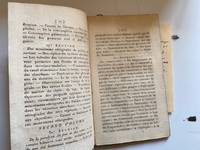
31376Couverture rigide. Bon/1807. in-8. Gand Goesin-Verhaeghe 1807 in-8 84pp Document dé-relié et sans couvertures Document dé-relié et sans couvertures sinon bel exemplaire complet! unknown
ill., br. Questa biografia è un'importante testimonianza dell'interesse provato da Charles Darwin nei confronti della vita e delle opere di suo nonno Erasmus; i due non si conobbero mai, ma lo stesso Charles confessò, fra le pagine della sua "Autobiografia", come l'opera di suo nonno fosse riuscita a preparare il "terreno favorevole a quella dottrina che più tardi, in forma diversa, ho sviluppato nell''Origine delle specie'". Diversi contadini della cittadina di Lichfield credevano che il dott. Erasmus Darwin fosse un mago, altri pensavano si trattasse di un ateo, a giudizio di molti fu uno strabiliante poeta, per alcuni invece fu il primo grande teorico delle leggi della vita organica. Egli, infatti, già nel corso del XVIII secolo iniziò a porsi alcuni fondamentali interrogativi sulla natura e sulla storia della vita, cercando di rispondere alla più difficile delle domande: da dove veniamo e qual è la nostra storia? Con uno sguardo al contesto filosofico e scientifico in cui emersero le sue risposte trasformiste e tentando di porre nuovamente in rilevanza anche alcuni aspetti dell'opera e del pensiero del nipote, questo testo intende offrire un ampio quadro del trasformismo settecentesco attraverso lo sguardo di uno dei suoi più noti pensatori.
17911277661791. First Edition. BLAKE William engraver DARWIN Erasmus. The Botanic Garden; A Poem in Two Parts. London: J. Johnson 1791 1791. Two volumes in one. Quarto contemporary full brown mottled calf rebacked burgundy morocco spine label. $3300.First edition of Part I third edition of Part II of Erasmus Darwin's chief poetical work illustrated with two engraved frontispieces and 18 plates one from a painting by Henry Fuseli five engraved by William Blake.""The chief source of Erasmus Darwin's literary fame during his lifetime The Botanic Garden contains a great deal of important and frequently advanced scientific information in the nearly 300 footnotes and the 115 pages of appendices to its verses. Part I 'The Economy of Vegetation' involves a far-reaching survey of science and technology with significant sections on evolutionary theories and numerous footnotes on electrical phenomena. Part II 'The Love of the Plants' is a 'single-minded catalogue of vegetable sex-life"" Norman. Darwin describes plant reproduction according to the Linnaean system ""by means of a most ingenious and amusing personification of each plant and often even of the parts of the plant. It is significant that botanical notes are added to the poem and that its eulogies of scientific men are frequent"" Britannica. Darwin's Garden is also important for the five plates in Part I engraved by William Blake: ""The Fertilization of Egypt"" engraved after the painting by Henry Fuseli and four engravings of the Portland Vase. Darwin the grandfather of Charles is notable for his ""exposition of the form of evolutionism afterwards expounded by Lamarck"" DNB. Inexplicably Part II was published first in 1789 here present in the 1791 third edition; Part I followed in 1791 present in the first edition. Wilson 343. Hunt II lxvii. Nissen 451. Bentley 450A. Keynes 103. Bookplate; early ink shelf markings to front flyleaf.Occasional spotting or offsetting from plates to text. Some wear to corners and board edges. A very good copy. unknown
26963DUBLIN J. MOORE 1791. MIXED EDITION. VOLUME ONE IS 1793 AND VOLUME TWO IS 1796 FOURTH EDITION. VOLUME ONE CONTAINS THE ECONOMY OF VEGETATION AND VOLUME TWO THE LOVES OF THE PLANTS. BOUND IN FULL-TREE CALF HINGES STARTING SPINE GILT WITH MOROCCO SPINE LABELS PART MISSING IN VOLUME ONE INTERNALLY CLEAN AND TIGHTLY BOUND. DUBLIN, J. MOORE, 1791 unknown
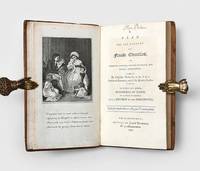
1798167893Philadelphia: Printed by John Ormrod 1798. A "determined stand against the nearly universal belief that women ought to be feather-brained and feeble-bodied" First US edition of Darwin's treatise on the education of women presented here in a well-preserved contemporary binding. This copy's title page is signed in a contemporary hand by one "Eliza Phelan". Although Darwin ultimately sought to educate women so as to make them useful companions for men his was a more equal "different but complementary" conception of the male-female relationship than was commonly held ODNB. The Plan advocated the creation of dedicated schools for girls where such subjects as botany and experimental philosophy would be taught. "In retrospect the most important feature of the book is his determined stand against the nearly universal belief that women ought to be feather-brained and feeble-bodied. He was taking the first crucial step along the path that has led to sexual equality and feminism" King-Hele p. 284. Darwin wrote from the start with practical applications in mind: the work originated as advice to his two illegitimate daughters for whom he had bought a converted inn to run as a school for girls. It is perhaps for this reason that the work has been described as "the most appealing of Darwin's prose publications" ibid. p. 282. The Plan was originally published in Derby in 1797: the US edition was published a year later with Darwin's slender tract bound with the unrelated Rudiments of Taste a work which had been published several times before in Philadelphia and London over the previous decade. Duodecimo 168 x 99 mm. Engraved frontispiece numerous engraved head and tailpieces in the text. Contemporary speckled sheep smooth spine ruled in gilt forming 5 compartments red morocco label to second. Late 19th-century book label of one "Jean Rouche" to front pastedown. Small hole to foot of spine very light bumping and wear to extremities small ink stain to p. 38 over text without affecting legibility slight separation within gatherings I-N: a very good copy. ESTC W27662. Desmond King-Hele Erasmus Darwin: a Life of Unequalled Achievement 1999. unknown
1854772333.Ghardcover. Good. Access codes and supplements are not guaranteed with used items. May be an ex-library book. hardcover
1797D19679DERBY: J. Drewry for J. Johnson 1797. First Edition. Paperback. Near Fine. 4to. 128 pp. including half-title. With engraved frontispiece of the grounds of Ashbourne School. ORIGINAL WRAPPERS. Housed in attractive custom box. Written for his two illegitimate daughters who were known as the Misses Parker Darwin covers a number of topics in this treatise on female education. "Education should draw the outline and teach the use of the pencil; but the exertions of the individual must afterwards introduce the various gradations of shade and colour must illuminate the landscape and fill it with the beautiful figures of the Graces and Virtues" preface. He recommends science subjects for girls as well as visits to factories and foundries. Also included is a fifteen-page list of recommended books for studying further one of the many subjects touched upon here. Darwin 1731-1802 grandfather of Charles Darwin was a poet naturalist as well as a prominent physician. He assisted in setting up the Ashbourne School and in furtherance of his belief in the importance of intellectual pursuit for all. He had this work published by Johnson an important radical bookseller of the period who was responsible for among many other works Wollstonecraft's Vindication of the Rights of Women. <br/><br/> J. Drewry for J. Johnson paperback
2001mon0002974221Woodstock Books 2001-03-01. Hardcover. Good. 0.7900 11.1000 8.4300. Woodstock Books hardcover
1379548640.Ghardcover. Good. Access codes and supplements are not guaranteed with used items. May be an ex-library book. hardcover
179817365<p>Philadelphia: Printed by John Omrod 1798 First American edition of this educational classic that shows the influence of Rousseau on the work of Erasmus Darwin 1731 – 1802. First published in London the previous year. Included in this edition is an American printing of Mrs. M. Peddle's Rudiments of Taste a popular conduct book was first published in London in 1789 and in the United States in 1790. Contemporary tree sheep with red morocco spine label. Gilt-ruled spine. Twelvemo. Separate title-page for Mrs. M. Peddle's The Rudiments of Taste. Some wear to binding and a couple cracks to sheep on upper board. Quite a fresh copy despite some foxing to first few leaves and some slight toning throughout. A very good tight copy of a fragile book. Darwin wrote the present work after helping his daughters Susan and Mary Parker establish a boarding school for young women in 1794. Here he draws on the theories of Rousseau Locke and Genlis to advocate for the education of women in schools in topics like philosophy the natural sciences history art manufacturing and language. Darwin believed that women should be educated for the purpose of becoming better wives and companions to men but promoted progressive notions that women's education would take place in well-resourced schools rather than in the home and that women should be educated in the concepts of finance industry and manufacturing. In Peddle's The Rudiments of Taste "Classical influence blends with Christian…Peddle recommends reading ancient and modern history travels biography science and good poetry not novels which leave their readers incapable of 'relishing anything superior'" Blain Grundy and Clements eds. The Feminist Companion to Literature in English p. 841.</p> Printed by John Omrod,
0548897425.Gpaperback. Good. Access codes and supplements are not guaranteed with used items. May be an ex-library book. paperback
1164180347.Gpaperback. Good. Access codes and supplements are not guaranteed with used items. May be an ex-library book. paperback
1340378531.Ghardcover. Good. Access codes and supplements are not guaranteed with used items. May be an ex-library book. hardcover
1436644879.Ghardcover. Good. Access codes and supplements are not guaranteed with used items. May be an ex-library book. hardcover