CHEVRIER (François-Antoine de)Livre Rare Book
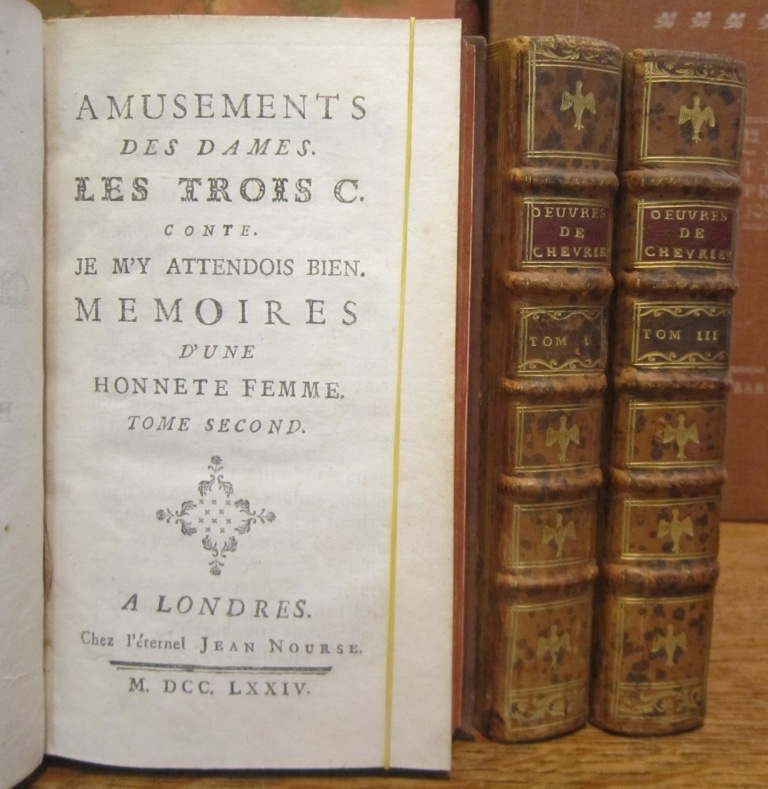
Oeuvres complètes
1774002778Londres, Chez L'éternel Jean Nourse, 1774
Henri Picard et Fils · Paris, France1 800,00 €
2 873 résultats
Very Good Turkish, Ottoman (1500-1928) Original manuscript book of the registers of the conjurations sessions by the first Turkish spiritualist group. 20x15 cm. In Ottoman script (Turkish with Arabic letters). [154] p., several hand-drawn ills. Group has Bedri Ruhselman, (1898-1960), Albert Braun, (Violinist and Ruhselman's violin teacher of German origin), Hans Ianma (Violin teacher), Hasan Saadeddin Bey, (Turkish spiritualist), and Doctor Zühdü Riza Bey, (Turkish musician, Kemençe teacher, a friend of Sadeddin Arel). Dr. Bedri Ruhselman (1898-1960), the founder of NeoSpiritism and "the Experimental New Spiritism". Ruhselman's point of view and a new perspective to the concepts such as creation, spirit, afterlife, birth incarnation, and rebirth-reincarnation are pioneers in the Early Turkish Republican period. Ruhselman's empirical perspective on "afterlife", one of the most important and primary subjects of theology, has made important contributions to spiritism, out of the classical standpoint. (Source: Ruhselman and his metaphysical vision, Kestel). Albert Braun was Ruhselman's violin teacher and his friend. It's said this early spiritualist group is the pioneer and elitist of Neo-Spiritualism in Turkey. He is considered a Mission Medium, a very rare category within spiritual mediumship. By definition, every medium has a varying degree of ability to tune in to spiritual "frequencies". But not all "reception" (coming from those frequencies) convey a meaningful message (sometimes if any). While mediumship is a gift (meaning that; one either has it or not); very few mediums are actually knowledgeable in spiritual matters. They simply transfer what they capture from their sensitive channels. And once in a while, mainstream media picks on certain mediums, especially when he/she delivers sensational predictions (i.e. Edgar Cayce). Bedri Ruhselman's both interest and gift was manifested since his early childhood. He was conducting spiritual sessions when he was only 12 years old. While continuing his musical education in the Prague Conservatory, in the 1920s, he studied the pioneers of classic spiritualism like Allen Kardec, Gustave Geley, Charles Richet, Leon Denis, William Crooks and become experienced in hypnotism and spiritual sessions. He also completed his medical education and graduated as a medical doctor. In 1950 by establishing Metapsychic Investigations and Scientific Research Society, he gifted an institutional identity to Neo-Spiritualism. His true duty started in 1958 by means of spiritual sessions with a guide being from higher spiritual plans which identified itself as "The Master". Ruhselman and his carefully selected mediums received a vast amount of knowledge via these sessions during a few months. That body of knowledge has been compiled as a book, which Ruhselman never claimed any ownership (stating that it's purely a gift from the higher spiritual plan). The plan has instructed that; the book was only to be released in the future - to be identified by a certain sign. That point alone commends recognition for pure selfless devotion towards undertaken duty. If the ego was in play; one would usually do anything for fame or at least to cash on the subject. But Ruhselman completes his true duty and hands over the book for safekeeping without ever mentioning one word about the content. He passes away a few months after (1960). (Source: Indication23). This manuscript includes their registers of the conjurations sessions with some illustrations which have "table order" of the sessions at a house in Sisli, Istanbul. In the illustrations, given the locations of the goods in the room like piano, wardrobe, chair, etc. Registers including the sessions between the years of 1935-1936. Scripts were written by M. Zühdü Pektas mostly, by various fountain pens with blue and black inks. Some registers are taken by a pencil. An extremely rare stylish manuscript. Unpublished.
1656F96168s.l. [London?], 1656 2 parts in one volume: [8],321,[i] + 152,34,[18] pp., "Editio tertia" (in fact this is the 4th edition ; 1st in Paris 1624, 2nd in London 1633, 3rd enlarged in 1645), contemporary full vellum bit soiled though in very good condition, 14cm., text in good condition but paper is somewhat browned on quite some pages, old inscription on second last blanco endpaper, good condition, rare, [Herbert of Cherbury, 1583-1648, religious philosopher and considered as "the father of English Deism", created with his major work "De Veritate" the first purely metaphysical treatise ever written by an Englishman. In "De Veritate" he states the 5 articles which became the charter of English Deism. "De causis errorum" deals with logical fallacies but was unfinished. Both works are clearly meant to be published together and are commonly so bound], F96168
2 parts in one volume: [8],321,[i] + 152,34,[18] pp., "Editio tertia" (in fact this is the 4th edition ; 1st in Paris 1624, 2nd in London 1633, 3rd enlarged in 1645), contemporary full vellum bit soiled though in very good condition, 14cm., text in good condition but paper is somewhat browned on quite some pages, old inscription on second last blanco endpaper, good condition, rare, [Herbert of Cherbury, 1583-1648, religious philosopher and considered as "the father of English Deism", created with his major work "De Veritate" the first purely metaphysical treatise ever written by an Englishman. In "De Veritate" he states the 5 articles which became the charter of English Deism. "De causis errorum" deals with logical fallacies but was unfinished. Both works are clearly meant to be published together and are commonly so bound], F96168
Uno dei 99 esemplari accompagnati da una litografia originale, stampata su carta cina, a colori di De Chirico dal titolo Agamante, e firma autografa dello stesso; edizione speciale “pubblicata per gentile concessione dell’editore Flammarion di Parigi”, presso cui fu stampata la prima edizione francese. in folio, esemplare non cucito, con copertina originale in cartonato che riproduce al piatto anteriore una litografia di De Chirico, e in custodia rigida in seta blu con titolo in oro al dorso. Pp. 295 e nel testo 24 illustrazioni litografiche compresa quella in antiporta, appositamente realizzate da De Chirico per questa sua opera. Contiene anche “Ebdomero e il suo lettore” un testo critico di Aldo Paladini, Roma, Bestetti, pp. (8), e uno specimen di pp. (12), con due illustrazioni. Ottimo esemplare. de chirico libro d’arte novecento arte italiana
Fuller title: LES PROPHETIES DE M. MICHEL NOSTRADAMUS. Dont il y en a trois cens qui n'ont encores iamais este imprimees. Adioustees de nouueau par ledict Auteur. [BOUND WITH] RECUEIL DES PROPHETIES ET REVELATIONS, TANT ANCIENNES QUE MODERNES. Contenant un sommaire des revelations de Saincte Brigide, S. Cyrille, & plusieurs autres Saincts & religieux personnages: nouvellement reveues & corrigees. Et de nouveau augmentees outre les precedentes impressions. Three volumes in one. ff. 64 leaves; 48 leaves; 64 leaves (with various errors in pagination). Loss of a corner and a few letters from one leaf of volume two. Last leaf of the third work lacks a half page containing part of the Table. Some age and damp staining. Old manuscript notes. There is also an manuscript quatrain at the end of the first volume of Centurie XI [actually 12]. It is numbered LVI or 56. "Roy contre Roy et Le Duc contre Prince / Haine entre iceux, dissension horrible / Rage et fureur sera toute province / France grand guerre et changement terrible. It apparently was left out in the printing of this edition. This is usually taken to refer to "The War of the Three Henrys" [Guerre des trois Henri - Valois, Bourbon et Guise]. Small 8vo. 170 cm. Modern full blue leather binding, with raised bands. The original French marbled endpapers are preserved. Michel de Nostredame (1503-1566), usually Latinized to Nostradamus, was a French apothecary and reputed seer who published collections of prophecies that have since become famous world-wide. He is best known for this book Les Propheties, which first appeared in 1555. The book has rarely been out of print since his death. All the early editions are very idiosyncratic and deserving of study. Nostradamus attracted an enthusiastic following who, along with the popular press, credit him with predicting many major world events. Interest in the work of this prominent figure of the French Renaissance is still considerable, especially in the media and in popular culture, and the prophecies have in some cases been assimilated to the results of applying the alleged Bible Code, as well as to other purported prophetic works. Benazra pag 170; Chomarat 176; Ruzo 53. A decent example of a very scarce edition. CHEST 2/1
1774002778Londres, Chez L'éternel Jean Nourse, 1774
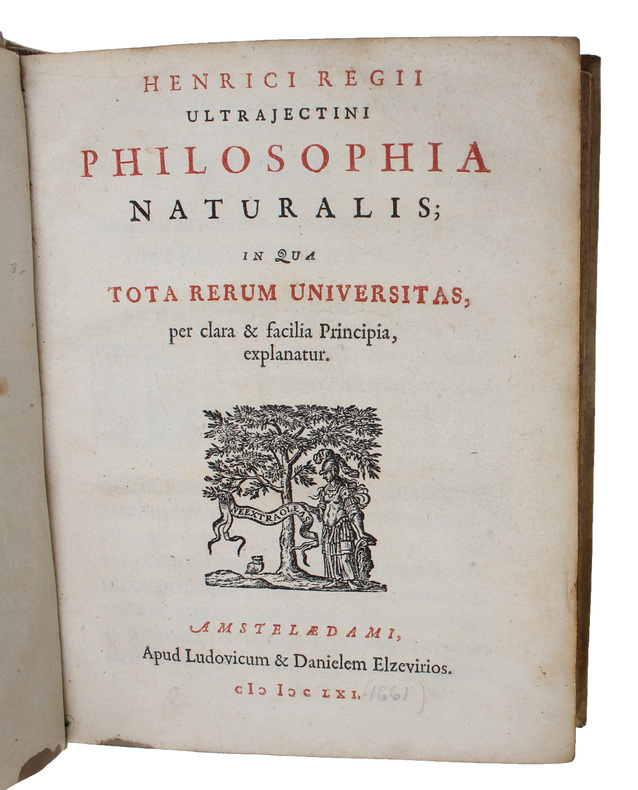
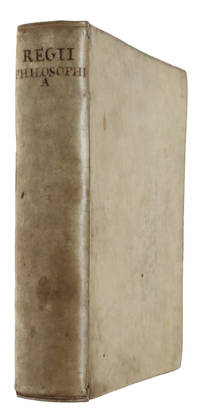
166144596Amsterdam, L. & D. Elzevirios, 1661. 4to. Contemp. full vellum, ms-title on spine. Title in red/black. Engraved portrai of Regius on verso of f 4 (H. Bloemaert pinxit, T. Matha, sculpsit). (44),523,(1- Errata) pp. 2 folded engraved plates (Globus Coelestis a. Orbis Terrarum Typus). Numerous woodcut illustrations in the text, astronomical, mechanical, physical, physiological, anatomical, theory of light, theory of vision etc. etc. Printed on good paper, clean and fine.
166144596Amsterdam L. & D. Elzevirios 1661. 4to. Contemp. full vellum ms-title on spine. Title in red/black. Engraved portrai of Regius on verso of f 4 H. Bloemaert pinxit T. Matha sculpsit. 445231- Errata pp. 2 folded engraved plates Globus Coelestis a. Orbis Terrarum Typus. Numerous woodcut illustrations in the text astronomical mechanical physical physiological anatomical theory of light theory of vision etc. etc. Printed on good paper clean and fine. <br/><br/><em>Third edition appeared 1651 a. 1654. This is edition having the 2 plates which appears here for the first time and not in the earlier editions.Henricus Regius in Dutch: Hendrik de Roy may be recognised today primarily as one of Descartes' correspondents. However he was also the author of a textbook of natural philosophy Fundamenta physices 1646 which offered an alternative to Cartesian epistemology and metaphysics. His correspondence with Descartes and his simultaneous controversy with G. Voetius during the 1640s reflected Regius' efforts to establish his intellectual independence from scholastic philosophy and Cartesian metaphysics.Stanford Encyclopedia of Philosophy.Willems 1274. - Poggendorff II 587 b. </em> hardcover
174911118La Haye, Neaulme, 1749 ; 2 tomes reliés en un volume in-12 ; plein veau fauve marbré, dos à faux-nerfs dorés, décoré et doré, pièce de titre grenat, roulette dorée sur les coupes, tranches rouges (reliure de l'époque) ; (8), 228, (4), pp. [229]-449, (1) pp. faute à corriger.
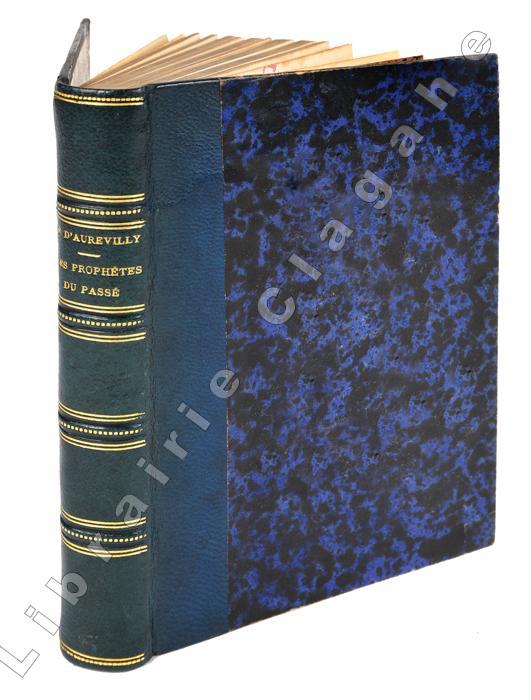
188020105Paris, Victor Palmé ; Bruxelles, J. Albanel, 1880 (Le Mans, Edmond Monnoyer) ; in-16, demi-chagrin maroquiné bleu marine, dos à nerfs décoré de filets et pointillés dorés, titre doré (reliure de l’époque) ; VI, 330, [6] pp. Table, Erratum, Publicité pour “Les Oeuvres et les hommes”.
In 4, pp. 28 con 3 tavv. n. t. (due disegni di Savinio e 1 ms. in fac simile). Br. ed. Lievissimo danno al d. Edizione originale di questo racconto illustrato da due disegni di Savinio. Rara pubblicazione. Asor Rosa, Diz. letteratura novecento, p.499.
120901aafA Paris, chez Briasson, M. DCC. LXIV., 1764, kl. in-8vo, (17 x 11 cm), VIII (faux-titre, titre, avertissement) + 302 p. / 2 ff. (faux-titre, titre) + 370 p. + 1 f. (privilège du Roi), Exlibris gravé ‘Bibliothèque de Villeneuve-Butel’, avec monogramme au même nom. reliure pleine basane d’époque, pages de gardes en papiers dominotés, tranches marbrées, pièce de titre en maroquin rouge, dos lisse orné de compartiments fleuronnés et cloisonnés, charnières et coiffes restaurées, bel état.
20606Genève, Pierre Chouët, 1664. pleine basane, dos à nerfs, tranches jaspées, plats et dos frottés, coins émoussés, coiffes manquantes, 1 mors fendu sur 2 cm. in-4 de 1 feuillet blanc, titre général, 1 feuillet non chiffré, titre de la première partie, 1 feuillet d'index, 146 pages, 1 feuillet blanc, titre de la seconde partie, 1 feuillet d'index, 136 pages, titre de la troisième et dernière partie, 1 feuillet non chiffré, 248 pages, 1 feuillet blanc, rousseurs.
1673000221Paris: Michel Bobin & Nicolas Le Gras 1673. Hardcover. See Description. Third French Edition revised and corrected. 4to. pp. 38 754. Decorative initials and ornamental head pieces at the beginning of each chapter. Contemporary calf boards rubbed corners neatly restored re-backed including new hand sewn headbands. Original end papers are preserved but worn at the edges. Two names are written in a contemporary hand at the top of the title page 1 name is crossed out. Another name also crossed out is inscribed beneath the imprint; a small shelf number is written in the upper right corner. Pages are generally clean with occasional minor soiling and spotting. A narrow piece is missing from the upper margins of pp. 311-320 4 cm. long x 5-7 mm. deep - either from rough opening or from a manufacturing error; brown ink spot on fore-edge of text block; leaf T2 marked S2. Leaves remain untrimmed after last re-sewing. Descartes's "Meditations metaphysiques" was first published in Latin as "Meditationes de prima philosophia" 1641. The first French edition printed in 1647 was produced by the Duc de Luynes under Decartes supervision. De Luynes translated the first part and Claude Clerselier the second. The "Meditations" offer the most detailed presentation of Descartes metaphysical system. Tchemerzine IV p.201-202; Brunet I 609; Querard 758. <br/> <br/> Michel Bobin & Nicolas Le Gras hardcover
Six volume set bound in blue cloth. Dust jackets show light wear, ink smudges, discoloration, and small tears at edges, with volume six having a large closed tear. Volume I: Cosmogenesis. Volume 2: Cosmogenesis Parts 2 & 3. Volume 3: Anthropogenesis Part 1. Volume 4: Anthropogenesis Parts 2 & 3. Volume 5: [No Title]. Volume 6: Index and Glossary.
46400228, Amsterdam, D. Elsevier, 1680; suivi de Esclaircissement ou la suite du traité de la nature et de la grâce. Id., Veuve Elsevier, 1681; 2 parties en 1 vol. in-12, plein maroquin rouge, encadr. fil. dorés, dos à caissons et fleurons dor., tr. dor., fine dentelle int. dor., doublé et gardes en dominoterie ancienne jaune et or. (Relié vers 1850). 3 ff., 268 pp.- 68 pp. "EDITION ORIGINALE pour les deux parties. Traité écrit à la suite des discussions de Malebranche avec le grand Arnauld qui avait cru trouver en lui un allié de Port-Royal contre les jésuites. Cette publication fut le signal d'une guerre déclarée avec Arnauld ce qui n'empêcha pas l'auteur d'être également attaqué par Bossuet et Fénelon. Le Traité fut mis à l'index pour avoir osé chercher à résoudre des problèmes insolubles. L'œuvre étudie les concepts de création et d'incarnation, de grâce divine et de liberté humaine. La beauté littéraire du Traité a éveillé l'admiration de Sainte-Beuve. L'intérêt philosophique est également de premier ordre, car le livre contient le premier exposé du système de l'occasionalisme. Leibniz le méditait en écrivant son Discours de métaphysique et n'a cessé d'y revenir, y compris dans sa Théodicée. """"L'édition de 1680 est de loin la plus conforme à l'inspiration créatrice de l'œuvre, et la plus belle aussi…Que la préférence de Malebranche soit allée à la première édition, on n'en saurait douter. Certes il recommande celle de 1712. Mais ce n'est que parce qu'elle est accordée à l'ignorance des lecteurs, et non plus comme celle de 1680, aux lumières de l'auteur… Bref, selon l'heureuse expression de M. Gouhier la première édition nous offre du Traité l'aspect que Malebranche """" a voulu lui donner"""", la dernière """" celui que le temps lui a imposé"""". Bibl. des textes philos. Malebranche tome V pp.XV-XVII.- Brunet, III, 1335.- Willems, 1583.- Sauvy, Livres saisis, 165.- Cioranesco 44901 et 44902. Bel exemplaire, complet de l'Eclaircissement et finement relié
Acquaforte e bulino. Tiratura: 60 es. su carta a mano + X es. su carta Giappone + alcune p.d.a. (alcuni es. colorati a mano dall'Artista) Firma e numerazione a matita. Stampata da Giorgio Upiglio, Milano. Esemplare 27/60. cm 24,5x34,7 (Foglio 50x60). pp.. . Ottimo (Fine). . Tiratura: 60 + X + alcune p.d.a. .
056408Paris Librairie philosophique de Ladrange 1854 in 8 (22x14) 4 volumes reliures demi basane verte de l'époque, dos lisses ronés de filets dorés. Tome 1: Premier essai. Analyse générale de la connaissance. Bornes de la connaissance. Plus un appendice sur les principes généraux de la logique et des mathématiques, (1854) XII et 611 pages. Tome 2: Deuxième Essai. l'homme: la raison, la passion, la liberté, la certitude, la probabilité morale, (1859) XX et 695 pages. Tome 3: Troisième essai: Les principes de la nature, (1864) LXXVIII et 238 pages. Tome 4: Quatrième essai: introduction à la philosophie analytique de l'histoire, (1864) 795 pages. Charles Renouvier, Montpellier 1815 - Prades 1903, philosophe français, fondateur du néo-criticisme, inventeur du terme '' uchronie. Très rare ensemble, en reliures uniformes de l'époque. Envoi autographe signé par Charles Renouvier à un ami. Bel exemplaire ( Photographies sur demande / We can send pictures of this book on simple request )
[Postincunabolo] (cm. 31) bella mz. pergamena antica ben restaurata, piatti a stampa rosso e nero (sec. XVI).-- cc. 11 + 1 c. bianca. Caratteri gotici, testo a due colonne, capilettera ornati, grande marca in fine a fondo nero. Edizione originale di grande rarità. Manca all' Adams e a molta bibliografia consultata. Per la bella marca tipografica vedi: Kristeller "Italienischen Buchdrucker und Verlegerzeichen" pag. 111 n° 281, ma a fondo nero anzichè rosso. Frontis lievemente ombreggiato assieme all' ultima carta bianca che ha una leggera gora in alto. peraltro esemplare molto bello, marginoso e stampato con grande eleganza tipografica. * Bm. Stc. p. 683; * Brunet VIII (supplement) 809, cita una copia nella Biblioteca Nazionale stampata su pergamena. Il Census Iccu, registra solo quattro copie nelle biblioteche italiane.[f42] Libro
19567555Berkeley and Los Angeles: University of California Press 1956. First edition. 8vo 61 3pp. Inscribed by Graves to a Sallyan Windt and dated in 1960 on the title page. Full color and black and white facsimiles of the artist's work throughout. Goldenrod cloth boards lettered in brown in gold illustrated jacket. Boards bumped on bottom edge and slightly toned. Jacket price clipped and with light edge wear. Very good. <br /> <br /> Very attractive copy of the first book of any substance to come out about one of the most important Northwest artists of the 20th century Morris Graves 1910-2001. Graves was self taught and blended elements of Northwest natural iconography with Zen Buddhist aesthetics to create a metaphysical art style that was dubbed "Mysticism" by some reviewers including Wight.<br /> <br /> In all a beautifully designed and printed book and one we have not encountered signed by Graves. . University of California Press unknown
1973016114Paris Le Soleil Noir 1973 In-8 carré Broché, sous étui de l'éditeur Ed. originale
192966670CBBonn, Cohen Verlag, 1929. 8°. 23,5 x 16 cm. XII, 236 Seiten. Blauer Original-Leinenband mit blindgeprägtem Rücken- und Deckeltitel und blauem Kopfschnitt.
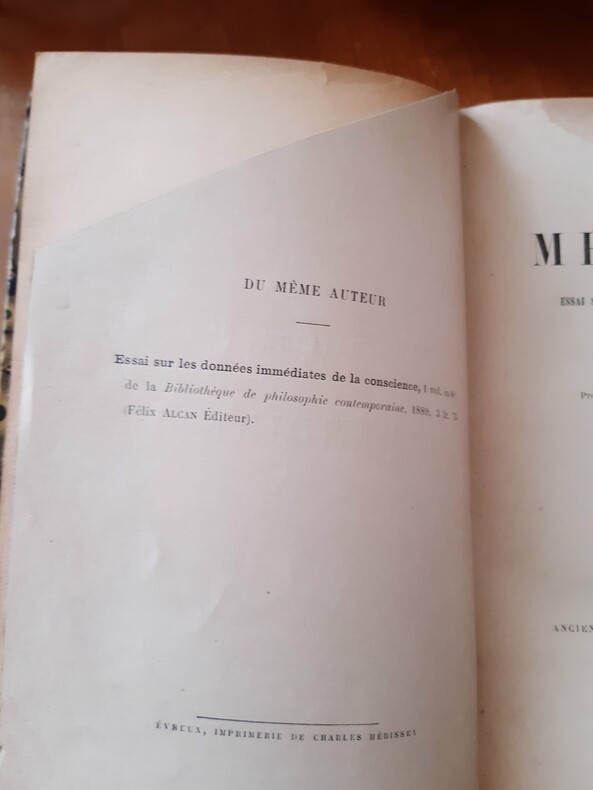
1896454EDITION ORIGINALE Félix Alcan, Paris :1896. In-8 ( 22,5 x 14,5 cm) , demi-reliure de percaline verte . pièce de titre brune à mention d'auteur, de titre et filets dorés. III-279 pp. et table des matières.
21832Turin, Imprimerie royale, 1748. In-4, [16]-XXXIX-[1]-282 pp., basane marbrée havane, dos à nerfs orné de caissons dorés, pièce de titre blonde, tranches mouchetées (reliure défraîchie mais solide, quelques petites taches et rousseurs éparses).
In 8, cm 20 x 16, pp. 110. Brossura editoriale con sovraccoperta. Edizione originale rara. Volume stampato per gli Amici del libro a cura e spese di Giovanni Scheiwiller. Si sono stampati 50 esemplari con impostazione speciale in macchina su carta Ingres della cartiera Miliani di Fabriano e 300 su carta bianca vergata della cartiera Burgo di Verzuolo. Il nostro esemplare appartiene alla tiratura di 50 esemplari su carta Ingres. Buona copia con minimi danni al taglio dei piatti e alla cuffia. L'opera venne commissionata a De Chirico da Giovanni Scheiwiller non ancora diventato ufficialmente editore, ma dipendente della Hoepli. L'opera, nella tradizione della trattatistica pittorica antica, doveva essere un semplice manuale pratico che in realta' rispecchia l'idea di 'ritorno al mestiere' di De De Chirico, concetti peraltro gia' espressi in vari articoli di Valori Plastici