Schopenhauer, ArthurBiblio.com
2 202 résultats
8498790794.Ghardcover. Good. Access codes and supplements are not guaranteed with used items. May be an ex-library book. hardcover
3752595973.Ghardcover. Good. Access codes and supplements are not guaranteed with used items. May be an ex-library book. hardcover
3375029365.Gpaperback. Good. Access codes and supplements are not guaranteed with used items. May be an ex-library book. paperback
200442143BECK C.H. 2004. 3. softcover. Limitierte Sonderausgabe! BECK´SCHE REIHE BECK, C.H. paperback
844600397X.Gpaperback. Good. Access codes and supplements are not guaranteed with used items. May be an ex-library book. paperback
3382738686.Gpaperback. Good. Access codes and supplements are not guaranteed with used items. May be an ex-library book. paperback
44478511like new. unknown
1888117576Leipzig, F. A. Brockhaus 1888. * Mit 1 Porträt, 1 Wappendarstellung 1 gefalteten Faksimile. 221 Seiten, 1 Blatt. 22,5 x 17,5 cm. Brauner Original-Halblederband über fünf falschen Bünden mit Buntpapierbezug, goldgeprägtem Rückentitel, hübscher Rückenvergoldung und Buntpapiervorsätzen.
201198611Berlin, de Gruyter 2011. X, 678 Seiten. Hardcover/Pappeinband
117932Paris Alcan date. Volumi 8 riuniti in 4. In 8° piccolo mezza pergamena e angoli con titoli su tassello ai dorsi. L'pera è così composta: Ecrivains et style 1908 pp. 189 3 n.n. - Sur la religion 1906 pp. 194 6 n.n. - Philosophie et philosophes 1907 pp. 207 1 n.n. - Ethique droit et politique 1909 pp. 187 3 n.n. - Métaphysique et esthétique 1909 pp. 192 - Philosophie et science de la nature 1911 pp. 193 3 n.n. - Fragments sur l'histoire de la philosophie 1912 pp. 196 4 n.n.- Essai sur les apparitions et Opuscules devers 1912 pp. 201 3 n.n. Tutte le opere sono tradotte da A. Dietrich ed in prima edizione francese solo "Ecrivains et style" è in seconda edizione. Piccola firma privata tutti in ottimo stato di conservazione Paris, Alcan unknown
6h10999Bibliographische Anstalt Berlin um 1860. Zusammen ca. 3300 Seiten Leinen mit Goldprägung gebräunt. unknown
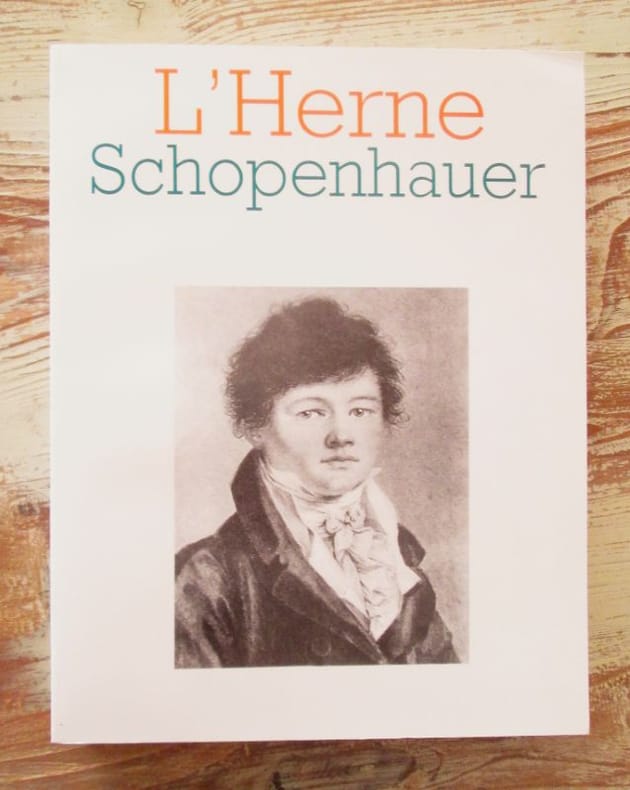
196533546Paris : Editions de l'Herne, 1997. Sous la direction de Jean Lefranc In-4 broché (27 x 21 cm), 431 pages, quelques illustrations photographiques, bibliographie. Au sommaire : "Un idéalisme athée, Une anthropologie pessimiste, Textes et documents, Schopenhauer et Nietzsche, Lectures de Schopenhauer". Très bon état.
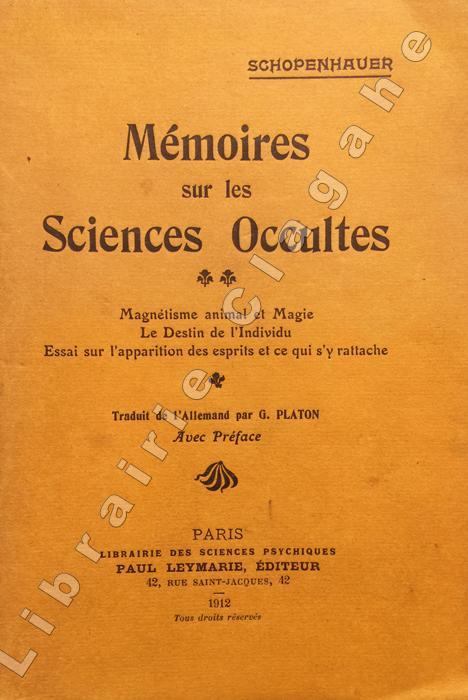
19123606Paris, Paul Leymarie, 1912 ; in-12, broché ; XXXV (35) pp., 292 pp.
191363748München, Georg Müller, 1912-1913. 8°. Mit 2 gefalt. Tafeln. XXX, 725 S., 1 Bl.; VII, 831 (1) S., OHLdr.-Bde.
190110416BBerlin und Leipzig, Schuster & Loeffler, 1901-1902. 8°, 505, (2); 520; 524, (4) Seiten OPb. (I+III Deckel vom Buchblock gelöst)
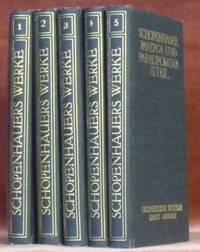
2006BN30978ZWEITAUSENDEINS 2006. 2006. Hardcover. Was macht den Philosophen Der Mut keine Frage auf dem Herzen zu behalten." Endlich: Der authentische Schopenhauer!Schopenhauers letzter editorischer Wille gipfelt in einem Fluch: Erfüllt mit Indignation über die schändliche Verstümmelung der deutschen Sprache welche durch die Hände mehrerer schlechter Schriftsteller und urtheilsloser Menschen seit einer Reihe von Jahren mit ebensoviel Eifer wie Unverstand methodisch und con amore betrieben wird sehe ich mich zu folgender Erklärung genöthigt: Meinen Fluch über Jeden der bei künftigen Drucken meiner Werke irgend etwas daran wissentlich ändert sei es eine Periode oder auch nur ein Wort eine Silbe ein Buchstabe ein Interpunktionszeichen.Schopenhauers Werke in fünf Bänden.Herausgeber Ludger Lütkehaus ausgewiesener Kenner der Philosophie Schopenhauers hat diesen Wunsch nach Werktreue erfüllt. Seine Edition enthält Schopenhauers Texte in der vom Philosophen gewünschten Abfolge und empfiehlt sich durch philologische und typografische SorgfaltAlfred Schmidt FAZ. Mit dieser Werk-ausgabe wäre Schopenhauer selbst sicherlich höchst zufrieden der Herr Rezensent ist es mit Sicherheit und erlaubt sich mit den Worten des Meisters ein Urteil abzugeben: genial! so Marco Louis im Internet-Magazin Haruspex. Seit Jahren vergriffen ist die Lütkehaus-Edition inzwischen eine gesuchte Werkausgabe auf dem Antiquariatsmarkt. Jetzt erscheint sie neu: Die Welt als Wille und Vorstellung I und II Parerga und Paralipomena I und II Kleinere Schriften. Dazu ein integriertes Begleitbuch mit Nachweis und Übersetzung der Zitate Chronik und Register sowie einem Essay zur Praxis der Schopenhauer-Edition von Ludger Lütkehaus. <br/><br/>"Was macht den Philosophen Der Mut keine Frage auf dem Herzen zu behalten." Endlich: Der authentische Schopenhauer!Schopenhauers letzter editorischer Wille gipfelt in einem Fluch: Erfüllt mit Indignation über die schändliche Verstümmelung der deutschen Sprache welche durch die Hände mehrerer schlechter Schriftsteller und urtheilsloser Menschen seit einer Reihe von Jahren mit ebensoviel Eifer wie Unverstand methodisch und con amore betrieben wird sehe ich mich zu folgender Erklärung genöthigt: Meinen Fluch über Jeden der bei künftigen Drucken meiner Werke irgend etwas daran wissentlich ändert sei es eine Periode oder auch nur ein Wort eine Silbe ein Buchstabe ein Interpunktionszeichen.Schopenhauers Werke in fünf Bänden.Herausgeber Ludger Lütkehaus ausgewiesener Kenner der Philosophie Schopenhauers hat diesen Wunsch nach Werktreue erfüllt. Seine Edition enthält Schopenhauers Texte in der vom Philosophen gewünschten Abfolge und empfiehlt sich durch philologische und typografische SorgfaltAlfred Schmidt FAZ. Mit dieser Werk-ausgabe wäre Schopenhauer selbst sicherlich höchst zufrieden der Herr Rezensent ist es mit Sicherheit und erlaubt sich mit den Worten des Meisters ein Urteil abzugeben: genial! so Marco Louis im Internet-Magazin Haruspex. Seit Jahren vergriffen ist die Lütkehaus-Edition inzwischen eine gesuchte Werkausgabe auf dem Antiquariatsmarkt. Jetzt erscheint sie neu: Die Welt als Wille und Vorstellung I und II Parerga und Paralipomena I und II Kleinere Schriften. Dazu ein integriertes Begleitbuch mit Nachweis und Übersetzung der Zitate Chronik und Register sowie einem Essay zur Praxis der Schopenhauer-Edition von Ludger Lütkehaus. ZWEITAUSENDEINS hardcover
2009SONG0521871409Cambridge University Press 2009-07-27. First Edition. hardcover. Used: Good. 6.25x0.75x9.00. Buy with confidence. Excellent Customer Service & Return policy. Cambridge University Press hardcover
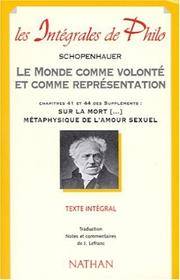
2002mon0000126685NATHAN 2002-05-02. Paperback. Very Good. 0.3937 in x 8.7402 in x 5.1969 in. Little to no wear. A clean and tight copy. NATHAN paperback
1999Q-0872203999Hackett Publishing Company Inc 1999-06-01. hardcover. New. In shrink wrap. Looks like an interesting title! Hackett Publishing Company, Inc hardcover
ROD0105896HENRI GAUTIER. NON DATE. In-12. Broché. Etat du neuf, Coins frottés, Dos satisfaisant, Intérieur acceptable. Environ 300 pages. Couvertures d'origine conservées.. . . . Classification Dewey : 840-Littératures des langues romanes. Littérature française
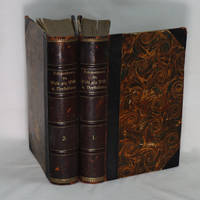
1891FB5707(1&2) /8<p>Brown calf spine with gilt banding and title. Brown marbled boards. dimensions are for one volume.</p><ul><li><strong>We provide an in-depth photographic presentation of this item to stimulate your feeling and touch. More traditional book descriptions are immediately available.</strong></li></ul><p>2 quality volumes of this prestigious work. Binding and contents are in good order.</p><p><strong><em>The World as Will and Representation</em></strong> <strong><em>WWR</em></strong>; <em>Die Welt als Wille und Vorstellung</em> <strong><em>WWV</em></strong> sometimes translated as <strong><em>The World as Will and Idea</em></strong> is the central work of the German philosopher Arthur Schopenhauer. The first edition was published in late 1818 with the date 1819 on the title page. A second two-volume edition appeared in 1844: volume one was an edited version of the 1818 edition while volume two consisted of commentary on the ideas expounded in volume one. A third expanded edition was published in 1859 the year before Schopenhauer's death. In 1948 an abridged version was edited by Thomas Mann. In the summer of 1813 Schopenhauer submitted his doctoral dissertation—<em>On the Fourfold Root of the Principle of Sufficient Reason</em>—and was awarded a doctorate from the University of Jena. After spending the following winter in Weimar he lived in Dresden and published his treatise <em>On Vision and Colours</em> in 1816. Schopenhauer spent the next several years working on his chief work <em>The World as Will and Representation</em>. Schopenhauer asserted that the work is meant to convey a "single thought" from various perspectives. He develops his philosophy over four books covering epistemology ontology aesthetics and ethics. Following these books is an appendix containing Schopenhauer's detailed <em>Criticism of the Kantian Philosophy</em>. Taking the transcendental idealism of Immanuel Kant as his starting point Schopenhauer argues that the world humans experience around them—the world of objects in space and time and related in causal ways—exists solely as "representation" <em>Vorstellung</em> dependent on a cognizing subject not as a world that can be considered to exist in itself i.e. independently of how it appears to the subject's mind. One's knowledge of objects is thus knowledge of mere phenomena rather than things in themselves. Schopenhauer identifies the thing-in-itself — the inner essence of everything — as <em>will</em>: a blind unconscious aimless striving devoid of knowledge outside of space and time and free of all multiplicity. The world as representation is therefore the "objectification" of the will. Aesthetic experiences release one briefly from one's endless servitude to the will which is the root of suffering. True redemption from life Schopenhauer asserts can only result from the total ascetic negation of the "will to life". Schopenhauer notes fundamental agreements between his philosophy Platonism and the philosophy of the ancient Indian Vedas. <em>The World as Will and Representation</em> marked the pinnacle of Schopenhauer's philosophical thought; he spent the rest of his life refining clarifying and deepening the ideas presented in this work without any fundamental changes. The first edition was met with near-universal silence. The second edition of 1844 similarly failed to attract any interest. At the time post-Kantian German academic philosophy was dominated by the German idealists—foremost among them G. W. F. Hegel whom Schopenhauer bitterly denounced as a "charlatan". <strong>Arthur Schopenhauer</strong> German: 22 February 1788 – 21 September 1860 was a German philosopher. He is known for his 1818 work <em>The World as Will and Representation</em> expanded in 1844 which characterizes the phenomenal world as the manifestation of a blind and irrational noumenal will. Building on the transcendental idealism of Immanuel Kant 1724–1804 Schopenhauer developed an atheistic metaphysical and ethical system that rejected the contemporaneous ideas of German idealism. Schopenhauer was among the first thinkers in Western philosophy to share and affirm significant tenets of Indian philosophy such as asceticism denial of the self and the notion of the world-as-appearance. His work has been described as an exemplary manifestation of philosophical pessimism. Though his work failed to garner substantial attention during his lifetime he had a posthumous impact across various disciplines including philosophy literature and science. His writing on aesthetics morality and psychology have influenced many thinkers and artists. Arthur Schopenhauer's paternal grandfather Andreas Schopenhauer de 1720–1793 was a wealthy merchant in Danzig. Arthur Schopenhauer's paternal grandmother Anna Renata Schopenhauer 1726–1793 was the daughter of a Dutch merchant and the Dutch ambassador to the Hanseatic city of Danzig Hendrik Soermans 1700–1775. Arthur Schopenhauer's maternal grandfather Christian Heinrich Trosiener de 1730–1797 was a merchant in Danzig and a councilor from the middle class. Arthur Schopenhauer's maternal grandmother Elizabeth Trosiener 1745–1818 was daughter of pharmacist Georg Lehmann died 1762 and his wife Susanna Concordia Lehmann née Neumann born 1718. Arthur Schopenhauer's paternal great-grandfather Johann Schopenhauer de 1670–after 1724 was the mentioned merchant in Gdansk. Arthur Schopenhauer's paternal great-grandfather through paternal grandmother Hendrik Soermans de 1700–1775 was a Dutch merchant and Ambassador of the Netherlands in Gdansk. Arthur Schopenhauer's paternal great-great grandfather Johann Schopenhauer 1630–1701 was a farmer in Petershagen and son of Simon Schopenhauer 1580–1660 and grandson of Salomon Schopenhauer born 1550.</p> F H Brohaus. hardcover
0804468478.Gpaperback. Good. Access codes and supplements are not guaranteed with used items. May be an ex-library book. paperback
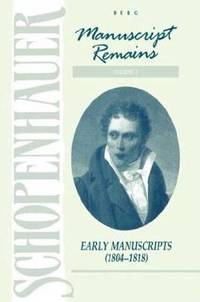
642959312Berg Publishers pp. 564 . Hardback. New. Berg Publishers hardcover
3843040419.Ghardcover. Good. Access codes and supplements are not guaranteed with used items. May be an ex-library book. hardcover
36076Leipzig : Insel ohne Jahr. 175x105mm. Verlegereinband. Sehr schnes Exemplar. 1370 Insel unknown