NIETZSCHE, FRIEDRICHBiblio.com
83 résultats
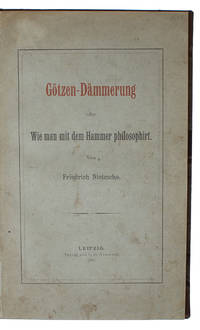
188960004Leipzig C.G. Naumann 1889. 8vo. Bound with the original printed wrappers in a nice near contemporary brown half cloth with gilt lettering to spine. Lovely marbled end-papers. A bit of light soiling and brownspotting to wrappers which are otherwise very well preserved. A few leaves with some very light brownspotting and a couple of leaves with small closed tears to blank inner margin far from affecting text. Overall very nice. With the engraved book plate of Adolf Fischer to inside of front board. 8 144 pp. <br/><br/><em>First edition - with the scarce original wrappers - of the epitome of Nietzsche's final project -a re-valuation of all values "Eine Umwerthung aller Werthe" -his hugely interesting "declaration of war" preface p. 4: "Diese Schrift ist eine grosse Kriegserklärung" which was written during his last productive year just before his big breakdown in Turin. "Götzen-Dämmerung" "The Twilight of the Idols" arguably constitutes the culmination of the production of this giant of philosophy who turned mad after having finished it.Early in 1889 Nietzsche began to exhibit signs of serious mental illness; in Turin he finally broke down and was brought back to Basel by his friends. "The Twilight of the Idols" was released merely a few weeks after this collapse and Nietzsche never wrote again.Nietzsche had 1.000 copies of the work privately printed. The work is considered one of his most popular and it is here that we find some of the most frequently quoted passages from the works of Nietzsche e.g. "What does not kill me only makes me stronger" p.2.: "Was mich nicht umbringt macht mich stärker".The Twilight was meant as an introduction to or summary of Nietzshe's philosophy and as such it is one of his most interesting works. It is written almost as in a rage of fever - it took him no more than a week to write it - and he regarded it a world-changing magnum opus. As he states at the end of the preface: "Turin am 30. September 1888 am Tage da das erste Buch der Umwerthung aller Werthe zu ende kam." i.e. "Turin on September 30. 1888 on the day that the first book on the re-valuation of all value came to an end.". This highly polemical work makes clear reference to Wagner's opera "Götterdämmerung" and it presents us with a sharp critique of the most influential philosophers in history e.g. Kant and Plato and of Christianity in general but also the likes of Rousseau Hugo Renan Mill Darwin Dante etc. are attacked as the causes of cultural decadence in Europe. Giants like Caesar Napoleon Dostojevski Goethe and Thukydides are considered representatives of the opposite.The mental collapse of the author may not come as a surprise to anyone reading the work.Of the 1.000 copies 659 still remained unsold by October 1893.Twilight of the Idols: Schaberg: 56a </em> hardcover
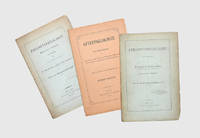
1872174288Berlin & Leipzig: Gebrüder Borntraeger & E. W. Fritsch 1872-73. Wagner Nietzsche and the battle for antiquity First editions of three key entries in the controversy over Nietzsche's first book a dispute which damaged his academic reputation confirmed his early Wagnerian allegiance and made his name in the German cultural scene. Both authors had known Nietzsche in his youth yet each offered a completely different analysis of his capacities methods and intentions. Die Geburt der Tragodie The Birth of Tragedy Nietzsche's first book outlined an analysis of ancient tragedy that "fell outside of every known convention in classical studies" Porter p. 74. For Nietzsche Socratic philosophy had killed Greek tragedy and Wagner was the man to revive it in modern Germany. For many this exposed a dangerous rift between Western tradition and the subversive followers of Schopenhauer and Wagner. Objections were first expressed by Ulrich von Wilamowitz-Moellendorff 1848-1931 in the Zukunftsphilologie Future Philology. Although Wilamowitz had been a fellow student with Nietzsche his response was a vitriolic demolition of Nietzsche's style logic and research. Wagner defended Nietzsche but his argument unwittingly bolstered Wilamowitz's claim that the Geburt was not intended for the academic establishment. Nietzsche persuaded Erwin Rohde 1845-1898 - another old schoolmate - to conduct his defence. The Afterphilologie False Philology which was shaped by suggestions from Nietzsche answers Wilamowitz in kind: exposing his own lack of academic rigour and painting him as an immature arriviste. Wilamowitz responded in the Zweites Stück Part II reiterating his disgust with Nietzsche's abandonment of Western philosophy. The Zukunftsphilologie captured the zeitgeist and recent academics "have remained broadly behind him" Silk & Stern p. 156. Wilamowitz became the most celebrated Greek scholar of his age while Rohde wrote a study of the Greek Pysche 1890-4 which remains prominent in modern classical studies. The three papers are: 1 WILAMOWITZ-MOELLENDORFF Ulrich von. Zukunftsphilologie! Eine erwidrung. Berlin: Gebrüder Borntraeger 1872. Pp. 32. 2 ROHDE Erwin. Afterphilologie. Zur Beleuchtung des von dem Dr. phil Ulrich von Wilamowitz-Möllendorff herausgegeben Pamphlets: "Zukunftsphilologie!" Sendschreiben eines Philologen an Richard Wagner. Leipzig: E. W. Fritsch 1872. Pp. 48. 3 WILAMOWITZ-MOELLENDORFF Ulrich von. Zukunftsphilologie! Zweites Stück. Eine erwidrung au die rettungsversuche für Fr. Nietzsches "geburt der tragödie". Berlin: Gebrüder Borntraeger 1873. Pp. 24. 3 works octavo. Original orange or green printed wrappers. Spines repaired. Light toning chipping and creasing to wrappers minor browning and foxing to contents: very good copies in the fragile original wrappers. James L. Porter "'Don't Quote Me on That!': Wilamowitz Contra Nietzsche in 1872 and 1873" The Journal of Nietzsche Studies no. 42 2011; M. S. Silk & J. P. Stern Nietzsche on Tragedy 2016. unknown
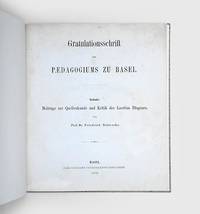
1870170977Basel: Carl Schultze's Universitaetsbuchdruckerei 1870. Nietzsche's early work on Diogenes Laertius First edition of this scarce early article privately printed in a run of 100 copies. The Gratulationsschrift was written shortly after Nietzsche had gained tenure at the University of Basel at the age of 24. He began his academic career as a philologist and the Gratulationsschrift outlines a philological study of Diogenes Laertius the shadowy author of the Lives and Opinions of the Eminent Philosophers. Nietzsche dedicates the work to F. D. Gerlach a colleague at Basel and copies were distributed at the ceremony marking Gerlach's retirement despite the fact Gerlach had opposed Nietzsche's appointment. Some copies were issued with a half-page cancel either bound between pages 2 and 3 or pasted to the lower half of page 3 that is not present here. No priority has been identified. Provenance: Hermann Türck 1856-1933 a philosopher and Nietzsche scholar who wrote Fr. Nietzsche und seine philosophischen Irrwege in 1891 a psychological study of the man and his later works. Türck's large printed bookplate is on the front pastedown. Quarto 218 x 193 mm pp. iv 36 8. Recent sprinkled grey boards printed paper label to spine. Minor browning and foxing to outer leaves: a very good copy indeed. Schaberg 18. hardcover
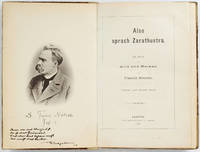
18911004<p>NIETZSCHE Friedrich. Also sprach Zarathustra Vierter und letzter Theil C. G. Naumann Leipzig 1891. Frontispiece portrait of Nietzsche TP Quote page 5-135 half title 3-21 23 = Inhalt Octavo. First Edition. Schaberg 58.</p><p>The famous first public printing of Nietzsche's notorious conclusion to Zarathustra. Although printed in 1890 and dated 1891 this book did not see public release until March of 1892 due to legal arguments between Nietzsche's sister Elisabeth and the publisher. Elisabeth was worried that the books would all be confiscated as "obscene" –and therefore negotiated until she received a contract from Naumann that protected her against this possibility. This edition –which is cited in Printing and the Mind of Man as the first edition ignoring the private printing of 1885 –is rare in any condition. When copies do make their rare appearances on the market they almost always come bound with the original three books 1883-1884 or more commonly bound with copies of the three books as re-issued in 1886. Containing the first edition printing of Nietzsche's poems: Dionysian Dithyrambs.</p><p>CONDITION: Contemporary quarter vellum with marbled boards little rubbed minor bumping to extremities. Slight browning little foxing and small marginal tears to few leaves at the end short tear to bottom gutter of title. - From the collection of archeologist and art-historian Botho Graef 1857-1917 known for his friendship with artists like Emil Nolde and Ernst Ludwig Kirchner in addition to his facilitation of the Jena art-collection. His handwritten dedication is addressed to German playwright and poet 'Ernst' Hardt 1876-1947.</p> C. G. Naumann hardcover
1880923Chemnitz: Schmeitzner 1880. First Edition. Wraps. Near fine. The Third and Final Part of Human all too Human <br /> <br />NIETZSCHE Friedrich. Der Wanderer und Sein Schatten The Wanderer and His Shadow. Schmeitzner Chemnitz 1880. 1 blank leaf TP 3-185 186 = Berichtigungen Octavo. First Edition First Issue in original wrappers. Schaberg 32. <br /> <br />Written as a second sequel to Human All Too Human The Wanderer and his Shadow was first published in the year following Nietzsches departure from academia. Perhaps the title here is somewhat autobiographical reflecting Nietzsche and his shadow heading off into the wilderness of the unknown. Wanderer contains a series of aphorisms and was published on December 20 1890. It was received enthusiastically by Nietzsches friends though failed to sell more than 200 copies. Yet it was viewed by Nietzsche himself as a triumph. In a letter to Schmeitzner written on December 18 Nietzsche remarks: "Der vollendete 'Wanderer' ist mir fast etwas Unglaubliches. Die ganze 'Menschlichkeit' mit den 2 Anhängen ist aus der Zeit der bittersten und anhaltendsten Schmerzen - und scheint mir doch ein Ding voller Gesundheit. Dies ist mein Triumph." The completed 'Wanderer' is to me something almost unbelievable. The entire 'humanity' with the 2 supplements is from a time of the most bitter and continual pains - and yet seems to me to be a thing full of health. This is my triumphThe Nietzsche Chronicle. <br /> <br />CONDITION: Very good to near fine in original front and rear wrappers. Spine restored with graphics to match the original. Interior crisp and bright. Housed in cloth-backed clamshell box. A gorgeous copy of this final installment of the Menschlisches three-book series. <br/><br/> Schmeitzner paperback
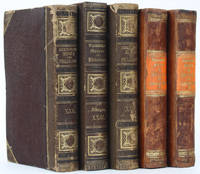
18671001<p>1867-73 First Edition of Seven of Nietzsche's Philological Articles Accepted as his Dissertation Requirement – Qualifying Him to Become a Professor at Age 24</p><p>Rheinisches Museum für Philologie Edited by F.G. Welcker & F. Ritschl 1867-68 F.G. Welcker F. Ritschl A. Klette 1869 Friedrich Ritschl & Anton Klette 1870 & 1873 Johann David Sauerländer Frankfurt am Main 1867-1870 1873. 1867 Volume: Facing TP TP V-XVI 1-648; 1868 Volume: Facing TP TP V-XVI 1-704; 1869 Volume: Facing TP TP V-XVI 1-640; 1870 Volume: Facing TP TP V-XV 1-640; 1873 Volume: Facing TP TP V-XV 1-640; First Edition of seven of the eight philological articles written by Nietzsche Schaberg 9-14 & 16.</p><p>Friedrich Nietzsche began his publication career at the age of twenty-two while he was a student of philology at the University of Leipzig. In Nietzsche's day to be a philologist meant that one studied ancient languages texts history philosophy art and even archeology in an attempt to recapture and understand the meaning of Greece and Rome. Nietzsche was a prize student first at the University of Bonn and then in Leipzig and as such he published several papers in scholarly journals… All but one of these essays appeared in the Rheinisches Museum für Philologie which was—and remains today—a respected journal in the field of classical studies. The single exception was The So-Called Contest of Homer and Hesiod which appeared in Volume I of the Acta Societatis Philologae a compendium organized in 1870 by Ritschl that published just four volumes before its demise in 1875.</p><p>Four of the philological articles were written in German and four in Latin. At least one of the articles On the Sources of Diogenes Laertius was originally composed in German and then translated into the required Latin. The German articles were signed at the end either as 'Friedrich Nietzsche.' or 'F. Nietzsche.' In the Latin articles the author was credited on the first page of each as 'Fridericus Nietzsche'. .</p><p>In later years Nietzsche was understandably dismissive of his philological works. He once wrote to Georg Brandes that "there are of course also Philologica by me but that need not concern either of us anymore." Certainly this was true in 1888 but twenty years earlier when these articles were published they were of major personal importance. Nietzsche's mentor Ritschl used the first four articles as justification for the recommendation that resulted in Nietzsche's spectacularly early appointment to Basel as professor at the age of twenty-four. Ritschl then went further and allowed the articles to be accepted as the dissertation requirement for Nietzsche's doctorate which was conferred without oral examination on 23 March 1869…</p><p>All of his philological works were published prior to the appearance of The Birth of Tragedy January 1872 except for the last article the second half of The Florentine Manuscript concerning Homer and Hesiod dated August of 1872 which appeared in February of 1873. It was the last piece of traditional classical scholarship that Nietzsche published.</p><p>Schaberg The Nietzsche Canon pp. 8-14</p><p>CONDITION: Very good or better in contemporary boards leather spines with gilt lettering. Two different styles of binding. Light edgewear. Three volumes in quarter leather with black boards and marbled endpapers; two volumes in quarter leather with marbled boards. See photos.</p> Johann David Sauerländer hardcover
1873165812Leipzig: E. W. Fritzsch Schopenhauer: Schloss-Chemnitz: Ernst Schmeitzner 1873; 1874; 1874. Nietzsche in the culture war First editions of the first three of Nietzsche's four individually published Untimely Meditations bound together in a contemporary binding and unusual thus. Nietzsche originally conceived a series of 13 essays on the condition of contemporary European culture and its leading figures specifically German. The first published was an attack on David Strauss. The composer Richard Wagner who had taken an immediate dislike to Strauss's latest book Der alte und der neue Glaube The Old and the New Faith suggested Nietzsche publish the work with his own publisher E. W. Fritzsch. Nietzsche remained with Fritzsch for the publication of the second essay the only one not centred on a specific person but instead on the proper understanding and use of history. Finding payment slow Nietzsche switched publishers to Ernst Schmeitzner for the third essay which describes how Schopenhauer's genius despite his admitted pessimism might bring about a renaissance in German culture. The fourth work in the series Richard Wagner in Bayreuth was published in 1876 and is not present here - the collection was likely bound before its publication. The planning and publication of the Unzeitgemässe Betrachtungen series was quite haphazard and affected by Fritzsch's financial difficulties slow sales and Nietzsche's loss of enthusiasm for the project. No more of the planned thirteen works appeared after the Wagner essay though an uncompleted fifth essay was published posthumously. Schmeitzner negotiated to buy the remainders of the first two works from Fritzsch but was disappointed to find them in poor condition so that complete sets of all four essays which were all originally issued in wrappers are very rarely found bound together. Three works bound in a single vol. octavo 225 x 139 mm. Contemporary red morocco spine lettered in gilt red mottled sides black speckled edges. Errata of first work bound following p. 6 leaves in sig. 5 of same bound out of sequence. Spine a little darkened and trivial wear to tips contents with light foxing more pronounced towards rear some pencilled underlining and pencilled annotations to terminal endpapers a few leaves opened a little roughly in third work. In very good condition. Schaberg Nietzsche Canon 23 25 & 26. unknown
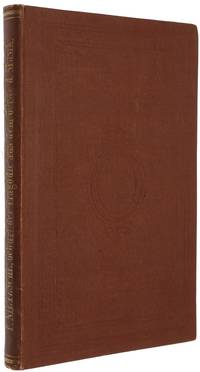
18724535Leipzig: E.W. Fritzsch 1872. First edition. <p>First edition in exceptionally rare original publisher's cloth binding. This copy previously handled by Bill Schaberg: "When I wrote The Nietzsche Canon: A Publication History and Bibliography 1995 I had never even heard of these cloth copies of Nietzsche's first book put out by his publisher Fritzsch. So it was quite a shock when someone offered this copy to me. It turns out that Fritzsch's contemporary advertisements for the book mention a cloth binding so this is not just a figment of some bookseller's imagination." This Nietzsche's first book is a compelling argument for the necessity for art in life. It is fueled by his enthusiasms for Greek tragedy for the philosophy of Schopenhauer and for the music of Wagner to whom this work was dedicated.</p>. Hardcover. IN THE EXCEPTIONALY RARE PUBLISHER'S BINDING. <p>First edition in exceptionally rare original publisher's cloth binding. This copy previously handled by Bill Schaberg: "When I wrote The Nietzsche Canon: A Publication History and Bibliography The University of Chicago Press 1995 I had never even heard of these cloth copies of Nietzsche's first book put out by his publisher Fritzsch. So it was quite a shock when someone offered this copy to me. It turns out that Fritzsch's contemporary advertisements for the book mention a cloth binding so this is not just a figment of some bookseller's imagination."</p> <br /> <p>This Nietzsche's first book is a compelling argument for the necessity for art in life. It is fueled by his enthusiasms for Greek tragedy for the philosophy of Schopenhauer and for the music of Wagner to whom this work was dedicated.</p> <br /> <p>Nietzsche argues that the tragedy of Ancient Greece was the highest form of art due to its mixture of both Apollonian and Dionysian elements into one seamless whole allowing the spectator to experience the full spectrum of the human condition. The Dionysian element was to be found in the music of the chorus while the Apollonian element was found in the dialogue which gave a concrete symbolism that balanced the Dionysiac revelry. Basically the Apollonian spirit was able to give form to the abstract Dionysian.</p> <br /> <p>In contrast to the typical Enlightenment view of ancient Greek culture as noble simple elegant and grandiose Nietzsche believed the Greeks were grappling with pessimism. The universe in which we live is the product of great interacting forces; but we neither observe nor know these as such. What we put together as our conceptions of the world Nietzsche thought never actually addresses the underlying realities. It is human destiny to be controlled by the darkest universal realities and at the same time to live life in a human-dreamt world of illusions.</p> <br /> <p>The issue then or so Nietzsche thought is how to experience and understand the Dionysian side of life without destroying the obvious values of the Apollonian side. It is not healthy for an individual or for a whole society to become entirely absorbed in the rule of one or the other. The soundest healthiest foothold is in both. Nietzsche's theory of Athenian tragic drama suggests exactly how before Euripides and Socrates the Dionysian and Apollonian elements of life were artistically woven together. The Greek spectator became healthy through direct experience of the Dionysian within the protective spirit-of-tragedy on the Apollonian stage.</p> <br /> <p>The Birth of Tragedy was the best selling book that Nietzsche ever published; still it did not sell quickly. The Wagners had feared that there might not be an audience for the work and their apprehensions proved to be well-founded. A prediction that Nietzsche had once made to Rohde proved true: "The philologists won't read it on account of the music the musicians won't read it on account of the philology and the philosophers won't read it on account of the music and the philology." False hopes for brisk sales plagued the first half-year. In mid-April Nietzsche was writing home that "a new edition of my book will be needed soon"34 but the necessity of printing a second edition did not materialize quickly. By 20 July Fritzsch complained that there had been "no results" even though he had "sent out a fair number of copies." Schaberg The Nietzsche Canon p. 27</p> <br/> <br/> 8vo 216 x 138 mm pp. i-iii iv 1 2-143 144. Original publisher's dark-rust binding with an ornate blind-stamped design on the front and rear covers and the spine lettered and filleted in gilt. There is some light browning to the edges of the page margins and light foxing throughout. Rear hinge with a 10 cm split. Entirely unrestored copy in its original state. An extremely well preserved copy of this unusual and all-but-unobtainable original publisher's cloth binding. / Hardcover. E.W. Fritzsch unknown