1 237 résultats
191740576NY: Dodd Mead 1917. First Edition. Bull Rene. 8vo pp. xi 299. Illustrated with 8 color plates and many smaller drawings by Rene Bull. Black cloth with decorative stamping in gilt and and blue and a colored paper label. Donor's presentation on flyleaf one hinge near tender cover slightly worn at edges o/w VG. Dodd, Mead unknown books
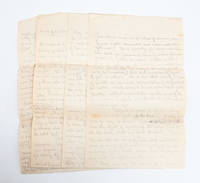
4060N.P. Late 19th century. Comprised of four manuscript pages on four unlined legal sheets composed in a single hand in pencil. Trifold lines on each. Text incomplete. Possibly an essay the use of brackets and underlining for emphasis heavily imply that the present work was intended for public reading. Anonymous in nature the writer's gender geography and age remain unknown. What becomes clear however in the document left behind is that logical arguments for women's rights were becoming mainstream and familiar across the country and were being used widely in grassroots efforts.<br/><br/>As the National Woman Suffrage Association geared up for the next phase of its campaign at the turn of the century its rising leader Carrie Chapman Catt increased the number of pamphlets and printed materials being distributed on the organization's behalf. These provided pro-suffrage activists with rhetorical responses phrases arguments and a vocabulary that was unified and shared across the cause. Many of them are present throughout this speech suggesting Catt's success in reaching and shaping grassroots activity. "Taxation without representation" "Will the balloy benefit the working woman is the question of the hour" and "'The exercise of the right of the franchise will degrade woman' is a narrow minded coward's device" are only a few examples of how this piece links to a more national movement. <br/><br/>Susan B. Anthony Elizabeth Cady Stanton and their protege Catt were also aligned in using reason logic law and economics as the basis for women's equality arguments. The present speech occasionally departs into broader praise for women's contributions -- for example to the Cotton State International Exhibition and to the World's Fair at Chicago -- but it leans most directly into an economic argument. Tackling the misguided anti-suffrage claim that giving women the vote or giving women equal pay will threaten male power the writer shows how equality in both fields will be to the benefit of all parties. Income inequality the writer reasons is a root cause of poverty. "A man will set his price upon his labor and if he cannot get it will fold his hands and say 'I can't afford to work for less wages and will not' and if there is no woman who will come to the rescue and take the position for less the employer pays the man his price; but it is no unusual thing for the wife and daughters of the man to support him through the interim or even longer on half wages." Ultimately "women who can do as efficient work as man and as much of it and are faithfull in the discharge of their duties deserve as much pay." The same argument is then applied to the franchise to the combining of men and women's voices to create political change and to shape the future.<br/><br/>A research rich opportunity for studying activist rhetoric the spread and use of activist vocabularies grassroots versus national campaigns and the connection of economic and employment concerns to the vote. unknown books
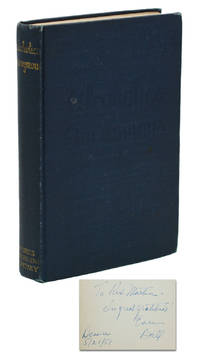
1945140938015New York: Works Publishing Inc 1945. Very Good. Signed by Bill Wilson and inscribed to a former owner on the front free end paper. First edition eighth printing. 400 pp. Bound in publisher's dark blue cloth with title stamped in blind on the front cover and in gilt on the spine; lacking the dust jacket. Very Good. Cloth lightly rubbed at corners and spine ends lightly rubbed and with a few small stains and a small crease to the bottom of the front board. Spine gilt partially rubbed. Previous owner name to front paste down and several notations written in pencil on the front free end paper. Light tidemark to top corner of text block affecting margins in varying degrees throughout. A nice copy of the AA Big Book signed by the co-founder of Alcoholics Anonymous Bill W. Works Publishing, Inc unknown books
1978160929002Port Glasgow: Bratach Dubh Publications 1978 1978. First Edition. Paperback. Very Good. First edition. Publication date of February 1978 on bottom of last page second volume in Bratach Dubh series listed as "in preparation" on back cover. 28 pp. Stapled red wraps. Very Good. Original price of 30 p on front cover with sticker shadow. Pages toned with age light shelf wear and tiny stain on back cover. The rare first appearance of a Left-wing compilation of official communiques from the group and a chronology of their actions. Bratach Dubh Publications, 1978 paperback books
184648832Philadelphia PA: Lindsay and Blakiston 1846. Hardcover. Very good/No jacket issued. Lindsay and Blakiston hardcover books
1719WRCLIT66441London: Printed for W. Mears . and Sold by J. Bettenham 1719. 751pp. Octavo. Extracted from nonce pamphlet volume. Old ink numbers in top margin of title leaf and lower margin of A2 a few small faint spots very good. First edition of this pointed reply to Wagstaffe's pamphlet: " The author. appears very formidable in his title-page and promises mighty Feats . But when we come to his performances we find this mighty champion no better than a Knight-Errant." ESTC locates two copies in North America: Emory and General Theological. ESTC T39938. Printed for W. Mears ... and Sold by J. Bettenham unknown books
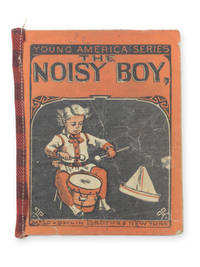
186719998New York: McLoughlin Brothers ca. 1867. <br /><br />Original color pictorial self-wrappers 4.38 x 3.63 inches 12 pages added red plaid scrap cloth spine machine-stitched with white thread. Wood engravings printed in black and red. First edition. <br /><br />Entertaining and moderately didactic verses for children handsomely produced in the McLoughlin style. Per the cataloging of the AAS copies this issue with "The Quiet Boy" on page 2 rather than page 4 and the illustrations printed in dull red rather than light red; the rear wrappers advertise paper dolls from McLoughlin including dolls for characters from Uncle Tom's Cabin that were not advertised until 1867. The paper dolls also include the little people performers Tom Thumb and Mrs. Tom Thumb as well as Minnie Warren and Commodore Nutt. <br /><br />A few stray early pencil marks. Some general wear and soiling; a good copy. McLoughlin Brothers books
1916119874London: Eyre and Spottiswoode Ltd 1916. Softcover. VG and tight with NF interior but for lib. stamp on front cover and light dust-dulling. Grey stiff paper wraps stapled with black lettering and border; 24 pp. A series of communiques between "Yours Truly" and The Foreign Office UK regarding the criticisms leveled at Britain for their censorship of information between the US and European countries during WWI thought to be for the aim of gaining trade advantages. Eyre and Spottiswoode, Ltd paperback books
1997233490Washington: Regnery 1997. First. hardcover. fine/fine. Facsimiles. 8vo 1/2 black cloth d.w. Washington: Regnery 1997. Fine<br/><br/> Regnery unknown books
1957213784Boston: Beacon Press 1957. Hardcover. 186p. worn first edition in worn red cloth boards and edgeworn price-clipped dj. European novel by white Boston author who had an affair with Chester Himes while in France. Himes claimed to have co-written the book threatening a law suit just pre-publication. Beacon Press hardcover books
1957213785Boston: Beacon Press 1957. Hardcover. 186p. first edition in lightly-worn red cloth boards and edgeworn unclipped dj. European novel by white Boston author who had an affair with Chester Himes while in France. Himes claimed to have co-written the book threatening a law suit just pre-publication. Beacon Press hardcover books
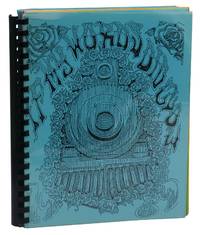
1989140940817No Place: No Publisher 1989. Near Fine. Comb-bound printed on sheets of various colors. Unpaginated. Near Fine with light wear. A thick collection of Grateful Dead lyrics plus lyrics to songs the Dead often covered. A memento of rabid Deadhead culture at the close of the '80s transcribed by the anonymous Deadeditor by hand from listening to various tapes; tape-trading being one of the most popular pursuits in the subculture. According to said editor in the intro "This book was not xeroxed out of another lyric book nor was it copied out of Dead songbooks. Anything that was taken from another source was looked over and corrected to the best of my ability." Also notable for the time was that it was written on a Macintosh SE computer writing on a computer was a strange new thing for many people then believe it or not and "the final copy was printed on a NEC Silent Writer laser printer." The title is taken from the band's classic song "Ripple" off the 1970 studio LP American Beauty. Rare with a single institutional copy located in a recent OCLC WorldCat search. [No Publisher] unknown books
183319161likely New England ca. 1833. Oblong 8vo. self-wrappers. Awkwardly hand-stitched in a rather ad-hoc manner. 21 leaves of manuscript penned in a neat and legible hand recto and verso. 42pp. in all. Mild toning infrequent foxing moderate edgewear. Overall very good. <br/><br/>A plea from unknown author offering statistics historical contect and warnings of the dangers of a half-way approach to temperance. Advocating for the kind legal ban of alcohol that would finally come to fruition during Prohibition the anonymous lecturer mixes a potent cocktail sorry had to of morality and patriotism: "Intemperance is the severest scourge with which our nation was ever visited. It has for many years rolled its waves of desolation over us spreading poverty ruin death and devestation around. Intemperance has filled our lands with widows and orphans. Under his black banner crime has stalked abroad at mid day and worked in darkness he has fed the hungry man of pestilence and nourished disease while they have done his deeds of cruelty . He hath filled our prisons and jails our poorhouses and penitentiaries with his unhappy visitors." Reference to Reuben Mussey Professor at Dartmouth College who left Dartmouth in 1838 and the "recent establishment of the Congressional Temperance Society" which was established in 1833 appear to date the manuscript to the mid 1830s; the paleography is consistent with this period as well. The lack of corrections suggests either fair copy or utilized in delivery. An apparently unpublished lecture bordering on sermon from the early years of the American temperance movement. unknown books
17904147London: Published by Robert Sayer 1790. Colour printed mezzotint with additional hand-colouring. State vi/viii with the publication line altered to: ' Printed for ROBERT SAYER Map & Printseller No. 53 Fleet Street London'. A magnificent portrait of Lord Grosvenor's celebrated Arabian horse by the master equine painter George Stubbs.<br/> <br/>George Stubbs is considered one of the greatest English painters. His ingenious animal and sporting pictures remain unrivalled in their passionate depiction of emotion and their commitment to naturalistic observation. Stubbs was briefly apprenticed to the painter Hamlet Winstanley a relationship that quickly ended leaving the young artist to his own tuition. In contrast to contemporary academic theory Stubbs' attached great importance to the belief that art should imitate nature not the work of other artists. He spent years carefully studying human and equine anatomy so that he could truthfully represent natural form and movement. A result of this study was his famous 'Anatomy of the Horse' which details with beautiful engraving the various elements of a horse's anatomy from skeletal form to muscular definition. Continuing in search on innovation Stubbs began experimenting with a myriad of different mediums becoming accomplished in both enamels and printmaking. Through arduous application he became a talented mezzotint engraver and worked with ease in both soft ground and etching techniques. Stubbs' masterful paintings inspired some of the greatest engravers of the day to reproduce his work for publication. Stubbs was elected director of the Society of Artists and a Royal Academician and today his prized paintings are housed in some of the finest museums in the world. Stubbs was often commissioned to paint accurate portraits of specific mares for proud aristocratic patrons who wished to highlight their horses' racing success. This practice is expertly exemplified in this magnificent print. The Arabian horse in this print belonged to the first Lord Grosvenor one of Stubbs' earliest and most important patrons. Lord Grosvenor had two passions horse racing and collecting paintings; by glorifying one passion he was able to indulge the other. In this clever work Stubbs made the Arabian horse the clear center of attention even the groom is made to appear secondary to the horse. The artist's anatomical knowledge is displayed in the musculature of the horse's legs and shoulders and by the veins on the muzzle and right hind leg.<br/> <br/>Lennox-Boyd George Stubbs 21 vi/viii; Gilbey Life of George Stubbs no.28; Siltzer The Story of British Sporting Prints p.270. Published by Robert Sayer unknown books
17904138London: Published by Robert Sayer 1790. Hand-coloured mezzotint. State vi/viii. A remarkable portrait of Lord Grosvenor's Pangloss by the master equine painter George Stubbs.<br/> <br/>George Stubbs is considered to be one of the greatest English painters. His ingenious animal and sporting pictures remain unrivalled in their passionate depiction of emotion and their commitment to naturalistic observation. Stubbs was briefly apprenticed to the painter Hamlet Winstanley a relationship that quickly ended leaving the young artist to his own education. In contrast to contemporary academic theory Stubbs attached great importance to the belief that art should imitate nature not the work of other artists. He spent years carefully studying human and equine anatomy so that he could truthfully represent natural form and movement. A result of this study was his famous Anatomy of the Horse which details with beautiful engraving the various elements of a horse's anatomy from skeletal form to muscular definition. By the 1760's Stubbs had developed a considerable reputation as a sporting artist and had attracted a number of distinguished patrons. Continuing in search of innovation Stubbs began experimenting with a myriad of different mediums becoming accomplished in both enamels and printmaking. Through arduous application he became a talented mezzotint engraver and worked with ease in both soft ground and etching techniques. Stubbs' masterful paintings inspired some of the greatest engravers of the day to reproduce his work for publication including his own son George Townly Stubbs who reproduced with faithful accuracy the sublime emotion inherent in his father's exquisite works. Stubbs was elected Director of the Society of Artists and a Royal Academician and today his prized paintings are housed in some of the finest museums in the world. Stubbs was often commissioned to paint accurate portraits of specific racehorses for proud aristocratic patrons who wished to highlight their horses' racing success. This practice is expertly exemplified with this magnificent print of Pangloss Lord Grosvenor's beloved horse. Pangloss was foaled in 1755 and named after a character in Voltaire's Candide; little is known about Lord Grosvenor's horse apart from the fact that his racing career was ended by a broken leg. This print was the second of a series of engraved horse portraits begun by the publisher Ryland in 1771 and extended by Robert Sayer in 1777. Although the inscription on the print establishes Stubbs as the painter the painting has not been identified making this print extremely intriguing since it is the only record of Stubbs' lost work.<br/> <br/>Lennox-Boyd George Stubbs 20 vi/viii; Gilbey Life of George Stubbs no.39; Siltzer The Story of British Sporting Prints p.270. Published by Robert Sayer unknown books
193409257New York: Farrar & Rinehart Inc 1934. Very Good/Very Good-. Octavo 296 pages; publisher's red cloth light off-setting to end papers. Dust jacket with price of $2.00 legible but partly clipped; tape removed from spine ends. First printing with Farrar Rinehart logo on copyright page light off-setting to end papers light stain in upper margin for first 20 leaves not affecting text. <br/><br/> Farrar & Rinehart, Inc hardcover books
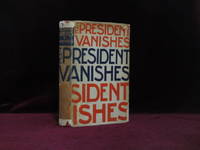
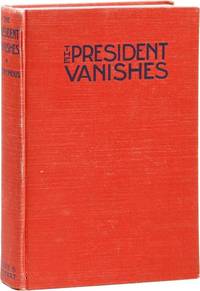
193420859New York: Farrar & Rinehart 1934. First Edition. Octavo 20.5cm.; original red cloth upper cover and spine lettered in blue dark blue topstain; 8296pp.; photographic frontispiece 3 leaves of illus. printed on rectos and versos. Light rubbing to spine ends else a Near Fine unfaded copy albeit lacking the scarce dust jacket. "A fantasy of future politics. When Congress tries to force the nation into a European war the president disappears and a crisis ensues" HANNA 2935. Farrar & Rinehart unknown books
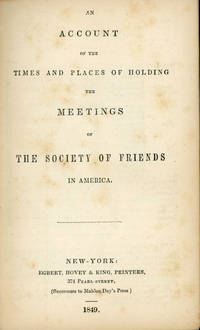
1849132599New York: Egbert 1849. Small octavo pp. 1-5 6-53 54-55 56: blank original plain brown flexible cloth. Second edition. An early and apologetically incomplete see anonymous compiler's note on page two attempt to list the entire history of meetings of the Society of Friends in America. Scarce little book only four holdings in OCLC. An earlier edition was dated 1845; a later edition was published in 1858 and many editions followed. Narrow 28 mm strip of loss of cloth along outer rear joint a very good plus copy. #132599 Egbert unknown books
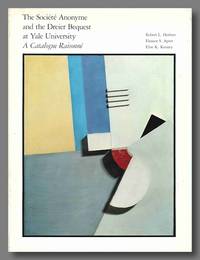
1984WRCLIT72866New Haven: Yale University Press 1984. Large thick quarto. Cloth. 52 color plates over 800 black and white illustrations. Lower edges a bit shelf-rubbed but a very good copy in modestly shelfworn dust jacket with internally mended short tear at crown of spine. First edition. Founded in 1920 the Société Anonyme was responsible for introducing contemporary European art to the American public. Donated by Dreier and Marcel Duchamp to Yale in 1941 the collection was augmented by Dreier during the last years of her life and by works from her estate upon her death in 1952. This catalogue records the history of the Société Anonyme and reproduces the entire collection and associated works from the Dreier estate a total of 1020 items including works by 180 artists. Capsule biographies of and bibliographical references for the artists are included. Yale University Press hardcover books
200666281New Haven & London: Yale University Press/Yale University Art Gallery 2006. First edition. 4to. 229 pp w/index. Very near fine in like dust jacket. Fully-illustrated. New Haven & London: Yale University Press/Yale University Art Gallery unknown books
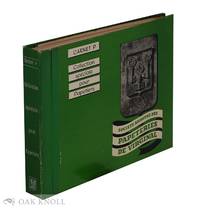
132142Brussels Belgium: Societe Anonyme Papeteries de Virginal n.d. illustrated paper-covered boards. Paper Specimens. oblong 8vo. illustrated paper-covered boards. unpaginated. Text in French. A collection of specimens for typewriters mimeograph machines air letters blotters parchment music and special purposes. Divided with tabs according to purpose. Illustration of the manufacturer on inside back cover. Covers lightly worn at edges. Some tabs stained. Societe Anonyme Papeteries de Virginal unknown books
193531263Paris: Societe anonyme des chantier et ateliers de Saint-Nazaire 1935. Quarter cloth over paper covered boards. A very good copy front board lightly scuffed. Unpaged 64 pp. Illus. with b/w photos and drawings. Obl. 4to. In French. Good coverage of the Normandie which had just finished her sea trials and completed her first voyage Ile-de-France L'Atlantique the Paris the France Lafayette Champlain Navy vessels shipyards and a few airplanes. An earlier edition with a few less leaves was published in 1933 and a later version was published after the war. Scarce. There are no copies of this edition in OCLC COPAC major European Libraries or the BN though the BN and the Mariner's Museum Lib. have a copy of the 1933 edition. Societe anonyme des chantier et ateliers de Saint-Nazaire hardcover books
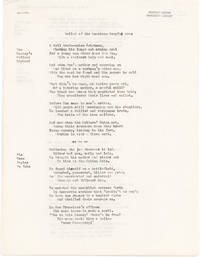
193443069n.d. but 1934. Original clean copy typescript poem; 9ll. on onionskin; previous mail folds ex-Mooney Papers Bancroft Library with their small rubberstamps to each leaf else Very Good and sound. Lengthy unpublished ballad of 86 4- and 5-line stanzas recounting the plight of iron molder and IWW leader Tom Mooney from his birth to the present date 1934 based on the penultimate stanza on p. 6 describing Judge Griffin: "all these eighteen years since the 1916 trial / Has fought on Mooney's side". Though no author is provided the poet has a detailed knowledge of Mooney's biography and trial beginning before his birth with his father "A tall trade-union Irishman / Choking his lungs out mining coal"; progressing to Mooney's early childhood helping his widowed mother make ends meet as a paperboy; and the first trial against him after dynamite was found or planted on a boat in the San Pablo Bay a crime for which he was exonerated. The poem additionally recounts the first meetings between Mooney and Warren K. Billings as well as the tireless travel and work his mother and sister shouldered to bring justice after it was revealed that the star witness Frank Oxman had perjured himself. The poem ends with the heartbreaking death of Mother Mooney who was laid in state at the gates of San Quentin and the mournful plea: "Warren Billings is forty years old. / Tom Mooney's hair grows white. / How soon will California turn / Her long long wrong to right" Another five years would pass before liberal Governor Culbert Olson would pardon him in 1939. unknown books
185519759N. p.: Jan. 4th 1855. Autograph address in ink on an unbound fascicle of 15 folia 30 leaves stitched. These arguments it is believed fairly prove that a man can be at the same time both a slave-holder and a Christian or stated in the abstract that the particular relation of superior & inferior known as slavery is not in itself necessarily sinful." An extensive detailed legal and ethical apology for American slavery arguing that a reciprocal relationship exists between the enslaver and the slave; the speak tentatively argues that Congress does have power to regulate slavery in the territories and had words against the doctrine of Popular Sovereignty. The anonymity of this argument and the popular setting of the lyceum stage perhaps as a student production seems altogether fitting as a reflection of the widespread currency of legalistic equivocation over chattel slavery in America prior to the Civil War. With revisions and interpolations and corrections to the text throughout. Jan. 4th, books
197620018New England: np 1976. Wraps. Very good . 8vo. Self-wraps. Very good plus. Mild handling wear and surface creases. Several corrections in felt-tip pen. "Additions and Corrections" slip laid in. 28pp. <br/><br/>Five short essays on various topics showing a strong situationist influence. Includes remarks on Bay Area activists psychiatry and several diaristic passages. Not in OCLC or Ford. np paperback books