1 237 résultats
TM 466ELEGANT MANUSCRIPT CONTAINING TWO WORKS OF SPIRITUAL AND MORAL EDIFICATION IN FRENCH TRANSLATION. Illuminated manuscript on parchment in French France after 1482 c. 1490. Dimensions 274 x 175 mm. 70 folios written in a Gothic <i>bâtarde</i> bookhand 18 large initials parti-colored in red and/or blue inserted leaf in first quire with FULL-PAGE HERALDIC COMPOSITION IN GOLD SILVER RED BLUE AND BLACK. BINDING: Bound in modern nineteenth-century blue velvet over wooden boards pink paper pastedowns and endleaves edges gilt. TEXT: Manuscript contains two works that reflect the spirituality of fifteenth-century Carthusians and their quest for the contemplative life. The first text <i>Sept fruits de la tribulation</i> is known in only five extant manuscript and is still unedited. A free French version probably dating from the fifteenth century of either the longer <i>Latin Tractatus de tribulacione</i> or an abridged adaptation of the French <i>Livre de tribulacion</i>. The second text<i> Miroir d'or de l'ame pecheresse</i> is a work of spiritual edification which consists of seven sections: on human misery sin especially lechery penance rejection of the world the vanity of human wishes death and hell and heaven. There is neither a modern critical edition of the second text nor a complete census of the existing manuscripts; the copy here was apparently made from an incunable edition of c. 1490. This manuscript begins with a remarkable added full-page illuminated frontispiece with the coat of arms and motto of Louis de Grolée fl. late fifteenth-early sixteenth century the abbot of Bonnevaux and Saint-Pierre de Vienne. PROVENANCE: Copied in France perhaps northeastern based on script and linguistic characteristics as well as internal evidence. It belonged to Louis de Grolée fl. late fifteenth-early sixteenth century. It then belonged Charles Chardin bibliophile. It was later a part of the collection of Sir Thomas Phillipps 1792-1872 who has been described as the greatest private manuscript collector of all time. CONDITION: Gold slightly rubbed some off-setting from heraldic painted composition to opening text page slight staining in upper margin and into three lines of text ff. 68-69. Overall good condition. Full description and pictures available. TM 466 books
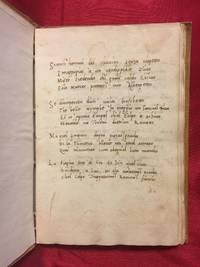
15102973Venice 1510. 8vo. in fours. Collation: A-Q4 COMPLETE. 64 ff. some signatures written in contemporary MS several erroneously neat modern foliation in pencil. Paper size: 155 x 105. Watermarks: Northern Italy ca. 1480-1520 see below. Bound in late 18th century Italian sprinkled ochre boards upper cover with title in MS. Text in Italian and with the titles of several poems in Latin. Several types of Italian humanistic literae cursivae all apparently by the same person see images below numerous corrections throughout. Fascinating Unknown Venetian Manuscript of Unpublished Sonnets and Love Letters ca. 1510.<br/><br/>An important discovery. Unknown manuscripts of unpublished Italian poetry written in Venice during the age of Aldus Manutius are rare in private ownership. The present manuscript contains 100 poetical compositions sic and merits considerable scholarly inquiry: certain sonnets and poems were extensively revised showing authorial development; the handwriting is perfectly clear in some instances modeled after contemporary Italian writing masters; and finally the codex is preserved in remarkably fresh condition and is perfectly suitable for exhibition and intensive study. <br/><br/>The manuscript consists mainly of sonnets in the style of Petrarch several capitoli and strambotti and includes many revisions variants and even cancellations to which two intriguing love letters were added. The name of the author is unknown but his identity may yet be discovered as he left a number of intriguing clues in the text the most obvious one being the family name Colonna famous in Venice and Rome and the names of several of his muses. <br/><br/>Certain sonnets exhibit handwriting reminiscent of Giovanni Antonio Tagliente ca. 1460s - ca. 1528 who worked for the Venetian Chancery and whose "Lo presente libro" Venice 1524 continues to inspire modern-day calligraphers and typographers. We may also reference the work of writing master Ludovico Vicentino degli Arrighi 1475-1527 who seems to have started his career in Venice before becoming a Papal scribe and type designer. <br/><br/>That the MS was written over a long period in some instances interpolated on formerly blank leaves is attested by the changes in handwriting and ink. To illustrate the development of the codex itself we propose an artificial division of four sections: <br/><br/>¶ Section A contains 42 sonnets written in the litera cursiva styles A and B. The neat humanistic handwriting is comparable with that used by contemporary Venetian scribes. If the text had been copied from previous drafts it is clear that the author remained unsatisfied as there are a number of substantive revisions in the text. In the upper margin of eleven sonnets were written the title of the poem - in Latin - at some point in the life of the MS. Two sonnets in this section were cancelled by the author. ¶ Section B contains 32 poems written in the litera cursiva styles C-G. These were presumably written in the same period except for some interpolated sonnets that were written slightly afterwards. ¶ Section C contains 16 poems one of which bears the date 27 Ianuarij 1510 fol. 46v. This section surely contains poems written in a different period including two sonnets fol. 49r-v that were written in the humanistic litera cursiva style A which begins the MS. ¶ Section D contains two Love Letters plus an Addenda of 10 "new" poems and capitoli hastily written. <br/><br/>That the author may have had thoughts on publishing his work is suggested by the "printer's signatures" that were written by him in ink in the lower margins of the first 16 leaves. If such a book was ever printed it has not been located; indeed not even a single poem has been traced see below for a complete Index Poematum. <br/><br/>The fact that the author never signed his work may be due to the private and very personal contents of this Canzoniere. The work was probably begun by the author as a young man and for years it served as a vehicle of consolation for unrequited love. <br/><br/>Faustina Helena Colonna Laura Arianna<br/><br/>In the first sonnet Stanch'ormai dal cacciar senza rispetto fol. 1r the author claims to have met "three beautiful nymphs" during a break from hunting. A possible connection to the Colonna family is first suggested in Sonnet II A una colonna d'alabastro fina 1v in which the poet declares his eternal lover for Faustina "ni altra Dea adorerò ch'a Faustina." The word colonna is found in other compositions throughout the Canzoniere suggesting that at least one of the author's muses was a member of the famous Colonna family. Sonnet XVIII Ardo piango sospiro et a tutt'hore 9v ends with the verse chiedendo sempre a un cor di marmo a una colonna viva "always begging a marble heart a living column" again suggesting by means of a well-crafted literary image the Colonna family. Most importantly the actual name "Helena Colonna" appears as the caption heading to Sonnet LXXXII Da una marmorina Alta colonna 48v. Lady Colonna may be referenced in the first Love Letter 53v in which the author describes her as alta colonna di mia vita "high column of my life". No longer is the Colonna surname obscured behind imagery. <br/><br/>The promise of endless love to Faustina was not kept unless the author cleverly utilized more than one name for the same woman a not-uncommon practice in this particular genre. Two other names appear herein namely Laura and Arianna. That the author may have had changes of heart might be due to the fact that he seems to have written the poems over an extended period of time see images of the handwriting development A-G and is therefore a record of failed love years in the making. The sonnets reflect perpetual desperate longing almost always to the point of death. How could it be otherwise<br/><br/>The Philosopher and His "Poetessa" Muse<br/><br/>In Sonnet LI I' solea ben la penna et l'intelletto 28v the author states quite clearly that the object of his desire was also a poet declaring that a mortal blow has pierced his side because he has lost the paper the ink and each amorous rhyme of his Lady's verse persi la carta l'inchiostro e ogni amoroso detto. The author claims that he is much better at writing about philosophy:<br/><br/>Smaritha quella strada. altro sentiero<br/>Hora mi è scorta mi governa et regge<br/>Qual va fina Avicenna e agli aphorismi<br/>Ove Signor si vostre rime egregge<br/>Non han da me risposta: a dirvi 'l vero<br/>Mi torna meglio scriver Syllogismi.<br/><br/>"The road is lost. A different path is now taking me to Avicenna the philosopher and to Aphorisms where Lady your excellent rhymes have no answer; to tell you the truth I'm better in writing Syllogisms." Thus the identity of the author a "reluctant poet" may be found among contemporary Venetian philosophers. <br/><br/>Index Poematum<br/><br/>Section A litera cursiva styles A and B:<br/><br/>I. Stanch'ormai dal cacciar senza rispetto "Stanch' hormai dal chacciar senza rispetto" fol. 1r<br/>II. A una colonna d'alabastro fina 1v<br/>III. Deponni l'archo la pharetra Amore 2r: textual corrections<br/>IV. Deh! Potess'io canggiar tecco mia sorte 2v: caption title in Latin<br/>V. Non posso più celar la fiamma ardente 3r: caption title in Latin<br/>VI. Era tutto coperto d'adamante 3v: caption title in Latin textual correction<br/>VII. Vedendo de gli fior le Vite corte 4r: caption title in Latin textual correction<br/>VIII. Vaten felice Aventurata Rosa 4v: caption title in Latin<br/>IX. L'esca gli stral et l'amorosa Rete 5r: caption title in Latin<br/>X. Quando sera quel giorno che chi m'have 5v: the entire sonnet cancelled<br/>XI. Dolce m'e 'l giogo et la pregion men grave 6r: caption title in Latin<br/>XII. La singular mia fede che vi porto 6v: entire sonnet cancelled<br/>XIII. Ardo d'Amor et ho la fiama viva 7r: caption title in Latin textual corrections<br/>XIV. Donna gentil fin hor son sta patiente 7v: caption title in Latin<br/>XV. Se mai per tempo alchun mi vedrò sciolto 8r: caption title in Latin<br/>XVI. Amor un dolce viso teso havea 8v: caption title in Latin<br/>XVII. Madonna ogni mio ben da dolci Rai 9r<br/>XVIII. Ardo piango sospiro et a tutt'hore 9v<br/>XIX. Qual vero Pregionier al sacro Tempio 10r<br/>XX. Sono doi animali un de si altera 10v<br/>XXI. Un scoglio d'una Pietra è tanto ardita 11r<br/>XXII. Amor in guisa d'huom che guerra aspetta 11v<br/>XXIII. Il mie Adversario a cui in tutte l'hore 12r<br/>XXIV. Amor nel volto mio ben più di mille 12v<br/>XXV. Sapete che ben solo me nutrisco 13r<br/>XXVI. Una che qui tra noi excider suole 13v<br/>XXVII. Si questo e ver Amor como se dice 14r<br/>XXVIII. Donna gentil mi sento 14v<br/>XXIX. Deh! Perché non vi è noto il mio dolore 15r<br/>XXX. Se gli è pur mio destin ch'amando i' rompa 15v<br/>XXXI. Sempre vidi Iustìa star accorta 16r<br/>XXXII. Come voi ho et d'enverno et d'estate 16v: textual corrections<br/>XXXIII. D'un verdeggiante Lauro un giorno Amore 17r: textual corrections<br/>XXXIV. Gli occhi leggiadri ove ch'alberga Amore 17v: final line verse rewritten in an 18th century hand<br/>XXXV. S'io fusse di sospir Et pianto privo 18r: extensively revised then completely cancelled<br/>XXXVI. Gratie che a pocche donne Amor concede 18v<br/>XXXVII. Occhi miei lassi ho ben mirare Fiso 19r: textual corrections<br/>XXXVIII. Il Pellegrin avintto dal disio 19v: textual corrections<br/>XXXIX. Il Chacciator che nel bosco la Ferra 20r<br/>XL. Smarite piaggie ov'hor piangendo torno 20v<br/>XLI. Mille fiate al di m'assale Amore 21r<br/>XLII. Ogni luocho mi spiace ov'io non trovo 21v<br/><br/>fol. 22r: S'io fusse de sospir et pianto privo: variant of Sonnet XXXV hastily written as a draft<br/>22v-23r: two pages of verse extensively revised and then apparently abandoned<br/>23v: blank<br/><br/>Section B litera cursiva styles C-G<br/><br/>XLIII. Amor Fortuna a sì'nfelice Sorte 24r<br/>Fol. 24v: blank<br/>XLIV. Lasso credendo haver pur qualche pace 25r: textual corrections<br/>XLV. Scoprir non posso l'amorosa fiama 25v<br/>XLVI. Miser vo pur scorgendo a passo: a passo 26r: textual corrections<br/>XLVII. Miser tutto ardo Et piango a tutte l'hore 26v<br/>XLVIII. Io viverei con la Phenice a prova 27r<br/>XLIX. Per la merce dil mio si longo affanno 27v<br/>L. Gli occhi beati intorno han l'esca e'l visco 28r: textual corrections<br/>LI. I' solea ben la penna et l'intelletto 28v<br/>LII. Sotto rara beltà nascosto è l'hamo 29r: textual corrections including one stanza cancelled<br/>LIII. Piango cantando 'n rime il mio lamento 29v: textual corrections<br/>LIV. Qual dolce mana qual esca qual visco 30r: introduction of "Laura"<br/>LV. Quando Madonna con dolci parole 30v<br/>LVI. In fronte meco i' porto l' ben e il male 31r: textual corrections<br/>LVII. Occhi ove ch'Amor sovente tresca 31v: textual corrections LVII and LVIII are written on the same page but in different handwriting styles<br/>LVIII. Che il tempo si consuma ogni fier cosa 31v: textual corrections<br/>LIX. Sol per farmi gustar mana in veneno 32r<br/>LX. Baso ogni giorno mille et mille volte 32v<br/>LXI. N'anti ch'entrasse un'hora me ritrovo 33r<br/>Fols. 33v-34r: blank<br/>LXII. Lauda le ver ch'ogni fidel amante 34v<br/>LXIII. Laura soave che si dolcemente 35r: reintroduction of "Laura"<br/>LXIV. Deh! Vi fusse si noto quanto ch'io ardo 35v<br/>Fol. 36r: blank<br/>LXV. Si come è vagho un vivido colore 36v: a capitolo written for "Arianna" <br/>LXVI. Maraveglia non è si ho mesto il volto 37r<br/>LXVII. Chi non vedrà quanto è mia bella 37v<br/>LXVIII. Dovran per mostrar gran maraviglia 38r<br/>LXIX. Si come è bello un vivido colore 38v: preliminary verses corrected cancelled and apparently abandoned<br/>LXX. Se mai per altra donna i' rompo fede 39r<br/>Fols. 39v-40r: blank<br/>LXXI. Et copre donna quel candido seno 40v: caption heading: "Laura S. C." <br/>LXXII. Amor da cui mai fu troppo lontano 41r<br/>LXXIII. Quella ch'un tempo la ti piacque tanto 41v-42r<br/>LXXIV. S'el primo di che mi piacesti tanto 42r-43r: ending with "Telos" in Greek<br/>Fol. 43v: blank<br/><br/>Section C:<br/><br/>LXXV. Vaga et smarita va Phylosophia 44r<br/>LXXVI. Spirto gentil in cui valor si trova 44v<br/>LXXVII. Occhi che nel mio cor fate il bel nido 45r<br/>LXXVIII. Gli occhi ove scherzar si vede amore 45v: textual corrections<br/>LXXIX. S'el vivo Sol et le doi chiare Stelle 46r: dated 27 January 1510 at Venice "M.E."<br/>LXXX. La meggia notte facea meggio giorno 46v: textual corrections <br/>LXXXI. Gratie da gli occhi uscian sante et si nove 47r: textual corrections <br/>Fols. 47v-48r: blank<br/>LXXXII. Da una marmorina Alta colonna 48v: textual corrections; caption title: "Helena Colonna" <br/>LXXXIII. Istarò sempre come scoglio al onde 49r<br/>LXXXIV. Ogni supplitio dammi ogni martoro 49v <br/>LXXXV. Questo già non pensai superba Altera 50r<br/>LXXXVI. Deh! Pensa un poco a la mia Iniqua sorte 50v <br/>LXXXVII. Da poi che per amar son gionto a morte 51r<br/>LXXXVIII. Non è cosa mortal benchè in fra sphera 51v<br/>LXXXIX. Ben è infelice chi in fra mondo ingrato 52r<br/>XC. Se dil mio amor volevi esser felice 52v: textual corrections<br/><br/>Section D Sigs. O-Q4:<br/><br/>NB: These three gatherings have a waterstain which does not appear in any of the preceding gatherings or individual leaves. <br/><br/>First Letter: Honoranda et singular mia Diva la cui imagime como richo thesoro explicit: Vale o et praesidium et dulce decus meus 53r-54v<br/>Second Letter: Suolsi communemente dire almo mio Sole explicit: Vale. 54v-55v<br/>XCI. Così come un sasso accorto et destro 55r<br/>XCII. Né illegible word d'haver più pena vale 55r<br/>XCIII. A che mostrarmi pace nel aspetto 56v<br/>XCIV. Io son contento poi che m'hai nel Iocho 57r-57v<br/>XCV. Sacro santo mio nome Alma mia stella 58r-59r: caption heading: "Capitolo" / Finis<br/>XCVI. Rotto e carcho d'amor spreciato e l'arco 59r-60v: caption heading: "Capitolo" / Finis<br/>XCVII. Un dolce laccio ha fatto amore 61r-61v: textual corrections; caption heading: "Capitolo" / "Telos" in Greek<br/>Fols. 62r-63r: blank<br/>XCVIII. Mai rosa fu si vagha nel mattino 63v: caption heading: "Strambotti"<br/>XCIX. De' Lumi da begli occhi discendea 63v: caption heading: "Strambotti"<br/>C. Doi occhi da far arder 64r: caption heading: "Sonetto"<br/>Fol. 64r: blank<br/><br/>WATERMARKS: As the book is an octavo the watermarks appear in the upper gutter margins and thus only one half appears at one time; however it has been possible to identify them especially with the aid of the countermarks "angle" and "lettre B". Chapeau: type of Briquet 3456 Venice 1499 and Briquet 3461 Udine 1521. Balance: type of Briquet 2575 Venice 1478 Briquet 2587 Verona et al. 1525. unknown books
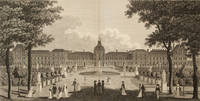
18161435761816. PARIS. Graphic Illustrations of the Most Prominent Features of the French Capital; with Characteristic Figures in the Foregrounds comprised in Twelve Stroke Engravings From Accurate Designs Taken in Paris during the Imperial Reign of Buonaparte. With Descriptive Notices and Interesting Anecdotes. 26 pp. Illustrated with 12 double-page engravings. Folio 430 x 380 mm bound in contemporary French three-quarter black morocco over marbled boards gilt title and floral vignettes on spine paper label with ms. number "20" on front cover and spine. London: Harper and Co. 1816. A fine copy of this extremely rare collection of views of Paris consisting of twelve artistically-conceived views of Paris engraved by English artists. The large double-page engravings incorporate local Parisians participating in daily routines within the setting of each view. Panoramic views include: the Military School and the Church of the Invalides; View of Paris from the South Boulevard; View of Paris from Montmartre; South View of the Old and New Louvre; The Mint and The Façade of the Louvre; View of La Place de la Concorde; The Garden of the West Front of the Tuileries; Palace of the Tuileries Facing La Place du Carrousel; Garden of the Tuileries; The Luxembourg or Palais du Senat with the Gardens; The Elysian Fields Distant Gardens of the Tuileries; Entrance to Les Champs Élysées and La Place de la Concorde. Each plate is followed by two pages of text giving historical details and anecdotes about the site illustrated. Minor wear to outer edges of binding plates and text clean. Rare: OCLC lists 6 copies worldwide of which only one is held in America Bowdoin College. hardcover books
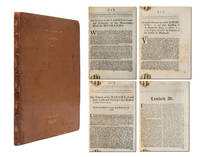
16934178London: Various 1693. First editions. Late 18th - early 19th century full polished calf with gilt to spine and front board. Marbled endpapers. A pleasing square copy with just a bit of rubbing to extremities. Gilt and embossed bookplate of bibliophile Edward Hailstone 1767-1851 to front pastedown. Containing four complete exceedingly scarce pamphlets from the 17th century querelle des femmes debates about women's humanity and place in society interleaved with blanks likely for manuscript glossing although all remain unmarked. Comprised of:<br/><br/>1. Petition of the Ladies of London and Westminster to the Honourable House for Husbands. London: Printed for Mary Want-man the fore-maid of the petitioners and sold by A. Roper in Fleetstreet 1693. First edition. Complete including all four pages called for by ESTC and listing its imprint in the colophon. ESTC records only 8 copies with only 3 listed in the modern auction record since 1940.<br/><br/>2. An Humble Remonstrance of the Batchelors in and about London.in Answer to the Late Paper Intituled A Petition of the Ladies for Husbands. London: Printed for and Sold by the Bookselling Batchelors in St. Paul's Churchyard 1693. First edition. Complete including all four pages called for by ESTC and listing its imprint in the colophon. In all a clean and neat copy of this scarce and important part of the debate on women. ESTC lists only 8 extant copies with only 2 listed in the modern auction record. ESTC R4393.<br/><br/>3. The Petition of the Widows in and about London and Westminster for a Redress of their Grievances. By the Same Solicitor that Drew up The Petition for Ladies. London: Printed for the Use of the Wide--ows 1693. First edition. Complete including all four pages called for by ESTC with the imprint appearing at the rear colphon. A scarce piece recorded at only 7 institutions by ESTC and recorded only twice at auction since 1927. ESTC R25582.<br/><br/>4. Lambeth Ale. London: Printed for Abel Roper 1693. First edition. Complete in four pages with the imprint recorded on the rear colophon. With no listing on ESTC and no appearances at auction a truly scarce piece.<br/><br/>A unique opportunity to trace a string of direct argument-and-response publications rapidly produced within one year of the 17th century querelle des femme pamphlet wars. Brought together in one binding by solicitor and bibliophile Edward Hailstone whose remarkable library at Walton Hall included rare books and antiquities. <br/><br/>The Querelle des Femmes the Woman Question was a debate on women's status that raged across Europe and England through the 16th to 18th century depicted at times in drama and literature but most often enacted through broadsides and pamphlets. While early iterations of the debate focused on whether women were humans or indeed possessed souls emphasis began shifting as an increasing number of women began printing responses of their own. In this collection's first pamphlet "Mary Want-man the fore-maid of the petitioners" the anonymous female author draws attention to the negative impacts that misogynist bolster lectures have had on the general state of matrimony. By labeling women as natural harlots predestined to cuckold their husbands the Petition alleges polemicists endangered women and men alike: the former would lack economic and legal security without a spouse and the former would turn to drink and debauchery. "Mary Want-man" in this sense turns the tables on the terms of the debate. Men are morally weak without a helpmeet and need wives -- and women are placed at social disadvantage by the rules that define them as men's companions. To this end the Petition sets out the demand that men be required to marry much as women have been and that they meet five terms: "First that all men of Quality and Degree soever shall be obliged to marry as soon as they are one and twenty and that those persons who decline so doing shall for their Liberty as they call it pay yearly to the State.Secondly that no Excuse shall be admitted but that of natural Frigidity or Impotence.Thirdly since it is found by experience that the generality of young men are such Idolators of the Bottle.that no person whatsoever shall be privileged to enter a Tavern who is not married.That every Poet or pretender to be a poet or anyone who is hired to write .to the derogation of the Matrimonial State shall be obliged to marry before Lady day ensuing.Lastly.every person of Quality pretending to keep a Miss.must dispose of her in Marriage to his Footman or Groom." Biting and witty this feminist satire suggests that men must be corralled and that marriage is the means by which to do it thus also ensuring stability for women. <br/><br/>Soon after the "Bookselling Batchelors" engaged "Mary" with their own publication -- and in attempting to break down the Petition's satirical arguments An Humble Remonstrance relies on many of the misogynistic commonplaces that the Ladies decried. And in its conclusion Remonstrance teases the possibility that women were right about men's current debauched tendencies shifting The Petition's desire for social instability to one of bawdy fulfillment for men's benefit. "The Ladies are weary of lying alone and so are we: They would fain be advantageously married and so would your humble Servants. The Quarrel on their side is therefore unjustly begun.but because Jacob could serve two Apprenticeships for his Rachel they imagine that we must do the same; not considering that the Race of Methuselahs and Patriarchs is quite extinct."<br/><br/>Unwilling to be outdone the women clap back; and a pamphleteer claiming to represent the interests of the region's Widows joins the printed fray. "Last week a petition subscribed by the unmarried Ladies came before you.Tis true we wondered to find an Army of Maids from whom the world usually expects modesty and silence.Widowes indeed who lye under no such restrictions are allowed to speak for themselves." Thus the Widows point out a crucial and problematic differentiation among women based on marital status: the division of the femme covert unmarried or married women with legal identities subsumed by fathers or husbands under coverture versus femme sole orphaned or widowed women with more independent legal and social status. To this end the widows recognize the need of the Maids to raise concerns about the issues most affecting them; while the more empowered widows can build on this foundation and push for a further expansion of rights.<br/><br/>While the final pamphlet of the group is not a direct engagement with the others it does suggest the collector's own interest in the role alcohol plays in much of the behavior decried by women in these works. <br/><br/>An opportunity unlikely to arise again for acquiring three incredibly scarce directly related arguments released only weeks apart. Various unknown books
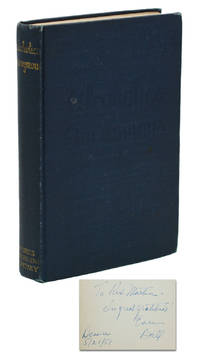
1945140938015New York: Works Publishing Inc 1945. Very Good. Signed by Bill Wilson and inscribed to a former owner on the front free end paper. First edition eighth printing. 400 pp. Bound in publisher's dark blue cloth with title stamped in blind on the front cover and in gilt on the spine; lacking the dust jacket. Very Good. Cloth lightly rubbed at corners and spine ends lightly rubbed and with a few small stains and a small crease to the bottom of the front board. Spine gilt partially rubbed. Previous owner name to front paste down and several notations written in pencil on the front free end paper. Light tidemark to top corner of text block affecting margins in varying degrees throughout. A nice copy of the AA Big Book signed by the co-founder of Alcoholics Anonymous Bill W. Works Publishing, Inc unknown books
18209232London 1820. Engraving printed in bistre on linen with contemporary cloth edging tape. A beautiful ephemeral and very rare angling print on linen.<br/> <br/>At the centre of the print is a Hogarthian scene of an angler in his winter closed-season sitting-room. He is laid-up in his arm-chair with gout his foot rests on a gout stool a toddy warms on the grate above a blazing fire whilst he tries to re-live the long-gone halcyon days of summer by fishing for apples in a large coopered barrel full of water. Scattered around him are the accoutrements of his art: creels nets rods an open fly-case. This image is surrounded by a decorative border of scrolling stylised foliage. Beyond this is a surround of 13 ovals each with a picture of a different British freshwater fish giving the fish's name and the season when it can be fished joined to these ovals are shaped 'labels' that give brief details of where and when each fish is to be found what time of day it should be fished for and which hooks and flies/bait should be used. The outermost rectangular border includes the title an oval portrait of Sir Izaak Walton at each corner and a series of shaped boxes containing details of flies and baits under the headings 'Flies' 'Pastes' 'Worms' and 'Fishes and Insects'. Sir Izaak Walton 1595-1683 was the author of the most famous book on fishing and a classic of English literature: The Compleat Angler ; or the Contemplative Man's Recreation. It was written during the horrific English Civil War and was Walton's attempt to draw attention to the benevolence of a simple virtuous life. unknown books
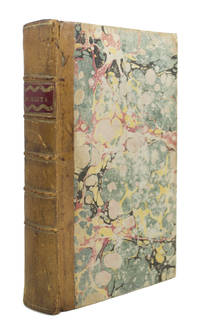
177868338A Collection of Five Eighteenth-Century British Revolutionary Pamphlets Anonymous. T.M. A letter to His Grace the Duke of Buccleugh of national defence to which is now added a postscript relative to the regiments of fencible men raising in Scotland. Edinburgh Sold by J. Dickson bookseller 1778. A reissue of the London edition of the same year with a cancel title-page and the addition of a postscript dated: LincolnÃs Inn July 20th 1778. 4 72 10 Postscript. With the letter signed "T.M." Previous owner's old ink signature on title-page. This also includes remarks on Adam Smith's Wealth of Nations. Adam Smith's Remarks were not in the London Edition. We could find no other copies at auction. ESTC T179898. Bound with DOUGLAS JOHN Anonymous. A Letter Addressed to Two Great Men on the Prospect of Peace; And on the Terms necessary to be insisted upon in the Negotiation. London: A. Millar 1760. First edition first issue with no errata below Finis on final leaf. 4 55 1 blank pp. With half-title and final leaf verso blank. " This tract relating to the Treaty of Utrecht and the French Canadian question has been attributed to Junius also to William Pulteney Earl of Bath but with more probability to John Douglas. The ìTwo Great Menî were Wm. Pitt and the Duke of Newcastle. The writer urges upon the government in making peace with France to require from her the relinquishment of all Canada Guadaloupe and Senegal." Sabin 40263. ESTC T37753. Bound with Macpherson James Anonymous. The rights of Great Britain asserted against the claims of America: Being an answer to the declaration of the general Congress. The third edition with additions. London Printed for T. Cadell 1776. The Third edition. 6 96 pp. With folding chart "Appendix." Half-title and advertisement leaf after the title-page. "Also attributed to Sir John Dalrymple Lord George Germaine and Henry Mackenzie." ESTC T45081. Half-title is soiled and some minor toning to a few pages." A reply to the July 1775 declaration of the Continental Congress commissioned and widely distributed by the British government. ìThis celebrated performance is said to have been written printed and liberally distributed both in Great Britain and America at the instance and expense of government; but whether this be true or not the work itself we are afraid will answer no other purpose than to exasperate the people of Great Britain against their brethren of America; and by inflaming misrepresentations and invective aggravate the evils of our present civil discord.î---Monthly Review." Sabin 18347. Howes D37. Evans 14727. Bound with LIND JOHN. Anonymous. An answer to the Declaration of the American Congress. The Fourth Edition. London Printed for T. Cadell 1776. Fourth Edition. 1-132 pp. Leaves D2 and D3 trimmed close at fore-edge just slightly affecting the printed marginal notes. " This anonymous work was ascribed to English barrister John Lind by Richard Price and others. In the work Lind a close associate of Jeremy Bentham treats each of the Declaration's grievances individually refuting them on philosophical and factual grounds. Pages 119-132 include a discussion of the Preamble to the Declaration which he describes as an "absurd and visionary" theory of government." National Book Auctions. " In these later editions the outline of a counter declaration is omitted. With regard to the theory of government set forth in the preamble to the ìDeclarationî the writer adds ìa theory as absurd and visionary as the system of conduct in defence of which it is established is nefarious;î indeed each article of the Declaration of Independence is carefully examined and every assertion disputed." Sabin 41281. Howes L349 ESTC N5626. Bound with Burke William Anonymous. Remarks on the letter addressed to two great men. In a letter to the author of that piece. London Printed in the year 1760. A pirated reprint According to Todd 263 item 98. 32 pp. Bound without the half-title. Previous owner's old ink signature on title-page." Occasionally attributed to Charles Townshend but more generally assigned to William Burke and Ãin partà to Edmund" Todd. A respond to the first pamphlet in this volume "The ÃLetter addressed to two great menà is by John Douglas Bishop of Salisbury." "Argues against giving Guadeloupe to the French. Attributed to Charles Townshend by Evans; however the Dictionary of national biography attributes the Remarks to William Burke secretary to Guadeloupe" Evans 8751. ESTC N26297. Octavo 8 1/4 x 5 inches; 210 x 128 mm. All pamphlets bound together in contemporary half calf over marbled boards. Red morocco spine label lettered in gilt. Some occasional foxing but otherwise very clean. Previous owners old ink notes on front endpapers. A very good copy. HBS 68338. $5000 Sold by J. Dickson, bookseller hardcover books
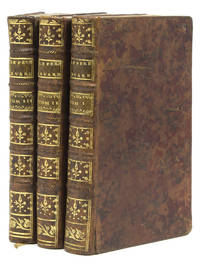
1770307572Paris: Desventes de Ladoué 1770. First edition. xvi 359 iii; 334; 360pp. 3 vols. 12mo. Bound in full contemporary mottled calf. With the bookplate of the Vicomte de Noailles engraved by Agry in each volume. Upper joint of vol. III with short start at foot otherwise a fine and fresh copy. First edition. xvi 359 iii; 334; 360pp. 3 vols. 12mo. Contemporary Satire of Rousseau's 'Émile'. A satirical response to Rousseau's Emile ou l'Education 1762. Where Émile is guided by a wise tutor the author of Le Père avare mocks from the outset Rousseau's dictum "le véritable précepteur est le père" for the narrator's father M. d'Erigny grew up poor and gained wealth through his friendship with a government minister; his child has been spoiled from infancy. <br/>While M. d'Erigny is drunk his mistress gets him to sign an order from her jeweler for 20000 francs of precious stones and skips out. The extravagance is discovered and the father becomes miserly in the extreme. The son now 15 years old is entrusted to a unscrupulous précepteur or tutor who involves the youth in a swindle and vanishes with the money. <br/>This is a confessional so we learn it all: the narrator soon discovers love and devotes himself to pleasure using the family name to run up accounts everywhere before being deceived and fleeced. M. d'Erigny is furious; Madame intercedes: his debts are paid and he is sent off to exile in a provincial town. He is befriended by a well-connected gentleman but repays this trust with deceit. Besotted with an actress he forges a criminal denunciation of a rival but his scheme is discovered and his in consigned to "une de ces maisons de force" a private prison for the reform of licentious youth. <br/>To escape this close confinement the narrator embarks with a flotilla of colonists bound for the island of C in the new world. His mother's continued good influence follows him across the ocean cushioning him from the worst excesses of a brutal colonial regime amply detailed. Florainville a mistress who has managed her money well comes to the colony to rescue him but falls afoul of the corrupt Intendant and her health fails her. She dies but not before she has made him her legatee. The narrator assists the colonial governor in prosecuting the Intendant and returns to France. He retires to a rural abbey and contemplates his experiences. Before long he becomes the benefactor of a village community and sees it thrive.<br/>Only edition of this little-known work of fiction set partly in the Americas. OCLC records two copies in N. America Princeton UCLA two in France and one at Trinity College Dublin Desventes de Ladoué unknown books
179268343A Collection of Five Political Tracts from the Years 1792-1793 Anonymous. Six essays on natural rights liberty and slavery consent of the people equality religious establishments the French Revolution which were greatly approved and have been in much request since their original appearance in the Public Advertiser. London Printed for S. Woodfall 1792. First edition. 8 48 pp. We could find no copies at auction and only four are listed at libraries according to ESTC N62745 Bound with ANDERSON George. A general view of the variations which have been made in the affairs of the East-India Company since the conclusion of the war in India in 1784. By George Anderson. London Printed in the Year 1792. First Edition. 8 102 2 blank 11 folding appendix tables pp. With half-title and 11 folding appendix tables. There have been no copies at auction since 1978. George Anderson was a colonial official and writer. In 1792 he published this present highly regarded study as to the condition of Indian trade and finance. ESTC T97303 Bound with Anonymous Callender James T. The political progress of Britain; or an impartial account of the principal abuses in the government of this country from the revolution in 1688. The Whole tending to prove the ruinous Consequences of the popular System of War and Conquest. Part first. Edinburgh Printed for Robertson & Berry 1792. First edition. 80 pp. We could find no copies at auction in over 50 years. Previous owner's old ink notes on blank verso of title-page. "In February 1792 Callender published in the Edinburgh Bee the first of eight parts of what was to become a very successful pamphlet The Political Progress of Britain. As an inflammatory critique of imperialism war and corruption with a strong Scottish nationalist flavour Callender's work rivalled Thomas Paine's in its radicalism. It sold well although not in the numbers of the Rights of Man." Oxford DNB. ESTC T43967. Bound with CARLYLE Alexander. A sermon on the death of Sir David Dalrymple Bart. Lord Hailles; from Eccles. VII.3. Preached In the Church of Inveresk on Sunday the 9th day of December 1792. By Alexr. Carlyle D. D. F. R. S. E. Chaplain to His Majesty & Minister of that Parish. With an address to the congregation suited to the circumstances of the times. Edinburgh Printed for John Balfour 1792. First edition. 33 1 blank pp. We could find no copies at auction in over 50 years. ESTC T53279. "Carlyle was a Church of Scotland minister and memorialist. During the French Revolution he was equally conservative in regard both to domestic issues.and to foreign issues such as the war with France which he exalted as a divinely sanctioned cause and a test of British virtue and resolve in three published sermons including: Sermon on the Death of Sir David Dalrymple Bart. Lord Hailes 1792." Oxford DNB. Bound with Mallet du Pan M. Jacques. ConsidÈrations sur la nature de la rÈvolution de France et sur les causes qui en prolongent la durÈe. A Bruxelles et se trouve a Londres chez Owen 1793. Early edition. viii 79 1 table pp. ESTC T75704. Mallet du Pan was a Swiss journalist who "Published with the approval of the foreign representatives a work which was to make a prodigious sensation and which is still the best know of his writings his Considerations on the Revolution." Mallet du Pan and the French revolution by Mallet Bernard. He is considered a pioneer of modern political journalism. Octavo 8 1/8 x 4 7/8 inches; 205 x 125 mm. All tracts bound together in contemporary half calf over marbled boards. Red morocco spine label lettered in gilt. Some occasional foxing but otherwise very clean. Previous owners old ink notes on front endpapers. Outer hinges cracked but holding. Top of spine chipped. Otherwise a very good copy. HBS 68343. $5000 Printed for S. Woodfall hardcover books
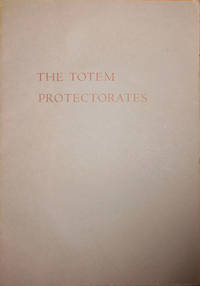
197226416San Francisco: Hermes Free Press 1972. First edition. Paperback. Very Good . Folio. Sewn wrappers. 6 pp. Printed on Bergstrom papers with the text set on Centaur & Cloister types. Rare anonymous collaboration between Allen Ginsberg and Gary Snyder. Subtitled "Being the Assignment of Same to the Honorable Senators Lawmakers of the United States Government toward the Preservation of Life and Spirit in these Lands. This Investiture Proclaimed in Grace Cathedral at the Autumnal Equinox 1971." Published by the Hermes Free Press an offshoot of the Zephyrus Press of San Francisco. Noted on page 175 of Alistair Johnston's "Zephyrus Image: A Bibliography" who notes "10 1/4 x 14 3/4" 12 page book sewn into brown Tweedweave cover "printed on Bergstrom papers at Hermes Free Press in San Francisco Spring 1972" Centaur type in brown on cover. This book assigns specific endangered plants and animals to each U.S. Senator. Originally in printed manila envelope lacking with this copy. One copy was mailed to each U.S. Senator. Rob Rusk writes . The Totem Protectorates appeared in another issue of Place magazine half on the inside front cover and half on the inside back cover - the Neon Rose issue - tho I'm unsure whether it was photocopied or reset". Interestingly neither the Morgan bibliography of Ginsberg or the McNeil bibliography of Snyder makes mention of this independent piece. Only four copies located in O.C.L.C. Although the print run is unstated according again to Johnston the typical Zephyrus Image publications were generally produced in small quantities perhaps 100 to 200 copies. Scarce item. Hermes Free Press paperback books
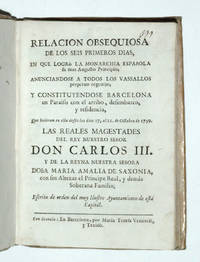
26281. Palau 29755 one record in OCLC: Northwestern; 2. Palau 80255 no OCLC records; 3 4 5 6 7. Palau 259767 NUC records NYPL Hispanic Society no locations in OCLC. NOTE: Palau calls for 13 plates but the two copies listed in the NUC contain only 11; this copy has 12. separate issues: 4. Palau 193624; 5. Palau 156972 20 pp.; 6. Palau 156973 19 pp.; 7. Palau 156974; 8-9. Palau 259934 separate record for 9: Palau 156976 12 pp. Rare illustrated collection of nine ephemeral fête programs documenting three generations of royal entries into Barcelona: Charles III in 1783 his son Charles IV in 1802 and grandson Ferdinand VII in 1827. This group of pamphlets affords a comparison between royal entries staged before and after the French occupation of Catalonia 1808-1823.LIST OF TITLES:1. Bilingue Obsequiosa Consonancia en 92. decimas y las vistosas Mascaras Moxiganga Luminarias Adornos afectuosas públicas y privadas Festivas Alegrias que tributa al Rey Supremo y al de Espana la Inclita y Fidelisima Barcelona en los dias 8 9 y 10 del mes de Dbre. de 1783. Barcelona Imp. Viuda Piferrer 1783. 31 ff. 2. Epitalami à las Reals Bodas dels serenissims senyors princep y princesa de Asturias Don Fernando y Dona Maria Antonia y dels serenissims senyors princep y princesa de las dos Sicilias Don Francisco y Dona Isabel. Barcelona Imp. Thomas Gorchs 1802. 28 pp. 3. Relacion de las Diversiones Festejos Públicos y otros acaecimientos que lan ocurrido en la ciudad de Barcelona desde el 11 de Setiembre hasta principios de Noviembre de 1802. Barcelona Compania de Jordi Roca y Gaspar 1802. 35 1 pp. with 1 folding plate. 4. Noticia Individual de la Entrada de los Reyes Nuestros Senores y real familia en la ciudad de Barcelona la tarde del once de Setiembre del presente ano de mil ochocientos dos. Barcelona Jordi Roca y Gaspar 1802. 30 pp. 1 blank leaf. 5. Máscara real para la primera noche. Cinco de Octubre. Barcelona Jordi Roca y Gaspar 1802. 12 pp. 5 plates. 6. Máscara real para la Segunda Noche. Seis de Octubre. Barcelona Jordi Roca y Gaspar 1802. 13-23 1 pp. 5 plates. 7. Máscara real para la Noche siete de Noviembre. Barcelona Jordi Roca y Gaspar 1802. 1 f. 6 pp. 1 plate. 8. Relación de la entrada de los Reyes nuestros Senores en la ciudad de Barcelona la manana del 4 de diciembre de 1827 y de los demas festejos públicos. Barcelona la Viuda de D. Agustín Roca 1828. 25 1 pp. 5 plates. 9. Máscara real para la noche del 6 de enero de 1828. Barcelona Imp. Vda. de Agustín Roca 1828. 10 pp. 3 ff. 3 plates. The printing house of Jordi Roca and Gaspar was active in the latter years of the 18th century; its tradition of printing topical works continued at least until the 1830s under the helm of Agustín Rocas widow. Agustín Roca published clandestine leaflets during the Napoleonic invasion and was forced to flee to Tarragona and Mallorca. According to Palau the pamphlets pertaining to both the 1802 and 1827 festivities were issued separately as well as in the collected editions found here. A more detailed description of this item can be supplied on request. unknown books
18500000269Bretagne 1850. Contemporary pebbled green morocco. Very Good. Collection of 119 expertly pressed mounted and labeled marine algae from Bretagne coast circa. Mid 1800's. Small 4to24.5 x 17.2 cm. Contemporayry green morocco binding. Collation: 119 lv each leaf mounted on stub with single labeled specimen. Each specimen is identified with earlier Latin name in black ink and later additions in red ink. All specimens are well preserved and beautifully displayed on the page. Binding has raised bands; title in gilt in upper panel. There is sunning on the spine and along the hinges and edges of boards less so for the later. Minor wear to ends of spine. Monogram "SB" in calligraphic style in gilt in each corner of boards. The inner covers are elaborately detailed in gilt dentils and additional inner borders. Pastedowns and free end papers in fine marble paper. This private collection is the most elaborate that we have had and represents a personal collection of "SB" who has made the presentation of the algae growing along the coast of Britany most appealing and scientifically important. <br/><br/> unknown books
1928002034Hvidore: s. n. 1928. Softcover. Original silver gelatin photographic postcard of the Empress sitting on a padded bench in her garden holding an umbrella and a bouquet of flowers; 5 x 3 1/4; minor wear to corners and image; a bit of age-toning and a manuscript note in pencil to verso; near fine condition. Signed in ink: "Maria Hvidore" in the lower half of the photo. Possibly one of Maria Feodorovna's last photographs the anonymous note on the back stated: "The Empress sent me this not long before she passed away at Hvidore." Empress Consort of Russia Maria Feodorovna 1847 â 1928 christened Dagmar was the wife of Tsar Alexander III and mother of Emperor Nicholas II of Russia whom she outlived by ten years. The second daughter of King Christian IX of Denmark and Louise of Hesse-Cassel she was bethroted to Tsarevich Nicholas Alexandrovich of Russia but after his death from meningitis in 1865 Maria honored his last wish and married his younger brother the future Alexander III. She converted to Orthodoxy and became Grand Duchess Maria Feodorovna of Russia. With Alexander II's assassination in 1881 she and her husband were crowned Emperor and Empress of Russia. After Alexander III's death in 1894 she became Dowager Empress and her son Nicholas II and his wife Alexandra were crowned the new rulers. The outbreak of the Revolution in 1917 forced her to travel to Crimea where she received the devastating news that her sons daughter-in-law and grandchildren had been murdered. She refused to believe it and declared it a rumor. Although the monarchy would be overthrown she would not leave Russia until 1919 - first to London and eventually to her native Denmark where she would settle in Hvidore a former country house near Copenhagen. Maria died on October 13 1928 at the age of 80 having outlived four of her six children. Hvidore: s. n. paperback books
1780265361780. Pastel on laid watermarked paper. The sheet retains signs of having been stretched as these types of portraits typically were. Dampstain upper right corner tear lower right corner otherwise excellent condition. A strikingly well done portrait of a successful European gentleman with piercing eyes.<br/> <br/>Pastel portraits were popular in Europe Great Britain and America during most of the 18th century especially in the 1770s and 80s. They provided a more rapid way of rendering a likeness in bright colors that didn't yellow. This was a golden age for portrait painting which exemplified the optimistic views of the Enlightenment: a sitter was not ashamed to show his or her wealth contentment or character. Our self -assured subject looks directly at the viewer with piercing eyes calm practical not likely to be fooled. It is an astounding accomplishment; we feel that this was exactly how he was. The artist allowed himself or herself there were a number of excellent female pastel portraitists particularly in France to be subject entirely to what was seen and sensed about this strong indomitable personality.<br/> <br/>Baetjer & Shelly Pastel Portraits. Images of the 18th Century. Metropolitan Museum of Art 2011. unknown books
196021470np ca. late 1960s. Hardcover. Very good. Oblong 4to. Boards. Likely commercial scrapbook but possibly ad-hoc. Containing 66pp. plus covers and one fold-out all mounted both recto and verso with color collages consisting mainly of magazine models with occassional textual elements in German many typed. Spine appears persished. But otherwise sound and apparently complete. Very good. Housed in custom Talas archival clamshell box. <br/><br/>An extraordinary and unique handmade artist's book elaborately assembled by an anonymous artist. A kinky but lighthearted celebration of female flagellantism the book appropriates quintessentially 1960s fashion models and recontextualizes them in dozens of original collages so that they are weilding whips switches and various similar tools. Paired with self-referential and irreverant texts as well as black-and-white hand-penned drawings presumably by the assembler of bondage spankings and other S&M-themed scenes the book humorously imagines Mod Girls as doms — a perhaps intentional visual pun. The collages many spanning across page spreads and including one fold-out exhibit a strikingly skillful and stylish retraint suggesting an ambition and audience beyond the merely pruriently personal. An outsider book of rare sophistication and wit: the Swinging Sixties meets Dada. Yeah baby. hardcover books
17904147London: Published by Robert Sayer 1790. Colour printed mezzotint with additional hand-colouring. State vi/viii with the publication line altered to: ' Printed for ROBERT SAYER Map & Printseller No. 53 Fleet Street London'. A magnificent portrait of Lord Grosvenor's celebrated Arabian horse by the master equine painter George Stubbs.<br/> <br/>George Stubbs is considered one of the greatest English painters. His ingenious animal and sporting pictures remain unrivalled in their passionate depiction of emotion and their commitment to naturalistic observation. Stubbs was briefly apprenticed to the painter Hamlet Winstanley a relationship that quickly ended leaving the young artist to his own tuition. In contrast to contemporary academic theory Stubbs' attached great importance to the belief that art should imitate nature not the work of other artists. He spent years carefully studying human and equine anatomy so that he could truthfully represent natural form and movement. A result of this study was his famous 'Anatomy of the Horse' which details with beautiful engraving the various elements of a horse's anatomy from skeletal form to muscular definition. Continuing in search on innovation Stubbs began experimenting with a myriad of different mediums becoming accomplished in both enamels and printmaking. Through arduous application he became a talented mezzotint engraver and worked with ease in both soft ground and etching techniques. Stubbs' masterful paintings inspired some of the greatest engravers of the day to reproduce his work for publication. Stubbs was elected director of the Society of Artists and a Royal Academician and today his prized paintings are housed in some of the finest museums in the world. Stubbs was often commissioned to paint accurate portraits of specific mares for proud aristocratic patrons who wished to highlight their horses' racing success. This practice is expertly exemplified in this magnificent print. The Arabian horse in this print belonged to the first Lord Grosvenor one of Stubbs' earliest and most important patrons. Lord Grosvenor had two passions horse racing and collecting paintings; by glorifying one passion he was able to indulge the other. In this clever work Stubbs made the Arabian horse the clear center of attention even the groom is made to appear secondary to the horse. The artist's anatomical knowledge is displayed in the musculature of the horse's legs and shoulders and by the veins on the muzzle and right hind leg.<br/> <br/>Lennox-Boyd George Stubbs 21 vi/viii; Gilbey Life of George Stubbs no.28; Siltzer The Story of British Sporting Prints p.270. Published by Robert Sayer unknown books
17000000629Paris: Author 1700. Full leather. Very Good. 8vo. Modern quarter red morocco binding with on marble boards. Collation: Premier Section- 2 52 14 – 7 engraved tables dated Paris 1716 pp. 2- Blank; Seconde Partie- 2 72 5 pp.; Troisieme Partie- 1 60 pp. numerous diagrams throughout and 17 page table in Premiere Partie. There is extensive treatment of sundial theory geometry application and construction and application of different cadrans sundials. It is copiously illustrated with accurate finely executed drawings. The last part of the manuscript discusses and illustrates the use of portable and curious types of dials that could by use when making observations sun off surfaces separate dials for use with moon or stars. The use of two hands as a dial for determining time is also covered in a separate section. <br />This is a rare and thorough treatise for dialing with little evidence of author. No reference to the title could be found checking numerous reference sources. The date of 1700 on the title pages for each section may be accurate. However the printed geographical tables for longitude and latitude inserted as part of the first section have a date of 1716. <br/><br/>This is a rare and thorough treatise for dialing with little evidence of author. No reference to the title could be found checking numerous reference sources. The date of 1700 on the title pages for each section may be accurate. However the printed geographical tables for longitude and latitude inserted as part of the first section have a date of 1716. Author hardcover books
17904138London: Published by Robert Sayer 1790. Hand-coloured mezzotint. State vi/viii. A remarkable portrait of Lord Grosvenor's Pangloss by the master equine painter George Stubbs.<br/> <br/>George Stubbs is considered to be one of the greatest English painters. His ingenious animal and sporting pictures remain unrivalled in their passionate depiction of emotion and their commitment to naturalistic observation. Stubbs was briefly apprenticed to the painter Hamlet Winstanley a relationship that quickly ended leaving the young artist to his own education. In contrast to contemporary academic theory Stubbs attached great importance to the belief that art should imitate nature not the work of other artists. He spent years carefully studying human and equine anatomy so that he could truthfully represent natural form and movement. A result of this study was his famous Anatomy of the Horse which details with beautiful engraving the various elements of a horse's anatomy from skeletal form to muscular definition. By the 1760's Stubbs had developed a considerable reputation as a sporting artist and had attracted a number of distinguished patrons. Continuing in search of innovation Stubbs began experimenting with a myriad of different mediums becoming accomplished in both enamels and printmaking. Through arduous application he became a talented mezzotint engraver and worked with ease in both soft ground and etching techniques. Stubbs' masterful paintings inspired some of the greatest engravers of the day to reproduce his work for publication including his own son George Townly Stubbs who reproduced with faithful accuracy the sublime emotion inherent in his father's exquisite works. Stubbs was elected Director of the Society of Artists and a Royal Academician and today his prized paintings are housed in some of the finest museums in the world. Stubbs was often commissioned to paint accurate portraits of specific racehorses for proud aristocratic patrons who wished to highlight their horses' racing success. This practice is expertly exemplified with this magnificent print of Pangloss Lord Grosvenor's beloved horse. Pangloss was foaled in 1755 and named after a character in Voltaire's Candide; little is known about Lord Grosvenor's horse apart from the fact that his racing career was ended by a broken leg. This print was the second of a series of engraved horse portraits begun by the publisher Ryland in 1771 and extended by Robert Sayer in 1777. Although the inscription on the print establishes Stubbs as the painter the painting has not been identified making this print extremely intriguing since it is the only record of Stubbs' lost work.<br/> <br/>Lennox-Boyd George Stubbs 20 vi/viii; Gilbey Life of George Stubbs no.39; Siltzer The Story of British Sporting Prints p.270. Published by Robert Sayer unknown books
18140000800Germany 1814. Small rectangular cardboard box; Hand-colored lithographed label on pull-off lid toned and spotted some loss to embossed border; Colorful pattern around border of box; Lithograph is illustration of flower garden with children playing around water fountain and parents nearby that can be reproduced with parts contained in box;; Rose paper on bottom with inscription “ Frederick Pearson the gift of Mrs. Cooper April 1841. The box contains parts for this hand-colored lithograph game with standing cut-outs that are either folded or on wooden bases. The collection of parts include six trees four with green benches two rose bushes a pair of classical brick archways a woman filling a watering can at a fountain a herbaceous border a low border of shrubs a set of four shelves with 15 slots each total ot 60 for potted plants and fifty-six of 60 potted plants plus a separate wooden base with a slot in either side occasional minor creasing and some old repairs on verso of parts. From the image on the cover and contents of the box there might be some additional parts missing other than the 4 potted plants. The missing parts appear to be the children and parents. However the colored lithograph is not exact replica of all the parts within the box. This is a rare Garden garden game that can be used by children and adults from the Collection of Percy H. Muir. <br/><br/> unknown books
17400000645Italy 1740. Contemporary vellum on boards. Very Good. Tom I. 4to20.5 x 15.0 cm. Contemporary vellum with ink label on spine. There are no free endpapers or title page.Text block attached to boards by threads; all edges with marbling. Collation: 298 pp.293-298 blank 38 ll 3 folding containing 99 numbered ink drawings. The drawings are labeled as numbered Figures for each of the five V Tabula. These illustrations are grouped into V Tables with a Tabula IV Supplement for a total of 6 Tabula of images: Tab. I - 6 ll 18 Fig.; Tab. II - 4 ll 23 Fig.; Tab. III - 8 ll 17 Fig.; Tab. IV -6 ll 19 fig.; Tab.IV Suppl. - 9 ll 17 Fig.; Tab.V - 5 ll 5 Fig. There is a colophon on p. 286. <br />Note in Italian on front free pastedown mentions the colophon on p. 286 which reads “FINEM POSUI DIE I JUNY MLCCXXXX/ SUB DISCIPLINA U.J.D. MAR. I J LAMA. This manuscript was completed on June 1 1740. <br />There is a Tabula Index for the manuscript on pp. 289-292. Beneath the title is the Introduction that is followed by Liber I Physica Generalis or Book I General Physics. <br />The remainder of the manuscript text is organized with four 4 Dissertations different areas of physics that are treated with a number of chapters or addition of theorems as pertinent to the theme of Dissertation. Reference to figures at rear is made by noting the figure number in the margin that is found for the particular chapter in one of the Dissertations. The index at rear contains detail information for each Dissertation Chapter number and where appropriate Theorems. <br/><br/>Writing is in a fine hand and drawing very accurate and well laid out on page. <br />Although the ink writing in spine indicates volume 1 major areas of physics viz. motion of bodies mechanics friction color optics etc. are covered. hardcover books
19190032531919. Cloth. Very Good. Patriotic World War One poem "The Man who Keeps his Head" illuminated with exquisite vignettes. Oblong 24.5 by 31 cm. With eight plates including title page plus painted vignette on final leaf. These vignette watercolors four to eight per page depict the diversity of British experience whether its variety of industry its trades its modes of farming its ships etc. The effect is panoramic and epic a visual equivalent to Noel Coward's sweep in "Cavalcade" say. Framing it all are Art Nouveau devices and ornament very much true to the period. The book was easily of publishable quality and its creation demonstrates that a strain of patriotism and optimism somehow withstood the bitterness and cynicism engendered by the war. Tissue guards with creases and one with tear. Binding bowed. Other light wear. <br/><br/> hardcover books
2187Barcelona: Maria Teresa Vendrell y Texido. Rare first edition and fine copy of this illustrated funeral festival book for Charles III of Spain Maria Teresa Vendrell y Texido unknown books
30637<p>12mo 68 manuscript pages plus blanks and 8 pages of notes bound in contemporary embossed leather backed flexible stiff wraps entries written in English in pencil in a clear and legible hand.</p><p> The journal is an excellent highly literate well written account of the author's impressions of Russian society and his keen observations on all aspects of life in Russia which the author refers to as "<i>the Empire of Fear</i>." The diarist who describes himself as a Russian prince is anonymous although he identifies his companions. He takes a business trip to the part of Russia which is now in present day Poland. The purpose of his trip was to draw up a statement of account for the manufactory of Messrs Palin & Dunlop in Nowogrodek. Afterwards he visits the different silk and cotton manufactories in the town and also the place where Russe serge cloth is manufactured. The book only mentions business in passing. Mostly the author is concerned with describing the people and the regime of the country. </p><p> <b>Sample Quotations:</b></p><p> "Wednesday April 24 1872 </p><p> Left Windermere at 8.15 a.m. for Preston meeting at the latter place Thomas Hatch Margaret Hatch; James Ainscough; and Robert Sale proceeded from thence to Hull via Leeds arriving at 4.40 p.m. Went to Foreign Consulate for colltn of Passports; thence Granville Temperance Hotel. Left the Humber Dock Wall by steamship <u>Cyclone</u> at 10.50 same evening for Hamburg…"</p><p> After a rough passage our author and his party arrived in Hamburg after passing through customs they left Hamburg by rail at 11:30 a.m. for Perleburg making several stops along the way they arrived in Berlin shortly before 9 p.m. and stayed overnight at the Café Imperial. They departed Berlin by rail the next morning and arrived at the border of Poland that afternoon:</p><p> "… on the boundary line of Poland where we first encountered the numerous annoyances travelers of all descriptions are subjected to and to which even Russian Princes like myself were obliged to submit during our transit through the Custom House but on arriving at <u>Warsaw</u> I had the mortification of seeing them released in three minutes whilst I had to struggle with every species of trickery for the space of three hours. At four o'clock we succeeded in penetrating that land which is blessed with all the amenities attached to Russian Government which was announced by the Russian Eagle floating over the miserable apology for a building yclept the <u>Groche</u> Custom House Groche being <u>a</u> town of some dozen or so of dilapidated wooden erections which serve not only as shelters but also as dwellings and of which the Customs House is chief Winding by the banks of the river Vistula … the line threaded by the river bank to Nieszawa which seemed to be a busy place for the shipment of sundry descriptions of goods and merchandize; some loading for others unloading from the Baltic; we next came to Bobrownik another port of the same river & from whence two canals diverge; after this we reached Biskepia; where we stayed upwards of 20 minutes and then proceeded to Wyrzogrod at which place we left the Vistula on the right & proceeded by way of Biaski & Takrodzin and reaching Warsaw at 9.20 p.m. at which place a multitude of little superfluous precautions engender a population of deputies and sub-officials each of whom acquits himself with an air of importance and a rigorous precision which seems to say though everything is done with much silence "Make way I am one of the members of the grand machine of state."</p><p> Such members acting under an influence which is not in themselves in a manner resembling the wheel-work of a clock are called men in Russia! I say Russia though I am in reality speaking of Poland which is virtually and tyrannically a part and portion of the Great Empire. The sight of these voluntary automata inspires me with a kind of fear: there is something supernatural in an individual reduced to the state of a mere machine. If in lands where the mechanical arts flourish wood and metal seem endowed with human powers under despotisms human beings seem to become as instruments of wood. We ask ourselves what can become of their superfluity of thought And we feel ill at ease at the idea of the influence that must have been exerted on intelligent creatures before they could have been reduced to mere <u>things</u>. In Russia I pity the human beings as in England I feared the machines: in our own country England the creations of man lack nothing but the gift of speech; in Russian Poland the gift of speech is a thing superfluous to the creatures of the state.</p><p> These machines clogged with the inconvenience of a soul are however marvelously polite it is easy to see they have been trained to civility as to the management of arms from their cradle. But of what value are the forms of urbanity when their origin savours of compulsion The free will of man is the consecration that can alone impart a worth or a meaning to human actions; the power of choosing a master can alone give a value to fidelity; and since despite the reported abolition of serfdom by the Emperor Alexander in Russia an inferior chooses nothing all that he says and does is worthless & unmeaning – The numerous questions I had to meet and the precautionary forms that it was necessary to pass through warned me that I was entering the empire of Fear and depressed my spirits. – I was obliged to appear before an Areopagus of deputies who had assembled to interrogate the passengers. The members of this formidable rather than the imposing tribunal were seated before a large table; some of them were turning over the leaves of the register with an attention which had a sinister appearance for their ostensible employ was not sufficient to account for so much gravity. </p><p> Some with pen in hand listened to the replies of the passengers or rather the accused for every stranger is treated as culpable on arriving on the frontier and remains so at the very least until discharged by these officious notables; during the scrutiny six or a dozen ragged men half covered with sheepskins the wool turned within and the filthy skin appearing without will appear from time to time at the entrance to satisfy their curiosity by a prolonged and vulgar stare at the luckless beings undergoing the ordeal of officious examination. These arrivals and departures though they did not accelerate our matters at least gave me leisure to reflect on the species of filthiness peculiar to the people of the north who for the most part are shut up within doors and have a greasy dirtiness which appears to me far more offensive than the neglect of a people destined to live beneath the open heaven & born to bask in the sun.</p><p> The tedium to which these Russian formalities condemned us gave me also an opportunity of remarking that the great lords of the country were little inclined to bear patiently the inconveniences of public regulations when those regulations proved inconvenient to themselves.</p><p> "Russia is the land of useless formalities" they murmured to each other – but in French that they might not be overheard by the subaltern <u>employ</u><u>ès</u>. I have retained the remark with the justice of which my own experience has only too deeply impressed me. As far as I have been hitherto able to observe a work that should be entitled <u>The Russians judged by Themselves</u> would be severe. The love of their country is with them only a mode of flattering its master; as soon as they think that master can no longer hear they speak of everything with a frankness which is the more startling because those who listen to it become responsible.</p><p> It was a perfect relief to the tortured mind to find the sic such things as gags were not in use as it allowed me to expound a number of invectives which might have brought me into no end of trouble had my hearers been even possessed of an inadequate knowledge of the English language. </p><p> The cause of all our delay was at length revealed. The chief of chiefs the director of the directors of the custom-house again presented himself: it was this visit we had been waiting so long without knowing it. At first it appeared as if the only business of the great functionary was to play the part of the man of fashion among the few ladies who had been subjected to the same indignities as those of the sterner sex. He reminded one of their rencontre in a house where the lady had never been; he spoke to her of balls she had never seen: but while continuing to dispense these courtly airs our drawing room officer of the customs would now and then gracefully confiscate a parasol stop a portmanteau or recommence with an impartable <u>sang froid</u> the researches already conscientiously made by his subordinates. </p><p> In Russian administration minuteness does not exclude disorder. Much trouble is taken to obtain unimportant ends and those employed believe they can never do enough to show their zeal. The result of this emulation among clerks and commissioners is that the having passed through one formality does not secure the stranger from another. It is like a pillage in which the unfortunate might after escaping from the first troop may yet fall into the hands of a second & a third.</p><p> The chief turnkey of the empire having at length concluded his scrutiny graciously permitted us to depart at about half past twelve and time being an object I thought it desireable not to chance the accommodation offered for the night in a city where I had already been subjected to a sufficiency of inconveniences & in opposition to the desires of those under my charge I determined to proceed at the earliest chance which occurred and accordingly on the morning of the 28th Sunday we moved from the neighbourhood of the city of Warsaw at a little past four o'clock and at half past seven reached a large and apparently prosperous town called Praga…"</p><p> Our writer and his party stopped in Praga for about 40 minutes where excellent coffee but detestable food were procured. They resumed their journey and passed Misorent and Kamienezyk a small town on the river Narew. They then reached "a long straggling town" with the"somewhat short name of Nur" on the River Bang. Then the large village of Wysokie and afterwards the town of Surasz an extensive manufacturing place twelves miles further they reached Boralystok and at length arrived at Gradnau where the party stopped for the night at the Hotel de Coulon:</p><p> "… and found it to be under the management of a degenerate French innkeeper. The house was nearly full at that time owing to the marriage of a Duchess which was about to take place; indeed the landlord appeared almost annoyed at being obliged to receive other guests … gave himself little trouble to accommodate us… Having seen their immediate wants attended to I joined the company at the <u>Table d'hote</u> which consisted of a mixture of Russians Poles French Spaniards and a couple of Englishmen and curiously enough not a single lady was present – Amongst those natives of High blood were a Prince & two young Counts. The first named is of an illustrious family and may be taken as a fair specimen of the general swelldom of the country. He is as I was informed the only son of a very rich individual and a character worthy of observation. The tavern is his empire: it is there that he reigns eighteen hours out of the twenty-four; on that ignoble theatre he displays naturally & involuntarily noble & elegant manners; his countenance is intellectual and extremely fascinating; his disposition is at once amiable and mischievous; many traits of rare liberality & even touching sensibility are recounted of him. He is remarkably well informed; his mind is quick and endowed with great capacity; his wit is unequalled but his language and conduct are such as would not be tolerated elsewhere except in the most depraved society. Profligacy has impressed upon his contours the traces of a premature decay; still these ravages of folly not of time have been unable to change the almost infantile expression of his noble and regular features … In no other land could a man be found like the young Prince Leuchtenberg but there are more than one such here.</p><p> He is surrounded by a group of young men his disciples and competitors who without equaling him in disposition or in mind all share with him a kind of family resemblance it may be seen at the first glance that they are and only can be Russians. It is for this reason that I am about to give some details connected with their manner of life … But I know not or rather fear how to begin; for it will be necessary to reveal the connection of these libertines not with women of the town but with the youthful sisters of religious orders – with nuns whose cloisters as it will be seen are not very securely guarded. It may be asked why lift a corner of the veil that shrouds scenes of disorder which ought to remain carefully covered Perhaps my passion for the truth obscures my judgment but it seems to me that evil triumphs so long as it remains secret whilst to publish it is to aid in destroying it and since these incidents may at some future time be submitted to the scrutiny of the public this one particularly is noted here as a memorandum; besides I have resolved to draw a picture of this country as I see it – not a composition but an exact and complete copy from nature. … As for the man whom I select for a specimen of the most unbridled among libertines he carries his contempt of opinion to the extent of desiring me to describe him as I see him. A story of the death of a young man killed in the convent of - by the nuns themselves he told at the full table d'hôte before several grave and elderly personages employès and placemen who listened with an extraordinary patience to this and several other tales of a similar kind all very contrary to good manners. The story in question … relates to a young man who after having passed an entire month concealed within the convent of - began at last to weary of his course of happiness to a degree that wearied the holy sisters also… whereupon the nuns wishing to be rid of him but fearing the scandal that might ensue should the sic send him to die in the world concluded that it would be better to make an end of him themselves. No sooner said than done – The mangled remains of the wretched being were found a few days after at the bottom of a well. The affair was hushed up. …As I have imposed upon myself the duty of communicating the ideas that I have hurriedly formed of this land I feel called upon to add to the picture already sketched a few minor specimens of the conversation of the parties already referred to.</p><p> One boasted of himself & his brothers being the sons of the footmen and the coachmen of their reputed father; & he drank and made the rest drink to the health of all his unknown parents. Another claimed the honour of being brother on the father's side of all the waiting maids of his mother.</p><p> Many of these evil boasts are no doubt made for the sake of talking: but to invent such infamies in order to glory in them shows a corruption of mind that proves wickedness to the very core – wickedness worse even than that exhibited in the mad actions of these libertines. According to them the wives of the middle classes are no better than the women of rank.</p><p> During the months that their husbands go to the fair of Nijni the officers of the neighboring garrisons take care not to leave the vicinity of the deserted wives. This is the season of easy assignations. The ladies are generally accompanied to the place of rendezvous by some <u>respectable</u> relation to whose care their absent husbands have confided them. The goodwill and silence of these family duennas have also to be paid for. Gallantry of this kind cannot be excused as a love affair there is no love without bashful modesty – such is the sentence pronounced from all eternity against women – who cheat themselves of happiness and who degrade instead of purifying themselves by tenderness. The defenders of the Russians pretend that the women have no lovers; I agree with them other term must be employed to designate the <u>friends</u> whose intimacy they seek in the absence of their husbands. … </p><p> Scarcely was I installed in my abode for the night than overcome by fatigue I lay down wrapped in a rug on an immense leather sofa & slept profoundly during – 3 minutes. At the end of that time I awoke in a fever and in casting my eyes upon the rug what a sight assailed them! – a brown but living mass: things must be called by their proper names – I was covered I was devoured with bugs in a place too where I was obliged to remain imprisoned with the enemy and the war was consequently more sanguine. … A Russian waiter appeared. I made him understand that I wished to see his master. The master kept me waiting a long time and when he at length did come & was informed of the nature of my trouble he began to laugh & soon left the room telling me that I should soon become accustomed to it for that it was the same everywhere in Russia. … The town generally is not of a prepossessing appearance; a few yards only to the rear of the inn I came to a guard house full of Cossacks whose stiff bearing and severe gloomy air would impart to foreigners the idea of a country where no one dares to laugh even innocently. In the neighbourhood of the canal wharves all was busy with life whilst a few drowskas were already slowly traversing the streets the drivers dressed in the costume of the country The singular appearance of these men their horses and carriages struck me more than anything else on this my first view of a Russian town or city. The ordinary costume and general appearance of the lower classes by which I mean the workmen coachmen small trades people is as follows – On the head is worn either a cap formed somewhat in the shape of a melon or a narrow brimmed hat low crowned & wider at the top than the bottom. This headdress slightly resembled a woman's turban. It becomes the younger men. Both young & old wear beards. Those of the beaux are silken and carefully combed; those of the old and careless appear dirty and matted. Their eyes have a peculiar expression strongly resembling the deceitful glance of the Asiatic. … The movements of the men whom I met were stiff and constrained; every gesture seemed to express a will which was not their own. The morning is the time for commissions and errands and not one individual appeared to be walking on his own account. I observed very few good-looking women and heard no girlish voices; everything was dull and regular as a barrack. There are scarcely any buildings worthy of note in this busy mart except the Kremlin a building which is indigenous to every Russian town of importance. … Shortly after 9 0'clock we took our departure from <u>Gradnow</u> through a dead flat & muddy district stopping only at 3 insignificant towns or large villages viz: <u>Goja</u> <u>Perschevelka</u> & <u>Onlekha</u>; and about a couple of miles from the last named we reached <u>Novogrodek</u> a large manufacturing town and here terminated our journeying by rail though we were still 21 miles distant from our destination <u>Novogrodka</u> and in order to accomplish this distance I succeeded after some difficulty in securing a team of horses & a rude description of dray minus springs with driver for the sum of half Impl or about 16/1 English in this rude machine we were conveyed at the risk of our necks owing to the badness & unevenness of the road in a trifle under two hours; and shortly after 4 o'clock I presented myself Mssrs Palin and Dunlop's manufactory along with T. Hatch…Mr. Hebden the manager was greatly surprised to see us as he had not been apprised of our coming: though a letter had been forwarded from Manchester a fortnight previously to inform him of our coming but owing to the irregularity of the Russian postal arrangements it had not been delivered although it arrived safely on the following morning."</p><p> "Tuesday April 30th 17th Russian I arose early finding Novorogodka in every way an exact repetition of my first nights experiences in the great Muscovite nation. I have often in my travels had reason to remember the sagacious observations of Pestalozzi the great practical philosopher the preceptor of the classes before Fourier & the St. Simonians. According to his observations on the life of the lower orders of two men who have the same habits of life one will be dirty the other clean. … Among the Russians there reigns a high degree of sordid negligence it seems to me they must have trained their vermin to survive the bath. Notwithstanding my ill humour I went carefully over the interior of the patriotic convent of the Trinity… This is one of the principal convents in the empire and at this season of the year is much sought by pilgrims even from the most remote parts of the country. All the names of note in Russian history have taken pleasure in enriching the convent which overflows with gold pearls and diamonds. … Czars Empresses nobles libertines and true saints have vied with one another in enriching the treasury of Novogrodka. Amid so many riches the simple dress and the wooden cup of St. Sergius shine by their very rusticity. … The convent would have furnished a rich booty to an enemy; it has not been taken since the fourteenth century. It contains nine churches. The shrine is of silver gilt; it is protected by silver pillars and canopy the gift of the Empress Anne. The image of St. Sergius is esteemed miraculous. Peter the Great carried it with him in his wars against Charles XII. </p><p> Not far from the shrine under shelter of the virtues of the hermit lies the body of the usurping assassin Boris Godounoff surrounded by many of his family. The convent contains various other famous but shapeless tombs… The number of monks is now only one hundred… Notwithstanding my persevering request they would not show me the library. "It is forbidden" was always the answer. This modesty of the monks who conceal the treasures of science while they parade those of vanity strikes me as singular. I argue from it that there is more dust on their books than on their jewels. …"</p><p> "… The town of Novogrodka is an important entrepot for the interior commerce of Russia. By it Petersburg communicates with Persia the Caspian & all Asia. The Volga that great national & moving road flows by the town which is the central point of the interior navigation of the country – a navigation wisely directed much boasted of by the subjects of the Czar and one of the principal sources of their prosperity. It is with the Volga that the immense ramifications of canals are connected that create the wealth of Russia.</p><p> The town of Novogrodka is like all other provincial towns in the empire vast in extent and appears empty. The streets are immensely broad the squares very spacious and the houses in general stand far apart. The same style of architecture reigns throughout. The painted and gilded towers which are numerous shine at a distance and gives the idea of a place resplendent with wealth and the town altogether presents a picturesque appearance…. Notwithstanding it's commercial importance the town is empty dull and silent. From the height of the terrace is to be seen the yet more empty dull & silent surrounding country with the immense river its hue a somber iron-grey its banks falling straight upon the water and forming at their top a level with the leaden-tinted plain here and there dotted with forests of birch & pine. The soil is however as well cultivated as it is capable of becoming; it is boasted of by the Russians as being with the exception of the Crimea the richest & most smiling tract in this empire. The primitive droshky is to be seen in this town. It consists of a little board on four wheels entirely concealed under the occupant and looks as though the horse were fastened to his person… The females generally go barefoot. The men most frequently wear a species of sandal made of rushes rudely platted which resembles those of antiquity. The leg is clothed in a wide pantaloons the folds of which drawn together at the ankle by a little fillet are covered with the shoe. This attire is precisely similar to the Scythian statues of the Roman sculptors. </p><p> Upon a long float of timber I observed several men descending the course of their native Volga they managed to guide the raft skillfully the while singing a Russian melody in the vague plaintive strain peculiar to the country. On reaching near to where I stood they wished to land which they eventually did and passed close before me without taking any notice of my foreign appearance; without even speaking to each other. The Russian peasants are taciturn and devoid of curiosity; I can understand why: what they know disgusts them with all of which they are ignorant.</p><p> To a certain point the want of a charitable disposition in the Russians towards strangers appears to me excusable. Before knowing us they lavish their attentions upon us with apparent eagerness because they are hospitable but they are also easily wearied. In welcoming us with a forwardness which has more ostentation than cordiality they scrutinize our slightest words they submit our most insignificant actions to a critical examination; and as such work necessarily furnishes them with much subject for blame they triumph internally saying "These then are the people who think themselves superior to us!" …"</p><p> "… One of the peculiar laws relating to strangers in this country is that on entering the empire in addition to answering the multitudinous and frivolous questions put as to your object &c it is also necessary to mention if the visit or stay on Russian soil is to extend over five days for if so it will be found necessary for the foreigner to advertise not less than twice at intervals of three days his intention of departure in the local newspapers stating the precise time of leaving &c. Also to make an affidavit to the Governor of the province that all debts are duly discharged a note to that effect is given by the Governor for the moderate sum of half a rouble 1/6 ¾ in exchange for his autograph this is then countersigned by the sub-governor who also expects a <u>tip</u>for his condescension. No one can leave Russia under any pretence until he has forwarded all his creditors of his intention in the manner above quoted. This is strictly enforced unless at least you pay the police to shorten the prescribed time and even then the insertion <u>must</u> be made once if not twice. No one can obtain post horses or a railway ticket without a document from the authorities certifying he owes nothing. … The Russian police so alert to torment people is slow to help or enlighten them when they have recourse to its aid in doubtful situations…" </p><p> "… It will by this be seen how the subaltern agents of the Russian police perform their duties. These faithless servants gained a double advantage by selling the body of the murdered woman; they obtained a few rubles & they also concealed the murder which would have brought upon them sever blame if the noise of the event had got abroad. …"</p><p> "… I safely reached <u>Warsaw</u> shortly before 9 at night and entered a Russian or I might perhaps more properly call it a Polish coffee house adjacent to the Railway. … Here I determined to take up my quarters for the night. The waiters were dressed in white shirts girded round the middle and falling like a tunic over loose white pantaloons. The teas served was excellent so is the coffee & liqueurs at this establishment but it is served with a silent solemnity very different from the gaiety which suffuses houses of entertainment in our own country. … About ten o'clock I sallied forth into the city without guide or companion strolling at hazard from street to street. I first traversed several long and wide streets laid out with great regularity. It was only at this time that the sun sank and the moon rose. The turrets of the convents the spires of the chapels the towers the battlements and all the irregular and frowning masses of buildings were swathed with wreaths of light … my eyes were filled with the dust of the streets kept in continual motion by the number of vehicles moving about at a gallop in all directions. It was not until 12 o'clock that I repaired to my lodgings where I slept soundly happily without the aid of the multitudinous bugs which I had experienced previously in Russia." </p> books
1262864Unique ca 1956-1970<br /> Collection of over 70 objects mostly postcards in a 1960s era photo album related to famous ocean liners and other ships many of which met their end in tragedy. Postcards of ships ranging from the USS Maine to RMS Titanic and Lusitania as well as coastal riverine and lake steamers and shipboard-cancelled envelopes. Included is a full-page magazine ad for the Andrea Doria and a copy of Life Magazine from 1956b featuring the tragedy of the Andrea Doria.<br /> 12.5" x 12.75" 10 album pages plus magazine. Condition is Good most of the postcards being in plastic sleeves rather than glued in to the album.<br /> Room 429. 1262864. Rockville Non-Retail Listings. unknown books
1820147671820. Watercolour heightened with india ink on wove paper some discoloration noticable on the front in the margins. On the verso framing directions in pencil with a title "Christ Blessing Little Children" and a name perhaps the owner Mrs. Pollard. Christ sits with five apostles standing behind Him and blesses seven children attended by five women; a bearded man stands behind them. unknown books