6 559 résultats
1908108760Mercure de France, 1908, in-8°, 492 pp, un portrait en frontispice gravé d'après Lieure, un fac-similé, biblio, index, extrait du catalogue du Mercure in fine, broché, bon état. Edition originale (n° 264) sur papier d'édition
7419Paris, Colin, 1912, in 12, broché, XXIX-407pp, dos cassé, couverture fanée
2000Q-0192822896Oxford University Press 2000-09-28. Paperback. New. New. In shrink wrap. Looks like an interesting title! Oxford University Press paperback

2005Q-0812966376Modern Library 2005-07-12. Paperback. New. In shrink wrap. Looks like an interesting title! Modern Library paperback
Mm 290x415 Fascicolo in folio di 12 pp. con prima e ultima carta illustrate a colori, illustrazioni in nero e una tavola a colori "Francesco Tamagno". Fioriture ai margini. SPEDIZIONE IN 24 ORE DALLA CONFERMA DELL'ORDINE.
Modena, I Quaderni del Lavino, 2010, 4to (cm. 29 x 22) tutta tela editoriale con copertina illustrata a colori, pp. 157 con numerosissime illustrato a colori nel testo. Tiratura di 2500 copie numerate.
AAVV Le serate di Médan. , De Agostini 1958, Libro uato in buone condizioni. Pagine gialle ingiallite lievemente. Tagli regolari impolverati. Copertina rigida in pelle con sovraimpressioni d'oro al piatto. Buono (Good) . <br> <br> <br> 444<br>
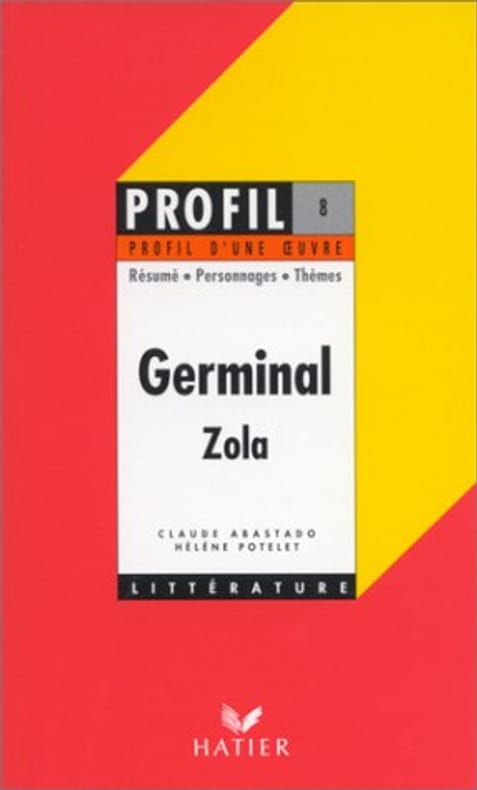
199280570Editions Hatier 1992 63 pages poche. 1992. broché. 63 pages.
199259729Editions Hatier 1992 63 pages poche. 1992. broché. 63 pages.
1992500126553Editions Hatier 1992 63 pages poche. 1992. broché. 63 pages.
96515Paris, Revue Europe/Les Editeurs Français Réunis, 1969. 13 x 22, 282 pp., broché, bon état.
192241561Heidelberg (Baden); Ohne Verlagsangabe., 1922. 67 S. Broschiert.
1998LFA-126712535Un ouvrage de 296 pages, format 140 x 230 mm, broché, publié en 1998, bon état
189874340Paris: Imprimerie Champenoispour CH. MassonH. Piazza 1898. Fine. Imprimerie Champenois pour CH. Masson H. Piazza Paris Février 1898 31 x 27 cm une feuille et une serpente Rare original colour lithograph executed by Albert-Émile Artigue for L'Estampe Moderne series no. 10 published in February 1898. One of 50 deluxe proofs printed on Japon with wide margins artist's signature within the stone publisher's blindstamp depicting a child's profile in the lower margin numbered stamp of the deluxe issue on the verso; the print is preceded by a captioned tissue guard with the artist's name the title and an excerpt from the work; with additional plain tissue guard. Lithograph inspired by an excerpt from Emile Zola's novel La Faute de l'abbé Mouret reproduced on the tissue guard of the print. A magnificent French monthly publication issued between May 1897 and April 1899 L'Estampe Moderne comprises original chromolithographs which unlike other periodicals such as Les Maîtres de l'Affiche and as specified on the tissue guards were created expressly for the journal by each artist. In all 100 prints were published encompassing the major artistic movements of the late 19th century: Symbolism Art Nouveau the Pre-Raphaelites Orientalism and the Belle Époque. Each issue of four plates was printed in 2000 copies sold at 3.50 francs and 100 on Japon paper offered at 10 francs. Henri Piazza also planned an exclusive printing of the utmost luxury: 50 copies on Japon with wide margins and 50 in black on China paper at the considerable price of 30 francs. This large-format print is superbly printed on the most prestigious of papers: Japon. Thick silky satin-finished and pearly it elevates each sheet into a work of art in its own right. Its exceptional capacity for ink absorption and affinity with colour make it the ideal medium for these splendid lithographs. The interest of French collectors in artistic posters intensified at the beginning of the 1890s. Octave Uzanne to describe this craze coined the term affichomanie. The poster originally popular and pasted up on the streets of the capital then became an art object its ephemeral support transformed into something precious and destined for preservation. Piazza resolved to remove the poster from its advertising purpose and elevate it to the rank of a work of art in its own right on a par with the deluxe illustrated book. In this way he assembled a prestigious collection of entirely original works by the most prominent European artists of the time: Georges de Feure Eugène Grasset Henri Detouche Emile Berchmans Louis Rhead Gaston de Latenay Lucien Lévy-Dhurmer Gustave-Max Stevens Charles Doudelet Hans Christiansen Henri Fantin-Latour Steinlen Ibels Engels Willette Henri Meunier Evenepoël Bellery-Desfontaines Charles Léandre etc. A handsome copy. Imprimerie Champenoispour CH. MassonH. Piazza unknown
Cartella h. 30 cm. bel frontespizio xilografico e rogito di 4 pp. con timbro. 29 luglio 1884, Giovanni Pradella notaio di Bologna.
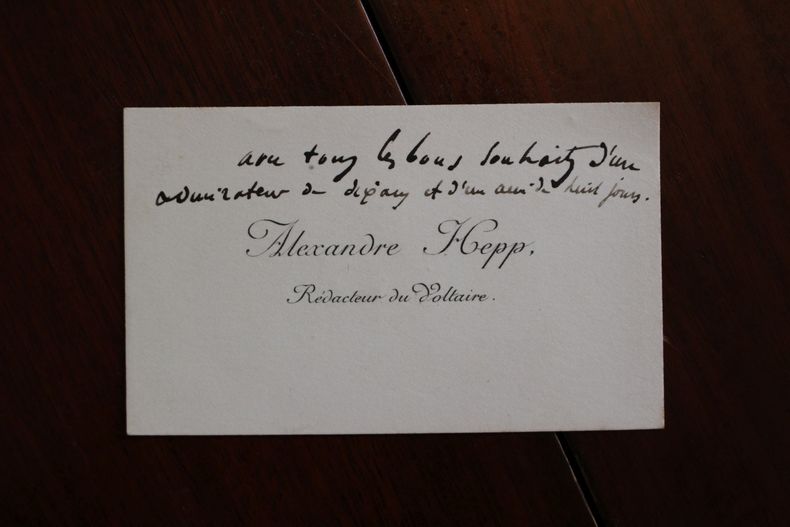
005582Alexandre Hepp (1857-1924), écrivain, journaliste, disciple d'Emile Zola. C.A., sd, 2 lignes. « avec tous les bons souhaits d'un admirateur de dix ans et d'un ami de huit jours ». [127]
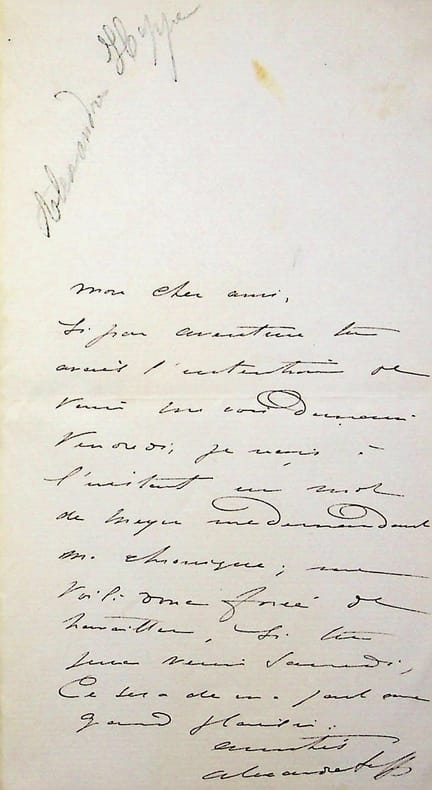
018141Alexandre Hepp (1857-1924), écrivain, journaliste, disciple d'Emile Zola. L.A.S., sd, 1p in-12. Il demande à son correspondant de ne pas venir le lendemain vendredi mais le samedi car Arthur Meyer lui a demandé une chronique. [418]
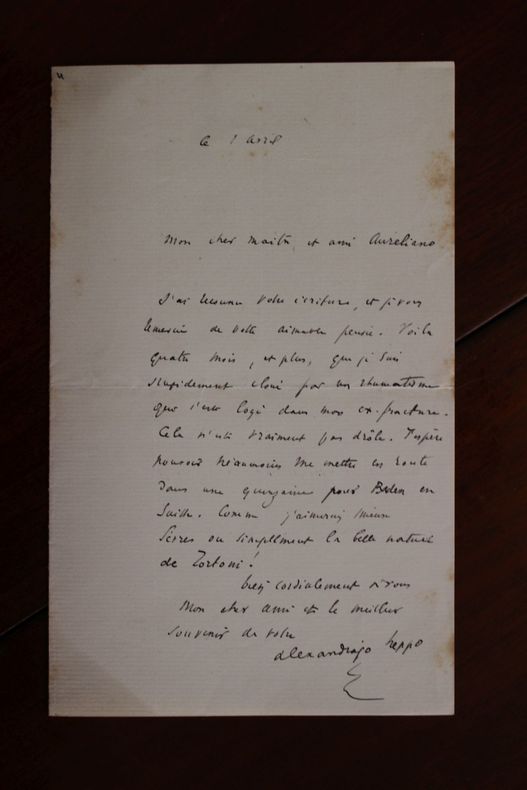
005566Alexandre Hepp (1857-1924), écrivain, journaliste, disciple d'Emile Zola. L.A.S., 1er avril, 1p in-8 (14 lignes). Il remercie Scholl pour « son aimable pensée ». Il est cloué au lit par un rhumatisme. Il espère aller à Baden en Suisse. [126]
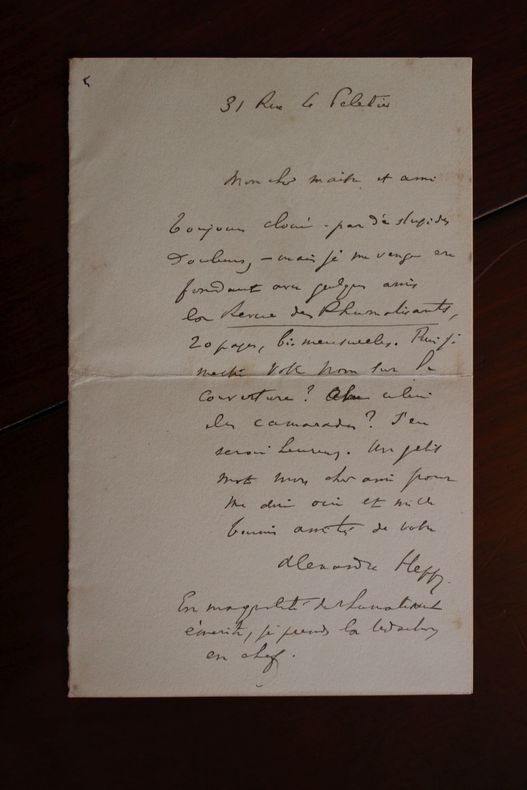
005567Alexandre Hepp (1857-1924), écrivain, journaliste, disciple d'Emile Zola. L.A.S., sd [décembre 1898], 1p in-8 (13 lignes). Belle lettre annonçant à Scholl la fondation de la Revue des Rhumatisants, bimensuelle. Il lui demande d'en faire partie. « En ma qualité de rhumatisant émérite, je prends la rédaction en chef ». Cette revue parut de décembre 1898 à février 1900 et n'eut que 30 numéros. [126]
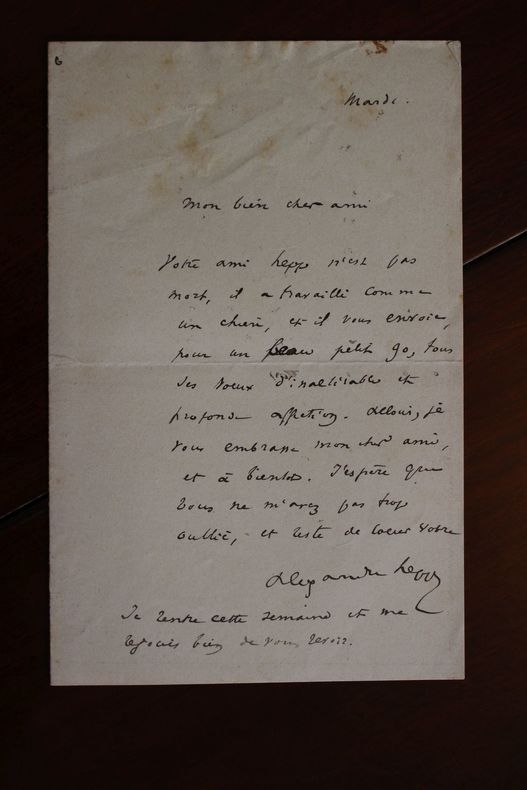
005568Alexandre Hepp (1857-1924), écrivain, journaliste, disciple d'Emile Zola. L.A.S., sd [mardi], 1p in-8 (13 lignes). Il présente ses voux à Scholl (pour 1890 ?) et annonce qu'il sera bientôt de retour. [126]
005570Alexandre Hepp (1857-1924), écrivain, journaliste, disciple d'Emile Zola. L.A.S., sd, 1p in-8 (9 lignes). Il est malade depuis 4 jours et n'a donc pas pu venir remercier Scholl pour ses « petits seigneurs hollandais ». Il espère « pouvoir venir fumer une bonne pipe un de ces jours » chez Scholl. [126]
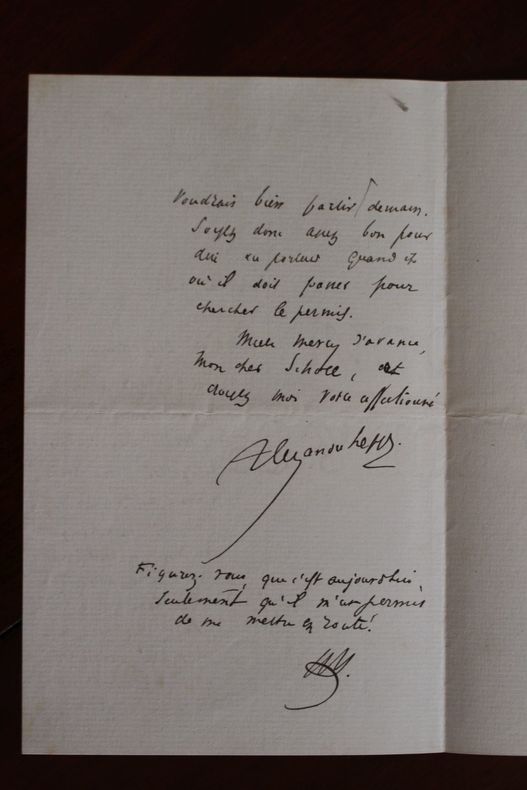
005571Alexandre Hepp (1857-1924), écrivain, journaliste, disciple d'Emile Zola. L.A.S., sd, 2p in-8 (25 lignes). Il souhaite partir à Aix-les-Bains le lendemain et demande à Scholl un permis pour voyager. [126]
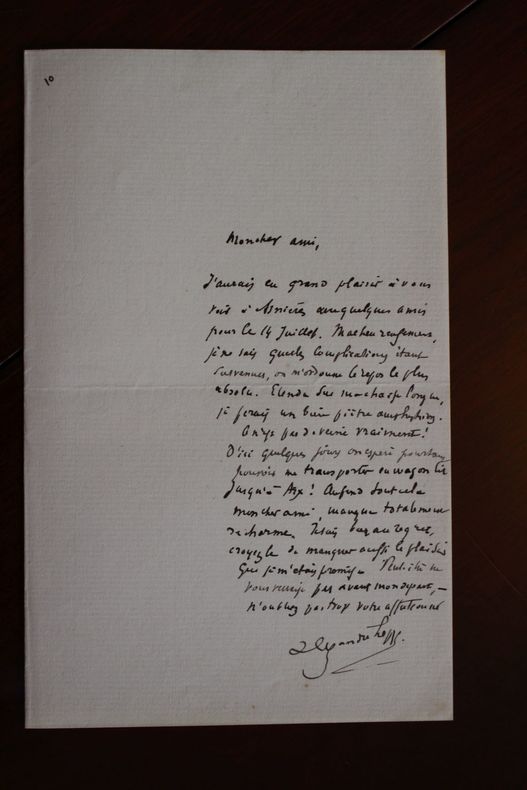
005572Alexandre Hepp (1857-1924), écrivain, journaliste, disciple d'Emile Zola. L.A.S., sd, 1p in-8 (17 lignes). Il ne peut pas venir à Asnières chez Scholl pour le 14 juillet. Il est au « repos le plus absolu » et espère être transporté le plus rapidement possible en wagon-lit à Aix-les-Bains. [126]
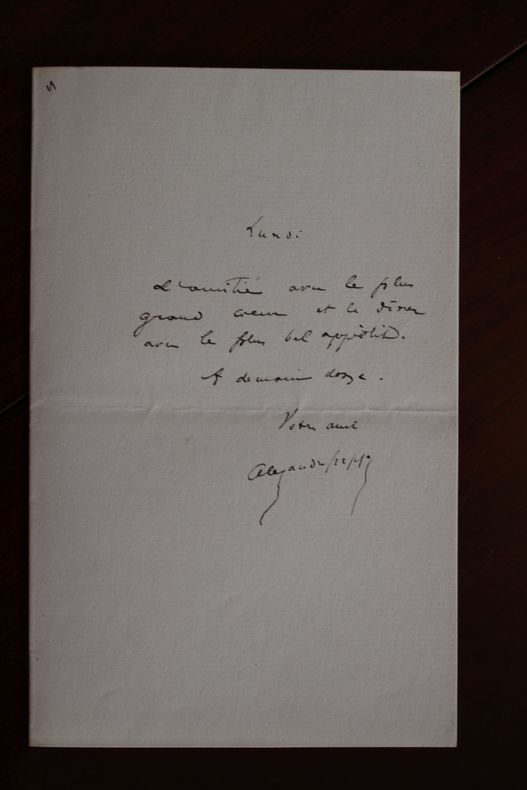
005573Alexandre Hepp (1857-1924), écrivain, journaliste, disciple d'Emile Zola. L.A.S., sd [lundi], œp in-8 (4 lignes). « L'amitié avec le plus grand cour et le dîner avec le plus bel appétit ». [126]
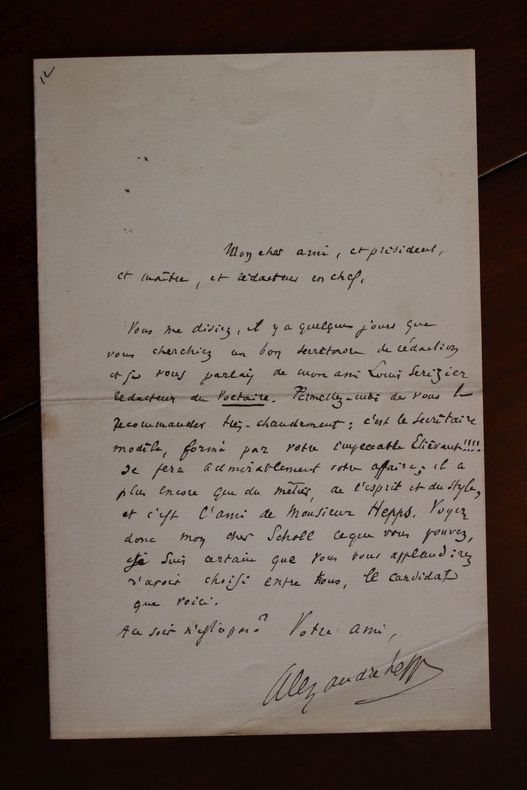
005574Alexandre Hepp (1857-1924), écrivain, journaliste, disciple d'Emile Zola. L.A.S., sd, 1p in-8 (16 lignes). Il recommande, à Scholl, Louis Serizier, rédacteur au Voltaire, pour le poste de secrétaire de rédaction. « C'est le secrétaire modèle, formé par votre impeccable Etiévant !!!! ». [126]