34 267 résultats
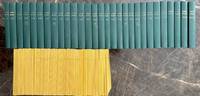
195051769Oxford Oxford University Press 1950 - 2004. 8vo. Volume 1-2 5-10 12-20 in green buckram with gilt lettering to spine. Volume 21 in orange buckram. Volume 22-30 in full buckram in different colours. Volume 32-55 in uniform blue buckram. All volumes with small library stamps to titel page and library label to back board. <br/><br/><em>"For over fifty years The British Journal for the Philosophy of Science has published the best international work in the philosophy of science under a distinguished list of editors including Alexander Bird Peter Clark Mary Hesse James Ladyman Imre Lakatos and David Papineau. One of the leading international journals in the field it publishes outstanding new work on a variety of traditional and 'cutting edge' topics from issues of explanation and realism to the applicability of mathematics from the metaphysics of science to the nature of models and simulations as well as foundational issues in the physical life and social sciences. Recent topics covered in the journal include the epistemology of measurement mathematical non-causal explanations signalling games the nature of biochemical kinds and approaches to human cognitive development among many others. The journal seeks to advance the field by publishing innovative and thought-provoking papers discussion notes and book reviews that open up new directions or shed new light on well-known issues." Oxford University Press. </em> hardcover
19291826<p>BOOKSELLER JOURNAL Newsboy & Newsgirl. A Monthly Paper for all the Boys & Girls of W H Smith & Son. London 1929-1955. </p><p>Uncommon publication created for the children and teenagers employed by the UK news vendors W H Smith best known for their chain of railway station airport port hospital and motorway service station shops selling books stationery magazines newspapers entertainment products and confectionery. Articles include internal news of the company features by various staff and extracts from similar news agencies issued in the USA Australia and Europe also Boys Scout news with special coverage of the blitz during World War II comprising:</p><p>Volumes 3 issues 1 - 36 January 1928 thru December 1930; afterwards renamed JUNIOR STAFF JOURNAL Volumes 5 issues 1 - 36 January 1934 thru December 1936; volume 6 issues 1 - 12 January - December 1937; volume 7 8 each 12 issues January 1938 thru December 1939 volume 9 ten issues January thru October 1940; volume 10 two issues November December 1940; Volumes 11 thru 13 each twelve issues January 1941 thru December 1943; volumes 14 thru 16 each twelve issues January 1944 thru December 1946. </p><p>Also Including TALKING SHOP <em>A Business Magazine for the Staff of W H Smith & Sons Ltd</em> January 1948 thru December 1955. Altogether 288 issues bound into eleven cloth bindings not matching. </p> W H Smith & Son, hardcover
6252EDWARD ALLEN GOODWIN unknown-1862. Goodwin was the Sergeant in Company K of the 23rd Regular Massachusetts Volunteers. This is the diary of Edward A. Goodwin Co. K 23rd Regt. M. of. M. This diary is THE AMERICAN UNION DIARY FOR 1862 an annual published diary accessible and likely provided to Union soldiers during the Civil War. After a few pages that include a calendar and interest tables the diary provides space for each day of the year 1862. Goodwin wrote entries every day from January 1st to April 7th and none thereafter. At the time Goodwin was serving in the 23rd Massachusetts Infantry Regiment which was a part of the Coast Division under General Ambrose Burnside. Entries are handwritten in either pencil or black ink. Notable entries include: aFriday 7: Naval engagementplace lasting from noon till sunset. Troops were landedin the afternoon and evening. Bivouacked on Roanoke Island in the rain. b Saturday 8: Captured a rebel battery in a swamp. Took 3000 rebel provisions and the whole island wasSergt. Howard hurt his foot. W.S. Clark missing. Both entries describe the Battle of Roanoke Island fought February 7th and 8th 1862. Part of General Ambrose Burnsides expedition to capture key ports in the Outer Banks the battle first saw Union gunboats first firing on Confederate forts under the command of Henry Wise until Burnsides soldiers could land ashore unopposed. and the forts on shore engaged in a gun battle with occasional contributions from the Mosquito Fleet. The next day the Union soldiers successfully flanked the Confederate artillery and infantry defenders on both sides forcing a retreat into the Confederate forts. The forts were then individually taken with the Union suffering only 264 casualties and capturing 2500 Confederate defenders. c Friday 14: Fought the battle of New Bern. Took over 100 pieces of artillery ammunitioncamp equipment &c. I arrived at night in the tents of the enemy. This entry describes the Battle of New Bern fought on March 14th 1862. After first advancing up the Trent River General Burnside had his soldiers exploit the weakened center of the line of the defending Confederates under Lawrence O'B. Branch. This allowed the Union Navy to shell Fort Thompson forcing its abandonment and shortly thereafter the city of New Bern too. 90 Union soldiers were killed and 64 Confederates were killed and 413 were captured. d Monday 31: Sick all day. Took horses.e Monday 7: Saw Amoat the hospital. DeceasedRain in the afternoon. These two entries foreshadow Goodwins ultimate fate including his last entry on April 7th 1862. Goodwin would pass away in New Bern on April 16th. Having survived two major battles unscathed at least according to his diary Goodwin most likely succumbed to disease. It is estimated that 2/3 of Civil War soldiers who died during the war died of disease not in battle. His body was ultimately returned to Massachusetts and is buried in Mansfield. The pages of the journal are in good condition but the exterior of black leather is frayed and partially torn. It should be handled very delicately but its value as a lens into the mindset of a Civil War soldier is immense. hardcover
02972612mo 361 pages of manuscript entries plus 16 pages of memoranda and cash accounts at rear pocket diary bound in original dark blue leather wallet style binding some minor wear to binding few old tape repairs to wallet flap entries in a good clear legible hand. The entries are dated January 1st through December 31st 1865. Accompanied by mid-twentieth century typescript transcription compiled by a Michener family descendant. Manuscript diary of Philip Fie Michener a carpenter and resident of Duncannon Pennsylvania. Michener was born July 30 1821 and died July 22 1889. The entries record the daily activities of Michener the work he was engaged in news of the Civil War the death of Abraham Lincoln and his experiences on a trip west across Iowa to Sioux City Iowa and into Nebraska Territory looking at various properties with a view to purchasing a homestead in that Territory. Michener was a correspondent of Rev. Samuel Aughey 1832-1912 a Lutheran minister and natural scientist and former Pennsylvanian and who had been in Nebraska since 1864 who acting in the role of promoter and booster seems to have induced a number of residents of Duncannon to Dakota Nebraska Territory to seek homesteads. Aughey was appointed in 1871 by the regents of the University of Nebraska to a chair of natural history at the new university. The only scientist on a faculty of five Aughey acquired the title of “Honorary State Geologist.” He was possibly the best known member of the university faculty during the 1870’s Aughey became a well-known Nebraska booster. He promoted the richness of the state’s soils the idea of increasing precipitation by cultivating more acres and the prospects for coal fuel in that state with few trees. Sample Quotations: Sunday January 1 1865. “Sunday the weather fine and clear at Sunday School at 1 o’clock. School opened by P. F. Michener Sup’t and closed by Father Sylvanus Green with a few appropriate remarks we did get the news of the death of M. B. P. Stewart who was seriously wounded and died from the effects on the 27th of November 1864.” Monday January 2 1865. “… received from A. G. White twelve dollars for making sleigh and one dollar & half from A. Miller for repairing sausage cutter John McLain is very sick and he is at John Jones no person is allowed to go into see him save the family …” Monday January 9 1865. “This morning the coldest this winter. This evening somewhat warmer… Received a letter from Rev. Samuel Aughey from Dakota Nebraska Territory he gives much information about the country…” Wednesday January 25 1865. “This morning clear and very cold and has been all day and this is going to be a very cold night. The boys have a fine time sliding down the hills on their sleds. I was told today that the Smithsonian Institute at Washington has been partly destroyed by fire very lately which did contain many things that can never be replaced Such as paintings and so forth which is a great loss to the country.” Wednesday February 1 1865. “This morning cloudy and not so cold as it has been the sleighing is first rate yet. 18 years today since I did commence business. Chickens are crowing and it is but 9 o’clock. This evening is cloudy. I did today send my application with some certificates and a partition to Provost Marshall General for to try and get back my commutation and also a letter to the Hon. Jas. Bailey member of congress. Slavery is forever done with in the United States.” Wednesday February 22 1865. “This morning clear and pretty cold about 9 o’clock … There is a ball up at Bloomfield. I think it would be better for them here and hereafter if they would turn it into a prayer meeting and ask God to have mercy on their souls. Received the Governor’s message from Nebraska Territory I suppose sent by Bro. Aughey. Some very good things in it.”write for fuller description unknown books
1851WRCAM40376Primarily at sea 1851. 34pp. in a highly legible hand. Folio. Dbd. Lightly foxed. Several pages torn out. Doodles on blank versos of some leaves. Good. First-person narrative of a young man's sea voyage from Boston to Palermo and back. Though serving as a hand the young man seems to be of fairly good breeding and education having determined to teach himself the art of navigation while on board and often waxing poetic and sentimental. Departing on Oct. 21 1850 the author says the ship is "a very good looking vessel" and that the Captain and mates are "very fine men;" regarding the rest of the crew he says: "I have not been with them long enough to judge of their characters as yet." While his journal is filled with weather and wind and resetting the rigging it also has very contemplative passages: <br> <br> "At eight PM I went to the wheel it was a beautiful night the full moon shone in all her glory casting a mellow light on all around so light was the breeze that it scarce ruffled the surface of the Ocean our ship was gliding through the water with scarcely any perceptable sic motion ah who would not go to sea were it always thus. I have been thinking of home and friends this watch which I may never see again but I hope before many months are passed I shall return to my native land and grasp the hand of friends once more." <br> <br> He writes often of seeing friends and home again and of spending his future days more profitably than his past ones. On Nov. 18 he turns twenty and writes: "I must say that but a small portion of that time has been spent as it should have been but it is passed and cannot be recalled and I have only to try to do better in future and hope for success." The ship arrives at Palermo on Nov. 30 and the crew are let ashore on Dec. 8 having finally passed quarantine. The author writes at some length about Palermo and the sights seen including the King's gardens and the catacombs "where are the remains of some twenty thousand people of both sexes and all ages from the infant to the gray headed old man." But for all the sights of Palermo he is nevertheless eager to be underway again for home. One of the tasks the crew has been set to is the painting of the ship which the author finds quite enjoyable: "We have been painting the spars today which is hard work but I have a fancy for painting so I have got along very well." <br> <br> Impatient to be home he is not sorry when they set off from Palermo on Dec. 21: "I do not think I shall regret leaving here though I have nothing in particular to complain of respecting the town or the inhabitants." Light winds hamper their return journey and at times the ship is entirely becalmed. When they finally reach Gibraltar on Jan. 14 squalls are upon them and they have to anchor there for some days. While in port the author begins to be peevish with the Captain: <br> <br> ".the Capt. has found plenty of what I call humbuging sic or unnecessary work for us to do it seems strange to me that a man professing to be a gentleman should stoop to such low acts of meanness merely to show his authority and gratify a malicious spirit but so it is with some who wish to exercise a sort of tyranny over those who have not the power to defend themselves however we shall soon be on an even footing and can say and do as we please and then I shall express myself more freely." <br> <br> Things eventually settle out though with the Duchess arriving in Nantucket on Feb. 22 1851 ending the journal. An interesting and personal account of a trip to sea. unknown books
1839055027Kostantiniyye Constantinople - Istanbul: Takvîm-i Vekâyi. AH 1255 1839. Soft cover. Very Good. Original newspaper taken from a volume. Folio. 425 x 28 cm. In Ottoman script Old Turkish with Arabic letters. 5 p. Extremely rare early issue of this first official newspaper of the Ottoman Empire after the proclamation of Reform Tanzîmât in 1839 informed Daguerre's new and weird invention "photography" as it would be called in the 1850s to the Ottoman peoples and readers. The article reads: "It is the talk of the town steam engines have been able to run on rails in factories in recent years. Meanwhile a man carefully focused on his thoughts so much and the craft turned into a strange art and finally a coquettish mirror surface appeared. This skillful Frenchman named Daguerre drew the lines of objects by reflecting the sunlight with the methods of the different science of art he learned drew the contours of the objects and gave 20 years secretly and openly to the formation of this strange art. Finally he reached the goal and this event won the appreciation and admiration of everyone. This is to say the image of the object in the form of a large or small box free from light is pictured inside by passing through the glass in front of it. In order for the reflected picture to be captured on a surface some chemicals must be prepared. Daguerre has achieved this mix based on his experience. This substance applied on the plate is called iodine. After the plate is kept in the vapor of the iodine for a few minutes it is immediately placed in the dark box and the image passing through the window of the box is pictured for five minutes. Considering that some of the things that should be hidden are captured like this it will be understood what a valuable invention this is.". In the continuation of the article it is written that an Englishman named Talbot Henry Fox Talbot found the same thing with almost the same processes ! but Daguerre had taken pictures before. Takvim-i Vekâyi was the first fully Turkish-language newspaper. It was launched in 1831 by Sultan Mahmud II taking over from the Moniteur ottoman as the Official Gazette of the Ottoman Empire. With the beginning of the Tanzimat reform period Takvim-i Vekayi produced versions in multiple language editions. It ceased publication in 1878 resuming in 1891-2 before being closed again. It resumed in 1908 until around 1922. In the 1831-1878 period it published a total of 2119 issues - an average of slightly less than one a week. <br/> <br/> Takvîm-i Vekâyi., [AH 1255] paperback
1865BW-44a<br /><b><i>Excitement in the city is intense-- bells are ringing-- and joy rules the hour. Glory to God on High.</i></b><br /><br />Newspaper: WATERBURY AMERICAN: Extra. Monday April 10 1865 LEE AND HIS ENTIRE ARMY SURRENDERED TO GENERAL GRANT. Let the Merry Church Bells Ring Bring out the Big Gun.<br /><br />Broadside: 9 3/4" x 4"<br /><br />Very good some browning stress at folds. Rare. WATERBURY AMERICAN books
1985021790Lawrence Kansas: Published By the Editors. 222 pages. Inscribed by both editors in two different inks and handwriting styles. A large format book published by the editors in an extremely limited edition intended for the family members. A well annotated and researched book with bibliography. A few other documents explained some illustrations. and bibliography. Stephens served for three years and writes from 1861 to 1864. Stephens was wounded taken prisoner and has daily entries of movement from the capture to Bell island and Libby Prisons -with much preceeding and later data. Contains interesting Civil war material ".Walking on dead men piled on top of each other. etc. Involved from shore in Monitor-Merrimac battle; At Cape Hattersa; Fair Oaks Seven PInes Glendale Fredericksburg Chancellorsville Gettysburg Kellys Fort Coal sic Harbor Spottsylvania Petersburg. Rare. Size: 4to - over 9¾" - 12" tall . Fine. Blue Cloth hardback/gilt Title. Original First Printing. 1985. Published By the Editors hardcover
17015Women's Education Handwritten daily diary of a young female student in North Carolina 1867. Small pocket diary embossed gold on cover 1867 with daily entry spaces. 4 x 2.5 in. A memorabilia recording many aspects of the first major movement of women's education in the United States brings depth to a movement that was groundbreaking in its time but today is largely at risk of disappearing from the historical record. Original cover. "Diary 1867" gilt on front flap. Consistent daily entries beginning in the 2nd week of January. Possible ownership signature of Sally Van Eaton Jonesville N.C. though this may be a friend as the diary also mentions a "Miss Sally". 352 of the 365 dates are filled usually to the last line. She attends school likely a two-room schoolhouse mentions one female and one male teacher. She must sew and knit to prepare for the new term as well as for her father and children of relatives. As a result her eyes are often too strained to study. Constant rain and muddy roads make the trek to school difficult. <br/><br/>Some selections from the 352 Handwritten entries include:<br/><br/>Sun Jan 13 "French Algebre Philosophy Arithmetic Grammar and Dictionary. January 1867. Spring Session.<br/>Fri Jan 18 "I have been helping Cousin Ann and Cous Mary fix the children's cloth. They are so busy fixing to go to school I am afraid they will not get riding to start Monday."<br/>Wed Jan 23 "I have made a pair of draws to-day. School will commence Monday the 28th 1867. Miss Mag Tucker and Mr. C. Hacket are the teachers.<br/>Mon Jan 28 "School commenced today. We had only five scholars "a bad beginning makes a good ending." I did not say but one lesson my eyes were so sore. Recited in Dictionary."<br/>Tue Jan 29 "My eyes are better today. Missed but one word in D. today no more scholars yet the weather is so bad Miss Mag and I went up to Mr. Claywell's this evening after school.<br/>"Wed Jan 30 "One more scholar today. Sister and Miss Mag have gone to talk the male has come but no letters."<br/>Fri Feb 1 "School is out and Miss Mag and Brid have gone over the river this evening rode horseback."<br/>Mon Feb 4 "It has been raining all day and I never saw Jonesville so muddy in my life.I have been studying tonight but don't know my lessons."<br/>Mon Feb 11 "Monday night and I have studied until I am sleepy. Annie is asleep and Carrie is reading and nobody to talk to.<br/>Tues Feb 12 "I think I know all of my lessons tonight and I have set down to write to cousin Mollie."<br/>Thur Feb 21 "Cousin Millie Guyse is here tonight came late this evening. I have been studying very hard tonight and I think know my geography for tomorrow evening."<br/>Mon Feb 25 "Monday morning and we have got two new scholars."<br/>Fri May 17 "I must write some on my composition tonight for the end of the school it will soon be out."<br/>Tues May 28 "It has been raining very hard this evening. The thunder scared us all very badly in the school room. Mrs. Jordan is here. I have been very busy writing tonight"<br/>Thurs Aug 8 "Mrs. Harris called a few minutes to see us. She use to go to school here."<br/>Mon Aug 12 "Miss Sallie D. commenced school. Had five scholars."<br/>Wed Aug 14 "It rained this evening awhile. I have to go down to the chapel and recite my Algebra by myself to cousin Charlie."<br/>Mon Aug 26 "Eliza Hampton came to school today. Miss Sallie hasn't got but 10 ten scholars."<br/>Mon Oct 28 "It has been raining all day. Miss Sallie didn't have school. I finished my purple calico."<br/><br/>There is a lot more since these are just a few of the 352 Handwritten entries. Small small hole in bottom left corner of front cover and first few pages. Still in very good condition. unknown books
10601Paris, 1900. In-folio en feuilles, sous chemise orange. Contient 25 "Feuilles" : dessin au recto (les 2 premiers en couleurs - 1 sur papier jaune - la feuille 12 étant double) - texte au verso (articles sur 4 colonnes). 1 déchirure marge inférieure des feuilles et chemise (env. 1,5 cm), sinon, bon état. Dessins de : Steinlen - Willette - Léandre - Hermann-Paul - Couturier - Anquetin - Luce.
2009CNJL1180Monmouthshire: The Old Stile Press 2009. Limited Edition. No binding. Fine. Lemaire Angela. No. 3 of 25 copies for sale folio size 52 pp. The story begins: "I was present during the Great Plague of 1665 It took away my life" he said. Per the artist this work originally produced by her in 1967 is "about a man who is killed by the plague in London in 1665; I have brought him to life again so that he can tell his story." The story unfolds as a series of nine eerily wonderful etchings by Angela Lemaire which were inspired by the sufferings of the plague victims. Each enclosed in a separate leaf and introduced with a quotation from scripture also dealing with suffering with each plate numbered and signed by her. Ms. Lemaire's Afterword tells the story of her inspiration for the work and the essay by Anthony Dyson discusses the making and proofing of the plates which is a story worthy on its own merits. <br/><br/>___DESCRIPTION: Unbound folio sheets each with letterpress printing on the first and last pages inserted between the plates the images from zinc plates with each plate signed and numbered by the artist in pencil. The eight intaglio plates images 2 through 9 are each tissue-guarded; Image 1 and the original Title page are both woodcuts. Folio size the signatures being just under 15" tall the work is unpaginated containing 52 pages excluding cuts and images; type Baskerville paper Somerset soft white satin; limited edition of 25 copies for sale plus 3 NFS this no. 3 signed by the artist on the colophon page. The unsewn sections are held loosely in a folded portfolio of smokey blue Roma paper handmade by Fabriano in Italy which is then laid into a clamshell box covered with blue cloth paper label on the front with olive green lettering lined with aubergine velvet. <br/><br/>___CONDITION: Signatures are fine; clean straight with no folds or edgewear. All tissue guards over the zinc etchings present. The portfolio is fine as is the clamshell box. <br/><br/>___POSTAGE: International customers please note that due to the size of this work additional postage may apply please inquire for details. <br/><br/>___Swan's Fine Books is pleased to be a member of the ABAA ILAB and IOBA and we stand behind every book we sell. Please contact us with any questions we are here to help. The Old Stile Press unknown books
B306546-1Kamakura-shi Shiruku Rodo Kenkyujo 1990-2004. Vols. 3 - 5 7 - 9. Lrg. 4to. Cloth. With: Festschrift Ikuo Hirayama. Studies in Silk Road Coins and Culture: Papers in Honour of Professor Ikuo Hirayama On His 65th Birthday. Edited by Katsumi Tanabe Joe Cribb Helen Wang. Silk Road Art and Archaeology. Special volume 1997. 332pp. Prof. illus. Lrg. 4to. Cloth. Kamakura The Institute of Silk Road Studies 1997. Kamakura-shi (Shiruku Rodo Kenkyujo), 1990-2004. hardcover
M14249Rare complete run 1-198. Göttingen 1972-2004. First edition. Contemporary cloth 1-145 bound in 29 volumes and 53 issues 146-198 in their original softcover. From the library of German scholar Hans-Jürgen Jordan HJJ. Language: German/Deutsch - English - French/Français. This set ships from Europe shipping costs will be updated accordingly BCI. Relevant subjects: Egypt: Journals Egypt. unknown
In-4 (mm. 317x230), tela edit., pp. 364 (incluso l’Indice), con numerose figure inc. su legno nel t. Di questo importante periodico mensile offriamo quasi "tutto il pubblicato" dal luglio 1896 (Anno I, n. 1) al giugno 1897 (n. 12). Manca solo l’ultimo numero: il n. 1 - luglio 1897 - Anno II. “La rivista intende tenere i suoi lettori continuamente al corrente di tutte le novità che in fatto di ciclismo la scienza e la meccanica moderna sapranno escogitare”. E’ strutturata in sezioni: “Parte tecnica” (suddivisa in rubriche: Tecnologia meccanica. Le novità. Tribuna del pubblico. Varietà tecniche. Ciclismo militare. L’igiene e la medicina del ciclismo. Diritto ciclistico) - “Parte commerciale” (Corriere d’Inghilterra. Il commercio ciclistico internazionale. Piccola cronaca del commercio) - “Parte sportiva” e “Automobilismo” (articoli scientifici, tecnici, di varietà, di sport, elenco di brevetti di privative rilasciati in Italia, relazioni delle principali esposizioni automobilistiche, descrizione di vetture, motocicli e motori). Cfr. Catalogo Periodici Biblioteche Lombarde,V, p. 115. Esemplare molto ben conservato. Rarissimo trovarlo completo. .
Collezione completa. In ottime condizioni di conservazione (segni di “usura da scaffale” al bianco di alcune copertine, che rimangono leggermente scurite), completo dell’allegato sciolto di Sol LeWitt al numero quattro. La serie completa di «Numero», rivista promossa dall’associazione/galleria Cenobio Visualità in Milano, affidando ciascuno dei sei quaderni annuali alle cure di un artista e critico, che compila a sua maniera un’antologia / libro d’artista a raccogliere prospettive sull’arte contemporanea, dall’informale al concettuale senza dimenticare il ripescaggio in chiave autostoricizzante delle avanguardie di primo Novecento. -- «numero uno a cura di Ben / numero un realisé par Ben», giugno 1979; «numero due a cura di Bernar Venet / number two edited by Bernard Venet», giugno 1980 (contiene i saggi: «L’immagine razionale / The Rational Image»; una selezione di lavori dal 1976; «Non ci si può avvicinare all’arte ingenuamente / On ne peut plus approcher l’art naivement»); «numero tre a cura di Vincenzo Accame / number three edited by Vincenzo Accame», giugno 1981; «numero quattro a cura di Sol LeWitt / number four edited by Sol LeWitt», giugno 1982; «numero cinque a cura di Giuseppe Panza di Biumo; number five edited by Giuseppe Panza di Biumo», giugno 1983; «numero sei a cura di Arturo Schwarz / number six edited by Arturo Schwarz», giugno 1984. 6 voll.
8170In 8 (14 x 23 cm) demi-percaline.
Fondata a Firenze da E. Corradini nel novembre del 1903 con cadenza settimanale. La rivista rappresentò il primo strumento di propaganda delle idee nazionaliste. Il programma (apparso nel primo numero del 29/11/1903) manifestava un'avversione feroce al socialismo e al sistema liberale (si era allora appena insediato Giolitti al governo), odio congenito verso la democrazia e disprezzo del parlamento, idea dello stato forte e imperialista. Tutti motivi che passeranno in seguito ad alimentare l'ideologia fascista. L'ultimo numero uscì il 25 dicembre 1906. Vi collaborarono Papini, Prezzolini, Borgese, Ojetti ed altri. Offriamo le prime due annate (1903-1904) a fascicoli sciolti in perfetto stato di conservazione.
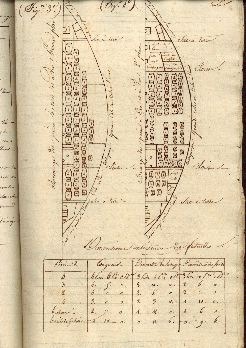
20447manuscrit autographe de 73 pages,sans date vers 1820,IN4 broché,non relié,en feuilles numerotées,a l’encre,dessins in et hors texte,
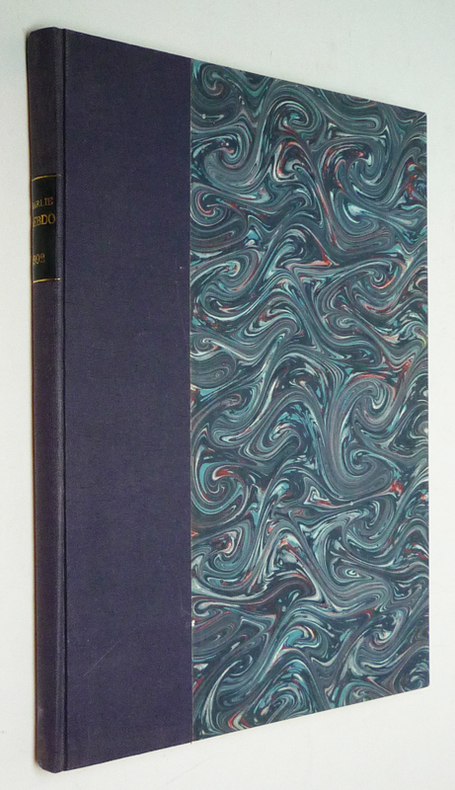
1992bf4895Editions Rotatives Relié 1992 "PARFAIT ETAT. In-folio (31,7 x 41 cm), reliure demi-toile bleue, 27 numéros dont certains INTROUVABLES aujourd'hui, année 1992 complète du journal satirique ""Charlie Hebdo"", du n°1 (1er juillet 1992) au n°27 (30 décembre 1992). Suite à un différend avec Jean-Cyrille Godefroy, directeur de la publication du journal ""La Grosse Bertha"", Philippe Val et Cabu quittent l'hebdomadaire satirique pour fonder cette seconde mouture de Charlie Hebdo, emmenant avec eux de nombreux membres de l'équipe de rédaction, dont, entre autres, Charb, Luz, Oncle Bernard (Bernard Maris), Wolinski, Gébé, Siné, Willem et Tignous ; exemplaires en SUPERBE ETAT--COMME NEUFS, présentés dans une reliure parfaite pour les collectionneurs. Livraison a domicile (La Poste) ou en Mondial Relay sur simple demande."
1993bf4896Editions Rotatives Relié 1993 "PARFAIT ETAT. In-folio (31,7 x 41 cm), reliure demi-toile bleue, 52 numéros dont certains INTROUVABLES aujourd'hui, année 1993 complète du journal satirique ""Charlie Hebdo"", du n°28 (6 janvier 1993) au n°79 (29 décembre 1993). Suite à un différend avec Jean-Cyrille Godefroy, directeur de la publication du journal ""La Grosse Bertha"", Philippe Val et Cabu quittent l'hebdomadaire satirique pour fonder cette seconde mouture de Charlie Hebdo, emmenant avec eux de nombreux membres de l'équipe de rédaction, dont, entre autres, Charb, Luz, Oncle Bernard (Bernard Maris), Wolinski, Gébé, Siné, Willem et Tignous ; exemplaires en SUPERBE ETAT--COMME NEUFS, présentés dans une reliure parfaite pour les collectionneurs. Livraison a domicile (La Poste) ou en Mondial Relay sur simple demande."
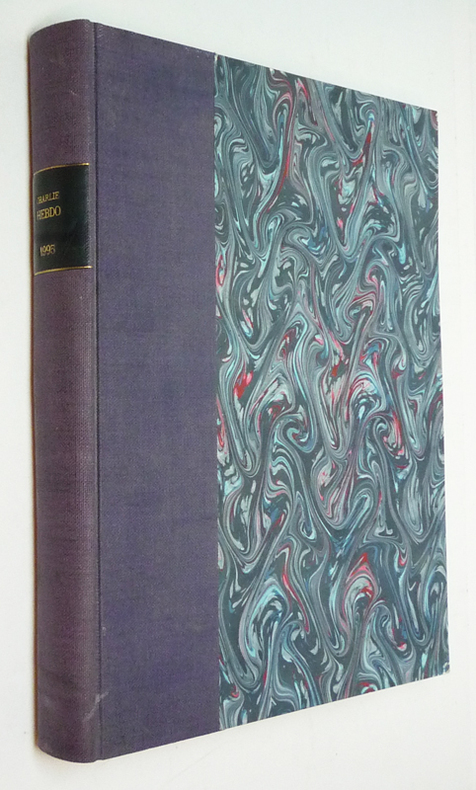
1995bf4898Editions Rotatives Relié 1995 "PARFAIT ETAT. In-folio (31,7 x 41 cm), reliure demi-toile bleue, 52 numéros dont certains INTROUVABLES aujourd'hui, année 1995 complète du journal satirique ""Charlie Hebdo"", du n°132 (4 janvier 1995) au n°184 (27 décembre 1995). Suite à un différend avec Jean-Cyrille Godefroy, directeur de la publication du journal ""La Grosse Bertha"", Philippe Val et Cabu quittent l'hebdomadaire satirique pour fonder cette seconde mouture de Charlie Hebdo, emmenant avec eux de nombreux membres de l'équipe de rédaction, dont, entre autres, Charb, Luz, Oncle Bernard (Bernard Maris), Wolinski, Gébé, Siné, Willem et Tignous ; exemplaires en SUPERBE ETAT--COMME NEUFS, présentés dans une reliure parfaite pour les collectionneurs. Livraison a domicile (La Poste) ou en Mondial Relay sur simple demande."
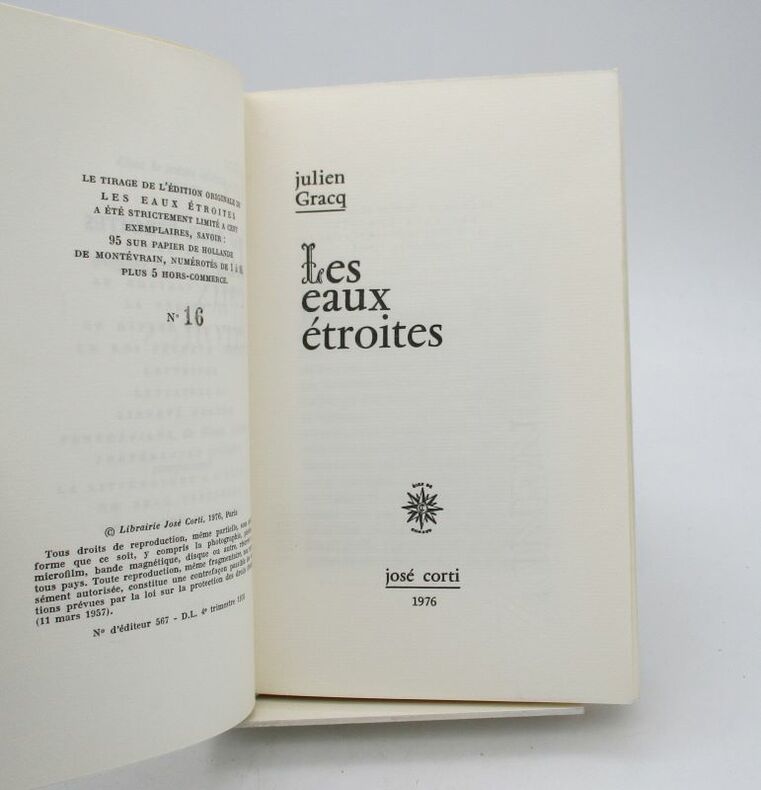
16837Paris, José Corti, 1976. In-12, 74 pp., broché, couverture originale imprimée, non coupé.
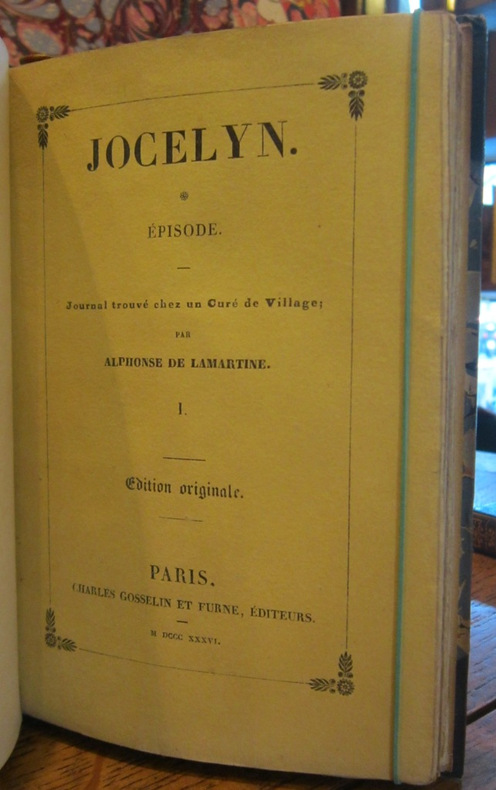
1836002795Paris, Charles Gosselin et Furne, 1836
187942241879 Au Bureau, Paris, 1879-1892. Quatorze volumes in-4 demi velin ivoire, dos manuscrits, texte sur deux colonnes, nombreuses illustrations de Blass, Willette, Ubel, Job, Caran d'Ache, L. Vallet, Fernand Fau, Guydo, Navarre, José Roy, Gaston Nourry,... Ensemble réunissant: T.I: 1879, 51 n° (manque le 13) et 2 suppléments; T.II: 1880, 52 n° et 1 supplément; T.III: 1881, 52 n°; T.IV: 1882, 53 n°, reliés sans couvertures; T.V: 1883, 52 n° et un supplément, sans les couvertures; T. VI: 1884, 51 n° (manque le 33), sans les couvertures, avec le Jeu du Canard en couleurs; T.VII: 1885, 52 n°, sans les couvertures; T.VIII: 1886, 52 n°, sans les couvertures; T.IX: 1887, 52 n°, sans les couvertures; T.X: 1888, 44 n° (manque 2 n° et quelques couvertures); T.XI: 1889, 52 n°; T.XII: 1890, 52 n°; T.XIII: 1891, 51 n° (manque le 39); T.XIV: 1892, 50 n° (manque le 29, le 23e n'existe pas). Deux dos à restaurer, ensemble rare. On compte parmi les collaborateurs à cet hebdomadaire satirique Capus, Boubée, Barbey d'Aurevilly,... Provenance: Bibliothèque Alain Le Chartier, Marquis de Sedouy.
5381Aux bureaux, Paris, 1888-1891. Un volume in-folio demi percaline crème, dos lisse, titre et fleuron dorés, 4 pp. par n°, du n°1 de la première année (6 juillet 1888) au n° 23 de la deuxième année (20 septembre 1889), + le numéro spécial du 5 mars 1891. Couverture défraîchie, néanmoins bel exemplaire.