34 248 résultats
19563115397New York: Random House. Near Fine in Very Good dust jacket. 1956. Later Printing; Fourth Printing. Hardcover. Fourth printing. Warmly INSCRIBED & dated in 1959 by playwrights Frances Goodrich and Albert Hackett Hollywood's original models for Nick & Nora Charles to screenwriter Laura Kerr "The Farmer's Daughter" on front end-paper. About fine in very good dust jacket. Spine on jacket toned with couple soil spots. Brooks Atkinson foreword. Awarded the Pulitzer Prize. A notable association. ; 5 1/2" X 8 1/4"; 174 pages . Random House hardcover
1974754Brussels: Pour: Un Journal Libre au Service du Peuple 1974. First Edition. SIGNED and numbered 36/70 by Joseph Beuys on the front cover. A collection of the first year of Pour a radical/anarchist French-language magazine in Brussels for 1973-74. Beuys was a supporter of Pour and sometimes raised money on behalf of the magazine which at first appeared twice monthly and then became a weekly. 14x11 inches in wrappers with some soiling to the wrappers and mild toning to the pages. Otherwise Fine. The cover is stamped in German and English with the contact details for Beuys's organization in Düsseldorf the Organization for Direct Democracy Through Referendum. RARE. <br/><br/>The collection contains a sort of prospectus at the front laying out the aims of the magazine as well as details on circulation and financing. Pour: Un Journal Libre au Service du Peuple unknown books
8vo., Second Edition, on laid paper, with a portrait frontispiece in photogravure, 2 plates in photogravure and 5 folding maps, neat signature on front free endpaper verso, half-title, frontispiece and title mildly spotted ; original red cloth, upper board framed in blind enclosing regimental crest of 16th Light Dragoons in gilt, gilt back, black endpapers, upper hinge tender (but binding entirely sound) else a very good, bright, clean copy. SIR CHARLES OMAN'S COPY WITH HIS NINETEENTH CENTURY ARMORIAL BOOKPLATE MOUNTED ON FRONT PASTE-DOWN. Tomkinson's Diary was first published in 1894 (a number of Press reviews is given on half-title verso). Widely regarded as a classic personal account of the campaign, it has been several times reissued but usually without the plates. This second edition contains the editor's final amendments, including the correction to the part played by Vivian's brigade at Waterloo. A RARE, POSSIBLY UNIQUE, ASSOCIATION COPY. Sandler 3277.
1793218222Boston: Belknap and Hall 1793. pamphlet. good. Folio 4 pages light foxing lower right corner of front page with seven inch expertly repaired tear with partial loss of some words center fold repaired in margin. Boston: Belknap and Hall 1793.<br/><br/> An entire issue of a Boston newspaper with mostly political content. The American Apollo was only published from January 6 1792 to December 25 1794. The entire front page is an article by William Fox the political reformer pamphleteer and bookseller from London entitled " Thoughts on the Death of the King of France". Most of the 2nd and 3rd pages consists of a reprinting of a letter from Thomas Jefferson as Secretary of State to Gouverneur Morris Minister Plenipotentiary to France. Jefferson writes against French provocations during the "Citizen Genet Affair" and other maritime actions that go against George Washington's policy of neutrality during the War between France and Great Britain. Jefferson writes extensively of the visit of French Minister Edmond Genet to the United States including Genet's attempts to enlist American ships in Charleston South Carolina as privateers against English ships. Jefferson mentions frequently how opposed he is to Genet's actions in America.<br/><br/> Belknap and Hall unknown books
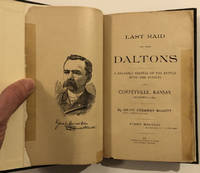
18923832Coffeyville: Coffeyville Journal Print1892. 1892. First edition. First edition. 8vo. Rebound in grey cloth 5 p.1.13 71 1 pp. frontis. portrait illustrations portraits plan on unnumbered page 72. Adams 150 #52 says "Rare." "The author was the editor of the Coffeyville Journal and was an eye-witness to the battle of the citizens and the Dalton Gang. It is said that he was the first man to reach the wounded Emmett Dalton. He wrote this little book to give an account of what he saw and published it in a limited edition immediately after this battle took place. This is about the best account of this battle written thus far." Six Guns 671 says "Rare." "It is now very rare and a collector's item." Lacks the original wrappers a few end-pages reinforced along the edges with cellophane tape that was applied many years ago contents clean and bound into a cloth boards with titles stamped in gold gilt on the front cover. Overall a very good copy of a rare and much sought item. Coffeyville Journal Print,1892. hardcover
1782WRCAM43196Boston 1782. 4pp. Folio. Old folds. Very minor loss at some folds. Light soiling and wear. Very good. THE CONTINENTAL JOURNAL. was a weekly Boston paper published by John Gill from 1776 to 1785. The front page is an article entitled "The Political Spectator" attacking the state government for abuse of power. This issue includes news from London: "Gen. Arnold comes home as fully disgusted with the conduct of the royal commanders as he was heretofore disgusted with those of America"; also part of a letter form John Adams about diplomatic affairs in the Netherlands. Another article of interest notes that Gen. Nathanael Green is taking a detachment of troops to deal with hostile Indians at the headwaters of the Mobile River. unknown books
43248aafaltogether 24 handmade yellow full calf bindings. Beautiful set.
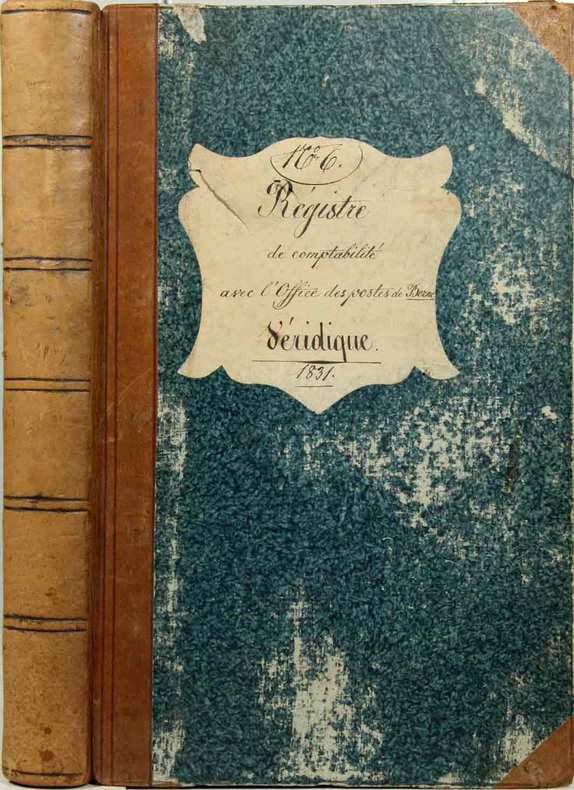
103316aafFribourg, L.J. Schmid, 1831, gr. in-4°, 4 p., texte sur 2 colonnes par fasc. quelques légères rousseurs, le tout en bon état; 18 ff. + env. 140 ff. vierges, avec feuille volante de décomptes ms. entre les pages (à l’origine collée sur feuille de garde), cartonnage muet original.
123112aafParis, de l’Imprimerie de la République, Se trouve à Paris, chez Dupont, imprimeur-libraire, 1795, pt. in-8vo, An IV: 3è trim. No 19 (85 p. + 1 f.) , 20 (85 p. + 1 p.) , 21 (80 p.), cartonnage muet, couverture en papier marbré originale, dos avec pièce de titre manuscrite.
123191aafParis, de l’Imprimerie de la République, Se trouve à Paris, chez Dupont, imprimeur-libraire, 1795, pt. in-8vo, An IV: 4è trim. No 22 (80 p.) , 23 (85 p. + 1 p. + 1 f. bl. + 1 planche dépl.) , 24 (80 p.), cartonnage muet couvert de papier marbré originale, dos avec pièce de titre manuscrite.
123193aafParis, de l’Imprimerie de la République, Se trouve à Paris, chez C. Coquebert rédacteur, et chez C. Fuchs, libraire, 1796, pt. in-8vo, An V: 4è trim. No 34) p. 737 à 812 (76 p.) / 35) 813 à 892 (80 p.) / 36) 893 à 972 (80 p.), cartonnage muet, couverture de papier marbré originale, dos avec pièce de titre manuscrite.
75378aafParis, Arthur Bertrand, 1820 - 1824, pt. in-8vo, XIX, 274 p. / 263 p. / 250 p. orné de douze figures en taille-douce, et de la carte de l'Ile déserte en dépl. / (deuxième série ‘Continué par...’, 246 p. / 213 p. / 182 p., avec 2 frontispices, ex. avec deux pet. étiquettes de libraires au verso du premier plat ‘Vendu par Frère... à Rouen’ et ‘Libr. Jean Clavreuil... à Paris’, gardes marbrées, pleine basane d'époque, dos lisse richement orné or, dentelles sur les plats. Qqs reliures et charnières un peu abimées, sinon bel exemplaire.
Raro mensile diretta da Massimo Notari (figlio di Umberto), con copertina interamente disegnata da Sinopico. Pubblicazione fatta da e per i giovani, d’impostazione interventista, goliardica e avanguardista. I numeri che offriamo ospitano — oltre ai bei disegni di Sinopico, Enrico Gianieri (Gec) e Leonardo Borgese — tre tavole parolibere dei fratelli Cangiullo: Pasqualino con «Al mare» e «Alfabeto a sorpresa dinamico. Ciclista-record», qui pubblicate in edizione originale ed unica; Francesco con «Stazione - Guerra * Europea. Partenza di reclute + richiamati», datata in calce «Roma 1915» (già edita ne «Gli Avvenimenti», dic. 1915). Cfr. Crispolti, Il futurismo attraverso la Toscana, nr. 23.49 (per il bozzetto del «Ciclista» di Pasqualino); Lista, Le livre futuriste, nrr. 27-28 (per la «Stazione» di Francesco). Raro insieme.
Collezione dei primi tre numeri incluso il rarissimo numero di novembre 1968, incentrato sulla contestazione e sull’arte politica. Fisiologici segni del tempo alle brossure, nel complesso esemplari in ottimo stato di conservazione. Rivista nata insieme alla galleria d’avanguardia romana L’Attico di Fabio Sargentini, da cui fu finanziata. Con soli cinque numeri all’attivo, «Cartabianca» fu diretta da Alberto Boatto per le prime tre uscite, poi sostituito da Adele Cambria. Nella presentazione della rivista del marzo del 1968 la vocazione politica — di rottura e rinnovamento — della rivista è resa manifesta: dopo aver celebrato il “nuovo” come forza capace di scardinare antichi equilibri e scambi di favori interni anche al mondo dell’arte e aver presentato «Cartabianca» come voce del “nuovo” stesso, gli autori precisano nella righe conclusive il loro progetto: «Di fronte al potere assorbente della maggioranza, il nuovo deve assegnarsi il compito, costruendosi un solido margine di autonomia, di trasformarsi anch’esso in potere di minoranza. [...] Tra gli altri obiettivi anche questo, non affatto utopistico ma realistico, dacché corrisponde ad una urgenza precisa [...]. Arrivare a produrre alcune chiarificazioni e un paio di scissioni, sino a far precipitare in parti questo potere accentrante, risulterebbero azioni oltremodo meritorie. Più modestamente il nostro programma potrebbe essere così formulato: operiamo affinché non si continui a stare tutti insieme pur non stimandoci affatto, ma affinché ciascuno ritrovi e lavori con i propri amici». Si segnalano, tra gli interventi pubblicati, testi di Alberto Boatto, Achille Bonito Oliva, Germano Celant e Maurizio Fagiolo. Vi si trovano inoltre rappresentati gli artisti che allora erano coinvolti con la galleria L’Attico, tra cui Giovanni Alselmo, Luciano Fabro, Jannis Kounellis, Mario Merz, Michelangelo Pistoletto e Gilberto Zorio. G. Maffei, Libri e documenti. Arte povera 1966-1980, Corraini, 2007, p. 276.
Collezione completa. Esemplari in ottime condizioni (normale brunitura interna e minimi segni del tempo marginali alle copertine, nel complesso comunque assai ben conservate per un tipo di pubblicazione economica difficile da trovare oggi intatta). Pubblicazione periodica organizzata in una «prima serie» (vol. 1) seguita da una «seconda serie» (vol. 2), diretta da Fillia. Molto rara completa. Raccoglie importanti testi teorici e letterari, alcuni in edizione originale, dai maggiori futuristi: Balestrieri, Balla, Benedetta, Bragaglia, Buzzi, Caligaris, Carli, Casavola, Ciuffo, Curtoni, Deamicis, Depero, Dermée, Dottori, Farfa, Fillia, Jannelli, Mortari, Orazi, Prampolini, Reverdy, Russolo, Seuphor, Vasari, Walden, Whisky. «“Vetrina Futurista” raccoglie in diversi volumi le creazioni e le azioni più importanti di tutti i movimenti futuristi. A questo primo volume seguirà immediatamente un secondo dove saranno raccolte le migliori opere degli scrittori futuristi italiani e streanieri. In un terzo volume verranno riprodotti i lavori più importanti dei pittori futuristi» (presentazione a p. [5]). Il terzo volume non vedrà mai la luce. Cammarota, Futurismo, Riviste fut., 90 (con imprecisioni) 2 volumi
Edizione originale. Minima mancanza al piede anteriore di copertina, senza perdite di parte a stampa; sfrangiature e piccole mancanze al sottile dorsetto muto; per il resto ottimo esemplare. Raro «numero unico dell’associazione studenti universitari pavesi figlio legittimo e non degenere dei coniugi: “Riso e crape”, “Musi e muse”, “Gogla e Magogla”». Prodotto senza badare a spese, con una bellissima copertina interamente disegnata a colori da Guido Marussig e la raffinata stampa a due colori con numerose illsutrazioni e grafiche d’impatto, contiene un’intera pagina impreziosita dalle tavole parolibere del giovane futurista Pino Masnata: «Pino Masnata, poeta futurista, assicura che amare una conpagna [sic] goliarda è orribile cosa ...». Salaris, Riviste futuriste, pp. 860-61
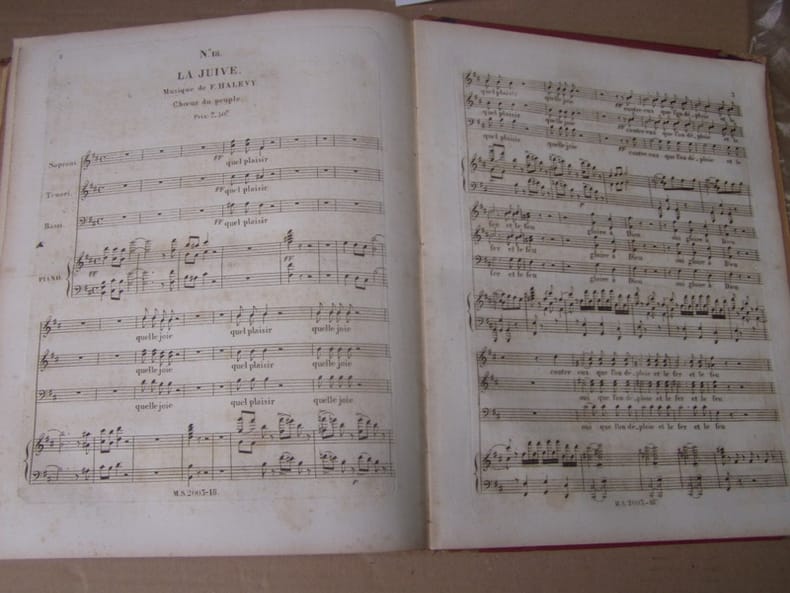
1785123791785 Fort volume reliure mi XIXe s?- titré Terpsichore - LA JUIVE.,dos usé - Feuilles de Terpsichore ; Paris : Chez les Srs. Cousineau père et fils, [1785/7?],gravés par Roy l'ainé,année 2, du no. 1 a 52 in folio,210p;,tables ,manques ? les numeros 49 et 51,reliés a la suite No.15,18,47 de la 3e année ,et en double numeros 18 et 35 de la 2e année,et le numero 1 de la 9e année (weekly issues) -RISM B II, p. 181. - Bestaat ook voor klavecimbel. Voor harp; voor zangstem en harp.-- relié avec HALEVY F. / SCRIBE LA JUIVE - partitions gravées chants 1 à 18 - Paris ,Berlin SCHLESINGER - Londres [1835]= M.S. - 2003 - morceaux détachés pour piano etc.
150671New York, Warsaw, Polish Institute of Arts, and Sciences in America, Warsaw Society of Science and Letters, (1946 - 1965).
150671New York Warsaw Polish Institute of Arts and Sciences in America Warsaw Society of Science and Letters 1946 - 1965. 15 volumes in 12. Cloth 23.5 cm Rebound; library stamp in the title Heavy book may require extra shipping costs hardcover
1926vd1292Paris, Calmann-Lévy, éditeurs, 3, rue Auber, 3 Sélection Chantefable, Sélection Abraxas-libris Broché 1926 Rare édition originale du journal intime de George Sand publié par Aurore Sand (petite fille de George Sand), 1 des rares 100 exemplaire sur vergé de rives au format (12,5 * 20 cm), 232 pages. Ce journal concerne les périodes de 1834 à 1841 ; dos insolé, premier légèrement éclairci également, petites déchirures en marge des plats, intérieur très frais, en partie non coupé, bon état. Livraison a domicile (La Poste) ou en Mondial Relay sur simple demande.
1970208901970 Réunion de onze maquettes originales gouachées recouvertes d'un calque agrafé surlequel est collé le texte dactylographié, références du journal apposées sur chaque illustration en bas à droite,1970, Société Française de Presse, 32.2 x 28 cm.
Telephone Talk was the glossy bimonthly publication of the British Columbia Telephone Company. It was written by employees for employees to present information of interest to those engaged in the plant, traffic, commercial, operating, accounting and other departments of the service. Each issue is replete with black and white photos and information on topics such as: company, industry and technological news, traffic levels, expansion plans, personnel announcements, publicity and social events, deaths, weddings, lists of exchanges, and more. As such, these issues serve as a vital preserve of rare and fascinating British Columbia history. This volume covers topics including: Miss K. Perrin joins as health supervisor; New West office upgraded - super photos; New York Engineer describes latest developments i.e. transmitting photos over phone lines; the truth about instrument zoning; Excitement at Duncan office; Diary describes observations on Chilliwack line; New cable successfully laid from Galiano Island to Point Grey - 9 pages of text and good photos; New Trans-Gulf circuits opened; sleeping car reservations by phone; Joe Gagnon; Phone expansion in Bay store; Seymour remodeling complete; Operating room photos; Coal, Travelling Men and Toll Lines Feature Nanaimo; High Poles removed from Seymour St. - 6 pages of text and great photos; Miss E.R. Walker - manages traffic on Vancouver Island; Cobble Hill Exchange; photo of updated Ladysmith office; Coast now linked with Okanagan by phone; Miss A. Falconer of the Port Coquitlam office; Successful Canadian jubilee broadcast from Ottawa; Photo of Chemainus Office; Royal Alexandra Apartments Fire - phones used from burning buildings by reporters; Company will have its own line to Vernon; Photo of public phones/'Pay Stations'; Photo of Belmont office near Victoria; Table of phones in use per province in Canada; Six pages of info. and great photos re: Kootenay; Battling Storm King; Mexico City can now communicate with Vancouver; Direct cable to be laid to West Vancouver; Article on poles; and more. Half-leather binding. Average wear. Ink stamp of company executive E.P. LaBelle upon top edge of text else unmarked. Binding intact. Substantial wear to backstrip with some chips missing. Book
2576061 Wells Street Oxford Street 30 June 1815. Note: a. "He also chaired the board of the London-based South Australian Colonisation Commission created by the South Australia Act 1834 to oversee the new colony of South Australia. He also chaired the board of the London-based South Australian Colonisation Commission created by the South Australia Act 1834 to oversee the new colony of South Australia before the colony went bankrupt and he was sacked in 1841. He was chiefly known for championing the cause for emigration to the new colony and his name lives on in Adelaide's main river the Torrens the suburb of Torrensville and a few other places Wikipedia; B. "In 1831 having impressed John Stuart Mill Robert Torrens and other leading economists with the value of his ideas Wakefield became involved in various schemes to promote the colonisation of South Australia. He believed that many of the social problems in Britain were caused by overpopulation and he saw emigration to the colonies as a useful safety valve. He set out to design a colonisation scheme with a workable combination of labourers artisans and capital. The scheme was to be financed by the sale of land to the capitalists who would thereby support the other classes of emigrants. It took several attempts before the Province of South Australia was established. Although initially Wakefield was a driving force he found that as it came closer to fruition he was allowed less and less influence until he was frozen out almost completely whereupon he took offence and severed his connections with the scheme Wikipedia."; C. "Wakefield " is considered a key figure in the establishment of the colonies of South Australia and New Zealand" Wikipedia. See Image. 61 Wells Street, Oxford Street, 30 June 1815 unknown
188132098aux bureaux du journal 1881 3 années reliées en un volume comporte les Années 1881, 1882, 1883 complètes dans la même reliure
186021616Paris, Bohné ; Bruxelles, Van Meenen, 1860 ; in-16, bradel de percaline rouge vif, pièce de titre vert foncé, chiffre couronné doré Philibert de Lombard de Buffières, comte de Rambuteau en pied du dos, date en queue (reliure de l’époque) ; XII-494 pp.