34 248 résultats
1784WRCAM43190Boston 1784. 4pp. Folio. Silked on both sides. Small losses at old folds affecting a few lines of text. Trimmed closely at top of first leaf affecting one line of text. Some light soiling and wear. About very good. A representative issue of this newspaper with a lengthy article on the origin of slaves and the slave trade to be continued in the next issue. Also the proclamation of the treaty of peace between America and England. THE INDEPENDENT LEDGER. was established June 15 1778 by Edward Draper and John W. Folsom; it was published until Oct. 16 1786. unknown books
187941287San Francisco Cal 1879. 1st edition Cowan II p. 556. Original publisher's green cloth binding with elaborate gilt stamping. Bright gilt. Minor wear. A pleasing Nr Fine copy. 60 pp. Text double column. Frontispiece. 4 inserted chromolithographs. 8vo. 8-7/8" x 5-3/4" <br/><br/>The Chronicle newspaper was founded in 1865 as The Daily Dramatic Chronicle by the two teenage brothers Charles de Young and Michael H. de Young. Benefiting from the growth of San Francisco by 1880 it had the largest circulation of all West Coast newspapers. This book tells the story of that founding & growth. Uncommon in the trade. hardcover books
175447288London: J. Payne Bookseller at Pope's-Head in Pater - noster - row 1754. 1st Printing. Printed self-wrappers now housed in an archival mylar sleeve. Paper manufacturing irregularities at top & fore-edges. 3 stab-holes to left. Very Good. Bifolium 4 pages. 8-1/2" x 5-1/4" <br/><br/>A rare prospectus announcing the advent of Payne's thrice weekly publication "published Tuesday Thursday and Saturday in every Week; the First Number of which will be GIVEN GRATIS on Saturday March 2d." The paper would cease publication in 1758. J. Payne, Bookseller, at Pope's-Head in Pater - noster - row unknown books
19522092902137703597Nagano Prefecture Food Distribution Public Corporation Journal Publishing Association 1952. Soft Cover. Fine. The book is in fine condition. Nagano Prefecture Food Distribution Public Corporation Journal Publishing Association paperback
In-4 p., fascicoli in cartoncino con illustrazioni a colori applicate al piatto, ca. 40/70 pagine cad., molto ben illustrata in bianco e nero e con tavole a colori fuori testo applicate alla pagina. Di questa prestigiosa e tipograficam. lussuosa rivista trimestrale, pubblicata (a partire dal dicembre 1955) dagli "Amis du Musée National de Céramique de Sèvres", offriamo i primi 43 fascicoli (sui 59 pubblicati) + gli 8 fascicoli di Supplemento ai numeri 3, 9, 12, 13, 35, 36, 40 e 42/43. Anche i supplementi contengono numerose tavole a colori applicate su cartoncino, con la relativa descrizione (due sono dedicati a Limoges e alla sua porcellana, uno è un "Hommage à Francine del Pierre" e uno alla "Carte céramique de France"). La rivista è destinata ai collezionisti di ceramiche antiche e moderne, europee, orientali, precolombiane, e contiene anche vere e proprie monografie sugli argomenti trattati. La ns. collezione è contenuta in 11 scatole editoriali in cartone. In ottimo stato (nice copy).
175235155DBBand I-X in 10 (von 37) Bänden. Leipzig, Johann Friedrich Gleditsch 1752-1762. 8°. Jeder Haupttitel mit einer wiederholten gestochenen Titelvignette. Kalbslederbände der Zeit mit roten goldgeprägten Rückenschildern und reicher Rückenvergoldung.
19952090502113708892Not Available 1995. Soft Cover. Fine. The book is in fine condition. Not Available paperback
1851218121851. Science Medicine & TechnologyMilitary & WarLabor Environment & Welfare Manuscript industrial journal documenting the British lead shot industry patent culture and metallurgical manufacturing during the height of the Victorian industrial economy. Primarily England and Wales 1851-1853. Approximately 50 pages written in ink in a highly legible hand bound in an octavo-format notebook measuring 8 x 6.5 inches. Quarter red leather over marbled boards. Ownership inscription to front endpaper: "John R. Tracy / Nov 1852."<br /> <br /> An unusually detailed firsthand record of mid-19th-century industrial innovation centered on the manufacture of lead shot at a moment when Britain's expanding military infrastructure mining economy and heavy industry were increasingly dependent on large-scale metallurgical production. Compiled by John R. Tracy the manuscript documents the development and attempted commercialization of what he repeatedly identifies as a "Shot Patent" likely an improvement to the production or grading of lead shot associated with the traditional shot tower process. Rather than functioning merely as a technical notebook the volume captures the broader industrial system surrounding invention in Victorian Britain: factory inspections patent negotiations industrial espionage concerns business networking licensing discussions and the competitive culture of ironmasters and lead manufacturers operating across England and Wales.<br /> <br /> The manuscript opens in October 1852 and proceeds through a sequence of dated entries recording Tracy's travel and meetings with manufacturers engineers and industrial firms. These entries reveal the practical realities of introducing a new industrial process into Britain's established lead trade where manufacturers guarded technical methods closely and approached outside inventors with skepticism. On October 26 Tracy records receiving "letters of introduction to Messrs. A. B. Brown & Green" and to "Platt Bros." illustrating the importance of personal industrial networks and recommendation systems within Victorian manufacturing culture. Another entry dated November 5 describes a meeting arranged through "Mr. Maxwell of Messrs. Norton Theakers" followed by Tracy's note of "Much of 'shot etc.'-a rather funny conversation but on the whole. appointment for tomorrow @ 10 1/2" capturing the uncertain and often informal negotiations surrounding industrial patents.<br /> <br /> Particularly revealing is Tracy's November 6 account of visiting the Flintshire lead smelting firm Newton Keates & Co. where he describes the guarded and competitive atmosphere surrounding lead shot production. Tracy recounts that permission to inspect the works was "at-first-refused in rather a John Bullish manner" before eventually being granted under supervision. He writes perceptively about the mixture of suspicion and curiosity that surrounded industrial patents noting that the proprietor "wished to know the price upon the Patent" but that he deliberately withheld a valuation because "there was no use to let him have the bait to look at before he was hungry enough to bite." The language throughout reveals how industrial innovation in this period depended not simply on invention itself but on strategic secrecy negotiation and control over proprietary manufacturing knowledge.<br /> <br /> One of the manuscript's most important sections is a full-page listing titled "Lead Works in the United Kingdom in 1852" identifying more than two dozen lead works and manufacturers across Britain. Firms including Walker Parker & Co. Newton Keates & Co. and Richmond Anchor Co. are listed alongside annotations describing their production specialties including "sheet" "pipes" "shot" "white lead" and "pig." The page functions as a rare industrial survey of Britain's lead industry during a period of rapid military and industrial expansion documenting the interconnected infrastructure supporting ammunition production construction materials piping paint manufacture and metallurgical processing.<br /> <br /> Later entries contain detailed observations of shot-manufacturing equipment at a Chester lead works including descriptions of shot towers ranging from 76 to 96 feet in height and the use of perforated metal grading systems to regulate molten lead as it fell into spherical form. Tracy records the operation with notable technical specificity: "The shot are dropped through a perforated metal-the holes being smaller at the upper end and increasing in size as you get to the lower cylinder." Accompanying diagrams depict feed bins drop tubes sieves and sorting mechanisms apparently intended to improve efficiency or shot-size consistency beyond earlier tower methods. Tracy critically evaluates the machinery as well remarking that certain sieve boxes "seem inadequate for the work" and comparing the process economically to that employed by "D. De Roy & Co.'s works." The notebook therefore preserves not merely abstract invention but active industrial analysis and comparative manufacturing study.<br /> <br /> The manuscript is documenting metallurgy patent culture and military-industrial production in the decades preceding the major arms expansions of the later nineteenth century. Lead shot remained essential not only for hunting and civilian markets but for military supply systems deeply tied to imperial expansion and industrial warfare. Tracy's notebook reveals the increasingly professionalized yet still highly personal world through which industrial technologies circulated in Victorian Britain where factory visits guarded conversations handwritten technical sketches and negotiated introductions formed the practical infrastructure of innovation. Spine mostly perished with binding delicately held together; boards rubbed and worn. Interior exceptionally clean and highly legible throughout. A substantial and unusually revealing manuscript documenting Victorian industrial manufacturing patent strategy and the lead shot trade during a formative period in British industrial history. unknown
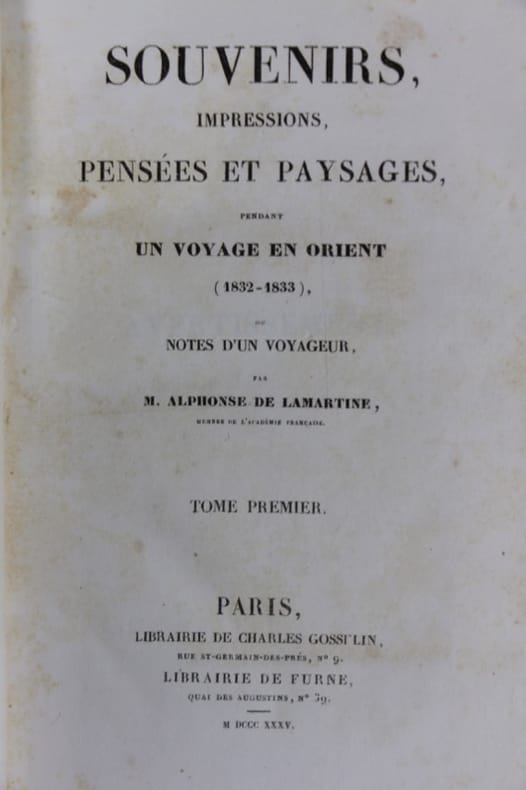
183598592Paris, Librairie de Charles Gosselin, Librairie de Furne 1835 4 volumes in-8, pleine basane brune, dos à nerfs ornés de roulettes dorées et d’un grand fer au centre, plats orné à froid d’une belle compositions à froid, encadrés d’un filet doré, roulettes dorée en coupes et contreplats, tranches dorées, XVI- 340- 429- 388- 395 pp. Un portrait frontispice sur acier par Plée, un tableau et deux cartes repliées de la Méditerranée et de la Syrie. Dos insolés, petit accroc en coiffe sup. du premier volume, rousseurs éparses.
1875ZB1347108Appleton 1875. Price HAS BEEN REDUCED by 10% until Monday June 29 SALE item 384 pp. rebound in buckram hardcover minor internal library markings else text clean & binding tight. All plates are present and in very good condition including 4 by J. M. W. Turner and 1 by Albert Bierstadt. - If you are reading this this item is actually physically in our stock and ready for shipment once ordered. We are not bookjackers. Buyer is responsible for any additional duties taxes or fees required by recipient's country. Photos available upon request. Appleton hardcover
19492082702114910783Kochi Prefecture 1949. Soft Cover. Fine. Number of pages: 880 pages Size: 22cm Kochi Prefecture paperback
In-4 p. (mm. 285x200), 3 volumi in mz. tela che contengono una raccolta completa dei primi 37 numeri di quesa rivista, ciascuno con proprio “Bollettino di Supplemento”. La raccolta (conserv. le copertine orig. figurate a colori), ben illustrata da immagini fotografiche in b.n. nel t., è così composta: - 1938 ( Anno I): N. 1 (novembre) “Colonizzazione demografica”, pp. 28 + XII (di Bollettino) - N. 2 (dicem.) ”Comunicazioni con l’Impero”, pp. 28 + XV. // 1939 (Anno II): N. 3 (genn.) “Sahara Libico”, pp. 32 + XX - N. 4 (febbr.) “Impero e autarchia”, pp. 28 + XX - N. 5-6 (mar./apr.) “Cinque anni di progresso libico”, pp. 40 + XXIV - N. 7 (magg.) “Conoscenza scientifica dell’A.O.I.”, pp. 32 + XXVIII - N. 8 (giu.) “Poesia dell’Africa”, pp. 24 + XXIV - N. 9-10 (lugl./ago.) “Cinquantenario aereo”, pp. 60 + XXVIII - N. 11 (settem.) “Le isole italiane dell’Egeo baluardo orientale dell’Impero”, pp. 32 + XXIV - N. 12 (ott.)“Racconti d’Africa”, pp. 20 + XVI - N. 13 (novem.) “Clima e pioggie dell’Africa italiana”, pp. 32 + XVI - N. 14 (dicem.) “Strade di Roma in Africa”, pp. 32 + XVI. - 1940 (Anno III): N. 15 (genn.) “Disciplina e tutela delle razze nell’Impero”, pp. 32 + XVI - N. 16-17 (febbr./mar.) “Donne italiane in Africa”, pp. 64 + XVI - N. 18 (apr.) “L’Amara”, pp. 44 + XVI - N. 19 (magg.) “La Libia e l’autarchia”, pp. 32 + XVI - N. 20-21 (giu./lugl.) “Conti da regolare”, pp. 48 + XVI - N. 22 (ago.): “Oltre le nostre frontiere”, pp. 32 + XVI - N. 23 (settem.) “La Germania in Africa”, pp. 32 + XVI - N. 24 (ott.) “Impero e levante”, pp. 32 + XVI - N. 25 (novem.) “La Somalia che fu britannica”, pp. 32 + XVI - N. 26 (dicem.): “La crisi imperiale britannica”, pp. 32 + XVI. - 1941 (Anno IV): N. 27-28 (genn./febbr.) “Forze armate d’Italia in Africa”, pp. 52 + XX - N. 29 (mar.) “Richiami di passione africana”, pp. 32 + XVI - N. 30 (apr.) “Centri italiani di cultura coloniale”, pp. 36 + XVI - N. 31-32 (magg./giu.) “La Spagna in Africa”, pp. 60 + XXIV - N. 33 (lugl.) “Inframmettenze americane e russe in Africa”, pp. 36 + XVI - N. 34-35-36 (ago./settem./ott.) “I Savoia in Africa”, pp. 32 + XX. A partire dal numero successivo, il 37 (novem./dicem./genn. 1941-42) “Il trentennale della Libia: 1911-1941)”, di pp. 112, la rivista diventa trimestrale e senza il Bollettino. Tutta la raccolta è molto ben conservata.
In-8°: tre volumi rilegati insieme. Vol. 1: cc. (2), pp. 380. tav. ripiegate 4 raffiguranti pentagrammi musicali, più una raffigurante una silhouette di M. l’Abbè Raynal . Vol. 2: cc. (2), pp. 358. tav. 2 ripiegate ( pentagramma musicale, Joseph Montgolfier). Vol. 3: cc. (2), pp. 390. tav. 7 ripegate ( di cui 6 pentagrammi musicali e un ritratto di M. Pilatre de Rozier). Legatura in mezza pelle con angoli, con fregi in oro e tasselo con titolo sempre in oro sul dorso, stemma dorato al piatto, tagli in rosso.
19347575CBBasel, Mähly & Schabelitz, 1934-1835. 4°. (1) Bl., Mit lithogr. Titelblatt, 4 S. lithogr. Notenbeilagen, 1 gef. Plan (Basler Fasnacht) und 61 Aquatinta-Tafeln. Orig.-Pappband. + Wichtig: Für unsere Kunden in der EU erfolgt der Versand alle 14 Tage verzollt ab Deutschland / Postbank-Konto in Deutschland vorhanden +, 7575CB|7575CB_2 [2 Warenabbildungen]
LING0113Dordrecht, Reidel Publ. Comp. gr.-8°, OKart., Einbände mit Gebrauchsspuren. In Englisch.
19147192EBLeipzig/Berlin/Wien/Budapest/New York., Verlag J. J. Weber, 1914-1918. 2°. 42 cm. Seiten 202-894, Seiten 2-782, Seiten 2-908, 5 Blatt, Seiten 38-940, Seiten 2-1074, Seiten 2-892, Seiten 2-892, Seiten 2-808, Seiten 2-586. Blaue Halbleinenbände der Zeit mit goldgeprägten Rückentiteln auf roten Lederschildchen, marmoriertem Bezugspapier und marmorierten Schnitten. [3 Warenabbildungen]
453062 vols.in-8 reliés.Pièces de titre notant "Journal des Jacobins".41 numéros du 22 Février ,l'An Deuxième,au 23 Aoùt ,l'An Troisième. Etat moyen.Des rousseurs.Reliures usagées.
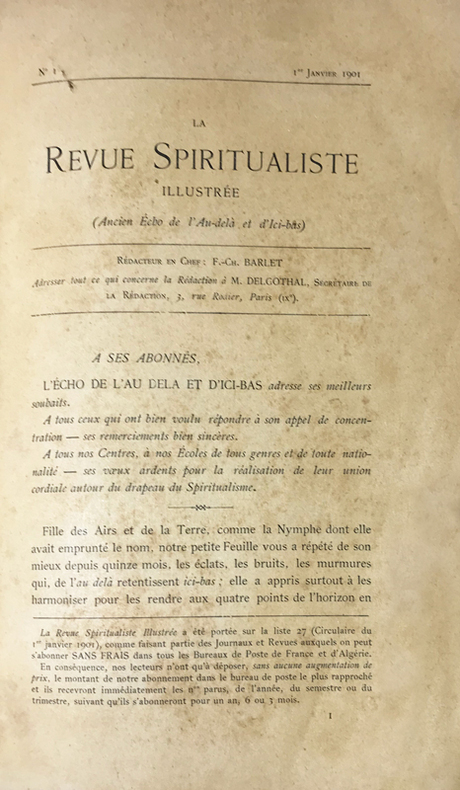
190115298Paris, Imprimerie de la Société des Journaux Spiritualistes réunis ; du N°1 du 1er janvier 1901 au N°7 du 15 avril 1901 (absence du N°4), soit 6 numéros reliés en un volume petit in-8 ; demi-percaline à coins vert-empire, dos muet ; 32 pp. par numéro, numérotation continue : pp. 1 à 96 et 129 à 224, figures dans le texte.
Edizione originale. Gran parte del pubblicato dal numero 1 del 12 settembre 1946 al numero 85 del 25 aprile 1948. Mancano i numeri: 16 - 17 - 34 - 49. Esemplari bruniti e con occasionali lacerazioni, ma nel complesso in stato più che buono se non ottimo per alcuni fascicoli. Fondata nel 1946 a Roma e diretta da un comitato formato da Maccari, Majorana, Pescatore e Scarpelli, «Don Basilio» si proponeva - sulla scia di precedenti e importanti esperienze di satira politica e anticlericale, a cominciare da «L’asino» di Gabriele Galantara e Guido Podrecca - di combattere con l’ironia e l’umorismo «contro le parrocchie di ogni colore», come recita il sottotitolo. Nel clima socialmente e politicamente teso dell’Italia dell’immediato dopo guerra, la redazione del settimanale rese chiarissime la propria posizione e la propria vocazione ferocemente avversa al Vaticano e alla Democrazia Cristiana. E basterebbe del resto guardare al grande titolo che domina il numero di apertura del 12 settembre 1946 per comprenderlo: «De Gasperi è un fantoccio manovrato dalla Compagnia di Gesù» accompagnato da una vignetta in cui Don Sturzo - ritornato in Italia da pochi giorni dopo l’esilio americano - viene accolto proprio da De Gasperi, dal Papa e da un gruppo di inquietanti prelati e guardie svizzere. L’esperienza di «Don Basilio» nel formato originario si concluse nel 1948 dopo 120 uscite, benché una “nuova serie” continuò le pubblicazioni dal gennaio 1949 all’aprile 1950.
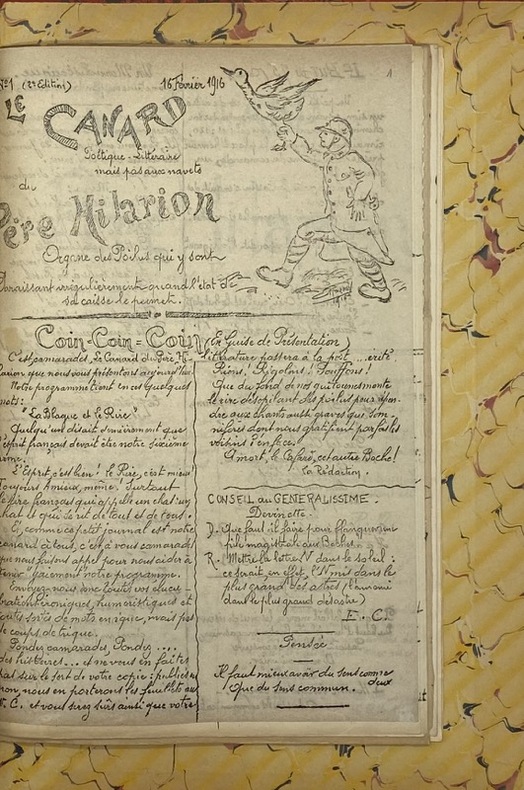
231908S.l., 1916 9 livraisons en un vol. in-folio, [19] ff. n. ch., tous multigraphiés, avec quelques illustrations dans le texte, demi-basane cerise, dos lisse (reliure postérieure).
231909S.l., 1916 9 livraisons en un vol. in-folio, [19] ff. n. ch., tous multigraphiés, avec quelques illustrations dans le texte, demi-basane cerise, dos lisse (reliure postérieure).
Dal 25 Marzo al 6 Aprile 1848 si pubblicarono solo 9 numeri; i primi quattro come numero di saggio. G. Romani ne fu il Gerente responsabile. Fortemente anti austriaco, in ogni numero compare la scritta: W.La Libertà W Pio Nono. Non mancano feroci attacchi a Radetzky, plausi per Carlo Alberto e articoli a difesa del popolo lombardo. Agli ultimi tre numeri al sottotitolo venne aggiunto: La Repubblica é il Governo della Prosperità e della Libertà. Alla collezione manca il solo numero nove, l’ultimo pubblicato.
Edizione originale Ottimo esemplare (normali minimi difetti ai bordi della copertina). Il raro numero V,8 (spesso indicato erroneamente come n. 3, dall’errore in copertina) del mensile di critica d’arte diretto da Giolli dedica ampio spazio ai futuristi, con i contributi «Aeropittura» e «Scenografia». Interessante e originale è l’ampia sezione iconografica, valorizzata dal formato del mensile: 4 tavole recto/verso con 19 immagini in bianco e nero per l’aeropittura; 2 tavole a colori recanti al recto le belle scene di Prampolini per «Prigionieri e Vulcani» di Marinetti (1927) per la scenografia. Nel resto del fascicolo: lettera aperta di Giolli all’On. Farinacci; «Ritratti chinesi» di G. Nicodemi; «L’arte di Carlo Bonomi» di E. Emanuelli. Raro. Salaris, Riviste, p. 554ss. (con imprecisioni)
200802704Colmar, Druck ALbert Jess Colmar I/els., 1916-1918 ; in-4, broché, couverture illustr. SAMELBAND - 25 VERSCH. NUMERN AUS DEM I-II UND III JHARGANG (BAYR. LANDW. INF. RGT. N°1 - 3. KOMP )- en litho très bel état presque neuf. très rare sur l'alsace, VOSGESEN.
Edizione originale. Tutto il pubblicato della “nuova serie” di «Uomini e Idee» dal numero 1 del gennaio-febbraio 1966 al numero 23/25 del settembre 1970. 25 numeri in 11 fascicoli, tutti in ottime condizioni (con occasionali bruniture e lievissime abrasioni alle brossure). La collezione, estremamente rara in questo grado di completezza, include il numero monografico «Il gesto poetico. Antologia della nuova poesia d’avanguardia» (numero 18, fascetta editoriale conservata). Nuova serie della rivista «Uomini e Idee» fondata e diretta da Corrado Piancastelli con il supporto finanziario e la direzione amministrativa di Enzo Portolano. Originariamente pubblicato come rivista scientifica dal 1958 al dicembre 1964 - con contributi di alto profilo principalmente dedicati al rapporto mente e corpo e mente-cervello -, il periodico tornò con la serie qui presentata nel 1966 ampliando i propri orizzonti e abbracciando in modo più deciso i campi della letteratura e della poesia sperimentali e dell’arte, pur non abbandonando – come del resto il lungo sottotitolo dichiara – l’originario terreno marcatamente scientifico-psicologico. Nei 25 numeri (alcuni doppi e tripli) comparsi tra il 1966 e il 1975 figurano così contributi d’eccezione e di natura diversa, da scritti di Renato Barilli, Furio Jesi, Emilio Servadio, Giulio Carlo Argan a interviste a Eugenio Montale e a Bertrand Russell. Da segnalare, per sottolineare la già ricordata attenzione della “nuova serie” alla sfera poetico-letteraria sperimentale, il numero 18 del novembre/dicembre 1968 intitolato «Il gesto poetico. Antologia della nuova poesia d’avanguardia» con una ricchissima selezione di autori legati alle nuove frontiere della fusione tra poesia e arte o tra parola e immagine curata del direttore Piancastelli e di Luciano Caruso.