34 248 résultats
189559062BBBerlin und München, Julius Springer Verlag und Verlag R. Oldenbourg, 1895-1915. Groß-4°. 36,5 x 28,0 cm. ca. 15000 Seiten. Braune Halblederbände der Zeit mit goldgeprägtem Rückentitel. Jahrgang 1895 im Pappband der Zeit. [4 Warenabbildungen]
19127149London and Liverpool: The Journal of Commerce 1912. Book. Good . Hardcover. First Edition. Somewhat worn copy bound into burgundy boards with worn extremities. This is the first one volume edition of the reports that were published serially in the Journal of Commerce at the time. The original paper cover is loose but easily re-attached. Advertisements interspersed among the daily reports. Internally very good. The first comprehensive account of the Titanic disaster. May - July 1912 . 272 pages. Scarce. The Journal of Commerce Hardcover
1819SS321-001Various: Various 1918-1955. Hardcover. Very Good. For an itemized list of the items in this lot please inquire. Condition Very Good to Good. The Courier-Journal newspaper began publication in Louisville Kentucky in 1868 - the last run of the Courier-Journal newspaper was Sunday February 28 2021; the Courier-Journal Job Printing Company printing facilities closed for good on March 4th 2021. The material offered here is dated 1918 through circa 1955 and includes technical material used by apprentices and compositors working in the composition and press rooms of the Courier-Journal Job Printing Co. Included are 6 volumes of the Typographic Technical Series For Apprentices Part VI Nos. 32-40 out of series Chicago IL: Published by the Committee on Education United Typothetae of America 1918. All copies with the bookplate "Property of Courier-Journal Job Printing Co. For EMPLOYES' sic Use Only Return to Superintendent's Office" in a handsome Art Nouveau design on the front paste-down. This educational material demonstrates that the Courier-Journal Job Printing Company was unionized at least from the beginning of the twentieth-century and highlights the power and influence of typographers who were among the most educated economically mobile wage laborers in the United States and who were represented in every major urban center in the newspaper industry; the typographic unions won a 48-hour work week in 1897 and a standard wage scale throughout the newspaper industry; as an example of the power of the typographers unions in the 1930s the International Typographical Union introduced the 40-hour work week across the industry which spread to other unions and has sinse been codified across the labor sector by federal legislation; the typographers occupied an important if ambiguous place in the development of American labor history in as much as American labor was never successful in uniting all laborers together in one force but tended organize within industries. This grouping tends to focus on the tools of the trade including type specimens and catalogs of process inks issued in the 1920s and 1930s; Courier-Journal typographers left notes to themselves in these catalogs indicating material they felt needed representation in the Courier-Journal Job Printing Company's shops. Something of an outlier in this grouping is an accordion-fold volume of photographs of printing equipment available for use in the 1950s by the competing print shop The Standard Printing Company Incorporated of Louisville Kentucky. Most likely a salesman's dummy to show potential clients that The Standard Printing Company had the latest printing equipment and the most prestigious customers this undated circa 1955 without imprint accordion-fold photo-archive of printing equipment shows the most modern print shop of the 1950s. The earliest book printed by the Courier-Journal Job Printing Company was issued in 1884. An interesting article by Chris Kenning in the Louisville Courier Journal March 11 2021 gave some valuable insights into the history of the newspaper the Courier-Journal Job Printing Company and the challenges to the newspaper business and printing in general in the United States with the advent of desktop computers and the rise of the internet. While the Kenning article did not touch much on the time period 1918-1955 there are still interesting stories to tell about the printing industry in America the place of printing in the American labor movement and printing technology in the first half of the twentieth century that can be told using the materials offered here as visual aids. With the sale of the Courier-Journal to the Gannett Co. Inc in 1986 the road to the shut down of the Courier-Journal Job Printing Company was opened. Now the Courier-Journal newspaper will be printed in Indianapolis IN. The current print circulation of the paper is now under 60000 while the Courier Journal's digital journalism garners 4.5 million monthly visitors to their website. Media consolidation has been made possible with the internet's ability to distribute news on a minute-by-minute basis making regional newspapers printed on paper a redundancy. The Cincinnati Enquirer the Lexington Herald-Leader the Bowling Green Daily News are all regional newspapers that will no longer be produced locally after having been produced in Louisville by the presses of the Courier-Journal. This consolidation of the newspaper industry means the loss of 102 Louisville jobs including printing press operators mailroom and transportation jobs that have been lost to the relocation of the press work to Indianapolis. Various hardcover books
1856334Lancaster PA 1856. Folio broadside. 495 x 330 mm. 19 1/2 x 13 inches. Text printed in five columns. Matted. Several tiny holes affecting a few words. Substantial reportage with text printed in six point type of an anti-Fremont pro-Buchanan rally held at the home of James Buchanan. This was billed as the "Greatest Political Meeting Ever Held in Pennsylvania" with 50000 people in attendance. The sons of Henry Clay and Daniel Webster were present and spoke on behalf of the Democratic State Ticket. The speeches dealt chiefly with the results of the Kansas-Nebraska Act and the resistance of the Abolitionists to it noting that Connecticut was the first ahead of the Keystone State to vote to arrest the tide of disunionism fomented by the abolitionists. Democratic speakers favored the preservation of the Union an end to sectionalism and the protection of the constitution. Not cited in OCLC or at AAS Library Company American Philosophical Society or NYPL. unknown books
11932Harper Brothers NY 1872 Volume 16 #801 - Volume 16 #834 May 4 1872 - Dec. 21 1872 page 346 - page 1008 excluding the following: # 809 - June 29 issue p505-520 #813 - July 27 issue p577-592# 818 Aug 31 issue p665-689 one leaf of Oct 5 issue p790-791#825 - Oct 19 issue p 801-817 supplement for Oct. 19 issue is present #831 #832 and #832 Nov. 30 Dec. 7 and Dec. 14 issues p929-993. Profusely illustrated with many engravings including many by Thomas Nast and Gustave Dore . Half bound leather and marbled boards. Marbled endpapers. Copy of O.P. Kinsey in pencil on prelim. Backstrip missing. Front and back cover loose. A little foxing toward extreme back. Very minor dampstain to upper outer edge of many leaves - generally outside border of most engravings. The ten double spreads sewn in - not tipped in. Text in very good condition. Harper Brothers, NY, 1872 hardcover
1922N4540aBerlin: Rimon Publ. House 1922. First Edition . Original Half Cloth. Very Good. 4to. 1922-1924. SOME 250pp .FOR THE 6 PARTS OF THIS IMPORTANT PERIODICAL OF JEWISH ART published in Hebrew language in Berlin. With some contenc p and explantory ages in English PROFUSELY ILLUSTRATED WITH MANY PLATES IN COLOUR. EACH PART WITH THE ORIGINAL VERY DECORATIVE WRAPPERS PRESERVED. ARTICLES BY CHAGALL BIALIK AGNON AND OTHERS. Illustrated by Jewish artist many of the Jewish Russian Avantgarde PUBLISHER'S ORIGINAL HALF CLOTH BINDING. Some truly insignificant outside markings. A VERY CLEAN AND FRESH COPY .---The editors MARK and -RACHEL BERNSTEIN-WISCHNITZER had joined a group of Russian-Jewish intellectuals immigrants in Berlin with multi-lingual literary needs.RARELY FOUND IN THIS BEAUTIFUL FRESH CONDITION.------ERSTE ORIGINAL -AUSGABE 1- 6 alles erschienen. Ca. 250 S. für die 6 Teile zusammengebunden in dem Original-Halbleinen des Herausgebers. Jede einzelne der 6 Ausgaben hat ein eindrucksvolles dekoratives Umschlagsblatt alle sind erhalten. Reich illustriert teils farbig. Mit Beiträgen von Ch.N. Bialik Marc Chagall Nathan Altman u.a. viele Vertreter der JÜDISCH- RUSSISCHEN AVANTGARDE. Dieses hebräische Journal wurde in Berlin zwischen 1922 -und 1924 veröffentlicht und war der jüdischen Kunst und Literatur gewidmet. Es erschien parallel zu der jiddischen Edition genannt "Milgroim" hatte aber einen anderen literarischen Inhalt. Text in Hebräisch mit Ausnahme der zusätzlichen Inhaltsgabe der jeweiligen der 6 Ausgaben beim ersten Heft in deutsch bei Heft 2- 6 in englisch.Die Initiatoren dieser herausragenden Produktion in herausragender Druckqualität waren Dr. Mark Wischnitzer und seine Frau die berühmte Kunsthistorikerin Rachel Bernstein-Wischitzer.Beide hatten sich einer Gruppe von russisch-jüdischen Intellektuellen in Berlin angeschlossen. Ein sehr sauberes und frisches Exemplar. SELTEN! <br/> <br/> Rimon Publ. House hardcover
1922N442Berlin: Rimon Publ. House 1922. First Edition . Hardcover. Near Fine. Folio. 1922-1924. Issues 1 - 6 all published. Some 250pp. for the 6 parts bound together in the ORIGINAL PUBLISHER'S HALF CLOTH. Each issue HAS A FINE DECORATIVE COVER PRESERVED HERE. PROFUSELY ILLUSTRATED. MANY IN COLOR. Contributors included Bialik Lissitzky Chagall Tchernichovsky Nathan Altman and others many of the Jewish-Russian Avantgarde. This YIDDISH language journal published in BERLIN between 1922-1924 was dedicated to Jewish arts and literature and unique in its paper and printing quality. It served as a parallel publication to the Hebrew edition "Rimon" but varied in the literary content which was edited by the famous Yiddish writers Dovid Bergelson and Der Nister. The initiators of this exquisite production were Dr. Mark Wischnitzer and his wife famous art historian RACHEL BERNSTEIN-WISCHNITZER who had joined a group of Russian-Jewish intellectuals immigrants in Berlin with multi-lingual literary needs. Text in yiddish except for the additional content page in each issue which is in German for the first issue and in English for all the others issues. Condition of binding: Head and tail of spine with small expert repair hard to notice Cover with a few minimal markings. A VERY GOOD CLEAN AND FRESH COPY .RARE in this complete and fine state! ---ERSTE ORIGINAL -AUSGABE 1- 6 alles erschienen. Ca. 250 S. für die 6 Teile zusammengebunden in dem Original-Halbleinen des Herausgebers. Jede einzelne der 6 Ausgaben hat ein eindrucksvolles dekoratives Umschlagsblatt alle sind erhalten. Reich illustriert teils farbig. Mit Beiträgen von Ch.N. Bialik Marc Chagall Eli Lissitzky Nathan Altman u.a. viele Vertreter der JÜDISCH- RUSSISCHEN AVANTGARDE. Dieses jiddische Journal wurde in Berlin zwischen 1922 -und 1924 veröffentlicht und war der jüdischen Kunst und Literatur gewidmet. Es erschien parallel zu der hebräischen Edition genannt "Rimon" hatte aber einen anderen literarischen Inhalt. Text in jiddisch mit Ausnahme der zusätzlichen Inhaltsgabe der jeweiligen der 6 Ausgaben beim ersten Heft in deutsch bei Heft 2- 6 in englisch.Die Initiatoren dieser herausragenden Produktion in herausragender Druckqualität waren Dr. Mark Wischnitzer und seine Frau die berühmte Kunsthistorikerin Rachel Bernstein-Wischitzer.Beide hatten sich einer Gruppe von russisch-jüdischen Intellektuellen in Berlin angeschlossen.: Einband am Kopf des Rückens und unten mit einer kleinen kaum sichtbaren professionellen Restauration. Einband mit einigen wenigen minimalen Gebrauchsspuren. Ein sehr sauberes und frisches Exemplar. SELTEN! <br/> <br/> Rimon Publ. House hardcover
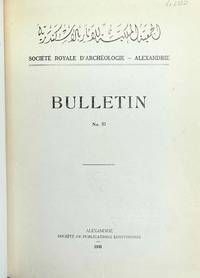
M14392Very rare set of 22 issues bound in 20 volumes. About 10% of the set is in XEROX the rest is in the original first edition. Société Archéologique d'Alexandrie Alexandrie 1900-2003. First edition. In-4 & in-8. Later half-leather for all volumes except vol. 47 which is in its original softcover. A very nice set. From the library of Egyptologist Charles Cornell Van Siclen III VSX. Language: French/Français - English - German/Deutsch - Italian/Italiano. This set ships from the USA shipping costs will be updated accordingly TXR. Relevant subjects: Egypt: Journals Egypt Greco-Roman. unknown
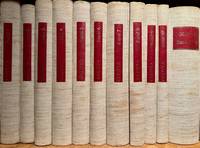
M14468Rare set of 62 issues bound in 30 volumes. Vandenhoeck & Ruprecht Göttingen 1909-1987. First edition. Large in-8. Original cloth some foxing on the spine of a few volumes otherwise a very nice unmarked set. From the library of German scholar Hans-Jürgen Jordan HJJ. Language: German/Deutsch. This set ships from Europe shipping costs will be updated accordingly BCI. Relevant subjects: Rome Greece & Aegean. unknown
168359146Paris, Florentin Lambert et Jean Cusson, 1683. 4to. Contemp. full calf. Raised bands. Gilt spine. Wear to spine ends. A crack in leather along upper joint. Corners bumped.
168359146Paris Florentin Lambert et Jean Cusson 1683. 4to. Contemp. full calf. Raised bands. Gilt spine. Wear to spine ends. A crack in leather along upper joint. Corners bumped. <br/><br/><em>First edition. </em> hardcover
1959ZB2113131959-1978. volumes 2-8 & 10-20 complete volumes partly bound ex library else texts clean & bindings tight. - If you are reading this this item is actually physically in our stock and ready for shipment once ordered. We are not bookjackers. Buyer is responsible for any additional duties taxes or fees required by recipient's country. Photos available upon request. unknown
19552091502133901160America Maru Passenger Bookmarked 1955. Soft Cover. Fine. Volume: 1 America Maru Passenger Bookmarked paperback
175235155DBLeipzig, Johann Friedrich Gleditsch, 1752-1762. 8°. Jeder Haupttitel mit einer wiederholten gestochenen Titelvignette. Kalbslederbände der Zeit mit roten goldgeprägten Rückenschildern und reicher Rückenvergoldung. + Wichtig: Für unsere Kunden in der EU erfolgt der Versand alle 14 Tage verzollt ab Deutschland / Postbank-Konto in Deutschland vorhanden + Band I-X in 10 (von 37) Bänden.
Numeri 1, 3, 4, 5, 10 - 11, 16, 19, 20 - 22. Esemplari in più che buone condizioni complessive. Conservata nel volume primo la cartelletta fuori testo con “Non Sol Antihertz”, opera di Marco Bagnoli. Il periodico trimestrale, che deve il titolo al celebre sonetto di Rimbaud, diretto da Bruno Corà, dedica ogni numero a un ventaglio di artisti diversi che partecipano alla pubblicazione con approfondimenti testuali, riproduzioni delle proprie opere e interventi artistici ideati ad hoc. Protagonisti della rivista sono spesso gli artisti dell’Arte Povera come è evidente fin dal primo numero che ospita tra gli altri: Jannis Kounellis, Mario Merz, Giulio Paolini e Luciano Fabro. La rivista fu pubblicata a partire dal settembre 1980.
Mende al primo fascicolo (al margine sinistro) ma nel complesso ottimo esemplare. Il giornale vide la luce il 25/27 marzo 1848 col numero doppio 1 e 2; cessò le pubblicazioni col n 48 del 16 giugno. Dal numero 28 al sottotitolo si aggiunse: Organo ufficiale del Circolo Patriottico. Moltissimi i collaboratori tra cui: Cesare Cantù, Vincenzo Gioberti, Tullio Dandolo, F. Ugoni, Carlo Cattaneo, Prati con Vincenzo de Castro come responsabile. Non comune giornale che raccolse attorno a se i più convinti sostenitori dell’Italia indipendente. Fogli impressi su carta azzurra.
Prima edizione. Ottimo esemplare completo di un allegato bifolio su carta giallognola con réclame editoriali. Volume quinto del periodico polacco «Scena di Lwów» diretto da Wilam Horzyca — manager dell'allora molto attivo «Teatro Municipale» di Lwów — relativo alla stagione teatrale 1932/33, interamente dedicato a Marinetti e al futurismo in occasione della prima polacca di «Prigionieri e Vulcani» e della visita del capo del futurismo nel marzo 1933. Testo in polacco, tranne in copertina e nella dedica in prima pagina. Traduce dal francese il primo capitolo del poema «Monoplan du Pape», e il manifesto sul teatro sintetico futurista. Precede l’introduzione «Marinetti y futuryzm», firmata dalla scrittrice e traduttrice polacca Anna Ludwika Czerny (1891-1968), e chiude la postfazione del direttore «Marinetti a Wyspiański», «indubbiamente il tentativo più valido e originale di approcciare la figura di Marinetti [...] per il confronto col drammaturgo polacco [Stanisław Wyspiański (1869-1907)]. Horzyca inquadra i due quali esponenti del “tempo della realizzazione”, fortemente contrari a un’inclinazione romantica, idealistica e sentimentale» (Ajres, Il futurismo italiano in Polonia nel centenario del Manifesto, in: Italia e Polonia 1919-2019, pp. 217-229). Oggi Lwów si chiama Lviv (Leopoli) ed è nel territorio dell’Ucraina. Cammarota, Marinetti, Marinettiana II, n. 59
172097482pierre marteau - demen 1720 A Cologne, chez les Héritiers de Pierre Marteau (4 premiers volumes) chez les Heritiers de Herman Demen (supplément), 1720-1724, 2 tomes + 1 supplément reliés en 5 volumes in-12 de 170x100 mm environ, tomes I.I et I.2 : (1) f., 1 frontispice, 1 titre, (4) ff. (avertissement et table), de 1 à 280, (1) f. suivi de (1) f., 1 frontispice, de 281 à 532 (pagination continue sur les 2 volumes), (13) ff. (table), (1) f., - Tome 2.1 et 2.2 : (2) ff. 1 titre, (1) f. ( table) de 1 à 258, (1) f., suivi de 259 à 516 pagination continue sur les 2 volumes, (13) ff. (table), (1) f., - Tome 3 : (1) f., 1 frontispice, 1 titre, (2) ff. (avis au lecteur, table) 352 pages, (1) f. Reliure plein veau havane, dos à nerfs portant titres et tomaisons dorés sur pièces de titre en maroquin bordeaux et brun, ornés de caissons à riches et délicats motifs dorés, coupes et chasses dorées, gardes marbrées avec ex-libris sur le premier contreplat, tranches rouges. Avec 11/13 portraits, 2 planches manquantes. Des rousseurs et pages brunies, quelques petites mouillures dans les marges, 3 coiffes légèrement ébréchées, coins émoussés, des auréoles et frottements d'usage sur le cuir, sinon bon état, édition rare avec son supplément.
Edizione originale molto rara. Minimi segni del tempo marginali, complessivamente un ottimo esemplare. Fondamentale testo teorico di Depero sul teatro plastico, corredato da 12 belle riproduzioni delle marionette e dei disegni preparatori in grande formato.
Rarissimo numero d’esordio della prima rivista d’arte inventata e diretta da Raffaello Giolli, «quella che può considerarsi la prima rivista italiana di arte contemporanea, nata come un bollettino dal nome ‘1927. Problemi d’arte attuale’, trasformatasi poi in ‘1928’, ‘1929’, e divenuta, dal novembre del 1929, ‘Poligono’» (DBI s.v. Giolli). Straordinaria esperienza che spazia dall’arte all’interior design con grande attenzione a dettagli tecnici, materiali da costruzione ecc. Gli articoli non sono firmati o lo sono con pseudonimo per scelta esplicita, dichiarata nel manifesto «Mancano le firme» (p. 12). Tra i contenuti, La Milano di Cascella (citato a più riprese Giandante X), Un negozio modello: “La Moda Nuova” dell’Arch. De Finetti, Il mobile di Chessa, la Conversazione classica di Gio Ponti (manifattura di Doccia per Richard Ginori), piatti e vassoi in rame e metallo bianco di «Michaelles (Thayaht)», modello di macelleria di Casorati. Qualche sfrangiatura ai margini della copertina e altri minimi segni del tempo, nel complesso molto ben conservato.
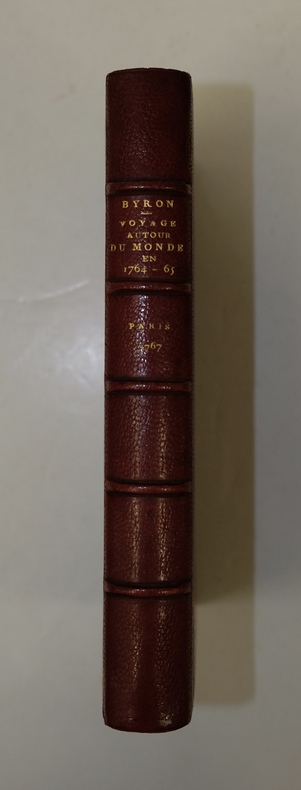
VOY915M1767, Molini, Paris. Première édition française. Trad. de Jean-Baptiste Suard. In-12, reliure plein maroquin rouge signée, dos à nerfs, roulettes encadrant les contreplats, filets sur chasse et coiffes, toutes tranches dorées. Figure en frontispice d'un couple de Géans pantagons. (2) ff., lxviij-335 pp. Infime enfoncement des coins. Intérieur très agréable voire frais malgré de rares épidermures sans incidence sur le texte. Mors du premier plat très légèrement marqué.
23482Journal de la littérature et des beaux-arts, 2e série, tome 2. Paris, 1839,2eme SÉRIE, TOME 2, 1839,nov. 1838 - avr. 1839. Paris: Bureaux de l’Artiste, 1839. First edition. 4to.contient Jules Janin, « Le Daguerotype »p 145 à 148,Georges Sand le dernier sauvage roman, etc,texte à 2 colonnes .IN FOLIO demi basane à coins,dos lisse romantique orné,tranches marbrées,366p.,33 lithographies et eaux fortes ht reliées in fine avec rousseurs,texte frais ,rare complet.
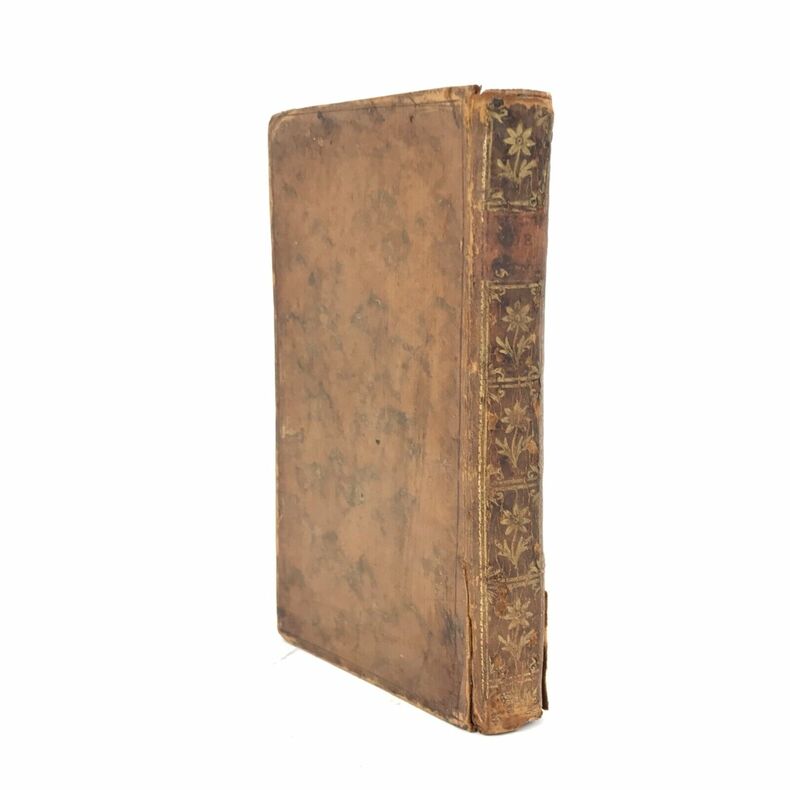
1754PHO-1551Lyon, chez les Frères Duplain, 1754 ,1 volume in-12 (14 x 8 cm), veau marbré (reliure de l'époque), dos lisse orné, filet à froid encadrant les plats, filet doré sur les coupes, tranches rouges, xxviii-233-[1] pages .Coins usés, charnières fendues, coiffes découvertes, rares rousseurs, manque la pièce de titre.
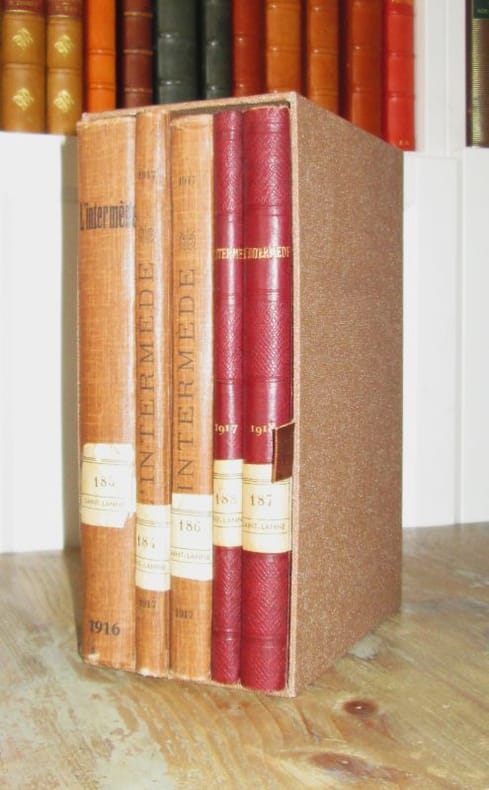
33644Collection complète. 5 vol. in-8 reliés sous emboîtage. Du n° 1, 23 janvier 1916-n° 85, 21 novembre 1918 au n° 85. .Le n° 15 (16 juillet 1916) a été interdit : il a été remplacé par un n° 15 bis daté du 19 juillet. La suspension entre le 2 avril 1917 et le 6 octobre 1917 est expliquée dans le n° 48 : de nombreux départs du camp (dont Pierre Saint-Lanne qui est parti à Constance). Cest lexemplaire de Pierre Saint-Lanne avec sa signature en 1ère page du 1er volume et son étiquette imprimée, collée au dos de chaque volume. Directeur littéraire : Pierre Saint-Lanne, Directeur sportif : André-Gérard Marchant. Textes de Maurice Béguin, Jean-Paul Berty, Henri Borel, G. Boulard, William Clochard, Sergent Combes, René Duchemin, Septime Gorceix, Claude Pellegrin, François Pellegrin, André Pons, Pierre Saint-Lanne, Charles Soulas. /// Dans la revue Les Archives de la Grande Guerre, Septime Gorceix présente ainsi LIntermède : « Une des plus singulières manifestations de la vie des camps en Allemagne, fut léclosion de journaux rédigés en français par les prisonniers. Envoyés dans les pays neutres et en France, ces feuillets dexil pouvaient présenter la captivité sous un aspect souriant et servir de témoignage contre la campagne menée par la presse de lEntente. Ce fut certainement en vue de cette action de propagande que le Gouvernement Allemand autorisa leur publication. Mais le piège était vraiment trop grossier. Les prisonniers français, malgré les efforts de la Censure, surent défendre leur indépendance de pensée et de sentiment. Un des journaux accueillis avec la plus grande sympathie par les familles françaises et la presse parisienne fut lIntermède, journal hebdomadaire du Camp de prisonniers de Galgenberg, à Würzburg, en Bavière, qui, sous le format dune revue, parut, avec quelques interruptions, du 23 janvier 1916 jusquà larmistice. [] » - On Joint en sus : 11 pages extraites de la revue Les Archives de la Grande Guerre contenant sous la signature de Septime Gorceix un article intitulé : « LIntermède, journal dun camp de prisonniers en Allemagne. » Cest lhistoire du journal et en particulier du n° 15 interdit ; Le manuscrit de « À nos morts », signé Sergent Combes, publié dans les n° 3 et 4 ; 3 programmes de récréations données au camp de Würzburg en 1916 ; 1 programme de lOrchestre symphonique des Internés alliés donné à Vevey le 18 septembre 1917 ; 2 croquis humoristiques de guerre, signés Dunand ; 1 coupure du Mercure de France (1er octobre 1916) signalant LIntermède ; les n° 34 à 47 en double, reliés en 1 volume.- . RARE.
12251<p><b><i>The Countryman</i></b> is the only newspaper known to have been published on a Southern plantation. J.A. Turner was the owner of the Turnwold plantation and editor of the newspaper. This issue features a full-page editorial titled "God Bless Our Southern Women!" which extolled their virtues during wartime. Also of interest is a full page devoted to "Teaching Negroes to Read." The author of the piece was quite clear in his views of educating slaves: "Negroes are incapable of education and it will be a waste of our time and resources to attempt to confer it upon them…"</p><p>Joel Chandler Harris author of the Uncle Remus Brer Rabbit and Brer Fox stories was employed as a printer's apprentice at Turnwold from 1862 at which time he was 16 years old to 1866. Indeed it was during his employment at Turnwold that he heard the stories told by slaves which served as the basis for his later successful literary efforts. This issue of <b><i>The Countryman</i></b> contains a brief item about a recipe for making black writing ink signed "J.C. Harris." </p><p>This issue of the paper comes from the personal collection of Joel Chandler Harris handed down to his youngest daughter Mildred Harris Camp then to her granddaughter from whom it was purchased by a prominent newspaper dealer and then by me. ICN 7579.</p><br /><br />