1 478 résultats
138112aafFribourg, Academic Press / Göttingen, Vandenhoeck & Ruprecht, 2014, gr. in-8vo, X + 440 p. + 5 leaves, orig. publisher’s illustrated red cloth. Spines sunned, else a fine set.
138199aafFribourg : Acad. Press / Göttingen : Vandenhoeck & Ruprecht, 1996, gr. in-8vo, 337 S. + 6 Bl., ill., rosa Original-Pappband, / orig. hardcover. Neuwertig.
Very Good German Paperback. Roy. 8vo. (24 x 17 cm). In German. 20 p., iv numerous b/w plates (Tafeln). Ein Weiteres Sultansbild von Gentile Bellini aus russischem Besitz. A study on Gentile Bellini, (1430-1507), was an Italian painter of the school of Venice. He came from Venice's leading family of painters, and at least in the early part of his career was more highly regarded than his younger brother Giovanni Bellini, the reverse of the case today. From 1474 he was the official portrait artist for the Doges of Venice, and as well as his portraits he painted a number of very large subjects with multitudes of figures, especially for the Scuole Grandi of Venice, wealthy confraternities that were very important in Venetian patrician social life. In 1479 he was sent to Constantinople by the Venetian government when the Ottoman Sultan Mehmed II requested an artist; he returned the next year. Thereafter a number of his subjects were set in the East, and he is one of the founders of the Orientalist tradition in Western painting. His portrait of the Sultan was also copied in paintings and prints and became known all over Europe.
Very Good English Original gold-tones albumen photograph from 'Holy Land pictures', London, 1870. Oblong folio. (30,5 x 38 cm); photographic image size: 15x20 cm. Descriptive text in English ( Baalbec, and the Lebanon range. This city may possibly have been built by King Solomon. "And Solomon built Balalath (Baalbek) and Tadmor in the wilderness (Palmyra)", I Kings ix, 18.). Frank Mason Good, born 1839 in Deal, Kent, began his photographic career as an assistant to photographer Francis Frith. Good is known to have been active during the 1860s and 1870s. He lived most of his life at Phoenix Green, Hartley Wintney, (and died there on 28th June 1928) but had studios in London and Brighton. In 1870 he married Margaretta Teape at St Mark, Goodman's Fields. Following Margaretta's death (on 29th December 1904) he married his second wife, Jessie Emily Waghorn, in 1906, at Hartley Wintney. He is best known for his stereographic photographs of the Near East, and it was Frith who sponsored Good's first trip there. Other geographic locations captured by Good include Spain, Greece, and the Isle of Wight. Frank Mason Good is best known for his series of views of the Middle East taken on four separate tours of the area in the 1860s and 1870s. He first traveled to Egypt as an assistant to Francis Frith in late 1857. He joined the Photographic Society in 1864, and in 1880 served as a judge of its annual exhibition. He lived at Hartley Wintney, Winchfield, Hampshire.
Very Good English Original gold-tones albumen photograph from 'Holy Land pictures', London, 1870. Oblong folio. (30,5 x 38 cm); photographic image size: 15x20 cm. Descriptive text in English. (Nazareth, from the East, with the Well of the Virgin. In this neighborhood, our Lord and Savior Jesus Christ spent nearly thirty years of his life: And over these "Sacred Acres" often roamed "Those blessed feet that once were nailed, for our advantage to the bitter cross.".). Frank Mason Good, born 1839 in Deal, Kent, began his photographic career as an assistant to photographer Francis Frith. Good is known to have been active during the 1860s and 1870s. He lived most of his life at Phoenix Green, Hartley Wintney, (and died there on 28th June 1928) but had studios in London and Brighton. In 1870 he married Margaretta Teape at St Mark, Goodman's Fields. Following Margaretta's death (on 29th December 1904) he married his second wife, Jessie Emily Waghorn, in 1906, at Hartley Wintney. He is best known for his stereographic photographs of the Near East, and it was Frith who sponsored Good's first trip there. Other geographic locations captured by Good include Spain, Greece, and the Isle of Wight. Frank Mason Good is best known for his series of views of the Middle East taken on four separate tours of the area in the 1860s and 1870s. He first traveled to Egypt as an assistant to Francis Frith in late 1857. He joined the Photographic Society in 1864, and in 1880 served as a judge of its annual exhibition. He lived at Hartley Wintney, Winchfield, Hampshire.
Very Good English Original gold-tones albumen photograph from 'Holy Land pictures', London, 1870. Oblong folio. (30,5 x 38 cm); photographic image size: 15x20 cm. Descriptive text in English. (Shechem (Nablus), between Ebal and Gerizim Shechem (Nablus), between Ebal and Cerizim: This was Abraham's first halting-place, Gen. xii. 6; Here Jacob settled and bought a piece of land, Gen, xxxiii, 19; Here Joshua assembled the people just before his death, Josh, xxiv; And here the ten tribes rebelled against Rehoboam, 1 Kings xii.). Frank Mason Good, born 1839 in Deal, Kent, began his photographic career as an assistant to photographer Francis Frith. Good is known to have been active during the 1860s and 1870s. He lived most of his life at Phoenix Green, Hartley Wintney, (and died there on 28th June 1928) but had studios in London and Brighton. In 1870 he married Margaretta Teape at St Mark, Goodman's Fields. Following Margaretta's death (on 29th December 1904) he married his second wife, Jessie Emily Waghorn, in 1906, at Hartley Wintney. He is best known for his stereographic photographs of the Near East, and it was Frith who sponsored Good's first trip there. Other geographic locations captured by Good include Spain, Greece, and the Isle of Wight. Frank Mason Good is best known for his series of views of the Middle East taken on four separate tours of the area in the 1860s and 1870s. He first traveled to Egypt as an assistant to Francis Frith in late 1857. He joined the Photographic Society in 1864, and in 1880 served as a judge of its annual exhibition. He lived at Hartley Wintney, Winchfield, Hampshire.
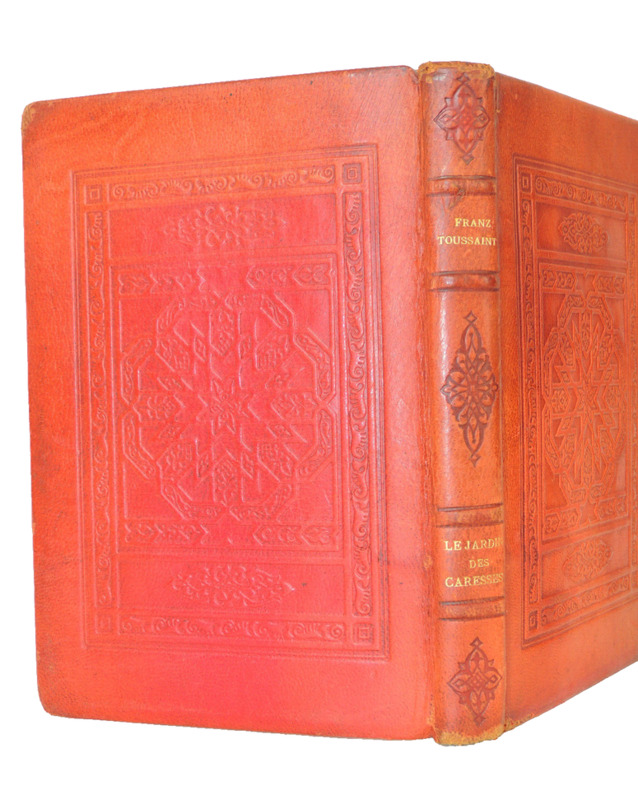
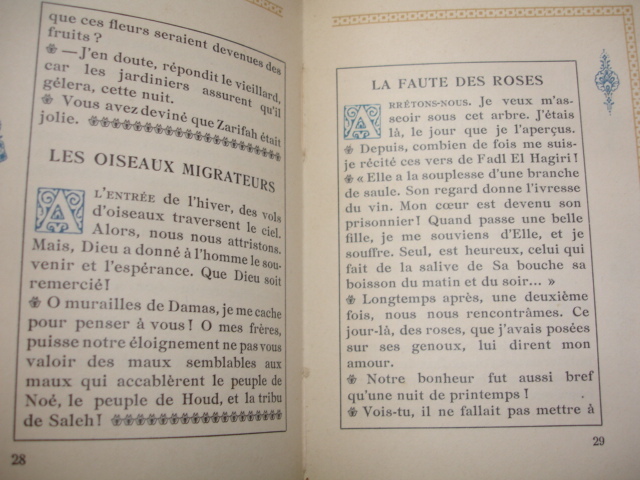
CZC-1596LE JARDIN DES CARESSES traduit de l'Arabe Frantz Toussaint miniature couleur en frontispice volume broché petit in-12, 160x110, 148pp, bon état Edition d'Art Piazza 1925
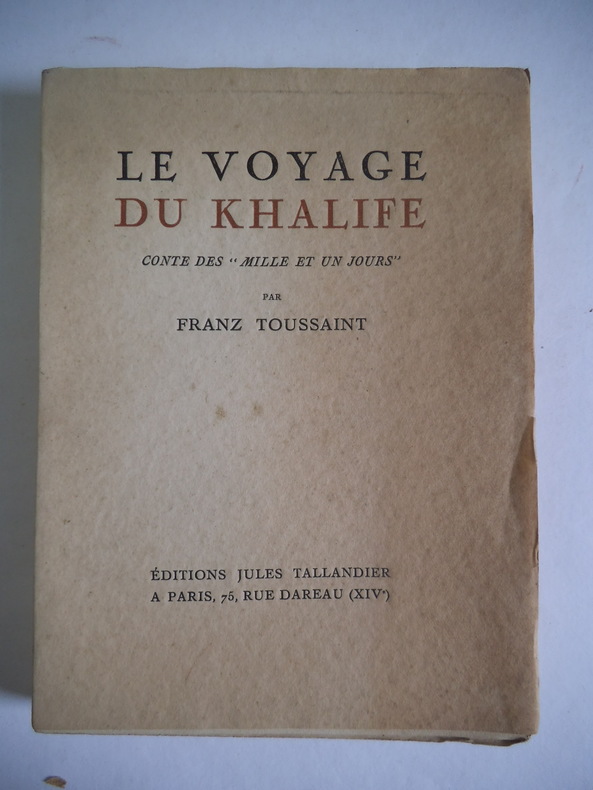
10706conte des mille et un jours. In 12 carré broché, faux-titre, titre, 155 pages, Editions Jules Tallandier 125 novembre 1927 collection les chefs d’œuvre de l’orient. Belle édition sur beau papier, dos légèrement insolé
CZC-12493Bel envoi autographe de l'auteur à Madame Rousseau, ces fleurs qui ne se faneront peut etre pas chez elle, puisqu'elle les a choisies.." très jolie reliure, mosaïquée au décors orientalistes, plein cuir, leg. frottements, 16x11, très bel exemplaire, 261pp. Couvertures conservées Édition d'art Piazza, achevé d'imprimé le 20 juin 1925. ref/12/4
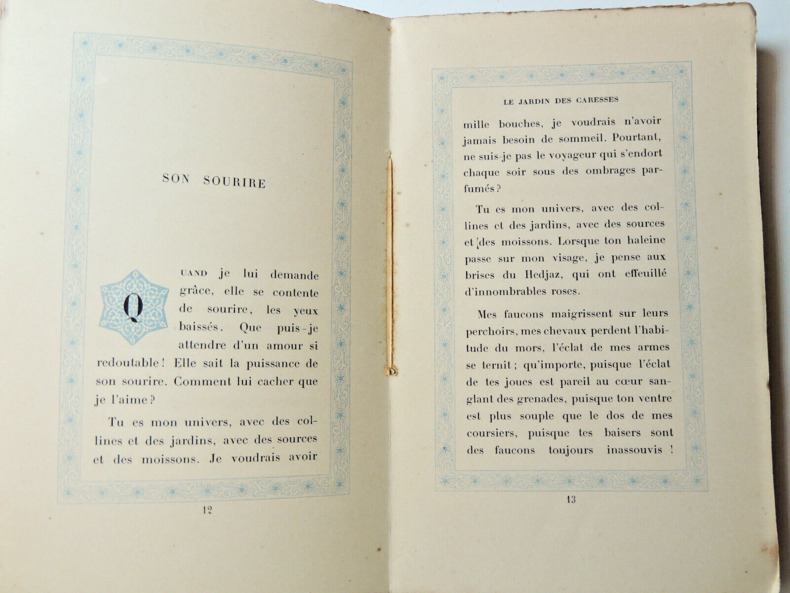
CZC-11517Anthologie Islamique, Arabie, Afganistan, Turquie, Géorgie, Egypte, Maroc, etc Écrivain et orientaliste français, Franz Toussaint (1879 - 1955) est l’auteur de nombreuses traductions de l’arabe et du persan, du sanskrit et du japonais. Sa traduction la plus connue, elle-même adaptée dans plusieurs autres langues, est celle du Rubayat d’Omar Khayyam. Né d'un père officier, Franz Toussaint passe son enfance à Albi et fait ses études au lycée de Toulouse où il a pour professeur Jules Marsan. Il séjourne avec sa famille à Lyon, puis fait son service militaire au Soudan. Vers 1910, il s'installe à Paris où il se lance dans la carrière littéraire et se lie d'amitié avec Ambroise Vollard, Jean Jaurès et Jean Giraudoux. Nombre de ses œuvres ont été éditées ou rééditées par les soins de Henri Piazza et somptueusement illustrées. Franz Toussaint est également l'auteur de scénarios de films muets. Ses poèmes orientaux ont plusieurs fois été mis en musique. vol. broché, contenu orné de frises et fleurons bleus, 16x11, très bel exemplaire, 138pp Édition d'art Piazza 1947 ref/164
CZC-11518Franz Toussaint (1879-1955) est l’un des représentants de la littérature orientaliste du début du XXème siècle. A la manière de Mardrus ou de Pierre Lou s, il traduit ou adapte des textes venus d’Orient en les parant des couleurs du rêve. Sa traduction la plus célèbre reste le Rubayat d’Omar Khayyam, mais il s’attaqua également à des œuvres de Saadi, le grand poète perse du Xème siècle, comme Le Jardin des Roses ou Le Jardins des fruits, des contes indiens et chinois. Dans son style, on retrouve l’Orient rêvé de la Belle Époque, lieu de mystère, de sensualité et de magie, comme dans ce Jardin des caresses, ode à l’amour. vol. broché, 20x13, très bel exemplaire, 261pp Édition d'art Piazza, ss date 1920 ref/164
CZC-11520Une petite anthologie de poètes chinois adaptés en prose, publiée en 1920, sous de somptueuses couvertures orientalistes. Écrivain et orientaliste français, Franz Toussaint (1879 - 1955) est l’auteur de nombreuses traductions de l’arabe et du persan, du sanskrit et du japonais. Sa traduction la plus connue, elle-même adaptée dans plusieurs autres langues, est celle du Rubayat d’Omar Khayyam. vol. broché 160x110, très bel exemplaire, 138pp Édition d'art Piazza 1947 ref/164
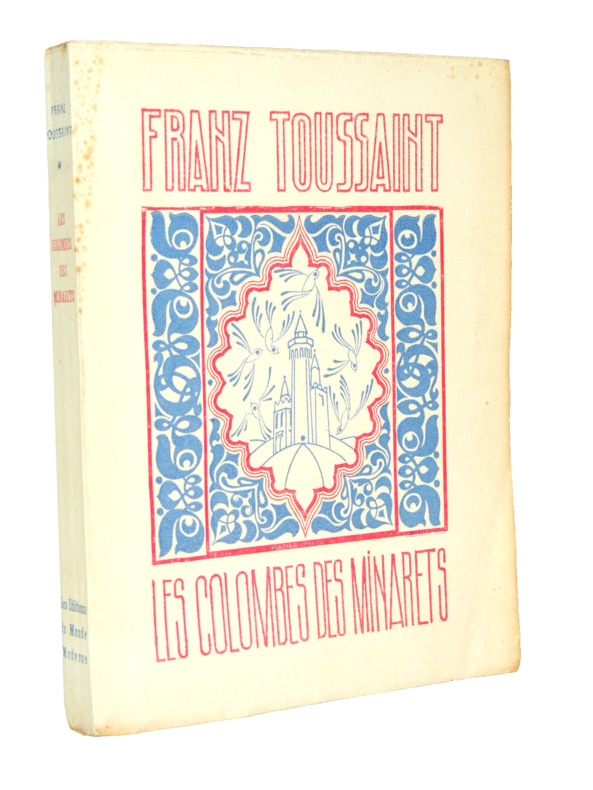
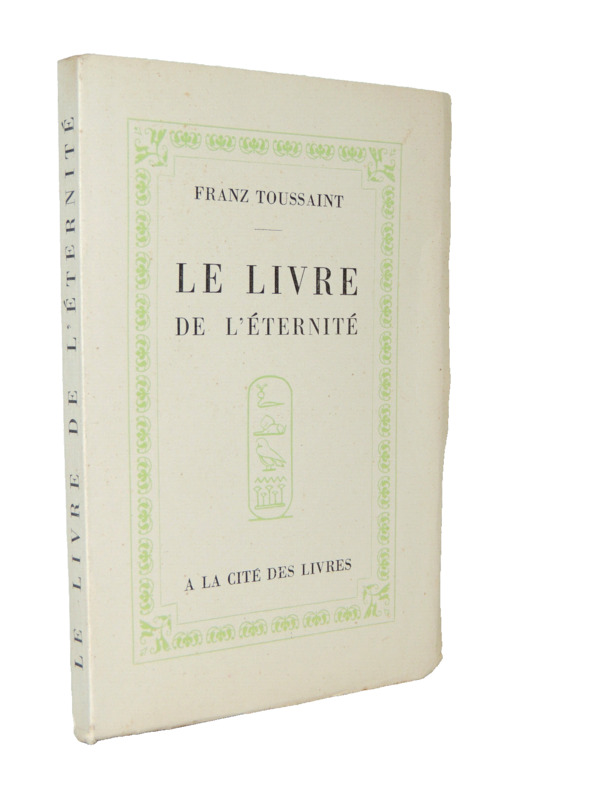
CZC-11519Le mensonge, le lotus, le tombeau, la révélation, le voyage Écrivain et orientaliste français, Franz Toussaint (1879 - 1955) est l’auteur de nombreuses traductions de l’arabe et du persan, du sanskrit et du japonais. Sa traduction la plus connue, elle-même adaptée dans plusieurs autres langues, est celle du Rubayat d’Omar Khayyam. vol. broché 160x110, très bel exemplaire, 101pp Cité des livres 1929 ref/164
New English Paperback. Pbo. 4to. (30 x 24 cm). In English and Turkish. 360 p., color and b/w ills. The exhibition highlights the orientalist trend in Polish painting, as well as drawings and graphic arts. The works in the exhibition cover a wide period from the 17th to the early 19th centuries. Among others, the exhibition includes drawings by Christian Kamsetzer of his Turkish travels, as well as oriental scenes by artists like Zmurko and Brandt. The artworks exemplify topics related to the Ottoman world, and to a lesser extent, the Near East and North African regions. One section of the exhibition is dedicated to Stanislaw Chlebowski, the court artist of Sultan Abdülaziz. Works by other artists who had visited Turkey, among them Jan Matejko, Waclaw Pawliszak, Jan Ciaglinski, and Jacek Malczewski, are also included. Selected from the collections of Polish institutions ranging from the National Museums in Warsaw, Kraków, Poznan, and Wroclaw, the University Library in Warsaw, to Lazienki Palace Museum, the exhibition brings together approximately 190 works. The apogee of Orientalism, which refers to a cultural current in Europe centred on an interest in the cultures of the East manifesting itself in art, architecture, music, literature, and the theatre, arrived in the 19th century, when a distinct Orientalist current sprang forth from academic painting, inspired first and foremost by the cultures of the Islamic countries of the Middle East and North Africa, as well as of Moorish Spain. In the specific case of Poland, interest in the Orient goes back to medieval times; a natural result of her geographic location, which rendered Poland particularly susceptible to influences from the East. To a large extent, this period in Polish history was defined by successive wars with the Ottomans, and it left an indelible trace in culture. A variety of equestrian types, generic skirmishes and great historic battles were depicted many times by various skilled artists, as well as Oriental characters, landscapes, and genre scenes -first and foremost of the harem. The latter subject matter, popular among audiences, was often taken up by painters who had never been to the East themselves. Exhibition catalogue presents works by the artists among them Jan Matejko, Waclaw Pawliszak, Jan Ciaglinski, Jacek Malczewski, and especially Stanislaw Chlebowski, the court artist of Sultan Abdülaziz, are included, and also sheds light on the artistic influences of Poland's cultural interaction with the East, different from the Western Orientalist approach, through history, diplomacy, battles and travellers.
In 16°, brossura editoriale illustrata, pp. 127, (5), con tavole fotografiche f.t. virate in seppia; buon esemplare, lieve mancanza al piede del dorso e strappetto alla testa del dorso. (ZC1/A) (ZC1/A)
London, Bernard Quatrich 1897. Fort et grand in 8 relié toile verte éditeur. 662 pages. Illustrations et cartes dépliantes. Bon état.
053624Paris Arcanes 1952 in 8 (19x14) 1 volume broché, 247 pages [1]. Préface d'André Breton. Introduction, bibliographie par Willy-Paul Romain. Collection " Humour Noir ". Edition originale collective, celui-ci un des 979 exemplaires nulmérotés sur châtaignier condat. Bel exemplaire
1576S.l., Chitra, 1930 ; in-16, broché.
138158aafFribourg Academic Press / Göttingen, Vandenhoeck & Ruprecht, 1999, gr. in-8vo, XVII + 383 S. + 25 plates, hellblauer Original-Pappband, / orig. hardcover.