2 720 résultats
2021RHOKHOK00drpTaschen 2021. Fine. Hokusai. Hokusai: Thirty-Six Views of Mount Fuji. Cologne Germany: Taschen 2021. 224pp. Illustrated. Folio. Pictorial cloth covered boards. Book condition: Fine. Enclosed in shrinkwrapped box. Taschen hardcover
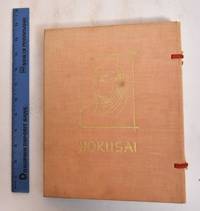
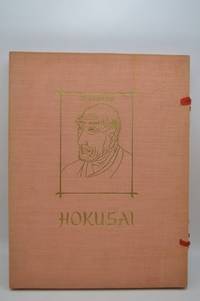
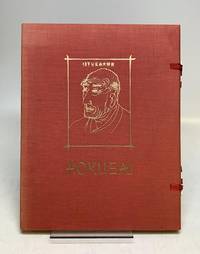
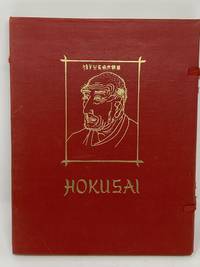
86336Prague Czech: Artia Undated. Stated Second Edition. String-bound. Very Good Plus / Good Plus slipcase. Large octavo 10 in. x 8 in. pp. 115. Illustrated with forty-eight color illustrations and several black and white illustrations. Printed and sewn in the Japanese style string-bound on double-fold paper. Previous owner's long inscription to half title page. Protected in a trifold hardback red slipcase of red cloth stamped with gilt Mt. Fuji image with two faux-ivory closure darts. Sunning and light rubbing to trifold cover; small dark stain to slipcover spine. Katsushika Hokusai 1760 - 1849 known mononymously as Hokusai was a Japanese ukiyo-e artist of the Edo period active as a painter and printmaker. His woodblock print series Thirty-Six Views of Mount Fuji includes the iconic print The Great Wave off Kanagawa. Hokusai was instrumental in developing ukiyo-e from a style of portraiture largely focused on courtesans and actors into a much broader style of art that focused on landscapes plants and animals. His works had a significant influence on Vincent van Gogh and Claude Monet during the wave of Japonisme that spread across Europe in the late 19th century. Artia unknown
ING9780878468669MFA Publications Museum of Fine Arts Boston. New. Special order direct from the distributor MFA Publications, Museum of Fine Arts, Boston unknown
1988102971Thames & Hudson London. 1988. Thames & Hudson London. 1988. Hardback with dust-wrapper. Very minimal shelf-wear to dust-wrapper which has slight remains of small price label to rear panel. hardcover
19894005906George Braziller 1989. Hardcover. Very good/Very good. Very good condition. First edition. Light shelf wear. Jacket in very good condition with small tears on front corners and a small chunk missing on lower back cover. George Braziller hardcover
1958207Frederick 1958. Hardcover. Near Fine/very good. Near Fine Condition Double uncut pages b/w illustrations 8vo; gray boards with rust cord ties. No visible defects. Red slipcase with title label very good condition wear to edges and corners. Frederick hardcover
1958289239New York: Frederick 1958. hardcover. very good. Color frontispiece profusely illustrated in black and white. 17 pp. introduction by Jack Hillier followed by 64 pages describing the plates. Tall 8vo grey pictorial cloth silk ties red board slipcase. Slipcase shows a little wear otherwise fine. Bound in the Japanese manner. Frederick Publications New York 1958. Very good .<br/><br/> Frederick unknown books
gh0nPrint. Good. No Binding. Approx 5"x7" hinged on an 8.5"x10" sheet. Obtained during the postwar Japanese occupation from the Tokyo shop of T. Sakai. unknown
Z1-Q-030-03536BNF. Used - Good. Ships from UK in 48 hours or less usually same day. Your purchase helps support Sri Lankan Children's Charity 'The Rainbow Centre'. Ex-library so some stamps and wear but in good overall condition. 100% money back guarantee. We are a world class secondhand bookstore based in Hertfordshire United Kingdom and specialize in high quality textbooks across an enormous variety of subjects. We aim to provide a vast range of textbooks rare and collectible books at a great price. Our donations to The Rainbow Centre have helped provide an education and a safe haven to hundreds of children who live in appalling conditions. We provide a 100% money back guarantee and are dedicated to providing our customers with the highest standards of service in the bookselling industry. BNF unknown
1898220134London: Unicorn Press 1898. First. hardcover. fine. Illustrated. Thin 8vo printed boards. London: Unicorn Press 1898<br/><br/> Contains an essay on Hokusai by Charles Holmes and two plates. Also contains A Note on Piranesi by L.A.Corbeille with 3 plates and contributions by Laurence Housman & Laurence Binyon. Very fine copy.<br/><br/> Unicorn Press unknown books
1968SKU2020023626Heibonsha Ltd 1968. Hardcover. Very Good/No Dustjacket as issued. . In Very Good condition. In Very Good slipcase which has some light rubbing and edgewear. Thirty-six Views of Mount is a series of landscape prints by the Japanese ukiyo-e artist Hokusai 1760–1849. The series depicts Mount Fuji from different locations and in various seasons and weather conditions. Uncommon in this edition. Heibonsha Ltd hardcover
196825329Heibonsha Ltd. Publishers 1968. hardback. Very good condition in cloth in a slipcase pen date & some fading to the spine. Heibonsha Ltd., Publishers hardcover
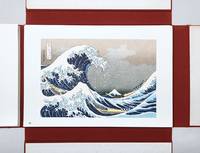
1970190192Tokyo: Kyodo News Agency 1970. A global icon An attractive homage to Hokusai's famous ukiyo-e series including the famous Great Wave Off Kanagawa as well as the supplementary ten views. Considered Hokusai's masterpiece the Thirty-Six Views remain the defining representation of 19th-century Japonism. The Great Wave is the most widely reproduced non-Western artwork in the world. The Kyodo News Agency periodically released lithographed sets of the Thirty-Six Views in the post-war period when interest in Japanese culture and art was booming. This set is pleasingly fresh retaining all the lustre of Hokusai's splendid originals. 46 lithographed prints 257 x 372 mm each tipped-in on 299 x 441 mm window-frame folder 2 printed sheets of text 305 x 450 mm. Housed in original red cloth folding case 311 x 458 x 43 mm lined with silver-flecked paper title label on front panel white bone toggles. Prints bright and well-preserved text sheets lightly toned and creased. A near-fine set in the very good case with some sunning wear at extremities. hardcover
1917277575Tokyo: Yoshikawa Kobunkan 1917. Reprint. paperback. near fine. Hokusai. 3 volumes in decorative wrappers with paper labels string-bound in Japanese Style. 4to Illustrated with 46 fine color reproductions printed by x. Tokyo: Yoshikawa Kobunkan 1917 or 1918. A handsome reprint of the 1803 classic original. Near fine and complete but lacking the original folding box.<br/><br/> Yoshikawa Kobunkan unknown books
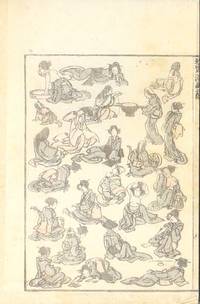
187558436Tokyo: piblisher not identified 1875. Later reprinting fukurotoji binding 2 29 actually 28 one leaf numbered 1 and 2 leaves; likely original yellow paper wrappers; covers worn title label perished binding string snapped light soiling internally fair with a fair impression. The Hokusai manga was a series of books that published a collection of sketches and studies from Hokusai. They were immediately and immensely popular and ran for 15 volumes. This edition was printed posthumously and the original blocks appear to have been worn down somewhat. It contains images of dragons saints landscapes plants and animals both real and mystical. <br/><br/> [piblisher not identified] unknown books
1980181933U.S.A.: Seisei Doh 1980. Slipcased. VG/ book cover has minot wear. Slipcase shows wear and shelf damage top coming unglued. Off white cloth boards with black spine. Black color illustrated slipcase. 15 pages 46 unnumbered pages of plates : chiefly color illustrations. On double leaves traditional oriental format. Seisei Doh unknown books
1955185012Prague Czechoslovakia: Artia 1955. Softcover. Good front cover of portfolio & spine sunned; various scuffs & marks; edge-wear. edge-wear to book w/ creasing to cover edges. pgs tanned; clean. pink porfolio w/ gilt portrait & printing; ivory-like clasps; illustrated pastedowns. 115 pg folded sheet string-bound book w/ 48 color illustrations; one laid-in plate. A nice copy. Woodcuts taken from the photographs of renowned antiquities lensman Werner Forman. Artia unknown books
23014201Japan circa 1868. Gold brocade green cloth covers clean accordion folded all edge silver gilt album: 17 x 25 cm. 12 double-page prints opens to 34 x 25 cm. Oban size with illustrated introductory page. EXCEPTIONALLY RARE EXAMPLE ! . . . . ONE OF HOKUSAI'S MOST FASCINATING EROTIC BOOKS . . . PROFUSELY COLOR ILLUSTRATED WOODBLOCK BOOKS . . . REVEALING ALL ASPECTS OF CARNAL LOVE-MAKING . . KATSUSHIKA HOKUSAI 1760-1849: . Hokusai was one of Japan's most celebrated loved and famous painters and woodblock print artist of the Edo period. He was fondly and commonly known as the "Mad Man on Painting." . The original was work printed around the late 1810's it was unsigned several variant editions are known most copies were lost or now unaccounted for. It is part of Hokusai's erotic trilogy. . This posthumous edition has been fashioned after the period original. It was meticulously woodblock carved and color-printed with utmost professional skill by the best artisans of the time. It has impeccable color impression and registry. . The book was printed in some twenty-odd different colors each color printed by a different woodblock. . An interesting proof of age is found on page six the rape scene. The girl's red under-Kimono was printed from a color made from finely ground iron oxide. The red has now turned to an iron-red patina with a dark purple hue. This common color was used at the beginning of the Meiji period 1868-1912 for most solid reds. Humidity content determines the amount of time it takes to give this patina on the average about 100-135 years for this reaction to change the properties of the iron forcing it to oxidize and change into a marvelous color and affect see scans posted to our website. . Although the book has a title slip it was intentionally left blank due to the subject being designated as "contraband" and banned by the Shogun as well as in the early Meiji era 1868. . ABOUT JAPANESE EROTIC ART: . A truly magnificent and unusual example of early Meiji polychrome printing. Most of the Shun Pon erotic books commonly call "Erotic Pictures of Spring" of this period show small images drawn from a distance with room decorations food bedding flowing robes furniture and outside scenery. . Shunga & Shunpon Erotic pictures & books reflect the "awakening" of human sexual desire after a long winter's sleep. Sex became an "art" used to stimulate enhance and evocative of love making. . THE CONTENTS: The work starts out with a double-page showing sliding Fusuma doors an invitation to voyeurism. The doors are subtly decorated giving no clue to the true nature of the contents useful for coercing young virgins to have a look.also the reason for no title slip. Each of the subsequent 12 double pages are devoted to the real subject of this book. The joy art & pleasure of love-making. . From the beginning of recorded time the Japanese were not a prudish people. In fact they held strong beliefs in and worship of inanimate sexual objects such as trees rocks and other things that showed a natural resemblance to the genitalia. These objects were collected & placed in shrines. Later some were carved from wood and stone and placed in special "fertility shrines" in Japan. Barren women often visited these shrines offering prayers to the Gods for fertility and evoked charms. Stories passed down over the centuries that some of the Monks or keepers of these fertility shrines or their priests were willing "assistants" of these "Gods" and gladly inseminated such vulnerable women. . The Japanese had an affinity with the natural expression of passion and lust. Rape of women alone along a pathway or in their own room was not uncommon. While some may truly object others feigned objection while in ecstasy see page #6. The book therefore beings when with point in mind. . Page one shows a very young woman. She has mounted an unseen suitor while she sits upon his gigantic penis her eyes are closed in the throes of ecstasy her lips are red with excitement and a very pale but obvious pink flush envelops her face. On the floor is the usual package of Chirishi or toilet paper used to wipe the aftermath. . The male's organ is huge and the veins are blue and popping her very excited vulva takes on the color of deep red and faint purple displaying the maximum color of excitement. While fully clothed her Kimono is open just enough to accomplish the act of love. To the Japanese partially clothed women with their genitals exposed was more erotic than a full nude.after all they did mixed public bathing for centuries. . Page two shows a couple. She is almost nude with just her red under Kimono draped over her stomach while he exposes his organ as he enters her from the "X" angle he cradles her from behind while holding her left breast. She pulls him from behind the neck to be close enough to share a tongue kiss rarely shown in Japanese prints. He inserts his tongue into her willing mouth as she holds his cheek fast. Her long and flowing hair is still tied with a black ribbon at the bottom suggesting that she is some kind of royal person. She also shows a pink flush to her mouth and vaginal lips. . Page three shows newlyweds. The woman still wears the traditional head gear of a bride. She holds a package of Chirishi in her lips ready for the flood of love juices that are already flowing out. The man enters her from the top while she willingly spreads her legs wide open. . Page four shows the woman on top in a contortion revealing the organs involved in love-making. . Page five shows the influence from an earlier Utamaro classic erotic work. The woman is on the bottom pulling the covers over her lover's bare back-side while they are making love in the winter. Her wooden platform pillow is ready as the are hidden from view by a small folding screen to keep cool the draft out. Her vermilion-red under Kimono is tangled with her outer Kimono. . Page six shows a ruffian raping a young girl. He is likely a common coolie all he wears is a "Fundoshi" or loin cloth which was easily moved to reveal his huge and erect penis. He has tumbled this innocent girl by pulling her foot from under her; then with his other hand inserts his organ into her. She is pushing his cheek away and attempting to pull his hand off her foot. What is ironical is that her face is flushed pink and her face shows no frown of rejection but her eyes are almost closed as she secretly anticipates the oncoming pleasure. For sure she must resist being innocent young coquettish and demure in an attempt to save face. It is important to note at this time that there exists a most similar print by Utamaro showing this very scene. Surely Hokusai was so impressed that as a tribute to Utamaro he utilized this stunning image in his own work the old adage "Copying is the greatest compliment." See more below regarding page six. . Page seven shows an unabashed nude couple enjoying a fully the pleasure of love-making sans restraints. In fact this must the a second or third time of love-making as noted the voluminous as the amount of expended Chirishi. It has been thrown about the room. It is known in Japan that after the first round of love-making if the man can wipe up love juices promptly enough a new erection can be achieved. The the drying of vulva will give the next round of love-making a new and more pleasurable sensation. . In this view the man enters from the rear while holding her fast his right foot is set and placed for maximum traction! . Page eight shows a couple engaged in love-making. The woman on top but with her back side facing him. Vis-a-vis each other to observe each other thus increasing the erotic passion. A tiny bit of silver color has accented her Kimono highly usual in any woodblock print. Of special note her toes are curled down in a fit of ecstasy! An exhibition of Hokusai humor ! . Page nine shows one of the most fascinating of all prints in this series. In the traditional "sixty-nine" position he has his tongue in her very excited and swollen purple-red vulva. She tries with difficulty to contain his very large penis with a dark pink-purple flush. Again this woman curls her toes in painful-erotic-ecstasy. Her expression shows her eyebrows in a frown as she enjoys the agony and ecstasy of wonderful carnal pleasures. . Page ten shows a mature couple nude she holds the tie-died head band in her mount to silence her cries of joy while she embraces her lover's neck. The spectacular view of the genitals fully engaged is stunning. The penis has its veins popping out while the lips of her vulva are flushed bright red the love juices flowing out. Her breasts are pointed downward revealing that she has given birth previously. Her her toes are curled in a passionate dream of pleasure. The pair both display a pink flush to their faces with very bright red lips. It is not common to see this in men. . Page eleven shows a couple preparing to make love. The man is on top displays a very large and erect penis while he sucks on her upturned breast. She is being manipulated to move her left leg up so he can then enter her open and eager waiting vulva. She clutches a handful of Chirishi in preparation for the flood of love juices. Her eyebrows are shaved with a faint pink flush just above her eyes has emerged from the excitement. . Page twelve shows a most unusual scene in the world of Shunpon. While lesbianism is not unusual in Japan openly depicting girls at such play are. This shows two ordinary nude women likely bored or abandoned by their male suitors have taken to the mutual pleasure of dildo play. One wears a huge and black penis tied about her waist. The other reveals her open and moist vagina clutches the penis while holding a few sheets of Chirishi. The other opens a tiny container with some sort of stimulating potion or lubricant. This will either be applied to the dildo or her partner's vagina. It seems clear the two girls have already shared this joy before. The girl grasping the dildo penis has already applied it to her partner and is now awaiting her turn to be "penetrated." . ATTRIBUTION: . The erotic book begins as usual without artist's name or title. By stylistic analysis and compared with many other signed Hokusai works its easy to understand who the artist was. . It is a long-standing tradition of most famous Japanese artists of the 17-19th centuries to create and discretely distribute banned erotic books and prints against Shogun laws. . Erotic books and prints were a quick cash resource for hard pressed artists regardless of how famous they were. Most all famous artists drew painted and provided artwork for woodblock-printed erotica. These earned immediate cash and the Shogun had a nearly impossible time proving guilt with unsigned materials. . ABOUT SHUNPON/BON & SHUNGA: Books of this erotic subject quality nature and rarity are seldom found on the open market. Shun=spring; Ga=picture; Pon/Bon=book. . Superbly colored in pastels prior to the very garish and bright advent and use of aniline dyes imported from Europe. Because Hokusai had lived during the life-time of Utamaro 1754-1806 he was influenced by this great master. . The most vivid example of this influence is found in number six above the rape scene. The original inspiration for this print was done by Utamaro in his most celebrated erotic album: UTA MAKURA: PILLOW OF SONG dated 1788. . Of this print Dr. Lane stated: "Utamaro's masterpieces.most impressive .series of twelve prints .this is one of the most dramatic scenes: a plebeian maiden being attacked by a middle-aged laborer and putting up stiff resistance" See Lane below. . The original Utamaro shows the exact same action with nearly identical composition; the man suppresses the girl by holding her left leg while she pushes his cheek away with her right hand.clearly Hokusai was so impressed with this superb composition and subject that he "borrowed" it in his own masterpiece. Note how even the man's "Fundoshi" loin cloth is in the exact format draped over his stiff penis. This is no coincidence ! This series and a few similar prints illustrated are found in Evans see below. . A RARE stunning and fantastic book of color erotica by Japan's master painter. . CONDITION: The over all condition is quite good with very minor amount of the usual period foxing. By and large this does not greatly detract from the over all images. Some images are in fine condition. On page #11 the print is about 5 mm. shorter at the bottom again this does not greatly affect the image. A small faint amount of transfer from the black is evident with a common result of books being folded and closed. . Overall the work is quite lovely and the viewer is exceptionally impressed by the fascinating and high quality of the subject images and drama. Please review photos posted to our website. . REFERENCE: . LANE Richard: IMAGES OF THE FLOATING WORLD p.140 plate 140 for a similar example. . --. EROTIC THEME IN JAPANESE PAINTING: THE EARLY SHUNGA SCROLL. . --. GREETINGS FROM EROS ! HOKUSAI AND THE EROTIC CALENDAR-PRINT. Japanese Title: HATSU HARU NO IRO GOYOMI. EVANS Tom.: SHUNGA: The Art of Love in Japan p.249 for text he text see illustrations: 6.83 6.85 and 6.86; 6.88 is an exact match for our number 9 above. BEURDELEY Michel. et al.: EROTIC ART OF JAPAN: The Pillow Poem. GICHNER Lawrence E.:EROTIC ASPECTS OF JAPANESE CULTURE. ILLING Richard.: JAPANESE EROTIC ART: And the Life of the Courtesan. UHLENBECK Chris. ed. et al.:JAPANESE EROTIC FANTASIES: Sexual Imagery of the Edo Period. WINZINGER Franz.: MEISTERWERKE DER EROTISCHEN KUNST JAPANS. MASTERWORKS OF JAPANESE EROTIC ART. RAWSON Philip.: ORIENTAL EROTIC ART. GROSBOIS Charles.: SHUNGA IMAGES OF SPRING: Essay on Erotic Elements in Japanese Art. DOUGLAS Nik. et al.: THE PILLOW BOOK: The Erotic Sentiment and the Paintings of India Nepal China & Japan. SHIBUI Kiyoshi.: UKIYO-E NAISI. BIBLIOGRAPHY OF JAPANESE EROTIC ILLUSTRATED WOODBLOCK PRINTED BOOKS. Modern Reading: UKIYO-E NAISHI . . hardcover books
1955SKU1036298Artia 1955-01-01. hardcover. Very Good. 0x0x0. Artia; Prague 1955. Hardcover. Introduction by Joe Hloucha. 48 colored photographs reproduced from photographs by W. Forman. Text in English. A Very Good string-bound and double folded sheets inserted in a three-panel portfolio the binding is sturdy and intact pages are age toned and some handling/scuff marks to text block edges the three-panel cardboard case is a skin color cloth binding with gilt illustration and gilt lettering on front board and gilt emblem on other two panels some sunning to cloth buckram two faux ivory bone clasps are present and intact. A nice clean and unmarked copy. 8vooctavo or approx. 8 x 10.5 115pp. color and b&w illustrations. We pack securely and ship daily w/delivery confirmation on every book. The picture on the listing page is of the actual book for sale. Additional Scans are available for any item please inquire. Artia hardcover
1955311733Prague: Artia 1955. hardcover. fine. Illustrated with 48 colored woodcuts and additional black & white drawings. Tall 8vo color printed wrappers bound Japanese-style on folded paper. Folding cloth pictorial slipcase with ivory clasps sunned and with a few stains. Prague: Artia 1955. Fine in very good slipcase.<br/> <br/> Artia unknown
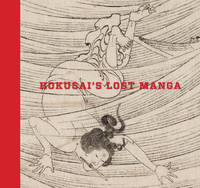
201673741E-239: MFA Publications Museum of Fine Arts Boston. Very Good. 2016. Hardcover. Hardcover. 4to. Published by Museum of Fine Arts Boston MA. 2016. 248 pgs. Illustrated. First Edition/First Printing. Bound in 1/2 red cloth and paper covered boards with titles present to the spine and front board. Boards have light shelf-wear present to the extremities. No ownership marks present. Text is clean and free of marks. Binding tight and solid. Nearly 200 years after Hokusai finished the drawings for this charming illustrated book this intriguing early Japanese manga is finally being published for the first time thanks to a curator at the Museum of Fine Arts Boston. Rediscovered in an old box in the storage rooms of the museum these Hokusai drawings should have been used to create the woodblocks for printing a continuation of his Manga series. But although scholars have found an advertisement announcing the title there is no record of the book ever having been produced. ; 8.5 X 1.2 X 8 inches; 248 pages . MFA Publications, Museum of Fine Arts, Boston hardcover
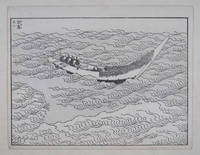
44864ca. 19th century. Later printing. Loose leaf. near fine. Oblong chuban yoko-e-format. B/w woodblock print. 8 x 10.5". The print originates from the 2nd volume of the 3-volume set "One Hundred Views of Mount Fuji" originally published 1834-1835 and considered to be among the artist's greatest achievements. The image depicts the oarsmen of an 'oshiokuri-bune' row boat on a turbulent sea. As implied by the title of the print the faint distorted reflection of Mt. Fuji can be seen in the swell to the bottom left side of the boat. Unlike the the format of the image as it appears in the book as a 2-part diptych this print is in one part and thus appears to be a later printing. Many scholars consider this image to be the sequel or companion piece to the world-famous masterpiece "The Great Wave off Kanagawa" which the artist created not long before. It has been commented that if turned upside down the print can be seen as an alternate version of the "Great Wave" where the wave the sea and the mountain have merged. Text in Japanese printed in the upper left corner of the print.<br /> <br /> The print is in near fine condition and housed in modern protective mylar. Reference: National gallery of victoria Austrailia. unknown
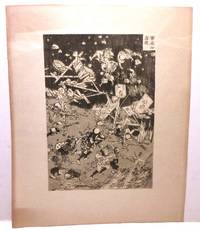
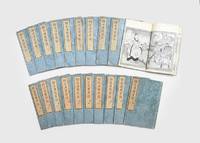
1845186060Edo: Yamashiroya Sahee and 4 others 1845. An ancient Chinese war for early modern Japanese readers First complete edition. This historical novel is a semi-fictional retelling of the Chu-Han Contention with depictions of peasant massacres put alongside fantastical scenarios of heroes fighting giant snakes and dragons. Hokusai illustrated this work in the final years of his life displaying the full range of the expressive skills he had honed for decades. After the fall of the Qin dynasty in 206 BC the empire split into 18 kingdoms the most powerful of which were the Western Chu led by Xiang Yu and the Han led by Liu Bang. The two rivals fought over four years culminating in a last stand at the Battle of Gaixia where the Chu leader committed suicide after a total Han victory. These legendary warriors and their battles were immortalized through literature including the Chinese work Xihan tongsu yanyi. This present work is Tamenaga Shunsui's 1790-1844 translation of that novel for the Japanese market with Hokusai's illustrations "providing an appealing vision of a foreign country unknown to readers" Marks p. 195. It is a blend of history and fiction where the real figures of Xiang Yu and Liu Bang perform semi-mythical acts of bravery and strength. One notably gory scene shows Xiang Yu's men killing 5000 peasants loyal to the Qin dynasty. The soldiers on the left behead two captives while their fellow soldiers shovel an overwhelming number of heads into baskets to be carried away. Part 1 the first ten volumes was initially released in 1843. It was then followed by Part 2 in a further ten volumes two years later. At this time the first part was also reissued as was likely the case with this set. It has a variant colophon with Yamashiroya listed as the most important publisher. Other copies instead rank Chojiya Heibee first. 2 parts in 20 vols octavo. Woodblock illustrations throughout; text in Japanese inner wrapper title pages of vols I and XI printed on yellow paper. Original grey-blue patterned paper wrappers renewed white thread fukuro-toji binding spine ends capped in grey silk printed paper labels on front wrappers. Housed in two 20th-century blue folding cases. Bindings weathered some small abrasions to wrappers paper label of vol. I lacking contents bright a few ink marks in vol. VII f. 15v.: a very good set folding cases repaired at joints one toggle detached. Hillier The Art of Hokusai in Book Illustration p. 256. Andreas Marks Japan's Manga Revolution: From Painted Scrolls to Comic Books 1680-1920 2025. unknown
18082110502150903230Soshichi Nishimura and other editions 1808. Soft Cover. Fine. Number of books: 5 Soshichi Nishimura and other editions paperback
B9781166630553New. unknown