43 résultats
18202111902160200401Kakumaruya Jinsuke Eirakuya Toshiro Minoya 1820. Soft Cover. Fine. Number of pages: 58 pages Size: 26.8cmx18cm 58p Number of books: 1 Kakumaruya Jinsuke Eirakuya Toshiro Minoya paperback
18062110502150908524Izumi-shi-ban 1806. Soft Cover. Fine. Number of books: 1 Izumi-shi-ban paperback
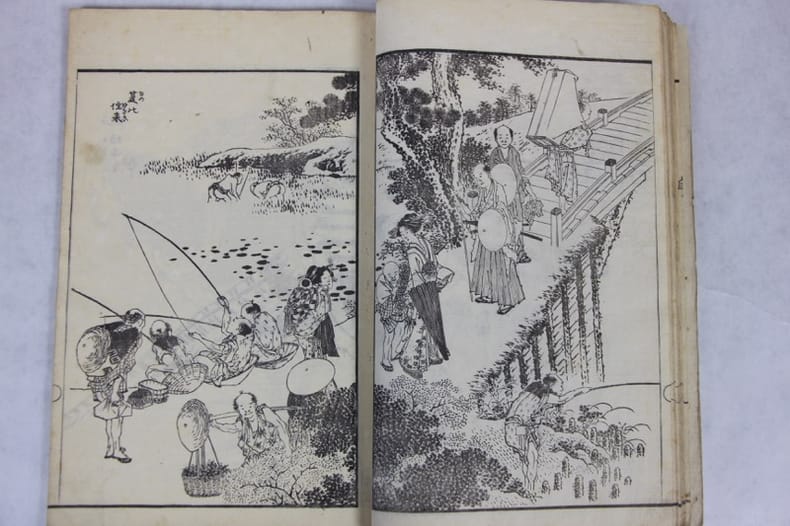
1849137090Sn 1849 18 x 26.5. Couverture d’origine avec étiquette de titre imprimée en vert, 29 ff ; 58 pp. 56 d'illustrations gravées sur bois en noir , 2 de texte. Quelques attaques de vers.
18102110502150908533Not Available 1810. Soft Cover. Fine. Number of books: 1 Not Available paperback
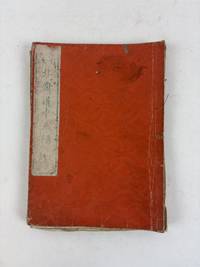
18681410438Meiji Era 1868 - 1912. Saddle-stitched. Octavo Two Volumes bound together. In Fair condition. Fukurotoji binding with orange paper wraps. Wraps show significant wear with prominent creasing. Binding cord is snapped in four places. CONTENTS: Volume I marked "UE top": Significant gray smudging to front wrap; moderate smudging to back wrap. Creasing along edges and spine. Significant fading to title paper.Toning and light smudging to page block and throughout pages. Significant water marking to some pages. -- Volume II marked "SHITA bottom": Moderate gray smudging to front wrap; moderate smudging to back wrap. "HTS" written in pencil beside title paper. Dark spot to back wrap. Creasing along edges and spine. Significant fading to title paper.Toning and light smudging to page block and throughout <br /> Shelved Room E. Cluster of four characters above titles says "Gojyuusanji" literally "53rd in an unplanned sequence". I am not sure whether this refers to edition printing or something else. 1410438. Special Collections. unknown
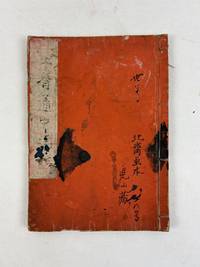
18681410439Meiji Era 1868 - 1912. Saddle-stitched. Octavo unpaginated. Volume I of two missing second volume. In Good minus condition. Fukurotoji binding with orange paper wraps. Wraps show significant wear with prominent creasing. Prominent ink stains to front and back covers. Written in black ink on front cover is "Hokusai Gahon Miyama Zou Hachigou Hokusai's Picture Book Collected by Miyama Volume Eight". On back is written "S. Tamura" in black ink. Significant water marking to both covers. Binding cord is intact. Significant gray smudging to front wrap; moderate smudging to back wrap. Creasing along edges and spine. Significant fading to title paper with loss of legibility.Toning and light smudging to page block and throughout pages. Significant water marking to some pages. Sticker to back endpaper is torn through with loss to endpaper.<br /> Shelved Room E. 1410439. Special Collections. unknown
18122091202133201307Shuseikaku / Gungyokudo 1812. Soft Cover. Fine. Number of books: 2 books in total Shuseikaku / Gungyokudo paperback
18912091502133700533Kyoto Kambei Murakami 1891. Soft Cover. Fine. The book is in fine condition. Kyoto Kambei Murakami paperback
1875912491875. EHON Katsushika HOKUSAI. FUGAKU HYAKKEI. 100 Views of Fuji. Meiji 8 1875. Aichi Katano Toshiro. 3 vols. Yellow covers. 15.7 x 22.6 cm. Paper labels. This Meiji reprint of Hokusai's classic is in very good condition with original yellow covers and title labels. The impressions are fair to good and preserve the remarkable aesthetic sense of the master. The original blocks cut some 40 years earlier are here used by skilled printers to produce a fair example of the original work. unknown
18922111902160200155Nihonbashi District Wakamatsucho Oseki Toyo 1892. Soft Cover. Fine. Number of pages: 12 maps Size: 17cmx11.5cm Prints: 17cmx22.5cm Number of books: 1 Nihonbashi District Wakamatsucho Oseki Toyo paperback
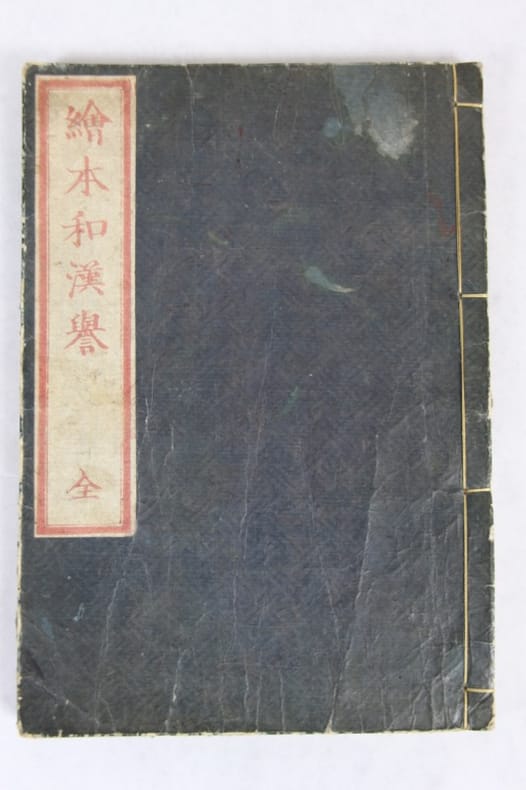
1850137006[Suzuki Chuzo, graveur Egawa Sentaro. Kaei (1848-1854)] 1850 23 x 16 cm. Reliure japonaise verte d’origine avec étiquette de titre imprimée en rouge, 30 ff., 58 pages d'illustrations gravées sur bois en noir. Fine impression.
18112110502150908881Hanmoto fumei 1811. Soft Cover. Fine. Number of books: 1 Hanmoto fumei paperback
18112110502150908882Hanmoto fumei 1811. Soft Cover. Fine. Number of books: 1 Hanmoto fumei paperback
18112110502150908590Hanmoto fumei 1811. Soft Cover. Fine. Number of books: 1 Hanmoto fumei paperback
18112110502150908589Hanmoto fumei 1811. Soft Cover. Fine. Number of books: 1 Hanmoto fumei paperback
1818907811818. Katsushika HOKUSAI 葛飾北斎. Denshin Kaishû HOKUSAI GAKYÔ. ä¼ç¥žé–‹æ‰‹ã€€åŒ—æ–Žç”»é¡ã€€å…¨ã€€Nagoya: Hishiya Kyuubei Edo: Maekawa Rokuzaemon Osaka: Kawachiya Tasuke Kyoto: Hishiya Jihei. The preface is date Bunka 15 1818. Almost certainly an original printing of this surprisingly scarce work. 26.1 x 17.3 cm. The covers and title label are original. Later Meiji era issues had a printed title page mounted on the front mikaeshi. This copy does not but it may well be that there was none in the first printings.Jack Hillier in his THE ART OF HOKUSAI IN BOOK ILLUSTRATION devotes a whole chapter to this book. It exists in at least 2 early editions. One printed in color but always missing three fascicles when found is titled SHUGA ICHIRAN. Our version at hand is printed in sumi only and usually considered the first appearance in 1818 but there has been controversy on that point for years. Our copy is complete save the possible absence of the title page pastedown as mentioned. But the covers are original with the blindstamped pattern of the earliest copies so it would be hard to believe the title page was steamed off the inside of the cover and there is an appropriate sheet of paper affixed there.<br /> <br /> In any event one of the most underappreciated of all Hokusai's books as it is usually found in worn and poorly printed late copies. unknown books
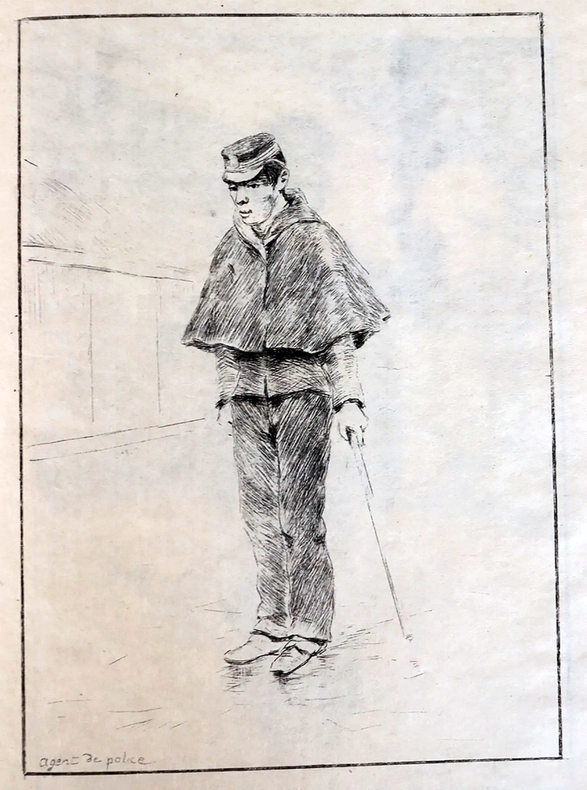
18861886Tokio, 1886. 1 volume in-folio ((46,3 x 31,5 cm), broché cousu à la japonaise le tout sur papier du Japon, couverture illustrée. Album de 31 PLANCHES DE DESSINS GRAVÉS SUR CUIVRE dont 2 gravés sur les plats de la couverture : L'étudiant, écoliers, officier, soldat, matelot, fonctionnaire, jeune garçon lisant, Bonzes, agent de Police, servante, facteur,d eux femmes jouant au volant, une femme coiffant une autre, une lavandière, marchand de remèdes, pêcheur à la ligne, marchand de Puéta, cuisinière, cheval de bât, etc. - NOTICE HISTORIQUE : Georges Bigot (1860-1927) est formé à Paris au moment de l’essor du « Japonisme » dans les arts graphiques. Suite à l’ouverture du Japon au commerce extérieur, les années 1870 voient en effet arriver en France de nombreux objets d’art japonais, en particulier les « Manga » (ou carnets de croquis) d’Hokusai (1760–1849). D’Hokusai, les artistes français copient les scènes de vie gravées sur le vif, très expressives, et le traitement de la faune et la flore à la façon des estampes japonaises. Bigot arrive au Japon en 1882 et s’installe à Tokyo, avec la volonté délibérée de ne pas vivre dans les enclaves étrangères mais au sein du petit peuple de la ville. En 1886, il tire de cette expérience une série intitulée « Croquis Japonais » mettant en scène des personnages aux traits individualisés dans la vie quotidienne de ce début de l’ère Meiji (1868-1912). Il observe cette société japonaise bouillonnante et en publie caricatures et périodiques satiriques. Cette ère nouvelle a transformé le Japon, jusque-là régi par un régime féodal, l'a ouvert aux étrangers et introduit de grands changements. Bigot refusant la vision idéalisée d'un Japon, en marche vers le modernisme, se heurte aux tracasseries d'un gouvernement japonais de plus en plus nationaliste, qui le contraindra à partir en 1899, quelques semaines avant la suppression des concessions étrangères. Ses publications sont finalement interdites à la vente dès 1900, tandis qu'en France il s'est tout simplement fait oublier. Les nombreux albums de caricatures et les différents périodiques qu'il laissera derrière lui vaudront bien des années plus tard d'être reconnu comme le « caricaturiste de l'ère Meiji ». Il est considéré par la jeune génération de dessinateur de Manga, comme un des pères de ce genre. - L'ALBUM : Bigot utilise ici une technique typiquement occidentale, l’eau-forte (façon de graver le métal en y faisant pénétrer de l’acide), qu’il imprime en noir et blanc, à l’opposé des estampes japonaises gravées sur bois et si colorées.
18452091202133206230Bunkeido 1845. Soft Cover. Fine. Number of books: 20 books in total Bunkeido paperback