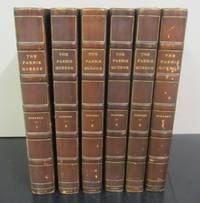
Spenser, EdmundBiblio.com

171 résultats
185912698London: Routledge Warnes and Routledge. Fair with no dust jacket. 1859. Hardcover. Rebacked in amateur fashion. The original leather spine has been laid down onto the new leather but this original spine is in very poor condition with very bad dry rot and large chips missing. Internally good. 19th century heraldic bookplate of Francis Digby Spencer Neave. Inscription to Francis Digby S. Neave "on his leaving Eton" from J. W. Martyn dated 1860. ; "Fifth Edition with a Glossary". xii 820 pages frontispiece. Full leather binding. Calf boards. Amateur rebacking with later leather spine overlapping the leather of the front boards. Marbled endpapers and page edges. Page dimensions: 165 x 98mm. A nineteenth century edition of Spencer's long poem the first part of which was originally published in 1590.; 16mo . Routledge, Warnes, and Routledge hardcover
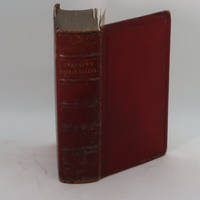
1856001321London: Routledge & Sons. Original blind stamped red cloth decorated in gilt on front board titled & decorated in gilt on spine. The faerie Queene disposed into twelve bookes fashioning XII morall vertues to which is added his Epithalamion. With glossary. All edges gilt. Spine has been neatly re-laid due to wear at head & foot resulting in the need for replacement endpapers a professional job . Very Good. Hardcover. 4th Edition. 1856. Routledge & Sons hardcover
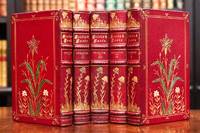
19001041London: British Literary Society 1900. Extra Illustrated Edition of the Aldine Poets Limited to Ten Numbered and Registered Copies of Which This Is No. 4. Publishers Fine Leather Bindings. Near Fine. A complete five volume set in near fine condition beautifully bound in publishers full leather inlaid Morocco bindings with bright gilt floral patterns to covers and spine. Leather inlaid doublures silk end pages bright gilt page edges pages are bright and clean without marks and no foxing. illustrated with color plates. Limited edition #4 of 10. No publication date stated - circa 1900. A stunning example in excellent condition. Near Fine. British Literary Society unknown
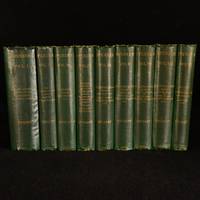
1844864N58-: Printed for Private Circulation 1844-1884. First edition. Cloth. Good Only. 8" by 5". None. A privately printed set of the complete works of Edmund Spenser. With illustrations and a biographical introduction to the sixteenth century poet. A privately printed set of the complete works of Edmund Spenser with an autobiographical introduction by the literary editor Alexander Grossart. With four illustrations to volume I collated but Hamerton's Woodcuts and the facsimile called for. With three illustrations to volume III collated but lacking frontispiece. With two illustrations to volume V collated and complete. Only 150 copies of this set were printed for private circulation only. Complete in nine volumes. Whilst the title pages in the set state ten volumes the final book was not published. Grossart provides a detailed biographical introduction to the sixteenth century poet in the first volume which is followed by Spenser's first major work The Shepheardes Calendar. This is followed by Complaints his collection of poems that mournfully or mockingly express the poet's grievances and his narrative elegy for the heiress Douglas Howar Daphnaida. Spenser's celebrates the Tudor dynasty in allegorical poem The Faerie Queen which can be found in volumes five to seven followed by a collection of his letters. The prior owner's pencil inscription can be found to the half title or the recto of the front endpaper of the volumes 'S. B. M. In a full green cloth binding. Externally generally smart. Bumped to the head and the tail of the spines with some closed tears to each across the set. Lightly bumped to the extremities. The front hinge has failed to volumes I and IX and the rear hinge has failed to volume IV but the spines have been re-adhered to all three volumes. Both hinges are starting but firm to volume II the front hinge is starting to volume VII and the rear hinges is starting but firm to volumes V and IX. Internally the binding is strained to volumes I IV and IX with the front endpaper disbound to the latter volume. Otherwise the volumes are generally firmly bound. Pages are bright and clean across the set. Good Only Printed for Private Circulation hardcover
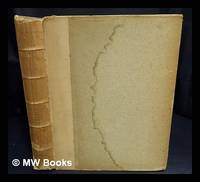
1882425705Manchester : Printed for private circulation only 1882. 1st edition. Hardcover. Good copy in the original paper-covered boards. Spine bands and panel edges somewhat edge-nicked stained and dust-toned as with age with some loss. Pages with shadow-staining. Some wear around the spine cover edges. Remains quite well-preserved overall. Physical description; 1 volume #4 : illustrations map facsimile ; 24 cm. Notes; ""100 copies only."" T.p. in red and black. Subjects; Spenser Edmund 1552-1599 ; Biography. Spenser Edmund 1552-1599. 16th century literature. 16th century Edmund Spenser. Manchester : Printed for private circulation only hardcover
188242715Lancashire England: Alexander B. Grosart 1882. Book. Good. Hardcover. Limited Edition. 9 Volume Set 8vo. "Edited with a new Life based on original researches and a glossary embracing notes and illustrations by the Rev. Alexander B. Grosart LL.D. Edin. F.S.A. St. George's Blackburn Lancashire." Nine volumes were printed between 1882-84. Limited to 150 copies only. "Printed for Private Circulation Only." Green cloth boards with gilt title along spines. Shelfwear to all nine volumes: moderate scuffing along edges and covers slightly heavier fraying at top and bottom spine edges light spine fading. Some light tanning and foxing along page edges. Volume One's front spine hinge has been reinforced with archival tape. Otherwise volumes are tightly bound with clean and crisp pages. No marks. Overall volumes are in Good condition. Alexander B. Grosart Hardcover
1882218315London : printed for private circulation 1882-1884 1882. Limited Edition. Hardback. Good to very good copies in the original gilt-blocked cloth. Gilt-tooled portrait and decorative border to front panels. Spines bands worn with some fraying evident in places. Spine covers faded and sun-toned. Some fading and toning also evident to the panels of vols. 1-3 and 7-9. Panel edges dulled and rubbed. Bumped corners. Small tear between the top of the spine cover and front panel of vol. 5. Vols. 6 7 8 and 9 are unread copies with unopened pages. Fore and bottom page edges rough-trimmed. Internally pages are clean and bright with just some scattered spots of marginal foxing evident in places. Remains quite well-preserved overall. Further scans images etc. and additional bibliographical material available on request. ; 8vo 8"" - 9"" tall; 0 pages; Physical description: 9 v. : facsim. ill. maps ; 20 cm. 100 copies only in this form --c.f. title page. Contents: v. 1. Life of Spenser / by the editor with appendix. Essays: Characteristics of Spenser's poetry / by Aubrey de Vere. Spenser the poet and teacher / by Prof. Edward Dowden. Certain aspects of the poetry of Spenser / by the Rev. W.B. Philpot. The introspection and outlook of Spenser / by the Rev. William Hubbard -- v. 2. The Shepheards calender and Glosse 1597: with various readings of the quartos 1579-91 -- v. 3. Complaints 1590-91. Essay on English pastoral poetry / by E.W. Gosse. Rider on the same ; Who were Rosalinde and Menalcas ; Notices of Edward Kirke / by the editor -- v. 4. Essays on the minor poems of Spenser / by F.T. Palgrave. Daphnaida: an elegie upon the death of . Douglas Howard etc. 1591. Colin Clouts come home again 1595. Amoretti and Epithalamion 1595. Fowre hymnes 1596. Prothalamion or A spousal verse etc. 1596. Astrophel etc. and Sonnets -- v. 5. The faerie queene. bk. i.-ii. -- v. 6. The faerie queene. bk. ii. continued-iii. -- v. 7. The faerie queene. bk. iii. continued-v. -- v. 8. The faerie queene. bk v. continued-vi. Two cantos of Mvtabilitie. Letter to Sir Walter Raleigh. Commendatory poems and sonnets -- v. 9. Prose: A veue of the present state of Ireland. Letters etc. Subjects: Spenser Edmund 1552-1599 -- Collected works -- Biography -- English literature -- Poetry -- Verse -- Prose -- Studies interpretation and criticism. [London] : printed for private circulation, 1882-1884 hardcover
1882026962London: by the author Printed for Private Circulation Only. 1882. Book. Fine. Half Leather. Limited Edition. 8vo 14 x 22cm. 1882-4. A fine nine volume set of this edition limited to 100 copies - Printed for Private Circulation Only. The title pages state "in ten volumes" but in the event only 9 volumes were publised. Fine contemporary uniform bindings by Zaehnsdorf of restrained but elegant half brown morocco with marbled boards and 5 raised bands to the spines lettered in gilt; bindings very good with a little gentle wear only spines very slightly faded. All edges marbled to match boards and end-papers. Contents clean and tight; a little foxing more or less confined to the front and rear blanks otherwise unmarked. A superb set of this rare and desirable edition limited to just 100copies. Provenance: With the attractive bookplate of Claude Goldsmit-Montefiore to most front paste-downs. Claude Joseph Goldsmid Montefiore 1858 - 1938 was son of Nathaniel Montefiore and the great nephew of Sir Moses Montefiore. Some identify him as a significant figure in the contexts of modern Jewish religious thought Jewish-Christian relations and Anglo-Jewish socio-politics. Wikipedia. [by the author] Printed for Private Circulation Only. Hardcover
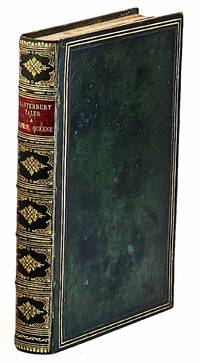
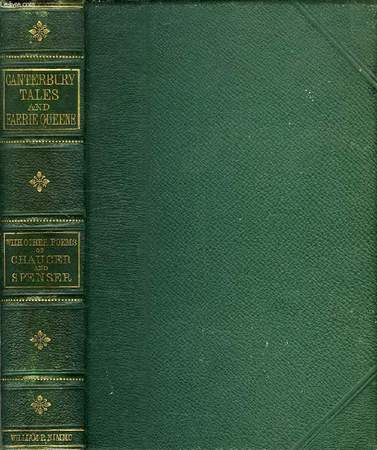
1874103370Edinburgh: William P. Nimmo. 1874. 1st thus royal octavo full leather binding spine decorated in gilt with red spine title label all edges gilt gilt decorated edges marbled endpapers pp viii 616. Engraved author portraits of Chaucer and Spenser. Tipped-in photo postcard of Canterbury Cathedral. Tipped-in reproduction illustration Jacomb-Hood etching illustrating the Farie Queene. Gift inscription 1877. Previous owner's bookplate of British historian A.W. Searley to front paste-down. Very good condition. Chaucer and Spenser "Edited for Popular Perusal with Current Illustrative and Explanatory Notes". Double-column text with Purves's notes at the foot of the page bound in full leather. 1st thus. Leather. William P. Nimmo hardcover
1870C219397Edinburgh: William P. Nimmo 1870. Hardcover Hardcover. Very Good. Large octavo. viii 624pp. Original dark green cloth with gilt spine titles. Covers with some wear and chipping re-cased with repairs to backstrip tears slight wrinkling to endpapers faint marks to frontis and illustrated title page slight creasing to title page otherwise very good. William P. Nimmo, hardcover
1870RO40111448William P. Nimmo, Edinburgh. 1870. In-8. Relié. Bon état, Couv. convenable, Dos frotté, Quelques rousseurs. 624 pages. Gravures en noir et blanc en frontispices et en page de titre. Auteurs, titres, fleurons, cadres et roulettes dorés sur le dos. Tranche de tête dorée. Texte encadré, sur 2 colonnes. Annotations d'époque (1871) à la plume en page de garde. Feuillets de la 2e moitié de l'ouvrage jaunis.. . . . Classification Dewey : 420-Langue anglaise. Anglo-saxon
1889RO60071488W. P. Nimmo, Hay, & Mitchell, Edinburgh. 1889. In-8. Relié. Bon état, Couv. légèrement passée, Dos satisfaisant, Intérieur frais. 616 pages. Gravures en noir et blanc en frontispice et en page de titre. Titre, fleurons, roulettes et filets dorés sur le dos. Tranche de tête dorée. Mors droit très légèrement fendu.. . . . Classification Dewey : 420-Langue anglaise. Anglo-saxon
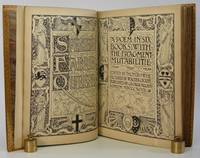
18974803London George Allen 1897 Très bel exemplaire de la première édition. Six volumes. Édité par Thomas J. Wise et avec les fabuleuses illustrations art nouveau de Walter Crane. Un des 1000 exemplaires non numérotés sur papier fait main imprimés par Charles Whittingham & Co. à la presse de Chiswick. Les couvertures souples originales des parties ont été conservées et reliées à l'arrière. Récemment réparé / ré-épinglé en cuir rouge avec les planches d'origine en cuir rouge. Certaines planches présentent quelques taches, mais dans l'ensemble elles sont en très bon état. A l'intérieur, les livres sont sains, mais les bords sont légèrement assombris. Un bon exemplaire. lxxxvii, 1-248 [i], [couvertures], viii, 251-528, [couvertures], viii, 529-806, [couvertures], viii, 807-1044, [couvertures], viii, 1045-1276, [couvertures], viii, 1277-1546, [8], [couvertures].
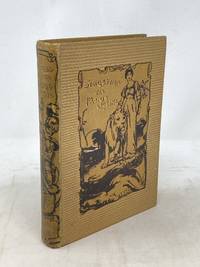
1900100350New York: Frederick A. Stokes 1900. Hardcover. Good Plus. Octavo 8.3 in. x 6.2 in. pp. 395. Illustrated withtissue-guarded frontis and over 100 additional drawings. Ochre cloth boards with gilt title and brown image of a queen and lion to front. Gilt titkle and knight slaying a dragon to spine. Gilt title and brown helmet image to rear board. Gilt top-edge. Shelfwear to edges with bottom rear corner nudged. Light soiling to boards and spine. Previous owner's inscription to front flyleaf. Several pages with short closed tears or chips to fore-edge. Light age-toning to pages. Frederick A. Stokes hardcover
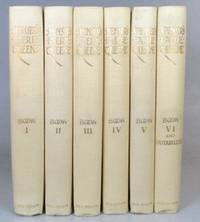
189721539London: George Allen 1897. Limited edition. Hardcover. Near fine. Illustrated by Walter Crane. 4to. Six volumes bound from parts. 85 full-page black and white illustrations by Walter Crane. Printed on handmade paper by Charles Wittingham at the Chiswick Press. Ivory colored buckram gilt spine and with the upper boards blocked in gilt and red. Volumes 3-6 also have top edges gilt and the original wrappers bound in. <br/> <br/>Cloth has traces of soil paper is lightly age-toned at the edges we note one inner hinge partially cracked else this is a fine set. One of 1000 copies.<br/> <br/>Howey F-147. George Allen hardcover books
1894006745London: George Allen 1897 parts 1894-1897. First edition. Three Quarters Crushed Morocco. Marbled pastedown. . Near Fine. One of 1000 unnumbered sets printed. 4to. 27.5 by 22 cm. 19 parts bound in 6 volumes. Pictorial pink wrappers bound in. Plates headpieces and tailpieces by Crane. Gilt rose and leaf pattern in four spine compartments lettering in two. <br /> George Allen books
1897206378London: George Allen 1897. Rear cover of the final volume detached hinges tender; some surface scratches; spines faded a shade. A very handsome set. Six volumes. 4tos; lxxxvii 1-248 18 viii 251-527 13 viii 529-805 13 viii 807-1044 12 viii 1045-1274 16 viii 1277-1546 24; full polished tree calf gilt with exquisitely tooled spines with red and tan leather labels marbled endpapers; t.e.g. One of 1000 unnumbered copies on handmade paper printed by Charles Whittingham & Co. at the Chiswick Press this copy has been beautifully bound in the Riviere style by H.S. Nichols. One of the high-water marks of Art & Crafts book design this was Walter Crane's last major commission and one of his most fully executed and highly prized publications featuring 88 full-page illustrations along with head and tailpieces devices and initials throughout. The set was issued in parts between 1894 and 1897 and the original title pages and publisher's devices are bound in at the rear of each volume of this set. n.b. this is a heavy multi-volume set and will require additional shipping charges. George Allen unknown
1897102598George Allen 1897. Hardcover. Very good/No jacket. Walter Crane. The original 19 parts published between 1894 through 1896 with illustrations by Walter Crane bound into six volumes with the original wraps. Limited to 1000 copies. Bound in white cloth covers are darkened in places with a couple water stained on the spine though no damage seen on the text block. George Allen hardcover
1859FB197 /Str shlf<p>Red leather binding with gilt lettering and raised banding on the spine. All edges gilt.</p><p>This book also has "Epithalamion" added. <strong><em>The Faery Queene</em></strong> is an English epic poem by Edmund Spenser. Books I–III were first published in 1590 then republished in 1596 together with books IV–VI. <em>The Faerie Queene</em> is notable for its form: at over 36000 lines and over 4000 stanzas it is one of the longest poems in the English language; it is also the work in which Spenser invented the verse form known as the Spenserian stanza. On a literal level the poem follows several knights as a means to examine different virtues and though the text is primarily an allegorical work it can be read on several levels of allegory including as praise or later criticism of Queen Elizabeth I. In Spenser's "Letter of the Authors" he states that the entire epic poem is "cloudily enwrapped in Allegorical devices" and that the aim of publishing <em>The Faerie Queene</em> was to "fashion a gentleman or noble person in virtuous and gentle discipline". Spenser presented the first three books of <em>The Faerie Queene</em> to Elizabeth I in 1589 probably sponsored by Sir Walter Raleigh. The poem was a clear effort to gain court favour and as a reward Elizabeth granted Spenser a pension for life amounting to £50 a year though there is no further evidence that Elizabeth I ever read any of the poem. This royal patronage elevated the poem to a level of success that made it Spenser's defining work. <strong>Edmund Spenser</strong> 1552/1553 – 13 January 1599 was an English poet best known for <em>The Faerie Queene</em> an epic poem and fantastical allegory celebrating the Tudor dynasty and Elizabeth I. He is recognized as one of the premier craftsmen of nascent Modern English verse and is often considered one of the greatest poets in the English language. Though Spenser was well-read in classical literature scholars have noted that his poetry does not rehash tradition but rather is distinctly his. This individuality may have resulted to some extent from a lack of comprehension of the classics. Spenser strove to emulate such ancient Roman poets as Virgil and Ovid whom he studied during his schooling but many of his best-known works are notably divergent from those of his predecessors. The language of his poetry is purposely archaic reminiscent of earlier works such as <em>The Canterbury Tales</em> of Geoffrey Chaucer and <em>Il Canzoniere</em> of Francesco Petrarca whom Spenser greatly admired. An Anglican and a devotee of the Protestant Queen Elizabeth Spenser was particularly offended by the anti-Elizabethan propaganda that some Catholics circulated. Like most Protestants near the time of the Reformation Spenser saw a Catholic church full of corruption and he determined that it was not only the wrong religion but the anti-religion. This sentiment is an important backdrop for the battles of <em>The Faerie Queene</em>. Spenser was called "the Poet's Poet" by Charles Lamb and was admired by John Milton William Blake William Wordsworth John Keats Lord Byron Alfred Tennyson and others. Among his contemporaries Walter Raleigh wrote a commendatory poem to <em>The Faerie Queene</em> in 1590 in which he claims to admire and value Spenser's work more so than any other in the English language. John Milton in his <em>Areopagitica</em> mentions "our sage and serious poet Spenser whom I dare be known to think a better teacher than Scotus or Aquinas". In the eighteenth century Alexander Pope compared Spenser to "a mistress whose faults we see but love her with them all."</p> Routedge Warnes. hardcover
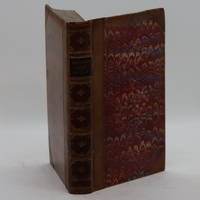
1868FB940 /str shlf<p>Tan calf binding with red and blue marbled boards. Black title plate with gilt lettering banding and decoration on the spine. From the Chandos Classics Library published circa 1868<strong>.</strong></p><p><strong><em>The Faery Queene</em></strong> is an English epic poem by Edmund Spenser. Books I–III were first published in 1590 then republished in 1596 together with books IV–VI. <em>The Faerie Queene</em> is notable for its form: at over 36000 lines and over 4000 stanzas it is one of the longest poems in the English language; it is also the work in which Spenser invented the verse form known as the Spenserian stanza. On a literal level the poem follows several knights as a means to examine different virtues and though the text is primarily an allegorical work it can be read on several levels of allegory including as praise or later criticism of Queen Elizabeth I. In Spenser's "Letter of the Authors" he states that the entire epic poem is "cloudily enwrapped in Allegorical devices" and that the aim of publishing <em>The Faerie Queene</em> was to "fashion a gentleman or noble person in virtuous and gentle discipline". Spenser presented the first three books of <em>The Faerie Queene</em> to Elizabeth I in 1589 probably sponsored by Sir Walter Raleigh. The poem was a clear effort to gain court favour and as a reward Elizabeth granted Spenser a pension for life amounting to £50 a year though there is no further evidence that Elizabeth I ever read any of the poem. This royal patronage elevated the poem to a level of success that made it Spenser's defining work.</p><p><strong>Edmund Spenser</strong> 1552/1553 – 13 January 1599 was an English poet best known for <em>The Faerie Queene</em> an epic poem and fantastical allegory celebrating the Tudor dynasty and Elizabeth I. He is recognized as one of the premier craftsmen of nascent Modern English verse and is often considered one of the greatest poets in the English language. Though Spenser was well-read in classical literature scholars have noted that his poetry does not rehash tradition but rather is distinctly his. This individuality may have resulted to some extent from a lack of comprehension of the classics. Spenser strove to emulate such ancient Roman poets as Virgil and Ovid whom he studied during his schooling but many of his best-known works are notably divergent from those of his predecessors. The language of his poetry is purposely archaic reminiscent of earlier works such as <em>The Canterbury Tales</em> of Geoffrey Chaucer and <em>Il Canzoniere</em> of Francesco Petrarca whom Spenser greatly admired. An Anglican and a devotee of the Protestant Queen Elizabeth Spenser was particularly offended by the anti-Elizabethan propaganda that some Catholics circulated. Like most Protestants near the time of the Reformation Spenser saw a Catholic church full of corruption and he determined that it was not only the wrong religion but the anti-religion. This sentiment is an important backdrop for the battles of <em>The Faerie Queene</em>. Spenser was called "the Poet's Poet" by Charles Lamb and was admired by John Milton William Blake William Wordsworth John Keats Lord Byron Alfred Tennyson and others. Among his contemporaries Walter Raleigh wrote a commendatory poem to <em>The Faerie Queene</em> in 1590 in which he claims to admire and value Spenser's work more so than any other in the English language. John Milton in his <em>Areopagitica</em> mentions "our sage and serious poet Spenser whom I dare be known to think a better teacher than Scotus or Aquinas". In the eighteenth century Alexander Pope compared Spenser to "a mistress whose faults we see but love her with them all."</p> Frederick Warne & Co. hardcover
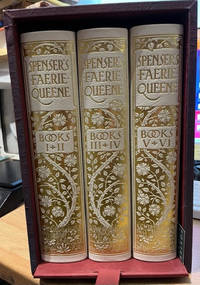
189769960London: The Folio Society 2011. 4to.Limited Edition. Limited Facsimile Edition. 3 volumes. Full white Nigerian goatskin with elaborate gilt-stamped decoration and lettering to boards and spines based on Walter Crane's original design within a maroon silk covered wooden slipcase; top edges gilt. Very minor spots to the fore-edges; otherwise all in fine condition clean and bright including the heavy slipcase. A beautiful facsimile edition with Walter Crane's incredible black & white illustrations throughout. Numbered 588 of 1000 limited edition copies published by The Folio Society from the originally published George Allen editions printed at The Chiswick Press 1894-7. This is a very heavy set and may require additional postage if being shipped outside of Europe. . Near Fine. Gilt Decorated Leather. Limited Edition. 1897. The Folio Society 2011 hardcover
189752214London: George Allen 1897. Six volumes one of 1000 sets 4to. Numerous full page illustrations as well as head and tail pieces original wrappers bound in light browning to endpapers only attractive contemporary inscription to a front blank in volume I. Original gilt and red decorated cream buckram t.e.g. the volumes still with their plain d.w.'s with holes in the spines to enable the titles to be read these with some wear and loss and with half of the wrapper to volume II absent but as a result the set is in excellent condition and is still held in the original green cloth box this with some staining and wear to the fold-down front. A remarkable survival. London: George Allen unknown
1897006745London: George Allen 1897. First edition. Three Quarters Crushed Morocco. Marbled pastedown. Near Fine. One of 1000 unnumbered sets printed. 4to. 27.5 by 22 cm. 19 parts bound in 6 volumes. Pictorial pink wrappers bound in. Plates headpieces and tailpieces by Crane. Gilt rose and leaf pattern in four spine compartments lettering in two. George Allen unknown
189771892London: George Allen 1897. Limited edition. 3/4 Leather. Very Good. 6 volume set. 28.5 x 22 cm. Quarto. lxxxvii 1546 pp Bound into 3/4 brown leather over green marble boards and endpapers. 5 raised bands to spines. Illustrated with oveer 200 woodcut illustrations as well as head and tail pieces and decorated initials by Walter Crane. Limited to 1000 copies printed on handmade paper. TEG. Sun toning to spines. A bit of rubbing to edges. Previous owner's bookplate Deatherage on front fixed endpaper of each volume. Some scuffing to the spines. Crane's best work. George Allen unknown
1895000879London Eng: George Allen 1895. Paperback. Very Good. Crane Walter. Edited by Thomas J. Wise; Part VI with eight full-page and other illustrations by Walter Crane. Printed by Charles Whittingham at the Chiswick Press on handmade "Unbleached Arnold" paper. 4 421-527 5 vii-viii p.: added engraved title page 7 additional leaves of plates and many in-text illustrations; 28 cm. Original reddish brown illustrated wrappers with overlapping edges. Final 3 leaves contain half title page added engraved title page and table of contents for Book II all presumably meant to be bound in front of Book II when the parts were taken to a binder. Pages are unopened. In Very Good Condition: wrapper edges are chipped with slight loss of paper at ends of spine and along lower edges and fore-edges; front section of wrapper is detached and back section is largely detached; wrapper is foxed; first and last two leaves foxed; very occasional foxed elsewhere; pages and plates are otherwise clean and bright. Very scarce in the original wrappers. George Allen paperback