PATRIOTYLivre Rare Book
187 résultats
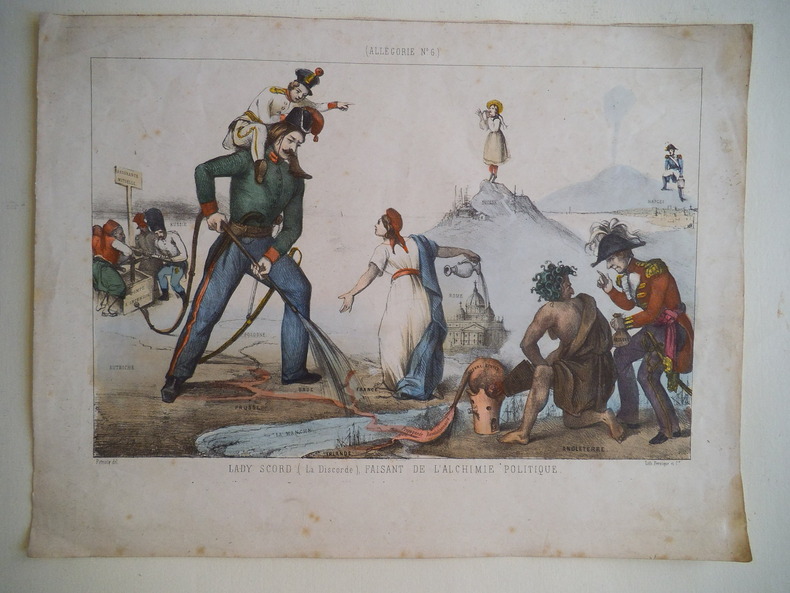
8619Lady Scord(La discorde)faisant de l’alchimie politique (allégorie n°6) lithographie originale en couleurs. 304x198mm et 335x270mm avec marge.Litho.Pernique & Cie. Quelques rousseurs Une satire sur la politique internationale,l’Angleterre qui attise les flammes de la guerre civile, pendant que d’autres essaient de les éteindre, avec en arrière plan Rome, Naples et la Suisse.
Frontespizio dell' “Atlas” di Reiner e Joshua Ottens, pubblicato ad Amsterdam nel 1730.Incisione in rame, incisa da J. van Munnikhuysen e disegnata da L. Webbers. Title page from the "Atlas" by Reiner e Joshua ttens, published in Amsterdam in 1730.Copper engraving, engraved by J. van Munnikhuysen after L. Webbers.
1980107766Darmstadt, Wissenschaftliche Buchgesellschaft [WBG] 1980. VI, 222 Seiten. Softcover/Paperback
19771091350Darmstadt : Wissenschaftliche Buchgesellschaft, 1977. XXXIV, 422, 30 S. : 30 Ill. (z.T. farb.) ; 20 cm. Originalhardcover.
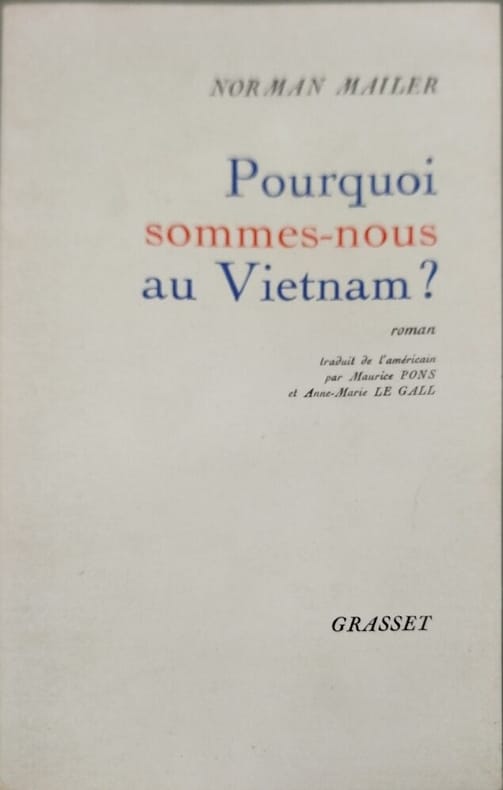
19686903GRASSET 1968 238 pages in8. 1968. broché. 238 pages. Ce roman de Norman Mailer utilise le cadre d'une expédition de chasse violente et obscène en Alaska comme allégorie de la guerre du Vietnam. Il suit un adolescent névrosé et son père représentants de la haute société de Dallas pour dresser un portrait féroce de la société américaine et questionner les raisons de l'engagement américain au Vietnam
1765910572CGAugsburg:, J. E. Nilson, 1765. Kupferstich 11 x 16 cm, Blattgröße 16,5 x 24,5 cm.
0451-Bo.J. Kupferstich, nach Johann Elias Ridinger (1698-1767), auf Bütten. 25,4:17,6 cm. Literatur: Schuster 145. Blatt 2 einer 2-Blatt-Folge. - Sehr guter und vollrandiger Abdruck. Einige kleinere Braunflecken.
0447-Bo.J. Altkolor. Kupferstich, auf Bütten. 22,5:16,6 cm. Literatur: Schuster 130 a und b. - Sehr guter Abdruck mit vollem Rand. - Mit altem Kolorit selten!
0448-Bo.J. Kupferstich, auf Bütten. 21,4:16,1 cm. Literatur: Schuster 131 a. - Guter Abdruck, auf die Plattenkante geschnitten.
180519625Leipzig, Leo, (1805). 232 (recte 132) SS., 33 Kupfertafeln von P. J. Laminit, T. J. Richter und Schnorr-Gründer. Kl.-8°, zeitgen. rote Pappe, etw. Rückenvergoldung, doppelte Deckelfilten, Goldschnitt, grüne Vorsätze, im grünen Pappschuber, dieser stärker berieben und bestoßen. Der Einband an den Ecken und Kapitalen berieben.
24 pages. Features: The Problem of Raising Sanctions Against Italy; The Kind of Insurance Which is Untertaken at Lloyd's (of London); The Prejudice Against Finger-Printing; How Governor Landon Got His Nomination; Why the Nations of the World Should Form a Trading Club; "An International Policeman Somewhare in the Background"; Access to Raw Materials; "My 60 Years In the Law" - by a Judge's Clerk Mr. F.W. Ashley; The Small Boy At Any School Sports On Any Saturday Afternoon; "Behind the Real Smile in Japan" - Mr. E.K. Venables; Miss V. Sackville-West Discusses Joan of Arc's Visions; Dr. Rufus Jones on Psychology and Religion; Mrs. Elinor Glyn and Her Allegory of Gold & Silver; The Spirit of Sussex Downs; and more. Somewhat above-average wear. Center page holding by one staple. A worthy vintage copy. Magazine
20021220786Würzburg : Königshausen und Neumann, 2002. 219 S. ; 23 cm kart.
Torino, 1932, 6 novembre, copertina illustrata a colori in fascicolo originale completo di pp. 20 de “Illustrazione del popolo”.
Frontespizio del "Itinerarium Italiae" di Martin Zeiler. Incisione in rame, in eccellente stato di conservazione. Frontespizio del "Itinerarium Italiae" di Martin Zeiler. Incisione in rame, in eccellente stato di conservazione. D. Cremonini, L’Italia nelle vedute e carte geografiche dal 1493 al 1894 libri di viaggi e atlanti, 1996, pp.37 e 64.
Frontespizio allegorico di Italia, Sclavoniae et Graeciae tabula geographicae (Duisburg, 1589) che comprende 22 carte geografiche della penisola, dei Balcani e della Grecia. Successivamente le carte sono ristampate nell’Atlantis Pars Altera (1595) pubblicato postumo alla morte del Mercatore, dallo stampatore di Duisburg Albert Buys, sotto la supervisione del figlio Rumold Mercator. Composto da sei parti – pubblicate separatamente tra il 1589 e il 1594 – comprende 107 mappe, tutte tranne la carta del mondo di Rumold, firmate da Gerard Mercator. Le lastre vennero poi acquistate da Jodocus Hondius, che tra il 1606 e il 1630 le utilizzò per il suo Atlas Sive Cosmographicae Meditationes de Fabrica Mundi, integrandole ed aggiornandole con proprie “nuove” carte. Delle mappe di Mercator sono note anche ristampe curate da Johannes Janssonius. Le edizioni Hondius e Janssonius ebbero un grande successo commerciale e furono stampate in più lingue, con il testo al verso della carta in latino, francese, tedesco e olandese. Incisione in rame, coloritura coeva, in buono stato di conservazione. Bibliografia cfr. Koeman II Me 11 e Koeman II Me 13A, 1595); Van der Krogt 1:002; J. Keuning, The History of an Atlas, in “Imago Mundi” IV (1947) pp. 37-43; World Encompassed p. 134. Title page of Italia, Sclavoniae et Graeciae tabula geographicae (Duisburg, 1589), which includes an allegorical frontispiece and 22 maps of Italy, the Balkans and Greece. Later, the maps are reprinted in the Atlantis Pars Altera (1595) published posthumously after the death of Mercator, by the Duisburg printer Albert Buys, under the supervision of his son Rumold Mercator. Composed of six parts - published separately between 1589 and 1594 - it includes 107 maps, all except Rumold's map of the world, made by Gerard Mercator. The plates were then purchased by Jodocus Hondius, who between 1606 and 1630 used them for his Atlas Sive Cosmographicae Meditationes de Fabrica Mundi, integrating and updating them with his own "new" maps. Of Mercator's maps are also known reprints edited by Johannes Janssonius. The Hondius and Janssonius editions had a great commercial success and were printed in several languages, with the text on the back of the map in Latin, French, German and Dutch. The map is engraved with the typical connotations of Mercatorian work. The mountains are aligned in a mountainous area concept, not to indicate true chains or valleys, and have a structure with some differences in size, but similar in shape, with vertical slopes and flat tops. The cities are shown through more or less large castles characterized by slender and pointed roofs, similar to wizard hats. Copper engraving, in good condition. Bibliografia cfr. Koeman II Me 11 e Koeman II Me 13A, 1595); Van der Krogt 1:002; J. Keuning, The History of an Atlas, in “Imago Mundi” IV (1947) pp. 37-43; World Encompassed p. 134
18241000342AG[Paris, rue de Vaugirard no 15], [chez Brunet / Imp. Litho. de Langlume], [1824]. Grossformatige allegorische Lithographie von Maurin nach Prud'hon, am Bildrand Künstlerbezeichnungen Prud'hon pinx. ; Maurin del. Bildgröße 36 x 62 cm, alt montiert unter Passepartout 51 x 77 cm, *Thieme/Becker XXIV, 282.- [6 Warenabbildungen] geringe Bereibungen, schönes Exemplar,
326762Contentum Ltd. Loose sheet. New. High-quality art print based on an original work from the Met. Created in the 16th century 1537. Professionally printed on premium fine-art paper Museum Etching museum quality in size A3. The artwork is printed with a white border museum-style presentation. Contentum Ltd. unknown
326763Contentum Ltd. Loose sheet. New. High-quality art print based on an original work from the Met. Created in the 16th century 1537. Professionally printed on premium fine-art paper Photo Rag 308 in size A2. The artwork is printed with a white border museum-style presentation. Contentum Ltd. unknown
326765Contentum Ltd. Loose sheet. New. High-quality art print based on an original work from the Met. Created in the 16th century 1537. Professionally printed on premium fine-art paper Museum Etching museum quality in size A2. The artwork is printed with a white border museum-style presentation. Contentum Ltd. unknown
326764Contentum Ltd. Loose sheet. New. High-quality art print based on an original work from the Met. Created in the 16th century 1537. Professionally printed on premium fine-art paper Photo Rag Bright White premium quality in size A2. The artwork is printed with a white border museum-style presentation. Contentum Ltd. unknown
in-16 broché Bon etat [LP-8]
A clean, unmarked book with a tight binding. Slight edge wear. 41 color plates. 7 7/8"w x 10 7/8"h.
Acquaforte, 1765 circa, firmata in lastra in basso a sinistra con il nome dell'inventore Marillier.Bellissima prova, impressa su carta veragata coeva, con margini, in ottimo stato di conservazione.Tavola della serie "Nouveaux trophées ou cartouches représentant les arts et les sçiences composés avec les atributs qui les caractérisent inventés et dédiés a Mr Morlot peintre par son elève et son ami Marillier" stampata a Parigi "Chez Mondhare rue St Jacques a l'hôtel Saumur". Etching, 1765 circa, signed on plate at lower left by the drawer Marillier.A fine impression, printed on contemporary laid paper, with margins, very good conditions.Plate from the "Nouveaux trophées ou cartouches représentant les arts et les sçiences composés avec les atributs qui les caractérisent inventés et dédiés a Mr Morlot peintre par son elève et son ami Marillier" printed in Paris "Chez Mondhare rue St Jacques a l'hôtel Saumur".
Frontespizio allegorico del L’Italia a cura di Fabio Magini, edito a Bologna nel 1620, tre anni dopo la prematura morte del padre. Inciso da Oliviero Gatti. Composto da un breve testo descrittivo di sole 24 carte, l’opera è corredata di 61 carte geografiche della penisola, e costituisce il primo esempio di atlante italiano. L’opera è per intero di mano del Magini, che iniziò la realizzazione delle carte nel 1594 circa, dando alla luce per prima nel 1595 la carta del territorio di Bologna. Tutte le carte vennero alle stampe quindi prima del 1620, nelle loro stesure provvisorie, successivamente corrette ed aggiornate per l’edizione definitiva. Per la realizzazione delle lastre il Magini si servì di due dei più famosi intagliatori dell’epoca: il belga Arnoldo Arnoldi e l’inglese Benjamin Wright. Decorative titlepage of L'Italia edited by Fabio Magini, published in Bologna in 1620, three years after the untimely death of his father. Composed of a short descriptive text of only 24 pages, the work is accompanied by 61 maps of the peninsula, and is the first example of an Italian atlas. The work is entirely by the hand of Giovanni Antonio Magini, who began the realization of the maps in 1594 or so; the first dated map (1595) the map of the territory of Bologna. All the maps were printed before 1620, in their provisional drafts, later corrected and updated for the final edition. For the realization of the plates Magini used two of the most famous engravers of the time: the Belgian Arnoldo Arnoldi and the English Benjamin Wright. Copperplate, in good condition.
Frontespizio decorativo con titolo e dedica da L’Italia a cura di Fabio Magini, edito a Bologna nel 1620, tre anni dopo la prematura morte del padre. Composto da un breve testo descrittivo di sole 24 carte, l’opera è corredata di 61 carte geografiche della penisola, e costituisce il primo esempio di atlante italiano. L’opera è per intero di mano del Magini, che iniziò la realizzazione delle carte nel 1594 circa, dando alla luce per prima nel 1595 la carta del territorio di Bologna. Tutte le carte vennero alle stampe quindi prima del 1620, nelle loro stesure provvisorie, successivamente corrette ed aggiornate per l’edizione definitiva. Per la realizzazione delle lastre il Magini si servì di due dei più famosi intagliatori dell’epoca: il belga Arnoldo Arnoldi e l’inglese Benjamin Wright. Incisione in rame, bella coloritura coeva, in ottimo stato di conservazione. Decorative allegoric titlepage of from L'Italia edited by Fabio Magini, published in Bologna in 1620, three years after the untimely death of his father. Composed of a short descriptive text of only 24 pages, the work is accompanied by 61 maps of the peninsula, and is the first example of an Italian atlas. The work is entirely by the hand of Giovanni Antonio Magini, who began the realization of the maps in 1594 or so; the first dated map (1595) the map of the territory of Bologna. All the maps were printed before 1620, in their provisional drafts, later corrected and updated for the final edition. For the realization of the plates Magini used two of the most famous engravers of the time: the Belgian Arnoldo Arnoldi and the English Benjamin Wright. Copperplate with fine original hand colour, very good condition.