66 723 résultats
1856E0560<p>3 volumes: xvii1537 pages with 90 lithographs plates including the usual expunged bathing plate many in color including 3 "facsimiles" of Japanese woodblock prints 2 folding; 6 maps and charts 2 folding; 79 woodcuts in the text; 2414414-1xi pages with 4 color lithographs of Chinese scenes; 2 uncolored natural history engraved plates; 6 hand-colored lithographs of birds; 10 hand-colored steel-engravings of fish; 5 lithographs of shells 2 hand-colored; 16 diagram plates of winds and currents; 14-page facsimile of Japanese language version of the U.S.-Japan treaty; 17 folding charts on 16 sheets; numerous woodcuts in the text; xliii17051 pages woodcut star charts throughout. Volume III titled "United States Japan Expedition. Observations on the zodiacal light from April 2 1853 to April 22 1855 . by Rev. George Jones A.M. chaplain United States Navy". Quarto 11½ x 8 ¾" bound in the original blind stamped cloth. Volume 1 rebacked with the original cloth spine laid down. Hill 1332; Sabin 30968 Stabbed signature of the author included. First edition of the House Issue.<br /><br />Detailed and profusely illustrated account of Perry's expedition to open Japan to the West; Upon his return to the U.S. his chief duty for the following year was to compile his reports of the expedition aided by Francis Hawks. The first volume has the account of the voyage and lithographs of the travel; the second volume has the natural history reports by D.S. Green and others and includes hand-colored plates of Japanese fishes and shells. In addition to the artist W. Heine from whose drawings a great number of the lithographs were made the daguerreotypist E. Brown Jr. went on the expedition taking what were undoubtedly the earliest photographic images of Japan many of them reproduced lithographically in this work. This copy with the nude bathing plate which was not included on the list of plates and not issued in all copies. <br /><br />In advance of his voyage to the Far East Commodore Perry read widely amongst available books about Tokugawa Japan. His research even included consultation with the increasingly well-known Japanologist Philipp Franz von Siebold who had lived on the Dutch island of Dejima for eight years before retiring to Leiden in the Netherlands. In 1852 Perry embarked from Norfolk Virginia for Japan in command of a squadron in search of a Japanese trade treaty. Aboard a black-hulled steam frigate he ported Mississippi Plymouth Saratoga and Susquehanna at Uraga Harbor near Edo modern Tokyo on July 8 1853. His actions at this crucial juncture were informed by a careful study of Japan's previous contacts with Western ships and what could be known about the Japanese hierarchical culture. He was met by representatives of the Tokugawa Shogunate who told him to proceed to Nagasaki where there was limited trade with the Netherlands and which was the only Japanese port open to foreigners at that time. Perry refused to leave and demanded permission to present a letter from President Millard Fillmore threatening force if he was denied. Perry ordered his ships to attack several buildings around the harbor to demonstrate US naval power. The Commodore was fully prepared for more hostilities if his negotiations with the Japanese failed and threatened to use unrestrained fire if the Japanese refused to negotiate. He sent two white flags to them telling them to hoist the flags when they wished a bombardment from his fleet to cease and to surrender. Perry's ships were equipped with new Paixhans shell guns capable of wreaking great destruction with every shell. The Japanese military forces could not resist Perry's modern weaponry; the term "Black Ships" in Japan would later come to symbolize a threat imposed by Western technology. Perry returned in February 1854 with twice as many ships finding that the delegates had prepared a treaty embodying virtually all the demands in Fillmore's letter. Perry signed the Convention of Kanagawa on March 31 1854 and departed mistakenly believing the agreement had been made with imperial representatives. The agreement was made with the Shogun the de facto ruler of Japan. On his way to Japan Perry anchored off Keelung in Formosa modern day Taiwan for ten days. Perry and crew members landed on Formosa and investigated the potential of mining the coal deposits in that area. He emphasized in his reports that Formosa provided a convenient mid-way trade location. Formosa was also very defensible. It could serve as a base for exploration as Cuba had done for the Spanish in the Americas. Occupying Formosa could help the US to counter European monopolization of the major trade routes. President Franklin Pierce declined the suggestion remarking such a remote possession would be an unnecessary drain of resources and that he would be unlikely to receive the consent of Congress. When Perry returned to the United States in 1855 Congress voted to grant him a reward of $20000 in appreciation of his work in Japan. Perry used part of this money to prepare and publish a report on the expedition in three volumes titled Narrative of the Expedition of an American Squadron to the China Seas and Japan. He was also advanced to the grade of rear-admiral on the retired list when his health began to fail as a reward for his services in the Far East.<br /><br /><strong>Condition: </strong>Wear and fading to cloth large map repair at with archival tape several others with stub tears and splitting to folds; light foxing spine ends rubbed with a few with chips corners bumped and rubbed through. Accompanied with encapsulated and graded signature of the author else good to very good. Due to the size and weight additional postage will be required.</p> A O P Nicholson hardcover
2016__4861661420Taylor & Francis 2016. Hardcover. New. 1st edition. 4950 pages. 19.69x15.43x11.22 inches. Taylor & Francis hardcover
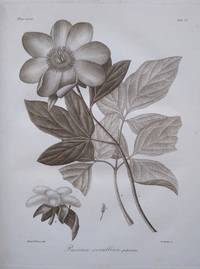
017976Taurini: Ex Regio Typographeo Three volumes 1837 - 1843. A partial set of one of the rarest of Mediterranean floras. Illustrated with 96 very fine engraved plates including 3 bis plates - XXXIII LXXVII LXXXVIII a double-page engraved map of Sardinia rather foxed quarto pp xii 606; 562. ii plates volume 96 plates of 114 remarkably clean internally contemporary half calf and cloth the spines with raised bands and black morocco labels slightly rubbed and scuffed a little wear at the corners. The engravings are by by L. Fea S. Botta H. Mil and A. Nizza after drawings by M. Lisa and J.C. Heyland; there is a presentation inscription in Latin in the first volume from the author to Sir Charles James Fox Bunbury. Lacking the final volume which was not published until 1857. The fact that the plates volume is here labelled Volume III suggests that Bunbury received these from the author in 1843 and the final volume was never presented. The author was a botanist at Cagliari then at Turin where he subsequently became Director of the Botanical Gardens. His primary investigations were on the flora of Sardinia of which this work is the first and still the most complete and detailed account. Sir Charles Bunbury was a keen botanist and geologist with a particular interest in paleobotany. He collected plant specimens on expeditions to South America in 1833 and South Africa in 1838. He also accompanied his great friend Sir Charles Lyell the geologist on an expedition to Madeira. He was elected a Fellow of the Royal Society in 1851. From Bunbury the set moved to the Leipzig collector and antiquary Oswald Weigel with his small stamp. Also in each volume is the later bookplate of Kenneth Lazenby a founding member of the Alpine Garden Society. The map is an addition to the published work and is equally rare - "Carta della Sardegna annessa alla 1a parte del viaggio in cetta Isola del Colonello A. della Marmora. 2da Edizione. Carte de la Sardaigne annexee a la 1e´re partie du voyage en cette Ile par le Colonel A. de la Marmora.". Although lacking the later volume this set remains very attractive due to its condition provenance and the additional map. First Edition. Half-Leather. Very Good. Ex Regio Typographeo Hardcover
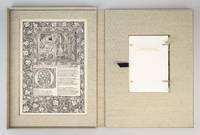
ST20503McMinnville Oregon: Phillip J. Pirages 2019. No. VII OF 47 COPIES numbered I-XLVII bound in flexible vellum from a total edition of 165 COPIES. Text: 244 x 154 mm. 9 1/8 x 6 1/8"; Case: 502 x 372 mm. 19 3/4 x 14 5/8". ii 75 pp. <br/> Bound in flexible vellum with ties inspired by Kelmscott Press bindings by Amy Borezo who also constructed the case holding the volume and leaves. The book printed letterpress on Zerkall Book Laid Vellum paper by Arthur Larson at Horton Tank Graphics. Book layout by Jill Mann. EACH COPY WITH FIVE LEAVES: ONE FROM THE KELMSCOTT CHAUCER WITH woodcut borders woodcut beginning word and A WOODCUT SCENE DESIGNED BY EDWARD BURNE-JONES AND ONE EACH FROM THE PRESSES OF FOUR GERMAN PRINTERS FROM THE 1470s--PETER SCHOEFFER JOHANN MENTELIN GÜNTHER ZAINER AND ANTON KOBERGER the Zainer leaf featuring at least one woodcut initial. The incunabular leaves consistently excellent with only minor defects and the Kelmscott leaves which were never part of a bound volume in entirely fine condition.<br/> <br/> This is a unique leaf book in the way that it combines three elements: a significant private press production involving people at the top of their craft a scholarly commentary that contributes to a further understanding of the history of printing and--most important--five leaves: one from the Kelmscott Press "Works" of Geoffrey Chaucer and four from books issued by German printers at work in the 1470s. The book has been printed and bound by hand by gifted professionals; the essay addresses a topic of significance to typophiles in a considerably more thoroughgoing way than has been done before; and the assemblage of leaves represents a powerful visual reinforcement of the text as well as an opportunity to share in the ownership of four important incunabula along with the extraordinary Kelmscott Chaucer. The story of the production is heavy on serendipity: in the winter of 2012 after purchasing a very incomplete copy of the Kelmscott Chaucer at auction we considered the possibility of producing a leaf book but because the Chaucer--universally considered to be one of the most beautiful books ever printed--had been written about by so many different people in so many different ways we didn't know what aspect was left for us to explore. The one topic we fastened on as thus far inadequately examined is the origin of the work's typeface. We soon learned that Morris who is known to have owned more than 500 incunables most admired--and was consequently most likely to have been influenced in his typographic design by--Peter Schoeffer of Mainz Johann Mentelin of Strassburg Günther Zainer of Augsburg and Anton Koberger of Nuremberg. Over the course of the years succeeding the purchase of the defective Chaucer we were fortunate beyond all expectation to acquire incomplete books from each of these four eminent printers. As a result the present leaf book will allow the reader not only to read in the accompanying essay about the influence on Morris of his typographic forebears but also to compare with his or her own eyes the resemblances between the Kelmscott leaf and the leaves from four centuries earlier. The essay comes in one of three bindings which reflect the degree of decorative elaboration on the accompanying Kelmscott leaf: linen-backed paper boards in imitation of the small format Kelmscott publications with a leaf containing text and small initials; floral patterned cloth after a Morris design with a leaf containing multiple six-line initials; or in the most deluxe version as here in flexible vellum with ties with a leaf featuring a full woodcut frame one or more prominent woodcut initials and a very large and striking Edward Burne-Jones woodcut scene. Phillip J. Pirages unknown
ST15039cAMcMinnville Oregon: Phillip J. Pirages 2019. ONE OF 47 COPIES numbered I-XLVII bound in flexible vellum from a total edition of 165 COPIES. Text: 244 x 154 mm. 9 1/8 x 6 1/8"; Case: 502 x 372 mm. 19 3/4 x 14 5/8". ii 75 pp. <br/> Bound in flexible vellum with ties inspired by Kelmscott Press bindings by Amy Borezo who also constructed the case holding the volume and leaves. The book printed letterpress on Zerkall Book Laid Vellum paper by Arthur Larson at Horton Tank Graphics. Book layout by Jill Mann. EACH COPY WITH FIVE LEAVES: ONE FROM THE KELMSCOTT CHAUCER WITH woodcut borders woodcut beginning word and A WOODCUT SCENE DESIGNED BY EDWARD BURNE-JONES AND ONE EACH FROM THE PRESSES OF FOUR GERMAN PRINTERS FROM THE 1470s--PETER SCHOEFFER JOHANN MENTELIN GÜNTHER ZAINER AND ANTON KOBERGER the Zainer leaf featuring at least one woodcut initial. ◆The incunabular leaves consistently excellent with only minor defects and the Kelmscott leaves which were never part of a bound volume in entirely fine condition.<br/> <br/> This is a unique leaf book in the way that it combines three elements: a significant private press production involving people at the top of their craft a scholarly commentary that contributes to a further understanding of the history of printing and--most important--five leaves: one from the Kelmscott Press "Works" of Geoffrey Chaucer and four from books issued by German printers at work in the 1470s. The book has been printed and bound by hand by gifted professionals; the essay addresses a topic of significance to typophiles in a considerably more thoroughgoing way than has been done before; and the assemblage of leaves represents a powerful visual reinforcement of the text as well as an opportunity to share in the ownership of four important incunabula along with the extraordinary Kelmscott Chaucer. The story of the production is heavy on serendipity: in the winter of 2012 after purchasing a very incomplete copy of the Kelmscott Chaucer at auction we considered the possibility of producing a leaf book but because the Chaucer--universally considered to be one of the most beautiful books ever printed--had been written about by so many different people in so many different ways we didn't know what aspect was left for us to explore. The one topic we fastened on as thus far inadequately examined is the origin of the work's typeface. We soon learned that Morris who is known to have owned more than 500 incunables most admired--and was consequently most likely to have been influenced in his typographic design by--Peter Schoeffer of Mainz Johann Mentelin of Strassburg Günther Zainer of Augsburg and Anton Koberger of Nuremberg. Over the course of the years succeeding the purchase of the defective Chaucer we were fortunate beyond all expectation to acquire incomplete books from each of these four eminent printers. As a result the present leaf book will allow the reader not only to read in the accompanying essay about the influence on Morris of his typographic forebears but also to compare with his or her own eyes the resemblances between the Kelmscott leaf and the leaves from four centuries earlier. Phillip J. Pirages unknown
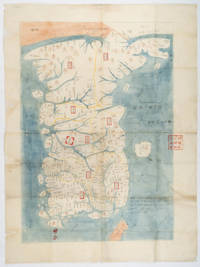
218441Tokyo. No date. Late Edo. Folding manuscript map ink and watercolour 82 x 61 cm red chop at one edge. Evidence of worming mainly affecting the edges and central fold professionally strengthened with archival washi tide-mark to the verso of the map and the wrappers but an appealing example of this delicately executed and sought-after map of the Korean peninsula. A late Edo period hand-painted colour copy of one five maps produced by Japanese scholar Hayashi Shihei to accompany his famous 1785 banned work "Sangoku Tsuran Zusetsu" "An Illustrated Description of the Three Countries" - the three countries in question being Japan's neighbours Korea the Ryukyu Kingdom now Okinawa Prefecture and Ezo now Hokkaido Sakhalin and the Kuril Islands. <br> <br>This detailed map of "The Eight Provinces of Korea" was probably based on Korean maps but Hayashi added details including the existence of the residence in Busan maintained by envoys from the Japanese Domain of Tsushima which had a relationship with Korea throughout most of the Edo period. He also adds text showing the distance between this residence and the Korean capital in both Japanese and Korean measurements and includes latitude lines though these are somewhat inaccurate - placing the 38th parallel south of the Korean capital. His map interestingly gives the Korean words for the four cardinal directions written in Korean script. Unlike Hayashi's "Illustrated Description of the Three Countries" this map does not show the contentious Takeshima/Dokdo/Liancourt Rocks which are too far out from the coast to fall within the frame of the map although it does include the island of Ulleungdo closer to the east coast of Korea. <br> <br>This copy is undated but inscribed with the words "Map by Hayashi Shihei of Sendai". A red chop in the lower middle shows that the map was owned by the Iijima Family in Matsushiro Domain Nagano Prefecture. The family were known as historians of the domain. . unknown
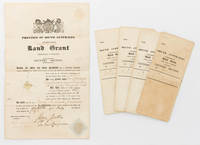
123505Very Good. Folio five documents approximately 387 × 240 mm each each being a bifolium centrefold blank last page docketed; the first page in each instance contains a small hand-coloured diagram of the block showing the orientation of the land a paper-over-wax impressed seal and the signature of Governor George Gawler as Resident Commissioner and Alfred Miller Mundy as Private Secretary dated 16 July 1840. Three horizontal creases when the documents are folded thus the docketed portion of the last page becomes visible on one of the exposed panels; a few tiny marginal chips; one document has a short split along one fold and its outer panels when folded are a little tanned; trifling signs of age; overall all five documents are in very good condition. The consecutively numbered land grants 1037 to 1041 are for 'Eighty acres numbered 957 to 961 in the Provincial Survey marked with the Letter C' purchased by 'George Frederick Dashwood Esquire Royal Navy Forest Lodge Bracknell Berks'. The purchase price of £80 per section is not shown; all five documents have the word 'Duplicate' in ink in a contemporary hand at the head of the first page and they have a slightly different title to examples we have seen where purchase prices are recorded 'Land Grant under Preliminary Sales in England and Partial Purchase in the Province'. <p>Lieutenant George Frederick Dashwood RN 1806-1881 . 'was a naval officer public servant and politician in South Australia. He was appointed an acting member of the Legislative Council of South Australia serving from June 1843 to June 1844. He entered the Royal Naval College Dartmouth in 1819 and served 1832-1833 under Captain C. H. Fremantle on HMS "Challenger" noted for earlier 1829 claiming all of New Holland west of New South Wales for the Crown. He was commissioned lieutenant in December 1833 later served on the survey vessel "Sulphur". Dashwood suffered terribly from rheumatism and was retired on half pay. Dashwood married Sarah Rebecca Loine on 27 December 1839 in a Catholic church in London. They arrived in South Australia aboard "Orissa" in November 1841. He purchased an estate 5 miles 8 km west of Meadows named Dashwood's Gully. He and Sarah married again in a civil ceremony for reasons of bureaucratic convenience. In 1844 he applied for partial remission of the purchase price of the land by virtue of his naval service. This was initially refused but granted in 1850 after much argument. In 1842 he was appointed justice of the peace and sworn in as magistrate and on 15 June 1843 he was appointed to the Legislative Council holding this position until July 1844 when he resigned and apart from a public meeting at which he protested against the proposed settlement in the colony of a contingent of Parkhurst boys he took no part in public life until November 1846 when he was reappointed JP and in April 1847 he was made Acting Commissioner of Police and Police Magistrate. Two years later he was appointed Stipendiary Magistrate for Port Adelaide. In October 1850 he was appointed Police Commissioner a position he held until January 1852 when he was appointed Collector of Customs succeeding later Sir R.R. Torrens. In July 1858 he was appointed Emigration Agent in Great Britain and apart from a visit in May 1861 was in England until late 1862 when the office was abolished and served as Stipendiary Magistrate in various places including Mount Barker and Strathalbyn. In 1875 he was appointed Stipendiary Magistrate for Port Adelaide and Edithburgh. He held this post until around 1880' Wikipedia. <p>'From Almanda to United States: Lost Localities in the City of Onkaparinga' consulted online records more specifically that Dashwood 'had purchased sections 955 956 957 958 959 960 and 961 in the Hundred of Kuitpo in 1840 while still living in Berkshire' that Dashwood Gully had a post office and a school which operated from 1863 to 1869 and that the area continued to be known as Dashwood Gully until at least the 1950s. George Gawler 1795-1869 was South Australia's second governor. 'Disputes between the first governor Captain Sir John Hindmarsh and the resident commissioner Sir James Fisher over their respective jurisdictions had retarded the colony's development so the two offices were combined in Gawler. Thus as governor he became representative of the Colonial Office in the province and as resident commissioner representative of the non-governmental Colonization Commission which was responsible for the control of land sales for applying the proceeds to the emigration of labourers and for raising loans until such time as the colony had sufficient revenue to support itself. On 12 October 1838 Gawler with his wife and five children arrived in Adelaide in the "Pestonjee Bomanjee" and found conditions far worse than he had been led to expect. The most urgent necessity he believed was to promote rural settlement. He persuaded Charles Sturt to accept the post of surveyor-general and until he could assume office Gawler himself took charge of the Survey Department reorganizing it and conducting preliminary explorations. He also hired every available surveyor including some of Light's former officers. In October 1839 to his dismay he was ordered to dismiss them. The commissioners had appointed Lieutenant Edward Frome as surveyor-general and sent him out with a party of sappers. Gawler solved the problem by amalgamating the two forces feeling justified by the increasing volume of land sales. In 1839 over 170000 acres 68797 ha were sold'. Gawler produced results: within twelve months 200000 acres had been surveyed and by May 1841 mapping of 7000 square miles had been completed and over 500000 acres divided into sections. These rare land grants are evidence of Gawler's energy and zeal. Unhappily for him history was about to repeat itself: his 'major weakness was his complete failure to understand political realities. His recall and his successor Captain Sir George Grey arrived together on 10 May 1841' 'Australian Dictionary of Biography'. <p>Alfred Miller Mundy 1809-1877 has his own claims to fame as well. He 'enlisted in the army and was stationed in Sydney in November 1827 when he was promoted . to lieutenant. He was appointed a Magistrate in Tasmania in March 1835 and as Justice of the Peace in 1837. He resigned his commission in 1839 but was later commonly referred to as "Lieutenant Mundy". On 11 July 1839 Mundy John Bourke and Joseph Hawdon set out from Melbourne for Adelaide Mundy and Bourke on a light tandem and Hawdon on horseback following the route taken by Charles Bonney via Portland Bay and the Glenelg River. They arrived in Adelaide exactly a month later and estimated it could easily be done in half that time. He joined with Edward Bate Scott and Edward John Eyre who had a scheme to purchase and transport livestock from Adelaide to the Swan River Colony now Perth aboard chartered ships as far as King George's Sound then the only deepwater harbor in Western Australia and then drive them overland to Perth. On 30 January 1840 they loaded some stock onto the schooner "Minerva" and a few days later the remainder onto the barque "Cleveland". Eyre sailed aboard "Minerva" while Mundy was aboard the "Cleveland". The stock consisted of 1700 sheep which included over 1000 ewes and 450 lambs 6 horses and 100 cattle. They achieved good prices in Perth and would have made a tidy profit except many sheep and cattle died on the track in Western Australia ascribed to their eating poisonous plants. On 3 April 1840 Eyre and Mundy were elected honorary members of the WA Agricultural Society. They arrived back in Adelaide aboard "Minerva" in May 1840. Mundy was appointed acting Clerk of the Legislative Council in June 1840 and Private Secretary to the newly appointed Governor Grey in May 1841. He was appointed by the Governor to the Legislative Council on 15 June 1843 originally as a non-official appointee then as Colonial Secretary from 15 June 1848 to 14 June 1849 when he returned to England on leave of absence. His brother Edward Miller Mundy who was MP for the constituency of South Derbyshire had died childless on 29 January 1849 and Alfred resigned on succeeding to the family estate which included lucrative coal mines. He was Sheriff of Derbyshire in 1855 and a JP and DL for that county and a JP for Nottinghamshire. He died on 30 March 1877 while on holiday in Nice' Wikipedia. <p>These documents indicate Mundy was also private secretary to Governor Gawler by mid-July 1840 little more than two months after he arrived in Adelaide. He was successful in securing another important government contract too: less than a year later on 5 June 1841 he married Jane Hindmarsh 1814-1874 the eldest daughter of the colony's first governor John Hindmarsh. He had been recalled by the Colonial Office and he sailed for England on 14 July 1838. The 'recall was not considered a disgrace either in Adelaide or at the Colonial Office' and he 'had high hopes of reinstatement and left his wife in Adelaide. she married off her daughters with enviable success: in July 1840 Mary to G.M. Stephen a cousin of James Stephen at the Colonial Office and in July sic 1841 Jane to Alfred Miller Mundy a cousin of the earl of Lincoln. Mrs Hindmarsh also managed the sale of her husband's land to such effect that her account of £12000 was by far the largest in the Adelaide branch of the Bank of Australasia when she left to rejoin her husband in 1841' after he was appointed governor of Heligoland in 1840 ADB. 5 items. unknown
1924048236Macmillan And Co. 1924 1930 1924. 1st Edition 1st Printing. Hardcover. Fine/Fine. Colored And Supplementary Plates Figures In Text Plans Tables. Four Volumes An Incomplete Set In Original Blue Cloth Gilt With Dust Jackets And Slipcases. First Printings. Volume I: Fine In Fine Dust Jacket Slipcase With Wear At Open Corners Mostly At The Right Open Corners. Volume Ii: Lacking Volume Ii Parts I And Ii. Volume Iii: The Great Transitional Age In The Northern And Eastern Sections Of The Palace ; The Most Brilliant Records Of Minoan Art And The Evidences Of An Advanced Religion. Fine In Fine Dust Jacket In Lightly Used Slipcase With Wear At Open Corners. Vol. IvPart I Emergence Of Outer Western Enceinte. With New Illustrations Artistic And Religions Of The Middle Minoan Phase ; Chryselephantine 'Lady Of Sports' 'Snake Room' And Full Story Of The Cult : Late Minoan Ceramic Evolution And "Palace Style". Volume IvPart.2 'Camp-Stool' Fresco ; Long Robed Priests And Beneficient Genii Chryselephantine Boy-Pod And Ritual Hair-Offering ; Intaglio-Types Mmiii-Lmii ; Late Hoards Of Sealings ; Deposits Of Inscribed Tablets And The Palace Stores ; Linear Script B And Its Mainland Extension ; Closing Palatial Phase ; 'Room Of The Throne' And Final Catastrophe. With Epilogue On The Discovery Of 'Ring Of Minos' And "Temple Tomb. Volume Iv Parts I And Ii Both Fine In Fine Dust Jackets In A Quite Worn Slipcase Frayed And Bumped At Center Of Left Open Edge And With Top Right Long Edge Detached But Complete. International Shipping Not Available Due To Lack Of Fully Insurable Shipping Options For The Set. <br/> <br/> Macmillan And Co. 1924, 1930 hardcover
1965mon0000121503PROGRESS PUB. 1965-01-01. Hardcover. Good. 2.5000 in x 8.5000 in x 5.9000 in. No DJ. Mild shelf wear and fading to both volumes. Former owner's name on inside cover otherwise pages clean. Cup mark on volume one's cover. PROGRESS PUB. hardcover
1843010268London 1843. Book. Very Good. Paper Covered Boards. 12mo - over 6¾ - 7¾" tall. Very Good bound in Stitched paper covered boards lacking the spine a fragment of spine laid in with partial title -"ASHBY HARDING LETTER OF PEERESS". A fascinating collection of letters mostly requesting various goods and items to be sent -"The Ladies Cornwallis will be glad to see the person who made their cloaks on Thursday morning at ten o'clock " "lady Blount wishes Messrs. Harding to send her two yards of silk." etc. The company of "Messrs. Harding" went through many name changes during the first half of the nineteenth century in London from Harding Howell & Ashby to Harding Howell & Co Harding Ashby & Co. Ashby & Co. etc. They were always involved in selling various high-end goods and services- dressmaking jewelry haberdashery perfumes furs silks etc.- to the Royalty of England including the Prince & Princess of Wales and York Dukes of York & Clarence and to the peers and peeress of the realm. A simply marvelous collection of letters with much to be discovered about the identities of their authors. . Hardcover
1907009965Torino Turin Italy 1903-1907: Impresa Allegri & Co. 1907. Book. Very Good Minus. Leather. Oblong Folio. Collection of 29 original photographs two - 8 3/4" x 6" and 27- 6 1/4" x 4 1/2" applied on 15 thick card leaves titles written in white ink directly under photos one blank leaf each front and back. The photographs detailing the construction of the Umberto I Bridge over the Po River at Turin 1903-1907 the bridge was completed with the addition of the statue groups by Rubino and Reduzzi in 1911. Bound in oblong leather folio 13" h x 16 1/2" w with presentation in gilt front cover -"Al Marchese Francesco Medici Deputato al Parlamento" - followed by title and publisher in gilt. front cover with gilt decorations ornate 1" wide gilt turn-ins all edges gilt. Very Good Minus missing 2/3 of the leather at spine boards rubbed soiling and staining to end pages the leaves darkened at edges the photographs all in Very Good condition with some rubbing. Designed by the Florentine architects Vincenzo Micheli and Enrico Ristori to replace the suspended metal bridge named after Maria Teresa and constructed over the period 1903-1907. The bridge was dedicated 26 May 1907. This copy with 29 photographs comparable to that held by the library of the Polytechnic of Turin there was also a like-bound version with only 15 photographs. Francesco Medici 1847-1911 was an Italian politician and engineer who played a prominent role in the construction of this bridge. F. CORRADINI 1907; C. FIORIO 1907; M. LEVA PISTOI 1969. pp. 185-186; M. MAFFIOLI 1978 pp. 32 ff Table: 49-50. Impresa Allegri & Co. Hardcover
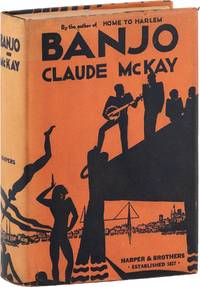
192988435New York: Harper & Brothers Publishers 1929. First Edition. First Printing. Octavo 19.5cm; navy blue and red paper-covered boards and black cloth backstrip with titles stamped in gilt on spine; decorative endpapers; orange topstain; dustjacket; viii23-3262pp. Spine ends gently nudged topstain slightly dulled else a fresh very Near Fine copy. In the original dustjacket designed by Aaron Douglas; unclipped priced $2.50 gently spine-sunned and lightly edgeworn with a few tiny tears a tiny split at rear flap fold and some mild dust-soil; still a bright Near Fine copy. <br /> <br /> McKay's second novel an accurate social perspective of Black life in southern France drawn directly from McKay's experience living in Marseilles. "Lincoln Agrippa known to his drifter cohorts on the 1920s Marseilles waterfront as "Banjo" passes his days panhandeling and dreaming of starting his own little band. At night Banjo Malty Ginger Dengel Bugsy Taloufa Goosey and even Jake of Home to Harlem prowl the rough waterfront bistros drinking looking for women playing music fighting loving and talking - about their homes in Senegal the West Indies or the American South; about Garvey's Back-to-Africa Movement; about being Black. When Ray a writer joins the group it triggers his rediscovery of his African roots and his feeling that at last he belongs to a race "weighted tested and poised in the universal scheme" from the HarperCollins reissue. PERRY 377; GLOSTER p.165-166. 88435. Harper & Brothers Publishers unknown
189544165New York December 8th 1895. Autograph letter signed on recto and verso of single cream laid sheet 22x14.5cm.; approx. 85 words; dated 26 West 61st N.Y. Dec 8th and simply addressed to "Parker" presumably Stanton's friend and fellow-suffragist Parker Pillsbury 1809-1898 who with Stanton had co-edited the women's rights newsletter "The Revolution" twenty years earlier. Faint mail folds small unobtrusive archival paper remnants to two corners from having been previously mounted else Near Fine and still quite fresh. Brief contemporary 1897 pencil note at bottom edge "Mrs. Stanton - born Nov. 12 1815 Now past 82 - C.E.R." though based on contents we would place this letter as having been written around 1895. Brief but significant missive addressed to Parker Pillsbury the American minister and women's suffrage advocate regarding a copy of Stanton's "Woman's Bible" she had just sent him. "I wonder if I could interest them a "Mrs. White" and one other sufficiently in the Woman's Bible to sell ten or twenty copies in there sic respective woman's clubs It is published at my expense hence I am trying to push its circulation." The controversial "Woman's Bible" a series of commentaries pertaining to the portions of the Bible relating to women was published in two parts in 1895 and 1898 and composed almost entirely by Stanton alone her committee of Bible revisors finding the project too controversial and harmful to the cause of women's suffrage. Clearly at the time of writing this letter the book was still meeting with resistance thus our placing the date at around 1895 Stanton turning to Pillsbury as a potential source of influential and wealthy patrons she inquires "Is Mrs. White still living & working Is that rich woman that Mr. illegible used to visit in Maine living". But by 1897 the book had become a best seller though many of the members of the women's suffrage movement would continue to distance themselves from it. This letter quite significant as a testimony to the aging Stanton organizer of the historical 1848 Seneca Falls Convention and her continuing indefatigable efforts and initial lack of support in getting this work circulated. See Tracy A. Thomas "Elizabeth Cady Stanton and the Feminist Foundation of Family Law" 2016 pp. 15 & 223. unknown
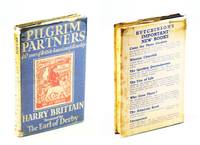
1942163H4369London: Hutchinson & Co. Publishers Ltd. 1942. Book. Fair. Hardcover. First Edition. 8vo - over 7¾" - 9¾" tall. 156 pages. Index. Seventeen black and white plates. "In this unusual and important book the author traces the remarkable history of 'The Pilgrims' a unique organization which may well prove the basis and meeting-ground for an even closer fellowship between the the two great English-speaking peoples on whose constant friendship the peace of the world so largely depends." - from dust jacket. "The goal to move America into global government is not new. It was the goal of many British aristocrats specifically Cecil Rhodes and industrialist Andrew Carnegie along with the Pilgrim Society." - Joan Veon 2007. Average wear to unmarked book which is foxed at edges. Above-average wear and yellowed tape repairs to dust jacket now preserved in archival-grade Brodart. A worthy example of this elusive title much-sought by conspiracy researchers. Please note that this is not a limited edition copy. Hutchinson & Co. (Publishers) Ltd. Hardcover
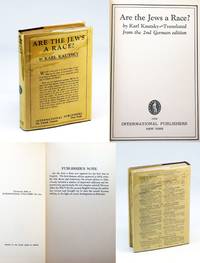
1926441j1458New York: International Publishers Co. Inc. Good. 1926. First English Edition. Hardcover. "What is the truth of the Jewish claim of race What are the causes of anti-Semitism What is the future of Zionism and can an independent Jewish state in Palestine be realized These are the fundamental questions affecting the Jews which Karl Kautsky discusses in this penetrating book." - dust jacket. "An early attempt by one of the world's leading Jewish Communist theoreticians to counter early twentieth century anti-Semitism - which argued that Jews were an alien non-European race - by attempting to prove that the Jews do not constitute a specific race but are rather a mixture of many different groups." - Bokus. "Appearing in English for the first time. The first German edition appeared in 1914 under the title Rasse und Judentum; the second edition in 1921 already included a number of important additions and improvements particularly the new chapter entitled 'Zionism After the War'. For this English version the author has revised and brought up to date the second German edition in the light of recent developments in Palestine." - Publisher's Note. 10-255 1 pages. Index. Chapters include: Race Theories; Races of Animals; The Races of Man; Differences and Oppositions Between the Races of Man; Physical Characteristics of the Jewish Race; Mental Qualities of the Jewish Race; The Assimilation of the Jews; Anti-Semitism; Zionism Before the War; Zionism After the War; Pure Races and Mixed Races; The Last Stages of Judaism. "Kautsky 1854-1938 was an influential Marxist theoretician friend of Engels and strong critic of the Bolshevik Revolution." - Wikipedia. 20.7 x 14.7 cm. Tight and unmarked with moderate wear to original textured brown cloth lettered in gilt upon backstrip. Includes replica dust jacket preserved in glossy new archival-grade protection. A sound example of this fascinating study.; 8vo - over 7¾" - 9¾" tall; Anti-semitism Zionism Judaica Jews Race Jewish Question Racism . International Publishers Co., Inc. hardcover
1734D4425Paris: Par La Compagnie des Libraires 1734. Hardcover. Very Good. Three volumes comprising Vol. III parts I to III of Memoires de lAcadémie Royale des Sciences depuis 1666 jusquà 1699. Paris: Par La Compagnie des Libraires 1733-1734. Part I: 231pp.; Part II: 294pp.; Part III: 215pp. 97 engraved folding plates depicting animals and skeletal diagrams. Engraved portrait frontispiece of Claude Perrault in first volume. Contemporary French calf spines gilt edges red; some occasional browning; repairs to joints some rubbing. Unidentified armorial bookplate to front pastedown beneath monogrammed bookplate D.P. with chipmunk and two mice. A later reduced format edition of Perraults Memoires of 1671-1676 Perraults study of this nature was first published in 1669 with the results of investigations of five animals and later expanded with studies of over forty animals. Prior to 1670 most descriptions of animals paid little attention to their internal structure and there were very few images in natural history encyclopedias that depicted skeletons or muscles. That changed with the establishment of the Académie des Sciences in Paris in 1666 by Jean-Baptiste Colbert with the approval of King Louis XIV. The Academy functioned with neither statutes nor regulations until 1699. At that time the Academy used the term mathématique to encompass the fields that are now called astronomy mathematics and physics and the term physique to encompass the fields that are now called anatomy botany zoology and chemistry. In January 1699 Louis reorganized the Academy giving it first regulations. The effect was to give the King more control over their activities in exchange for becoming an official institution under his protection with the new name Académie Royale des Sciences. One of the original academicians the physician Claude Perrault organized regular sessions at which participants could dissect deceased animals from Louis XIVs royal menagerie and record all they observed. Lions chameleons bears gazelles wolves ostriches crocodiles monkeys eagles tigers porcupines and salamanders among some were all laid open by the academics scalpels. These superb folding plates record in great detail the pioneering work at the Academy. These three volumes in three parts focus on the transformative and foundational years of the French Royal Academy of Sciences and Claude Perraults efforts which had made comparative anatomy a vital tool for the classifying naturalist. <br/><br/> Par La Compagnie des Libraires hardcover
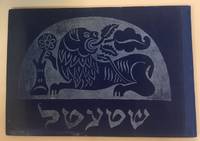
1923S6Berlin: Verlag Schwellen 1923. First Edition . Original Decorative Half-cloth. Very Good. Folio-oblong. Issachar Beer Ryback. FIRST AND ONLY EDITION. 31 ORIGINAL LITHOGRAPHS with captions in yiddish. Front-cover: on the leftside one strip 5cm wide with some discoloration. for binding see our photos Edges with truly insignificant occasional foxing . "Bilder - Verzeichnis" reproduced in facsimile. A very good clean and fresh copy AS RARELY SEEN - A SCARCE ITEM of JEWISH ART in the Russian Avantgarde Style. <br/> <br/> Verlag Schwellen hardcover
1939863H4593New York: Longmans Green and Company Co. 1939. Book. Good. Hardcover. Signed by Authors. First Edition. 8vo - over 7¾" - 9¾" tall. Signed and affectionately inscribed by Carter Glass upon front free endpaper. "Here is a character composed of truth sincerity and courage. He hates deceit and detests a lie. But this Jeffersonian Democrat possesses a rarer integrity which we call intellectual integrity. Appointed to the Banking and Currency Committee in 1904 the supreme opportunity soon came to him to be the chief architect of the Federal Reserve System. He became the great post-WWI Secretary of the treasury and won Woodrow Wilson's intimacy trust and praise. He came to the Senate and is the most outstanding Senator Virginia has ever contributed to the nation's chief deliberative council." - Introduction. xv 1 519 pages. Index. Four black and white plates. Unmarked with average wear to publisher's navy blue cloth. Binding sound. Above-average wear to dust jacket now preserved in mylar. Photocopy of New York Times book review dated May 28 1939 laid-in. A sound signed copy of the life story of this highly-influential Virginian. Longmans, Green and Company Co. Hardcover
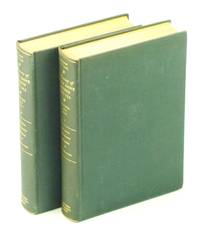
1943733j0479New York: Columbia University Press. 1943. First English Edition. Hardcover. Good. "Generally regarded as the first comprehensive history of the crusades. Author was archbishop of Tyre from 1175 to 1184 or 1185 and he remained chancellor of the Latin Kingdom of Jerusalem of which he was a native from 1174 until 1186." - Introduction. Translated from the Latin. pp. xii 3-556; 6 553. Includes bibliography and index. Foldout map in Volume 1. Contents clean unmarked and tanned primarily at periphery. Light wear to publisher's forest green cloth lettered in gilt upon spines. Several fly specks to fore-edges. Bindings intact. No dust jackets presumably as issued. A well-preserved example of this highly-treasured work.; Sm 4to . Columbia University Press hardcover
19670001018Paris FRANCE: Author Published. Good. 1967. On offer is 'Dossier Solange' by Zwy Milshtein includes two original signed pen and ink drawings. This is a very extraordinary rare set of handmade engravings being the second signed original proofs set "exemplaire no.2" dated 1967 which was never offered for commercial sale together with two original pen and ink drawings both signed and dated 1967 by the artist. The Dossier is comprised of: an outer sleeve/box with hand drawn title treatment and graphic; inner hard cover title shell handwritten and drawn which is a duplicate of the outer hard cover; two original pen and ink drawings not prints signed by Milshtein they are on one page one on either side; on hand made textured art paper 144mm x 172mm twenty-two 22 French-folded pages on handmade hand cut art paper of the four sides of a French-fold there is an engraving front and one page with text and roman numeral thus two blank. Overall size: 282mm x 170mm. Eighteen 18 pages have de-bossed and the odd embossed engravings including the inside cover and text numbered I-XVIII the number V appears twice although it has a different etching on each page. Number XII is omitted. Protective tissue throughout. The text and the eighteen engravings which accompany them together with the cover were all executed by Milshtein. The engravings were hand pressed by the artist and the original pages engraved after printing. The condition is very good with the exception of the spine on the inner hard cover being detached and taped. One or two etchings have very feint foxing spots negligible. BIO NOTES: Zwy Milshtein is well known in France as a painter and as a master at the art of engraving. Milshtein was born in 1934 in Kichinev the area now known as Moldovia. During the World War II his family emigrated to Russia and then later returned to Romania. In 1948 Milshtein arrived in Israel but later moved to Paris in 1955. Since that time he has received great acclaim for his etchings and engravings. Numerous exhibitions in Paris and abroad attest to his artistic skills. In the year 1970 Milshtein had an exhibition at ARC the Museum of Modern Art Paris France. In 1978 a retrospective exhibition of his engravings was held at the Bibliotheque Nationale in Paris. In 1997 his work was featured in the Hans Christian Andersen House project which selected top European artists to create an homage to celebrate the bi-centennial birthday of the famous Danish author. G.; French; 16mo - over 5¾" - 6¾" tall; ART ARTISTS FRANCE MOLDAVIA PRISONER AUTOGRAPH JEWISH HEBREW YIDDISH JUDAICA AUTHOR WRITER HOLOGRAPH SIGNED POETRY POET Hand Drwan Personal Memoir Handwritten hand written autograph autographs signed letters document documents manuscript manuscripts writers writer author holograph Travel personal Americanaantiquité contrat vélin document manuscrit papier Antike Brief Pergament Dokument Manuskript Papier oggetto d'antiquariato atto velina documento manoscritto carta antigüedad hecho vitela documento manuscrito Papel . Author Published hardcover
18961812240048Boston Mass. : Published by the New-England Historic Genealogical Society 1896. First Edition. Hardcover. Very Good. Signed. The Tan Book series: Massachusetts Genealogy 182 volume set. Hardcovers. A massive collection of many of the towns in Tan Book series. Census information births marriages deaths. Contains the Vital Records of the following Massachusetts towns: Acton; Alford; Amesbury; Andover vols 1-2; Arlington; Ashfield; Ashburnham; Athol; Barre; Becket; Bedford; Beverly vols 1-2; Billerica; Brimfield; Bolton; Boxford; Bradford; Brockton; Brookfield; Burlington; Canton; Carlisle; Cambridge Vols 1-2; Charlemont; Charlestown Vol 1. Newer printing; Charlton; Chatham NP 1991; Chelmsford; Chelsea NP; Chester; Cohasset; Conway; Dalton; Danvers vols 1-2; Dartmouth Vos. 1-3; Deerfield; Dennis Vols. 1-3 np; Dorchester South; Douglas; Dracut; Dudley; Dunstable; Edgartown 2 vols; Essex; Falmouth Picton Press 1993; Framingham; Gardner; Gloucester vols. 1-3; Grafton; Granville; Great Barrington; Greenfield; Groton vols. 1-2; Hamilton; Harvard; Harwich Harwick Historical Soc 1982; Haverhill vols. 1-2; Heath; Hinsdale; Holden; Holliston; Hopkinton; Hubbardston; Hull; Ipswich Vols. 1-2; Lee; Leicester; Leominster; Lexington; Lowell Vols. 1-4; Lynn Vols. 1-2; Kingston; Malden; Marblehead Vols. 1-3; Marlborough; Manchester; Medford; Methuen; Middleborough Mass. Soc. Mayflower Desc. 1986 Vols 1-2; Middleton; Middlefield Vols. 1-4; Nantucket Vols. 1 3-5; New Ashford; New Bedford Vols. 1-2; New Braintree; Newbury vols. 1-2; Newton; Northbridge; Norton; Oakham; Palmer; Pelham; Pembroke; Petersham; Phillipston; Princeton; Plympton; Reading; Richmond; Rowley; Roxbury Vols. 1-2; Royalston; Rutland; Salem Vols. 1-6; Salisbury; Saugus; Shelburne; Shirley; Shrewsbury; Southborough; Southbridge Holbrook NP; Spencer; Stoneham; Stoughton; Stow; Sturbridge; Sudbury; Sutton; Taunton Vols. 1-3 vol 1; Templeton; Tewksbury; Tisbury; Topsfield; Tyngsborough; Tyringham; Webster Holbrook np; Wakefield; Warren; Washington; Wayland; Wenham; Westborough; West Bridgewater; West Boylston; Westford; Westminster; West Newbury; Westport; West Stockbridge; Weymouth Vols. 1-2; Winchendon; Windsor; Williamstown; Worthington; Upton; Uxbridge. Note: 9 of the volumes later printings as indicated. This is an oversized or heavy book which requires additional postage for international delivery outside the US. Boston, Mass. : Published by the New-England Historic Genealogical Society, hardcover
1880023430London circa 1880: J. S. Virtue and Co 1880. First Edition . Hardcover. Very Good . 13" Tall. Engravings on Steel and Wood. Vol 1: X;Vi; 240; Vol 2: Vi 240; Vol 3 Vi 240; Vol 4 Vi 236. Half Morocco Spine And Tips Over Purple Pebbled Cloth; Spines With 5 Bands Six Compartments Gilt Title And Volume Number Ornate Gilt Decorations In Other Four Compartments; Original Yellow Endpapers; All Edges Of Page Block Gilt. The Books Are 13" Tall 10 1/2" Deep And The Four Volumes Are 6 3/4" Wide On The Shelf. Undated But Circa 1880. Front Hinge To Vol Ii Cracked Binding Solid. Original Leather Recently Professionally Conditioned And Refreshed Professional Repairs To A Few Splits At Top/Bottom Of Spine Edges; Gilt Bright; No Names No Marks No Bookplates. Also With An Additional 41 Loose Plates Of Same Size As Those In The BooksPossibly From Another Copy Of This Set Or Perhaps Never Bound. Shipping Weight About 30 Pounds Insurance Required Shipping Requires Additional Charges Depending On Destination. Palestine Refers To The Area Immediately North Of Egypt Along The Mediterranean Coast Inhabited By Countless Peoples And Conquered More Or Less Mercilessly Countless Times By Various Empires From England To Central Asia. The Volumes May Or May Not Include References To This Unrivaled Mix Of Ethnicities Most Of Whom Were Then Living At Pece With Each Other. <br/> <br/> J. S. Virtue and Co hardcover
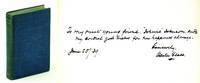
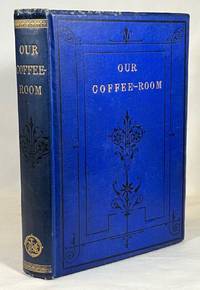
187824897London: James Nisbet & Co. 1878. A very collectible copy inscribed and signed in ink by Florence Nightingale to 'Miss Johnson' on the half-title page dated Jan/78 January 1878; Original flat brown endpapers separated at the front and rear gutters with hinges strong and intact. Textblock slightly aged but very clean and tight; Bound in blue cloth with gilt embossed titling and characteristic bevel-edged boards worn and scuffed at the corners and along the edges and spine tips; Former owner's signature on ffep verso; On the recto of the rear free endpaper is an undated ink notation concerning the Coffee Public House Assoc. Grosvenor Square; President - Duke of Westminster / Chairman Hon. W.F. Cowper Temple; Elizabeth Reid Coffin was one of Scotland's greatest social reformers and advocated total abstinence from alcohol. She founded the first Coffee-Room in 1869 where food and non-alcoholic drinks were served; Her friend and fellow activist Florence Nightingale established her own Coffee Room in her home village of Whatstandwell Derbyshire and distributed and signed copies of this book; Elizabeth Cotton became Lady Hope when she married British evangelist Sir James Hope in 1877; 247p. plus 16 pages of ads. Additional photos available upon request. From the collection of John Calder Pearson ardent bibliophile former member and one-time president of the Rowfant Club of Cleveland Ohio a celebrated literary society. . Signed by Florence Nightingale. Eleventh Thousand. Embossed Blue Cloth. Very Good. Illus. by Frontispiece Engraving. 12mo - over 6¾" - 7¾" tall. Hardcover. James Nisbet & Co. Hardcover
1648032258At the Sun over against St Dunstan's Church in Fleetstreet: Printed by William Wilson for Abel Roper 1648 A fair copy of an extremely scarce work. Thomas Overbury 1581-1613 is best known for the scandal surrounding his death by poisoning in the Tower and the trial that followed it some 2 years later. He studied Law in 1598 was knighted in 1608 and was known as a writer and poet. His account of the arraignment and trial of Raleigh is assumed to be written as an eye-witness. Raleigh was tried in 1603 and convicted of treason. His sentence of death was commuted to imprisonment and he was later briefly released before being imprisoned and retried in 1618. This trial reinstated his death sentence albeit by less gruesome means. The book contains Overbury's account of the first trial; an account of the second trial no author named; and Raleigh's letters to the King and to his wife before his death. The binding is more recent full panelled calf with title label to spine matching a contemporary design. There is a bookplate of Col William Allen Potter to the front pastedown. Col Potter was a High Sherriff of Nottinghamshire and President of the Thoroton Society. Newer endpapers and 2 initial and final blanks have been added. Contents: title page; blank text with decorative headpiece and initial capital pp 1-25; proceedings against Sir Walter R 1618 pp 26-34; Letter to the King pp 35/6; Letter to his Wife 37/8; Finis. The binding is in fine condition. The contents are fragile: the paper is very browned at points and the side margins have been reinforced probably when the book was rebound. It has also been trimmed at both top and bottom. P 7 has a couple of small holes next to the side margin and P 9 is particularly browned. Small parts of text are affected but the text can be read. Please ask for more images if you want to further assess condition. Size 13.5cm wide; 17.9cm high. Printed by William Wilson, for Abel Roper hardcover
20072083002115801450Ehime Prefecture Assembly 2007. Soft Cover. Fine. Number of books: 9 Ehime Prefecture Assembly paperback