1 575 résultats
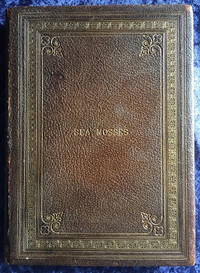
186424170<p><i>"call us not weeds we are flowers of the Sea."</i></p> <b>CIVIL WAR. ANNA BIGELOW.</b>Autograph Manuscript Signed unique calligraphy book with illustrations pressed sea weeds and hand lettered four lines of verse titled 'Sea Weeds.' New York N.Y 1864. 7½ x 10½ on 60-plus pages with 31 moss examples interleaved.<p>Album donated to benefit Union soldiers presented at the New York Metropolitan Fair held on March 28 1864 to raise funds to aid sick and wounded Union soldiers. The Metropolitan Fair was organized to benefit the Sanitary Commission a private relief agency authorized by federal legislation in 1861. The Commission raised an estimated $25 million in revenue more than $386 million today and enlisted thousands of volunteers. A New York Times article on Jan. 1 1864 provided a preview: "Every branch of agriculture trade industry and art will be invited to contribute its choicest and costliest products for exhibition and sale. Musical and dramatic artists will be invited to aid the common cause with their talent and genius. All the material resources of the great City of New-York and of the region directly tributary to it are to be invoked."</p><p>The great success of an earlier Chicago fair inspired many women in the North to become involved. The Metropolitan Fair included everything from "Architectural Ornaments" to "Wines & Liquors" to "Wholesale Millinery Goods." Commemorative and ceremonial objects were often specially designed for the Sanitary fairs. Anna Bigelow's album of sea mosses may have been displayed in the "Arrangements and Decoration" section.</p><p>When Northerners attended fairs donated money or goods or volunteered their time they were aiding the soldiers on the front lines. Autographs of leading Americans were often sold; Lincoln even donated an autograph manuscript of the Gettysburg Address to the New York Fair where it sold for $1000. For Chicago's Great Northwestern Fair Lincoln donated his original signed draft of the Emancipation Proclamation with an accompanying letter stating his "desire to retain the paper but if it shall contribute to the relief or comfort of the soldiers that will be better."</p><p>The elaborately hand lettered and decorated title page of this album bears a small signature "Ellsworth" and "819 Broadway." Henry W. Ellsworth is listed in New York's Manual of the Board of Education as a penmanship instructor at School No. 47 on Twelfth Street between Broadway and University Place p. 295. There is also an inscription "Drawn by E. W. Gandy 1864" at the top of the front free endpaper.</p><p><b>Condition</b></p><p>All edges gilt. Elaborately gilt stamped brown morocco gift binding with white silk linings with gilt title "Sea Mosses" at front board and "Album" at spine. A bit chipped top of spine. Internally a bit marked at the silk linings. The plates in very good condition with the each sea moss plate a delicate floral arrangement. Front cover detached. Some soiling and foxing.</p> hardcover books
500989of A.H. Perry to W.P. Burrall Esq. on Hartford and New Haven Railroad Office letterhead Springfield MA February 22 1864. Small 4to 1 page. Signed by Authors. F. Soft cover. paperback books
500990text of a telegram on printed form of the American Telegraph Company from Captain William M. McKim to agent George P. Greer of the Hartford and New Haven Railroad Boston ca. 1864. 8vo 1 page with additional Autograph Letter Signed of S.R. Conner on verso for certification. Signed by Authors. F. Soft cover. paperback books
500997holograph "Official Copy" in the hand of 1st Lieutenant William Stone of "General Order No. 1" on "Office Act. Ass't. Pro. Mar. Gen'l" letterhead Philadelphia April 9 1864. Order routing information in red ink at bottom in another hand. 4to 1 page. Signed by Authors. F. Soft cover. paperback books
501001holograph copies of text for 4 telegrams Boston February 15-18 1864. Small 4to sheet 2pp. recto and verso. F. Soft cover. paperback books
1888229914Providence R.I. J.A. & R.A. Reid Publishers 1888. 1888. First edition. Thick 8vo. Engraved frontispiece portrait; 22 illustrations; 46 portraits. 2 page preface by Frank A. Burr. Original green cloth stamped in dark brown and gilt; green floral endpapers. Very good. 445 pages. 1st Edition. Hardcover. Very Good/No Jacket. Providence, R.I., J.A. & R.A. Reid, Publishers, 1888. hardcover books
1952198635New Hope Pennsylvania The River House 1952 1861. 1952. Reprint of the 1861 Richmond edition. 4to. 23 illustrations. Original blue cloth stamped in black; blue endpapers. Very good. Bookplate of Charles S. Schwartz on the front pastedown. Ink signature on the front endpapers. #67/400 copies. Hardcover. New Hope, Pennsylvania, The River House, 1952, 1861. hardcover books
188719211Gettysburg Pa.: Wm. J. Cook ca. 1887. First edition. Roughly opened or trimmed along the lower edge; some light chipping and light soiling; a very good copy. Original printed yellow wrappers 6 x 4 inches 9 1 pages. Illus. Seemingly unrecorded a bound pamphlet of irregular leaves and varied typefaces stitched together into printed wrappers; likely only a short step up from an amateur press production. With a historical summary plus dramatic poetry on Gettysburg; one of the poems is signed in type W. J. C. and the rear wrappers note that the book is available from Wm. J. Cook Box 82 Gettysburg. The rear wrappers also note that one poem concerns an 1887 reunion of veterans from both sides of the war. Wm. J. Cook), unknown books
186222500<p>Mainer Edgar Alphonso Burpee describes the Battle of Fredericksburg providing previously-unknown details regarding order of battle Union movement through city streets <i>"unbecoming"</i> ransacking of civilian property and Confederates shelling Union-occupied parts of their city. He also includes drawings of the city's streets.</p> <b>CIVIL WAR. EDGAR A. BURPEE.</b>Autograph Letter Signed to Alexander Burpee. Fredericksburg Va. December 15 1862 12 pp. 5 1/8 x 7¾ in.<p><b>Partial Transcript</b></p><p><i>"Being our orderly I summoned the company at 4 o'clock and gave them my orders.a report of a gun was heard that sounded like thunder. It was a signal gun and to us indicated that something was in process of being done. Then another was heard and immediately after that musketry and some other guns.we stacked arms and lay down waiting the order to move forward.waiting for the pontoon bridges to be laid so we could pass.guns of both forces were constantly being fired and such a roar I never heard before. It seems as if the very heavens were filled with thunder and it was very stirring that our forces were engaged in shelling the city.Then later at double quick we crossed the pontoon bridge and set foot in the doomed city for our first time. We filed into the street that runs along the river bank having the honor of being the first regiment of our brigade in. As we entered marched up the street some 5 or 6 rods in front of us skirmishing and the bullets of the rebels came whistling thickly over our heads and around our ankles.</i></p><p><i>The streets are laid out in regular squares I shall draw you a plan. Because skirmishing was going on in the next street above us we were protected from the rebel shots. the rebel sharpshooters were about six rods away in the houses.their sharpshooters rapidly picked off our men.Our batteries too poured into the rebels showers of shells so that they completely riddled the homes nearby killing a large number of the enemy.By this time 7 o'clock the firing had ceased.our men commenced.ransacking the houses and stores tearing down fences & out buildings.It was alarming to see the scenes of unbecoming behaviors around us.All this time the dead and wounded were being brought down the street. The surgeons were busy attending to those badly wounded.On going up the street we would stumble over the dead of both sides some shot in the heads with shells still there were others killed by bullets. Some wounded would crawl off to some place of shelter.It was indeed a sad scene.</i></p><p><i>Morning came.we formed into line of battle.We were ordered to lie low or march in a stooping position.The ambulance corps were also engaged in carrying off the dead & wounded.In the street where we were two or three rebels lay. One had his whole side and his arms shot off. Another had the top of his head and brains carried away.Towards morning December 13 when it became light enough for the rebels to see our men they began to shell us and the pieces would fly.About 12 o'clock skirmishing commenced on our left.The streets were now filled with moving lines of soldiers.We could see and hear nearly the whole field and our brave men as they advanced under heavy fire from the enemy's batteries and musketry fire.Gen Howard marched often along our line & encouraged us by his words and presence. A balloon was in the rear of the city to observe all movements.About 4 o'clock our brigade was ordered in and down the street with a rush we went.bang went the rebel guns and whiz came their shells at us.Our regiment remained firm.Gen. came along after dark and said 'men of the 19th reg. you have done nobly. Your consistency deserves great praise.' To be continued - Ed."</i></p><p><b>Edgar A. Burpee</b> 1839 – 1919 of Rockland Maine mustered into the 19th Maine Infantry on August 25 1862. He rose to captain's rank was wounded at Gettysburg and was captured at the Battle of Jerusalem Plank Road Virginia in June 1864. He returned to Rockland married Annie Farwell and eventually joined his family's funeral business.</p><p><b>Condition</b></p><p>Fine. Written in light pencil. With some separation at edge of folds.</p> books
1881229921New York Charles Scribner's Sons 1881. 1881. 8vo. 3 page preface. Illustrated with 8 maps including one fold-out. One page preface by M.F. Force. Original blue cloth stamped in gilt on the spine with stamped in gilt and blind with an imprint of a rifle and sword. Very good. 204 pages 4 pages of publisher's advertisements. No dust jacket. No signatures or bookplates. Hardcover. Very Good/No Jacket. New York, Charles Scribner's Sons, 1881. hardcover books
1236Philadelphia: Druck von H. B. Ashmead 1863. . 8vo printed buff wrappers front pictorial small loss to front bottom outer corner; bottom outer corners of text slightly dog-eared A collection of articles on northern sedition against the Union and foreign intervention culled from leading newspapers. There is also a signed declaration by the officers of 150th Pennsylvania Volunteer Regiment scorning northern traitors who were trying to harm the efforts of the army. Funk is credited with the section "Rede eines braven alten Patrioten" and Rousseau with "Die Worte eines patriotischen Soldaten". Includes a quote from Oliver Cromwell and a call by a Democrat for both Republicans and Democrats to join together to defeat traitors to the Northern cause Philadelphia: Druck von H. B. Ashmead, 1863. unknown books
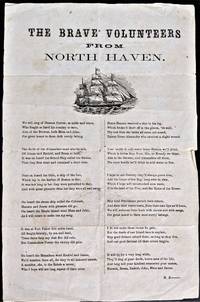
1864712North Haven Maine 1864. 4to. broadside. 255 x 167 mm. 10 x 6 ¾ inches.  12 stanzas of verse in two columns with woodcut engraving of large sailing ship set beneath the title. American Navy Civil War verse broadside from North Haven Island Mainewritten by Harrison Beverage. The broadside lists many names of sailors from North Haven and ships that they served on. The names included are Hanson Carver the Brown's - Eben & John the Alexanders - James Ezekiel & Zena. They served on board the School Ship Sabine The Ohio a ship of the line The steamship Colorado the Rhode Island and on board the Monitor Menadnoc with a couple of them getting wounded in battle. The piece also tells about the battle at Fort Fisher and Commodore Porter. Rare. unknown books
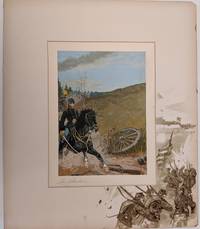
1887692New York: Koch Sons & Co. 1887. Folio. 480 x 405 mm. 19 x 16 inches. Printed index of plates followed by 12 chromolithographic images after original drawings by L. K. Harlow. Each image is mounted to a cardboard mat 11 of which have lithographic vignettes in the lower corner of the mat. Each image is preceded by a tissue with the title of plate printed; some of the tissues are creased and chipped at the out edges. Each plate is signed by Harlow in pencil and a few are signed in the plate; the images are clean and bright but the mats show some toning and a few have minor chips to the edges.  The folio plates are housed in a folding portfolio the spine and flaps are worn and probably should be discarded. Deluxe Edition numbered "79". Sold by Subscription Only. Scarce portfolio of Civil War paintings by the noted Boston artist Louis Kinney Harlow.  Harlow was noted for his water color illustrations that were used to illustrate scores of books and which keep the printer Louis Prang very busy in the 1880's and 1890's. Fielding writes "In 1880 he opened his studio in Boston. Since that time he has been much sought after by publishers of fine books his illustrations having color brilliancy." The plates in this portfolio depict aspects of army life and battle scenes including Grant at Vicksburg Sherman on his march and Sheridan at the Battle of Cedar Creek Each is finely designed and colored and each is signed in pencil in the lower margin. The color plates were printed by Koch and Sons and demonstrate the technical skills of the printer and his attention to detail and color registration. Copies of this portfolio were scarce in the trade. NUC lists only the Boston Public Copy and OCLC adds seven others all in American libraries. Mantle Fielding Dictionary of American Painters p. 158. . Koch, Sons, & Co. unknown books
1958302970Chicago University of Chicago 1958. 1958. First edition. 8vo. Edited with a 8 page introduction and afterword by Jay Luvaas. 2 b/w illustrations; 7 maps in text 1 double-page; 1 folding map laid in loose. Bibliographical references. Dust jacket unclipped; short tears; nicks. Very good. 1st Edition. Hardcover. Very Good/Very Good. [Chicago] University of Chicago [1958]. hardcover books
1954302567New York Crown Publishers Inc. 1954. 1954. First edition. 8vo. Illustrated with 100 b/w photographs and facsimiles; endpaper maps by Alfred P. Jancovic. Bibliography. Dust jacket unclipped; slight rubbing. Very Good. 326 pages. No signatures or bookplates. 1st Edition. Hardcover. Very Good/Very Good. New York, Crown Publishers, Inc. [1954]. hardcover books
1970198394Pasadena California Soci-Technical Publications 1970 1891. 1970. 4to. Indtoduction by James S. Hutchins. Illustated with 20 b/w plates from drawings; b/w full page halftone of Charles A. Wolford. Original black/brown marbled boards stamped in gilt. Pictorial dust jacket unclipped. Very good-fine fresh copy. Bookplate of Charles S. Schwartz on the front pastedown. No signatures. Hardcover. Pasadena, California, Soci-Technical Publications, 1970 [1891]. hardcover books
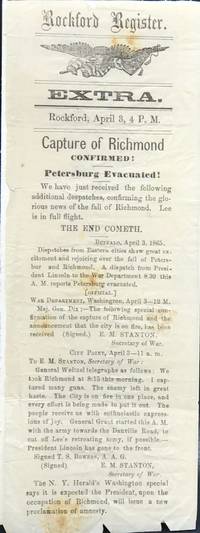
186564431Rockford IL 1865. Broadside 22 X 8 cm. with small illustration of an eagle & flag motif under the "Rockford Register" line. A few shallow chips at edges not affecting text. The "extra" announces: "We have just received the following additional despatches confirming the glorious news of the fall of Richmond. Lee is in full flight. The End Cometh." Following with a Buffalo April 3 dateline are further dispatches from the Secretary of War. At the time there was a Rockford Illinois paper called the Register. We did not find any other possibilities. No OCLC. <br/><br/> Rockford, [IL unknown books
1927197562New York Minton Balch & Company 1927. 1927. First edition. 8vo. Frontispiece halfton photographs. Original black stamped gray cloth. Dust jacket unclipped. Very good-fine. No signatures or bookplates. Author's first book. Story of Stone Mountain Memorial. F. Hardcover. New York, Minton, Balch & Company, 1927. hardcover books
1915197672New York Abingdon Press 1915 1915. First edition. Thick 8vo. Author's preface. Frontispiece portrait photograph. Index. Original gilt stamped maroon cloth. Dust jacket unclipped; few nicks. Very good. Autobiographical reminiscences of the distinguished Ohio-born educator 1830-1921; notable for Chapter 16 which deals with King's Civil War experiences with Sherman's army in the Carolinas: visit to Alaska Chapter 33. No signatures or bookplates. F. Hardcover. New York, Abingdon Press, 1915 hardcover books
1881229899New York Charles Scribner's Sons 1881. 1881. 8vo. 2 page preface. Illustrated with 8 maps. Original blue cloth stamped in gilt on the spine with stamped in gilt and blind with an imprint of a rifle and sword lacks front free endpaper; rubbing; spine ends frayed; corners rubbed. Good. 220 pages 4 pages of publisher's advertisements at end. No dust jacket. Hardcover. Good/No Jacket. New York, Charles Scribner's Sons, 1881. hardcover books
1960221155New York Thomas Yoseloff 1960. 1960. First edition. Small folio. Foreword and acknowledgments by Pakula; introduction by Ryan and Rothstein. 20 color plates; 108 b/w portrait drawings by Pakula. Bibliography. Dust jacket unclipped; small chips nicks. Very good. No signatures or bookplates. F. Hardcover. New York, Thomas Yoseloff [1960]. hardcover books
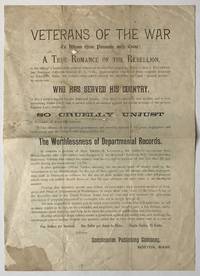
1886858Boston: Combination Publishing Company 1886. About good. Broadsheet 11.75 x 8.5 inches. Old folds a few slight losses not affecting text. Lightly soiling and moderate wear. Ephemeral broadsheet advertising a new book "A True Romance of the Rebellion" by Cyrus S. Haldeman a veteran of the Civil War. "The story is unusually well written and is very interesting within itself; but it carries with it an earnest appeal for a wise revision of the present Pension Laws which are so cruelly unjust to thousands of deserving veterans." In addition to its narrative it contains "official tables showing the enormous sums of money paid by the Government to our Bondholders.and the meagre amounts in proportion paid in Pensions to soldiers for the use of their bodies together with other information which every old soldier should have so that he may advocate his own cause in an intelligent manner." Includes information for pricing and orders. The verso contains an excerpt with a large woodcut illustration of a skeleton in the weeds captioned "Reported Missing." While we locate several copies of the book itself in OCLC we find no record of this advertising broadsheet. Ephemeral and an interesting piece of publishing history. Combination Publishing Company unknown books
18670000404New York: Harper and Brothers 1867. Few faint spots to cloth; scattered foxing to prelims and title page brief unobtrusive numbers in red ink at rear pastedown still a tight attractive copy in the original publisher’s binding Very Good or better. Tall 8vo xix 20-492 pages; three frontispiece plates; folding map; numerous plates and text illustrations. Publisher's original blue cloth boards lettered in gilt on spine. Eicher/ The Civil War in Books: An Analytical Bibliography 293. <br/><br/>". an early highly partisan account of life with the cavalry raider who was transformed into legend by this and other works. Endorsed by Mosby himself this authorized biography sets forth the life story of the Confederate partisan ranger through the Civil War ." Harper and Brothers hardcover books
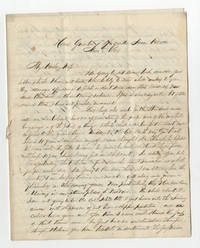
186423878<p>"<i>Just make up your mind that negro nature & human white nature are very near alike.</i>"</p><p>"<i>Every now & then it is proclaimed with great joy that Mr So & so some northern nabob or speculator has purchased some rebel plantation & prepares to work the same. … It's of more consequence locally & nationally thus the negro should buy & toil as he surely will on his acre of land than that princely men in Illinois should have inserted his loose change in a southern plantation.</i>"</p><p>Connecticut native William H. Noble writing to his wife responds to rumors of the fountain of youth vilifies northerner plantation renters who continued the Southern system as new feudal barons and calls for the redistribution of plantations to former slaves to ensure national stability. Jacksonville Florida was occupied and then abandoned by the Union four times. The result was a broken skeletal city at the Civil War's conclusion.</p><p>Noble reflects on how the African Americans' freedom will change Southern and national life and that regardless of race he believed human nature was the same. Further the former slaves needed an interest in and responsibility for their own advancement. Presaging Booker T. Washington he thinks developing industry more important than carpetbaggers coming south offering education. With a detailed sketch of headquarters in Jacksonville including tents stables and the brigade flagstaff.</p> <b>CIVIL WAR. WILLIAM H. NOBLE.</b>Autograph Letter Signed to his wife Jacksonville Fla. April 8 1864. 16 pp. 8 x 10 in. on 4 folding sheets stitched together.<p><b>Excerpts</b></p><p>"<i>An artillery officer told me yesterday that there is a spot down the coast somewhere at which people never die. I am going to live down there. I want to see how this country I am helping to save and remake gets along and grows & flourishes in the coming years.</i></p><p>"<i>The truth is there are but very few men as old as I really am in point of years in the army and I have no doubt I look old to them. But I am not in point of the elements of youth & age & their manifestations more than half the years…. <b>I think very likely however that the change in the Status of the negro will show that race to occupy the place now accorded to the Irish and push up the Irish girls a peg or two. That is just what the Irish did for the American help. When I was young there were no Irish field or house servitors. All were Yankeys.</b></i></p><p><b><i> Well the irish are dreadfully down on the negroes. American laborers used to be very hard on the Irish. But</i></b><i><b> God works wonders in spite of mans blindness</b> <b>and I have no doubt in more ways than one he will do so with the Negro. But I see but very few contrabands. My Regiment has never yet penetrated into a virgin Ethiopian place. In fact wherever we have been the yanks have one time & another been before us and culled them out for soldiers or Sambo has taken his chance and gone north.</b></i></p><p><i> The fact is the quicker Sambo learns to take care of himself and is made so to do the better. But it wont by apprenticeing him to some one who only cares to get the most possible out of him. Forcing him to work for set wages to remain in a fixed place & to toil for a man who buys of the government his industry is but a mockery of Freedom. Sambo has the same right & must be treated like any other human & not as if his skin hid under its somber hue a different nature or a soul governed by different impulses passions & motives.</i></p><p><i> <b>Who cares whether the world has cotton princes or not. Let the production run out if need be. Don't bother yourself about obtuse fancies on the negro question & his industry. Take no thought about large Estates going to waste & without culture.</b> <b>Have no anxiety but that human nature & niger nature will work out its own salvation if you give it a chance. Sambo wont work if you feed him a plumb pudding and send down a lot of infatuated people who should make little nigs. fully acquainted with general geography the distribution of offices universal History in 24 lessons</b>.</i>"Additional excerpts below</p><p><b>Historical Background</b></p><p>Jacksonville Florida suffered mightily as it changed hands several times during the Civil War. With the Union Navy blockading the port for most of the war the army alternately occupied and abandoned the city deeming its defense too costly and non-essential. Despite the blockade the city remained a key Confederate supply point becoming the "breadbasket" of the Confederacy and shipping large quantities of pork beef molasses corn potatoes and other supplies to troops via rail. In an attempt to take the railroads and stop the flow of foodstuffs and supplies on February 7 1864 Union soldiers occupied Jacksonville for a fourth time. Politically Lincoln hoped to establish a Unionist government after cutting the Confederate supply lines. He even sent John Hay one of his personal secretaries as his representative. But Union troops suffered a devastating loss 45 miles away at the Battle of Olustee on February 20 and veteran soldiers on both sides remarked that they had never experienced such terrible fighting.</p><p>As the Union forces were still retreating the 54th Massachusetts US Colored Troops USCT was ordered to march back to a broken-down train carrying wounded Union soldiers. When the USCT troops arrived the men attached ropes to the engine and cars and manually pulled the train approximately three miles to camp where horses then helped pull the train the ten miles back to Jacksonville.</p><p><b>Additional Excerpts </b>Full Transcript Available</p><p>"<i>…<b>Just make up your mind that negro nature & human white nature are very near alike.</b> Find out its appetites & fancies & give them play. <b>The negro has toiled as the chattel & possession of some body who </b></i><6><b><i>owned him & his toil & the soil on which he lived. He has never known the manhood & the anchorage which comes of the ownership deep down & high as heaven of a little piece of Gods footstool.</i></b><i>He longs for this purchase next after the freedom for himself & his household. Till he has this he does not feel himself fastened any where but still a moveable whom the whim of the white man may tote about. <b>But once let him have his little fast anchored piece of mother Earth and you will find him planting therein his faith not only in being free but in the reality of that freedom which has no seeming substance for him but in calling a little piece of land his own & the home of him & his.</b> When he has got the time he will toil to get that which he also covets the beasts to help his tillage. The negro saves they are found to get & keep money. At Hilton Head they have more cash than any body else. Let him plant it in a home.</i>"</p><p> "<i>What are you keeping these immense plantations leased out to farmers to whom you have the impudence & effrontery to lease freed men whom you would fasten to the soil. The terrible horror is manifested lest Estates should go uncultivated. <b>Every now & then it is proclaimed with great joy that Mr So & so some northern nabob or speculator has purchased some rebel plantation & prepares to work the same. You had proclaimed a more welcome fact if you could tell me that you had cut up our Rebel hosts plantations & that his chattels had bought it in pieces with cash or with </b></i><b><7><i> the right of prescription which they proposed to make secure & perfect by their toil & its products. </i></b><i><b>It's of more consequence locally & nationally thus the negro should buy & toil as he surely will on his acre of land than that princely men in Illinois should have inserted his loose change in a southern plantation.</b> As an item of national health as an element of Public currency the latter has to my mind much the less significance. <b>Give me the divided & subdivided proprietorship of the soil as the best element of national strength and the surest index of national happiness & prosperity. The small proprietors of the lands make no rebellions they are looking for no exclusive privileges. They have no schemes to enhance the importance & consequence of a big landed aristocracy.</b></i></p><p> "<i>Then <b>cut up their big possessions. Parcel out the sugar & the cotton land into small proprietorships. Let the poor white man or the poor negro have the chance. If they cannot pay to day let them have the chance to earn their living & the money to do so at a more convenient season.</b> Confiscate every rebel Estate down to a certain amount to be reserved for him & his family Declare forfeited the possesses of every one who cant prove his loyalty especially of all who have aided and abetted the Rebellion turning only a small proportional account for the innocent of his own household. <b>Render no man but a willful arrant rebel in arms homeless.</b> But open up his rich possessions to the part of the white & the negro in such limited quantities as the </i><i>population</i> <i>& the desire to purchase seem to demand</i></p><p> "<b><i>The Ethiopian will then see in the ownership of the soil his interest in the government & the reality of freedom which without this is only in airy theory & which this makes solid and practical.</i></b></p><p> "<i>You need not trouble yourself then about what to do with the freedmen. They will take care of themselves exceptions there will be. <b>Poor miserable lazy wretches there will be wearing both white & black skins. These can be taken care of by wise laws if found necessary.</b></i></p><p> "<i>But enough if you will watch you will find among wise men there is a great deal of tomfoolery & very little common sense when you try to render their wisdom practical. Genl </i>George Henry <i>Gordon told me he had known of all men first class legislators & lawyers come out & utterly break down in the care of a Regiment. They were <u>old</u> dogs & could not learn new tricks. They had a great deal of uncommon but a very little common sense</i>."</p><p><b>William H. Noble </b>1813-1894 was born in Connecticut and graduated from Yale University with a law degree in 1836. He established a practice in Bridgeport and helped the city secure its charter. He served as state's attorney in the late 1840s and when his father died he entered into an agreement with P. T. Barnum to develop land in East Bridgeport that Noble had inherited. A conservative Democrat but strong Unionist Noble obtained a commission as colonel of the 17th Connecticut Infantry on July 23 1862. He led his regiment in the Battle of Chancellorsville where his horse was killed under him and he was severely wounded. Before completely recuperating at Bridgeport Noble rejoined his regiment and led it at the Battle of Gettysburg and later in the sieges of Fort Wagner and Fort Sumter. In February 1864 the regiment transferred to Jacksonville Florida where Noble served as commander of the first brigade of Adelbert Ames's division. On December 24 1864 Noble was captured while traveling between Jacksonville and St. Augustine Florida and sent to the prisoner-of-war camp at Andersonville Georgia where he was the highest ranking officer. Exchanged early in 1865 he returned to the service before mustering out in July 1865. After the war General Ulysses S. Grant brevetted Noble as a brigadier general. Returning to his law practice Noble lived in Bridgeport until his death. In 1870 his family had an African American domestic servant named Anthony Seymour b. 1835 who was born in South Carolina and had likely been a slave.</p><p><b>Harriet J. Brooks Noble</b> 1818-1901 was born in Bridgeport Connecticut. She married William H. Noble in October 1839. They had five children born between 1840 and 1859.</p><p><b>Condition</b></p><p>Fine.</p> books
1932197555New York Minton Balch & Company 1932. 1932. First edition. 8vo. Author's foreword. Frontispiece and 7 b/w illustrations. Original black stamped brick red cloth. Dust jacket unclipped; few small chips. Very good. Bookplate of Edna Spennetta on the front free endpaper. F. Hardcover. New York, Minton, Balch & Company, 1932. hardcover books