[Boer War}Biblio.com

11 490 résultats
140997London: His Majesty's Stationary Office. Softcover. near fine. 1st Editions. Folio. 146 separate reports. Original blue wrappers where issued. Small ex-libris stamp to front wrapper of some. The vast majority of these reports are in near fine condition although there is some minor chipping and wear to some. Black and white illustrations maps charts and tables in many of the reports. Overall this collection is in impressively fine condition. near fine The first report--Papers Relating to the Complaints of British Subjects in the South African Republic--is from June 1899 and the final reports are from 1906. Some other noteworthy reports include: "Further Correspondence Relating to the Political Affairs of the South African Republic" from October 1899 which includes a declaration of war; "South African War: Telegrams from Field-Marshall Lord Roberts to the Secretary of State for War" contains a discussion on the abuse of the white flag; "Correspondence Relating to the Prolongation of Hostilities in South Africa" 1901 with a proclamation to Boers continuing to carry out guerrilla warfare that unless they surrender they will be banished from South Africa upon capture. Please contact us for a complete list of the reports in this collection. His Majesty's Stationary Office paperback
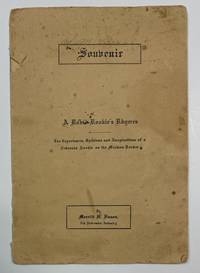
19164822N.p. possibly Brownsville Tx 1916. Very good. 111pp. Original tan printed wrappers stapled. Wrappers soiled partially split along spine penciled ownership signature on front cover. Light creasing occasional minor foxing to text. An unrecorded collection of poetry by First Sergeant Merritt H. Fuson of the 5th Nebraska Infantry capturing military life during the U.S.-Mexico Border War in 1916-1917. Sergeant Fuson's poems begin with "A Rookie's Prayer" and generally describe the incessant drilling and preparations for battle in southern Texas. One of the poems was given to Fuson before he left home and one other poem is credited to a "Minnesota artilleryman name unknown" but the remainder of the poems appear to be authored by Fuson himself. Fuson's poem "War Is Hell" particularly encapsulates the difficulties of military camp life during his service but does not capture the horrors of war which Fuson apparently never experienced. Fuson does express his desire to return home to Nebraska in at least two poems and his homesickness comes through in others in passages such as "Sing a song of Texas Drill and sweat and dig One Nebraska soldier Dirty as a pig." The 5th Nebraska Infantry had a short and uneventful stay in Llano Grande outside Mercedes in the McAllen-Brownsville region of south Texas. They arrived in July 1916 and drilled and camped until returning to Nebraska in February 1917. An interesting collection of wartime poetry by a young Nebraska man serving in the Texas-Mexico borderlands. No copies in OCLC auction records or any other sources we consulted. unknown
19163738N.p. probably Portland 1916. Near fine. 36pp. plus two multi-panel folding panoramic photographic plates. Original tan wrappers printed in brown accompanied by original printed mailing envelope reading "A Souvenir of The Third Oregon Infantry on the Mexican Border." Very light wear. A scarce work featuring the officers staff and soldiers of the Third Oregon Infantry while stationed on the Mexican border near San Diego during the conflict with Mexico just before World War I. The work includes field and staff lists rosters organized by company and a list of "men who have enlisted at Clackamas since the Regiment left" in the summer of 1916. The work is profusely illustrated with photographs of each company within the text usually on the recto facing the roster lists. Each inside cover includes a folding panoramic photographic plate - the first titled "First Battalion at San Diego Exposition July 9 1916" and the second featuring the "Third Battalion on the Border - Mexico in the Background." Both panoramic images were produced from photographs by O.A. Tunnell. unknown
16946281London: Josiah Bromley 1694. First Edition. Loose Broadside Framed Under Glass. Good. Original one-sheet broadside roughly trimmed 8-1/8 by 12-4/8 inches. Printed on rag paper with old creases now mellowed and two archival tissue repairs on left margin. Mounted on mat board with mat board overlay. Overlay with edge-wear. Framed under glass. First Lord of the Admiralty Edward Russell 1653 -1727 was a key figure in the Nine Years War notably establishing his reputation at the Battles of Barfleur and La Hougue. <p>Following a decisive 1693 victory over the French navy near Cape Barfleur the House of Commons determined that Russell had not done enough in dispatching French ships; he was removed from duty. After disasters that befell the British Navy in summer 1693 Russell was reinstated. In early May 1694 he was appointed First Lord of the Admiralty and sailed for the Mediterranean to thwart French depredations against the Spanish coast near Barcelona and Palamos. The engagement documented here likely occurred enroute to the Mediterranean.</p> <p>With the idiosyncratic spelling and usage common to the era. e.g. "we were buzzed about the ears .". A charming patriotic broadside from reign of William and Mary. Rare. No institutional copies located.</p> . Josiah Bromley unknown
1883Original with family inscriptions. Wooden Case. Very Good. Original wooden case for a brass set of scales used by Dr. David Townsend during the battle of Bunker Hill and other events requiring medical attention during and after the American Revolutionary War. unknown
1840105031<p>Small family archive of letters 10 pieces in all some folio size other basic letter sheet size over 20 pages of text some docketed on reverse. Most pages are aged and browned some chips and tears a few holes at center folds a little staining but otherwise about very good. This family archive begins with a letter dated June 14 1840 and provides a glimpse of life in still early America during the pioneer period. In the first letter which is. from near Danville Missouri daughter Emily Lee and Adam Lee to father Ely Butcher in Randolph Virginia asking for money. Emily complains about poor health but tells him to consider moving out there where good land could be had. Another letter dated September 24 1840 is from Rock Island County Illinois from John H. Butcher to his father Ely in Randolph Virginia. John Butcher a farmer tells his father he is in "tolerable good health" but talks about some hard times where he lives. He comments on the rivers being very low and it appears his shipping costs were double what they should be. He stays he finds times very hard in this country harder than expected and adds he couldn't get $1000 for his home at that time. He even makes a comment about a split in government but that the Whigs may feel they won writing not totally clear on this comment. On January 2 1842 from Danville Missouri we see another letter from Emily Lee to her father Ely Butcher in Randolph Virginia. This letter has a sad tone as Emily complains she hasn't gotten a letter from her father in almost two years despite writing to him a few times. She says she feels neglected by her father and brothers and times are very hard. She mentions store credit is not available and they lost a horse. According to Emily her in-laws are no help and she has eight children to take care of. She tells her father she will see him in the spring and she expects him to do something about her situation. Seems like Ely's kids are often in need and asking dad for help. On August 20 1844 John Butcher In Rock Island Illinois to Ely Butcher in Beverly Randolph County Virginia appears to be visited by his sister and his brother-in-law and sister Adam Lee and Emily lee. The farm is doing well and he indicates that oat and corn prices are "tolerable" and he expects to produce 800 bushes of corn and wheat. It appears his sister wants a divorce and it also appears John asks his father to intercede with his uncle Peyton about the land he uses. He seems to be tired of being a renter. He asks his father to negotiate a deal and help him pay for it. He apologizes for the tone of the letter but sounds a little desperate. There are also what appears to be some detailed receipts for the goods of Ely Butcher the dates appear to be 1842 and 1843. In fourth receipt the date is unclear but could be as late as 1866. A final document is a marriage certificate for Hannah Hart Butcher and the date is November 22 1911.</p>
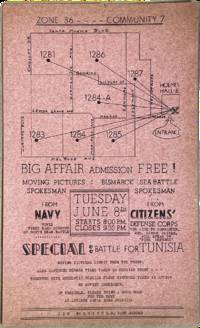
77124Broadside invitation from Zone Warden Jim McQuiston to a gathering of Zone 36 Community 7 of the Citizens' Defense Corps in Hollywood on June 8 1943. A spokesman from the U.S. Navy was scheduled to provide a vivid first-hand account of fighting in the South Seas and Mrs. Carrol Oliver a Citizens' Defense Corps aide was to speak on fire defense. The event was free but attendees were encouraged to bring "a good book for the boys" at Advance Naval Base Hospital".<br /> <br /> In the early days of the Second World War air raids and other assaults on populated areas in Europe generated fears that similar attacks could happen in the United States. On May 20 1941 more than six months before the United States entered the war President Franklin D. Roosevelt set up the Office of Civilian Defense OCD to coordinate non-military state and federal measures to protect citizens in a war-related emergency. The OCD organized the United States Citizens' Defense Corps to recruit and train volunteers to perform essential tasks.<br /> <br /> Featuring a block map of Zone 36 which was bordered by Santa Monica Boulevard on the north and Melrose Avenue on the south this single-sided notice is printed on 8 1/2" x 14" red paper that is a bit faded with some very minor chipping along the edges. OCLC locates no holdings. unknown
1970216333Beijing.: National United Front of Kampuchea. 1970. 20pp 14.5 x 9.5cm. A very good copy in original stapled wrappers. A manifesto of FUNK divided into three parts outlining the organisation's commitment to popular solidarity democracy social development and international non-alignment. . [National United Front of Kampuchea]. unknown
sala43Ottawa: 1920. Includes Home Work Section of Canadian original art and a price list of war etchings drypoints and lithographs by British and Canadian artists. 16mo. pp. 25 6. 8 double-sided plates. pictorial wrs [Ottawa: 1920] unknown
sala42Ottawa: 1919. 16mo. pp. 6ads 48. wrs. short tears & creases to covers small chip to lower inner front cover front cover & staining to front cover & ad leaves [Ottawa: 1919] unknown
sala44Ottawa: 1919. 12mo. pp. 8ads 45 3. pictorial wrs. light wear to covers & short tear to edge of front cover [Ottawa: 1919] unknown
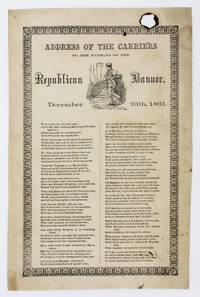
18616140Nashville 1861. Good plus. Small broadside approximately 11 x 7.25 inches. Creased along lower edge; ink burn causing a dime-size paper loss at upper right slightly affecting border plus a few additional stray ink marks. Later faint pencil annotations on blank verso. Moderate tanning and dust soiling. A scarce Confederate carrier's address published on Christmas in Nashville during the first year of the Civil War. The Republican Banner was formed in 1837 from a merger of two other periodicals and was the first permanent daily newspaper to serve the Nashville area as well as the first to operate its presses by steam. Tennessee officially seceded from the Union on June 8 1681 but Nashville surrendered to Gen. Grant's troops on February 23 1862 whereupon the Republican Banner suspended publication for the remainder of the war. As a result the present broadside is only carrier's address issued by the paper that is also a Confederate imprint. The text is printed in two columns with in a decorative border and the title is illustrated with a vignette of a newsboy making a delivery. The verse itself exults in the success of the Confederate rebellion thus far regaling its reader with the progress of secession and naming the recent battles that were Confederate victories including Fort Sumter Bull Run Bethel Lexington Leesburg Springfield Oak Hill and Belmont due to the supposed righteousness of the Southern cause and its superior fighting spirit:<br /> <br /> "'Twas Southern valor won the undying name / Of conqueror o'er the unconquered till that hour. / And when upon Manassas' awful plain / The Federal hordes fled back aghast in woe / Not courage only heaped the field with slain / The majesty of right o'erwhelmed the foe."<br /> <br /> The broadside also mentions somewhat optimistically England’s support of the Confederacy and names specific figures including Generals Lee Beauregard Johnson and President Jefferson Davis among a number of others as emerging Confederate heroes. Parrish & Willingham record a single copy at Vanderbilt and OCLC adds nothing further. A rare example of a Confederate carrier's address. <br /> Parrish & Willingham 6498. unknown
194533388America Europe 1945. Archive. Very good. Manuscript Archive. 2 three ring black binders with 41 letters and misc. ephemera. Letters were addressed to family and in Chester Vermont mainly to his brother Ray and his Aunt Florence. The letters are sorted into three phases: prewar U.S. training camps and from places in Europe. 2 letters were written by Private Lawrence before he enlisted in the Army circa 1942. <br /> <br /> 20 letters were written from training camps in the United States 1943-44. 12 letters were written by Lawrence somewhere in France Belgium and Germany from June 1944 to January 1945. The remaining 7 letters were written by family members before and after Private Lawrence was killed in action December 1944 - February 1945. These letters were returned to his family with the word "deceased" written or stamped on the envelopes. The archive also consists of 8 envelopes not matching the dated letters two change of address postcards 5 pieces of foreign money and misc. news clippings relating to the Allied Forces actions late in the War. One non-letter item included in the archive is a hand drawn December 25th 1944 Christmas greeting presumably drawn by Lawrence. In these letters Charles Lawrence is often homesick inquires about things in Vermont and how he is getting along in the Army. Many of his letters begin with a variation of "I am still in the land of the living." The handwriting is legible for the most part and the condition of the archive is very good. The first ring binder of letters encompasses Private Charles Lawrence's pre War draft and his training in various U.S. camps. Training camp letters were written on nice Army letterhead paper from places such as Fort Devin Massachusetts; Fort McClellan Alabama and the U.S. Naval Construction Training Center Camp Peary Williamsburg Virginia. While training in the States Private Lawrence yearned to return home before he was shipped off to Europe. "If I get back to the States after I leave you can bet I wont stay in this army if I can help it." <br /> <br /> The second ring binder of letters begins with a letter dated June 1 1944 from some unknown location. The letters from Europe are censored and some letters were sent by V-Mail. While in Europe Charles asks about events back home and provides some general not to specific training and battle information. In the second letter in this binder dated June 9th Private Lawrence writes "Dear Aunt Florence and All: How are you folks feeling today hope you are feeling fine and dandy. Well here I am in a new camp and I am sorry to say that I cannot tell you where I am or the name of the camp. The camp is very good good climate food and it has lot of mountains around it." He adds "We do not get any training at this camp because they don't want anyone to know how many troops we have here at this camp but we have to go on two 11 miles hike every week." <br /> <br /> The letter dated June 11th one week after D-Day June 4 1944 has Lawrence awaiting transport to occupied France. He writes "This is my 40th letter since I came back from my furlough.The P.X. here is open all day and every time there isn't anything to do we all head for it most of us are broke including me."<br /> <br /> As the War heats up after June one comment in Lawrence's letters stands out:<br /> <br /> "I have been lying in a fox hole for two weeks now the only time when we can get up and walk around is at night it gets kinda tired laying in the fox holes eating H rations you can't stick your head out of the hole in the day time because you will get your head blowed off if you do so we just lay there.Boy when I get home I wont fuss about anything so long as I live I have been through everything now and it isn't any fun either." <br /> <br /> As the battles in Europe intensified in the fall of 1944 it appears Private Lawrence had been in very dangerous situations. In his November 23 1944 letter he writes ".a lot has happened to me since I last wrote to you last I have been in a lot of tough spots tough enough to lose all of my personal belongings such as mail letters that I hadn't answered toilet articles my pack overcoat raincoat etc. I am going to write to Barb and see if she will buy me toilet articles. My stationary is all gone.Today is Thanksgiving and I hope you folks had a good meal I haven't seen any turkey for us yet."<br /> <br /> On December 21st 1944 Charles writes his brother Ray from "Somewhere in Germany". He tells his brother "I have been busy as ever for the last few days and it looks like I will be for quite some time." The last full letter in this archive written by Private Lawrence is dated January 4th 1945. He writes to Aunt Florence & all the gang. He tells Aunt Florence "Well here I am again I thought I would write you a letter as long as I have some extra time this isn't much for news this time because I wrote Glady's a little this morning and told her all the news that there was at hand but when this letter is finished you will at least know that I am still alive & kicking." He signs off this letter with this - "Got to go now but I will be back before to long hope everyone is okay.".<br /> <br /> Private Charles Lawrence died 16 days later in Europe on January 20 1945 at the age of nineteen. He was buried in the American Cemetery in Luxembourg.<br /> <br /> From wikipedia:<br /> <br /> The 5th Infantry Division Mechanized—nicknamed the "Red Diamond"1 the "Red Devils" or "die Roten Teufel"—was an infantry division of the United States Army that served in World War I World War II and the Vietnam War and with NATO and the U.S. Army III Corps. It was disbanded and deactivated on 24 November 1992.2<br /> <br /> During World War II after D-Day the 5th Infantry Division after two years of training landed in Normandy on Utah Beach 9 July 1944 over a month after the initial D-Day landings and four days later took up defensive positions in the vicinity of Caumont. Launching a successful attack at Vidouville 26 July the division drove on southeast of Saint-Lô attacked and captured Angers 9–10 August captured Chartres assisted by the 7th Armored Division 18 August9 pushed to Fontainebleau crossed the Seine at Montereau 24 August crossed the Marne and seized Reims 30 August and positions east of Verdun. The division then prepared for the assault on Metz 7 September.10 In mid-September a bridgehead was secured across the Moselle south of Metz at Dornot and Arnaville after two attempts. The first attempt at Dornot by the 11th Infantry Regiment failed. German-held Fort Driant played a role in repulsing this crossing. A second crossing by the 10th Infantry Regiment at Arnaville was successful.11 The division continued operations against Metz 16 September to 16 October 1944 withdrew then returned to the assault on 9 November. Metz finally fell 22 November. The division crossed the German border 4 December captured Lauterbach a suburb of Völklingen on the 5th and elements reached the west bank of the river Saar 6 December before the division moved to assembly areas.<br /> <br /> On 16 December the Germans launched their winter offensive in the Ardennes forest the Battle of the Bulge and on the 18th the 5th ID was thrown in against the southern flank of the Bulge helping to reduce it by the end of January 1945. In February and March the division drove across and northeast of the Sauer where it smashed through the Siegfried Line and later took part in the Allied invasion of Germany.<br /> <br /> The 2nd Infantry Regiment is an infantry regiment in the United States Army that has served for more than two hundred years. It was constituted on 12 April 1808 as the 6th Infantry and consolidated with 4 other regiments in 1815 to form the present unit.1. When the Battle of the Bulge began the 2nd Infantry Regiment moved to the battle zone in the area of Nideranven Luxembourg. In January 1945 the 2nd Infantry Regiment forced a crossing of the Sauer River and attacked into the Siegfried Line. The regiment then crossed the Rhine River near Oppenheim and secured the crossing for other Third Army units. The unit then spearheaded the attack into Czechoslovakia and was located near the town of Volary when the word came to cease all forward movement at 08:31 on 7 May 1945. unknown
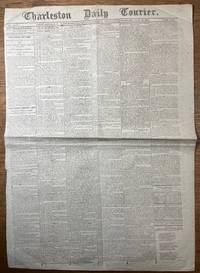
186435376Charleston: A. S. Willington & Co 1864. First Edition. Newspaper. Good. Newspaper. Approximately 23" x 16.5". Single sheet two pages. Folded. Light vertical crease. Stitching removed on the extreme left edge. A few tiny pin holes to the paper. <br /> <br /> Contents include the latest Civil War news reporting including General Lee's battle success; General Johnston's army victory at Kennesaw Mountain; the Siege of Charleston Three Hundred and Forty-Ninth Day and several more news items. On the back page is the publisher information advertisements and a printed act of authority to levy taxes for support the war effort. A. S. Willington & Co unknown
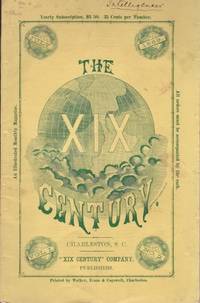
186934735Charleston: XIX Century 1869. First Edition. Periodical. Good. Periodical. Pages 85-167 5 pages of advertisements. Yellow illustrated stitched wraps. titles on the front and on the paper spine. Light wear to the covers. Small closed edge tear front cover. Rear cover has a small torn piece with no loss of content. "Intelligencer" written in old ink top of the front cover. Pages are clean and issue is in good condition. <br /> <br /> Contents of this Reconstruction era publication include derogatory depiction's by 'Sooty-Graphs' of African Americans soldiers pages 166-167; "Shoulder to Shoulder. Reminiscences of Confederate Camps and Fields.The Bombardment of Fort Sumter - Second Day - April 13 1861"; "Duels and Dueling"; "The Blockade Runners of the Confederacy"; "The Parable of Southern Politics."; and many other topics. XIX Century unknown
191234680Chattanooga: MacGowan-Cooke Printing Company 1912. Soft cover. Very good. Oblong string tied soft cover. 64 pages. Illustrated with black and white photographs. Light shelf and edge wear to the covers. MacGowan-Cooke Printing Company unknown
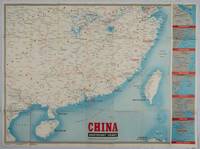
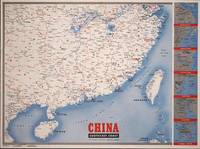
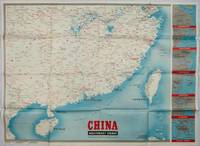
1944195577New York.: Army Information Branch. 1944. Very large folding colour map main map 85 x 95.5 cm plus 6 sidebar maps together 85 x 14.1 cms; sheet 88 x 118 cms several fold splits archivally sealed in good condition. Large colour wartime map issued by the U.S. Army Information Branch in 1944 the main map showing Shanghai to French Indochina with the islands of Formosa and Hainan scale 7 inches to 200 miles. At the right edge are inset maps of Shanghai Wenchow Foochow Swatow Canton and Hong Kong. Map issued to accompany Newsmap Volume III No. 51B. . Army Information Branch. unknown
1945194660New York.: Army Information Branch. Volume III No. 51F. 9 April1945. Folding colour map and six inset maps in a vertical panel 88 x 119 cms sheet and on the recto circular map of Europe smaller inset map of Asia and of the Ryukyu Islands descriptive text original folds in very good bright condition. Scarce Newsmap of "China Southeast Coast" from Shanghai to French Indochina with the islands of Formosa and Hainan. At the right edge are inset maps of the vicinities of Shanghai Wenchow Foochow Swatow Canton and Hong Kong. On the verso is a large map of the European theatre of operations centred on Berlin a map of the Pacific area noting the American occupation of Okinawa with a detailed map of this island. In unusually fine bright condition. . Army Information Branch. unknown
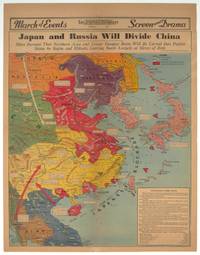
1940209821Los Angeles.: Los Angeles Examiner. 1940. Printed colour pictorial map on a single newspaper leaf 42.3 x 39.9 cms; 54.3 x 42.5 cms sheet archivally laid down on linen slight discoloration to lower centrefold and sheet slightly age-toned but in very good condition. A striking geopolitical map by Los Angeles Examiner artist Howard Burke covering China Japan Southern Russia and the northern part of French Indochina and Siam showing how the "Aggressors Divide China." Areas under Japanese occupation are shown in red and their naval blockade shown by an arc of naval vessels with vivid arrows indicating lines of supply. Text labels including sources of agricultural and raw materials provide a dynamic overview of the geopolitical situation and show the influence of American scientific illustrator and cartographer Richard Edes Harrison who argued for examining geographic issues from multiple perspectives and Los Angeles Times artist Charles Owens. . Los Angeles Examiner. unknown
1944215448New York.: Army Information Branch. 1944. Very large folding colour map main map 85 x 95.5 cm plus 6 sidebar maps together 85 x 14.1 cms; sheet 88 x 118 cms and on the verso a large circular map centred on Europe the Ruhr Valley & Vienna with smaller maps of Southeast Asia and the Philippines and a map of Okinawa; both in very good unblemished condition. The main map of Southeast China includes inset maps of the region around Shanghai Wenchow Foochow Swatow Canton and Hong Kong and on the verso text as well as the maps Eastern Europe South Pacific Okinawa reporting on the war: Americans Isolate Ruhr; Vienna Threatened; Ryukyus Invaded. . Army Information Branch. unknown
193064035Enshih Shihnan Hubei China: R.J. Mueller Rev. Gebhardt Miss Simon LCMS ca. 1930-1937. Two vols. 1st - Oblong folio. 11.25 x 15 in. 48 pp unpaginated. thick black paper stock w/ 103 original silver gelatin photographs sized 2.75 x 3.5 in. all neatly numbered in ink MS at corners affixed to the leaves. Contemporary black flexible board post-binder punch-sewn & glued at spine in black paper paper title label partially torn on front cover Building Committee title label affixed to first page minor chipping edgewear to fore-edges some scuffing tidemark to fore-edges still a VG- exemplar w/ all images with bright strong contrast; 2nd - 4to. 8 leaves carbon copy typescript on onion-skin ruled paper some ink annotations corrections 1 pencil MS annotated correction still VG signed by R.J. Mueller on first leaf dated April 24 1937 from the library of David G. Kohl 1946-2025 former art teacher at the Hong Kong International School musician artist and historian. A remarkable photo album with images shot by three different Lutheran Church Missouri Synod LCMS missionaries in China along with the descriptive contents list compiled by Rev. R.J. Mueller detailing the purpose and composition. He writes that the Enshih Shihnan Mission had prepared three albums “one for the Mission Board one for the Building Committee of General Conference and one at the Enshih Station. The numbers all agree. However not all pictures listed appear in all books.†This “Building Committee†album was intended to focus primary on the structures homes chapels of the mission as well as surrounding areas and was intended to aid in speeding up communications for fundraising and building affairs issues as correspondents could then merely refer to the master list of numbers held by all three parties. Enshih China was one of the final mission stations established by the LCMS far from their other missions and when Gebhardt returned to Enshih following the Civil War in 1928 there was significant damage to the mission structures to be repaired. Looting by bandits and marauding soldiers had caused over $ 2000 in damage but was encouraged to find that the Lutheran evangelist Shen had continued the mission chapel school orphanage. He would later be joined by Mueller and others although primarily composed of Chinese Staff. These photos in the album includes views of Mueller’s residence windows frames and gutters looted; screens torn doors boarded up as well as views of the native house and threshing floor adapted into an orphanage at Yao Wan after 1930. Several others show the extent of the protective walls built around the properties farm houses the gates as well as farms bridges and nearby fields at Enshih. Landmarks such as rocks shaped like Elephants in the river and Big and Little Hog creek below farmland. A very nice series of photos depict the Ts’i Ts-ung-fu funeral the blind deaf and other orphans about 1931 as well as textiles drying in the sun. Other photos capture the Ch’i-li-ping market fortune teller temple noodle stand and the T’ai shan shrine at Ch’i-li-p’ing. More photos depict Hu Ping-chih the orphanage secretary Yuen Ye-chih cashier in 1934 Hsieh T’i-ya seminary student who died later in 1937; along with the mission pulpit nearby streets and the rear view of the Yao Wan houses.Of additional interest are the images of the rugged roads to Liang Shui-chin the temple and steep steps drying opium in Kuan-p’e which was a small town between the East Gate and Yao Wan before opium raising was banned in 1934; along with the nearby Ch’ing-Ching Clear River at the high water stage the front of the True Light Chapel in 1934 as well as the gravestone of Mr. & Mrs. Wang Japanese-Lutherans who had died in 1930. The final photo No. 169 again shows the Clear River below the city. Mueller 1905-1998 graduated from seminary in 1929 and left for China with his wife Dorothy for the Evangelical Lutheran Foreign Mission Board returned briefly to the U.S. from 1937-1940 spent 1939-1942 teaching at a Lutheran seminary in China while being bombed by the Japanese and also served in Shanghai where he would supervise the Lutheran Hour and Lutheran Hour offices. Although he and his wife briefly returned to the United States in 1946 following World War II they subsequently served again in Shanghai China into the early years of Communist rule by Mao tse-tung before returning again to the U.S. See: David Kohl Lutherans on the Yangtze: A Hundred Year History of the Missouri Synod in China 2014 pp. 103 124 131 132 166 174 99-131. R.J. Mueller, Rev. Gebhardt, Miss Simon, LCMS, unknown
195364144New York: Oxford University Press 1953. 8vo. 175 1 pp. Photo frontisp. numerous photo plates. Tan tweed boards gilt lettering on spine w/ d.j. photo cover art of Chinese refugees NF/NF copy from the library of David Kohl 1946-2025 former art teacher at the Hong Kong International School musician artist and historian. First American edition of this well-written memoir detailing the author’s experiences driving medical supplies landed at Rangoon over the Burma Road during World War II into the middle of China resulting in travels over 2 1/2 years in Free China along the edges of Chinese Tibet visiting Beijing staying with leper colonies delousing the Chinese Army and working with refugees on the Yellow River. Oxford University Press, hardcover
193763311Changsha: 商務å°æ›¸é¤¨ - Shangqu yinshuguan Commercial Press Minguo 26 1937. 8vo. 362 18 pp. With photo illustrations throughout tables charts several large folding tables at rear. Printed softcovers as issued minor chipping head & foot of spine old dampstain ring front cover chipping edgewear uniform toning some scuffing & wear to a couple fore-edge creases of folding tables at rear still a G- copy from the library of Otto C. Winzen 1917-1979 pioneering German-American aeronautical engineer was interned during World War II and later significantly advanced material and construction of high-altitude balloons after World War II. First edition of this very scarce Chinese analysis of the military build-up by the major powers around the World with a focus on aviation developments by Allied powers Nazi Germany and more importantly the Imperial Japanese Army air forces. There are references to the 1931 Mukden incident the Japanese occupation of Manchuria and the following events leading to the Second Sino-Japanese War leading to events such as the Rape of Nanking and World War II. Worldcat locates 3 copies National Lib. of China - Beijing Wuhan Univ. U of Hong Kong. 商務å°æ›¸é¤¨ - Shangqu yinshuguan, [Commercial Press], paperback
191963313Tokyo: å›½éš›å ±é“ Kokusai hodo æ˜å’Œ Showa 19 1944. Tall 8vo. 232 pp inpaginated. With 100’s of photo illustrations two-colour maps sections chapter titles in green & black. Blue publisher’s cloth white lettering on spine turquoise-coloured lettering front cover some scuffing & rubbing edgewear minor sunning to spine still G copy from the library of Otto C. Winzen 1917-1979 pioneering German-American aeronautical engineer was interned during World War II and later significantly advanced material and construction of high-altitude balloons after World War II. First edition of this very scarce photographic history of the Imperial Japanese movements battles and actions in the Sino-Japanese War and across China later in World War II. Many of the photos and text focus on the impact of the Japanese Naval Air Force with photos of amphibious aircraft aerial bombing campaigns and continued action across Japanese- and Chinese-controlled areas. Worldcat locates 2 copies TX A&M National Diet Library. å›½éš›å ±é“ Kokusai hodo, hardcover
195264247Harrisburg PA: Military Service Publishing Co. 1952. 8vo. xiv 378 pp. Double-page title numerous photos maps text illustrations. Gold pictorial publisher’s cloth lettering & illustration in red & black minor rubbing edgewear w/ d.j. cover art repeated minor chipping & tears to spine old tape repair head of spine scuffing soiling still VG-/G- copy from the library of David Kohl 1946-2025 former art teacher at the Hong Kong International School musician artist and historian Paul Elder’s Books label on rear pastedown. Second printing of this eye-witness account to the training and formation of the Chinese Communist Army following World War II while serving as an American observer with the Soviet Occupation forces in Manchuria. He offers detailed Army military intelligence how the army was organized training methods and more as the Chinese continued to be a growing threat during the Korean War. Military Service Publishing Co., hardcover