1 575 résultats
175723896London: Printed for J. Morgan 1757. Octavo. 7 3/4 x 4 5/8 inches. 4 99 1pp. Half-title errata on verso 1p. publisher's advertisements at back. Blindstamp to title H1 and H2 library number stamp at the foot of the verso of the title and at foot of p. 48. 20th-century half calf over marbled paper-covered boards joints rubbed.<br/> <br/>First edition of the fifth in a series by Tory political satirist and pamphleteer John Shebbeare.<br/> <br/>Here Shebbeare attacks the ministry of the Duke of Newcastle and the unfair influence exercised by George III's Hanoverian interests on policy. There are also references to Admiral Byng and problems in North America with the French. The first five letters were published between 1755 and 1757 and together they constituted a bold attack on the government and its handling of home and international affairs. Near the end of 1757 after Pitt's dismissal Shebbeare published his Sixth Letter and finally went too far: in the following year he was tried for libel fined pilloried and imprisoned and his final Seventh letter London: 1758 was seized and suppressed.<br/> <br/>Kress 5647; Sabin 80044; ESTC 35524. Printed for J. Morgan unknown books
191832663Boston: Houghton Mifflin Company 1918. 1st US edition. Purple cloth backed drab paper boards. Buff printed dust jacket with the rear panel & flap listing other publications on the war. NF/NF. Uncommon in dust jacket. v 3 110 2 pp. 12mo. 7-1/8" x 4-1/4" <br/><br/> Houghton Mifflin Company hardcover books
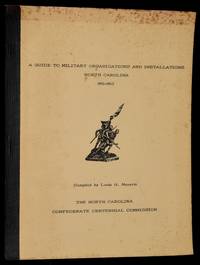
1961247122Raleigh: North Carolina Confederate Centennial Commission 1961. Soft Cover. near Very Good binding. No pencil or ink markings in text; paper binding stapled at spine; front cover is spotted on upper half; light spotting to text block edges. near Very Good binding. North Carolina Confederate Centennial Commission unknown books
1959173fdiBangkok: Chalermnit Bookshop 1959. Octavo white cloth hardcover gilt letters 300 pp. Very Good with light foxing age darkened spotting in a Very Good mylar protected dust jacket with light edgewear. Chalermnit Bookshop, (1959). hardcover books
1812WRCAM53959London 1812. 219pp. Dbd. Title-leaf detached else a clean very good copy. A rare War of 1812 pamphlet written by British Secretary to the Admiralty and Member of Parliament John Wilson Croker. Here Croker argues the British side of the story in the impending conflict and urges the United States to see France as the real enemy. Anderson Galleries called this work "extremely rare" in their 1918 catalog for the H.R. Lawrence Collection. SABIN 37671. GOLDSMITH-KRESS 20412. unknown books
1760WRCAM35262London: A. Millar 1760. 456pp. Dbd. Very good. Lacks half title. Second printing of the first edition. The ascription of authorship to John Douglas is suggested by Halkett & Laing; William Pulteney has also been a candidate. An appeal to William Pitt and the Duke of Newcastle that the process of making peace with France must include France's relinquishing all of Canada Guadeloupe and Senegal. This work is important for having elicited Franklin's noteworthy THE INTEREST OF GREAT BRITAIN CONSIDERED WITH REGARD TO HER COLONIES. This second printing includes an erratum on the final page below "FINIS." HOWES L276. SABIN 20684 second ed. TPL 314 first issue. A. Millar unknown books
1760WRCAM221London: A. Millar 1760. 56pp. Half title. Later paper wrappers. Very good. The ascription of authorship to John Douglas is suggested by Halkett & Laing; William Pulteney has also been a candidate. An appeal to William Pitt and the Duke of Newcastle that the process of making peace with France must include France's relinquishing all of Canada Guadeloupe and Senegal. The issue is important for having elicited Franklin's noteworthy THE INTEREST OF GREAT BRITAIN CONSIDERED WITH REGARD TO HER COLONIES. TPL 315. JCB 1III:1264. A. Millar unknown books
1740WRCAM35453London: T. Cooper 1740. 460pp. Half title. Dbd. Light stain on half title leaf affecting but not obscuring a handful of letters. Else very good. "Relates largely to affairs with Spain in the West Indies the writer defending the Ministry and the Convention. Probably written by a Ministerial partizan" - Stevens. First of three editions. BELL L321. EUROPEAN AMERICANA 740/185. GOLDSMITHS 7808. SABIN 40399. STEVENS RARE AMERICANA 1926 1521. T. Cooper unknown books
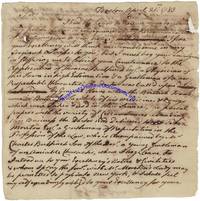
4545GUY CARLETON 1ST BARON DORCHESTER 1724-1808. Carleton was the British colonial governor of Quebec before and at the beginning of the American Revolution. He retired in 1778 but he was brought back to North America in 1782 to oversee the evacuation of New York by British troops and loyalists. AL. 2pgs. 7 ¾†x 7 ¾â€. April 21 1783. Boston. A handwritten unsigned letter addressed to Sir Guy Carleton as Commander in Chief of All the Forces of His Britannic Majesty in North America. The anonymous author seeks reimbursement for a doctor named Thomas Bulfinch who had his entire stock of medicines taken by the British for their use in Boston. Carleton was the in New York City: “Sir I had the honour to receive Excellency’s very polite letter in consequence of my recommendation of Mr. Livingston to your notice; I fear your Excellency will think me trouble some in my frequent addresses to you but I must beg your indulgence in suffering me to solicit your countenance to the application of Thomas Bulfinch Esqr. a physician of respectable character; the doctor was call’d upon by General Howe when the British Troops were in Boston for the whole of his medicines & drugs which were taken & used in their service the several papers with the variety of circumstances attending this business the doctor has dedicated to Mr. Peter Morton Esqr. a gentleman of reputation in the profession of the law who is accompanied by Mr. Charles Bulfinch son of the Doc’r a young gentleman of an amiable character whom I beg leave to introduce to your Excellency’s notice & civilities & whom I pray the fav. with Mr. Morton’s Lady may be permitted to pass into New York & I shall feel myself exceedingly oblig’d to your Excellency for your countenance & support to Mr. Morton & Mr. Bulfinch in the prosecution of this Business with possible that the Doc’r may meet a Reimbursement and I shall be happy to have an oppo’y to demonstrate my readiness on all occasions to convince you of my disposition to make similar returns & with what truth I am Sir Your Excellency’s Most Obed’t humble Serv’t.†Charles Bulfinch 1763-1844 the doctor’s son mentioned in this letter would go on to become an important architect and he was the second Architect of the United States Capital. His son Thomas Bulfinch 1796-1867 is well-known as the author of Bulfinch’s Mythology. The letter is in fair condition with cross-outs repaired folds and dark ink. unknown books
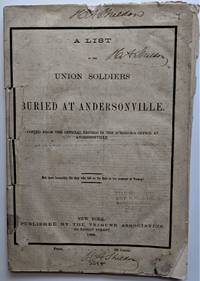
1866608New York: Published by the Tribune Association 1866. Tall 8vo.  260 x 180 mm. 10 ¼ x 7 inches. viii 74 pp. Self-wrappers with printed title-page stitched as issued; some soiling to the first leaves and a few chips to the corners and edges. With the signature of H. Henry Sheldon on the title-page in three places along with the stamp of the Sheldon Art Museum. First edition. The text comprises the "Report of the expedition to Andersonville Georgia July 1865 for the purpose of identifying the graves and enclosing the grounds of a cemetery created there during the occupation of that place as a prison for Union Soldiers in Rebel hands."  Included is a history of the Andersonville Prison its administration and treatment of soldiers under its care. The lists of soldiers is organized by State and is 74 pages long. Published by the Tribune Association unknown books
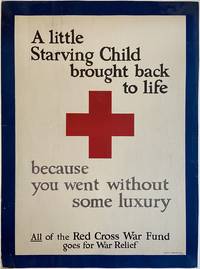
1918295743New York: American Red Cross 1918. Original poster mounted on linen. Color lithograph. 27 1/4" x 20 1/8"<br/><br/> This poster was part of the Second War Fund a fundraising campaign led by the American Red Cross in 1918 with the goal of raising $100000 in a single week in May. The poster reads "All of the Red Cross War Fund goes for War Relief."<br/><br/> American Red Cross unknown books
002003Washington D.C. US Government Ptg Office 1936. Tan buckram lettered in black. Light soiling only. This is Document 14a from the Office of the Judge Advocate General of the Army. Owner's name in ink top of front flyleaf. Extensive appendix and index including the Articles of War. Reprint edition. Washington, D.C. US Government Ptg Office 1936. hardcover books
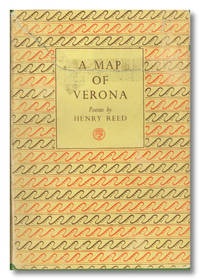
1946WRCLIT84197London: Jonathan Cape 1946. Cloth. A very good copy in poor badly town and internally mended dust jacket. First edition. The poet's first collection one of the most distinguished volumes of verse to come out of World War II. He issued a pamphlet of criticism in the same year which may or may not precede. REILLY WWII p.273. Jonathan Cape hardcover books
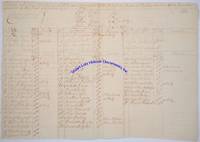
4943MASSACHUSETTS MUSTER ROLL. DS. 2pg. 15 ½†x 10 ½â€. January 1778. No place near Boston. A “Muster Roll of Capt. Ford Company of Militia now in Service of the United States for the Purpose of Guarding the Troops of the Convention Commanded by Col. Eleazer Brooks Taken to Jany 1778â€. The roll of American officers and soldiers lists one captain three lieutenants four sergeants four corporals two drummers and fifty privates. After the British defeat at Saratoga in the fall of 1777 the British prisoners of war were marched to the Boston area; they were later marched to Richmond Virginia. It is signed on the back by Captain Ford Secretary Reed and a Justice of the Peace. Eleazer Brooks 1727-1806 was a farmer and an official in Lincoln Massachusetts. He served as a colonel in the militia and marched on Dorchester Heights. He was later promoted to brigadier general and he represented Lincoln at the Massachusetts ratification of the Articles of Confederation in 1778. The document has the usual aging and wear and dark legible ink. A most unusual Revolutionary War manuscript. unknown books
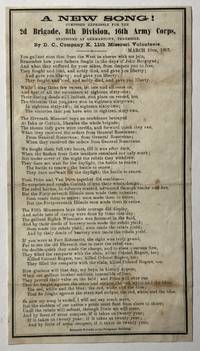
1863645Memphis: Memphis Bulletin 1863. About very good. Small broadside 8 x 4.5 inches. Previously folded. Short separation along top fold. Light tanning and foxing. An unrecorded Civil War song sheet that celebrates the accomplishments of the 11th Missouri Volunteers and several other regiments in the XVI Corps of the U.S. Army of the Tennessee. The sheet was printed on a Memphis newspaper press in March 1863 while the units were stationed at Germantown Tennessee east of the city. The lyrics by an unnamed member of the 11th Missouri attempt to immortalize the part played by the brigade in the successful siege and subsequent defense of Corinth which took place in the latter half of 1862. Also singled out for praise are the 47th Illinois and 5th Minnesota volunteer regiments. The 11th Missouri went on to participate in the siege of Vicksburg and later helped to drive Hood's Confederate Army out of Nashville. Not in OCLC. Memphis Bulletin unknown books
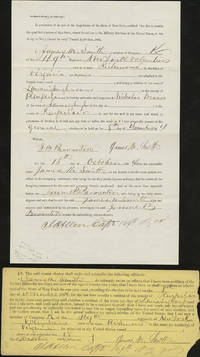
186421264.05<p><b>CIVIL WAR.</b>Partially Printed Document Signed by James M. Smith countersigned by Jerome B. Parmenter and Captain Joseph H. Allen. Richmond Virginia October 18 1864. 1 p. 8 x 12½ in. With printed envelope restating affidavit's claim on the outside. </p><b>Excerpt:</b><p>"<i>I James M. Smith a member of Company K of the 169th Regiment New York Volunteers…do hereby authorize and empower Nicholas Weaver of the town of Lansingburgh in the county of Rensselaer to cast for me and in my name and stead…my vote or ballot the same as if I was personally present at the general election to be held on the 8th day of November 1864.</i>"</p><p><b>Historical Background</b></p><p>On April 21 1864 the New York State Legislature passed "An Act to enable the qualified electors of this State absent therefrom in the Military Services of the United States in the Army and Navy thereof to vote." Each soldier and sailor needed to select someone at home who could cast his ballot for him.</p><p>In this Soldier's Power of Attorney James M. Smith of the 169th New York Volunteer Infantry authorized Nicholas Weaver to vote on his behalf in Lansingburgh New York in the 1864 election. In mid-October 1864 when Smith signed this document the 169th New York was in the trenches before Richmond Virginia. Three weeks earlier the regiment had suffered 21 casualties at the Battle of Chaffin's Farm. A few weeks after the election the 169th New York left on an expedition to Fort Fisher which led to its capture in mid-January 1865.</p><p>Republican President Abraham Lincoln was running for reelection against his former general Democrat George B. McClellan who was widely considered the favorite among his former troops. Instead Union soldiers such as Smith voted for their commander in chief in great numbers reelecting Lincoln using proxy voters like Weaver. Although no statistics exist for soldiers who went home to vote or voted by proxy as Smith did those 40000 soldiers who voted in the field gave 75 percent of their votes to Lincoln. He won reelection by more than 400000 popular votes and by an overwhelming 212 to 21 vote in the electoral college.</p><p><b>James M. Smith</b> b. c. 1820 was born in Essex County New York and enlisted on August 28 1862 at Lansingburgh New York as a private in Company K of the 169th New York Volunteer Infantry. He was promoted to chief bugler on April 28 1864 and was mustered out with his regiment at Raleigh North Carolina in July 1865. A month earlier he is listed on the census of Lansingburgh with his wife Elizabeth three of their children and his mother. His profession was listed as "soldier" and he lived next door to Nicholas Weaver and his family. By 1870 his wife and three children still lived next door to the Weavers but James M. Smith was not present.</p><p><b>Nicholas Weaver</b> 1798-1878 served as the president of the village of Lansingburgh New York in 1840 and 1842. In 1865 he was a river captain in Lansingburgh where he lived with his second wife Phoebe Homan and four of their eight children next door to James M. Smith and his family.</p><p><b>Jerome B. Parmenter</b> 1838-1910 graduated from Union College in 1857. He studied law and was admitted to the bar in 1859. Parmenter mustered in as a 1st lieutenant in Company A of the 169th New York Volunteer Infantry in August 1862. He became captain of Company I on December 31 1862. On December 2 1863 he was discharged for disability and returned to his law practice. Because Parmenter filled in and witnessed this power of attorney form he may have been revisiting his old regiment for the purpose of gathering such documents to return to Rensselaer County in time for the election. In 1868 he bought a half-interest in the <i>Troy Press</i> newspaper for which he served as editor until the 1880s. By 1890 he lived in Bennington Vermont.</p> books
19432305287Washington D.C: War and Navy Departments 1943. Stapled Binding. Near Fine. An excellent copy. 1943 Stapled Binding. 57 pp. CONTENTS: Introduction; Money; Currency Table; Paper Notes; Weights and Measures; Calendar and Time; Check List of Do's and Don'ts; Hints on Pronouncing Arabic; List of Most Useful Words and Phrases; Additional Words and Phrases. War and Navy Departments unknown books
1739WRCAM35446London: T. Cooper 1739. 31pp. Dbd. Very good untrimmed. Second edition. A point-by-point refutation of a recent pamphlet which favored diplomacy to war with regard to recent colonial trade conflicts with Spain. A REPLY. was one of many 1739 pamphlets that reflected and reinforced the British public's outrage at perceived injustices to British seamen by the Spanish in the Caribbean. Prime Minister Walpole bowed to popular sentiment in October and commenced the War of Jenkins' Ear. EUROPEAN AMERICANA 739/248. DE RENNE I p.79. GOLDSMITHS 7685 first ed. SABIN 69687. T. Cooper unknown books
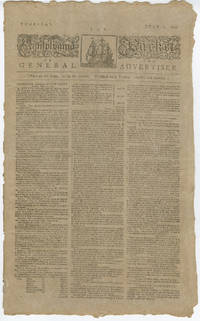
177921556.07Philadelphia PA 1779. No binding. Fine. Pennsylvania Packet or General Advertiser. Newspaper. Pennsylvania Packet or General Advertiser. John Dunlap Philadelphia Pa. July 1 1779. 4 pp. 10 1/2 x 17 untrimmed. Page 1-2 leads with extracts from the Journals of Congress regarding Indian Affairs and New Hampshire land disputes. Extensive content on the Revolutionary War medical department including a lengthy serialized ""Doctor Morgan's Vindication"" regarding the Continental Congress's dismissal of Dr. John Morgan who had great success managing military hospitals for Washington's Army without cause or explanation. Here he obtains testimony from General Nathanael Greene and even Washington himself to defend his reputation.Page 3 reports war news from Pennsylvania as well as a June 29 1779 act of the Continental Congress borrowing $20 million to maintain fiscal solvency.Page 4 includes advertisements for runaway slaves book auctions and stolen horses.Excerpt ""IN CONGRESS June 29 1779.AS Congress are bound by every motive of policy and of public & private justice to maintain the credit of the paper money emitted by their authority on the faith of the United States; so it is their intention not only to avoid further emissions but to diminish the quantity in circulation provided that the respective States by correspondent and vigorous exertions shall put it in their power to raise the necessary supplies.Resolved therefore That twenty millions of Dollars or such a part thereof as shall be brought into the Continental Loan-Offices on or before the first day of October next be borrowed on the faith of the United States at an interest of six per cent. per annum.For facilitating the said Loan Resolved1. That the Loan-Officers in every state do immediately open subscriptions for the said Loan. 2. That the executive authorities of the several states be requested immediately to appoint persons of character and influence in every county town or district to receive subscriptions and transmit the same to the Loan-Officer or Officers in the states respectively. 3. That no subscription be received for less then five hundred dollars. 4. That all subscriptions under ten thousand dollars shall be paid into the Loan-Office where the same shall be subscribed or into the Hands of the person obtaining the subscription within fourteen days after the subscription shall be made. 5. That any person subscribing ten thousand dollars or upwards shall be allowed to pay the same at two periods to wit one half within fourteen days after the subscription the residue on or before the first day of October next; the whole to bear interest from the time of the first payment provided the other payment shall be punctually made. 6. That each lender shall have his election either to receive the principal at the expiration of three years from the date of the Loan or to continue it in the funds on interest until the whole amount of Continental bills in circulation shall not exceed the sum in circulation at the time of the Loan. 7. That interest on all sums which shall be paid into the Loan-Office before the said first day of October or which shall be subscribed and paid agreeably to the terms of the 5th resolution aforesaid shall be payable annually at the Continental Loan-Office of the State in which the money was originally subscribed. 8. That when the interest on Monies which have been or may be placed in the several Loan-Offices on or after the first day of March 1778 shall become due and be paid the same until some more accurate standard of value can be devised shall be increased in proportion to the increase of the sum of Continental paper money which may be in circulation after the date of such Loans respectively.Extract from the MinutesCHARLES THOMSON Sec'ry."" unknown books
4713REVOLUTIONARY WAR ERA LETTER. ALS. 2pg. 7 ¼†x 9â€. Kingston Jamaica. An autograph letter signed “Joram Place†from Jamaica to his wife. Joram Place was a Newport Rhode Island sailor. He wrote some spelling had been corrected to make reading easier: “I have taken this opr'tunity to Informe you the good State of my helth and well-feare since the Last hoping they may find you in the same good helth with God's blessing and all the familey and you may Exspect to see me please God in the Spring please God. My vessel saild last Sunday for the Spanish Main his voyege will be 3 months I presume and there will come sum part of North America But you will keep your one secrets as I shall not come in the harbour with the vessel as I exspect. She must go to New Found Land. I have had trouble enough here by Reason of sum friends of myne and my owners going home from here as I have been Informed By others and that and the troublesum times here and there has detaind me so long here as the owners Did not Let me know whether they would take…ports of the vessel. I could not run the risk of being taking for here is Capt. Bull of Rhod. Island and 5 others vessells now lying at port. Ryal pryses and the Captns Conferr'd onboard the admiral. I have sent by Capt. Reminton a watch which he will Deliver to you if he gets safe home.†The letter has the usual aging and is in fine condition. unknown books
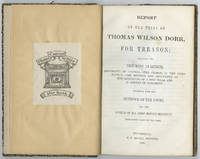
184422542<p><b>JOSEPH S. PITMAN. DORR WAR.</b>Book. <i>Report of the Trial of Thomas Wilson Dorr for Treason; Including the Testimony at Length.Together with the Sentence of the Court and the Speech of Mr. Dorr Before Sentence.</i> Providence R.I. B.F. Moore 1844. 1st ed. 115 pp. 5 1/3 x 8¾ in. </p><p>Based on Rhode Island's colonial charter over half of adult males were disenfranchised. Thomas W. Dorr led the effort to change Rhode Island's political system and expand voting rights. After trying to change the system internally he created the People's Party held an extralegal constitutional convention and set up a competing government. The Rhode Island General Assembly drafted a rival constitution and in 1842 both groups voted on their respective Constitutions. Both Dorr and sitting Governor Samuel Ward King were elected governor but King refused to accept the People's Constitution declared martial law and accused Dorr of treason. While he did not attempt to seize the State House or governmental institutions a few armed clashes did occur. Dorr fled the state but returned and was convicted in 1843 but released for health reasons two years later. Ultimately Rhode Island greatly liberalized voting rights in the aftermath of the rebellion. This trial record prepared by his defense attorneys is especially scarce. R & B 44-2044. Sabin 20649. </p><p><b>Condition</b></p><p>Very good. Original printed front wrapper bound into old boards. Front board loose but holding. Providence Athenaeum Gift of Deborah H. Philbrick bookplate on front pastedown Providence County Sheriff Hunter Carson White's bookplate on verso of half-title. Deaccessioned.</p> hardcover books
1739WRCAM35449London: T. Cooper 1739. 63pp. Dbd. Very good. A defense of Robert Walpole's international policy leading up to and including the Convention of El Pardo January 1739. Walpole's long diplomatic efforts praised by the anonymous author of this pamphlet would soon prove to have been in vain as the Prime Minister reluctantly declared war on Spain later in the year. The result was the desultory affair known as the War of Jenkins' Ear. Of this pamphlet's two 1739 editions the present one is given priority by EUROPEAN AMERICANA and CATALOGUE OF THE GOLDSMITHS' LIBRARY OF ECONOMIC LITERATURE. EUROPEAN AMERICANA 739/280 GOLDSMITHS 7693. SABIN 79228 another ed. STEVENS RARE AMERICANA 1926 1539. T. Cooper unknown books
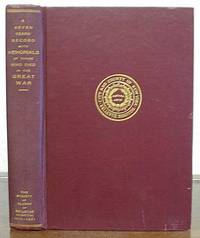
192234575New York: Published by The Society of Alumni of Bellevue Hospital 1922. 1st edition. Maroon cloth binding with gilt stamped title lettering to spine. Gilt stamped Hospital medallion to front board. Spine a bit dull. Hinges restored. A VG - VG copy. 285 3 pp. Illustrated with inserted plates. 8vo. <br/><br/> Published by The Society of Alumni of Bellevue Hospital hardcover books
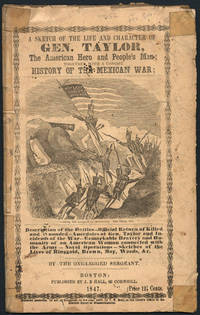
1847WRCAM49052Boston: J. B. Hall 1847. 36pp. Pictorial wrappers. Tape repairs to the spine and corners dust-soiling to front wrappers minor foxing. Good. Authorship is attributed to "The One-legged Sergeant." Tutorow and Howes note a different issue with a joint New York and Boston imprint but this imprint was surely executed around the same time and additionally appears with a slightly different imprint "John B. Hall" and contents in the same year. This is one of the first pamphlets in the making of Taylor as hero. TUTOROW 3729. HOWES T80. J. B. Hall unknown books
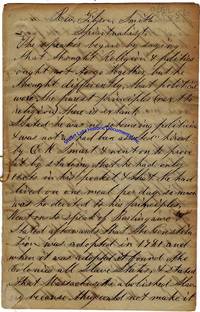
4297SPIRITUALISM. A religious movement centered on communication with the dead. It was very popular in 19th-century Europe and America. MDS. 8pgs. N.d. Civil War era N.p. probably Vermont. A handwritten transcript of a speech given by a Spiritualist minister. In a long and cutting speech Rev. Gibson Smith a minister from South Shaftsbury Vermont criticized the Civil War the Union and many American politicians of the era. Though he seems to have supported the abolitionist cause – as did most Spiritualists – Smith decried the war itself believing that the north was as immoral and self-serving as the south. He speaks frequently of morality versus law considering the former to be more powerful than the latter. Smith also complains about the persecution of Spiritualists by numerous politicians. Smith mentions several times the possibility of Stephen Douglas becoming the next President. The transcript is signed “A. Thompson Rep.†at the bottom presumably by the man who recorded it. “Rev. Gibson Smith Spritualist. The speakers began by saying that though Religion & politics out not to go together but he thought differently that political were the purest principles next to religion there is extant. Stated he was no scheming politician & was not ‘as had been asserted’ hired by C K Smart & went on to prove it by stating that he had only 10 cts in his pocket & that he had lived on one meal per day so much was he devoted to his principles. Went on to speak of Burlingame & stated afterwards that the Constitution was adopted in 1781 and when it was adopted it found the Colonies all slave states & stated that Massachusetts abolished slavery because they could not make it profitable & would not have done so if they could & that the people of Mass had no sympathy for niggers & never will have. Stated that the northern people were greater slaves than the southern niggers because they were made subservient to domineering churches & sectarian…That the south were honest and believed slavery a divine institution & prove it from the Bible & you regard it a moral evil ‘They have as much right to their opinion as you & it is none of your business to interfere with it. Want you to call your ministers in I want to talk to them you have got mad at this thing of slavery & this quarrel is a monstrous thing between the north & south. You talk about a Higher Law what is your higher law it causes you to trample upon the constitution & laws of your country. You never knew a legal enactment to do away with a moral evil. Cited the Maine Law as an instance & said there was as much liquor drank now as there ever was before Cheers Moral suasion is the only way to abrogate slavery & there is no others. How did your churches regard the higher laws let us see when the Washingtonion movement came up they opposed it to the last end! When this ramrod law came up how did they to They went in for it to a man! The Democrats are for moral suasion in all things. A word to spiritualists you believe in progression & that progression is from wrong to right. Now slavery has steadily advanced under your doctrine of intervention. Your doctrine has caused you to repudiate your higher law. If you oppose slavery as having its equal share of the territories the south will dissolve the Union! & justly to! Douglass will be the next president & he will prevent this. The South drove slavery into Kansas & the north drove it out. Washburn endorsed Helpers Book & 11 other republican members of the House of Representatives. Slavery must have more territory or this great increase will overflow the south & you will have to cut their throats to make room for the others to live. Fessenden is an abolitionist. Speaking of the taxes in Maine he said there was $20000000 worth of church property in maine not taxed & said all property ought to be taxed. So you the people have to pay the taxes that should be levied upon this property. Some rich men buy $5000 dollars worth of pews in your churches & sent them at a money making rate & it is all clear of taxation. This is no donation they do it to speculate! The ministerial exemption law was smuggled through the legislature and there is no report other than the law itself upon record no report in the newspapers the law itself is a disgrace to the state for it helps only the rich & poor Methodist ministers get nothing by it. They abuse & persecute me & I have to help pay their taxes for them by the force of your statue law. Nothing to say about Peck the Rep. Leaders are dishonest but the voters are not & the speaker goes on to advise them to vote for smart and Douglass if they want to be honest & they certainly will be elected for all the boys are for them. Rust of the Progressive Age tried to put me down & came in and disturbed my meeting & threatened to call the police before he would be quiet. Simonton of Camden tried to stamp me down when I spoke in opposition to Grimes but I stood until they got tired of for I would have stood all might but I would have spoken & then he saved me the next day when I went into his shop & that is gods truth. The speakers said he stumped the state of Vermont for Fremont in ’56 and he should not have turned democrat if they had not drove him to it. Luke P Rand & G.W. Brown turned when they were driven to it by the Republicans. Remmings of Boston donated a printing press worth $5’00 to the spiritualists of Maine & G.W. Brown was to conduct the paper & Remmings was informed that Brown calculated to blow for the democracy & he came to get the press away but Brown would not give it up & Remmings put the law to it & stopped it while it was running off its edition before the papers were half printed. He persecuted Brown & put his wife & remaining child for one lay dead in the house when they seized the press in a common pest house pretending that they were going to have the small pox & when Brown was gone from home & they had no protestors they kept them there 4 weeks & Brown had to threaten to prosecut sic to get them out. The names of the men that did this as Frost Straw & Snow. Speaker goes on to tell the spiritualists to vote against them because they have done it & tells them they are no spiritualists if they do not for their dessenent saith not. A. Thompson Rep.†In fair condition with some toning on each page. This is quite a speech and it must have been quite something to hear it in person. It’s difficult to know what the man who copied it down thought of it. The thread binding that once held the sheets together has come apart so all leaves are now separate. unknown books