1 575 résultats
1934191625Rand McNally & Company 1934-01-01. 2nd Edition. Hardcover. Good. 1935 early printing. Blue boards have moderate fading and discoloration with heavy edgewear including some chipping at spine and bent corners. Pages are foxed throughout some pencil markings including two names on front pastedown. HB HS Rand McNally & Company hardcover books
1772269008Venice: Heredis Nicolai Pezzana 1772. First. hardcover. very good. Volumes I & II out of four. Title page vignettes Volume I title in red & black; minor worming & foxing; llibrary mark eradicated from the bottom of each title page. Folio contemporary limp vellum; stained. Venetiis: Heredis Nicolai Pezzana 1772.<br/><br/> First edition of Guerra's edition of the Luxemburg Bullarium one of the most famous editions of papal bulls.<br/><br/> Heredis Nicolai, Pezzana unknown books
1949001648Berlin: Political Activities Branch Office of Military Government for Germany 1949. Fine. ".The salient facts regarding the post-war history of Western Germany political parties and their leaders." . First Edition. Printed Wrappers. Fine/No Jacket As Issued. 8vo - over 7¾" - 9¾" tall. Political Activities Branch, Office of Military Government for Germany Paperback books
1960WRCLIT76294London: British Council and National Book League / Longmans Green & Co. 1960. 48pp. Printed wrappers. Portraits. First edition. Small nick in rear wrapper at fore-edge otherwise fine. Writers and Their Work No. 127. British Council and National Book League / Longmans, Green & Co. unknown books
1920WRCLIT76459London: Secker 1920. Cloth and decorated boards paper spine label. First edition expanded over the similar collection of 1918. Binding and label a bit rubbed and sunned but good and sound. REILLY WWI p.48. Secker hardcover books
188719211Gettysburg Pa.: Wm. J. Cook ca. 1887. First edition. Roughly opened or trimmed along the lower edge; some light chipping and light soiling; a very good copy. Original printed yellow wrappers 6 x 4 inches 9 1 pages. Illus. Seemingly unrecorded a bound pamphlet of irregular leaves and varied typefaces stitched together into printed wrappers; likely only a short step up from an amateur press production. With a historical summary plus dramatic poetry on Gettysburg; one of the poems is signed in type W. J. C. and the rear wrappers note that the book is available from Wm. J. Cook Box 82 Gettysburg. The rear wrappers also note that one poem concerns an 1887 reunion of veterans from both sides of the war. Wm. J. Cook), unknown books
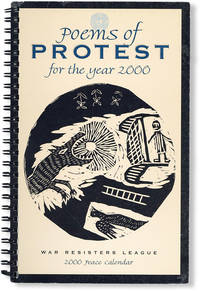
199948532New York: War Resisters League 1999. First Edition. Octavo. Spiral-bound desk calendar and appointment book. Unused; Near Fine. Illustrated by P. Schumann / Bread & Puppet Theatre. War Resisters League unknown books
1945WRCLIT75658London: Harrap 1945. Large octavo. Gilt cloth. About fine in lightly nicked and edgeworn dust jacket. First edition ordinary issue. Foreword by Lt.-General Sir Oliver Leese. Introduction by Sassoon. There was also a special edition of 110 numbered copies. REILLY WWII 44. KEYNES B18. Harrap hardcover books
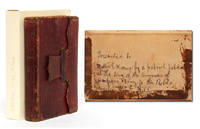
3256Harper's Ferry. Pocket New Testament bound in red sheep over card measuring 3 x 4.25". Extremities somewhat rubbed but in overall solid condition. Offsetting to pastedowns. Various selections dog-eared but no markings to internal text. Multiple ownership signatures from the prominent Koonce family most notably the inscription to the front endpaper: "Presented to Mollie E. Koonce by a patriot soldier at the line of surrender in Harper's Ferry to the Rebels under Gen. Hill." Other signatures include Howard Koonce Alice R. Koonce and Peachie Koonce. A unique artifact that speaks to women's presence influence and the risks they faced in wartime.<br/><br/>The Mollie E. Koonce of the ownership is possibly Mary E. Koonce daughter of George Koonce an entrepreneur and statesman; several other family members' names also appear in the Bible Howard who went on to become a physician and Estelle May "Peach" Koonce. History has remembered and recorded George Koonce. The proprietor of a Harper's Ferry general store Koonce & Son he was a prominent Unionist and delegate to the 1861 Wheeling Convention protesting the secession and arguing for the creation of a separate state West Virginia a Northern and Unionist region carved out of Virginia to which he ultimately served as senator. What remains lesser known are the experiences of the women in this family who were clearly present for the traumatic events of the Harper's Ferry battle and surrender and who were identifiable as part of an activist family. They faced tremendous risk yet it is likely as with women on both sides that they continued maintaining homes and businesses and may have even been volunteers. The fall of Harper's Ferry was an especially harsh loss for the Union 44 killed 47 wounded 12419 captured. In her 1862 account The Battle of Harper's Ferry as a Woman Saw It nurse Mary Clemmer Ames reported that "traitors gathered around us even while we watched. Besotted blear-eyed Virginia cravens squatted on stones and stood with hands in their pockets estimating the probabilities of a fight.Beside these cowards stood women watching trembling for the safety of their homes.young girls whom the fortunes of war had given a temporary home here wondered if with the enemy in they would ever get out." What was Mollie's role in the midst of this and what brought her to the line of surrender where she could receive this gift To what extent was the "patriot soldier" passing along his Bible in request for her prayers versus giving it to her a sign he prayed for her safety<br/><br/>A unique piece of women's Civil War social history raising questions deserving of further research.<br/><br/>U.S. Census Records 1860-1900. George W. Koonce Family Papers at West Virginia University AM.0407. unknown books
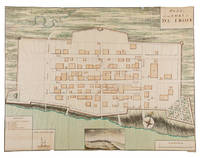
1761WRCAM56427Albany 1761. Manuscript plan in pen and ink with watercolor on four conjoined sheets of paper 21 1/2 x 28 1/2 inches signed at lower right "W.B. Albany Augt. 18th 1761." Old folds minor edge wear light soiling a few unobtrusive minor repairs to verso. Very good. A beautifully-rendered pen ink and watercolor plan of Fort Detroit executed by noted cartographer William Brasier for his commander General Jeffrey Amherst in Albany in 1761. It depicts Fort Detroit just months after it was ceded from New France to Great Britain and very much as it would look for the next four years. This version of Detroit would hold strong against Pontiac and his warriors throughout their barrage in the summer of 1763. <br> <br> William Brasier produced this plan after an original drawn the year before by Lieutenant Diedrich Brehm which was also presented to Amherst some months earlier in February 1761. Brehm had accompanied Robert Rogers from Detroit to New York in late 1760 and early 1761 and arrived at Amherst's command in New York with his plan of Detroit in tow. It is here in Albany where Brasier used Brehm's plan to create the present depiction. <br> <br> Like Brehm's plan Brasier's version presents Fort Detroit as a long roughly rectangular-shaped settlement populated with about seventy mostly-unidentified buildings colored in light red-brown. The names of north and south streets are labeled according to their orientation; this was just the second time the first being on Brehm's map that these streets were identified in print. The fort is shown just off the banks of what is now the Detroit River; a handwritten notation in the water reads "The Streight is about 900 Yards wide here." <br> <br> Brasier includes a "Reference" key at bottom left which identifies six of the buildings and other locations on the plan namely the "King's Powder Magazine" the powder magazine belonging to the inhabitants of the fort the block-houses "The Cavalier" the church and the "Commandant's Garden." This is down from nine locations in a similar key on Brehm's plan. Brasier's plan of Detroit was featured in Brian Leigh Dunnigan's FRONTIER METROPOLIS: PICTURING EARLY DETROIT 1701- 1838 and Dunnigan illuminates the reasoning behind Brasier's elimination of some of these locations: <br> <br> "Brasier's title 'Plan of the Fort at De Troit' does not reveal why it was drawn but the work is not an exact copy of Brehm's original. The differences lie in the west end of the town where all of the buildings shown by Brehm along both sides of the 'Rue neueve St. Germain' have been deleted. These stood within the space gained when Captain Belestre enlarged the stockade during 1758- 59 and it is likely that Brasier's copy relates to the controversy over ownership of those properties. At least twelve grants were made within the town by Captain Belestre during 1758-59 and most were in the area of expansion at the western end of the stockade. Before it had been incorporated into the town however that land was part of the Domain surrounding the fort and was thus the property of the French king. British officers questioned whether Captain Belestre had the authority to grant lots there to individuals. If not the land was rightly the property of King George III." <br> <br> Brasier also followed Brehm by including a "Profil sic of the Stockade" and an elevated depiction of the fort titled "View from the West." The stockade profile is a detailed depiction of the construction of Detroit's main defensive apparatus. The view of the city is considered the "first look at the town of Detroit in other than a ground plan or a map" according to Dunnigan. The perspective of this view was intended to be that of Rogers' troops as they faced the main gate upon arrival at the fort. The tops of many of the buildings including Belestre's own house peek over the tops of the surrounding stockade. The view also makes clear the reality of the uneven ground upon which Fort Detroit was built; the ground swells from left to right to about the middle of the fort then pitches downward again towards the river at right before plunging down to the river banks just outside the stockade walls. <br> <br> William Furness Brasier 1689-1775 was a draftsman in the engineer's office of General Amherst's command post at the time he executed the present plan of Fort Detroit. He was also a prolific and exacting cartographer who produced well-regarded maps of Lake Champlain the upper Hudson River valley and the Mississippi River as well as impressive plans of Fort Ticonderoga Fort Ontario Fort George Mobile and Pensacola and St. Augustine Florida. <br> <br> The whereabouts of this plan were unknown to Dunnigan at the time he published FRONTIER METROPOLIS. The plan remained in the collection of General Jeffrey Amherst and descended through his family until it was bought by Charles Sessler for H. Richard Dietrich at Sotheby's sale of the Earl of Amherst's collection July 4 1967 lot 494. It has been in the Dietrich American Foundation ever since. Brian Leigh Dunnigan FRONTIER METROPOLIS: PICTURING EARLY DETROIT 1701-1838 Detroit: Wayne State University 2001 p.55 figure 4.5. Sotheby's & Co. CATALOGUE OF AMERICANA VOYAGES AND TRAVEL ATLASES AND MAPS London: Sotheby's July 4 1967 pp.102-03. unknown books
2005229939Beijing: China Intercontinental Press 五洲传æ’Â出版社 2005. Paperback. 224p. profuse b&w captioned period photography and some contemporary color photos scattered texts in Chinese and English well-organized production in a sewn textblock on alkaline clay-coated paperstock throughout. Softbound a substantial 11.5x9 inch paperback in photo-decorated wraps some abrasion to lower joint with clear tape repair mild general edgewear perfectly clean and sound within. A very good copy. Minimal atrocity shots many portrait photos much journalistic photography from trialrooms and other sites photos of groups of the prisoners enjoying recreation periods photos of repentant confessions being made following acceptance of guilt. The Management Center was formerly the detention facility for 982 Japanese prisoners those considered to be the worst offenders against the Chinese people in World War II. This book traces their later paths after release including many who expressed atonement. China Intercontinental Press 五洲传æ’Â出版社 paperback books
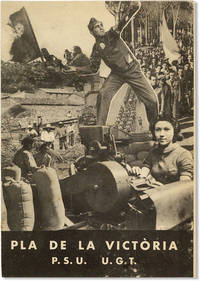
193743660Barcelona: P.S.U. / U.G.T. n.d. but ca. 1937. First Edition. Octavo 21cm.; bifolium printed on newsprint photo-montaged upper panel. A hint of wear and toning else Near Fine. Promotional handbill issued at the height of the Spanish Civil War delineating the platform of the short-lived Unified Socialist Party of Catalonia the Catalan referent of the Communist Party of Spain and its workers' union. The lovely photo-montaged upper panel depicts both military scenes agricultural activities and at the fore-front a young woman working on a piece of heavy machinery. Text entirely in Catalan. UCSD only in North American according to OCLC February 2019. P.S.U. / U.G.T. unknown books
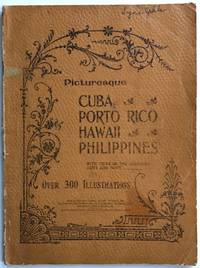
1898535Springfield Oh: Mast Crowell & Kirkpatrick 1898. Good. 121pp. Folio. Original orange printed wrappers. Light wear and soiling spine chipped with some glue repair. Ink ownership inscription at top of front cover. Minor internal soiling several leaves with tape repairs at edges. Extensively illustrated souvenir publication of the Spanish-American War. Images include local street scenes and landmarks photos of the native populations and the American military occupation. "Depicting the natives their costumes habitations and occupations; prominent buildings street scenes mountain and river scenery etc. Also life in the American Army and Navy with portraits of the chief actors in the Spanish-American War. Over three hundred illustrations. Mast, Crowell & Kirkpatrick unknown books
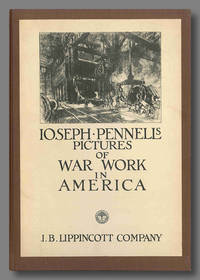
1918WRCLIT75663Philadelphia & London: J. B. Lippincott Company 1918. Small quarto. Cloth pictorial label. 36 plates with descriptive text. First edition. Bookplate otherwise near fine without dust jacket. J. B. Lippincott Company hardcover books
001898Washington Government Ptg Office 1941. In wrappers. Minor soiling only. Illustrations charts throughout. Sections on swimming and life-saving exercises group games disciplinary exercise. Washington Government Ptg Office 1941. unknown books
19462296441The 75th Infantry Division / Army & Navy Publishing Company 1946. First Edition. Large Hardcover. Very Good/No Jacket. Rowe John S. Signed by author. Original platoon photograph signed by dozens of members of the 75th Infantry Division and noting their home towns laid in along with a Remember Pearl Harbor soldier 'diary' detailing the service of a soldier in the division. A couple faint spots to boards otherwise an excellent copy. Soldiers who signed included: Pearson C. Schiller; Sgt. Chitwood; Domenico J. Scatena; George T. Wingard Jr.; Mike Stirling Jr.; Paul Toman; Joe LaPointe; Lowell E. Murphy; 'myself' probably Nathan Hena who signed the Pearl Harbor sheet; Jack M. Reese; Robert N. Dugal; Joseph A. Buzogany; Robert T. Berkebile; Joseph W. Lasley; Grover E. Hardy; Douglas Huff; William C. Woodward; Ivan C. Else; Francis Quinn; G.L. Mae; Calvin W. Hood; Howard L. Marshall; Chester Kalm; Delwyn P. Goodyear; Sgt. Adams; Walter J. Clausius Jr.; John J. Long; Morton L. Plesser; Ridley W. Meek; Richard H. Phillips; Jerry H. Steward; Harry S. Singer; William H. Fleming; Platton Sgt. Smith the sergeants' names are all in pencil in the same hand so they were probably written in by the owner of the book. Some names are numbered to correspond with the photo others are marked as 'not present for picture'. 1946 Large Hardcover. Unpaginated. Black-and-white photographs throughout depicting the service of the 75th Infantry Division toward the end of World War II. The 75th Infantry Division / Army & Navy Publishing Company hardcover books
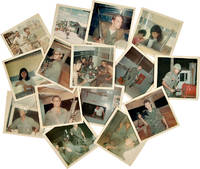
1972WRCAM55575Various places in Vietnam 1972. 145 photographs all but thirteen in color most approximately 3 1/2 x 3 1/2 inches. Majority of photographs mounted on black paper stock with non-archival adhesive tape some photos retain remnants of tape at corners. Some images a bit faded but generally in very good condition. A tremendous collection of photographs depicting the personal life and military service of an unidentified African-American soldier with the last name "Williams" serving in Vietnam during the war and with numerous family photographs at home. The majority of the photographs are undated but those that are dated place the collection roughly between 1968 and 1972. Other identifying characteristics in the photographs indicate that the soldier was likely part of the United States Air Force 93rd Security Police Squadron which provided security and air base defense during the Vietnam War. There is a photograph of Williams leaning against the sign for the 93rd SPS dormitory. <br> <br> Notable in the sixty or more photographs from the soldier's time in Vietnam are images from an unidentified American Air Force base depicting soldiers in the barracks a mess hall and fraternization among soldiers; additional photographs show a heavily-armed Williams manning a bunker holding an EBONY magazine posing with a South Vietnamese soldier in an urban setting and staring strikingly at the camera wearing machine gun ammunition and a hand grenade. A series of thirteen images were taken at "Le Van Loc" a popular Vietnamese night club located on the Tan Son Nhut Air Base near Saigon indicating Williams may have been stationed at or near that base. Personal photographs show individuals of varying ages presumably family members who appear alone or in groups and at times are photographed with Williams. Several of these photographs feature children presumably Williams' at home and at an Elmhurst School function. Williams seems to have been especially proud of his motorcycle as it features in a few shots. <br> <br> A collection of both service and family photographs capturing a young African- American serviceman during the Vietnam War. unknown books
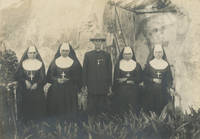
1900List518Most Cuba or Jacksonville 1900. Silver gelatin or albumen photographs various sizes ranging from 3 x 3 to 6 x 8 most captioned to verso. With handwritten manuscript four leaves discussing various diseases. The Spanish-American War was the first war in which nurses formed their own dedicated units as well as the first war in which they were accepted within military hospitals. While no nurses died in battle 153 died during the war from disease. Nurses were responsible for both treating soldiers as well as maintaining sanitary conditions within the camps. Conditions were often poor leading some to work until they were too sick to continue. <br /><br /> The current collection of photographs documents the experiences of a Mrs. Waters who was originally from Groton Massachusetts. The collection begins with a couple early photographs including a portrait as a young woman and a cyanotype of one of Waters' leprosy patients at Johns Hopkins Hospital in Baltimore. The next section shows Waters' training in Jacksonville Florida with either the Fourth or Seventh Army Corps at what was called Camp Cuba Libre both Corps trained there in 1898. The photographs of Jacksonville show life around the military camp and environs with some notable photographs of African-American inhabitants of the region. Three photographs quite notably show the Congregation of American Sisters a small group of American Indian nuns led by Reverend Francis Craft. The photographs taken in Cuba are notable for their portrayal of local life. Several photographs of military installations are taken around the "trocha" or line established by General Valeriana Weyler from Mariel to Majana. Another notable photograph is a cabinet card of a large group of nurses taken by the Havana photographer R. Testar. <br /><br /> The group overall shows very early photographic records of military nurses in training as well as a scarce photographic record from a woman in a combat situation. The photographs are generally well preserved in very good to excellent condition with some light fading. Accompanying the photographs is a four page manuscript essay presumably by Waters discussing leprosy as well as the booklet Spanish Phrase Book for American Soldiers and Sailors published by the National Relief Commission of Philadelphia. <br /><br /> Offered in partnership with Daniel / Oliver Gallery. books
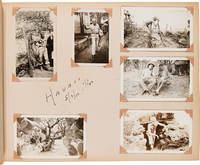
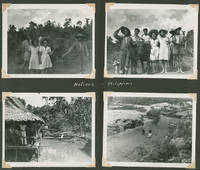
1945WRCAM55773Philippines New Caledonia Guadalcanal New Zealand Hawaii 1945. 213 photographs from 2 3/4 x 2 1/4 to 6 1/2 x 8 1/2 inches corner-mounted; plus twenty-two pieces of ephemera mounted or laid in including two mimeographed pamphlets. Oblong quarto album. Red silk boards blue silk ties with stylized Japanese figure on center of front board. Some fraying to edges and corners some loss to silk on rear board minor soiling. Photographs in excellent condition overall. Very good. A dramatic photograph album from Harvey D. Burgstresser's 1912-83 service in the U.S. Army artillery during World War II. Although most photos are not labeled individually they are labeled by group and track Burgstresser's travels through various combat stations during the war in the Pacific. The first photo labeled "Fayetteville NC" shows Burgstresser on left in uniform with another solider walking along a city street. The first section follows and is labeled "Hawaii 5/7/42-11/1/42" and consists mostly of photographs of soldiers at-ease playing with radio equipment and goofing around likely as they wait for deployment to the front. The next section "Guadalcanal 11/15/42-12/1/43" is short but more somber including photo prints of indigenous people of the island the corpse of a soldier and a photo of a sign posted on a roadside reading: "Kill the Bastards! Down this road marched one of the regiments of the United States Army Knights Serving the Queen of Battles Twenty of their wounded in litters were bayoneted shot and clubbed by the yellow bellies. Kill the Bastards!" <br> <br> Next is a section entitled "Auckland New Zealand 12/1/43-3/1/44" a small and peaceful section featuring photos of couples a few female friends and shots of Burgstresser's battery and company in formation 90th Field Artillery Battalion 25th Infantry Division. From there he was off to "New Caledonia 3/1/44-12/15/44" with a joint force of ANZAC soldiers. Most of these shots are also at- ease and around camp several featuring a truck marked "NZ Mail." From here he moves to "Luzon P.I. 1/9/45 to 10/2/45" the final section and the place where things get a bit more serious; this is also the largest section in the album. Several images show soldiers setting up artillery stations laying wire and organizing ammunition. One image in this section is labeled "V-J Day" and this is the only mention Burgstresser makes about the progress of the war. There are scenes of buildings damaged from war along with a few scenes of combat and more of the aftermath of combat including downed planes and destroyed tanks and several quite explicit images of corpses. In the midst of this are images of Filipino women and men in traditional attire and likely some from New Caledonia and Guadalcanal as well including several shots of topless Filipino women likely not taken by Burgstresser. <br> <br> Various pieces of ephemera are in the album including a twenty-eight-page mimeographed pamphlet entitled WELCOME 25th. INF. DIV. with sections corresponding closely to Burgstresser's arrangement of this album; and a six-page mimeographed pamphlet entitled THE SEA BREEZE "Souvenir Edition" October 23 1945 issued to those aboard the troop ship USAT "Cape Meares." Also included is Burgstresser's military "Motor Vehicle Operator's Permit" authorizing him to drive automobiles large trucks and a "Vehicle wheeled combat;" an invitation to ceremonies honoring General Douglas MacArthur's return to the U.S.; Burgstresser's "Good Conduct Pass" for Auckland; a few newspaper clippings; and pieces of Japanese currency including two pieces of Japanese government- issued "fiat pesos" which the Japanese issued during their occupation of the Philippines. <br> <br> According to his obituary PHILADELPHIA DAILY NEWS April 25 1983 Burgstresser had graduated from Bucknell University; after the war he went into the insulation business and was eventually president of the Philadelphia Asbestos Corporation. His album ably captures both the camaraderie and the horror of the war in the Pacific. hardcover books
1945WRCAM54321Philippines; Okinawa; San Diego 1945. 133 silver gelatin photographs most 2 1/2 x 4 inches but ranging from 2 1/2 x 2 1/2 to several 10 x 7 inches. Oblong folio. Black leatherette album strong tied. Light wear. Photos in corner mounts with many captions. Very good. A fascinating photographic account of military service in the Philippines compiled by a member of the 142nd U.S. Naval Construction Battalion the Seabees in 1945. Most of the images approximately three- quarters of the album were taken in Guiuan on Samar Island in the central Philippines where the photographer was stationed. Guiuan city square the Seabees' camp numerous portraits of local girls who sometimes pose with American soldiers local families and their activities native architecture and other local scenes. They also show the Immaculate Conception Church with shots of the exterior and detailed views of the silver altar - built in 1595 to 1844 but completely destroyed by Typhoon Haiyan in 2013. Several other photos evidently portray the album's compiler posing next to an American fighter plane while boiling sea shells in front of his tent etc. <br> <br> The final portion of the album contains photos taken during the operations aboard the USS "Monrovia" and "President Harris" in October-November 1945 including views of Okinawa on the way to China and snapshots of soldiers unloading cargo in the Yellow Sea China before returning to Manila. There are also eight clear views of Manila showing destroyed Japanese cranes and boats in the harbor American army headquarters and a warehouse. The album concludes with a few photos of the homeward voyage and shows soldiers discharged in San Pedro California. <br> <br> Overall a very good album depicting local life and the activities of the 142nd U.S. Naval Construction Battalion in the Philippines and Yellow Sea in the last months of the World War II. hardcover books
194520240The Hague ca. 1945. Hardcover. Near fine. Two oblong 8vo. albums. First album: 11.5" by 9" approx. String-tied faux-alligator boards. 43 gelatin-silver prints majority 3.75" by 2.5" but many 5.5" by 3.25" mounted to stiff gray leaves with cobweb-patterned tissue guards on each and handwritten captions in Dutch. Apparently complete. Near fine with several photos mildly yellowed but majority bright and sharp. <br /> <br />Second album: 13'' by 9'' approx. String-tied grey textured paper boards. 91 gelatin-silver prints of various sizes from 3.75'' by 2.5'' to 5.5'' by 3.25'' most of the latter size on stiff blue paper with tissue guards and handwritten captions in Dutch. Also contains an anti-Hitler card affixed to the front paste-down several cards with art and verse and two sepia-toned photographs on the final page. Two 5'' scuff marks to front board album corners and edges worn and bumped otherwise near fine with bright and sharp photographs. <br/><br/>A pair of carefully assembled albums possibly compiled for official use. The majority of the photos in both albums record the aftermath of a botched Allied bombardment in the Hague on March 3 1945; the attack claimed the lives of 511 civilians and left over 20000 people homeless. Targeted at a German missile base in the occupied Netherlands bombs deployed by the Royal Air Force landed instead in the adjacent Bezuidenhout neighborhood in the Hague destroying thousands of homes business and public buildings. The photos show several bombed-out churches and many apartment buildings with street names captioned underneath. Near the end of the first album three images show the burning of the Schevenigen Pier near the Hague which the compiler blames on the Germans but whose exact cause has never been established. The album forms a direct account of wartime destruction in the Netherlands. <br /> <br />The second album much more extensive includes some of the same material along with many other photographs. Affixed to the front paste-down is a black-bordered satirical memorial card for Hitler reading in Dutch "He came.but not to England / He saw.Moscow / He lost.the war." Beginning with two views of The Hague one in 1930 and one apparently mid-bombardment labeled March 3 1945 it also includes numerous scenes of destroyed buildings and monuments identified by street name. Some of these overlap with images from the first album; many do not. In addition to those showing the aftermath of the bombing several photos show intact monuments and buildings from neighboring cities like Middelburg possibly as a point of comparison with the ones destroyed. A few pages show photographs of various Bailey bridges at unspecified locations and other wartime construction. The final page of uncaptioned photos includes a shot of a pro-Hitler slogan painted in Dutch on a bridge underpass and a photo of several posters including a Dutch advertisement for "De Eeuwige Jood" The Eternal Jew a German propaganda film. A final leaf follows with two pro-R.A.F. cards with verses and drawings and three souvenir cards of Queen Wilhelmina Princess Juliana and her children Beatrix and Irene. The final page has two sepia-toned photos of a parade presumably celebrating the war's end. An important act of witnessing from an unfortunate event. hardcover books
19441769Amchitka & Anchorage Ak 1944. Overall very good. 111 original photographs measuring from 2.5 x 3.5 to 3.5 x 5 inches. Oblong folio album string-tied; leatherette boards front embossed and color stamped. Manuscript captions on album leaves; photos in corner mounts. A bit of soiling and wear to album leaves fading to some captions and a few images. An album of over 100 striking vernacular photographs taken and compiled by Corporal Herbert Farris of Lexington Kentucky that document his World War II service with the 39th Air Depot in Alaska. The men were involved in the maintenance and repair of Army Air Force aircraft and it appears that Farris operated a refueling truck. The unit was stationed in both Anchorage and in the Aleutian Islands and the album appears to include images from both of these areas. One image depicts the "wind indicator at Amchitka" an island in the far western Aleutians home to an Army Air Force Base constructed during the war. The album also includes many other images showing a remote base with bare bones conditions likely Amchitka or a nearby island. There are photos of the "first mess hall" a tent the "second mess hall" a series of huts a "barber shop" contained in a tent a shower tent a theater quonset hut barracks control tower and wooden walkways. The album also includes many images of aircraft including P-40s B-25 bombers and C-67 transports as well as photos of the refueling truck its operation and its crew. Finally there are images of "training planes" used for practice likely in Anchorage as well as some other images that appear to have been taken in Anchorage such as river gold dredgers and more permanent-looking buildings. A fascinating visual record of this far-flung American military outpost during World War II. unknown books
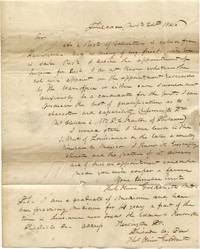
14741786-1857. Marcy was a New York Governor and Senator and Secretary of War during the Mexican War. ALS. 1pg. 7 ½" x 9 ½". Novr 24th 1846. Philada. An autograph letter signed "Thos Oliver Goldsmith M.D." two times to Secretary of War William Marcy. After the start of the Mexican War Goldsmith appeals to be sent to Mexico: "As a Regt of Volunteers is called from Pennsylvania and as many of my friends will be in said Regt I desire the appointment of Surgeon for Regt. I do not know whether the Col will appoint or the appointment reserved by the War office. In either case I would most anxiously be a candidate for the post. I can produce the best of qualifications as to character and capability references to Drs. McClellan and Wm. C.C. Barton of Philada. I would state I have lived in the S. West of Louisiana on the lakes a country similar to Mexico. I know its Geography climate and the nature of its diseases and if such an appointment could be made by you you will confer a favor. I am a graduate of Medicine and have been practicing Medicine for 14 years a part of the time in Louisiana near Texas the balance in Kensington Phila Co Pa." The letter has the usual mailing folds with two toning bands on the integral address leaf unknown books
1864215608New York: Phelps & Watson Publishers 16 Beekman St 1864. Fold out hand-colored map. 1 vols. 60 x 88 cm 35 x 29 inches folded in cover to 18 x 12 cm. 6-1/2 x 4-1/2 inches; with 35 pp booklet "Brief Description of Battles and Skirmishes of he War. Orange printed pictorial boards cloth spine with 35 booklet tipped to inside front cover. Fragile binding is splitting at cloth spine corners are chipped; map torn along folds one small tear into image. Interestingly the map is stamped on the verso; "Price 50 cts. for the benefit of a one armed soldier"; and signed by an early NYC owner. Fold out hand-colored map. 1 vols. 60 x 88 cm 35 x 29 inches folded in cover to 18 x 12 cm. 6-1/2 x 4-1/2 inches; with 35 pp booklet "Brief Description of Battles and Skirmishes of he War". Rare and Fragile Civil War Map. Fragile and very scarce map from the Civil War this copy being issued after May 1864 as the final entry on the accompanying booklet listing skirmishes concludes with 'spotsylvania Pa." The map itself locates battles and skirmishes by means of red dots or by red underlining of place names and it also gives the population statistics for each state. OCLC locates 4 copies and the map is not in ot in Stephenson Civil War Maps in the Library of Congress. Phelps & Watson, Publishers, 16 Beekman St unknown books
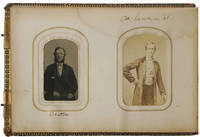
1860CAT0140Massachusetts 1860. 9 x 6 inches. Polished calf decorative covers. Nineteen pages with 55 Carte-de-Visite portraits. Good. A carte-de-visite portrait album kept by Billings during the Civil War. Notation before index reads: "This album was sent me at my order from Philadelphia and was received while our army lay at Brandy Station in the winter of 1863-1864. I think! Many of the pictures I carried with me throughout nearly my whole term of service. This is true of these on the first 17 pages. The others have been inserted since the war." <br /> <br /> A particularly noteworthy artifact. Hardtack and Coffee is one of few books on soldiers' everyday life and this album would have been quite significant for Billings. He discusses photographs twice in the book as being among the dearest objects soldiers kept with them. Per Billings' own note on the endpapers there are seventeen portraits present that he personally kept with him during the first part of the war before adding them to this album in 1863. These include: his parents several cousins and various acquaintances. The remainder of the portraits were added later. Notable subjects include two portraits of Billings himself and two portraits of his future wife Mary Phillips Cotton Whitney. <br /> <br /> Unfortunately portraits of Billings' compatriots are missing. Several portraits of members of the Massachusetts 10th were removed in the 1980s by an unknown person and framed with the subjects' identities and the photos removals noted on the mounts. Several other pages lack portraits though it is unclear whether or not each space in the album was originally filled. The photographs that remain are in very good condition. The album itself is worn with tears and chips to spine and general wear. First leaf repaired with crude tape. Still a significant piece despite the flaws. unknown books