Münsingen - SCHRAML, ErichAntiquariat.de

1 160 résultats
1995142217Münsingen. Privatdruck. (Druckhaus Baader). 1995. 411 Seiten. Mit zahlreichen faks. Abbildungen u. faks. Dokumenten. Farbig illustrierter Original-Einband. 24x16,5 cm
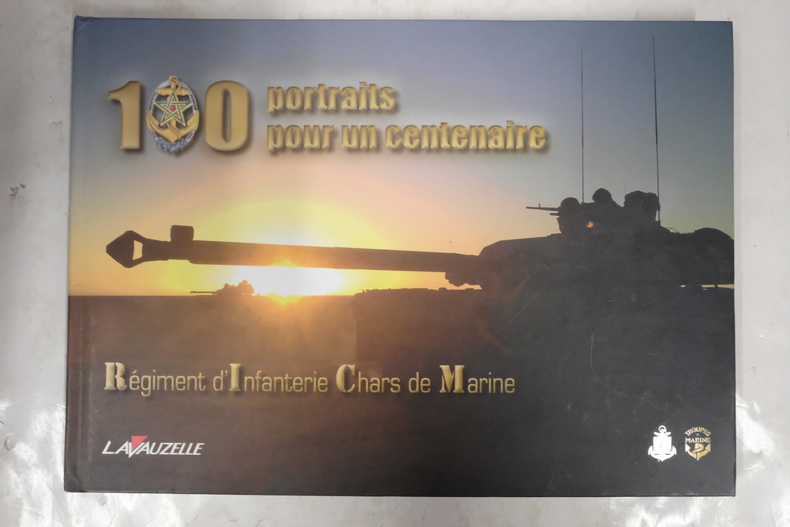
2014HIS5446MRelié, 256 pages, paru le 18 décembre 2014 chez Lavauzelle, très bon état général, quelques rousseurs très légères.
106.461Paris, Librairie Garnier Frères, s.d. (ca 1870). 18 x 28, 111 pp., demi-reliure larges dos/coins carton vert, plats marbrés, couverture conservée (avant-arrière), bon état (rousseurs).
6252EDWARD ALLEN GOODWIN unknown-1862. Goodwin was the Sergeant in Company K of the 23rd Regular Massachusetts Volunteers. This is the diary of Edward A. Goodwin Co. K 23rd Regt. M. of. M. This diary is THE AMERICAN UNION DIARY FOR 1862 an annual published diary accessible and likely provided to Union soldiers during the Civil War. After a few pages that include a calendar and interest tables the diary provides space for each day of the year 1862. Goodwin wrote entries every day from January 1st to April 7th and none thereafter. At the time Goodwin was serving in the 23rd Massachusetts Infantry Regiment which was a part of the Coast Division under General Ambrose Burnside. Entries are handwritten in either pencil or black ink. Notable entries include: aFriday 7: Naval engagementplace lasting from noon till sunset. Troops were landedin the afternoon and evening. Bivouacked on Roanoke Island in the rain. b Saturday 8: Captured a rebel battery in a swamp. Took 3000 rebel provisions and the whole island wasSergt. Howard hurt his foot. W.S. Clark missing. Both entries describe the Battle of Roanoke Island fought February 7th and 8th 1862. Part of General Ambrose Burnsides expedition to capture key ports in the Outer Banks the battle first saw Union gunboats first firing on Confederate forts under the command of Henry Wise until Burnsides soldiers could land ashore unopposed. and the forts on shore engaged in a gun battle with occasional contributions from the Mosquito Fleet. The next day the Union soldiers successfully flanked the Confederate artillery and infantry defenders on both sides forcing a retreat into the Confederate forts. The forts were then individually taken with the Union suffering only 264 casualties and capturing 2500 Confederate defenders. c Friday 14: Fought the battle of New Bern. Took over 100 pieces of artillery ammunitioncamp equipment &c. I arrived at night in the tents of the enemy. This entry describes the Battle of New Bern fought on March 14th 1862. After first advancing up the Trent River General Burnside had his soldiers exploit the weakened center of the line of the defending Confederates under Lawrence O'B. Branch. This allowed the Union Navy to shell Fort Thompson forcing its abandonment and shortly thereafter the city of New Bern too. 90 Union soldiers were killed and 64 Confederates were killed and 413 were captured. d Monday 31: Sick all day. Took horses.e Monday 7: Saw Amoat the hospital. DeceasedRain in the afternoon. These two entries foreshadow Goodwins ultimate fate including his last entry on April 7th 1862. Goodwin would pass away in New Bern on April 16th. Having survived two major battles unscathed at least according to his diary Goodwin most likely succumbed to disease. It is estimated that 2/3 of Civil War soldiers who died during the war died of disease not in battle. His body was ultimately returned to Massachusetts and is buried in Mansfield. The pages of the journal are in good condition but the exterior of black leather is frayed and partially torn. It should be handled very delicately but its value as a lens into the mindset of a Civil War soldier is immense. hardcover
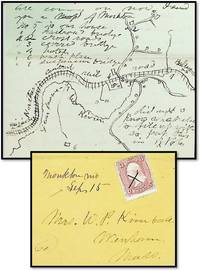
21451Very Good. HAND-DRAWN MAP OF MONKTON MD - UNION SOLDIER DESCRIBES GUARDING THE NORTHERN CENTRAL RAILROAD AND A CHAOTIC 'CHICKEN RAID' DURING THE FINAL YEAR OF THE CIVIL WAR.<br /> <br /> An original Civil War manuscript letter dated September 14 1864 written by a Union soldier stationed in Monkton Maryland. The letter features a remarkable hand-drawn map of the town and military outposts documenting the regiment's duty guarding the vital Northern Central Railroad bridges and a humorous incident involving a 'liberated' flock of chickens.<br /> <br /> Key Features:<br /> Visuals: The final page features a detailed pen-and-ink hand-drawn map of Monkton MD. It identifies the 'Northern Central Rail' 'River' Gunpowder Falls 'Covered Bridge' 'Hotel' and 'Our House' Barracks.<br /> Content: The soldier details life on guard duty at the 'Covered Bridge' building a brick stove for warmth and sleeping on straw. He recounts a a vivid and informal account of an improvised 'chicken raid' following a rail stop illustrating camp life food scarcity and soldierly opportunism late in the war. where a train passed carrying chickens; eight chickens "got off" escaped or were pulled off leading to a chaotic chase by the soldiers and the Captain to secure 'soup for dinner.' Full transcription available<br /> Postal History: Includes the original envelope addressed to Mrs. W.P. Kimball in Wenham Mass featuring a 3-cent George Washington stamp 1861 issue and a Monkton MD postmark.<br /> The envelope features a 3-cent George Washington stamp 1861 Issue tied by a Monkton MD postmark. Please Note: A previous owner noted this as a 'Scott #64' on the protective sleeve; however it has not been expertized and is sold as the more common Scott #65 Rose variety. We leave the final determination of the shade to the buyer.<br /> Transcription: A previous owner has handwritten the letter onto one page in attractive cursive. We also has a typed transcript available.<br /> <br /> Physical Specs:<br /> Date: September 14 1864<br /> Dimensions: Standard bi-fold letter sheet approx. 5x8 inches folded; Envelope included.<br /> Format: Handwritten ink on period writing paper.<br /> <br /> Condition: Very Good - The handwriting is legible and ink remains dark. Paper shows standard age-toning and fold lines consistent with mailing. The map is clean and sharp. This letter offers a specific window into the defense of the Northern Central Railroad NCR a critical supply line for the Union Army connecting Baltimore to Harrisburg. In 1864 regiments like the 8th Massachusetts Infantry were stationed along this line to protect bridges from Confederate raiders Gilmor's Raid had struck this area just months prior in July 1864. <br /> <br /> The mention of the 'Covered Bridge' at Monkton is historically significant as this was a key infrastructure point. The soldier's map provides a rare first-hand topographical view of the encampment layout relative to the rail line.<br /> <br /> Keywords: Civil War Letter Monkton MD Northern Central Railroad Hand Drawn Map Soldier Art 8th Massachusetts Infantry Wenham MA Covered Bridge Military Correspondence 1864. unknown
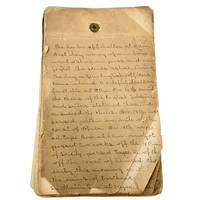
18990012049Donsol Pilar Manila Philippines New York Malta. Poor with no dust jacket. 1899-1901. Other. On offer is an unbelievable handwritten account of 19 months of action on the frontlines of the Philippine Insurrection the Philippine-American War between November 1899 and June 1901. An unknown American soldier writes of his experiences in a level of detail that cannot be overstated. This diary places the reader in the Philippines with shocking realism making this diary exceedingly rare. The 139 pages of this journalled account of events have been removed from a larger document and someone has pinned these loose pages together. This writing begins at the end of a sentence penned on presumably November 17 1899 and concludes half way through a sentence written on June 23 1901. There seem to be very few missing pages from within the journal and it reads very smoothly. The content is outstanding. The diary opens with our soldier diarist sailing from New York to the Philippines via the British Naval base at Gibraltar and the Suez Canal. He describes his experiences sailing sharing about a stop ashore in Malta a Thanksgiving spent at sea a concert enjoyed aboard the gunboat Nashville on the way to Manila and more. He arrives with his regiment in Manila on Dec 22 1899. The troops explore Manila and meet Filipino locals. In early January of 1900 they receive orders to head to southern Luzuon on the Kobbe Expedition which refers to General William Kobbes Expedition to Bicolandia. This expedition was in response to an urgent order from Washington to open up hemp ports of Southern Luzon due to an American hemp shortage. The problem was the port towns were largely controlled by Filipino Insurgents. Our diarist provides absolutely remarkable detail about Americas role in defeating the Insurgents and the tragedy of the Filipino peoples experience. Context indicates that our diarist was possibly a member of the 43rd Volunteer Infantry Regiments USV Company A. An excerpt that provides a sense of how our soldier explains the circumstances in the Philippines follows: Jan 16th we got the order to pack up and get ready to leave Mikata and to proceed to the Southern part of Luzon we were put aboard the transport Hancock which was at anchor in the Bay of Manila All combined we were named the Kobbe Expedition to the Southern Luzon to open up the Hemp ports and protect the natives from the Insurgents down there On the 21st of Jan 1900 our boats dropped anchor in a bay named the bay of Sorsogon in the Province of Albay All over this province there are large gangs of Insurgents holding the towns so at many towns our boys had a hard fight with the Insurgents before they could take the towns and the gun boat had to shell many of the towns. Our Regt. Occupied nine towns. Our detachment of A and D. Co. Were taken to a town named Donsol the gunboat Helena took us ashore from the Hancock On their arrival ashore they were met by a crowd of Philippinos. They had an order from the officers of the Insurgents it read saying that they would not haul down their colors nor surrender for three days. So our Major returned to the gunboat and a short conversation was held with the officers of the gun-boat and it was decided to prepare the gun boat for action and land all of us. If the Insurgents fired one shot at us the gun-boat would shell the town The hills were full of fleeing people. A detail of men were sent out on the hills at once then the Insurgents fired their first shot at us. Our boys had a warm fight for 15 minutes. They found the hills well entrenched and also found one big cannon. Lots of spears Bolas and wooden guns. They returned to town bringing in a few prisoners. A scouting party was seent and they saw a lot of Philippinos fleeing to the mountains. This town had a population of 10000 and three hundred were Insurrectors. The next thing we done was to find ourselves some good houses to live in. Outposts were put out all around the town. A few natives came across our post for a few nights and on the 22th Jan the Insurgents paid our town a visit setting fire to one of the big houses where our men were sleeping. Our men got out of the house without anyone being hurt. We surrounded the town fired a few volleys . Later in January our soldiers regiment goes on the first of many missions all of which he describes in glaring detail. On this mission the troops attempt to leave Donsol for Pilar when they run into trouble as the connecting bridge was destroyed by Insurgents. They make it to Pilar and find the town has been deserted. As they march back to Donsol they find someone has lit the bridge ablaze: Jan 28th We had a very hard time crossing the bridge burning our shoes and legs but we got safely on the Donsol side before the bridge fell with a crash into the river. We marched on we heard several shots from the Mauser and Remington rifles. Next we discovered a big fire and a call to arms and fire call was sounded The fire of the Insurgents got heavier. Our Major gave an order not to fire. He was going out in the front of our lines. He went out with a detail of men and discovered that our town was surrounded and the hills were full of Insurgents. He fired a few volleys then he came into town. The Insurgents answered him by firing a cannon. Then the Insurgents gave a yell and started to advance and we kept quiet and let them get close to our lines. Then we got the order to commence firing and the boys opened up all around the town and we soon put the Insurgents to flight firing a few shots as they ran. Next morning we discovered a few dead Insurgents close to our lines. The Insurgents almost always carry their dead and wounded along with them in their flight Our soldier does an absolutely phenomenal job of describing not only the day-to-day in Donsol where he spends majority of his time but also the various missions in which he participates. His words paint a fulsome picture of the war: 21st Feb at noon our Major asked for a detachment of men to volunteer to go up the river on a scouting expedition. I along with 12 more men went out of our company and 12 out of D. Co. Along with Capt. Hart of D. Co. And our Major left Donsol in a hard paddle boat and one white boat in tow On our way up the river we could see high hills on each side and the river was very narrow. There were many Insurgents outposts in the high trees all the way up and we fired at every one we saw. We went up a distance of 8 miles before we thought of coming home as it was getting late We had traveled one mile on our homeward way when the Insurgents fired on us from the left hand ashore. Our men in the rear boat fired a volley into the two Insurgents and were taking good aim for a second volley when the hills fairly echoed with the yells from the Insurgents. They then opened up on the right hand side which was aimed at the white boat hitting one of our men our company in the head and he was killed instantly. Then we answered their shots from each of our boats and from that time until we got back to Donsol we were under the hot fire of the Insurgents we could see the hills full of Insurgents and we had plenty to shoot at. We made every shot count. The insurgents even fired rocks at us from the high hills . More texture is added when our soldier discusses aspects of the war that dont involve active fire. Some examples follow: March 5th Gen Kobbe of the 8th Army Cor was here on a visit and he said these two companies were a very industrious lot of men and that the building of the stocade and trenches was a very sensible work he also brought us 17 of the Battery G 3rd Artillery men and one Hotch Kiss gun for reinforcements. April 10th the mail boat was here bringing the report of Gen. Pawa likely Jose Ignacio Paua an Insurgent Gen in Command of the Insurgent troops through this province. He surrender to our Colonel in Legaspi Legazpi and was sent to the Military Prison in Manila. April 21st We took a long march across the hills in a round about manner to a town named Sevilla merely an Insurgent camp. The town was deserted on our arrival. Fires were still burning in the houses. Everything was just as they had dropped it in their flight. We passed through the town and discovered many traps laid in the roads for us. One trap was an arrow trap on each side of the path in the bushes and by pulling a strong the arrows would stick into anyone going down the path. None of their traps caught us. Our soldier writes frequently about expeditions for which he volunteers. He describes a mission to Banningaran sic. En route the men captured Captain Hernandiz sic; possibly Adriano Hernández y Dayot and his family before being caught unprepared by the Insurgents who severely injured one of the American sargeants. On their hike back to Donsol they are again attacked by the Insurgents this time caught off guard as they attacked from the rear. And so it goes for many more months. Our author describes the movements of the men with whom he is stationed his commanding officers and the various wins and setbacks of both the Americans and the Insurgents. In May of 1901 our soldier and his regiment begin the process of boarding a ship to return to America. There is of course never a straightforward path and there are many bumps in the road. However our soldier does eventually board a ship and begins again to describe his journey in detail. The diary cuts off abruptly mid-sentence on June 23 1901 as our soldier is describing being at sea with nothing but a sailboat in sight for miles. While we do not know our soldiers identity we do know he was safely heading home at the conclusion of his diary. We know he was a highly motivated volunteer soldier who displayed total buy-in to the mission of the Americans in the Philippines and we know he was a gifted writer penning his experiences with such texture and realism that the reader feels as though they too have been on the front lines of a bloody wet miserable war in the Philippines - fighting for America and for the displaced Philippino people forced to flee from the Insurgents to the mountains. This journal measures 8x5 inches and contains 139 single-sided sheets. The pages were all loose so the author has pinned them together with a single round-headed fastener post. There are no covers to this journal. As a result the first and last few pages show obvious and significant wear and tear including a large corner of the first page being completely ripped off obstructing the text. The handwriting is quite legible. Overall Fair to Poor. ; Manuscripts; 8vo 8" - 9" tall; 139 pages . unknown
1911000418Schenectady New York. Fine with no dust jacket. 1911. PETER J. ARNOLD - Union solider in the 134th NY Vols. Partly cropped slip on which he writes "I saw General Grant many times this word cropped away in front of Petersburg during 1864 and 1865." Signed with his X mark and full name Schenectady 1911. ; Manuscript Handwritten Autograph Civil War Era Union Americana Confederate; Signed by Autograph . unknown
19671083331967 Imprimer chez Alsagraphic, réalisé avec le soutien du Ministère des Anciens Combattants et des Victimes de la Guerre, Délégation à la Mémoire et à l'Information Historique - 1995 - In-8, broché, couverture illustrée en couleurs - 333 p. - Reproductions photographiques en N&B
19801112201980 Editions J.M. Collet - 1980 - In-4, cartonnage rouge illustré - 80 pages - Nombreuses reproductions photographiques en N&B
19620001450KOREA. Very Good. 1962. Manuscript. On offer is a super manuscript relic of Canada's Korean War participation being a handwritten day book diary pages of a soldier with the famed French Canadian regiment the 'Van Doos'. The 2-ring 6 x 4 inch pages record terse fact filled sometimes intimate personal notations of this soldier's duties and life in the Korean Theatre. Some pages are missing but from April 2nd 1952 through November 3rd 1952 he notes 216 days in Korea at this point this serviceman provides an intimate picture of a support soldier laying cables building rafts laying out minefields and many times under attack. June July August and September are the most filled months and in roughly 137 pages one reads the day to day mundane and of course the definitely not mundane entries - how he was driving a jeep with a Sergeant and a military officer and the jeep was under mortar fire and it rolled over down an embankment. Other entries include: May 17th 1952 29 years old; check Vandoos reg. 2000 mine A/P minefield. Got shelled in the valley. 18 - 75 mm came in on us in ½ hour. No casualties; received letters from patootie. Wrote letter to patootie; started booby trap MF mine field; Sgt. Jackson went to battle school in Japan; attended class pontoon raft demonstration at Widgeon bridge; June 25th 7th Wedding Anniversary; mention of Operations Buster and Buckingham Noahs Ark; went over to Sgt's mess a HQ. Tied one on; constructed & operated close 50/60 raft all day; buffet lunch @ Vandoos HQs; took 5 L/Cpls up to Black Watch; almost got clobbered by a heavy mortar which landed 25' behind jeep and much more. One online source provides: BACKGROUND NOTES: The Royal 22e Régiment is an infantry regiment and the most famous francophone organization of the Canadian Forces. The regiment comprises three Regular Force battalions two Primary Reserve battalions and a band making it the largest regiment in the Canadian Army. The ceremonial home of the regiment is La Citadelle in Quebec City where the regimental museum is housed. The regiment is nicknamed the Van Doos an anglicized mispronunciation of vingt-deux "twenty-two" in French. The regiment's regimental headquarters is located in Quebec City with all three of its regular battalions stationed at various bases in the province of Quebec. The regiment serves as the "local" infantry regiment for Quebec. During the Korean War 1951-1953 the regiment expanded to three battalions each serving in turn as part of the Canadian brigade in the 1st Commonwealth Division. Thus the "Van Doos" represented one-third of Canada's infantry contingent throughout the war. Overall in very good condition save for one page chewed as noted by 'Kibbles'.; 12mo - over 6¾" - 7¾" tall; KEYWORDS: CANADIANA FRENCH CANADIAN REGIMENTS VAN DOOS VANDOOS 22ND REGIMENT KOREAN WAR SEOUL PYONG YANG OPERATION NOAHS ARK OPERATION BUCKINGHAM MINE FIELDS BLACK WATCH CANADA Personal Memoir Handwritten hand written autograph autographs signed letters document documents manuscript manuscripts writers writer author holograph personal ANTIQUITÉ CONTRAT VÉLIN MANUSCRIT PAPIER ANTIKE BRIEF PERGAMENT DOKUMENT . unknown
1981146129Bonn: Herausgegeben vom Evangelischen Kirchenamt für die Bundeswehr 1980-1981. 234; 200 Seiten. 8° (17,5-22,5 cm). Orig.-Broschuren. [Softcover / Paperback].
198117756Gütersloh [u.a.] : Bertelsmann-Club [u.a.], [1981]. 191 S. 8°. Lizenzausg. Ill. OBroschur.
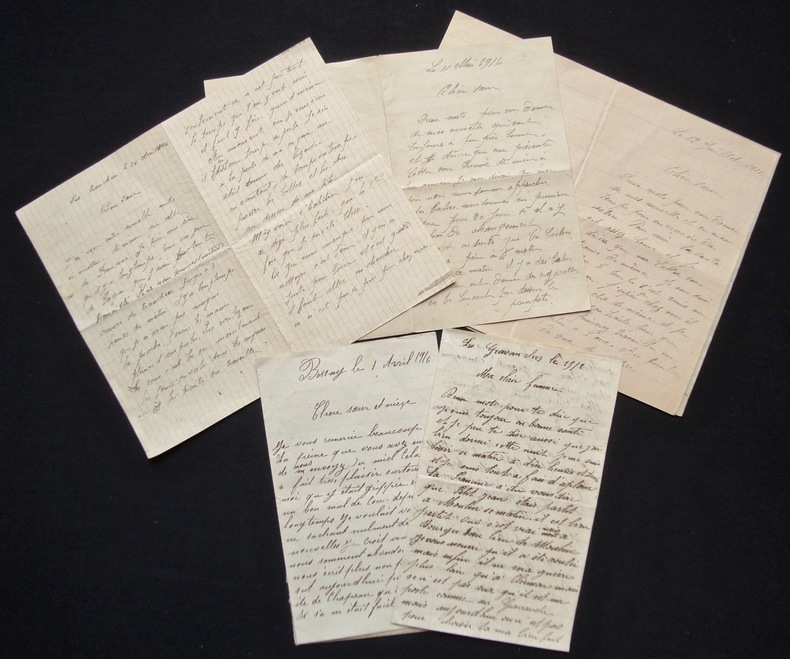
36948Six lettres manuscrites au format 21,5x17,6cm recto-verso d'une écriture à l'encre noire bien lisible. Cinq lettres du soldat Thomas sont adressées à sa soeur. La sixième à une tante. La première datée du 19 février est envoyée de Les Gravanches, près de Clermond-Ferrand où le poilu se remet d'une blessure. Les quatre suivantes datées d'avril à juillet 1916 décrivant la vie dans un secteur où Thomas est envoyé en première ligne : le travail de nuit à creuser des tranchées, le manque d'eau pour se laver, les poux, les cigarettes lancées par les Allemands à 8 mètres de sa tranchée, la pluie incessante au mois de juillet, les demandes spécifiques d'envois dans les colis - une sixième lettre (10,5x16cm) recto-verso est adressée à une tante, datée du 19 août 1916 - ensemble en bon état -
Very Good Turkish, Ottoman (1500-1928) Original wrappers. Demy 8vo. (21 x 14 cm). In Ottoman script (Turkish with Arabic letters). [3], 158 p. Occasionally minor age-toning on pages and cover. Spine restored. Uncut and untrimmed copy with sensitive extremities. Otherwise a good copy. First Edition and extremely rare Baku imprint of Karabekir's book including his advices to children, printed in Baku in the same year when the Red Army captured Azerbaijan. Printing types are peculiar to the Caucasus imprints. The author wrote this book in his own words to teach children "the first facts of life". Kâzim Karabekir Pasha, who took care of thousands of children who lost their parents during the First World War, is a statesman and soldier who was also closely interested in the education of these children. "My Advice" book purposes to reach teachers and parents as well as primary and secondary school students. The rights and wrongs that every child should know about life are explained in a sweet way. The book contains more than a hundred moral and other advices on issues such as the importance of being friendly, how to spend money, hospitality rules, spies, paying attention to cleanliness, helping each other, and respecting elders. Musa Kazim Karabekir Pasha was a Turkish general and politician. He was the commander of the Eastern Army of the Ottoman Empire at the end of World War I and served as Speaker of the Grand National Assembly of Turkey before his death. Karabekir was appointed commander of the 2nd Corps on the Caucasian front (Erzurum, Kars, and Baku) and fought bitterly against the Russian and Armenian forces for almost ten months. In September 1917, he was promoted to brigadier general by a decree of the Sultan. OCLC 13180947.; Özege 16062.
Good Turkish, Ottoman (1500-1928) Original autograph letter signed 'Besinci Kafkas Firkasi Kumandani'. Dated Hegira: 1335 = Gregorian: 1919. In Ottoman script. 1 p. Full. Also response from 9. Kafkas Firkasi Kumandanlligi written with red pencil. Signed. Chipped on extremities. Stains on paper. Text: "Üçüncü tabur kumandanligi vekâleten müstahdem yüzbasi Ref'et Efendi'nin 1319 tarih-i nisanina nezareten [.] kidemli yüzbasi maasi ile atandigi[.]". This is a preferment letter of an Turkish lieutenant. Besinci Kafkas Firkasi Kumandanligi (Fifth Caucasian Command) in Amasya would sign the 'Amasya Protocol' in 1920 at the beginning of Turkish War of Independence, (1920-1922).
Very Good Turkish, Ottoman (1500-1928) Original autograph letter signed Fuat Ziya Çiyiltepe. Dated 1928. 1 p. In Ottoman script. 22x18 cm. Addressed to Commander in Kizan Hani. Includes an assignment report. A military subject about Erzincan, Kizan Hani. "Kizan Hani ve civari bir kol noktasidir. Siz de Kizan Hani'na 9 numero kol noktasi kumandanisiniz..."
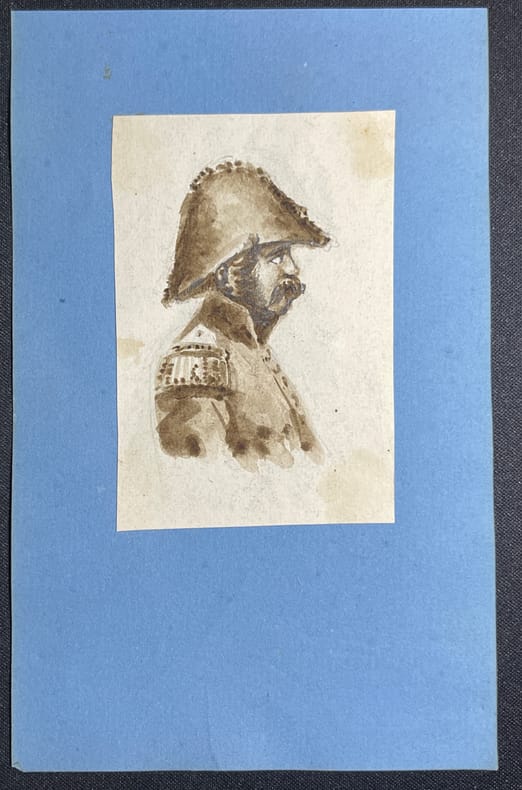
015922[Dessin romantique] Portrait de soldat napoléonien. Lavis collé sur une feuille bleu, environ 100*155mm, ca.1830. [229]
Very Good Turkish Original b/w photograph in its special cardboard. Signed and inscribed in Mersin, February, 23, 1934 as 'Kenan Bey kardesime: Miralay Sadik.'. No photograph studio's emblem. 24 x 21 cm. Miralay Sadik Bey, (Miralay or Mîr-i alay (Gendarmerie: Alaybeyi ) was a military rank of the Ottoman army and navy. It corresponds to a Colonel (modern Turkish: Albay). Miralay is a compound word composed of Mir (commander) and Alay (regiment). The rank was junior to the Mirliva and superior to the Kaymakam (Lieutenant Colonel).), (1860-1941), an Ottoman soldier and politician. He graduated from Mekteb-i Harbiye (Militarian Academy) in 1882. He went for duty to Trablusgarb (Libya), Syria, and Macedonia. He was in Manastir City, joined to Jalvatiyya order, and then joined to Ittihad ve Terakki Party (Committee Union and Progress) in secret (1906). He was the leader of Hâlaskâr Zâbitân (Saviour officers -Ottoman Turkish: Halâskâr Zâbitân-) was the name of a secret organization during the dissolution era of the Ottoman Empire), during the Bab-i Âlî raid in 1912, but it was failed. After a fail assassination of Mahmoud Chevket Pasha (Mahmud Sevket Pasa), he escaped to Paris, after that Egypt on the eve of the Balkan Wars (1912-1913). He was in adjacent relation to the British always. He returned to the country (25 April 1919) after Armistice (30 October 1918), and was elected to Heyet-i Ayan. And was elected to Hürriyet ve Itilâf Party -Committee Freedom and Entente- in 1920. He captured the management of the British Friendship Society in 1921. He was a dissident to Ankara Government during the Turkish National Struggle, but after the achievement of Ankara Government, he went to Romania with an English ship. Therefore he was got into '150 personae non-gratae of Turkey'. After the Turkish War of Independence (1919-1923), the newly established Republic of Turkey presented a list of 600 names to the Conference of Lausanne, which were to be declared personae non-gratae. Later, a list comprising only 150 of these, put into effect by the Grand National Assembly of Turkey on April 23, 1924 (revised on June 1, 1924), was included in the Treaty of Lausanne. The list (known as Yüzellilikler in Turkish, literally, Hundredandfiftyers), which is a who's who of the Ottoman Empire, had the purpose of eliminating the ruling elite of Ottomans from the Republic. The list is famous as it became the center of discussions of the nature of the new Republic: mainly, whether the Republic was to remain a continuation of the old Empire or not. The list has served as proof that the administration and ideologists of the Empire were not transferred to the Republic. The formation of this list is also related to studies analyzing the jurisdictional conflict between the Grand National Assembly of Turkey and the Ottoman Empire. These powers were fighting each other for their existence, as they were both active (using diplomatic and military means) until the Conference of Lausanne On June 28, 1938, the law restricting the entry of these people into Turkey was lifted, with the return of only a few on the list. In very good+ condition.
100968The full-length albumen paper studio portrait 92 × 55 mm is mounted as issued on the printed card of W.H. Schroeder 649 George Street Haymarket 'and at Princes Street Grafton'. The firm was definitely active at that address from 1867 to 1879 but the image appears to be earlier rather than later in this period. The uniform is that of the NSW Volunteer Artillery from the 1860s. Very similar caps are also to be found in a Tasmanian photograph in the collection of the Australian War Memorial A04784 'ten men of the Hobart Town Volunteers Artillery and ten men from the First Rifles' dated October 1863. unknown
1024389367.Ghardcover. Good. Access codes and supplements are not guaranteed with used items. May be an ex-library book. hardcover
1977MILI1131Ldn., Batsford Ltd. (1977). 140 S., mit zahlr. sw. Abb., OPp. m. farb. ill. OU., dieser mit geringen Gebrauchsspuren, Kopfschn. schwach angestaubt m. kl. Fl., Besitzerstemp. am vord. Innendeckel. In Englisch.
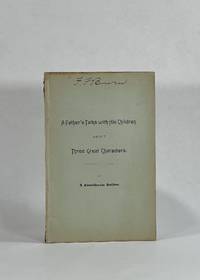
189210676Lynchburg VA: J. P. Bell Company Book and Job Printer 1892. Original Wrappers. Very Good binding. Octavo. 36 pp. First edition. As issued in printed wrappers. Wrappers a trifled toned some light abrasion to the top edge of the rear wrappers; contemporary previous owner name at the top of the front wrapper; similarly early editorial correction in the margin of one page. <br /> <br /> The three parts each are presented as a dialog between young children and the author and discuss Robert E. Lee Stonewall Jackson and J.E.B. Stuart in turn. Uncommon. Dornbusch III 50. J. P. Bell Company, Book and Job Printer unknown
19901216881990 Editions Productions "Le Burnous" - Sans date (années 1990-2000) - In-8, broché, couverture illustrée en couleurs - 104 pages - nombreuses illustrations et reproduction photographiques en couleurs in-texte
1851244220.Ghardcover. Good. Access codes and supplements are not guaranteed with used items. May be an ex-library book. hardcover
4713REVOLUTIONARY WAR ERA LETTER. ALS. 2pg. 7 ¼†x 9â€. Kingston Jamaica. An autograph letter signed “Joram Place†from Jamaica to his wife. Joram Place was a Newport Rhode Island sailor. He wrote some spelling had been corrected to make reading easier: “I have taken this opr'tunity to Informe you the good State of my helth and well-feare since the Last hoping they may find you in the same good helth with God's blessing and all the familey and you may Exspect to see me please God in the Spring please God. My vessel saild last Sunday for the Spanish Main his voyege will be 3 months I presume and there will come sum part of North America But you will keep your one secrets as I shall not come in the harbour with the vessel as I exspect. She must go to New Found Land. I have had trouble enough here by Reason of sum friends of myne and my owners going home from here as I have been Informed By others and that and the troublesum times here and there has detaind me so long here as the owners Did not Let me know whether they would take…ports of the vessel. I could not run the risk of being taking for here is Capt. Bull of Rhod. Island and 5 others vessells now lying at port. Ryal pryses and the Captns Conferr'd onboard the admiral. I have sent by Capt. Reminton a watch which he will Deliver to you if he gets safe home.†The letter has the usual aging and is in fine condition. unknown books