GLUBB John BagotMareMagnum

1 160 résultats
8vo., First Edition, with a portrait frontispiece, 25 plates on 22, 2 full-page facsimiles, a full-page pedigree, 26 maps (2 full-page) and endpaper maps, some faint offsetting from fold-ins to free endpapers, small neat inscription on front free endpaper verso; original navy blue cloth gilt, gilt back, blue top, a very good, clean copy in unclipped dustwrapper, the latter lightly frayed and browned at extremities. Nice copy of the personal story of Glubb Pasha.
1982226781.Ghardcover. Good. Access codes and supplements are not guaranteed with used items. May be an ex-library book. hardcover
20061200231Oxford ; Bern ; Berlin ; Bruxelles ; Frankfurt am Main ; New York ; Wien : Lang, 2006. 216 S. : graph. Darst. ; 23 cm kart.
Wie neu! Das Buch untersucht Werke jugendlicher deutscher Autoren, die als Wehrmachtssoldaten im Zweiten Weltkrieg dienten und ihre im Krieg gemachten Erfahrungen in Kinder- und Jugendbüchern literarisch verarbeiteten. Im Zentrum der Studie steht die literarische Umsetzung der folgenden Fragen: Was bewegte die Autoren für das nationalsozialistische Deutschland zu kämpfen? Empfanden sie persönliche Verantwortung für das Geschehene und wie war ihre Einstellung zum Widerstand? Welche literarische Form wählten sie, um dem zeitgenössischen jugendlichen Rezipienten die Kriegserlebnisse zu vermitteln? Die Studie analysiert Werke heute unbekannter wie auch etablierter Jugendschriftsteller und umfasst den Zeitraum von 1947 bis heute. Der Autor beleuchtet den historischen und soziologischen Kontext, in dem die Werke entstanden bzw. publiziert wurden. Er bezieht in seine Untersuchungen aber auch die affektive und kognitive Entwicklung eines Heranwachsenden mit ein, um die Motive, welche die Autoren als Begründung für ihr Handeln anführen, aus entwicklungspsychologischer Sicht zu erhellen. ISBN 9783039105236
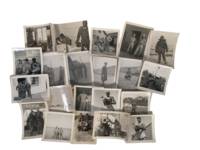
1957193551957. Vernacular photograph archive of African American soldiers in integrated U.S. Army units circa 1950s documents the early implementation of military desegregation following Executive Order 9981 and provides visual evidence of Black and white soldiers serving together during and after World War II including the Korean War. The photographs place African American servicemen within the first generation of formally integrated military units preceding broader civil rights gains in civilian society. Scenes of joint training transport and daily life show Black soldiers operating alongside white counterparts in contexts ranging from shipboard movement to antiaircraft defense positions indicating the practical realities of integration in active and post-conflict environments. The archive captures both structured military activity and informal moments offering a record of service that contrasts with the segregated conditions that had defined earlier periods of U.S. military history.<br /> <br /> United States and Korea circa 1950s. Archive of 21 silver gelatin vernacular photographs with several images bearing manuscript captions on the verso identifying individuals and locations including one noting Korea 1957-1958. Photographs depict a range of settings including military bases in Korea stateside camps shipboard scenes and antiaircraft gun emplacements in snowy terrain. Multiple images show interracial groups of soldiers posing with rifles and submachine guns while others capture informal activities including one sequence featuring a soldier holding an inflated puffer fish aboard a ship. One photograph includes a note written in Italian on the verso indicating cross-cultural contact or circulation. Composition and subject matter vary from posed group portraits to candid operational and leisure scenes.<br /> <br /> Created during the first decade of enforced military integration these photographs align with the transitional period in which desegregation policies were implemented unevenly across the armed forces with fuller integration not realized until the mid-1950s. The Korean War served as a critical testing ground for integrated units accelerating changes in military structure and social dynamics within the ranks. This archive provides a ground-level view of those developments documenting both the normalization of interracial military service and the persistence of shared routines duties and environments across racial lines. Light wear from handling with minor surface marks and occasional verso annotations; overall very good condition. unknown
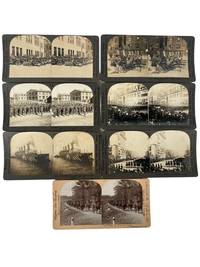
1918205021918. Buffalo Soldier regiments depicted in stereoview photographs from the World War I era document African American cavalrymen and infantry units serving in segregated formations of the United States Army during the early twentieth century. These images record soldiers from several historically significant Black military units including the 9th U.S. Cavalry the 10th Cavalry and the 369th Infantry Regiment. African American soldiers served in large numbers during World War I despite segregation in the armed forces and the war marked a turning point in public recognition of Black military service. The photographs capture cavalry movement machine gun training and celebratory returns from the European front preserving visual evidence of the military presence and public visibility of Buffalo Soldiers during the conflict.<br /> <br /> Archive consists of seven stereoview photographs published by the Keystone View Company during the World War I period. The views depict soldiers from the 9th U.S. Cavalry the 8th Regiment of Colored Troops the 10th Cavalry the Chicago Regiment of Colored Troops and the 15th Regiment of the 369th Infantry. Two stereoviews show Black machine gun companies operating Lewis guns one of the principal light machine guns used on the Western Front during the war. Another view shows Troop K of the 10th Cavalry moving on horseback at Camp Chickamauga in Georgia. Additional stereoviews depict African American soldiers returning from European service and marching in public celebrations including scenes of troops parading along major boulevards such as Fifth Avenue in New York.<br /> <br /> The Buffalo Soldier regiments had already established a long military record before the First World War. Units such as the 10th Cavalry formed part of the segregated Regular Army created after the Civil War and served in campaigns across the western United States during the Indian Wars later participating in the Spanish American War the Philippine American War and operations during the Mexican Revolution. World War I marked one of the final periods in which cavalry units remained visible in American military organization as mechanized armor and motorized vehicles soon replaced mounted troops. At the same time Black soldiers who returned from service were celebrated in wartime parades yet continued to face segregation and racial discrimination within American society. Stereoview cards remain well preserved with light age wear typical of early twentieth century photographic prints. Very good condition overall and a visually compelling record of Buffalo Soldiers during the World War I era. unknown
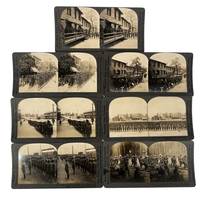
1918205031918. Keystone View Company. Buffalo Soldiers stereoview photographs World War I era document African American military service in the American Expeditionary Forces and place segregated Black troops within the broader Allied war effort in Europe. The images identify units of "Colored Troops" including engineers of the Signal Corps and depict formations logistical organization and moments of assembly such as soldiers "lined up for democracy." These photographs situate African American soldiers-many of whom descended from the Buffalo Soldier regiments established after the Civil War-within a transnational military environment that included French British and colonial forces. Scenes showing interaction with Moroccan and Indian troops on French roads reflect the multinational composition of Allied armies during the final phases of the war while the presence of Black American troops underscores their continued participation in major military operations despite segregation within the U.S. Army.<br /> <br /> France and possibly other European locations circa 1917-1919. Archive of seven stereoview photographs published by the Keystone View Company. Images depict African American soldiers in formation including lines for mess and organized ranks as well as mixed Allied groupings on roadways and near encampments. Stereographic format intended for three-dimensional viewing with printed captions identifying subjects and units. Photographs emphasize both structured military order and the varied roles occupied by Black troops particularly in engineering and support divisions.<br /> <br /> Produced during the final years of World War I these stereographs align with the expanded deployment of African American soldiers overseas and the broader visibility of Black troops within global conflict. While their service contributed to Allied operations these soldiers returned to a United States that maintained racial segregation and limited civil rights situating the archive within the larger history of African American military participation and postwar inequality. As visual records the images support research into race military organization and the international dimensions of the war. Light handling wear; overall very good condition. unknown
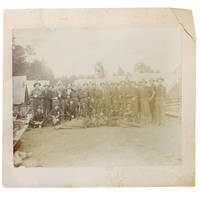
1890187391890. African American soldier photographed among members of a United States Army camp unit in the American West during the late nineteenth century providing visual documentation of Black participation within the military environment during the era of segregated service. African American soldiers served in the United States Army throughout the nineteenth century most prominently in units known as the Buffalo Soldiers which were formally organized after the Civil War. While Black soldiers were typically assigned to segregated regiments images occasionally record their presence in mixed military environments such as camps labor details or logistical units. The photograph captures a group of soldiers gathered in a temporary camp setting and includes a seated Black soldier identified by a contemporary handwritten note on the verso reading "Notice 'Black Soldier.'"<br /> <br /> Albumen sepia tone photograph mounted on photographer's board showing a group of American soldiers posed within a military encampment. Photograph measuring approximately 8.5 x 10 inches mounted on a photographer's board measuring approximately 10.75 x 10 inches. The men are dressed in clothing typical of western military and frontier settings of the late nineteenth century including dark buttoned shirts trousers supported by suspenders and boots. The African American soldier appears seated among the group with a cigarette in his mouth. The soldiers are gathered in a clearing surrounded by trees where rows of tents are arranged on raised wooden platforms suggesting an organized encampment. Cooking equipment stacked blankets plates and tankards are visible indicating a communal meal or informal gathering. One soldier holds what appears to be a long rifle with a visible barrel and wooden stock. Several soldiers sit or recline on the ground in the foreground while others stand behind them creating the appearance of an informal group portrait taken during daily camp life rather than a formal military arrangement. Handwritten note on the verso reads "Notice 'Black Soldier.'" Top right corner of the board cracked with tape repairs on the verso; slight water staining at the top left corner and damp staining at the lower left corner with partial cracking at the lower right corner. Image itself remains clear and largely unaffected. Overall condition good. The photograph preserves a visual record of African American presence within the late nineteenth century U.S. Army camp environment during a period when the armed forces remained formally segregated. unknown
2090202120405485Taiyo-do shoten N.A. Soft Cover. Fine. Number of books: 1 Taiyo-do shoten paperback
1821003-L1821. Kreidelithographie, 1821, nach Anne-Louis Girodet-Trioson, 1801. 42,5:59,3 cm. Lith. de G. Engelmann. - Im ganzen nicht ganz frisch. Provenienz: Trockenstempel, nicht bei Lugt. Literatur: Meyers Künstlerlexikon 128, 5; Thieme-Becker II, S. 233; McAllister Johnson 72, 5. ? Blatt 5 der Folge ?Têtes tirées du tableau représentant les ombres des héros francais recues dans les palais aériens d?Ossian??. ? 1801 hatte Napoleon Anne Louis Girodet-Trioson (1767-1824) den Auftrag gegeben, für Schloß Malmaison die Apotheose der gefallenen Helden Frankreichs, deren Schatten im Elysium Ossians empfangen wurden, zu malen. Noch zu Lebzeiten Girodet-Triosons lithographierte dessen Schüler Aubry-Lecomte unter seiner Aufsicht eine Folge von Köpfen aus diesem Gemälde.
3020chez l'auteur à Nice, 1988, broché, 14x21 cm, 175 pages.
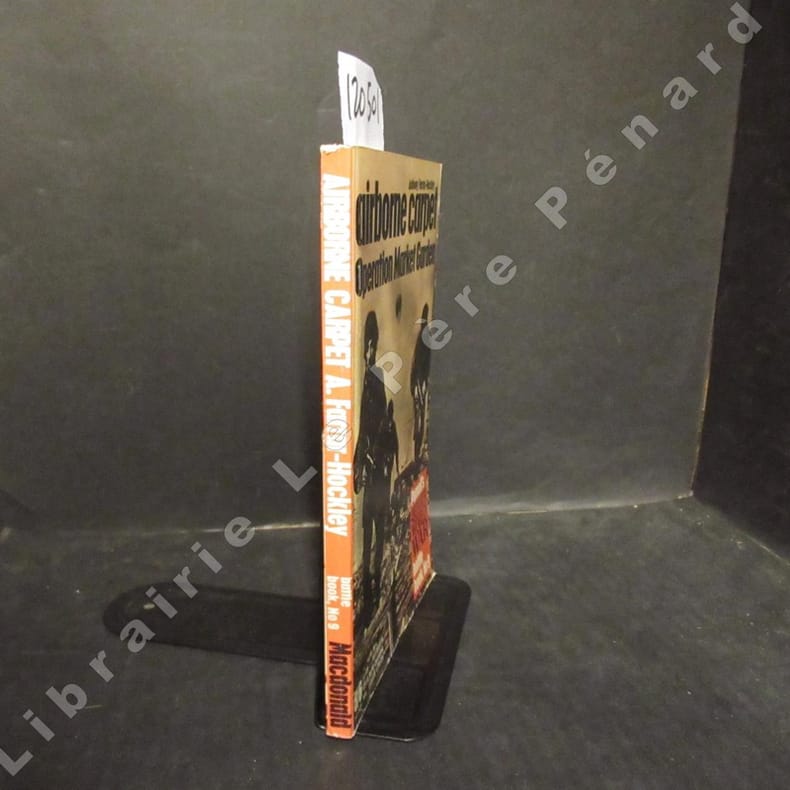
19701205011970 Published by Macdonald & Co., Purnell's History of the Second World War, collection "Battle Book", N° 9 - 1970 - In-8, broché couverture illustrée - 160 p. - Très nombreuses illustrations et reproductions photographiques en N&B in et hors texte - Ouvrage en anglais
1988RO80211690De Cosson. 1988. In-8. Relié plein cuir. Très bon état, Couv. fraîche, Dos impeccable, Intérieur frais. Environ 50 + 118 pages. Sous emboitage en très bon état. 1 volume en français et 1 volume en espagnol - Reimpression de 1829. nombreuses planches d'illustrations en couleurs. Tranches de têtes dorées. Ouvrage en français numéroté n°700.. . Sous Emboitage. . Classification Dewey : 848-Ecrits divers, citations, journaux intimes, souvenirs, mémoires
1900AMO-4198Pour vos beaux yeux. Album en couleurs (colorié au pochoir - ateliers Greningaire). Par Albert Guillaume. Préface de Coquelin Cadet. H. Simonis Empis, éditeur, s. d. (1900). Format 35,5 x 28 cm. Couverture illustrée en couleurs (premier plat) et 20 planches imprimées en couleurs (coloriage au pochoir par Greningaire) (avec 1 feuillet de faux-titre, 1 feuillet de titre et 2 feuillets de préface). Superbe et très rare tirage de luxe sur papier du Japon à 13 exemplaires seulement signé par l'artiste Exemplaire dérelié. Tête dorée. Superbe état de fraicheur des couvertures (les deux plats sont conservés en très bon état). A relier (un cartonnage papier serait le bienvenu). Voir photos de l'annonce. Très rare dans ce tirage.
159068857(Venezia, Damiano Zenaro), wohl 1590. Blatt ca. 16 x 10,5 cm. 1 Blatt, verso italienischer Text ("De gli Alfieri romani", vollständig).
19942091502135413109Hebei Science and Technology Publishing House 1994. Soft Cover. Fine. Number of books: 4 Hebei Science and Technology Publishing House paperback
64 pages. Songs include: After You've Gone; The Anniversary Waltz; Basin Street Blues; Blue Turning Grey Over You; Christopher Columbus; Dallas Blues; Honey Song (Honey, I'm in Love with You); I Ain't Got Nobody; I'll Never Forget; I'm Glad There is You; I Would Do Anything For You; Just Plain Lonesome;Keepin' Out of Mischief Now; Manhattan Merry-Go-Round; Rosetta; Shepherd Serenade; Skylark; Strip Polka; There Will Never Be Another You; Wednesday Night Waltz; What Does a Soldier Dream Of; Yesterday's Gardenias; You Call it Madness; You Can't Say not to a Soldier. Above-average wear. Openings along coverfold. Unmarked. Still a worthy working copy. Book
19241038381924 Les Editions du Combattant, Paris - 1924 - 1 vol in-8 - Broché, couverture illustrée - 394 pages - Illustrations en noir & blanc dans le texte
56650aafLausanne, Georges Bridel, éditeur, 1853, gr. in-8vo, 64 p. ill dont 3 planches, brochure originale, manque la couverture,
198840432München : Universitas-Verl., 1988. 440 S. Gr. 8°. 3. Aufl. Bibl.- Einbd.
2015154448München : Dt. Verl.-Anst. 2015. 350 S. 22*14 cm. OPappband, OSchu.
191730974Stuttgart [u.a.] : Union Dt. Verl.-Ges., [1917]. 260 S. 8°. 4. Aufl. Ill. OLwd mit Goldpräg. u. Ganzbuntschnitt.
20141238755Berlin : Neues Leben, 2014. 254 S. : Ill. ; 21 cm Pp.
2005112054München : Deutscher Taschenbuch-Verlag, 2005. Ungekürzte, vom Autor neu durchgesehene Auflage; 154 S. ; 19 cm; OKart. (Taschenbuch);
201535780München : Riva-Verl., 2015. 411, [8] S. Ill., Kt. 8°. 8. Aufl. Ill. OBroschur.