606 résultats
19351552Los Angeles 1935. Very good. 169 leaves plus 5 leaves laid in. Mimeograph typescript. Folio. Original blue paper folder title printed on cover. Light wear and fading to covers heavier at edges. Contents with minor toning and wear heavier to leaves laid in. Informative manual compiled by a missionary to the Fuzhou Parish in China providing numerous details about membership the Foochow Parish and projects of the mission together with information on the work of the outreach work of the California Methodist Episcopal Church. The work designed to be used with adults interested in missionary work is illustrated with hand-drawn maps as well as small illustrations and Chinese characters. In addition to Christianizing efforts there is significant information on life in Fuzhou such as agriculture climate population handcrafts topography and plants native to the area. The foreword describes the purpose of this volume:<br /><br />"This is not a text book of missions. This unpretentious Manual does attempt to answer everybody's question 'How can I with the resources within reach make our church a co-operating unit of the world parish -- enthusiastically missionary whole-heartedly sustaining the Kingdom of God at its frontier' It proposes to help introduce you to our Parish the Foochow Area and to our missionary co-workers both Chinese and American. . The Manual will not work for arm chair missionaries; it will not substitute for your personal interest. . But to those who with ready will and offered talents seek ways new or old to better fulfill the Great Commission we dare to hope that this simple cluster of idioms may be of assistance."<br /><br />An interesting glimpse into the life of a Chinese Christian parish and the missionary efforts there. One similar item found in OCLC -- prepared by a different person but also on the Foochow Parish -- at the Graduate Theological Union Library in California. books
19752412050448xbvkHoniara, British Solomon Islands Protectorate, printed by the Government Printer, 1971-1975. Detailed collation: I. Annual titlepage, v pages 'Index', 224 pages (Issue #1-#4 individually paginated [16 p. in total], Issue 5 starts with p. 17, then onwards to p. 224). / II. Annual titlepage, xiii pages 'Index', 245 pages. / III. Annual titlepage, xi pages 'Index', 200 pages. / IV. Annual titlepage, x pages 'Index', 245 pages. / V. Annual titlepage, xi pages 'Index', 196 pages. - 'Publisher's' titled greyblue halfcloth bindings with yellow thick cardboard-panels; 8vo.(ca. 20,5 x 14 x 9 cm; ca. 2,5 kg.).
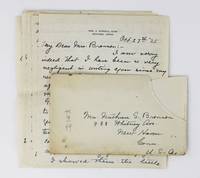
19255493Okayama 1925. Very good. 15pp. Old fold lines minor wear. With original envelope. Lengthy letter written by Mrs. C. Burnell Olds to a friend and donor back in Connecticut Mrs. Nathan S. Bronson. Okayama is located to the west of Osaka and Kyoto in the southern portion of the country; Mrs. Olds was born to a missionary family stationed in Japan and had worked in that country since 1903. In her letter Olds relates her current round of activities the ways in which Mrs. Bronson's funds have been of great use and the other activities she observes and participates in within the local community. She opens recounting a visit to the True Beauty Girls' School to which Mrs. Bronson has donated. She writes "The fact that an American woman was willing to give to a non-Christian school way over here in Japan has made a great impression here in Okayama." She goes on to discuss the building of a new church by some "earnest young men" briefly noting that they still need money to furnish the church. "We are very anxious to start some kind of social work here -- if possible to open an amusement hall where young men can come to have a good time in a good way -- with good women. There is no such place in our city and how many evil resorts there are." She relates further activities an endless stream of clubs and activities and teaching efforts for the Lord closing with family news. An interesting missive chock full of information on a local missionary's efforts in 1920s Japan. unknown
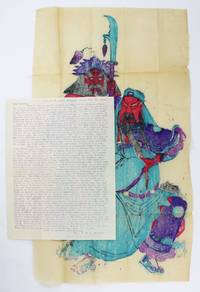
19286054Shanghai China: February 24 1928. Very good. 1p. plus colored woodblock print 21.5 x 12.5 inches. With original envelope. Old folds minor wear. Mimeographed fundraising letter sent by Reverend H.G.C. Hallock to a supporter in Vermont. Henry Galloway Comingo Hallock 1870-1951 was a West Virginia native who studied at Princeton Theological Seminary. He moved to China as a Presbyterian missionary and teacher in 1905 where he taught Sunday School served as a pastor and also taught theology at St. John's University in Shanghai. He survived war disease famine and a Japanese prison during World War II; he died in China in 1951. One thing that set Hallock apart was his inclusion of local Chinese woodblock prints with his fundraising letters which today have become desirable collectibles. Such a print is present here showing the God of War Wu-ti. His letter opens discussing the print:<br /> <br /> "Wars in China suggest sending you 'Wu-ti' the Chinese god-of-war. . The general idea about Wu-ti is that he delights in war. That is not the Chinese idea of him. . Officials and scholars worship him as the ideal of loyalty soldiers do it to make them brave and protect them in battle and the people worship him to protect them from war's horrors. He's called 'Peace Bringer Protector Great God of Loyalty.' But he makes not peace nor protects nor makes loyal so is a failure. He's also called 'Warrior Prince.' As to that name he's a great success! There are lots of wars."<br /> <br /> He goes on to discuss the many conflicts which are like "a real Chinese puzzle" noting that it's not the people of China who are at issue or fault. "Recently I have received letters from America suggesting that since 'China has altogether gone to the bad and the Chinese are absolutely impossible' and since our 'work among them has gone for nothing' then I should 'quit and come home.' I hope you don't think thus. The masses of Chinese tho reminding me of 'dumb driven cattle' are still friendly as ever. The war-lords the Nationalists the Reds the bandits wars and evil propaganda are disturbing elements; but they are NOT China nor the Chinese. . The troubles in China have come from a fiercely aggressive and 'noisy minority' who make the great mass of Chinese suffer untold hardships." He goes on to defend the Christian work being done in China as of great benefit to the people. February 24 unknown
189765520Calcutta:: The Calcutta Auxiliary to the B.A.F. Bible Society 1897. Revised Edition; First edition with references. full blind-ruled sheep; all edges stained red. Some light scuffing to binding; a very nice copy. Large 8vo. Translated out of the Original Tongues by the Calcutta Baptist Missionaries with Bengali Assistants. Title page printed in red and black. The Calcutta Auxiliary to the B.A.F. Bible Society, unknown
012493Révérend Père Augustin Colombel (1833-1905), missionnaire jésuite en Chine, père de l'astronomie moderne en Chine à qui on doit la construction de l'observatoire de Shanghai. L.A.S., Eglise Saint Joseph, Shanghai, 11 octobre 1892, 4p in-8. A sa soeur Marie-Thérèse Colombel (1839-1912), baronne Richerand : « Ma bien chère sour, Je suis bien souvent avec vous de cour et de prières. J'espère que le Bon Dieu continue à bénir l'affaire du mariage de ta fille. Je suis fort édifié de l'esprit de foi qui vous conduit à cette affaire. Le Bon Dieu la bénira. Vous prenez le bon moyen d'assurer l'avenir, tenez toujours les yeux sur la volonté de Dieu. Lui seul a l'avenir entre les mains. J'espère que les prochaines malles me donneront des nouvelles plus complètes. [...] Tu sais maintenant que St Antoine de Padoue nous a exaucé. Les deux nappes d'autel sont arrivées, d'abord la petite, puis la grande. La M. Dominique les a fait monter, la petite pour l'autel de La Chapelle de congrégation où je dis la messe les jours de réunion, la grande pour le grand autel de leur chapelle où je dis la messe presque tous les jours. Elles ont servi déjà souvent. Je les reconnais aussitôt. Je suis heureux de penser que votre long travail sert à la gloire de Dieu. Merci encore. J'ai reçu aussi la brochure que je demandais sur la cour chinoise, merci encore. Je vois avec plaisir qu'on commence à mieux connaître la Chine de convention qui est bien loin de la vraie. Cette vrai Chine une fois connue témoignera bien. haut en faveur de la vraie religion qui seule peut la sauver. Priez souvent pour la conversion de la Chine. Elle déterminerait celle de l'Asie... Dieu seul peut faire ce miracle. Demandons-le. Les journaux, les télégrammes nous ont parlé de votre choléra. Nous qui l'avons presque toujours, nous en avons été préservé d'une manière singulière. Eté horriblement chaud, sans pluie, sans orages, et pas un seul cas de choléra à l'hôpital. En même temps, le télégramme apportait aux journaux les nouvelles de votre épidémie. Ces télégrammes, tous anglais, exagéraient le choléra de Paris, battaient la caisse pour clamer l'immunité de l'Angleterre. En réalité, la France, je crois, a été peu éprouvée et vous en êtes tirés désormais. Je voyais ce matin un journal (anglais naturellement) expliquant que Paris se fournit en désinfectant pour ses rues à Londres. J4ai lu ce que les journaux disaient de vos grandes chaleurs. Ici le thermomètre montait plus haut, mais elle n'ont causé aucune épidémie. Je voyais qu'en Amérique des chaleurs moindres que les nôtres tuaient chevaux ou piétons. Ici rien de semblable. Je te remercie encore de ce que tu as fait pour Léon Hambert(?). Je me suis attaché à cet enfant, que je n'ai jamais vu, à cause de l'affection de notre père pour le sien. Ces pauvres enfants ont beaucoup perdu en perdant leur mère. Si l'aîné est à Paris, fais-lui tout le bien que tu pourras. Salue les de ma part. D'après ce que leur père me dit d'eux, il doit y avoir beaucoup de bon. Dès lors, on peut corriger ce qui est moins bon. Les sours de charité ont été éprouvées cette année. La plus ancienne des sours de l'hôpital est morte. Une autre fort vieille est morte à Hantcheou (?). Ce sont deux vides et il vient peu de nouvelles de France. [...] Adieu chère sour, je vous embrasse tout bien fort. Ton frère Augustin. » Belle lettre avec des détails autour de la mission. Cette lettre a été publié avec quelques autres sur le blog du Bibliomane Moderne le 14 octobre 2021. Elles apportent un éclairage particulièrement intéressant sur le développement des missions jésuites en Chine et à Shanghai en particulier. [242]
44Very fine Not used as new. About 1900s or 1910s. 30 plates paged continuously with envelope.It is a textbook by missionaries at COLLÈGE ST-IGNACE ZI-KA-WEI which is a famous school in Shanghai China for its first time in China to introduce the western educational courses and mode.
012482Révérend Père Augustin Colombel (1833-1905), missionnaire jésuite en Chine, père de l'astronomie moderne en Chine à qui on doit la construction de l'observatoire de Shanghai. L.A.S., Ousi [actuelle Shanghai ?], 17 avril 1872, 4p in-8. A sa soeur Marie-Thérèse Colombel (1839-1912), baronne Richerand : « Ma bien chère sour, Je reviens du nord de mon district où j'ai passé toutes les fêtes de Pâques, depuis deux mois je suis en course et je dois repartir après demain matin. Je te trouve toujours fidèle à ton affection pour moi et ta lettre du 6 février m'attendait ici. J'ai reçu aussi les journaux que vous m'envoyiez, l'album des ruines de Paris et la photographie de mgr Surat. Je vous remercie de vos attentions délicates. [....] Vous pensez bien que parmi mes chrétiens j'ai toute sorte de personnes, les riches exceptés toutefois. Ici plus que partout ailleurs la malédiction de l'Evangile pèse sur eux. Outre cette raison principale, on peut ajouter qu'ici plus que partout ailleurs cette classe tient d'autant plus à la terre qu'elle y jouit davantage. La grande majorité de ces pauvres gens cultive quelques arpents de terre. L'admirable fécondité du sol leur demande au plus quatre mois de travail et ils ont une récolte de riz qui leur donne la nourriture de la famille d'abord puis de quoi vendre assez pour pourvoir aux vêtements et aux autres besoins. Je n'ai qu'un catéchumène qui possède 200 arpents, il n'en cultive que 40 qui suffisent amplement pour ses besoins, mais le pauvre homme est trop simple, il se laisse gruger par tous ses parents et amis payens, il en est toujours à la misère. J'ai aussi parmi mes chrétiens deux anciens prêtres des idoles, l'un brûlait l'encens devant Fo et les autres dieux que la Chine a empruntés à l'Inde, il avait la tête rasée, c'est un Bonze. Il est maintenant cuisinier dans un thé tenu par des payens (comme qui dirait dans un café). L'autre faisait pousser sa queue et récitait les prières chinoises devant je ne sais quel héros du céleste empire, c'est un Fao sse (?). Comme j'avais refusé la communion au Fao sse qui n'était pas assez instruit et accordé cette faveur au Bonze qui dans sa simplicité savait et croyait le nécessaire. L'orgueil du Fao sse se réveilla et se traduisit en coup de poing sur la tête de son émule. C'était au moins un signe qu'il désirait le bienfait de la communion. Mais ce désir ne me paraissant pas assez surnaturel je lui donnais pourtant tous les torts. Parmi mes catéchumènes, j'ai aussi d'anciens rebelles, ils ont bien des meurtres à se reprocher, Dieu leur a pardonné, la justice chinoise ne s'en préoccupe pas, mais si jamais on établit les lois françaises en Chine et qu'il vienne un procureur de la république ou du Roi, je le prierais bien sincèrement de ne pas trop chercher à savoir le passé. Vous voyez combien nous avons besoin du secours de Dieu, priez beaucoup pour ces pauvres gens, pour que les payens ouvrent les yeux, j'espère que le Bon Dieu, à son heure, aura pitié d'eux. Ici comme en France on s'attend à de grands évènements. Prions pour que Dieu les tourne à sa gloire. Priez aussi pour moi, que vos prières m'accompagnent partout et nous aurons ainsi tous part à la même récompense. Adieu tout à tous et à chacun. Mon respect et mon affection toute entière, surtout à notre bien aimé père. Ton frère tout dévoué. Aug. M. Colombel s.j. » Magnifique témoignage sur le développement des missions en Chine et à Shanghai. Cette lettre a été publié avec quelques autres sur le blog du Bibliomane Moderne le 14 octobre 2021. Elles apportent un éclairage particulièrement intéressant sur le développement des missions jésuites en Chine et à Shanghai en particulier. [242]
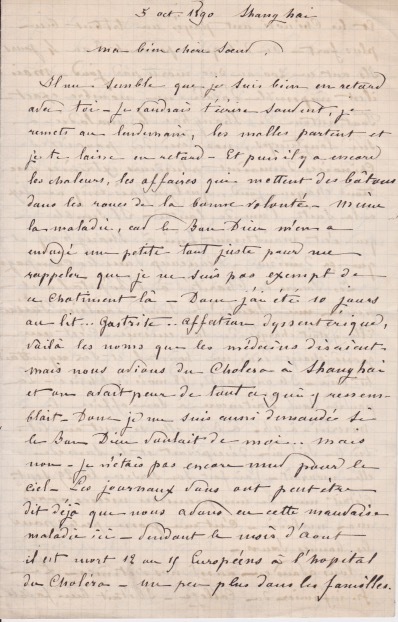
012489Révérend Père Augustin Colombel (1833-1905), missionnaire jésuite en Chine, père de l'astronomie moderne en Chine à qui on doit la construction de l'observatoire de Shanghai. L.A.S., Shanghai, 5 octobre 1890, 4p in-8. A sa soeur Marie-Thérèse Colombel (1839-1912), baronne Richerand : « Ma bien chère sour, Il me semble que je suis bien en retard avec toi. Je voudrais t'écrire souvent, je remets au lendemain, les malles partent et je te laisse en retard. Et puis, il y a encore les chaleurs, les affaires qui mettent des bâtons dans les roues de la bonne volonté. Même la maladie, car le Bon Dieu m'en a envoyé une petite tout juste pour me rappeler que je ne suis pas exempt de ce châtiment là. Donc j'ai été 10 jours au lit... gastrite... affection dysentérique, voilà les noms que les médecins disaient mais nous avions du choléra à Shanghai et on avait peur de tout ce qui y ressemblait. Donc je me suis demandé si le Bon Dieu voulait de moi... mais non. Je n'étais pas encore mur pour le ciel. Les journaux vous ont peut-être déjà dit que nous avons eu cette mauvaise maladie ici. Pendant le mois d'août, il est mort 12 ou 15 européens à l'hôpital du choléra. Un peu plus dans les familles. Et les chinois ont payé un tribut bien plus fort. On dit que pendant 3 ou 4 jours, ils ont eu 200 ou 300 morts par jour. Mais il est impossible d'avoir un nombre exact. Tout autour de Shanghai, la maladie a sévi longtemps, nos Pères des paroisses chinoises donnaient plusieurs extrêmes onctions chaque jours, quelques fois cinq ou six à la suite l'une de l'autre. Il semble que c'est maintenant fini à Shanghai et que ça diminue beaucoup dans les campagnes. Les sours de Charité à l'hôpital ont perdu une sour, la sour Pauline Faisais. Elle y était chargée de la cuisine - c'est une grosse charge dans un hôpital - et s'en acquittait très bien. 36 ans d'âge. 18 mois de Chine. La pauvre sour était en cure à son office le mercredi à 11h. A 3h elle se met au lit. Dès le soir on désespérait et le samedi elle mourait. J'ai fait son service le 29 sept. C'était une de mes premières messes après ma maladie. C'est une grosse perte pour les bonnes sours. Nous avons eu aussi nos victimes. Le fr. infirmier du collège. Il était bien faible déjà, le choléra a eu beau jeu sur lui. Puis un Père italien de 64 ans, très fort, mais tout dévoué à ses 4000 chrétiens qu'il saignait à 2 heures d'ici. Le Bon Père avait donné de 60 à 80 extrêmes onctions dans le mois de septembre. Il fut pris le 27 mais continua à donner des extrêmes onctions. Le 28, il dit encore la messe à grand peine, p[ar]c[e] q[ue] c'était dimanche et pour consommer les saintes espèces. Mais déjà les chrétiens qui connaissent bien cette maladie le regardaient comme perdu. Ils nous l'amenèrent aussitôt après la messe, il nous arrivait à 11hŸ et mourait à 4h malgré les efforts des médecins qui ont essayé des remèdes héroïques. Ce bon Père avait été chassé par la révolution de plusieurs provinces. Il était venu se consacrer à la mission. Il meurt les armes à la main. C'est là une belle mort de missionnaires. Chez la m. St Dominique, deux enfants ont été prises. Toutes deux en sont revenues. L'une d'elles (11 ans) était bien à l'extrémité, condamnée par le médecin. Je crois qu'elle doit la vie aux prières faites pour elle. On tenait beaucoup à ne pas la perdre pour la réputation de la maison. [...] Je vous embrasse tous bien fort. ton frère Augustin. » Belle lettre sur les difficultés des missions en Chine, le choléra, les nombreux morts, etc. Cette lettre a été publié avec quelques autres sur le blog du Bibliomane Moderne le 14 octobre 2021. Elles apportent un éclairage particulièrement intéressant sur le développement des missions jésuites en Chine et à Shanghai en particulier. [242]
1892124929à Paris - à Lyon, Perisse, frères, impr. Imprimerie de Rusand, à Lyon 1892 24 volumes. In-8 20,5 x 12,5 cm. Reliures de l’époque demi-basane vert-émeraude, dos lisses ornés de filets dorés, environ 400 pp. par volume. Ensemble en bon état.
19585047Sao Paulo: Tenrikyo Brazil Mission 1958. Very good. 52162511pp. including 32pp. of photographically-illustrated plates. Original orange cloth gilt spine titles housed in original cardboard slipcase with black spine lettering. Very minor wear internally clean. Some chipping and toning to slipcase. An unrecorded history of the Japanese immigrant Tenrikyo Mission in Brazil providing valuable information on many Tenrikyo churches across the country. Tenrikyo was a new Japanese religion founded in the 19th century in Japan by Nakayama Miki and spread to Hawaii Brazil and other regions where Japanese immigrants moved over the course of the first few decades of the 20th century. The photographic plates contain portraits of some mission members views of churches scenes from church life and more. The text is almost wholly in Japanese save for occasional listings of Spanish names and other information. Not reported in OCLC. Tenrikyo Brazil Mission unknown
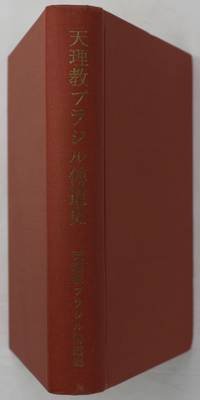
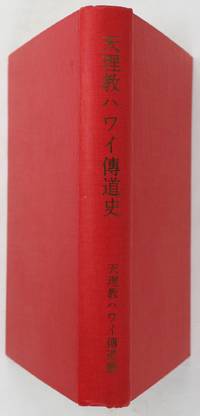
19575046Honolulu: Tenrikyo Hawaii Mission 1957. Very good. 1632365pp. including 32pp. of photographically-illustrated plates errata slip laid in. Original orange cloth gilt spine titles housed on the original cardboard slipcase with black spine lettering. Very minor wear to boards internally clean. Small puncture and some wear to spine of slipcase. A rare history of the Tenrikyo Mission in Hawaii beginning with the founding of its first church in Honolulu in 1929. Tenrikyo was a new Japanese religion founded in the 19th century in Japan by Nakayama Miki. The present work also includes information on many other churches on the islands including the Hilo Church Kauai Church the Maui Church and more. The photographic plates contain portraits of some mission members views of churches scenes from church life and more. The text is mostly in Japanese save for a fifteen-page section printing a series of English-language lectures on the Tenrikyo religion by members of the Hawaiian mission. OCLC records just a single physical copy of this rare Japanese-American work at the University of Hawaii at Manoa. Tenrikyo Hawaii Mission unknown
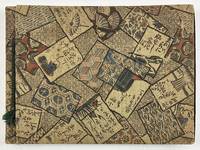
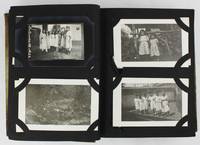
192812860Various locations in Hawaii and Japan 1928. 12 leaves illustrated with 123 mounted sepia-toned photographs many captioned in the image area occasional manuscript captions on the album leaves. Oblong folio. Contemporary pictorial cloth illustrated with various Japanese motifs string tied. Minor wear to cloth. Internally clean. Very good. An attractive and informative vernacular photograph album memorializing the experiences of Protestant missionaries in the Pacific. Protestant missionaries came to Hawaii starting in the 1820s and eventually became quite socially and politically influential. The first Protestant missionaries arrived in Japan in the mid-1840s. They were relegated to treaty ports and prohibited from proselytizing but once these restrictions were lifted they were fairly successful with 300 churches and 34000 converts by 1889. Their main avenue was education and by the 1920s they were well established in this sector. The present album of photographs were taken by an American missionary in Hawaii and Japan in 1927 and 1928. It is not entirely clear whether the photographer did any missionary work in Hawaii or if it was just a stop on the way to Japan; the photos from Hawaii show Honolulu harbor from the deck of the President Madison the "Club House" and Diamond Head.<br /> <br /> The photographs from Japan are more clearly missionary. The photographer was involved in teaching in Kyoto; captions include "Kami Kyoku Bishamon Cho" listed as a theological school in the 1928 Japan Mission Year Book "Japanese Language School" "The Faculty" "Nihongo Faculty" and "St Agnes Ena -- Music." There are two St. Agneses in the Year Book both middle schools one in Tokyo and one in Kyoto. Two photos of an older Japanese man in a clerical collar captioned "Mr Hayakawa" suggest this is the St. Agnes in Kyoto as Mr. K. Hayakawa is listed as the head of that school. Other individuals listed in the Year Book include Sally Rembert Thora Johnson and "Maxine" who is probably Maxine Schannep with the ABCFM. Generally the school shots are exteriors of buildings and people posing outside of them; there are also shots of Christmas trees at St. Agnes the students of "Helen’s Kindergarten" in Koriyama girls in school uniform with deer at Nara Park and several of the nurse's home at St. Luke's Hospital in Tokyo.<br /> <br /> Other photos show life around Kyoto and other cities including Nikko and Fukui. Most of the men are in Western dress while the women and children wear kimono. Two photos of Buddhist monks included in the album were taken by Japanese photographer Kurokawa Suizan; these show a KomusŠin a tengai hat playing the flute and a kasa-hatted monk on the steps of a building. Finally some uncaptioned shots show a procession taking place in front of an audience. Some in the procession carry flags a few are on horseback and a few carry plants on their heads and part of the procession carries a litter.<br /> <br /> Overall the album documents both religious education and everyday life in late 1920s Japan; of particular interest to historians of Protestant missionaries. unknown
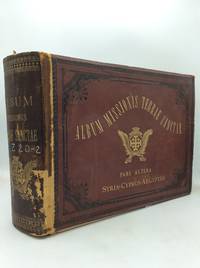
215047Milan: P. Luigi Michieli. Hardcover. Fair. Map plates 147-263 continuously paginated with volume one not present plus index. A large oblong hardcover book with a leather spine and decorated brick-red cloth boards. Ex-library with call number on spine and a few stamps on edges and endpapers. POOR CONDITION; OFFERED AS-IS. Spine is heavily scuffed and the binding is completely cracked with all plates detached but present. Plates 212-213 have small chips to edge. Plates have tanned edges but minimal edgewear overall. Otherwise the plates are clean and the images unmarred. A damaged copy in need of rebinding but still an excellent time capsule of the late 19th-century regions it depicts. Title in English is ALBUM OF THE MISSION OF FRANCISCANS IN HOLY LAND Second Book - Syria Cyprus Egypt. Volume 2 of 2 only. An album of black and white plates depicting Franciscan missionary activity in the Eastern Mediterranean. Each full-page plate has a decorative gilt border and includes descriptive captions in Latin Italian French English and German. Measures approximately 12.75"x 9.5." No copyright date given; book is circa 1890. P. Luigi Michieli hardcover
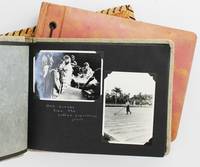
19556091Various locations in Costa Rica and Panama 1955. Very good. Three photograph albums: 10 leaves illustrated with thirty photographs most with manuscript annotations in white pencil; 22 leaves illustrated with seventy-one photographs most with manuscript annotations; 20 leaves illustrated with forty-nine photographs each with manuscript annotation. Each album oblong octavo in different colored cloth bindings string tied. Minor overall wear with a handful of loose photographs. A collection of three annotated vernacular photograph albums documenting the activities of Methodist missionaries in Costa Rica and Panama in the mid-20th century. The photographs picture the subjects traveling in the two countries scenes inside and outside the classroom views of native peoples and dwellings a mission in Costa Rica and the associated language school headed by Denton Powell Royster who is pictured here and identified as "Pastor Royster". The images capture missionaries on the road at roadside picnics enjoying leisure time at meetings and dinner celebrations and engaging in similar activities. Many of the subjects are named providing excellent opportunities for deeper study; individuals here include Stan Sheldon Jean Spahr or Spahn Virginia Miller Virginia Forkell Naomi Calkine Lois Henry Lorraine Roth Betty Brown Gordon and Marilyn Marken Norm Piersma Wally DeSmet John Gilmore and others. The album was compiled by a female missionary likely a member of the Benz family as one image is captioned "Peggy Daddy Mom and Steve Benz." Another photograph of a young woman is captioned "Me enroute to the falls at Catalina." She also identifies herself in other photos including one of her swimming at Ojo de Agua but never seems to indicate her name. She appears to have been an instructor at the language school; one image shows her and a few others in "Phonetics" class and another pictures her with other teachers of the grammar class.<br /> <br /> A couple of the image indicate some of the missionaries are part of a "Honduran prayer meeting." Other scenes of interest feature a group photograph of the language school "scenes from a woodworking shop on our paseo to the Roysters" activities in a coffee processing plant and views of the Irazu volcano among others. The indigenous or local peoples pictured here include the Baltadano family of the Central American Church a woman named Angela de Varga an oxcart operator in Costa Rica a young woman identified as "Maria una buena empleada" a man named Don Antonio and a few others. Identified South American locations include Cartago Church "the ruins of the oldest church in Costa Rica" Gatun Locks and other scenes in the Panama Canal Roble Alto the countryside near Cartago and the interior of a church in Cartago. A diverse collection of images memorializing American missionary activities in South American in the Eisenhower years with excellent potential for further study. unknown
Very Good Turkish, Ottoman (1500-1928) Contemporary handsome petrol green quarter leather, five raised bands to spine with decorative gilt edges, marbled boards. Roy. 8vo. (24 x 17 cm). In Ottoman script (Old Turkish with Arabic letters. 118 p., 14 unnumbered woodcut plates (one is full of two pages). Hegira: 1314 = Gregorian: 1896. Extremely rare first and illustrated edition of the journey of civil servant Ali Bey, who went from Istanbul to Baghdad and to India through his duty in Düyûn-u Umûmiye [i.e. Ottoman Public Debt Administration] covering the years 1885-1888, vividly describing Baghdad, Musul; and India. In 1884 Ali Bey started his journey as an ex-governor of Trabzon city and a new OPDA officer from Constantinople (Istanbul), and he arrived in Baghdad through Lesbos, Ayvalik, Smyrna (Izmir), Mersin, and Alexandretta (Iskenderun). On their way to Baghdad, they cross the Tigris River on rafts that local people call "Kelek". His descriptions of Baghdad city are very important and first-hand accounts of the region including the details of the walls of the city, hospitals, health organizations, industry, a transportation company on the river, a new settlement near the center of Kadhimiya with a tram line to through the city built. Ali Bey landed on the Indian continent in Karachi (today's Pakistan). He made a detailed description of the big cities that were the British Colony and states that he was influenced by these cities as a Reform period Turkish intellectual. He also describes Islamic India, Parsi traditions, costumes and funerals, Portuguese culture in India, Victoria Garden Zoo, silk weaving factories founded by David Sossoon, who came from Baghdad, architecture, music, theater, etc. List of ills.: General view from Ayvalik, the port of Smyrna (Izmir), the port of Mersin, two panoramas of Diyarbakir and Aleppo cities, the bridge of Musul, "Keleks" on the Tigris, a local woman of Aleppo, Famous water mill of Aleppo, Fortress of Aleppo, Eagles of Parsi people in Bombay, A Parsi family from Bombay, Arcadia ship in Bombay, Straight of Hormuz in Basra. Ali Bey was a playwright originally. He learned French in private lessons and firstly he worked at the Babiâli (The Sublime Port) Translation Office as a clerk, then he became a member of the Health Council and the first secretary of the Directorate of Quarantine. He went to Eastern Anatolia, Iraq, and Japan as an inspector of public debts (1855-88). After his duty as the Governor of Trabzon (1890-93) he became the director of the Office of Public Debts (1890-93), which would last until the end of his life. It is for this reason that he was called Direktör Ali Bey. His first work was published in Diyojen (1869-72), the first humorous review, published by Teodor Kasap. Ali Bey, who was one of the regular writers of this review, wrote plays for the Gedik Pasa Theater, which was founded by the Armenian Güllü Agop and his friends, and wrote scripts adapted from French plays. He gave Turkish diction lessons to the Armenian actors and participated in theater activities. His plays were performed under the authorship 'A Person' to hide his official identity. He explained the meanings of words satirically in his dictionary Lehçetü'l Hakayik (Language of Realities) which he wrote in 1897 and was the first work of its field; the faults of the 19th-century Ottoman Empire were also criticized in this dictionary. Özege 17900.; TBTK 3068.; OCLC 218189547 (One copy in Bayerische Staatsbibliothek), 602878049 (one copy in Universitatbibliothek), 879555766 (Four copies), 56944884.
FIRST AND ONLY EDITION of this fascinating document concerning Eastern and Western beliefs, and the activities of Danish missionaries on the Southeast Coast of India during the early 18th century. 8, xxii, 2, 352 pp, COMPLETE WITH THE HALF-TITLE, WHICH IS OFTEN MISSING. 8vo. Beautifully bound in quarter calf and marbled boards. Spine in six compartments with embossed fleurons, leather title-piece. Minor traces of old, faint staining in the lower margins of a few leaves, else a VERY FRESH COPY, COMPLETE AND ATTRACTIVELY BOUND. Rare.
19235584Various locations in Guatemala and Mexico 1923. Very good. 145 real photo postcards photographs and printed pictorial postcards thirty-eight with manuscript notes on verso. Minor wear overall. A wonderful collection of images featuring the people and places involved with the educational missionary work of Lula Maud Jackson later Tolosa of Birmingham Michigan. Jackson was a Baptist missionary teacher at schools in El Salvador Cuba Mexico and Guatemala before returning to Michigan in the early-1920s. Not long after her return Lula married an El Salvadorian minister named Ramon Alberto Tolosa in Michigan on June 26 1923; apparently Tolosa moved to Michigan to be with Lula and thereafter established the First Mexican Baptist Church in Saginaw where he remained as pastor until his retirement in 1975. The present collection of photographs feature numerous people and places Jackson knew during her time in Latin America.<br /> <br /> The collection contains a few photographs that appear to include Jackson but the great majority show various native settings and subjects including the children she was teaching pictured in class group shots. Most are not captioned but many of these images are dated in 1921. The images feature students at play fruit vendors carrying large baskets churches and other buildings and more. Almost forty of the images however which are mostly portrait postcards or photographs include inscriptions to Lula on the verso from the numerous named subjects. All of the captions are written in Spanish. Seventeen of these identify various subjects in Mexico by name including multiple members of the same family in one case. One postcard is covered completely on the verso with the musical notation and lyrics of a song called "Ven a El pecador!" Two of these postcards were actually postmarked to Lula in Cuba while she was there in 1916 and 1919. Eighteen of these annotated real photo postcards were sent to Lula by her soon-to-be husband Ramon Tolosa all but one in either May or early June 1923 before the couple married later in June of that year. At the time Ramon was working in Tampico Mexico from where he sent all of these postcards. The postcards are not postmarked indicating Ramon may have sent them inside other letters; plus the captions contain straightforward descriptions of the subjects and settings of the postcards and not the personal correspondence that might be expected from two people about to be married. All in all a diverse and personal collection of images of Mexico kept by a missionary teacher from Michigan to memorialize her earlier work there offering several avenues for further research. unknown
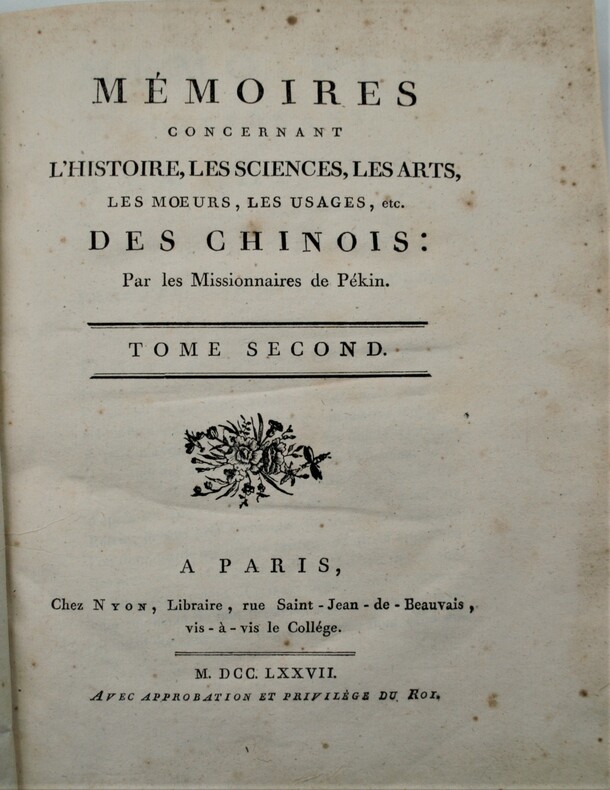
1777PHO-990Paris , Gide , 1797 , 3 volumes (1,2,3) in-4° (260x200) relié plein basane époque , dos lisse orné avec tomaison et pièce de titre . Tome 1 (1797) , chez Gay & Gide , xvi-500pp , illustré de 9 planches sur papier bleuté , ex-libris de la maison de Maistre avec sa devise , Tome 2 (1777), chez Nyon l’ainé, viii-278pp 234pp , charnière légèrement fendue , coin usé , Tome 3 (1778) chez Nyon l’ainé , vi-504pp , illustré de 6 portraits ,petits défauts , tome 2 et 3 , ex-libris de Jean-François-Charles Laval de La Loubrerie .
243 pages. Tissue-protected frontis photo portrait of author. Attractively decorated maroon cloth-covered front board. All seventeen black and white plates present. "An autobiographical account of the author's first twelve years (from 1862 to September 1873) as a Methodist missionary among the Cowichan and Nanaimo Indians." - Lowther. Average wear. Prior owner's name in light pencil upon front free endpaper. Faint moisture marks to fore-edge of first twenty-five pages. Hinges starting. Issued without dust jacket. LOWTHER 1556, RICKS p.75, AMTMANN 3499, SMITH 2134, WALLACE p.52, MATTHEWS 295, TOD & CORDINGLEY p.85. Book
193912870Various locations mostly in India 1939. Two contemporary photograph albums bound in matching black cloth. Album 1: 47 leaves illustrated with 347 mounted photographs including a handful of real photo postcards profusely captioned in white pencil on album leaves. Album 2: 30 leaves illustrated with 285 photographs including some real photo postcards and commercial images with only a few manuscript captions. Oblong quarto. A unique pictorial record of American Christian missionary service in India during the years of the Great Depression detailing the life and work of Seventh Day Adventists Edward and Edna Mabel Pohlman. Edward Pohlman 1906-1970 and Edna Mabel 1906-1997 married in 1928 and served in the Northern India Union NIU Section which was part of the Southern Asia Division from 1929 to 1946. While in India it appears that the Pohlman family lived at least in Mussoorie Roorkee and Poona during which time they had one son Edward Wendell born in Punjab in 1933. The father Edward received an M.A. and PhD from Ohio State University. The couple likely lived in Roorkee early on where Pohlman likely taught at Roorkee Adventist College as there are images of the faculty at Roorkee their bungalow and so forth. They may also have been associated with the Vincent Hill School in Mussoorie of which there are several images. He definitely taught theology at Spicer Missionary College Now Spicer Adventist University in Poona Pune and became president of Spicer in 1939 a position he held until 1946. Spicer College was the church’s flagship educational institution in India. Pohlman also held SDA conference positions including educational and missionary volunteer secretary for the Southern Asia Division.<br /> <br /> The SAD NIU section focused on establishing mission schools doing medical work publishing and direct preaching aiming to spread the gospel this way. The organization worked to establish churches and develop indigenous leadership and self-supporting missions in communities across northern India. The albums only pertain to his time in India but following his time there Pohlman taught at the Western College for Women in Oxford Ohio then in 1958 was a Fulbright lecturer in sociology and anthropology at the University of Karachi and then served as executive director of the U. S. Educational Foundation in Pakistan. In 1960 he joined Queens College in Charlotte North Carolina where he taught and was head of the sociology and anthropology departments until his death. He was fluent in Urdu and Hindustani.<br /> <br /> The first few images in the first album document the Pohlman's trip from New York to India as a young married couple in 1929. They spent some time in England and the Holy Land before arriving in India. The first images from India show their first house in Mussoorie and the Vincent Hill School which was part of the SDA educational system. Other early India images feature Najababad including a dispensary a village meeting and their colleagues the Kimble's bungalow there plus an image of a building captioned "Northwest Union Headquarters of our work" in Lucknow. The next group of photos are of Roorkee in 1931 picturing another SDA school the Roorkee Adventist College the faculty a group of students a sewing class a Bible class and a dispensary. Numerous images include Edna and Edward as well as their colleagues the Steeves the Kimbles the Garners and others. One shows Edna and four young men and is captioned "my first English class."<br /> <br /> Several historic photographs relate to important SDA events meetings and facilities. One of the bigger photographs shows a very large group and is captioned "workers from India Burma & Ceylon at Poona SDA Council 1931." Another shows the Division Headquarters at Poona and a third shows attendees from the Northwest India Union that attended the Poona Council in 1931. Another group of images shows workers and students at the SDA Colporteur Institute a school that trained people to evangelize and pass out literature. Another shows 17 Abbott Road in Lucknow the location of the SAD Publishing House. There are also images of the Seventh Day Adventist Training School many uncaptioned images of SDA student and graduate groups and some of Edna or Edward with their students.<br /> <br /> Other photographs illustrate the missionaries' lives through their bungalows outings trips to Kashmir a large group of images Lahore and Delhi riding elephants celebrating Christmas and more. Other images show local people harvesting sugar cane bathing in the Ganges a pilgrim knee-walking a street sewing service Indian weddings a group in front of the Seventh Day Adventist Training School many uncaptioned images of SDA large and small student and/or graduate groups and more.<br /> <br /> The albums also provide images of the couple's missionary colleagues including several who traveled out to India with them and some who were especially notable. These include:<br /> <br /> John Milton Steeves 1905-1998 an important SDA missionary and educator who became a career diplomat serving as acting ambassador to Jakarta Indonesia deputy assistant secretary of state for Far Eastern Affairs 1959-62 and ambassador to Afghanistan 1966-69. The Steeves family lived in Western Washington between 1919 and 1927 where Steeves graduated from Walla Walla College an SAD-affiliated school and the University of Washington.<br /> <br /> Raleigh and Edna Garner from Nampa Idaho who served sixteen years in India then pastored in Idaho. Garner also graduated from Walla Walla College.<br /> <br /> Ray LeRoy R.L. Kimble 1890-1972 and his wife Jessie M. Estep Kimble. Kimble was a pastor and missionary who served in India from around 1915 to 1950 and was president of the Northern India Union Section from 1946 to 1950. His wife was principal of the North Agra Mission Girl's School from 1930 to 1932; earlier they ran a sanitarium at Bombay. After India's independence Kimble was part of a delegation in August 1947 that met with Nehru Gandhi and Jinnah to explain the role of the Seventh Day Adventist Church in India.<br /> <br /> Marion Hulda Belchambers 1886-1949 a pioneer teacher administrator and publishing house pioneer who became secretary and treasurer of the Northwest / Northern India Union in 1923.<br /> <br /> The two albums document important contributions made by the Pohlmans and their colleagues to education and healthcare in India and also provide visual documentation of important Seventh Day Adventist events and meetings and insights into the daily lives of missionaries of the period. unknown
1753PHO-2353Paris, Broca, 1753, 4 volumes in-12 (16x9,5cm), 7pp.-370pp.-2ff./ titre-356pp.-4ff./6ff.-310pp.-3ff./titre-271pp.-2ff., basane postérieure (19ème ), dos à nerfs orné avec pièce de titre rouge et tomaison verte, ex-libris manuscrit répété, étiquette de libraire (Beauchemin & Valois, Montréal). Frottements et épidermures, 1 planche détachée (t1), 1 feuillet de table monté à l’envers (t4), défaut au titre (t1) Illustré de 25 (28) cartes et gravures, dont dépliantes, manque les 2 planches de musique et la carte de l’Hudson.
1875126715à Lyon - à Paris, chez M. P. Rusand, imprimeur-libraire, à la Librairie écclésiastique 1875 42 volumes. In-8 20,5 x 12,5 cm. Reliures de l’époque composites demi-basane aubergine, dos lisses ornés de filets dorés encadrés de petits fers à froid, environ 550 pp. par volume, table des matières en fin de chaque volume. Ex-libris Monteynard. Manque en pied de dos vol. 28. Intérieur frais. Ensemble en bon état.
1919124931à Lyon, chez M. P. Rusand, imprimeur-libraire, Librairie ecclésiastique de Poussielgue-Rusand 1919 72 volumes. In-8 20,5 x 12,5 cm. Reliures de l’époque composites demi-basane aubergine, dos lisses ornés de filets dorés encadrés de petits fers à froid & à partir du vol. n 48, demi-basane vert-émeraude, dos lisses ornés de filets à froid, environ 550 pp. par volume, table en fin de chaque volume. Ex-libris marquis de Monteynard.
1704PHO-2363Amsterdam, Chez Adriaan Braackman, 1704. In-12 (16x10cm) de 19ff.-604pp.-16ff.,Titre gravé en frontispice, 2 grandes cartes dépliantes et 6 planches dépliantes h.-t., Basane postérieure, dos à nerfs orné, pièce de titre rouge et auteur verte, tête dorée, rajout sur l’adresse de l’imprimeur à la seconde partie. Frottements et épidermures, traces de renforcements aux cartes.