SlaveryBiblio.com
224 résultats
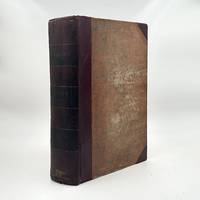
1713370449London: Printed for John Baskett 1713. 2 48pp. printed in English and Spanish in parallel columns. Without the Privilege leaf preceding the title. Quarto. Trimmed and inlaid into folio sheets and bound within a folio volume of treaties between Great Britain and Spain assembled by the British Foreign Office Library approx. 850pp in total. 19th century half roan and marbled paper boards worn some restoration at joints. Provenance: British Foreign Office Library bookplate on the front pastedown. 2 48pp. printed in English and Spanish in parallel columns. Without the Privilege leaf preceding the title. Quarto. First edition in English of one of the most important documents in the history of slavery in the Americas and in the political and financial history of Europe and the Americas in the early 18th century. <br /> <br /> Though the term "assiento" could refer to any number of Spanish contracts "the Assiento" almost always refers to the "Assiento de Negros": a monopoly contract granted by the Spanish crown between 1528 and 1779 for the sole right to import slaves from Africa into the Spanish colonies. Normally granted to individual companies the 1713 Assiento was granted directly to the British crown as part of negotiations for the Treaty of Utrecht which ended the War of Spanish Succession. In the decades following this 1713 Assiento an estimated 200000 enslaved Africans were transported across the Atlantic.<br /> <br /> The document grants sole privilege for the trade to the British crown for a period of thirty years expiring in 1743. The agreement consisting of forty-two articles allows for a maximum of 4800 slaves to be introduced to the colonies each year with a provision for increasing that annual amount each year by paying an added duty places limits on sale prices sets the cost of the duty to be paid for each enslaved person allows for the use of British or Spanish ships and mariners in the slave trade provides for the French Guinea Company's extraction from the colonies and establishes the details of precisely where British ships would be allowed to travel and trade. The British were also granted the unique privilege to send one vessel with a cargo of up to 500 tons of other trade goods to the Spanish colonies each year. <br /> <br /> While the Assiento seemed a lucrative deal most Assientists over the years saw considerable losses due to the difficulty of cross-Atlantic trade and the duties paid to the Spanish king. The real benefit to its grantees was not profits from the slave trade but rather the illegal ability to send other contraband on board their vessels to the otherwise closed-off Spanish markets in the New World. Britain was eager to get their own products overseas and to deny this revenue stream to the French who had held the Assiento since 1701 thereby preventing them from refilling their coffers too quickly and upsetting the balance of power in Europe after the costly War of the Spanish Succession. <br /> <br /> Queen Anne delegated the Assiento privilege to the South Sea Company which had recently been established to pay off Britain's considerable national debt. The privilege was largely granted to them as an encouragement to investors in order to allow the Company to achieve its original purpose more readily. Ultimately however it proved to be a costly and unprofitable endeavor for the South Sea Company who were able to import only about one-third of their allowed quota of slaves each year were frequently interrupted by war and were required to render twenty-five percent of their profits to King Philip V of Spain. <br /> <br /> The present example comes from the British Foreign Office Library inlaid and bound into a folio volume of other treaties between Great Britain and Spain arranged chronologically by treaty date. Over the course of many years the library of the Great Britain Foreign Office inlaid copies of nearly every treaty involving Great Britain to folio size and bound them together by region. The library was dispersed in the late 20th century with most of the volumes and particularly the American volumes broken up and sold by the William Reese Company.<br /> <br /> Most of the other treaties with Spain within this volume are clippings or extracts from larger works or true copies in manuscript of treaties dated between the years 1176 and 1739. Included in the volume however is a separately-printed English edition of the Treaty between Great Britain and Spain as part of the Treaty of Utrecht 1713: Tractatus pacis & amicitiæ . Treaty of peace and friendship between The most Serene and most Potent Princess Anne by the Grace of God Queen of Great Britain France and Ireland Defender of the Faith &c. and the most Serene and most Potent Prince Philip the Vth the catholick King of Spain concluded at Utrecht the 2/13 day of July 1713. London: Printed by John Baskett 1714. 115 1pp. ESTC T51509.<br /> <br /> There are two issues of the Assiento treaty; this is the issue with a semicolon after "Assiento" and no punctuation after "or" on the titlepage. A crucially important document in the history of colonial trade Spanish-British relations English finances and slavery in the Americas. Sabin 2227; European Americana 713/85; Hanson 1896; Sperling 34; JCB 1III:175; ESTC T4476 Printed for John Baskett unknown
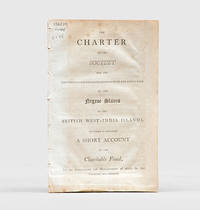
1794126550London no printer 1794 or later. First edition variously dated by ESTC and WorldCat between 1794 the date given at the end of the preliminary "Short Account of the origin and present state of the charitable fund" and 1823. The short account dated March 1794 is followed by a tipped in leaf reporting on the first meeting of the society which took place on Thursday April 3 1794 electing the Lord Bishop of London as president. The Charter of the Society 18 pages in length is dated at Westminster "this thirtieth Day of October in the thirty-fourth Year of our Reign" which again falls in 1794. Octavo 190 x 123 mm pp. ix 18. Sometime in a pamphlet vol. now disbound. Spine shows evidence of earlier binding sometime folded vertically; title lightly dust soiled page ix trimmed down and tipped onto p. viii; a good copy. Sabin 85881. unknown
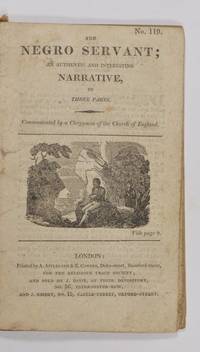
41475London: Printed by A. Applegath & E. Cooper for the Religious Tract Society c. 1825. 12mo 24pp. woodcut vignette to title-page disbound. London: Printed by A. Applegath & E. Cooper, for the Religious Tract Society, [c. 1825.] unknown
1852100540<p>Letterpress braodsheet 10 3/4 x 6 1/4 text on both sides. Margins trimmed on both sides a little uneven on the left side close to words on reverse but not affecting text a few small stains in text. Indiana was for many years a site of refuge for escaping slaves. With this joint resolution the document declares that the only real way to do away with the injustice of slavery was to advocate emigration and colonialization of Africa.</p>
1807190225London: W. Flint 1807. First edition published soon after the abolition of the slave trade in the British Empire appealing for Britain to make the international end of the trade a core part of its aims in the ongoing Napoleonic Wars. Quarto 248 x 194 mm 4 pp. Recent white and grey boards printed paper label to front cover. Light stain at bottom fore corner and light spotting: a good copy. hardcover
44503 and 6 March 1917 and 31 January and 25 March 1918; all four on letterhead of the Anti-Slavery and Aborigines Protection Society. Campaigner against slavery and colonial exploitation in Africa 1874-1940 and Liberal MP for North Hackney 1923-24. All four items one page quarto. All in good condition though on somewhat discoloured paper. Two items docketed in pencil and two bearing the Society's stamp. ITEM ONE: He hopes to be present at Dr. Max Horn's lecture and wants to know whether the Society is 'publishing the lecture by Mr. Wilson Fox on Imperial Resources'. He thinks he should join the Society 'if not now soon after the war' and asks to be sent the conditions of membership. ITEM TWO: Acknowledges receipt of the Society's journal containing Fox's paper and copy of the Society's prospectus. ITEM THREE: He is disappointed as he 'particularly wished to be present' at the lecture but will not be able to get back from Winchester in time. Asks for copy of paper. ITEM FOUR: 'I enclose herewith corrected proof of the few remarks I made at the meeting of the Society of Arts.' not present All four items signed 'John H Harris'. 3 and 6 March 1917, and 31 January and 25 March 1918; all four on letterhead of the Anti-Slavery and Aborigines Protection Socie unknown
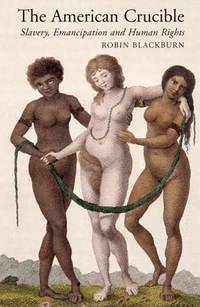
2001__0252026322Univ of Illinois Pr 2001. Hardcover. New. 328 pages. 9.25x6.25x1.00 inches. Univ of Illinois Pr hardcover
Blackburn-CrucibleNew. unknown
186223579<p><i>"It is a fact that the enslavement of human beings has so far infused its insidious poison into the very hearts of the Southern people that they have come to believe and declare the evil of slavery to be a good and to require the power of Government to be exerted to maintain extend and perpetuate an institution that enables thousands to sell their own children to be enslaved with all their posterity into hopeless bondage." </i></p><p>The founder of New York City's Cooper Union for the Advancement of Science and Art echoes the language and logic of the Emancipation Proclamation as well as citing some Southern pro-slavery arguments to demonstrate their ridiculousness in this open letter to President Lincoln. Cooper and the Cooper Union had long been advocates of abolition and both Lincoln and Frederick Douglass had famously lectured at the institution.</p> <b>PETER COOPER. SLAVERY.</b>Pamphlet. <i>Letter of Peter Cooper on Slave Emancipation</i> Loyal Publication Society New York 1862 8pp. disbound.<p><b><br /></b></p><p><b>Excerpts:</b></p><p><i>"It is a fact that the enslavement of human beings has so far infused its insidious poison into the very hearts of the Southern people that they have come to believe and declare the evil of slavery to be a good and to require the power of Government to be exerted to maintain extend and perpetuate an institution that enables thousands to sell their own children to be enslaved with all their posterity into hopeless bondage." </i></p><p><i>"In the original formation of that Constitution it became absolutely necessary to make a compromise with that great and all pervading interest which had then already entered into the very life-blood of the nation rendering the formation of an union of States hopeless without such a compromise."</i></p><p><i>"The constitutional requirement to return fugitive slaves on their being demanded by Southern men having been acknowledged and performed by the States has been reaffirmed by an almost unanimous vote in Congress.These honest efforts on the part of the North to maintain peace and friendship were met by a relentless war waged for the destruction of the Constitution and the dissolution of the Union.<i>"</i></i></p><p><i>"The time has now come when Southern men must know that the Union must be preserved and it is for them to determine whether they will persevere in their rebellion until the North shall be compelled in the most reluctant self defence to render contraband of war the slaves and property of all persons found in arms against the laws and Government of the country."</i></p><p><b>Condition</b></p><p>Fine. Disbound and lacking front wrap.</p>
0267513542.Ghardcover. Good. Access codes and supplements are not guaranteed with used items. May be an ex-library book. hardcover
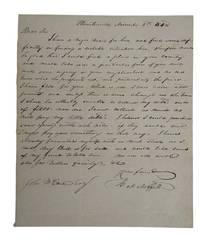
1842209651842. Slavery North Carolina Letter signed offering a "negro man" to settle debts. Letter signed by "H.M. Moffett" of Huntersville Virginia now West Virginia. Dated November 8th 1842. Measures 9.5" by 7.75". The letter reads in full: "Dear Sir I have a negro man for hire and find some difficulty in finding a suitable situation here therefore would be glad that I could find a place in your country and would take in as a particular favor if you will make some inquiring in your neighborhood and let me know what the prospects are and particularly the price- I have $200 for you which is all I can raise at present and unless their is some change in the times I shall be utterly unable to collect my debts of $1600 now due. I can't collect as much as will pay my little debts. I believe I could purchase some young cattle with notes if they would . I might pay you something in that negro sic. I have already furnished myself with as much stock as I need my Bull is for sale and would like some of my friends to take him. We are all well also Jan sic Millers family - . -- your friend H.M. Moffett." The letter was likely penned by Henry Hiller Moffett second Clerk of Pocahontas county Virginia present day West Virginia. Moffett is listed in the 1850 census with eight enslaved persons. Original folds some minor foxing. Overall very good condition. unknown
0266164226.Ghardcover. Good. Access codes and supplements are not guaranteed with used items. May be an ex-library book. hardcover
1836216961836. Slavery & Abolition CHILD Lydia Marie. An Appeal in Favor of That Class of Americans Called Africans. New York: Published by John S. Taylor 1836. Second edition. Illustrated with 2 plates. Coleridge quote on title page. In original blue cloth boards with embossing and gilt to spine. 8vo 216 pages. Child was a vocal abolitionist women's rights activist anti-American expansionist and proponent of racial equality amongst African and Native Americans. An Appeal in Favor of That Class of Americans Called Africans was the first written by a white woman in support of the immediate emancipation of slaves without compensation to their enslavers. Child begins by writing about the history of the slave trade as well as harrowing stories on it's detrimental and immoral faculties in order to engage readers to action. One illustrated plate showcases shackles and chains used on enslaved individuals. First published in 1833 Child's work was a prominent contribution to the abolitionist movement and her writing influenced many notable figures including Harriet Beecher Stowe and Frederick Douglass. Missing frontispiece some foxing to pages some wear to covers. Small tear affecting a few words in the fist first sentence on page 127. Binding is tight and text is clean and legible. Overall very good condition. unknown
24264ONE: ‘Coloured Emigrants from United States’ Downing Street 16 October 1850. TWO: ‘Immigration’ Downing Street 30 October 1850. Two interesting items from the period leading up to the American Civil War. Both items are scarce: no other copy of either traced. In good condition lightly aged. Extracted from a volume of Parliamentary Circulars with the ownership signature "Frederick Peel" Member of Parliament from Feb. 1849 dated 1839-1851 very good condition. The context makes it plain that this Circular was sent to all Colonial Governors a gap in the text indicating where the name of a specific Governor would appear in MS. Disbound from a volume and paginated in manuscript.Both printed in copperplate font. ONE: Printed ‘Circular’ dated from Downing Street 16 October 1850. Headed in manuscript ‘Colonial Emigrants from United States’. In manuscript at end not in Grey’s hand ‘/sd/ Grey’. 2pp 8vo. Paginated in manuscript 239-240. Begins: ‘Sir / I have to acquaint you that it has been suggested to me that a desirable Class of Emigrants for the West India Colonies might be induced to come to them from among the Black and Colored Population of the United States whose arrival and location if they chose to come would I have no doubt be advantageous to themselves and to the Colonies.’ TWO: Printed ‘Circular’ dated Downing Street 30 October 1850. Headed in manuscript ‘Immigration’. In manuscript at end again not in Grey’s hand: ‘/sd/ Grey’. 7pp 8vo. Not paginated in type; paginated in manuscript 239-245. Divided into eleven numbered sections the first of which reads: ‘In the course of the long correspondence which it has devolved upon me to conduct with the Governors of the Sugar Colonies and others on the subject of the Immigration of Labourers it has been my endeavour to promote the establishment of such laws and regulations respecting Immigrants introduced at the public expence as should make the Immigration most conducive to the well being of the Immigrants themselves of the Colonists by whom their labour was required and of the Populations at large of the Colonies in which they were to be placed.’ The chief ‘descriptions of Immigrants’ discussed in the correspondence are: ‘1st Coolies brought or about to be brought from the East Indies to some of the West Indian Colonies by the aid of Colonial Revenues or Loans raised by the Colonies and guaranteed by this Country. - 2nd. Kroomen or Africans from Sierra Leone and those parts of Africa where Slavery does not exist brought to the West Indies by the same means. - 3rd. Africans taken from captured Slavers liberated under sentences of the Mixed Commission Courts and brought to the West Indies at the sole cost of this Country.’Printed ‘Circular’ dated from Downing Street 16 December 1842. Headed in manuscript ‘Crime in the high Seas’. At bottom in manuscript not Stanley’s hand: ‘/sd/ Stanley’. Twenty-nine lines in copperplate font. The first of four paragraphs reads: ‘The attention of Her Majesty’s Government has been recently called to various Laws enacted in the British Colonies for the prevention regulation or punishment of acts done in the High Seas as on the Seas within one League of the Shore of the Colonies in which such Laws have originated. After consultation with the Queen’s Advocate and the Attorney and Solicitor General Her Majesty’s Government have adopted the following conclusions on the subject.’ ONE: ‘Coloured Emigrants from United States’, Downing Street, 16 October 1850. TWO: ‘Immigration’, Downing Street, 30 Oc unknown
1823423251London: Printed by Ellerton and Henderson Gough Square 1823. Near Fine. Folio 21.5 x 33 cm / 8½" x 13â€. pp. 1 2-3 4 blank. Light vertical and horizontal center folds three short tears at the horizontal fold near fine with a contemporary drawing of a few survey lines and diagrams very lightly sketched in ink and pencil on the final blank page. The Society states its case against slavery in the Colonies of Great Britain where "there are at this moment upwards of 800000 human beings in a state of degrading personal slavery." It provides a brief but detailed description of "the immoral inhuman and unjust" nature of the slave trade and of the absolute power of slave owners. Printed by Ellerton and Henderson, Gough Square unknown
1996210311010Cassell 1996-03-01. Paperback. Very Good. Softcover. Clean text. Tight binding. Free of any markings and no writings inside. For any additional information or pictures please inquire. Cassell paperback
1996Q-030433264xCassell 1996-03-01. Paperback. New. In shrink wrap. Looks like an interesting title! Cassell paperback
DADAX030433264XUNKNO 0000-00-00. paperback. New. 5.50x0.75x8.75. Buy with confidence. Excellent Customer Service & Return policy. UNKNO paperback
186335430New York: Carleton 1863. First Edition. Hardcover. Good. 12mo. 1 308 pages 1 page advertisement 1 page blank 1 page advertisement 1 page blank 1. . 4pp ads. Brown pebble cloth hardcover stamped in blind on the covers. Gilt stamped title on spine. Edge wear to the cloth head and base of the spine. Toning to the end papers. Light to moderate scattered foxing to the contents. Previous owners name on the front paste down. Civil War era stories revolve around treatment of Slaves with some stories of white southerners. Good only. Carleton hardcover
133041957X.Gpaperback. Good. Access codes and supplements are not guaranteed with used items. May be an ex-library book. paperback
2499523 November 1939. On letterhead of the National Council for Civil Liberties London. See his entry in the Oxford DNB. 1p 4to. A very good facsimile of a typed letter with the main text in black some in red and the facsimile signature 'Henry W. Nevinson' in light blue. Names of Nevinson as President E. M. Forster as Past-President and dozens of Vice-Presidents in left-hand margin including Aldous Huxley A. A. Milne J. B. Priestley H. G. Wells and Rebecca West. Addressed to 'Dear Sir' the letter sets out the history of the organization appealing for 'support for its activities'. In sending a copy of its monthly journal 'the Council makes an appeal not only because it stands for all those things upon which we as a free people pride ourselves but also because it is a live energetic body and shows practical results'. There is a reference to 'these critical days' and the letter ends by stating that 'it is in your interest to use its services and to see that it is strong and efficient to protect your liberties'. 23 November 1939. On letterhead of the National Council for Civil Liberties, London. unknown
0332941361.Ghardcover. Good. Access codes and supplements are not guaranteed with used items. May be an ex-library book. hardcover
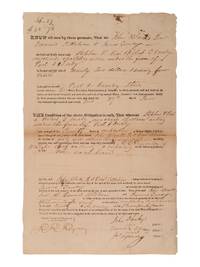
1822215261822. Manuscript debt bonds created in Mecklenburg County North Carolina during the early 1820s document the use of enslaved people as collateral within the financial system of the antebellum South. These legal instruments record obligations owed between creditors and debtors while identifying enslaved individuals as property subject to seizure in the event of nonpayment. Such documents illustrate the legal framework through which slavery operated as both a labor system and an economic structure where enslaved men women and children were routinely mortgaged pledged and sold to satisfy financial claims. Surviving manuscript bonds naming enslaved individuals provide direct evidence of the mechanisms through which courts and creditors enforced debt within slaveholding societies.<br /> <br /> Archive of three partially printed manuscript bonds completed in ink each measuring approximately 12 x 8 inches and bearing signatures of the involved parties. 1 Blanks John; Tillotson Edward; and Turney James. Debt bond to Stephen P. Pool and Robert O. Courby. Mecklenburg County North Carolina: 27 June 1822. The document binds the debtors for "ninety five dollars and seventy four cents" secured against property including "one land horse" with a notation on the reverse indicating the obligation was later settled by payment. 2 Carter Charles and Bullock John P. Bond to Thomas Howerton and John F. Howerton. Mecklenburg County North Carolina: 21 March 1823. The bond records a debt of $2214.67 associated with a writ of fieri facias issued against the estate of Charles Carter and identifies "one Negro man named Manuel Jack" as collateral subject to seizure if the debt remained unpaid. 3 Lenton Charles. Bond to James and John H. Irwin for the benefit of Michael Newton. Mecklenburg County North Carolina: 23 April 1823. This document binds Lenton for $337.42 and identifies "one Negro boy by the name of Peter" as property pledged to secure the obligation specifying that the enslaved child must be produced for sale if required under the terms of the writ.<br /> <br /> During the nineteenth century enslaved people were legally classified as chattel property under the laws of slaveholding states allowing them to be mortgaged seized by courts and transferred between owners as part of debt enforcement procedures. Legal instruments such as bonds and writs of fieri facias formed part of the judicial process through which creditors pursued unpaid obligations and frequently resulted in the forced sale of enslaved individuals. Documents naming individuals such as Manuel Jack and Peter provide stark evidence of how the legal and financial systems of the American South treated human lives as collateral within commercial transactions. Three manuscript bonds written on partially printed forms with handwritten text and signatures. Light creasing toning and handling wear consistent with age; text remains clear and legible. Overall very good condition. The archive preserves primary documentary evidence of the legal and economic structures sustaining slavery in the early nineteenth century United States. unknown
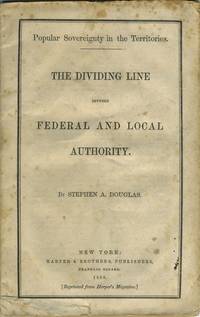
185927949New York: Harper & Brothers 1859. Paperback. Good overall. The United States will forever be in this struggle between the rights of the States vs. the rights of the Federal Government. In this case the question is slavery. One of Douglas' papers promoting 'Popular Sovereignty" or the right of the people of a state or territory to decide the slavery question for themselves-as a Union-saving formula. 8vo 40pp publisher's paper wraps slt foxed still very readable. Harper & Brothers paperback
18651260191865. First Edition. CONSTITUTION. Journal of the House of Delegates of the State of Virginia. for the Session of 18645. Alexandria: D. Turner 1865. Octavo original front printed wrapper respined renewed rear wrapper original string stitching; pp. 1-3 4-83 1. Housed in a custom chemise and clamshell box. $4500.First edition one of 500 copies of the momentous Journal featuring its February 9 1865 entry on the Alexandria Virginia government's passage of the 13th Amendment mere days after the U.S. Congress the first of the four Unionist southern states to pass the Amendment also featuring the governor's Message noting: ""though we have in inherited from our fathers of the revolution the blessings of a great nation yet they also left to us an inheritance of African slavery which has proved a bitter dreg in our cup of freedom"" a vital record of forces for constitutional change near the end of the Civil War.Soon after the 1860 election amidst southern secession ""the great questions of union or disunion war or peace hung in the balance. Probably the crucial weight on the scale was Virginia as long as the federal government did not seek to coerce the states Virginia secessionists were unable to achieve a majority. When Lincoln responded with force to the attack on Fort Sumter however the vote in Virginia went in favor of secession."" Subsequently a Virginia convention ""met in Wheeling on May 13 1861 it elected as Governor Francis Pierpont a western Virginian and ardent Unionist and arranged for the creation of a legislature to replace the body sitting in Richmond in July 1861 the new legislature met at the 'Restored Virginia' capital of Wheeling in a special session called by Pierpont."" Against its ""claim to represent a majority of Virginians"" a new state of West Virginia was created in 1863 and Pierpont's government moved to Alexandria to govern areas of Virginia under Union occupation Harrison Lawfulness of the Reconstruction Amendments 380-83.Scholars observe that the 13th Amendment its fellow amendments and Reconstruction as ""both a political process made possible by military successes and constitutional thought grew from wartime as well as post-Appomattox developments"" Hyman and Wiecek Equal Justice 247. This rare first edition of Journal of the House of Delegates substantiates that in documenting passage of the 13th Amendment by Pierpont's Virginia government mere days after the U.S. Congress passed the Amendment on January 31 1865. With that Virginia became the first of the four Unionist southern states that ratified the 13th Amendment. Of those Louisiana followed on February 17 with Arkansas and Tennessee that April. The 13th Amendment is the focus of the Journal's entry for February 9 1865 which states: ""Mr. Brownley called up Senate bill No. 12 entitled 'An Act to ratify the joint resolution of Congress passed January 31 1865 proposing an amendment to the Constitution of the United States.' The bill was read the first and second time and the rules were suspended and the bill read the third time and the bill passed."" Also notable herein is the complete printing of Governor Pierpont's opening Message where he notes: ""though we inherited from our fathers of the revolution the blessings of a great nation yet they also left to us an inheritance of African slavery which has proved a bitter dreg in our cup of freedom."" He speaks at length of the rights due people of color and the abolition of laws such as those that prohibit ""negro testimony"" or proscribe a ""different punishment for persons of African dissent"" from that of ""white persons.""""The legislature met for its second session on December 5 1864 The governor's message was a long and important document and indicated the changes of opinion that the war was bringing about. Pierpont gave his views upon the all-important negro question. He congratulated the constitutional convention which had met in the spring on the abolition of slavery in Virginia and advocated sweeping changes in the laws concerning negroes. The act prescribing different punishments for blacks should he said be altered in accordance with the amended constitution as well as the law for apprenticing them. The law prohibiting the education of negroes should be abolished His language was on the whole very moderate. He advised the legalizing of the marital relations of negroes and most important the establishment of public schools Notwithstanding the governor's advice no acts of great importance passed the legislature On February 9 1865 the assembly ratified the 13th Amendment to the Constitution of the United States. It adjourned on March 7"" Eckenrode Political History of Virginia During the Reconstruction. Faint ""U.N.C. Duplicate"" stamp to front wrapper.Text fine; just a bit of faint soiling and a tide line to fragile front wrapper. An excellent copy of this elusive item. unknown