Comm On Slavery in District of ColumbiaBiblio.com
224 résultats
0656291591.Ghardcover. Good. Access codes and supplements are not guaranteed with used items. May be an ex-library book. hardcover
188037129Circa 1880. 1880. Good. - A slip of paper 2-3/8 inches high by 4-3/8 inches wide is inscribed & signed in black ink: "Let us thank God for the Saxon Grit / Robert Collyer". The paper is mounted on a piece of cream-colored card of approximately the same size. The card is unevenly cut & both paper & card are slightly rippled from the mounting. Good. <p>"Saxon Grit" is the title of an 1880 poem by Collyer about the Norman conquest of England in which the phrase recurs in each verse.<p>Robert Collyer 1823-1912 was an English-born American Unitarian clergyman. He became a Methodist minister in England in 1849. Emigrating to The United States in the following year he found employment as a hammer maker in Pennsylvania and soon began preaching on Sundays while still employed at the factory. His earnest rugged simple style of oratory won him great popularity but his advocacy for the antislavery cause then frowned upon by the Methodist authorities aroused opposition. He was tried for heresy and his license was revoked. Continuing as an independent preacher he joined the Unitarian Church in 1859. In 1860 he organized and became pastor of the Unity Church the second Unitarian Church in Chicago. The church grew to become one of the strongest Unitarian churches in the West and Collyer was regarded as one of the foremost pulpit orators in the country. He left Chicago in 1879 and became pastor of the Church of the Messiah now renamed the Community Church in New York City. In 1883 he was a featured speaker at the convention of the American Woman Suffrage Association where he spoke movingly about his deceased wife and their struggles over "the woman question". Circa [1880]. unknown
184618128London; Chapman Brothers. 1846. The True 1st Edition. Hardback. Very good copy in the original blind-blocked fine-ribbed cloth. Minor nick to the spine crown with the usual dust-dulling to the bands and panel edges. Remains an uncommonly well-preserved example of a scarce and seminal title; 296 pages; Physical desc. : 296 p. ; 22 cm. Intended by the publisher as the first in a 'Library' of political and literary importance for discerning readers. Subject: Slaves - United States - Social conditions. The Clarke Family Narrative - Witness accounts - Jonathan Walker's Trial - etc. London; Chapman Brothers. hardcover
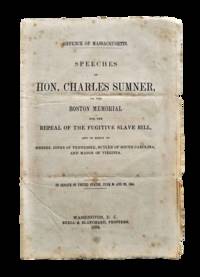
1854176351854. Abolition African Americana SUMNER Charles. Defence of Massachusetts. Speeches of Hon. Charles Sumner on the Boston Memorial for the Repeal of the Fugitive Slave Bill and in Reply To Messrs. Jones of Tennessee Butler of South Carolina And Mason of Virginia in the Senate of the United States June 26 and 28 1854. Washington D.C.: Buell & Blanchard Printers 1854. At the time that this description is being written just three copies are recorded in American institutions. OCLC search results are at best an estimate and can vary over time. The Memorial referred to in the title was a request by 2900 undersigners chiefly men of Boston Mass. to repeal the Fugitive Slave Bill of 1850. What follows is a transcription of Massachusetts Senator and famous abolitionist Charles Sumner's speeches in the ensuing debate: "Mr Jones. asks 'Can anyone suppose that if the Fugitive Slave Act be repealed this Union can exist' To which I reply at once that if the Union in any way be dependent on an Act-- I cannot call it a law-- so revolting in every regard as to that which he refers then it ought not to exist." Sumner goes on to argue amongst other things that the Fugitive Slave Act is parallel to the hated Stamp Act that sparked the Revolutionary War as well as to make spirited rebukes against the pro-slavery Senators Butler Mason and Jones: "The veteran Senator from Virginia Mr. Mason complained that I had characterized one of his "constituents" a person who went all the way from Virginia to Boston in pursuit of a slave as a Slave-Hunter. Sire I choose to call things by their right names. White I call white and black I call black. And where a person degrades himself to the work of chasing a fellow man who under the guidance of the north star has saught a freeman's home far away from the cofle and the chain that person whomsoever he may be I call a Slave-Hunter." Eight sheets folded to make one sixteen-page signature which is stitched along the left edge. Foxing throguhout pages chipped along margins. Dampstaining along two page edges. Delicate but in good condition. <br /> <br /> Charles Sumner January 6 1811 - March 11 1874 was an American statesman and United States Senator from Massachusetts. As an academic lawyer and a powerful orator Sumner was the leader of the anti-slavery forces in the state and a leader of the Radical Republicans in the U.S. Senate during the American Civil War. During Reconstruction he fought to minimize the power of the ex-Confederates and guarantee equal rights to the freedmen. During the war he was a leader of the Radical Republican faction that criticized President Lincoln for being too moderate on the South. Sumner specialized in foreign affairs and worked closely with Lincoln to ensure the British and the French refrained from intervening on the side of the Confederacy during the Civil War. As the chief Radical leader in the Senate during Reconstruction Sumner fought hard to provide equal civil and voting rights for the freedmen on the grounds that "consent of the governed" was a basic principle of American republicanism and to block ex-Confederates from power so they would not reverse the gains made from the Union's victory in the Civil War. unknown
33966London: John Murray Albemarle Street 1826. First edition 2 78 2pp. slight foxing of first few leaves folding table disbound. In reply to "An Address to the Members of the New Parliament on the proceedings of the Colonial Department." which held that if slaves were freed they would not work and as a consequence the colonialist's properties would fall into decay through lack of labourers. This pamphlet denies that the proceedings of the Colonial Department on the matter of Caribbean slavery had been injudicious and unauthorised. Ragatz p.451; Sabin 69410. London: John Murray, Albemarle Street, 1826 unknown
1168936209.Ghardcover. Good. Access codes and supplements are not guaranteed with used items. May be an ex-library book. hardcover
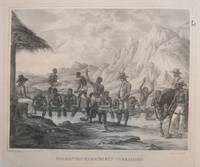
#[36399]München ca. 1830 Original lithographed plate by Meier E. Meyer and printed by J. Selb depicting the Brazilian diamond mines of Curralinho. Ca. 39 x 46 cm. From: Johann Baptist von Spix & Karl Friedrich Philipp von Martius Atlas zur Reise in Brasilien. - The atlas appeared in instalments and is rarely found complete. From 1817 to 1820 the botanist and traveller Martius 1794-1868 travelled in Brazil together with the zoologist Spix 1781-1826. Their journey was a scientific expedition financed by king Maximillian Joseph I of Bavaria. - Famous slavery print of the Brazilian diamond mines. - Unobtrusive dampstain in margin left lower corner mainly to be seen on verso few spots in margin otherwise a very fine copy. Borba de Moraes II p.p. 829; Bosch Brasilien-Bibliothek 346. unknown
133494363X.Gpaperback. Good. Access codes and supplements are not guaranteed with used items. May be an ex-library book. paperback
0243034016.Gpaperback. Good. Access codes and supplements are not guaranteed with used items. May be an ex-library book. paperback
17101200341710. First Edition. SLAVERY ANONYMOUS. A True State of the Present Difference Between the Royal African Company and the Separate Traders. London: No publisher 1710. Slim octavo period-style full tan sheep gilt red morocco spine label raised bands; pp. 40. $1650.First edition of this argument against providing a monopoly over the British slave trade to the Royal African Company with tipped-in diagram of one of the Royal African Company's forts.This work attempts to highlight the irregularities of the business practices of the Royal African Company and to argue for the superiority of open trade in Africa particularly as a means of supplying slaves to the American plantations. Founded in 1660 by the royal Stuart family and the City of London the Royal African Company was founded to exploit natural resources like gold along the west coast of Africa. While the Royal African Company did participate heavily in the gold trade the majority of their income came from slave-trading. The Royal African Company was part of a concerted effortfully elaboration in the Navigation Actsto establish dominance in the slave trade since the Dutch had been the leading slave-traders prior to the Restoration. To that end the Royal African Company established a brutal and highly efficient slave-trading system eventually providing more slaves to the West Indies than any other company or state. The slaves were branded with the initials of the company or its longtime governor the Duke of York. Children were included in the transports. Between 1662 and 1731 the Company transported approximately 212000 slaves a fifth of whom died enroute. While the Company formally gave up slave-trading in 1731 they remained involved in the trade of ivory and gold dust industries dependent on labor exploitation and slavery. Goldsmiths 4605. Kress 2677. Early ink underlining and marginal notations.Small paper repair to diagram text and diagram trimmed close affecting portion of imprint and scattered catchwords not affecting readability. A very good copy. hardcover
1332593208.Gpaperback. Good. Access codes and supplements are not guaranteed with used items. May be an ex-library book. paperback
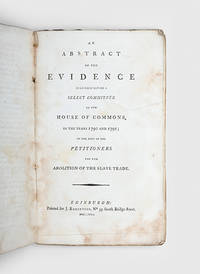
1791180598Edinburgh: Printed for J. Robertson 1791. Stepping up the campaign against slavery Second Edinburgh edition of this best-selling report on the colonial slave trade including a version of among the most famous abolitionist images the cross-section depicting the enslaved individuals transported aboard the Brookes. The Abstract is the first abolitionist work to ground its arguments not on biblical appeals or forceful rhetoric but on documented eyewitness accounts. Until 1790 the abolitionist campaign had been channelled through pamphlet and pulpit. After 1790 abolitionists turned to the new technique of mass petition campaigns against Parliament. The Abstract publishes the testimonies of the witnesses called by the petitioners arranging them thematically by chapter. Among others the select committee called planters traders naval officers and doctors. "The abolitionist petition campaign reached an apex during 1791-1792 where an unprecedented 519 abolitionist petitions coming from all over Britain were delivered to Parliament. Some 400000 persons signed these petitions 1 out of every 11 adults with Manchester alone contributing 20000 names from an adult population of about 30000" Fogel p. 212. Octavo pp. iv 128. Large folding plan of a slave ship folding map of the western coast of Africa tables in the text. Original paper wrappers spine lettered in manuscript ink edges uncut. Housed in custom orange cloth box. Contemporary presentation inscription from "Mr. Campbell" to "John White" on the front cover. Rubbing and chipping minor loss to spine and extremities browning and foxing to contents slight offsetting to plates folding plan loose: just about a very good fragile copy. ESTC N29168. William Fogel Without Consent or Contract 1989. hardcover
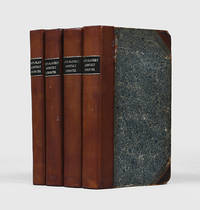
1827163198London: Printed for the London Society for the Mitigation and Abolition of Slavery in the British Dominions 1827-32. A new age of abolitionist agitation First collected editions being the full run under its original title of Zachary Macaulay's abolitionist magazine the leading organ of British abolitionist thought and campaigning. It was afterwards renamed the Anti-Slavery Reporter and has lasted under changing titles to this day. The journal "systematically collected information on the abuses of slavery" ODNB. "Highlighting the rise of abolitionist petition drives antislavery discussions in church and government venues and debates over unfree labor throughout the empire the paper celebrated a new age of abolitionist agitation" Newman pp. 44-45. The volumes collect the monthly issues from June 1825 to December 1831 with collective title pages and contents tables. 4 vols. octavo 216 x 129 mm. Contemporary half calf rebacked black morocco labels marbled sides edges speckled brown. Wear at extremities inner hinges reinforced a little browned and spotted: still very good copies. Richard S. Newman Abolitionism: A Very Short Introduction 2018. unknown
1862127191862. Front Page Headline reads "The Bill Abolishing Slavery in the District of Columbia Passed the House." Newspaper "The Detroit Free Press" April 12 1862. 19" x 26" 2 pages. Has a blow by blow account of the debate among the members of the House and the various amendments associated with the bill. It concludes "The bill was passed 93 agains 39." Also includes local national and international news as well as "News From the South." Some small tears at the left hand margin not affecting text. A diagonal crease runs across the top half of the paper and a small piece of yellow tape has adhered to the top margin. Overall in very good condition. unknown
0656338911.Ghardcover. Good. Access codes and supplements are not guaranteed with used items. May be an ex-library book. hardcover
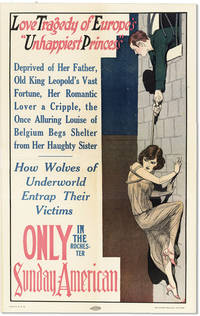
190415411Rochester: Office of the American 1904. Broadside extra lithographed in colors; 18" x 11". Single fold else fine. Colorful graphic depicting Princess Louise escaping from her asylum cell with the help of her illegitimate lover Geza Mattattich. The caption tempts readers with a White Slavery theme suggesting that Princess Louise has been lured to her ruin by a "Wolf of the Underworld." Unlocated. Office of the American unknown
185435390Boston: Phillips Sampson and Company 1854. 1854. Hardcover. Fair. Small octavo. 1 viii 9-256 pages 4 pages advertisements 1. Folding frontispiece map. Blue cloth hardcover with blind stamped covers. Gilt title and decoration on the spine. Folding map has some wrinkling and creases. Cloth hardcover is shelf worn rubbed at the extremities and chipped at the head and base of the spine. Lean to the binding. Light scattered toning and foxing to the contents. Fair. <br /> <br /> Graff 1079. Phillips, Sampson and Company hardcover
183836058Boston 1838. Hardcover. Fair. Octavo. Marbled paper covered boards with leather corners and spine. Red leather title label on the spine. Covers are worn. Toning to the end papers. Blind embossed stamp of the previous owner "Library of KJT Kevin John Twit" on the right front flyleaf. Incomplete: title page and issues for June October and December were not bound inside. Collation as follows: pages 1-240; pages 289-432; pages 481-528; 18 pages "A Sermon Occasioned by the Loss of the Harold and the Lexington Delivered at the Odeon January 26 1840 by William M. Rogers Pastor of the Franklin Street Church." Book and contents in fair condition. <br /> <br /> Articles include: "Contributions to Religious and Charitable Societies From Holders of Slaves"; "Triumphs of the Gospel in the South Sea Islands"; "Religious Notions of the North American Indians"; "The Cherokees"; "The Sandwich Islands" and more. hardcover
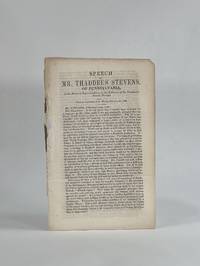
18508864Washington: Buell & Blanchard 1850. Disbound. near Very Good binding. Octavo. 8 pp. Removed from volume. Inner margin a bit irregular; horizontal creases from being folded. <br /> <br /> Stevens rails against "Southern gentlemen" who he argues have obstructed the business of Congress by speeches on the subject of slavery. The remedy Another speech on slavery. And no doubt the subject was indeed occupying Congress and the country. In fact the Compromise of 1850 and its Fugitive Slave Act was just months away from passage when Stevens took the floor with this searing speech against the institution of slavery and the Southern legislators who were holding Congress hostage. Stevens cites Mr. Clingman of North Carolina who in Stevens's words "was selected to open the debate in behalf of human bondage distinctly notified us that unless Congress as a condition precedent submitted to settle the Slavery question according to Southern demands there should be no legislation even the passage of the ordinary appropriation bills necessary to sustain the Government." A heated time indeed! Sabin 91565. Buell & Blanchard unknown
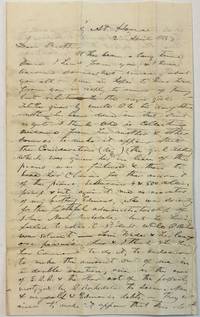
184740201Stewartsboro TN 1847. Folio 15" x 12-3/4" sheet folded to 7-1/2" x 12-3/4". 4 pp. Completely in ink manuscript integral address leave bearing Stewartsboro Tennessee April 3 1847 manuscript postal marking. mailing address on last page. The initials of the writer's name are difficult to decipher; this is our best guess. Old folds two short fold splits and a few tiny holes at fold corners. Wax seal remnant with tear at edge loss of a few letters some toning. Good to Very Good. <br /> <br /> The writer is concerned that Thomas had not responded to his letter "relating to the negro girl Tabitha given by Uncle R. to his daughter- nothing has been done in that suit as yet. I think she is collecting evidence from her mother & other sources to make it appear that the consideration viz the girl Tabitha which was given her in lieu of the piano was a failure & then to base her claim for the amount of the piano between 4 and 500 dollars princp. & int. against me as executor of my brother Edmond who was security for the faithful administrationship of John Nash Barksdale but he having failed to collect sd. debt while R. Barksdale was solvent. Levi Wade & her lawyer are persuading her. . . " He gives Thomas permission to "calculate on receiving a portion of the money for which Paulina sold. . . Negroes have advanced within 3 or 4 months but I fear one diseased as your boy Phil will command but a small price."<br /> Dr. Thomas Hill Read 1798-1874 of Tennessee settled in Macon County Illinois in 1831. He was the brother-in-law of Capt. David L. Allen one of the most prominent early citizens having married his sister. Dr. Read became known for his success in the treatment of children's ailments and was considered an expert in cholera infantum. He had a reputation for honesty and was said to have acted as administrator of more estates than anyone else in Macon County. Dr. Read was a member of the Decatur Board of Trustees in 1839 1841 1846 and 1847; County Treasurer from 1845-1846 and County Probate Judge from 1846-1849.<br /> John Nash Barksdale 1818-1844 Thomas Read's maternal cousin was born in Tennessee graduated from the University of North Carolina and became a lawyer. He practiced law in Tennessee for a few years and then moved to Columbus Mississippi and entered the law firm of his cousin Gen. William Barksdale. The Columbus bar announced that its members would wear the badge of mourning for thirty days following his death. "Death of John N. Barksdale" Republican Banner Nashville TN Dec. 6 1844 Page 2.<br /> Uncle R was likely Randolph Barksdale 1795-1844 Thomas H. Read's maternal uncle and John Nash Barksdale's father. Randolph settled in Tennessee with his father in 1808 and later established his own plantation. He was married three times and became the owner of a large estate and several slaves in Rutherford County Tennessee thanks to the wealth of his first wife. He also owned an estate near Chulahoma in Marshall County Mississippi. unknown
184736797Charleston: Burges & James 1847. Hardcover. Poor. Thick octavo. Two volumes. v index 1 page blank 524 pages; 536 pages v index 1 page blank 1. Ex-library copy with perforated stamp from "The University of The South Library" on the title page. Faded purple stamp page 101. Binding is in poor condition. Front cover is missing. Spine is dry cracked and chipped. Toning and light scattered foxing to the contents. <br /> <br /> Contents include articles on Adam Smith's Wealth of the Nations; Labor The Wilmot Provisio; China and the Chinese Life of Zachary Taylor; Carolina Sports; Slavery in the United States; Fanny Kemble and more. Poor to fair condition. Burges & James hardcover
18361005398vo pamphlet marbeled wrappers with printed label on front cover 32 pp.some minor spine snd edge wear slight aging; very good or better.The work begins with the original source of funds for its "Charitable Fund" which began with estate of Robert Boyle in 1691. Since the 500000 Negro Slaves in the West Indies were mostly "infidels and heathens" converting them to Christianity would be doing them a favor and help the empire.Converting the slaves to Christianity would make them more virtuous more comfortable offer them a prospect of eternall happines and even make them better servants. Richard Clay,
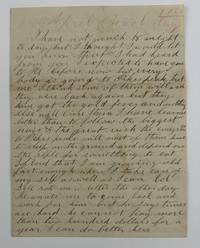
18604105Missouri: April 1 1860. Very good. 4pp. on a single folded sheet. Original mailing folds minor toning. An informative letter written by Charles H. Cram in Missouri to a friend in New England dated "April Fools Day 1860" in red pencil at the top of the first page. Cram mentions hoop skirts Pike's Peak and slavery while trying to decide whether to continue westward during the latter years of the California Gold Rush. Cram's letter reads in part: "Everybody is going to Pikes Peak but me. I think some of them will wish they were back again but they have got the gold fever and nothing else will cure them. I have learned better than to follow the biggest nois and the great rush. The emigrants to Pikes Peake will most of them will have to sleep on the ground and depend on the rifle for something to eat. I may start for Santa Fe about the first of June. I can git 15 dollars a month to drive a teem to Santa Fe. If I do cross the plains I shall go to California but if I have good health I shall stay here though I do not like to live in a slave state."<br /> <br /> In another portion of his letter Cram addresses his correspondent's question of whether slaves and freedpersons wore hoop skirts in Missouri. Cram writes: "You wanted to know if niggers wore hoops. Some do and some don't some slaves in broadcloth and silk and some go nearly naked. Slaves have there stent to do so much & if they do more they are payed for it. Most of them have a piece of ground that they call their own. What time they get they work on it. That is how they git their fine cloths. There is not a nigger in Missouri that works as hard as I do but I have consolation that I can work only when I am a mind to. You tell Albert not to start out among strangers as I did for he will find the people different in the country from them in New England."<br /> <br /> Cram then speaks to the emigrant populations he encounters out west as well as the agricultural bounty and animal life of Missouri: "The greatest difficulty I had was to learn the French and German language. I have been for weeks where I could not understand a word but now I can understand anything that comes along. But now for something else. The peach trees are in flower and the woods look green. Cattle and horses pick their living here the year round. I have not seen a barn in the country. The way to feed a horse is to tie him up to a tree and throw him a few ears of corn on the ground. I cannot rite to day much for there is half a dozen in the room talking about pikes peak or some young lady and how many negroes her father owns etc."<br /> <br /> Cram ends his letter with some advice for his friends back east: "Tell Mr. Bosworth that if he can rais $500 that he had better go to Cansas Kansas and go to farming. If you can persuade Andrew Marshall to go west it will be a good lesson for him."<br /> <br /> A mid-19th century manuscript letter with informative observations on the clothing of slaves and with notable observations of western life in Missouri. April 1 unknown
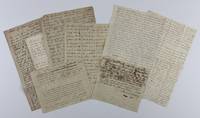
182012624Virginia and Alabama 1820. Eight manuscript documents totaling sixteen pages. Typical mailing folds and handling wear. Very good. Manuscript records from an extraordinary court case in modern-day West Virginia in which a free person of color named Caesar Freeman also known as Ceasar Cesar or Black Cesar and his family defended themselves and then sued to re-establish their own freedom over twenty years after being manumitted by their owner who had attempted to use them as collateral for a loan after their manumission. The case took place in Greenbrier and Pocahontas counties in West Virginia. Pocahontas County is located on the Virginia-West Virginia border and at the time of these documents was located in Virginia; Greenbrier County is a bit further west. A few of these documents emanate from or relate to Franklin County Alabama where one of the deponents had moved by the time of the legal proceedings.<br /> <br /> The case is detailed in a small pamphlet entitled Ceasar Mountain: Slavery and Freedom in Western Virginia by John Cohassey published in 2016. The opening paragraphs of said pamphlet provide excellent background on the case: “In Pocahontas County West Virginia lore tells of an 18th century legal feud between landowners George Massingbird and Thomas McCarty. In 1796 Massingbird secured a loan from McCarty. Thirty-two days after entering the contract and in need of collateral Massingbird claimed that his freed slaves – Cesar and family – were still his property. Nearly two decades later Massingbird remained indebted to McCarty who demanding final payment sought ownership of the Ceasar Freeman family. From the outset of this financial arrangement the Freemans served as collateral for a loan that Massingbird had intended to pay without likely expecting that the transaction would jeopardize the family’s freedom. When legally threatened to make the final payment Massingbird stated truthfully in a deposition that he had freed Caesar and family after the date of his initial loan. A Virginia statute stipulated that any slave manumitted after the date of a contract was not subject to reenslavement. But at this point Massingbird’s motivation for changing his story likely had more to do with his preventing McCarty‘s claim over the Freemans than to settle a debt that threatened him with serious legal consequences. Without money to pay McCarty upon the deadline of the debt Massingbird changed his story once again – that Cesar and family had not been freed after the contract. This untruthful claim as in the initial loan now placed the burden on the Freemans to prove their status as free persons of color. Assisted financially by local whites Ceasar and family won their case. Learning that Massingbird had on two occasions claimed them as collateral the Freemans sued both Massingbird and McCarty. Victorious in court the Freemans were awarded land in a region where they once were slaves – while the name of a nearby mountain was reputedly taken from their respected patriarch.†The mountain referred to here is known as Caesar Mountain in Pocahontas County.<br /> <br /> The present documents emanate from the case in 1819-20.  Two of the earliest documents dated in October and November 1819 relate to McCarty’s suit against Massingbird and mainly pertain to making sure Caesar and his family remain in the state. This included the jailing of Caesar and Sarah’s daughter Nancy Ware whom Massingbird apparently still claimed as a slave. One chief aspect of the importance of these documents lies in the fact that Caesar and his entire family are listed by name as such: “Caesar Sarah his wife Nancy Adam Zachariah John Esther Jim Sally Abraham Elizabeth Martha & Rebecca Children of Caesar and Sarah who are persons of colour.†Also of particular interest is that one of the documents appears to be signed by both Caesar and his daughter Nancy with their marks the day after Nancy was released from jail.<br /> <br /> In the remaining six documents Caesar and his family as well as defendant McCarty work through the Virginia and Alabama courts to secure a deposition from James J. Mayers a trustee of the Massingbird-McCarty agreement which supposedly still held the Freeman family in bondage. These documents are dated between July 1819 and February 1820. The earliest of these documents is a summons for Massingbird McCarty and Mayers to appear in Greenbrier County court “to answer a bill exhibited against them by Caesar and Sarah his wife as well as their adult children…who are permitted to sue in forma pauperis.†This is an extraordinary document encapsulating the right of free persons of color to sue their former owners and others in court in Virginia in 1819 and representing the Freemans’ fight for their continued freedom. The next document dated October 29 1819 contains testimony from George Massingbird confirming that “the Petitioners the Freemans were emancipated by your respondent Massingbird prior to the contract made by your respondent with his codefendant McCarty….†Finally the truth from Massingbird. In the third document dated the same day the trustee James Mayers asks to be dismissed from the case agreeing to all that was said by Massingbird in court.<br /> <br /> This was not enough for the courts or perhaps for one of the defendants Thomas McCarty. The final three documents dated between February and April 1820 further pertain to securing testimony from Mayers in the case. On February 21 1820 Virginia clerk John A. North addresses a one-page partially-printed form completed in manuscript to “any two Justices of the Peace for Franklin County State of Alabama.†The document was sent “on behalf of Thomas McCarty Defendant as of Caesar & other persons of colour Plaintiffs who are permitted to sue in forma pauperis.†The intentionof the document was to seek the help of Alabama officials in “examining whatever witnesses†they might have in the case. The next document is dated two days later and sent from McCarty to Caesar. Here McCarty informs “Black Caesar†that he intends to depose Mayers in Alabama on April 24 and that the deposition shall “bee red as evidence in the Chancery Court in a suit where you are plaintiff and myself and others are defendants.†Again a rare instance in which a white defendant writes to a Black plaintiff in the antebellum South involving the freedom of the latter.<br /> <br /> The final document chock full of detail on four folio pages contains the substance of Mayers’ deposition indeed given on April 24 1820. Here Mayers discloses all he knows of Massingbird’s contrary claims involving the case including the fact that Massingbird told him two contradictory stories about the Freeman’s manumission. Mayers professes that after Massingbird told him the whole truth of the matter he was “no little surprized at this declaration after what had taken place when application was made to draw the trust deed.†Sadly these four pages constitute the majority of Mayers’ testimony but seem to end mid-sentence leaving the remainder of his testimony to the vagaries of time. Still the most important part of the story is told here: Massingbird emancipated Caesar and then lied about it when he couldn’t pay his debts endangering the freedom of an entire family in the interest of cold hard cash.<br /> <br /> According to Cohassey’s 2016 pamphlet this testimony was “read aloud in court†and “no doubt revealed Massingbird’s duplicity in the matter.†Eventually Caesar and his family won the court case. Afterwards Massingbird deeded over 400 acres of land in Pocahontas County to the Freemans which apparently included Caesar Mountain. The Freemans lived out their remaining years as free people recorded in local tax lists between 1825 and 1843. unknown
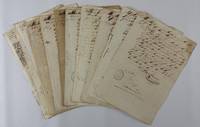
187312720Cuba 1873. Twelve manuscript documents on folio sheets approximately 8.5 x 12.5 inches all with official rubber-stamped seal. Small pinholes along left margin light wear occasional chipping to edges some ink bleed and light damp staining. Overall very good. A collection of documents recording the liberation or attempted liberation of numerous men women teenagers and a child from enslavement. The child is but seven years old while the remaining slaves range from fifteen to fifty-seven years old. The slave trade ended in Cuba around 1867 but the practice of owning slaves remained legal until 1880 and then was abolished completely by Spanish decree in 1886. Cuba was the penultimate country to outlaw slavery in the western hemisphere beating Brazil to formal abolishment by two years. Even before the official abolition of slavery in Cuba African or criollo slaves were manumitted by a variety of owners and at various costs as evidenced here especially after the practice of importing Chinese indentured servants began. Each of the present documents names the slaveholder and the slave granted "libertad" along with the cost in escudos or pesetas of that liberty. The slaves liberated here are as follows:<br /> <br /> 1 Luis criollo 7 years old for the sum of 28 pesos<br /> <br /> 2 Maria Antonia part criolla 20 years old for the sum of 2500 pesetas<br /> <br /> 3 Catalina morena de Africa 41 years old for c.200 pesetas<br /> <br /> 4 Lorenzo moreno criollo 21 years old for 2500 pesetas<br /> <br /> 5 Lucia morena criolla 15 years old for 320 pesos or 1600 pesetas<br /> <br /> 6 Frigidae "negro.de Africae" 56 years old<br /> <br /> 7 Augusto criollo 19 years old for 1750 pesetas<br /> <br /> 8 Marta criolla 16 years old for 1621 pesetas<br /> <br /> 9 Gil moreno de Africa 57 years old for 1500 pesos<br /> <br /> 10 Carmita morena criolla 20 years old for 1750 pesetas<br /> <br /> 11 Augustina Prieto morena criolla 30 years old for 1750 pesetas<br /> <br /> 12 Edwigio 39 criolla; Lazara 36 criolla; and Maria Leoncia 15 criolla for 2000 pesetas.<br /> <br /> These Cuban slave manumissions are offered with one 1844 manumission document liberating a slave in Spain totaling two pages and measuring about 8.5 x 13.5 inches. The document also has three rubber-stamped official seals at the head noting Isabella II. This document appears to free slave Nicolas 25 years old for the sum of 400 pesos and is signed November 5 1844. unknown