1 561 résultats
18401132391840. First Edition. SLAVERY BUXTON Thomas Fowell. The African Slave Trade and its Remedy. London: John Murray 1840. Octavooriginal brown clothuncut and partially unopened; pp.14 viii 3 6-273 274-276 i ii-vi 277 278-582. $2800.First expanded and revised edition of British abolitionist Buxton's powerful call for an end to the slave trade the first to include his extensive and influential Remedy two major works that followed the lead of Wilberforce in calling for treaties and commerce to end the slave trade and outlined a way to ""secure the regeneration of Africa through agricultural development"" with large folding map a handsome copy in original cloth.Quaker Thomas Buxton was in Parliament when in 1824 Wilberforce asked him to become his successor. ""In 1789 Wilberforce had begged Parliament to 'make reparation to Africa by establishing a trade upon true commercial principles Fifty years later Buxton redeveloped this appeal in The African Slave Trade To support his vision Buxton formed the African Civilization Society July 1839."" In this first expanded edition of African Slave Trade 1839the first to include his RemedyBuxton argues for the ""agricultural colonization of West Africa and the development of a broad-based commerce that could undercut the economic dominance of the illicit slave trade"" Hopkins Peter Thonning 615. He documents the horrors of the Middle Passage to show that despite all efforts to end the slave trade ""twice as many human beings are now its victims as when Wilberforce and Clarkson entered upon their noble task."" And in Remedy he further develops his argument: showing how ""legitimate commerce would put down the Slave Trade by demonstrating the superior value of man as a laborer on the soil to man as an object of merchandise.""With African Slave Trade and its Remedy Buxton powerfully ""synthesized contemporary currents of thought developed the arguments about the relationship between abolition and African improvement more systematically than before and then catapulted them to national prominence His views prevailed. The belief that the only way to suppress the African slave trade was to promote 'legitimate commerce' and that this new trade would launch Africa on the road to moral and material progress became the conventional wisdom in mid-19th-century Britain."" Among those he convinced was David Livingstone who as ""an unknown medical student attended the 1840 meeting of the African Civilization Society where Buxton first announced his remedy for the slave trade. What Livingstone heard on that occasion helped inspire a lifetime of work and travel on the continent"" Mann Slavery and the Birth of an African City 88-90. First expanded and revised edition: first to include Buxton's Remedy which was issued separately in 1839. Precedes the first American edition. With folding map of ""Central Africa."" Paginated as issued without loss of text. With 14-page ""Prospectus of the Society for the Extinction of the Slave Trade and for the Civilization of Africa"" preceding title page. Sabin 9685. Goldsmith's 31743. Kress C5121 See Goldsmith's 31181; Kress C4818; Blockson 9121. Interior fresh with light foxing to folding map as often front inner paper hinge starting but very sound mild rubbing and toning to bright original cloth. A desirable near-fine copy. hardcover
2013AFRIQQQQ30323Paris, L'Harmattan, 2013, 15,5 x 24, 224 pages sous couverture souple illustrée. Actes du colloque international en hommage à Edouard Glissant, les 11, 12 et 13 mai 2011 au Musée du Quai Branly. Iconographie noir & blanc.
AMA-1176London, Robillant + Voena, 2010. In 4°, broché, couverture à rabats. 37 pp.,[1 f.], illustrations en couleurs in texte.
1824GF264941824 Paris - Eymery - 1824 - 1 volume in12 - Reliure d'époque pleine basane mouchetée - tranches rouges - pièces de titre en maroquin rouge - dos lisse orné de fleurons - Coupes orné de filets - Bon exemplaire -
17680Used; Like New/Used; Like New. Rare pair of Anti-Slavery tokens produced for the Society for Effecting the Abolition of the Slave Trade established by Granville Sharp and Thomas Clarkson in 1787. The first shows the society's emblem of a chained African man naked and kneeling "Am I not a Man and a Brother" around the perimeter on obverse "May Slavery & Oppression Cease Throughout the World" around the perimeter and clasped hands in print formats generally one is black and one white in the center on reverse. The other example shows a kneeling woman and "Am I not a Woman & a Sister" 1838" on obverse "United States of America" with backwards "N" olive wreath with "Liberty / 1838" in center on reverse. These were commissioned by the American Anti-Slavery society to evoke pity for enslaved women as well as to foster equal rights for women.  Bronze. Diam. 1 5/16 inches 30 mm.  First somewhat worn and the "Sister" is slightly worn on recto just a few high points and the date below "Liberty" on the verso; the "Brother" with a loss on the recto. Not formally "graded" but overall very good.<br>Josiah Wedgewood 1730-1795 a dedicated abolitionist and close friend of Thomas Clarkson designed the "logo" of the kneeling slave for the Society for the Abolition of Slavery in 1787. This was taken up by the American abolitionists and in 1835 Patrick Reason a young black engraver created a version of a kneeling woman that bore the caption "Am I not a Woman and a Sister" This image together with that of the infamous slave ship's hold are without question the most iconic of the anti-slavery movement on both sides of the Atlantic. unknown books
1836011073, 1836. Erstausgabe Goldgeprägter Halblederband Solide, Materiell Gut
pp. vi, 415. Large 8vo. Original full dark blue cloth binding, slightly soiled. Spine faded. Hardbound. The growth and flowering of sectionalism in America. The rise of the two conflicting American "civilizations" - North & South is described and analyzed. First Edition. SHELF W20
301 p. 22 cm. Hardcover Very good condition good
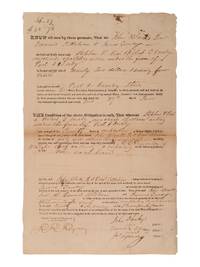
1822215261822. Manuscript debt bonds created in Mecklenburg County North Carolina during the early 1820s document the use of enslaved people as collateral within the financial system of the antebellum South. These legal instruments record obligations owed between creditors and debtors while identifying enslaved individuals as property subject to seizure in the event of nonpayment. Such documents illustrate the legal framework through which slavery operated as both a labor system and an economic structure where enslaved men women and children were routinely mortgaged pledged and sold to satisfy financial claims. Surviving manuscript bonds naming enslaved individuals provide direct evidence of the mechanisms through which courts and creditors enforced debt within slaveholding societies.<br /> <br /> Archive of three partially printed manuscript bonds completed in ink each measuring approximately 12 x 8 inches and bearing signatures of the involved parties. 1 Blanks John; Tillotson Edward; and Turney James. Debt bond to Stephen P. Pool and Robert O. Courby. Mecklenburg County North Carolina: 27 June 1822. The document binds the debtors for "ninety five dollars and seventy four cents" secured against property including "one land horse" with a notation on the reverse indicating the obligation was later settled by payment. 2 Carter Charles and Bullock John P. Bond to Thomas Howerton and John F. Howerton. Mecklenburg County North Carolina: 21 March 1823. The bond records a debt of $2214.67 associated with a writ of fieri facias issued against the estate of Charles Carter and identifies "one Negro man named Manuel Jack" as collateral subject to seizure if the debt remained unpaid. 3 Lenton Charles. Bond to James and John H. Irwin for the benefit of Michael Newton. Mecklenburg County North Carolina: 23 April 1823. This document binds Lenton for $337.42 and identifies "one Negro boy by the name of Peter" as property pledged to secure the obligation specifying that the enslaved child must be produced for sale if required under the terms of the writ.<br /> <br /> During the nineteenth century enslaved people were legally classified as chattel property under the laws of slaveholding states allowing them to be mortgaged seized by courts and transferred between owners as part of debt enforcement procedures. Legal instruments such as bonds and writs of fieri facias formed part of the judicial process through which creditors pursued unpaid obligations and frequently resulted in the forced sale of enslaved individuals. Documents naming individuals such as Manuel Jack and Peter provide stark evidence of how the legal and financial systems of the American South treated human lives as collateral within commercial transactions. Three manuscript bonds written on partially printed forms with handwritten text and signatures. Light creasing toning and handling wear consistent with age; text remains clear and legible. Overall very good condition. The archive preserves primary documentary evidence of the legal and economic structures sustaining slavery in the early nineteenth century United States. unknown
304p. Hardcover Very good condition good
Title and preface browned, 4pp. of advertisements at end, iv, 164 pp., original embossed cloth, gilt lettering on spine. Sabin, 79131.
1983ROD0020107Librairie des Libertés. 1983. In-12. Broché. Bon état, Couv. convenable, Dos satisfaisant, Intérieur frais. 192 pages.. . . . Classification Dewey : 326-Esclavage
243 pages. Tissue-protected frontis photo portrait of author. Attractively decorated maroon cloth-covered front board. All seventeen black and white plates present. "An autobiographical account of the author's first twelve years (from 1862 to September 1873) as a Methodist missionary among the Cowichan and Nanaimo Indians." - Lowther. Average wear. Prior owner's name in light pencil upon front free endpaper. Faint moisture marks to fore-edge of first twenty-five pages. Hinges starting. Issued without dust jacket. LOWTHER 1556, RICKS p.75, AMTMANN 3499, SMITH 2134, WALLACE p.52, MATTHEWS 295, TOD & CORDINGLEY p.85. Book
pp. 286, (2) [Publisher's catalogue]. Last signature damp stained with old mold damage. Penciled ownership of Geo. F. Griminger, Aug. 24, 1866 on title page. 12mo. Original full publisher's cloth binding. Rear board mold and damp stained. Hardbound. "Edmund Kirke" was the pseudonym of James Roberts Gilmore (1822-1903). A scarce and interesting book. **PRICE JUST REDUCED! SHELF W29
181p., illus. Newberry Medal Winner Hardcover Good condition tattered d.j. fair
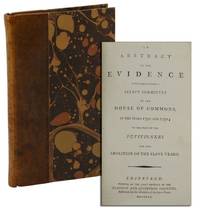
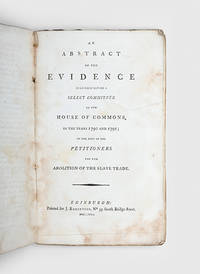
1791140945477Printed at the Joint Expence of the Glasgow and Edinburgh Societies instituted for the Abolition of the Slave Trade: Edinburgh 1791. First Edinburgh Edition. Very Good. Rare first Edinburgh edition published same year as the London edition of eye-witness testimony on the horrors of the British slave trade containing a very early engraving of the famous large folding plate of slaves packed into the hold of the slave-ship Brookes. The famous engraving is one of the most powerful and influential images in the history of social justice and the fight to abolish slavery. It served as a gruesome test of the Britain's "humane" Slave Trade Act of 1788 also known as Dolben's Act which limited the number of enslaved people that British slave ships could transport based on the ships' tons burthen. <p>Very Good. Small 8vo bound in somewhat recent quarter calf and marbled boards with light fading to the spine. Folding frontispiece map of the west coast of Africa in with 2 x 0.5" loss along one edge neatly restored. Large folding woodcut 16.25 x 15.5" of a slave ship based on the engraving W. Elford published in a pamphlet in London in 1789 is excellent and bright with several repairs made to the verso mending tears. The print now an iconic symbol of the Middle Passage was so visually arresting that William Wilbeforce created a scale model of the Brookes making it a central part of his presentation before the House of Commons. His abolition bill did not garner enough support to pass and it was not until 1807 that England succeeded in abolishing slavery. Edinburgh unknown
1791180598Edinburgh: Printed for J. Robertson 1791. Stepping up the campaign against slavery Second Edinburgh edition of this best-selling report on the colonial slave trade including a version of among the most famous abolitionist images the cross-section depicting the enslaved individuals transported aboard the Brookes. The Abstract is the first abolitionist work to ground its arguments not on biblical appeals or forceful rhetoric but on documented eyewitness accounts. Until 1790 the abolitionist campaign had been channelled through pamphlet and pulpit. After 1790 abolitionists turned to the new technique of mass petition campaigns against Parliament. The Abstract publishes the testimonies of the witnesses called by the petitioners arranging them thematically by chapter. Among others the select committee called planters traders naval officers and doctors. "The abolitionist petition campaign reached an apex during 1791-1792 where an unprecedented 519 abolitionist petitions coming from all over Britain were delivered to Parliament. Some 400000 persons signed these petitions 1 out of every 11 adults with Manchester alone contributing 20000 names from an adult population of about 30000" Fogel p. 212. Octavo pp. iv 128. Large folding plan of a slave ship folding map of the western coast of Africa tables in the text. Original paper wrappers spine lettered in manuscript ink edges uncut. Housed in custom orange cloth box. Contemporary presentation inscription from "Mr. Campbell" to "John White" on the front cover. Rubbing and chipping minor loss to spine and extremities browning and foxing to contents slight offsetting to plates folding plan loose: just about a very good fragile copy. ESTC N29168. William Fogel Without Consent or Contract 1989. hardcover
1373214Allerthorpe, York: K Book Editions, 1973 in-12, 56 pages. Cartonné, jaquette, bon état. Réédition fac-simile de l'édition de 1788 (London, J. Phillips).
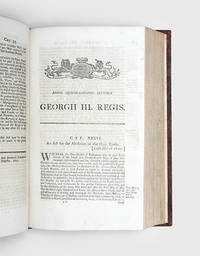
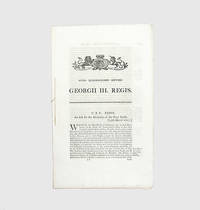
1807182125London: printed by George Eyre and Andrew Strahan 1807. The African Slave Trade. is hereby utterly abolished prohibited and declared to be unlawful First edition of one of the most consequential acts of legislation in world history abolishing the slave trade within the British Empire. The Act the culmination of many years of campaigning by British abolitionists ended two centuries in which Britain took the pre-eminent role in the transatlantic slave traffic. The act paved the way for other European empires to abolish the trade and for Britain to use its navy to intercept slave ships which effectively ended the transatlantic slave trade by the latter half of the century. However the act did not end slavery in the British Empire which did not follow until 1833. Parliamentary acts were issued individually and in collected format printed from the same type. This copy includes the full acts for 1807 comprising the only session of the Third Parliament with the first session of the Fourth the second session was held in 1808 together with the separately published report on vaccination. It was bound for use by the civic authorities of the town of Elgin in Scotland. 3 parts in 1 vol. folio 289 x 181 mm pp. 16 466 1; 14 578 2 blank; 16. Contemporary sprinkled calf twin red and green morocco labels "Town of Elgin Acts of Parliament / 1807" edges speckled blue. Pencilled notation at head of title page. Neatly restored at extremities very minor foxing and finger-soiling to contents. A very good copy. unknown
1807184142London: Printed by George Eyre and Andrew Strahan 1807. The African Slave Trade. is hereby utterly abolished prohibited and declared to be unlawful First edition of one of the most consequential acts of legislation in world history abolishing the slave trade within the British Empire. This copy is a well-preserved example of the separate folio printing. From 1807 enslaved persons could no longer be bought or sold within the British Empire while the Royal Navy was empowered to target vessels engaged in slave transportation a task it took up with vigour. Parliamentary acts were issued in collected annual volumes and as individual pamphlets all printed from the same type. As King's Printers Eyre & Strahan held the exclusive rights to publish and sell parliamentary statutes and this pamphlet would have been among those sold at their offices near Fleet Street. Folio 319 x 197 mm pp. 317-326 2. Woodcut headpiece. Stab-sewn as issued edges uncut. Minor offsetting else a near-fine copy. unknown
A clean, unmarked book with a tight binding. 208 pages. Previous owner's name label inside.
178640654Philadelphia: London printed: Philadelphia: re-printed by Joseph Crukshank 1786. 8vo. 8 1/2 x 5 inches. xix 2 22-155 pp. Publisher's advertisement at rear. Original blue paper wrappers<br/> <br/> Exceedingly rare first American edition of Clarkson's first work. A landmark work by the writer who helped abolish slavery in the British Empire.<br/> <br/> First American edition of Clarkson's rare first published work preceded by the same years first English edition his famous prize essay on the abolition of slavery igniting the campaign for one of the fundamental rights of man PMM 232. In 1770s England as "rebellious Americans were severing ties with their former British motherland a strenuous battle occurred that spawned the noble civil- and human-rights fight that eventually ended Britain's participation in the African slave trade." With this Essay on the Slavery and Commerce of the Human Species Thomas Clarkson "became the official whistle-blower of the horrors of transatlantic slavery the driving force behind the abolition of African slavery and the slave trade" Smith Thomas Clarkson 17. Clarkson's "famous prize essay was the prelude to parliamentary action" on the abolition of slavery. Clarkson together with William Wilberforce led the "campaign carried on by word of mouth and by means of the printing press for one of the fundamental rights of man" PMM 232. Clarkson had been completing his studies at Cambridge when he entered an essay competition and came across an "advertisement for Benezet's Historical Account of Guinea. He was profoundly struck by the title and 'hastened to London to buy it'. Overwhelmed by the horror and brutality of transatlantic slavery his goal of merely winning the prize for its own sake" shifted to creating a work of wider impact. On winning the 1785 Cambridge prize Clarkson translated the essay his Latin dissertation into English for publication. He documents the long history of slavery the devastating Middle Passage and the inhumanity of slavery in the colonies. Clarkson is renowned as "the man who spawned the British Abolitionist Movement and the first Briton to devote his entire adult life to ending African slavery… the moral conscience of American slavery proponents well into the 19th century" Smith 9-30 43. "He never ceased to work for anti-slavery lending his pen and his prestige particularly to the cause of abolition in the United States" DNB.<br/> <br/> Evans 19561; Library Company of Philadelphia. Afro-Americana 1553-1906 2nd ed. 2384; Kress B1028; ESTC W32021; PMM 232a; Sabin 13484. London, printed: Philadelphia: re-printed by Joseph Crukshank unknown
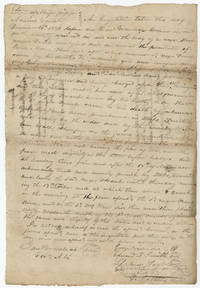
182122479<p>A Mississippi inquest holds a slave overseer accountable for killing a slave.</p> <b>SLAVERY.</b>Manuscript Document Signed by George Newman Edward T. Smith Sheppard Taylor Elijah Norman Hezekiah Kibbee David Collins and Daniel Greenleaf. Adams County Mississippi December 16 1821 1p. 8 5/8 x 12 3/8 in.<p><b><br /></b></p><p><b>Partial Transcript:</b></p><p><i>"the sd negro Frank came to his death by inhuman treatment and severe punishment in stocks starvation and lashes by the order and by the hand of William Wall.and so the sd Wm. Wall did then and there feloniously cause the death of the sd Negro Frank against the peace and dignity of the state and so we say all."</i></p> books
D16245London: Printed for Harvey and Darton Gracechurch-Street. 1827. Hardcover. Good. 8vo 185 x 115mm. Pagination: xi 88pp. Signatures: 4-b2 B-D12 E8. Title page with four-line excerpt of poem The Negroes Complaint by William Cowper written in 1788 and printed in an English anti-slavery pamphlet: Fleecy looks and black complexion Cannot forfeit natures claim: Skins may differ but affection Dwells in white and black the same. Contemporary possibly original boards backed with modern cloth edges uncut; title with loss at top some light marginal staining mostly at front and rear leaves and to covers; otherwise good. <br/><br/>Anonymously published signed only A lover of Africa the Anecdotes of Africans expressed the human identity of African slaves through a selection of stories and travels which largely related to the slavery at the Cape of Good Hope. Throughout the late 18th and early 19th-centuries an increasingly vocal anti-slavery sentiment rippled through both sides of the Atlantic. Authors who published anti-slavery works - hymns poems and anecdotes - believed that by arousing the feelings of human fellowship they could win the argument for racial equality. This book is exceedingly rare OCLC locates scarce print copies at Drew University Library Haverford College Library and the source library for widely held digitized copies is Goldsmiths Library University of London. See Goldsmiths-Kress Library of Economic Literature no. 25379. Printed for Harvey and Darton hardcover books
200413346Paris, Editions de l'Ecole des Hautes Etudes en Sciences Sociales, 2004 1 volume 17 x 24cm, Broché 2 feuillets, puis paginé de 489 à 690, XIIIp., 6 feuillets. Bon état.