1 561 résultats
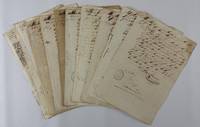
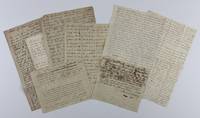
182012624Virginia and Alabama 1820. Eight manuscript documents totaling sixteen pages. Typical mailing folds and handling wear. Very good. Manuscript records from an extraordinary court case in modern-day West Virginia in which a free person of color named Caesar Freeman also known as Ceasar Cesar or Black Cesar and his family defended themselves and then sued to re-establish their own freedom over twenty years after being manumitted by their owner who had attempted to use them as collateral for a loan after their manumission. The case took place in Greenbrier and Pocahontas counties in West Virginia. Pocahontas County is located on the Virginia-West Virginia border and at the time of these documents was located in Virginia; Greenbrier County is a bit further west. A few of these documents emanate from or relate to Franklin County Alabama where one of the deponents had moved by the time of the legal proceedings.<br /> <br /> The case is detailed in a small pamphlet entitled Ceasar Mountain: Slavery and Freedom in Western Virginia by John Cohassey published in 2016. The opening paragraphs of said pamphlet provide excellent background on the case: “In Pocahontas County West Virginia lore tells of an 18th century legal feud between landowners George Massingbird and Thomas McCarty. In 1796 Massingbird secured a loan from McCarty. Thirty-two days after entering the contract and in need of collateral Massingbird claimed that his freed slaves – Cesar and family – were still his property. Nearly two decades later Massingbird remained indebted to McCarty who demanding final payment sought ownership of the Ceasar Freeman family. From the outset of this financial arrangement the Freemans served as collateral for a loan that Massingbird had intended to pay without likely expecting that the transaction would jeopardize the family’s freedom. When legally threatened to make the final payment Massingbird stated truthfully in a deposition that he had freed Caesar and family after the date of his initial loan. A Virginia statute stipulated that any slave manumitted after the date of a contract was not subject to reenslavement. But at this point Massingbird’s motivation for changing his story likely had more to do with his preventing McCarty‘s claim over the Freemans than to settle a debt that threatened him with serious legal consequences. Without money to pay McCarty upon the deadline of the debt Massingbird changed his story once again – that Cesar and family had not been freed after the contract. This untruthful claim as in the initial loan now placed the burden on the Freemans to prove their status as free persons of color. Assisted financially by local whites Ceasar and family won their case. Learning that Massingbird had on two occasions claimed them as collateral the Freemans sued both Massingbird and McCarty. Victorious in court the Freemans were awarded land in a region where they once were slaves – while the name of a nearby mountain was reputedly taken from their respected patriarch.†The mountain referred to here is known as Caesar Mountain in Pocahontas County.<br /> <br /> The present documents emanate from the case in 1819-20.  Two of the earliest documents dated in October and November 1819 relate to McCarty’s suit against Massingbird and mainly pertain to making sure Caesar and his family remain in the state. This included the jailing of Caesar and Sarah’s daughter Nancy Ware whom Massingbird apparently still claimed as a slave. One chief aspect of the importance of these documents lies in the fact that Caesar and his entire family are listed by name as such: “Caesar Sarah his wife Nancy Adam Zachariah John Esther Jim Sally Abraham Elizabeth Martha & Rebecca Children of Caesar and Sarah who are persons of colour.†Also of particular interest is that one of the documents appears to be signed by both Caesar and his daughter Nancy with their marks the day after Nancy was released from jail.<br /> <br /> In the remaining six documents Caesar and his family as well as defendant McCarty work through the Virginia and Alabama courts to secure a deposition from James J. Mayers a trustee of the Massingbird-McCarty agreement which supposedly still held the Freeman family in bondage. These documents are dated between July 1819 and February 1820. The earliest of these documents is a summons for Massingbird McCarty and Mayers to appear in Greenbrier County court “to answer a bill exhibited against them by Caesar and Sarah his wife as well as their adult children…who are permitted to sue in forma pauperis.†This is an extraordinary document encapsulating the right of free persons of color to sue their former owners and others in court in Virginia in 1819 and representing the Freemans’ fight for their continued freedom. The next document dated October 29 1819 contains testimony from George Massingbird confirming that “the Petitioners the Freemans were emancipated by your respondent Massingbird prior to the contract made by your respondent with his codefendant McCarty….†Finally the truth from Massingbird. In the third document dated the same day the trustee James Mayers asks to be dismissed from the case agreeing to all that was said by Massingbird in court.<br /> <br /> This was not enough for the courts or perhaps for one of the defendants Thomas McCarty. The final three documents dated between February and April 1820 further pertain to securing testimony from Mayers in the case. On February 21 1820 Virginia clerk John A. North addresses a one-page partially-printed form completed in manuscript to “any two Justices of the Peace for Franklin County State of Alabama.†The document was sent “on behalf of Thomas McCarty Defendant as of Caesar & other persons of colour Plaintiffs who are permitted to sue in forma pauperis.†The intentionof the document was to seek the help of Alabama officials in “examining whatever witnesses†they might have in the case. The next document is dated two days later and sent from McCarty to Caesar. Here McCarty informs “Black Caesar†that he intends to depose Mayers in Alabama on April 24 and that the deposition shall “bee red as evidence in the Chancery Court in a suit where you are plaintiff and myself and others are defendants.†Again a rare instance in which a white defendant writes to a Black plaintiff in the antebellum South involving the freedom of the latter.<br /> <br /> The final document chock full of detail on four folio pages contains the substance of Mayers’ deposition indeed given on April 24 1820. Here Mayers discloses all he knows of Massingbird’s contrary claims involving the case including the fact that Massingbird told him two contradictory stories about the Freeman’s manumission. Mayers professes that after Massingbird told him the whole truth of the matter he was “no little surprized at this declaration after what had taken place when application was made to draw the trust deed.†Sadly these four pages constitute the majority of Mayers’ testimony but seem to end mid-sentence leaving the remainder of his testimony to the vagaries of time. Still the most important part of the story is told here: Massingbird emancipated Caesar and then lied about it when he couldn’t pay his debts endangering the freedom of an entire family in the interest of cold hard cash.<br /> <br /> According to Cohassey’s 2016 pamphlet this testimony was “read aloud in court†and “no doubt revealed Massingbird’s duplicity in the matter.†Eventually Caesar and his family won the court case. Afterwards Massingbird deeded over 400 acres of land in Pocahontas County to the Freemans which apparently included Caesar Mountain. The Freemans lived out their remaining years as free people recorded in local tax lists between 1825 and 1843. unknown
187312720Cuba 1873. Twelve manuscript documents on folio sheets approximately 8.5 x 12.5 inches all with official rubber-stamped seal. Small pinholes along left margin light wear occasional chipping to edges some ink bleed and light damp staining. Overall very good. A collection of documents recording the liberation or attempted liberation of numerous men women teenagers and a child from enslavement. The child is but seven years old while the remaining slaves range from fifteen to fifty-seven years old. The slave trade ended in Cuba around 1867 but the practice of owning slaves remained legal until 1880 and then was abolished completely by Spanish decree in 1886. Cuba was the penultimate country to outlaw slavery in the western hemisphere beating Brazil to formal abolishment by two years. Even before the official abolition of slavery in Cuba African or criollo slaves were manumitted by a variety of owners and at various costs as evidenced here especially after the practice of importing Chinese indentured servants began. Each of the present documents names the slaveholder and the slave granted "libertad" along with the cost in escudos or pesetas of that liberty. The slaves liberated here are as follows:<br /> <br /> 1 Luis criollo 7 years old for the sum of 28 pesos<br /> <br /> 2 Maria Antonia part criolla 20 years old for the sum of 2500 pesetas<br /> <br /> 3 Catalina morena de Africa 41 years old for c.200 pesetas<br /> <br /> 4 Lorenzo moreno criollo 21 years old for 2500 pesetas<br /> <br /> 5 Lucia morena criolla 15 years old for 320 pesos or 1600 pesetas<br /> <br /> 6 Frigidae "negro.de Africae" 56 years old<br /> <br /> 7 Augusto criollo 19 years old for 1750 pesetas<br /> <br /> 8 Marta criolla 16 years old for 1621 pesetas<br /> <br /> 9 Gil moreno de Africa 57 years old for 1500 pesos<br /> <br /> 10 Carmita morena criolla 20 years old for 1750 pesetas<br /> <br /> 11 Augustina Prieto morena criolla 30 years old for 1750 pesetas<br /> <br /> 12 Edwigio 39 criolla; Lazara 36 criolla; and Maria Leoncia 15 criolla for 2000 pesetas.<br /> <br /> These Cuban slave manumissions are offered with one 1844 manumission document liberating a slave in Spain totaling two pages and measuring about 8.5 x 13.5 inches. The document also has three rubber-stamped official seals at the head noting Isabella II. This document appears to free slave Nicolas 25 years old for the sum of 400 pesos and is signed November 5 1844. unknown
223496Genève, Slatkine, 1978 in-8, [6]-VII-230 pp., 2 cartes dépliantes in fine, bradel sky-vertex blond, titre sur la 1ere de couv. (reliure de l'éditeur).
959Paris, Imp. Nationale, 1891 - in-4 : 514 pp. - br., couv. pap. beige
219851Paris, Grangé, 1776-1777 2 vol. in-8, XVI-327 pp. et [4]-IV-368 pp., tableau dépliant, demi-chagrin vert, tranches marbrées (reliure fin XIXe). Coiffes et nerfs frottés, coupes et coins usés. Rousseurs et mouillures au tome II.
208336S.l. [Elbeuf], s.d. (1904) in-4, 49 ff. anopisthographes, couverts d'une écriture épaisse et lisible à l'encre (environ 20 lignes par page), nombreux ajouts au crayon rouge gras, nombreuses ratures et biffures, en feuilles sous chemise très défraîchie.
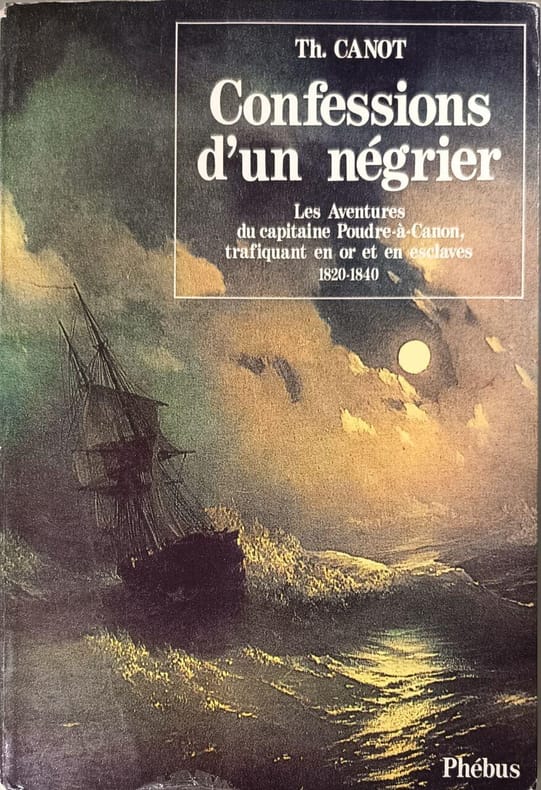
2008144202Couverture souple. Broché. 262 pages.
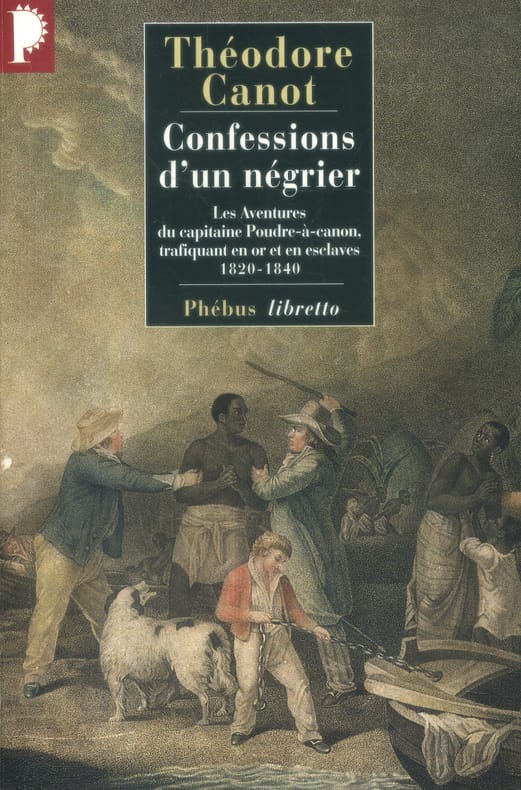
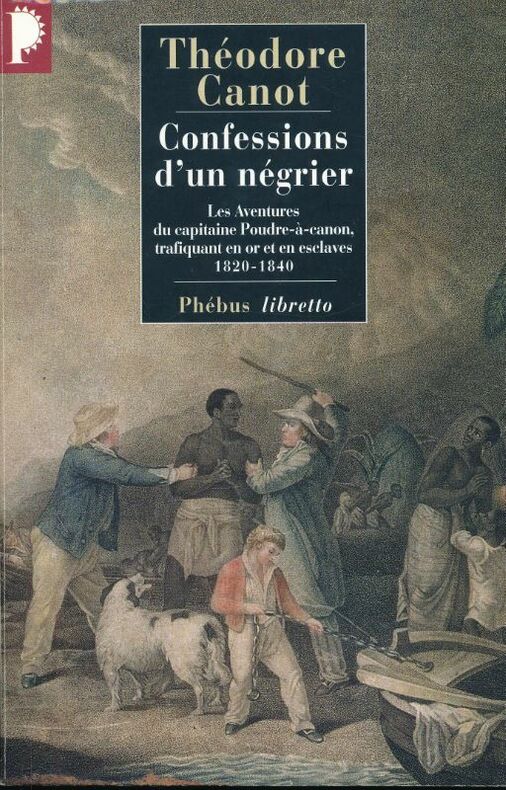
2008155526Phébus Phébus, 2008. In-12 broché de 262 pages. Colleciton Libretto. Très bon état
1989823331989 Paris, Phébus, 1989, in 8° broché, 262 pages ; couverture illustrée.
1369764Paris: Imprimerie Nationale, 1891 4to. 514 + 164 pp. Half morocco, raised bands gilt, spine chipped, rubbed, t.e.g.
2009R240119899FLAMMARION. 2009. In-8. Broché. Bon état, Couv. convenable, Dos satisfaisant, Intérieur frais. 248 pages. . . . Classification Dewey : 326-Esclavage
2001R240134817EDITIONS DU C.T.H.S.. 2001. In-8. Broché. Bon état, Couv. convenable, Dos satisfaisant, Intérieur frais. 415 pages.. . . . Classification Dewey : 326-Esclavage
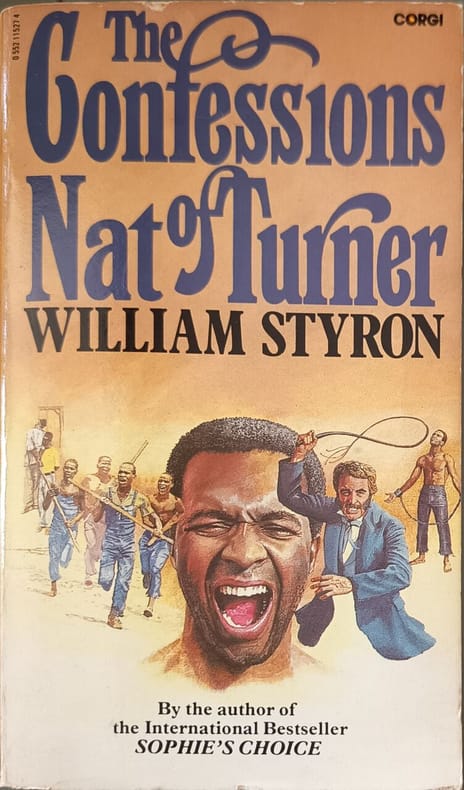
198015780Corgi Childrens 1980 416 pages 17 526x2 794x10 668cm. 1980. Broché. 416 pages. Le roman historique 'Les Confessions de Nat Turner' de William Styron raconte l'histoire de Nat Turner un esclave afro-américain qui a mené une révolte en Virginie en 1831. Le livre explore les motivations et les pensées de Turner bien que son exactitude historique et sa représentation aient suscité des controverses
198912650Phébus 1989 264 pages in8. 1989. broché. 264 pages. Les Confessions d'un négrier de Théodore Canot retracent la vie mouvementée du capitaine Poudre-à-Canon trafiquant d'esclaves entre 1820 et 1840. Le récit au ton neutre et minutieux offre un témoignage cru sur la société esclavagiste de l'époque mêlant naufrages mutineries et abordages
fort volume in-8, 636 pp, broche, couverture illustree.- ISBN 2960025601 RARE - Très bel exemplaire. [TX-15]
Scholar's bookplate to inner cover (G. P. Goold). Minor shelfwear to DJ. ; Sociological Studies in Roman History, Vol. 1; 268 pages; The enormous size of the Roman empire and the length of time it endured call for an understanding of the institutions which sustained it. In this book, Keith Hopkins, who is both classicist and sociologist, uses various sociological concepts and methods to gain new insights into how traditional Roman institutions changed as the Romans acquired their empire. He examines the chain reactions resulting from increased wealth; various aspects of slavery, especially manumission and the cost of freedom; the curious phenomenon of the political power wielded by eunuchs at court; and in the final chapter he discusses the Roman emperor's divinity and the circulation of untrue stories, which were a currency of the political system. Professor Hopkins has developed an exciting approach to social questions in antiquity and his book should be of interest to all students of ancient history and of historical sociology.
1331271592.Gpaperback. Good. Access codes and supplements are not guaranteed with used items. May be an ex-library book. paperback
1528590139.Ghardcover. Good. Access codes and supplements are not guaranteed with used items. May be an ex-library book. hardcover
183441625Salem MA: W & S.B. Ives 1834. 8 pp. <br /><br />"The society organized January 27 A.D. 1834.--Salem Mass." Waterstained. Bound in original printed wrappers. Front wrapper detached but present. Uncommon. W & S.B. Ives books
1865974Santiago de Cuba 1865. Very good. 10 leaves. Removed from a larger volume and restitched. Minor wear and one small area of worming at edges. Light tanning and foxing. Accomplished in several legible hands. A fantastic set of manuscript records for a slave auction house the General Slave Depository in Santiago de Cuba dating to January 1865. Santiago along with Havana and Cienfuegos was one of three major sites for slave sales on the island during the 19th century. The first leaf of the document provides a statement that the documents were assembled in accordance with the rules established for slave auctions which had been updated and approved at the end of the previous year. The second two documents lay out mortgage agreements and financial obligations between the slave house and the Real Sociedad Economica de Amigos de Pais of the city in which the auction owners acknowledge debts and forthcoming payments on the order of several thousand pesos. Following these are two leaves containing a "Relacion de los esclavos ecsistentes en el deposito de esta Ciudad en el dia de la fecha" that is a list of slaves at the depository on the day of the auction and their owners and renters which perhaps were a part of the collateral for securing the loan. A total of twenty-nine slaves are listed and the leaf that follows certifies that the list is correct according the to the director and the auctioneer of the depository. The final two leaves provide official recognition of the loan from two distinct government offices. All documents are signed by the relevant parties and government officials involved in the agreement. In all the present group of documents provides a detailed assessment of debts and human assets of the slave auction house in Santiago de Cuba in the mid-1860s and is a fascinating and valuable document of the bureaucracy and regulation surrounding the financial realities of selling slaves in Cuba during this period. unknown books
8192Saint-Denis (Ile Bourbon), 1810. 10 pp. manuscrites.
1846319747Boston: Eastburn's Press 1846. 20pp. 8vo. Removed. Staining lower text. 20pp. 8vo. <br/><br/> Eastburn's Press unknown
10531Broché - 14x21 - 160 pp - bimestriel N°13 - 1968 - nombreuses illustrations
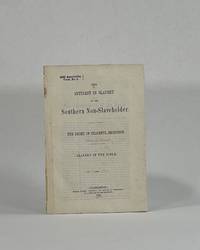
18609565Charleston: Steam-Power Presses of Evans & Cogswell 1860. Disbound. Very Good binding. Octavo. 30 2 blank pp. First edition. Removed from binding. Vertical crease from old fold; a few instances of pencil bracketing; De Bow's name is penciled in on the title page by a later hand. Generally a well preserved copy. <br /> <br /> One of a series of pamphlet issued by Charleston's "1860 Association" a group of wealthy slave-holders who moved to promote immediate secession. In this tract De Bow a Charlestonian by birth who was living and publishing pro-Southern essays in his New Orleans Commercial Review of the South and Southwest offers and economic argument about the "benefits" of slavery on the Southern worker's wages and working condition. De Bow's essay is followed by extracts from an article on the rights of secession as well as lengthy extracts from a sermon by Rev. Henry J. Van Dyke "The Character and Influence of Abolitionism" in which this Northern pastor argues that abolitionism has no Biblical foundation and that its principles are misrepresented for men's gain. Uncommon in commerce. Parrish & Willingham 5330; Confederate Hundred 28; Work p. 399; Afro-Americana 5157; Turnbull III p. 298. Steam-Power Presses of Evans & Cogswell unknown
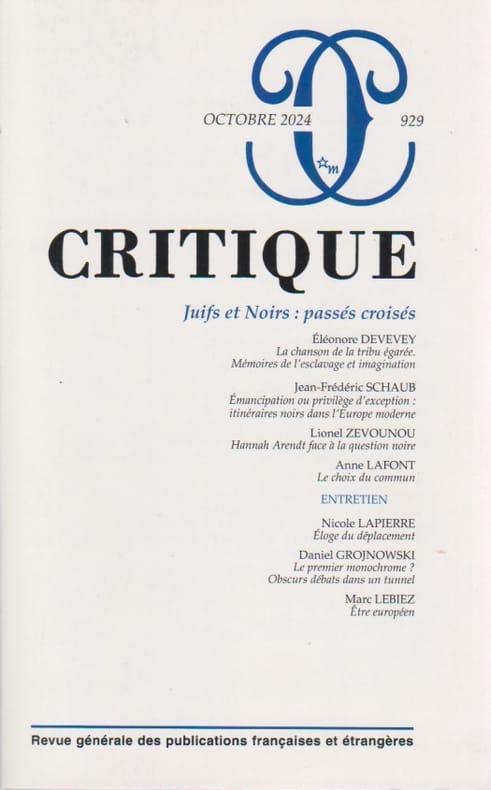
67690Minuit, revue Critique, n° 929, octobre 2024, 817-912 pp., broché, bon état.